 Your new post is loading...

|
Scooped by
Gust MEES
January 26, 2018 5:36 PM
|
Stealth cryptocurrency mining in one’s browser, without the user’s permission, is one of our least-favorite trends of the past six months. While there were always questions about whether cryptocurrency mining in-browser could serve as an alternate revenue stream for websites, there was at least an idea that some kind of alternate funding system might emerge — hopefully putting an end to the eternal cycle of invasive ads driving users to deploy ad blockers, which then drives websites to adopt more invasive ads.
But instead of an informed approach in which end users consented to such mining, we’ve seen stealth operations popping up everywhere that steal CPU cycles from users, particularly if more than one crypto mining malware is running simultaneously. While most of these plugins are written to only put a light load on user’s CPUs, that’s only if the miner is running in a single browser instance, and only if it’s running on a single site. Our tests back in 2017 showed that using different browsers can defeat this dubious attempt to sandbox the performance impact. And, of course, even running one site will still drain battery life more quickly than having the CPU properly idled.
It’s like someone figured out how to monetize the awful Flash ads everyone used to hate for eating CPU cycles. A true win-win! And now it’s even hitting YouTube.
TrendMicro has released an updated report, showing a sharp rise in ads served by Google’s DoubleClick service being infested with mining software. Learn more / En savoir plus / Mehr erfahren: https://www.scoop.it/t/securite-pc-et-internet/?&tag=Coinhive https://www.scoop.it/t/securite-pc-et-internet/?&tag=crypto-currency https://www.scoop.it/t/securite-pc-et-internet/?&tag=cryptojacking
|
|
Scooped by
Gust MEES
January 25, 2018 1:22 PM
|
Alphabet se lance dans la cybersécurité
par Bertrand Garé, le 25 janvier 2018 16:21
La société mère de Google lance une nouvelle société, Chronicle, dans le secteur de la cybersécurité. Actuellement en alpha, le projet vise à aider les équipes IT à prévenir les attaques avant qu’elles ne causent des dommages importants.
L’immense flux de données qui transitent par le million d'entreprises sous l’ombrelle d’Alphabet lui apporte une place privilégiée pour observer le Web et donc les attaques qui s’y développent. En y appliquant les différents outils analytiques issus des laboratoires de recherche de Google, Chronicle propose une plate-forme de cybersécurité intelligente qui a pour but premier de permettre aux équipes IT et aux utilisateurs de mieux comprendre et gérer leurs données. Le projet est en place depuis février 2016. Chronicle est un des rares projets ayant connu ce type d’avancement de recherche à projet dans le cadre de la « Moonshot Factory », l’usine à recherche d’Alphabet. La plate-forme se veut très rapide et bénéficie des capacités de calcul et de stockage quasi illimitée d’Alphabet.
Une threat intelligence as a service
La plate-forme va aider les équipes de recherche par la collecte d’informations pertinentes et des analyses en minutes plutôt qu’en jours comme c’est le cas aujourd’hui. Deuxième point saillant de la solution, la capacité de stockage va autoriser des analyses dégageant des modèles à travers un historique de données incomparables, et ce sur de multiples sources de données.
La solution va être couplée avec VirusTotal, une société acquise en 2015, spécialisée dans l’analyse des fichiers et URLs douteux.
Aucune précision n’a été donné sur le business model ou la commercialisation de la plate-forme qui est actuellement en phase alpha et réalisant des analyses sur les données internes. Learn more / En savoir plus / Mehr erfahren: https://www.scoop.it/t/securite-pc-et-internet/?&tag=Google https://www.scoop.it/t/21st-century-innovative-technologies-and-developments/?&tag=Google https://www.scoop.it/t/21st-century-innovative-technologies-and-developments/?&tag=Alphabet
|
|
Scooped by
Gust MEES
January 18, 2018 5:15 PM
|
Zyklon, a fully featured backdoor, is making the rounds using recently patched vulnerabilities in Microsoft Office.
The dismally named code has been around since early 2016; it’s an HTTP malware with a wide range of capabilities, including keylogging, password harvesting, downloading and executing additional plugins, conducting distributed denial-of-service (DDoS) attacks and self-updating and self-removing. FireEye researchers, who uncovered this latest wave of attacks, said that it also can download several plugins from browsers and email software, some of which include features such as cryptocurrency mining and password recovery. Additionally, Zyklon has a mechanism to monitor the spread and impact of its activities and uses the Tor anonymity network to communicate with its command-and-control (C2) server.
In an analysis, FireEye found that Zyklon is being delivered primarily through spam emails with an attached malicious Word document, targeting telecommunications, insurance and financial services. It’s using two Microsoft vulnerabilities: CVE-2017-8759, which was discovered by FireEye in September 2017, and CVE-2017-11882, a remote code execution bug.
CVE-2017-8759 is a .NET framework issue patched by Microsoft in October. An exploit allows attackers to install programs, manipulate data and create new privileged accounts. The second vulnerability was patched in November – though it was found to have existed for 17 years.
The threat actors are banking on administrators taking their time patching – a common tactic. Users should, of course, update their systems as soon as possible, given Zyklon’s virulent abilities. Learn more / En savoir plus / Mehr erfahren: https://www.scoop.it/t/securite-pc-et-internet
|
|
Scooped by
Gust MEES
January 16, 2018 7:36 PM
|
No one who’s used a long-running government website expects such things to be fancy — just functional. But there’s a limit to what can be tolerated, and I believe we’ve reached it with Hawaii’s emergency alert system, which is so dated that it would be hilarious if it hadn’t just caused a statewide panic. GeoCities ain’t got nothing on this.
Honolulu Civil Beat managed to get a screenshot, via Hawaii’s Office of the Governor, of the system used to launch emergency alerts like the one that went out on Saturday:
Look at that! Just a jumble of contextless plain links, with drills and tests heedlessly mixed in. It’s easy to see how this happened. We all click the wrong link now and then, but the consequence isn’t destabilizing an entire state. You can’t hit the back button on a million text messages and broadcast warnings.
You can see that at the top of the list a new entry: BMD False Alarm. That’s surely (let’s hope) a band-aid until this system gets dragged into the 21st century. Hell, even the turn of the century would be an improvement.
All you need is a bit of styling to perhaps put tests and real alerts in different columns and colors, in case your finger slips, telling all of Hawaii to pull over, find shelter and lay on the ground until further notice. Apparently there’s a confirmation popup that appears, which is a start. Want to bet it looks the same whether you’re doing a drill, text or real alert? Learn more / En savoir plus / Mehr erfahren: https://gustmees.wordpress.com/2012/11/05/naivety-in-the-digital-age/ https://gustmees.wordpress.com/2013/05/12/cyber-security-the-weakest-link-in-the-security-chain-is-the-human/
|
|
Scooped by
Gust MEES
January 16, 2018 7:32 AM
|
|
|
Scooped by
Gust MEES
January 15, 2018 2:18 PM
|
WD-My-Cloud-NAS-Geräte kommen mit Backdoor-Account
Wer ein privates NAS aufsetzt, verspricht sich meist mehr Kontrolle über persönliche Daten als in der Cloud. Kritische Sicherheitslücken in Western-Digital-Geräten ermöglichen jedoch Angreifern, sich mit einem Backdoor-Account einzuloggen oder beliebig Dateien hochzuladen.
Einige NAS-Geräte für Heimanwender und KMU des bekannten Festplattenherstellers Western Digital werden mit einem Backdoor-Account an Kunden ausgeliefert. Der Zugang wurde mittlerweile über ein Update deaktiviert - Nutzer sollten die Geräte also dringend patchen, besonders wenn diese mit dem Internet verbunden sind.
|
|
Scooped by
Gust MEES
January 15, 2018 9:45 AM
|
|
|
Scooped by
Gust MEES
January 12, 2018 6:38 PM
|
Security researchers have pinpointed another major security hole in Intel processors, in addition to the security holes in the Intel Management Engine and the Meltdown flaw that hits Intel CPUs uniquely hard. This time, it’s an issue with Intel’s Active Management Technology (AMT), a feature typically reserved for systems that support Intel vPro or workstation platforms with certain Xeon CPUs.
The Intel AMT is designed to allow administrators to access and update PCs, even if those PCs are turned off. All they need is an internet connection and a wall socket and they can be updated. That’s a useful tool for large multinational firms with far-flung employees, but it’s also a potential security risk. F-Secure has published information highlighting how easily an attacker with even brief local access can gain full access to an entire machine. Here’s how they describe the problem: From here, the possibilities are endless. Even firmware-based malware can be easily uploaded to the system with no chance of detection. And while local access might seem a tough barrier to crack, it’s not as hard as it seems. The changes can be made in under a minute, according to F-Secure. It may not be the kind of attack that gets deployed across thousands of systems on a corporate local network — at least not without additional steps — but it’s exactly the kind of targeted attack a government agency might use. And more to the point, it illustrates that Intel CPUs are once again vulnerable to set of management capabilities that Intel decided to sandbox entirely from the primary operating system. Learn more / En savoir plus / Mehr erfahren: https://www.scoop.it/t/securite-pc-et-internet https://www.scoop.it/t/securite-pc-et-internet/?&tag=intel https://www.scoop.it/t/securite-pc-et-internet/?&tag=Bitlocker+ByPass
|
|
Scooped by
Gust MEES
January 9, 2018 10:49 AM
|
You're security conscious. You're aware of the threats. You like to run a tight ship.
You install the latest security patches, and - of course - you run an up-to-date anti-virus.
Well, things just got a heck lot more complicated for users of some anti-virus programs.
That's because Microsoft has said that customers who are running certain anti-virus products will not receive its bundle of January 2018 security patches (including mitigations against the Spectre and Meltdown CPU flaws) unless their products certify that they don't make unsupported calls into Windows kernel memory.
According to Redmond, some security products jump through some hoops and perform double somersaults to bypass the Kernel Patch Protection built into the operating system. And unfortunately, those techniques, are incompatible with Microsoft's latest patches - and cause computers to blue screen.
So, Microsoft is demanding that anti-virus products certify that their software work with its fixes by adding a registry key every time they startup. More details of the issue can be found in this blog post by researcher Kevin Beaumont, including a link to a spreadsheet he is maintaining of which anti-virus products are setting the Registry key. Learn more / En savoir plus / Mehr erfahren: https://www.scoop.it/t/securite-pc-et-internet/?&tag=Meltdown+and+Spectre+Attacks https://gustmeesde.wordpress.com/2014/12/16/browser-sind-das-einfallstor-fur-malware-sind-eure-browser-up-to-date/ https://gustmeesde.wordpress.com/2014/12/26/programme-die-auf-jeden-neuen-pc-und-smartphones-gehoren/
|
|
Scooped by
Gust MEES
January 7, 2018 12:37 PM
|
Microsoft has warned users that its patches for the dangerous Meltdown CPU bug won't reach them if their third-party antivirus hasn't been updated to support this week's Windows security update.
By now Windows users should have received the patches Microsoft released yesterday to plug the widespread Meltdown bug and its companion Spectre, which expose most computers and phones to speculative execution side-channel attacks that affect chips from Intel, AMD, and Arm.
Microsoft released software updates for Internet Explorer, Microsoft Edge, Windows, and SQL Server, but customers will also need to apply firmware updates from their respective hardware vendors too.
Surface and Surface Book users can expect an automatic firmware update from Microsoft but those with other hardware will need to check with their vendors. Learn more / En savoir plus / Mehr erfahren: https://www.scoop.it/t/securite-pc-et-internet/?&tag=Meltdown+and+Spectre+Attacks https://gustmeesde.wordpress.com/2014/12/16/browser-sind-das-einfallstor-fur-malware-sind-eure-browser-up-to-date/ https://gustmeesde.wordpress.com/2014/12/26/programme-die-auf-jeden-neuen-pc-und-smartphones-gehoren/
|
|
Scooped by
Gust MEES
January 4, 2018 11:45 AM
|
Die Sicherheitslücke ist möglicherweise in Milliarden Geräten weltweit zu finden: Vom klassischen PC über Notebooks bis hin zu Smartphones. Wer ist betroffen? Und gibt es eine Lösung? Jörg Brunsmann gibt Antworten.
|
|
Scooped by
Gust MEES
January 4, 2018 9:48 AM
|
Microsoft has warned users that its patches for the dangerous Meltdown CPU bug won't reach them if their third-party antivirus hasn't been updated to support this week's Windows security update.
By now Windows users should have received the patches Microsoft released yesterday to plug the widespread Meltdown bug and its companion Spectre, which expose most computers and phones to speculative execution side-channel attacks that affect chips from Intel, AMD, and Arm.
Microsoft released software updates for Internet Explorer, Microsoft Edge, Windows, and SQL Server, but customers will also need to apply firmware updates from their respective hardware vendors too.
Surface and Surface Book users can expect an automatic firmware update from Microsoft but those with other hardware will need to check with their vendors. Learn more / En savoir plus / Mehr erfahren: https://www.scoop.it/t/securite-pc-et-internet/?&tag=Meltdown+and+Spectre+Attacks
|
|
Scooped by
Gust MEES
January 4, 2018 9:18 AM
|
Mozilla confirms everybody's worst fears
In research published online late last night, Google didn't provide specific ways in which an attack could take place, but many security experts that looked over the Meltdown and Spectre academic papers said that web-based attacks are possible, and not just attacks using locally-delivered malicious code.
Hours after Google's announcement, Mozilla confirmed everybody's worst fear, that both Meltdown and Spectre are remotely exploitable by embedding attack code in mundane JavaScript files delivered via web pages.
"Our internal experiments confirm that it is possible to use similar techniques from Web content to read private information between different origins," said Luke Wagner, a software engineer with the Mozilla Foundation.
Firefox added Meltdown and Spectre mitigations in November 2017
Details about the Meltdown and Spectre flaws had been shared with Mozilla since last year, and Wagner says that Firefox 57, released in mid-November, already includes some countermeasures.
Both Meltdown and Spectre are side-channel attacks that produce leak memory data. They both rely on the ability to very precisely measure time to deliver exploits that leak memory data.
To hinder the attacks' efficiency, Mozilla says it reduced the precision of Firefox's internal timer functions. This is not a full mitigation, but just an efficient and clever workaround. Learn more / En savoir plus / Mehr erfahren: https://www.scoop.it/t/securite-pc-et-internet https://www.scoop.it/t/securite-pc-et-internet/?&tag=Meltdown+and+Spectre+Attacks
|
|
|
Scooped by
Gust MEES
January 26, 2018 12:20 PM
|
A new report from researchers at Sucuri reveals that websites are once again being found infected by cryptomining code – stealing the resources of visiting computers to mine for the Monero cryptocurrency.
Many web surfers almost certainly don’t realise that the reason that their laptop’s fan is running at full blast is because the website they are viewing is tied up with the complex number-crunching necessary to earn the digital currency.
But, in a twist, this particular attack isn’t just interested in mining Monero. While the website’s front-end is digging for cryptocurrencies, the back-end is secretly hosting a keylogger designed to steal unsuspecting users’ login credentials.
With the keylogger in place, any information entered on any of the affected websites’ web forms will be surreptitiously sent to the hackers.
And yes, that includes the site’s login form. We’ve said it before, and we’ll no doubt say it again. And again. If your website is powered by the self-hosted edition of WordPress, it’s essential that you keep both it, and any third-party plugins, updated. Self-hosting your WordPress site is attractive in many ways, but you have to acknowledge that security is now your responsibility (or find yourself a managed wordpress host who is prepared to take it on for you). New vulnerabilities are found in the software and its many thousands of third-party plugins all the time. In short, if you don’t know what you’re doing, there’s a chance that your WordPress-running website has security holes which a malicious hacker could exploit. Such security weaknesses could potentially damage your brand, scam your website visitors, and help online criminals to make their fortune. Learn more / En savoir plus / Mehr erfahren: https://www.scoop.it/t/securite-pc-et-internet/?&tag=WordPress
|
|
Scooped by
Gust MEES
January 20, 2018 6:05 PM
|
Most readers here have likely heard or read various prognostications about the impending doom from the proliferation of poorly-secured “Internet of Things” or IoT devices. Loosely defined as any gadget or gizmo that connects to the Internet but which most consumers probably wouldn’t begin to know how to secure, IoT encompasses everything from security cameras, routers and digital video recorders to printers, wearable devices and “smart” lightbulbs.
Throughout 2016 and 2017, attacks from massive botnets made up entirely of hacked IoT devices had many experts warning of a dire outlook for Internet security. But the future of IoT doesn’t have to be so bleak. Here’s a primer on minimizing the chances that your IoT things become a security liability for you or for the Internet at large. Learn more / En savoir plus / Mehr erfahren: https://www.scoop.it/t/securite-pc-et-internet/?&tag=iot
|
|
Scooped by
Gust MEES
January 18, 2018 9:48 AM
|
Another site in the booming cryptocurrency wallet sector has been hacked after what looks like a DNS hijacking attack.
The victim this time is BlackWallet, whose users reportedly lost 670,000 of a currency called Stellar Lumens (XLMs) worth around $425,000 at the point they were stolen on the afternoon of 13 January.
News that something was amiss first emerged in a Reddit posting claiming to be from the site’s admin:
BlackWallet was compromised today, after someone accessed my hosting provider account. I am sincerely sorry about this and hope that we will get the funds back.
A security researcher who took a look at blackwallet.co before it was taken down tweeted:
The DNS hijack of Blackwallet injected code, if you had over 20 Lumens it pushes them to a different wallet. Learn more / En savoir plus / Mehr erfahren: https://www.scoop.it/t/securite-pc-et-internet/?&tag=crypto-currency
|
|
Scooped by
Gust MEES
January 16, 2018 7:22 PM
|
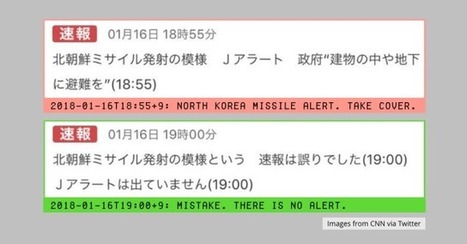
No sooner had we written up that fake missile alert in Hawaii than another fake missile alert was sent out, this time in Japan.
Japan’s national broadcaster, NHK, published an apology:
NHK is apologizing after issuing a false alert that said North Korea had probably launched a missile and warned people in Japan to take cover.
The false message was sent in Japanese shortly before 7 PM local time on Tuesday. It went out through the public broadcaster’s Japanese apps and website.
A few minutes later, NHK corrected the wrong information. There are no reports of problems caused by the mistake. NHK says a switching error is to blame.
The incident comes just days after officials in the US state of Hawaii issued a false missile alarm and caused panic. https://gustmees.wordpress.com/2012/11/05/naivety-in-the-digital-age/ https://gustmees.wordpress.com/2013/05/12/cyber-security-the-weakest-link-in-the-security-chain-is-the-human/
|
|
Scooped by
Gust MEES
January 15, 2018 2:35 PM
|
Über eine Lücke in Intel AMT können Angreifer sich binnen Sekunden den Zugriff auf Laptops verschaffen. So schützen Sie sich.
Die Sicherheitsexperten von F-Secure warnen vor einer Lücke in Intel AMT, die es Angreifern erlaubt, binnen weniger Sekunden die Kontrolle über Notebooks zu übernehmen. Schuld daran sind unsichere Standardeinstellungen in Intel AMT, durch die Angreifer das Nutzer- und BIOS-Passwort und den Bitlocker- und TMP-Schutz umgehen können, um Hintertüren auf den Geräten zu installieren.
Betroffen sind Firmen-Notebooks, in denen Intels Active Management Technology (ATM) zum Einsatz kommt, wodurch die Geräte von IT-Abteilungen verwaltet und aus der Ferne gewartet werden können. Intel AMT stand schon öfters wegen Sicherheitsproblemen in der Kritik. Bei der neuesten Schwachstelle bezeichnet F-Secure Angriffe als „fast schon lächerlich einfach“. Learn more / En savoir plus / Mehr erfahren: https://www.scoop.it/t/securite-pc-et-internet/?&tag=intel
|
|
Scooped by
Gust MEES
January 15, 2018 12:43 PM
|
A security vulnerability in Intel's Active Management Technology (AMT) remote access monitoring and maintenance platform could allow attackers to bypass logins and place a backdoor on a laptop, enabling remote access and operation of the machine.
Intel AMT is commonly found on computers with Intel vPro-enabled processors as well as systems based on some Intel Xeon processors.
Details of the vulnerability -- which can lead to a clean device being compromised in under a minute and can bypass the BIOS password, TPM Pin, BitLocker and login credentials -- have been outlined by researchers at F-Secure.
"The attack is almost deceptively simple to enact, but it has incredible destructive potential. In practice, it can give a local attacker complete control over an individual's work laptop, despite even the most extensive security measures," said Harry Sintonen, senior security consultant at F-Secure.
This vulnerability is unrelated to the Spectre and Meltdown security flaws found to be embedded in the fundamental design of processors and which are thought to exist in some form in most Intel CPUs since 1995. "We appreciate the security research community calling attention to the fact that some system manufacturers have not configured their systems to protect Intel Management Engine BIOS Extension (MEBx)," an Intel spokesperson told ZDNet. "We issued guidance on best configuration practices in 2015 and updated it in November 2017, and we strongly urge OEMs to configure their systems to maximize security. Those best configuration practices include running with the least privileged access, keeping firmware, security software and operating systems up to date." Learn more / En savoir plus / Mehr erfahren: https://www.scoop.it/t/securite-pc-et-internet/?&tag=intel
|
|
Scooped by
Gust MEES
January 12, 2018 6:51 PM
|
New AMT Vulnerability
F-Secure researchers found a new vulnerability in AMT that could allow anyone to bypass BitLocker encryption, BIOS password, TPM Pin, and login credentials on most laptops in less than a minute.
“The attack is almost deceptively simple to enact, but it has incredible destructive potential. In practice, it can give a local attacker complete control over an individual’s work laptop, despite even the most extensive security measures,” said Harry Sintonen, the F-Secure security consultant who discovered the bug.
Normally, when you reboot a machine and try to access the boot menu, you should encounter a BIOS password. However, most users don’t set one. Even if the users do set-up a BIOS password, the attacker can access the Intel Management BIOS Extension (MEBx). This functionality typically comes with the default “admin” password, unless it’s been changed by the PC vendor or the user.
The attacker could then change the MEBx password, enable remote access via AMT, and set the user “opt-in” to “none” in order to compromise the machine. This allows the attacker to control the machine remotely afterwards, as well as access the machine’s network. As a real world example of how this could be used, this could allow, for instance, border agents to gain access to your laptop remotely after they confiscate it temporarily in the airport to check its contents. Learn more / En savoir plus / Mehr erfahren: https://www.scoop.it/t/securite-pc-et-internet/?&tag=intel https://www.scoop.it/t/securite-pc-et-internet/?&tag=Bitlocker+ByPass
|
|
Scooped by
Gust MEES
January 9, 2018 12:20 PM
|
An seinem ersten Patchday des Jahres dichtet Adobe einen Speicherfehler im Flash Player ab, der zu einem Informationsleck führen kann.
Anlässlich seines Januar-Patchdays schließt Adobe eine Sicherheitslücke im Flash Player, die zu einem Informationsleck führen kann. Der Speicherfehler (Out of bounds) trägt die CVE-Nummer 2018-4871 und wurde anonym über Trend Micros Zero Day Initiative an Adobe herangetragen. Der Hersteller ordnete der Lücke den zweithöchsten Schweregrad "wichtig" zu, bislang seien keine Fälle bekannt, in denen die Schwachstelle für Angriffe missbraucht wurde. Betroffen sind alle Versionen des Flash Player bis einschließlich 28.0.0.126 auf allen unterstützten Plattformen.
Für Abhilfe sorgt Version 28.0.0.137, die sich wie gewohnt als Desktop-Runtime für Windows und Linux direkt bei Adobe beziehen lässt. Um die Aktualität des Plug-ins für den Chrome-Browser kümmert sich Google; in Kürze erscheint voraussichtlich eine neue Chrome-Version, welche die aktuelle Flash-Version enthält. Das Flash-Plug-in für Edge und Internet Explorer bringt Microsoft über Windows Update auf den aktuellen Stand. Learn more / En savoir plus / Mehr erfahren: https://www.scoop.it/t/securite-pc-et-internet/?&tag=Flash+Updates
|
|
Scooped by
Gust MEES
January 8, 2018 9:56 AM
|
Meltdown und Spectre: Nach diesen Updates müssen Sie Ausschau halten
Das Problem mit der CPU-Schwachstelle weitet sich aus. Welche Geräte müssen mit Updates ausgestattet werden? Und wie wissen Sie, welches Update das richtige ist? PCtipp zeigt auf.
von Florian Bodoky, Alexandra Lindner, dpa05.01.2018 (Letztes Update: 08.01.2018)
Update (8. Januar 2018)
Die festgestellten CPU-Schwachstellen haben in den letzten Tagen einigen Wirbel verursacht (siehe unten). Hersteller und Software-Unternehmen haben sich nun drangemacht, die Lücken so gut es geht zu schliessen. Es ist anzunehmen, dass Intel selbst in den kommenden Tagen noch nachzieht und einen Patch auf Hardware-Ebene lanciert.
Was ist nun zu tun?
Um Ihre Windows- und Apple-Geräte zu schützen, sollten Sie die entsprechenden Updates, die Microsoft und Apple bereits anbieten, herunterladen und installieren, sofern dies nicht automatisch geschieht.
Wie geht das? Welches Update ist das richtige?
Windows (7, 8.1, 10)
Bei Geräten, die unter Windows laufen, sollten Sie erst feststellen, ob das entsprechende Update nicht automatisch heruntergeladen und installiert wurde.
Drücken Sie Windowstaste+i, um in die Einstellungen zu gelangen.
Suchen Sie nach Update und wählen Sie Updateverlauf anzeigen.
Überprüfen Sie, ob das entsprechende Update heruntergeladen wurde. Wie das Update für Ihre Windows-Version und Ihr Build heisst, erfahren Sie hier (Windows 10) und hier (Windows 7 und 8.1).
Welchen Build habe ich denn?
Um herauszufinden, welchen Build von Windows 10 Sie haben, gehen Sie folgendermassen vor:
Drücken Sie Windowstaste+R.
Geben Sie winver ein und drücken Sie Enter.
Nun geht ein Fenster auf, die Ihnen unter anderem Ihre Build-Version anzeigt.
Apple
Bei macOS-Geräten aktualisieren Sie einfach auf die OS-Version 10.13.2.
Bei iOS-Geräten wie dem iPhone oder iPad aktualisieren Sie auf iOS 11.2.1.
Learn more / En savoir plus / Mehr erfahren: https://www.scoop.it/t/securite-pc-et-internet/?&tag=Meltdown+and+Spectre+Attacks https://gustmeesde.wordpress.com/2014/12/16/browser-sind-das-einfallstor-fur-malware-sind-eure-browser-up-to-date/ https://gustmeesde.wordpress.com/2014/12/26/programme-die-auf-jeden-neuen-pc-und-smartphones-gehoren/
|
|
Scooped by
Gust MEES
January 4, 2018 11:56 AM
|
Weil das Problem auf Prozessorebene liegt, betrifft es auch alle gängigen Betriebssysteme. Laut Daniel Gruss ist es den Grazer Forschern gelungen, unter Linux und macOS alles auszulesen, was im Arbeitsspeicher der Rechner abgelegt war, unter Windows "das meiste".
Dadurch, dass auch ARM-Prozessoren betroffen sind, finden sich die Schwachstellen auch auf Mobilgeräten. Google immerhin hat gemeldet, dass das Problem mit seinem jüngsten Android-Update vom 1. Januar behoben worden sei. Da aber längst nicht alle Hersteller ihre Android-Geräte zeitnah mit solchen Updates versorgen, dürfte die Mehrheit der Android-Smartphones und -Tablets noch ungeschützt sein. Apple hat sich zum Schutzstatus seiner Geräte bis zum Donnerstagmittag noch nicht geäußert.
Was kann passieren?
"Spectre" und "Meltdown" hebeln Sicherheitsmechanismen aus, die verhindern sollen, dass Programme beliebig Daten aus dem Speicher eines Computers abrufen können. Ist die Sicherung ausgetrickst, kann entsprechende Software auf eigentlich geschützte Speicherbereiche anderer Programme oder des Betriebssystems zugreifen und so zum Beispiel Passwörter und Krypto-Schlüssel auslesen.
Wie funktioniert das?
Das Problem basiert auf einer Prozessortechnik, die als "Speculative Execution" bezeichnet wird. Der Prozessor versucht dabei, die als Nächstes folgenden Arbeitsschritte vorherzusehen und so seine Leistung zu optimieren.
Daniel Gruss erklärt das so: "Ein Prozessor produziert nonstop Daten, ähnlich wie in der der echten Welt eine Fabrik die ganze Zeit Produkte herstellt. Alles läuft gleichzeitig und parallel ab. Da kann es vorkommen, dass etwas produziert wird, das später nicht gebraucht wird, etwa in Form eines Päckchens. Wenn die Fabrik später entscheidet 'Dieser Teil des Produkts wird nicht an den Kunden ausgeliefert', ist das möglich - das Päckchen landet dann im Hinterhof der Fabrik im Müll. Unseren Angriff kann man sich so vorstellen, dass wir im Hinterhof stehen und dieses Päckchen aus dem Müll holen." Learn more / En savoir plus / Mehr erfahren: https://www.scoop.it/t/securite-pc-et-internet/?&tag=Meltdown+and+Spectre+Attacks https://gustmeesde.wordpress.com/2014/12/16/browser-sind-das-einfallstor-fur-malware-sind-eure-browser-up-to-date/ https://gustmeesde.wordpress.com/2014/12/26/programme-die-auf-jeden-neuen-pc-und-smartphones-gehoren/
|
|
Scooped by
Gust MEES
January 4, 2018 11:13 AM
|
Eine neu entdeckte Schwachstelle in Computer-Prozessoren hat weltweit Sorge vor Hackerangriffen auf sensible Daten geschürt. Die betroffenen Hersteller wollen nun nachrüsten. Das Bundesamt für Sicherheit in der Informationstechnik riet Nutzern, Updates zu installieren.
Nach Bekanntwerden der gravierenden Sicherheitslücken in zahlreichen Computer-Prozessoren hat das Bundesamt für Sicherheit in der Informationstechnik (BSI) Nutzern zum Installieren von Updates geraten.
Privatanwendern und Unternehmen werde empfohlen, Sicherheits-Patches für Betriebssysteme und insbesondere Internetbrowser einzuspielen, sobald diese von den Herstellern zur Verfügung gestellt würden, erklärte das BSI. Auch für mobile Geräte wie Smartphones sollten Sicherheitsupdates unmittelbar installiert werden.
Grundsätzlich gelte, dass Software und Betriebssysteme stets auf dem aktuellen Stand gehalten werden sollten, teilte das BSI weiter mit. Zudem sollten Apps nur aus vertrauenswürdigen Quellen bezogen werden. Die Chip- und Hardwarehersteller rief das Bundesamt dazu auf, die Schwachstelle zu beheben. Der Fall sei ein erneuter Beleg dafür, "wie wichtig es ist, Aspekte der IT-Sicherheit schon bei der Produktentwicklung angemessen zu berücksichtigen", erklärte BSI-Präsident Arne Schönbohm. Learn more / En savoir plus / Mehr erfahren: https://www.scoop.it/t/securite-pc-et-internet/?&tag=Meltdown+and+Spectre+Attacks https://gustmeesde.wordpress.com/2014/12/26/programme-die-auf-jeden-neuen-pc-und-smartphones-gehoren/ https://gustmeesde.wordpress.com/2014/12/16/browser-sind-das-einfallstor-fur-malware-sind-eure-browser-up-to-date/
|
|
Scooped by
Gust MEES
January 4, 2018 9:35 AM
|
Die aktuell bekannt gewordene Prozessor-Sicherheitslücke ist wohl kritischer als bisher angenommen. Durch die Attacken "Meltdown" und "Spectre" sollen neben Systemen mit Intel-CPUs auch Geräte mit Chipsets von AMD oder ARM betroffen sein.
Wie com! professional bereits berichtete, wurde ein äußerst kritischer Designfehler in nahezu allen Intel-CPUs entdeckt. Zunächst wurde angenommen, dass der Fehler nur Intel.Prozessoren betrifft. Diese Aussage muss nun jedoch revidiert werden. Neben Geräten mit Intel-Chips sollen auch Systeme mit ARM- oder AMD-CPUs angreifbar sein. Je nach Art des Angriffs sprechen die Experten von Meltdown oder Spectre.
Damit ist in Computerchips von Milliarden Geräten eine Sicherheitslücke entdeckt worden, durch die Angreifer an vertrauliche Daten kommen könnten. Forscher demonstrierten, dass es möglich sei, sich Zugang zum Beispiel zu Passwörtern, Krypto-Schlüsseln oder Informationen aus Programmen zu verschaffen. Die Tech-Firmen sind dabei, die Lücke mit Software-Aktualisierungen zu stopfen.
Die Schwachstelle liegt in einem Verfahren, bei dem Chips möglicherweise später benötigte Informationen schon im voraus abrufen, um Verzögerungen zu vermeiden. Diese als "speculative execution" bekannte Technik wird seit Jahren von diversen Anbietern eingesetzt. Damit dürfte eine riesige Anzahl von PCs, Notebooks, Tablets und Smartphones bedroht sein.
Sie wüssten nicht, ob die Sicherheitslücke bereits ausgenutzt worden sei, erklärten die Forscher. Man würde es wahrscheinlich auch nicht feststellen können, denn die Attacken hinterließen keine Spuren in traditionellen Log-Dateien.
Der Branchenriese Intel erklärte, es werde gemeinsam mit anderen Firmen an einer Lösung gearbeitet, bezweifelte aber zugleich, dass die Schwachstelle bereits ausgenutzt worden sei.
Learn more / En savoir plus / Mehr erfahren: https://www.scoop.it/t/securite-pc-et-internet/?&tag=Meltdown+and+Spectre+Attacks
|






























Learn more / En savoir plus / Mehr erfahren:
https://www.scoop.it/t/securite-pc-et-internet/?&tag=Coinhive
https://www.scoop.it/t/securite-pc-et-internet/?&tag=crypto-currency
https://www.scoop.it/t/securite-pc-et-internet/?&tag=cryptojacking