 Your new post is loading...

|
Scooped by
Gust MEES
March 7, 2018 7:32 AM
|
A previously undisclosed flaw in Nike's website allowed anyone with a few lines of code to read server data like passwords, which could have provided greater access to the company's private systems.
An 18-year-old researcher Corben Leo discovered the flaw late last year and contacted Nike through the company's dedicated email address for reporting security flaws, which it advertises on its bug bounty page.
After hearing nothing back for more than three months, Leo contacted ZDNet, which also alerted the company to the vulnerability.
The bug exploited an out-of-band XML external entities (OOB-XXE) flaw that abused how Nike's website parses XML-based files, allowing the researcher to read files directly on the server. OOB-XXE flaws are widely seen as esoteric and difficult to carry out, but can be used to gain deep access to a server's internals. Gaining access to a server's files can disclose other avenues for exploitation, such as remote code execution or pivoting to other connected servers or databases. Learn more / En savoir plus / Mehr erfahren: https://www.scoop.it/t/securite-pc-et-internet/?&tag=DATA-BREACHES https://www.scoop.it/t/securite-pc-et-internet/?&tag=wearables https://gustmees.wordpress.com/2013/12/21/privacy-in-the-digital-world-shouldnt-we-talk-about-it/
|
|
Scooped by
Gust MEES
March 2, 2018 5:38 PM
|
In a growing sign of the increased sophistication of both cyber attacks and defenses, GitHub has revealed that this week it weathered the largest-known DDoS attack in history.
DDoS — or distributed denial of service in full — is a cyber attack that aims to bring websites and web-based services down by bombarding them with so much traffic that their services and infrastructure are unable to handle it all. It’s a fairly common tactic used to force targets offline.
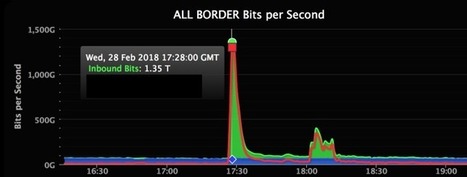
GitHub is a common target — the Chinese government was widely suspected to be behind a five-day-long attack in 2015 — and this newest assault tipped the scales at an incredible 1.35Tbps at peak.
In a blog post retelling the incident, GitHub said the attackers hijacked something called “memcaching” — a distributed memory system known for high-performance and demand — to massively amplify the traffic volumes that were being fired at GitHub. To do that, they initially spoofed GitHub’s IP address and took control of memcached instances that GitHub said are “inadvertently accessible on the public internet.”
The result was a huge influx of traffic. Wired reports that, in this instance, the memcached systems used amplified the data volumes by around 50 times. Learn more / En savoir plus / Mehr erfahren: https://www.scoop.it/t/securite-pc-et-internet/?&tag=DDos
|
|
Scooped by
Gust MEES
March 1, 2018 3:01 PM
|
Hackers -- possibly Russian -- have reportedly had access to the German government's secure network for over a year.
As first revealed by German news agency DPA, the hackers were able to steal data in the intrusion, which was apparently spotted in December.
The report quoted unnamed sources as saying the chief suspect is the notorious APT28 or Fancy Bear group, which was reportedly behind the German parliament's big 2015 hacking and, months later, the Democratic National Committee (DNC) compromise in the US.
Fancy Bear is widely believed to be under the Kremlin's control. Apart from the Bundestag and DNC, its targets have included everyone from the Ukrainian military and US defense contractors, to Russian opposition parliamentarians and the Putin-critical punk group Pussy Riot.
The group's previous German hack involved the Bundestag's regular network. This time it's the secure Berlin-Bonn Information Network (IVBB), an intranet run by the Interior Ministry that comes with higher usage restrictions for users and is supposed to be firewalled to the gills. Learn more / En savoir plus / Mehr erfahren: https://www.scoop.it/t/securite-pc-et-internet/?&tag=Cyberattacks
|
|
Scooped by
Gust MEES
March 1, 2018 9:48 AM
|
New Mirai variant named Mirai OMG
Fortinet has named this variant Mirai OMG —based on the OOMGA string found in some parts of the malware's source code where the term "Mirai" used to be— and this variant now joins a growing Mirai family that also includes variants such as Satori (Okiru), Masuta, and Akuma.
But while Fortinet has not analyzed the traffic flowing through the Mirai OMG network, in theory, it should not be any different from the regular type of traffic that malicious proxy networks have been relaying for years. This includes:
⠕ relaying traffic meant for malware C&C servers to hide their true location
⠕ acting as launching points for dictionary and brute-force attacks to bypass security solutions that limit the number of failed attempts per IP
⠕ launching SQL injection, CSRF, LFI, and XSS attacks to bypass geofencing rules and exploit other web applications
Since Mirai OMG still relies on the classic Mirai spreading technique of brute-forcing devices using weak passwords, changing any IoT equipment's default password should safeguard most users from having their device taken over for a crime spree.
Learn more / En savoir plus / Mehr erfahren: https://www.scoop.it/t/securite-pc-et-internet/?&tag=iot https://www.scoop.it/t/securite-pc-et-internet/?&tag=Mirai+Botnet
|
|
Scooped by
Gust MEES
February 19, 2018 3:04 PM
|
Geleistete Lösegeldzahlungen sind nur die Spitze des Eisbergs und nehmen sich im Vergleich zu den übrigen (Folge-)Kosten einer Infektion eher gering aus. Die eigentlichen Schadenssummen umfassen auch andere Kosten:
Datenverlust
Ausfallzeiten
Ersatz / Neuaufsetzen von Infrastruktur
Produktivität
Kosten für IT-Forensik
Reputationsschäden
Leib und Leben - gerade in Fällen, in denen Krankenhäuser und Pflegeeinrichtungen betroffen sind.
Nach einer Studie von CyberSecurity Ventures, einem der weltweit führenden Forschungsunternehmen der Internetwirtschaft, wird sich die gesamte weltweite Schadenssumme für das Jahr 2017 schätzungsweise um oder über fünf Millarden Dollar bewegen. Das bedeutet einen Anstieg um das fünffache der Schadenssumme von 2016. Experten prognostizieren hier einen weiteren Anstieg bis auf das 15-fache innerhalb der kommenden zwei Jahre: Um 2019 herum könnten es Schäden in Höhe von über 11.5 Milliarden Dollar sein.
Werfen wir einen Blick auf die prominentesten Vertreter der Gattung Ransomware und darauf, wie solche astronomischen Schadenssummen zustande kommen. Die nachfolgende Tabelle enthält Hinweise auf ein bestimmtes Verhaltensmuster, nach dem sich Malware-Autoren zunehmen auf Wirtschaftszweige kontentrieren, in denen die Absicherung wichtiger Kundendaten einen hohen Stellenwert hat.
Die Tatsache, dass Lösegelder gezahlt werden und dass hier massive Imageschäden angerichtet werden, unterstreicht, dass diese Strategie Wirkung zeigt. Petna bildet hier eine Ausnahme, da dieser Schädling nie dazu gefdacht war, Profit zu generieren. Stattdessen war Petnas Ziel, betroffene Betriebe lahmzulegen. Learn more / En savoir plus / Mehr erfahren: https://www.scoop.it/t/securite-pc-et-internet/?&tag=RANSOMWARE
|
|
Scooped by
Gust MEES
February 19, 2018 12:15 PM
|
Découverts par l'équipe de sécurité de Google les détails techniques de la faille ont été rendus publics mais le patch pour la corriger n'est pas encore prêt.
Une nouvelle faille de sécurité a été découverte dans le navigateur Edge et Microsoft en a été informé l'année dernière. Toutefois les développeurs Microsoft ont trop tardé à mettre en place un correctif pour corriger le problème.
L'équipe de chercheurs en sécurité de Google Project Zero suit une procédure bien particulière lorsqu'une faille est découverte dans un logiciel. Il informe tout d'abord l'éditeur sans divulguer la faille publiquement pour que celui-ci ait le temps de la corriger. Après un certain délai, que le correctif soit disponible ou non, la faille est rendue publique. Learn more / En savoir plus / Mehr erfahren: https://www.scoop.it/t/securite-pc-et-internet/?&tag=Browsers
|
|
Scooped by
Gust MEES
February 19, 2018 8:35 AM
|
Quantum bits are the basic units of information in quantum computing, a new type of computer in which particles like electrons or photons can be utilized to process information, with both “sides” (polarizations) acting as a positive or negative (i.e. the zeros and ones of traditional computer processing) alternatively or at the same time.
According to experts, quantum computers will be able to create breakthroughs in many of the most complicated data processing problems, leading to the development of new medicines, building molecular structures and doing analysis going far beyond the capabilities of today’s binary computers.
The elements of quantum computing have been around for decades, but it’s only in the past few years that a commercial computer that could be called “quantum” has been built by a company called D-Wave. Announced in January, the D-Wave 2000Q can “solve larger problems than was previously possible, with faster performance, providing a big step toward production applications in optimization, cybersecurity, machine learning and sampling.”
IBM recently announced that it had gone even further — and that it expected that by the end of 2017 it would be able to commercialize quantum computing with a 50-qubit processor prototype, as well as provide online access to 20-qubit processors. IBM’s announcement followed the September Microsoft announcement of a new quantum computing programming language and stable topological qubit technology that can be used to scale up the number of qubits.
Taking advantage of the physical “spin” of quantum elements, a quantum computer will be able to process simultaneously the same data in different ways, enabling it to make projections and analyses much more quickly and efficiently than is now possible. Learn more / En savoir plus / Mehr erfahren: https://www.scoop.it/t/21st-century-innovative-technologies-and-developments/?&tag=Quantum-Computing https://www.scoop.it/t/securite-pc-et-internet/?&tag=Quantum
|
|
Scooped by
Gust MEES
February 17, 2018 12:55 PM
|
Over the weekend, officials from the Winter Olympics taking place in South Korea confirmed a cyberattack hit systems helping run the event during the opening ceremony. They didn't provide much detail, though the attack coincided with 12 hours of downtime on the official website, the collapse of Wi-Fi in the Pyeonchang Olympic stadium and the failure of televisions and internet in media rooms, according to reports.
Researchers from Cisco's Talos cybersecurity unit now believe with "moderate" confidence they've found the malware responsible. They've suitably named it Olympic Destroyer, for its main focus is taking down systems and wiping data, rather than stealing information. More specifically, it deletes files and their copies, as well as event logs, whilst using legitimate features on Windows computers to move around targeted networks.
For the latter, the malware tries to use PsExec and Windows Management Instrumentation, both used by network administrators to access and carry out actions on other users' PCs. Both were used by the NotPetya ransomware in 2017. Whilst no one has attributed the Olympics attacks, Ukraine blamed Russia for NotPetya and suspicions the latter would target the event via digital means have been rife. Russia, meanwhile, has told media it was not responsible.
"We know that Western media are planning pseudo-investigations on the theme of 'Russian fingerprints' in hacking attacks on information resources related to the hosting of the Winter Olympic Games in the Republic of Korea," the foreign ministry said, according to the BBC. "Of course, no evidence will be presented to the world." Learn more / En savoir plus / Mehr erfahren: https://www.scoop.it/t/securite-pc-et-internet
|
|
Scooped by
Gust MEES
February 17, 2018 12:08 PM
|
If there is one thing that is universally disliked, it is spam. Thankfully, most large email services and providers do an admirable job filtering spam before it even gets to your inbox.
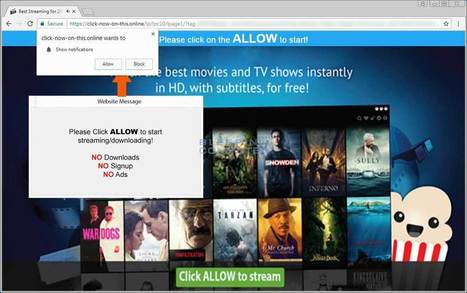
Unfortunately, a new method of sending you spam has been created that skips your email altogether and sends it directly to your browser. This new method is called web notification spam and I have started to see numerous sites being setup to utilize this new tactic.
What are web notifications?
Web notifications is a legitimate method that sites can use to send subscribers notifications when new content is available.
It works like this. A visitor goes to a site and they are presented with a notification at the top of the browser that asks them to allow the web site to send or show notifications. If a user clicks on the Allow button, the site can send them notifications of new content when it is published.
For example, if BleepingComputer utilized web notifications, you would get a prompt like the one below when you visited the site. If you subscribed, it is expected that you would only receive notifications about new content at BleepingComputer.com.
Learn more / En savoir plus / Mehr erfahren. https://www.scoop.it/t/securite-pc-et-internet/?&tag=Spam
|
|
Scooped by
Gust MEES
February 13, 2018 6:27 PM
|
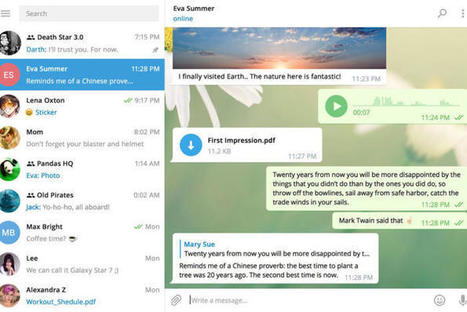
Un problème de sécurité informatique découvert dans l’application Telegram Desktop. Des attaques ont été confirmées.
Une vulnérabilité dans Telegram utilisées dans une attaque informatique en cours. Alors que les messageries sociales font partie de l’environnement quotidien connecté d’une part importante de notre société, la confiance des utilisateurs en une plateforme dépend de la sécurité des données qui s’y trouvent et des plateformes en elles-mêmes. La confidentialité et la fréquence des messages partagés sur ces types de messageries entraine une prise de risque conséquente pour les utilisateurs, en cas de cyberattaque ou de faille de sécurité.
Après la découverte du malware mobile compromettant WhatsApp, les chercheurs de Kaspersky Lab ont cette fois-ci découvert des attaques en cours, menées par un nouveau malware exploitant une vulnérabilité Zero Day dans l’application Telegram Desktop. La faille a servi à diffuser ce malware multifonction qui, suivant le type d’ordinateur, peut agir comme une porte dérobée (backdoor) ou comme vecteur d’un logiciel de minage de cryptomonnaies (Monero, Zcash, etc.).
La faille Zero Day dans Telegram repose sur la méthode Unicode RLO (Right-to-Left Override), généralement employée pour le codage de langues qui s’écrivent de droite à gauche, telles que l’arabe ou l’hébreu. En dehors de cela, toutefois, la vulnérabilité peut également être exploitée par les auteurs du malware pour inciter par ruse les utilisateurs à télécharger des fichiers malveillants, par exemple masqués sous forme d’images. Learn more / En savoir plus / Mehr erfahren: https://www.scoop.it/t/securite-pc-et-internet https://www.scoop.it/t/securite-pc-et-internet/?&tag=Telegram
|
|
Scooped by
Gust MEES
February 11, 2018 10:36 AM
|
Cyberwarfare is taking to the skies, aboard dronesHovering computers will make it increasingly possible to hack equipment that doesn’t connect directly to the internet. The drones: Cyberscoop rounded up a selection of drones that hack into networks. Take your pick: flying wiretaps for mobile networks, home-brew devices that turn off smart bulbs, or giants with 20-foot wingspans that meddle with Wi-Fi networks. What the experts say: “This market is about to blow up,” Francis Brown of thecybersecurity firm Bishop Fox told Cyberscoop. “Everyone is dumping money into this.” Why it matters: It’s often assumed that devices that don’t directly connect to the internet are relatively sheltered from attack. While it’s not straightforward, hovering a drone close to a vehicle or building could enable people to hack devices that use wireless communication but were once thought relatively safe. Hack backs: It’s also worth noting that drones, with wireless connections and precarious modes of travel, are highly susceptible to being hacked out of the sky, too. Learn more / En savoir plus / Mehr erfahren: https://www.scoop.it/t/securite-pc-et-internet https://www.scoop.it/t/21st-century-innovative-technologies-and-developments/?&tag=Drones
|
|
Scooped by
Gust MEES
February 8, 2018 12:00 PM
|
Mit Chrome 66 und 70 im April und Oktober entzieht Google gut hunderttausend der wichtigsten Domains das Vertrauen, falls diese sich keine neuen SSL-Zertifikate besorgen. Das Ganze ist eine Bestrafungsaktion gegen den Zertifikatsaussteller Symantec.
Geht alles nach Plan, macht Google am 17. April mit Chrome 66 Ernst: Ab dann werden Nutzer gewarnt, wenn der Browser auf ein Symantec-Zertifikat trifft, das vor dem 1. Juni 2016 ausgestellt wurden. Chrome beschwert sich dann, dass die Verbindung nicht sicher sei und eventuell Daten von Dritten abgefangen werden könnten. Am 23. Oktober, wenn Chrome 70 erscheinen soll, wird es noch unangenehmer für die Besitzer von Seiten mit Symantec-Zertifikaten: Ab dann stuft Googles Browser alle Verbindungen, die Symantec-Zertifikate nutzen, als nicht vertrauenswürdig ein und warnt noch lauter. Ein Sicherheitstechniker der Firma Airbnb hat sich nun die Mühe gemacht, herauszufinden, wie viele Seiten genau betroffen sind.
Spiegel, Uni Hildesheim und Tesla mit betroffenen Zertifikaten
Das Skript, das Arkadiy Tetelman gebaut hat um eine Million der (laut Alexa-Ranking) meistbesuchten Seiten im Netz nach Symantec-Zertifikaten zu durchsuchen, lief elf Stunden und fand insgesamt 11.510 Domains, die im April Fehler produzieren werden. Weitere 91.627 Domains werden mit dem Chrome-Update im Oktober Warnmeldungen auslösen. Für Admins, die nachschauen wollen, ob die eigene Seite betroffen ist, hat Tetelman eine Textdatei zur Verfügung gestellt.
Unter anderem in der Liste: Das Bundesfinanzministerium, Spiegel Online, die Uni Hildesheim, wetter.de, die Stadt Nottingham und Elon Musks Elektroautohersteller Tesla. Learn more / En savoir plus / Mehr erfahren: https://www.scoop.it/t/securite-pc-et-internet/?&tag=HTTPS
|
|
Scooped by
Gust MEES
February 8, 2018 9:59 AM
|
Adobe hat für seinen Flash Player ein Sicherheits-Update freigegeben. Version 28.0.0.161 schließt die kritische Sicherheitslücke, die vergangene Woche publik wurde. Nachdem die Lücke bereits ausgenutzt wird, sollten Sie als Flash-Nutzer dringend aktualisieren. Wie dies manuell funktioniert, erklären wir Ihnen im Video. Learn more / En savoir plus / Mehr erfahren: https://www.scoop.it/t/securite-pc-et-internet/?&tag=Flash-Player-Vulnerabilities
|
|
|
Scooped by
Gust MEES
March 4, 2018 10:01 AM
|
As location-aware advertising goes mainstream—like that Jack in the Box ad that appears whenever you get near one, in whichever app you have open at the time—and as popular apps harvest your lucrative location data, the potential for leaking or exploiting this data has never been higher.
It’s true that your smartphone’s location-tracking capabilities can be helpful, whether it’s alerting you to traffic or inclement weather. That utility is why so many of us are giving away a great deal more location data than we probably realize. Every time you say “yes” to an app that asks to know your location, you are also potentially authorizing that app to sell your data.
Dozens of companies track location and/or serve ads based on this data. They aim to compile a complete record of where everyone in America spends their time, in order to chop those histories into market segments to sell to corporate advertisers.
Marketers spent $16 billion on location-targeted ads served to mobile devices like smartphones and tablets in 2017. That’s 40% of all mobile ad spending, research firm BIA/Kelsey estimates, and it expects spending on these ads to double by 2021.
The data required to serve you any single ad may pass through many companies’ systems in milliseconds—from data broker to ad marketplace to an agency’s custom system. In part, this is just how online advertising works, where massive marketplaces hold ongoing high-speed auctions for ad space. Learn more / En savoir plus / Mehr erfahren: https://www.scoop.it/t/securite-pc-et-internet/?&tag=tracking https://gustmees.wordpress.com/2013/12/21/privacy-in-the-digital-world-shouldnt-we-talk-about-it/ https://gustmees.wordpress.com/2014/03/05/often-asked-questions-are-there-cyber-security-dangers-with-apps-and-whats-about-privacy/
|
|
Scooped by
Gust MEES
March 1, 2018 3:26 PM
|
|
|
Scooped by
Gust MEES
March 1, 2018 2:52 PM
|
GitHub has revealed it was hit with what may be the largest-ever distributed denial of service (DDoS) attack.
The first portion of the attack against the developer platform peaked at 1.35Tbps, and there was a second 400Gbps spike later. This would make it the biggest DDoS attack recorded so far. Until now, the biggest clocked in at around 1.1Tbps.
In a post on its engineering blog, the developer platform said that, on Feb. 28, GitHub.com was unavailable from 17:21 to 17:26 UTC and intermittently unavailable from 17:26 to 17:30 UTC due to the DDoS attack.
Github said that at no point "was the confidentiality or integrity of your data at risk. Learn more / En savoir plus / Mehr erfahren: https://www.scoop.it/t/securite-pc-et-internet/?&tag=Cyberattacks
|
|
Scooped by
Gust MEES
February 26, 2018 9:48 AM
|
Canoncinal vient d’annoncer la disponibilité de correctifs pour 26 vulnérabilités recensées dans le noyau d’Ubuntu 14.04 (Trusty Tahr). Cette version qui est sortie depuis avril 2014 bénéficie d’un support Long Term Support abrégé LTS (pour support à long terme en français) ce qui fait qu’elle est prise en charge par l’équipe de développement pendant cinq ans (pour les versions bureau et serveur), soit jusqu’en avril 2019.
Dans cette récente annonce, l’entreprise rapporte parmi les failles corrigées qu’une vulnérabilité d’écriture hors limites existait dans le système de fichiers Flash-Friendly (f2fs) du noyau Linux. Cette faille qui a été consignée sous la référence CVE-2017-0750 pourrait être exploitée par un attaquant pour construire un système de fichiers malveillant qui, lorsqu’il est monté, peut provoquer un déni de service (panne du système) ou éventuellement exécuter du code arbitraire.
À côté de cette faille, une situation de concurrence débouchant sur une faille use-after-free a été découverte dans la fonction snd_pcm_info du sous-système ALSA PCM sur le noyau Linux. Cette situation de compétition rapportée par l’équipe de sécurité d’Ubuntu pourrait être utilisée par une personne malveillante pour obtenir des privilèges non autorisés à travers des vecteurs non spécifiés et provoquer une panne du système ou éventuellement exécuter du code arbitraire. Cette faille portant le code CVE-2017-0861 a été classée à un niveau élevé de sévérité selon la version 3 de CVSS Severity. Learn more / En savoir plus / Mehr erfahren: https://www.scoop.it/t/securite-pc-et-internet/?&tag=Linux
|
|
Scooped by
Gust MEES
February 19, 2018 12:21 PM
|
Der JIT-Compiler, der Microsofts Edge-Browser von Angriffscode aus dem Web isolieren soll, lässt sich selbst zum Einschleusen von Angriffscode missbrauchen. Google hat die dazugehörige Lücke nun veröffentlicht, ohne dass Microsoft Zeit zum Patchen hatte.
Um zu verhindern, dass Angreifer über den Windows-eigenen Browser Edge Schadcode ausführen können, verfügt dieser über Exploit-Schutz-Funktionen namens Code Integrity Guard (CIG) und Arbitrary Code Guard (ACG). ACG verwendet einen Just-in-Time-Compiler in einem eigenen Prozess und soll sicherstellen, dass der von CIG geladene und als vertrauenswürdig verifizierte Code nicht vor der Ausführung im Speicher modifiziert wird, um böse Dinge zu tun. ACG soll also den aus dem Web geladenen Code isolieren, damit dieser den Browser-Prozess nicht dazu missbrauchen kann, Schaden auf dem System anzurichten. Leider steckt gerade im JIT-Compiler des ACG-Schutzmechanismus eine Schwachstelle. Learn more / En savoir plus / Mehr erfahren: https://www.scoop.it/t/securite-pc-et-internet/?&tag=Browsers
|
|
Scooped by
Gust MEES
February 19, 2018 9:40 AM
|
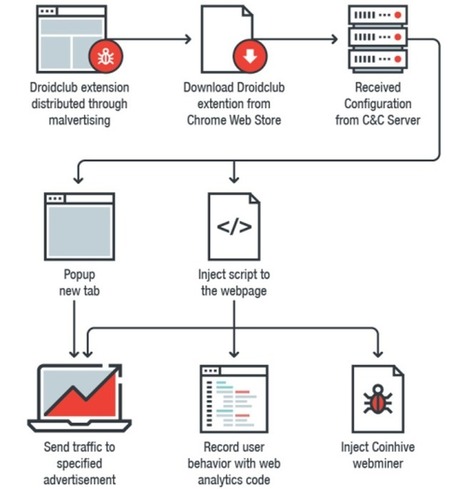
Google has removed 89 malicious extensions from the Chrome Web Store that have been installed on over 420,000 browsers, turning them into Monero-mining slaves and loading a tool to record and replay what their owners do on every website they visit.
Researchers at Trend Micro dubbed the family of malicious extensions Droidclub and discovered they included a software library with so-called "session-replay scripts" used by online analytics firms.
Princeton's Center for Information Technology in November drew attention to the increasing use of session-replay scripts by third-party analytics firms on high-traffic websites.
The study looked at replay services from Yandex, FullStory, Hotjar, UserReplay, Smartlook, Clicktale, and SessionCam, which were found on nearly 500 popular sites.
The scripts allow a site owner to essentially shoulder-surf their visitors by recording and replaying your "keystrokes, mouse movements, and scrolling behavior, along with the entire contents of the pages you visit".
But instead of allowing a site owner to record and play back what users do on one site, Droidclub extensions allow the attacker to see what victims do on every single site they visit. Learn more / En savoir plus / Mehr erfahren: https://www.scoop.it/t/securite-pc-et-internet/?&tag=Cyberespionage https://www.scoop.it/t/securite-pc-et-internet/?&tag=Privacy https://gustmees.wordpress.com/2013/12/21/privacy-in-the-digital-world-shouldnt-we-talk-about-it/ https://www.scoop.it/t/securite-pc-et-internet/?&tag=Session-Replay+Scripts
|
|
Scooped by
Gust MEES
February 18, 2018 7:39 AM
|
|
|
Scooped by
Gust MEES
February 17, 2018 12:19 PM
|
A cryptojacking attack hit thousands of websites, including government ones.
Surreptitious mining of cryptocurrency by hackers is spreading very, very fast.
The news: Over 4,000 websites, including those of the US federal judiciary and the UK National Health Service, have been weaponized by hackers to mine the cryptocurrency Monero on their behalf.
How it worked: Hackers injected malware into a widely used plug-in called Browsealoud that reads web pages our loud as a way of helping partially sighted people navigate the internet. The malware is based on the popular app Coinhive, a piece of software that uses processing power on someone’s device to mine cryptocurrency. The malicious version of the app does this without people's knowledge, coopting their computing power to enrich hackers.
Why it matters: Cryptojacking is rapidly becoming one of the world’s biggest cyberthreats. This news shows how easy it is for crooks to spread the trick, by infecting a single product used across multiples sites with a single hack.
Learn more / En savoir plus / mehr erfahren: https://www.scoop.it/t/securite-pc-et-internet/?&tag=Coinhive https://www.scoop.it/t/securite-pc-et-internet/?&tag=crypto-currency https://www.scoop.it/t/securite-pc-et-internet/?&tag=cryptojacking
|
|
Scooped by
Gust MEES
February 15, 2018 6:30 AM
|
Cyber thugs have been exploiting a zero-day flaw in the Telegram Messenger desktop app in order to mine for cryptocurrencies or to install a backdoor to remotely control victims’ computers.
Kaspersky Lab discovered “in the wild” attacks on Telegram Messenger’s Windows desktop client back in October 2017. The vulnerability in the popular Telegram app had been actively exploited since March 2017 to mine a variety of cryptocurrencies, such as Monero, Zcash, Fantomcoin and others. Learn more / En savoir plus / Mehr erfahren: https://www.scoop.it/t/securite-pc-et-internet/?&tag=Telegram
|
|
Scooped by
Gust MEES
February 13, 2018 4:51 PM
|
In 2018, European countries and the EU Agency for Network and Information Security (ENISA) will organise the 5th pan European cyber crisis exercise, Cyber Europe 2018 (CE2018). CE2018 is part of the bi-annual Cyber Europe series of exercises launched in 2010. The last exercise in the series, Cyber Europe 2016, involved over 1000 participants from across Europe. The scenario - Cyber Europe 2018 planners developed a scenario revolving around Aviation which can include, Civil Aviation Authorities, Air Navigation Service Providers (ANSPs), Airport Companies, Air Carriers, with potential impacts in other sector.
- The scenario will contain real life inspired technical incidents to analyse, from forensic and malware analysis, open source intelligence, and of course non-technical incidents.
- The incidents will build up into a crisis at all levels: local, organization, national, European. Business continuity plans and Crisis management procedures will be put at test
The exercise is organised for IT security, business continuity and crisis management teams coming from EU and EFTA Member States only. Learn more / En savoir plus / Mehr erfahren:
|
|
Scooped by
Gust MEES
February 10, 2018 12:37 PM
|
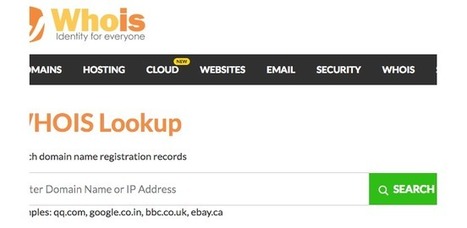
Die Internet-Organisation ICANN scheint auch knapp vier Monate vor Inkrafttreten der EU-DSGVO keinen praktikablen Plan zu haben, wie ihre Whois-Datenbank sich mit den neuen Vorschriften vertragen könnte.
Die Datenschutzgrundverordnug der Europäischen Union sorgt nicht nur in Europa, sondern weltweit für verstärkte Aufmerksamkeit für Datenschutzfragen. Die im englischen Sprachraum als "European Union's General Data Protection Regulation" (GDPR) bezeichneten Vorschriften betreffen unter anderem auch das Whois-Sytem, den weltweiten Verzeichnisdienst für Domain-Namen.
Diese Daten sind in der Whois-Datenbank gespeichert und öffentlich abrufbar. Und da nicht nur simple Zuordnungen von Nameserver-Adressen und Domain-Namen in der Datenbank enthalten sind, sondern auch personenbezogene Daten wie die Namen von für den Domain-Betrieb Verantwortlichen (AdminC, TechC oder BillingC), entspricht das Whois-System nicht den Ende Mai 2018 inkrafttretenden EU-Vorschriften. Learn more / En savoir plus / Mehr erfahren: https://www.scoop.it/t/securite-pc-et-internet/?&tag=GDPR
|
|
Scooped by
Gust MEES
February 8, 2018 10:07 AM
|
La mise à jour Flash Player est au rendez-vous prévu afin de corriger une vulnérabilité exploitée dans des attaques. Un exploit qui pourrait être nord-coréen. Adobe en profite pour corriger une autre faille critique.
Comme promis la semaine dernière, Adobe publie une mise à jour de sécurité pour Flash Player afin de corriger la vulnérabilité CVE-2018-4878 qui est exploitée dans des attaques ciblées visant des utilisateurs Windows.
L'exploitation s'appuie sur des documents Office avec du contenu Flash malveillant. Un objet ActiveX (un fichier SWF) est intégré dans le document et contient l'exploit Flash. Learn more / En savoir plus / Mehr erfahren: https://www.scoop.it/t/securite-pc-et-internet/?&tag=Flash-Player-Vulnerabilities
|



























A previously undisclosed flaw in Nike's website allowed anyone with a few lines of code to read server data like passwords, which could have provided greater access to the company's private systems.
An 18-year-old researcher Corben Leo discovered the flaw late last year and contacted Nike through the company's dedicated email address for reporting security flaws, which it advertises on its bug bounty page.
After hearing nothing back for more than three months, Leo contacted ZDNet, which also alerted the company to the vulnerability.
The bug exploited an out-of-band XML external entities (OOB-XXE) flaw that abused how Nike's website parses XML-based files, allowing the researcher to read files directly on the server. OOB-XXE flaws are widely seen as esoteric and difficult to carry out, but can be used to gain deep access to a server's internals.
Gaining access to a server's files can disclose other avenues for exploitation, such as remote code execution or pivoting to other connected servers or databases.
Learn more / En savoir plus / Mehr erfahren:
https://www.scoop.it/t/securite-pc-et-internet/?&tag=DATA-BREACHES
https://www.scoop.it/t/securite-pc-et-internet/?&tag=wearables
https://gustmees.wordpress.com/2013/12/21/privacy-in-the-digital-world-shouldnt-we-talk-about-it/