ICT Security-Sécurité PC et Internet
114.2K views | +0 today
ICT Security-Sécurité PC et Internet
ICT Security + Privacy + Piracy + Data Protection - Censorship - Des cours et infos gratuites sur la"Sécurité PC et Internet" pour usage non-commercial... (FR, EN+DE)...
Curated by Gust MEES
Your new post is loading...
Scooped by Gust MEES
April 18, 2018 4:18 PM
Scoop.it!

Microsoft Ports Anti-Phishing Technology to Google Chrome Extension | Windows Defender Browser Protection | #CyberSecurity 

Microsoft Ports Anti-Phishing Technology to Google Chrome Extension | Windows Defender Browser Protection | #CyberSecurity  | ICT Security-Sécurité PC et Internet | Scoop.it

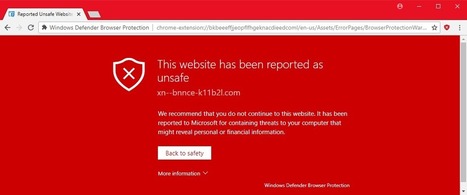
Microsoft has released a Chrome extension named "Windows Defender Browser Protection" that ports Windows Defender's —and inherently Edge's— anti-phishing technology to Google Chrome.

The extension works by showing bright red-colored pages whenever users are tricked into accessing malicious links.


https://gustmees.wordpress.com/2012/05/02/get-smart-with-5-minutes-tutorialsit-securitypart-1-browsers/


https://gustmeesde.wordpress.com/2014/12/16/browser-sind-das-einfallstor-fur-malware-sind-eure-browser-up-to-date/


Gust MEES's insight:

Microsoft has released a Chrome extension named "Windows Defender Browser Protection" that ports Windows Defender's —and inherently Edge's— anti-phishing technology to Google Chrome.

The extension works by showing bright red-colored pages whenever users are tricked into accessing malicious links.


https://gustmees.wordpress.com/2012/05/02/get-smart-with-5-minutes-tutorialsit-securitypart-1-browsers/


https://gustmeesde.wordpress.com/2014/12/16/browser-sind-das-einfallstor-fur-malware-sind-eure-browser-up-to-date/


No comment yet.
Scooped by Gust MEES
April 18, 2018 9:43 AM
Scoop.it!

Data firm leaks 48 million user profiles it scraped from Facebook, LinkedIn, others | #CyberSecurity #SocialMedia #Privacy #BigData

Data firm leaks 48 million user profiles it scraped from Facebook, LinkedIn, others | #CyberSecurity #SocialMedia #Privacy #BigData | ICT Security-Sécurité PC et Internet | Scoop.it

A little-known data firm was able to build 48 million personal profiles, combining data from sites and social networks like Facebook, LinkedIn, Twitter, and Zillow, among others -- without the users' knowledge or consent.

Localblox, a Bellevue, Wash.-based firm, says it "automatically crawls, discovers, extracts, indexes, maps and augments data in a variety of formats from the web and from exchange networks." Since its founding in 2010, the company has focused its collection on publicly accessible data sources, like social networks Facebook, Twitter, and LinkedIn, and real estate site Zillow to name a few, to produce profiles.

But earlier this year, the company left a massive store of profile data on a public but unlisted Amazon S3 storage bucket without a password, allowing anyone to download its contents.

The bucket, labeled "lbdumps," contained a file that unpacked to a single file over 1.2 terabytes in size. The file listed 48 million individual records, scraped from public profiles, consolidated, then stitched together.


Learn more / En savoir plus / Mehr erfahren:


https://gustmees.wordpress.com/2013/12/21/privacy-in-the-digital-world-shouldnt-we-talk-about-it/


Gust MEES's insight:

A little-known data firm was able to build 48 million personal profiles, combining data from sites and social networks like Facebook, LinkedIn, Twitter, and Zillow, among others -- without the users' knowledge or consent.

Localblox, a Bellevue, Wash.-based firm, says it "automatically crawls, discovers, extracts, indexes, maps and augments data in a variety of formats from the web and from exchange networks." Since its founding in 2010, the company has focused its collection on publicly accessible data sources, like social networks Facebook, Twitter, and LinkedIn, and real estate site Zillow to name a few, to produce profiles.

But earlier this year, the company left a massive store of profile data on a public but unlisted Amazon S3 storage bucket without a password, allowing anyone to download its contents.

The bucket, labeled "lbdumps," contained a file that unpacked to a single file over 1.2 terabytes in size. The file listed 48 million individual records, scraped from public profiles, consolidated, then stitched together.


Learn more / En savoir plus / Mehr erfahren:


https://gustmees.wordpress.com/2013/12/21/privacy-in-the-digital-world-shouldnt-we-talk-about-it/


No comment yet.
Scooped by Gust MEES
April 17, 2018 3:22 PM
Scoop.it!

Microsoft will mit Azure Sphere das IoT absichern | #CyberSecurity #InternetOfThings

Microsoft will mit Azure Sphere das IoT absichern | #CyberSecurity #InternetOfThings | ICT Security-Sécurité PC et Internet | Scoop.it

Microsoft präsentiert mit Azure Sphere eine neue Plattform zur Absicherung des Internet of Things (IoT).  Dabei setzen die Redmonder auf ARM-Chipsets, Linux und die hauseigene Cloud.

Azure Sphere setzt sich aus speziellen Chipsets, einem Linux-Betriebssystem und Cloud-Diensten zusammen.
(Quelle: Microsoft )


Das Internet der Dinge stellt die IT-Sicherheit in Unternehmen vor gänzlich neue Herausforderungen. Die schiere Masse an vernetzten Endpunkten liefert eine breite Angriffsfläche für Cyberattacken und Malware-Infektionen. So wurden etwa 2016 im sogenannten Mirai-Botnet rund 100.000 IoT-Geräte kompromittiert und für DDoS-Angriffe auf den Web-Dienstleister Dyn missbraucht. Weitreichende Ausfälle von populären Internet-Diensten wie Twitter, Paypal, Netflix oder Spotify waren die Folge.


Dieser Problematik will Microsoft nun mit seiner neuen Azure Sphere begegnen, einer sicheren Plattform für IoT-Geräte. Dabei setzten die Redmonder auf ein mehrschichtiges Sicherheitskonzept, das sich aus einem Verbund aus Hardware und Software sowie der Cloud zusammensetzt. Zertifizierte ARM-Chipsets treffen auf ein Linux-basierte Azure Sphere OS und werden von Sicherheitsdiensten aus der Cloud unterstützt.


Learn more / En savoir plus / Mehr erfahren:


https://www.scoop.it/t/securite-pc-et-internet/?&tag=iot


Gust MEES's insight:

Microsoft präsentiert mit Azure Sphere eine neue Plattform zur Absicherung des Internet of Things (IoT).  Dabei setzen die Redmonder auf ARM-Chipsets, Linux und die hauseigene Cloud.

Azure Sphere setzt sich aus speziellen Chipsets, einem Linux-Betriebssystem und Cloud-Diensten zusammen.
(Quelle: Microsoft )


Das Internet der Dinge stellt die IT-Sicherheit in Unternehmen vor gänzlich neue Herausforderungen. Die schiere Masse an vernetzten Endpunkten liefert eine breite Angriffsfläche für Cyberattacken und Malware-Infektionen. So wurden etwa 2016 im sogenannten Mirai-Botnet rund 100.000 IoT-Geräte kompromittiert und für DDoS-Angriffe auf den Web-Dienstleister Dyn missbraucht. Weitreichende Ausfälle von populären Internet-Diensten wie Twitter, Paypal, Netflix oder Spotify waren die Folge.


Dieser Problematik will Microsoft nun mit seiner neuen Azure Sphere begegnen, einer sicheren Plattform für IoT-Geräte. Dabei setzten die Redmonder auf ein mehrschichtiges Sicherheitskonzept, das sich aus einem Verbund aus Hardware und Software sowie der Cloud zusammensetzt. Zertifizierte ARM-Chipsets treffen auf ein Linux-basierte Azure Sphere OS und werden von Sicherheitsdiensten aus der Cloud unterstützt.


Learn more / En savoir plus / Mehr erfahren:


https://www.scoop.it/t/securite-pc-et-internet/?&tag=iot


No comment yet.
Scooped by Gust MEES
April 11, 2018 3:26 PM
Scoop.it!

Firefox und Chrome einigen sich auf ein Verfahren: Warum das Passwort bald Geschichte sein könnte | #CyberSecurity #Passwords #FIDO

Firefox und Chrome einigen sich auf ein Verfahren: Warum das Passwort bald Geschichte sein könnte | #CyberSecurity #Passwords #FIDO | ICT Security-Sécurité PC et Internet | Scoop.it

Ein kleiner Schritt in Richtung Phishing-freie Welt? Schon länger ist bekannt, dass ein Login per Nutzername und Passwort nicht die sicherste Methode ist – Alternativen müssen her. Mozilla, Google und Microsoft unterstützen jetzt einen Login-Standard ohne Passwort-Eingabe.

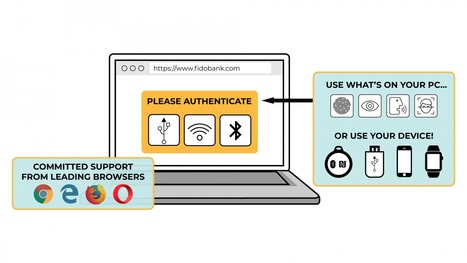
Eine 2-Faktor-Authentifizierung mit einem zusätzlichen Code per SMS oder Mail gibt es bereits seit einigen Jahren, doch nur wenige Nutzer sichern über diese - eher unbequeme - Weise ihre Accounts ab. Login auch ohne Passwort? Das soll mit einem weiteren Standard, FIDO, möglich sein. Dabei funktioniert der Login etwa durch biometrische Verfahren - wie zum Beispiel dem Iris-Scanner oder Fingerabdruck, die das Smartphone entsperren - oder durch einen Token in Form von einem USB-Stick, der einfach am Schlüsselbund getragen werden kann.


Wie das World Wide Web Consortium (W3C) und die FIDO-Allianz verkündeten, unterstützen künftig Firefox, Chrome und Edge die Schnittstelle zu FIDO für Webseiten: WebAuthn. Firefox unterstützt bereits mit der aktuellen Version, wohingegen Chrome und Edge erst mit kommenden Versionen in den nächsten Monaten nachrücken werden.


Learn more / En savoir plus / Mehr erfahren:


https://www.scoop.it/t/securite-pc-et-internet/?&tag=Browsers


Gust MEES's insight:

Ein kleiner Schritt in Richtung Phishing-freie Welt? Schon länger ist bekannt, dass ein Login per Nutzername und Passwort nicht die sicherste Methode ist – Alternativen müssen her. Mozilla, Google und Microsoft unterstützen jetzt einen Login-Standard ohne Passwort-Eingabe.

Eine 2-Faktor-Authentifizierung mit einem zusätzlichen Code per SMS oder Mail gibt es bereits seit einigen Jahren, doch nur wenige Nutzer sichern über diese - eher unbequeme - Weise ihre Accounts ab. Login auch ohne Passwort? Das soll mit einem weiteren Standard, FIDO, möglich sein. Dabei funktioniert der Login etwa durch biometrische Verfahren - wie zum Beispiel dem Iris-Scanner oder Fingerabdruck, die das Smartphone entsperren - oder durch einen Token in Form von einem USB-Stick, der einfach am Schlüsselbund getragen werden kann.


Wie das World Wide Web Consortium (W3C) und die FIDO-Allianz verkündeten, unterstützen künftig Firefox, Chrome und Edge die Schnittstelle zu FIDO für Webseiten: WebAuthn. Firefox unterstützt bereits mit der aktuellen Version, wohingegen Chrome und Edge erst mit kommenden Versionen in den nächsten Monaten nachrücken werden.


Learn more / En savoir plus / Mehr erfahren:


https://www.scoop.it/t/securite-pc-et-internet/?&tag=Browsers


No comment yet.
Scooped by Gust MEES
April 9, 2018 1:27 PM
Scoop.it!

WTF: US-Cyber-Bürgerwehr droht Russland und Iran mit ASCII-Flaggen | #CyberSecurity #Vulnerabilities #CyberAttacks 

WTF: US-Cyber-Bürgerwehr droht Russland und Iran mit ASCII-Flaggen | #CyberSecurity #Vulnerabilities #CyberAttacks  | ICT Security-Sécurité PC et Internet | Scoop.it

Unbekannte haben eine Sicherheitslücke in Cisco-Routern ausgenutzt und auf Systemen in Russland und Iran eine politische Botschaft hinterlassen. In westlichen Ländern hingegen schlossen sie die Lücke - behauptet zumindest eine anonyme E-Mail.

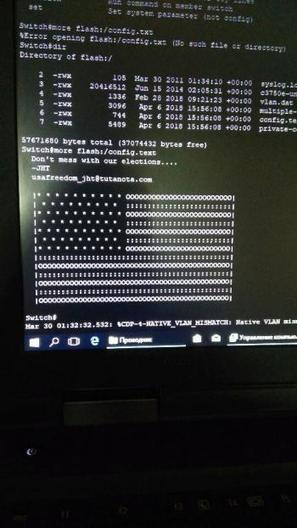
Hacker mit Sympathie für die USA nehmen für sich in Anspruch, am vergangenen Freitag zahlreiche Computersysteme in Russland und dem Iran über eine Sicherheitslücke gekapert und eine Abbildung der amerikanischen Flagge hinterlassen zu haben – zusammen mit dem Warnhinweis:


"Don't mess with our elections..." (zu deutsch etwa: Mischt euch nicht in unsere Wahlen ein). Das meldet das Online-Magazin Motherboard.

"Don't mess with our elections..."


Learn more / En savoir plus / Mehr erfahren:


https://www.scoop.it/t/securite-pc-et-internet/?&tag=Cyberattacks


Gust MEES's insight:

Unbekannte haben eine Sicherheitslücke in Cisco-Routern ausgenutzt und auf Systemen in Russland und Iran eine politische Botschaft hinterlassen. In westlichen Ländern hingegen schlossen sie die Lücke - behauptet zumindest eine anonyme E-Mail.

Hacker mit Sympathie für die USA nehmen für sich in Anspruch, am vergangenen Freitag zahlreiche Computersysteme in Russland und dem Iran über eine Sicherheitslücke gekapert und eine Abbildung der amerikanischen Flagge hinterlassen zu haben – zusammen mit dem Warnhinweis:


"Don't mess with our elections..." (zu deutsch etwa: Mischt euch nicht in unsere Wahlen ein). Das meldet das Online-Magazin Motherboard.

"Don't mess with our elections..."


Learn more / En savoir plus / Mehr erfahren:


https://www.scoop.it/t/securite-pc-et-internet/?&tag=Cyberattacks


No comment yet.
Scooped by Gust MEES
March 29, 2018 11:30 AM
Scoop.it!

Update Drupal ASAP: Over a million sites can be easily hacked by any visitor | #CyberSecurity #CyberHygiene #Vulnerabilities #Updates

Update Drupal ASAP: Over a million sites can be easily hacked by any visitor | #CyberSecurity #CyberHygiene #Vulnerabilities #Updates | ICT Security-Sécurité PC et Internet | Scoop.it

A dangerous Drupal flaw could leave your site completely compromised if you don't patch the flaw immediately.

Developers of popular open-source CMS Drupal are warning admins to immediately patch a flaw that an attacker can exploit just by visiting a vulnerable site.

The bug affects all sites running on Drupal 8, Drupal 7, and Drupal 6. Drupal's project usage page indicates that about a million sites are running the affected versions.

Admins are being urged to immediately update to Drupal 7.58 or Drupal 8.5.1. Drupal issued an alert for the patch last week warning admins to allocate time for patching because exploits might arrive "within hours or days" of its security release. So far, there haven't been any attacks using the flaw, according to Drupal.

The bug, which is being called Drupalgeddon2, has been assigned the official identifier CVE-2018-7600.

Drupal has given it a 'highly critical' rating with a risk score of 21 out of 25 under the NIST Common Misuse Scoring System.

Although there are no security releases for the unsupported Drupal 8.3.x and 8.4.x, Drupal has released patches for quick remediation.


Learn more / En savoir plus / Mehr erfahren:


https://www.scoop.it/t/securite-pc-et-internet/?&tag=Drupal


Gust MEES's insight:

A dangerous Drupal flaw could leave your site completely compromised if you don't patch the flaw immediately.

Developers of popular open-source CMS Drupal are warning admins to immediately patch a flaw that an attacker can exploit just by visiting a vulnerable site.

The bug affects all sites running on Drupal 8, Drupal 7, and Drupal 6. Drupal's project usage page indicates that about a million sites are running the affected versions.

Admins are being urged to immediately update to Drupal 7.58 or Drupal 8.5.1. Drupal issued an alert for the patch last week warning admins to allocate time for patching because exploits might arrive "within hours or days" of its security release. So far, there haven't been any attacks using the flaw, according to Drupal.

The bug, which is being called Drupalgeddon2, has been assigned the official identifier CVE-2018-7600.

Drupal has given it a 'highly critical' rating with a risk score of 21 out of 25 under the NIST Common Misuse Scoring System.

Although there are no security releases for the unsupported Drupal 8.3.x and 8.4.x, Drupal has released patches for quick remediation.


Learn more / En savoir plus / Mehr erfahren:


https://www.scoop.it/t/securite-pc-et-internet/?&tag=Drupal


No comment yet.
Scooped by Gust MEES
March 29, 2018 11:09 AM
Scoop.it!

​Android security: This malware will mine cryptocurrency until your smartphone fails | #Monero #CryptoMining 

​Android security: This malware will mine cryptocurrency until your smartphone fails | #Monero #CryptoMining  | ICT Security-Sécurité PC et Internet | Scoop.it

Monero-mining Android malware will exhaust your phone in its quest for cash.

A new strain of Android malware will continuously use an infected device's CPU to mine the Monero cryptocurrency until the device is exhausted or even breaks down.

Security company Trend Micro has named the malware HiddenMiner because of the techniques it uses to protect itself from discovery and removal.

Like most cryptocurrency-mining software, HiddenMiner uses the device's CPU power to mine Monero. But Trend Micro said that because there is no switch, controller, or optimizer in HiddenMiner's code it will continuously mine Monero until the device's resources are exhausted.

"Given HiddenMiner's nature, it could cause the affected device to overheat and potentially fail," the company said.


Learn more / En savoir plus / Mehr erfahren:


https://www.scoop.it/t/securite-pc-et-internet/?&tag=crypto-currency


https://www.scoop.it/t/securite-pc-et-internet/?&tag=Crypto+Mining


https://www.scoop.it/t/securite-pc-et-internet/?&tag=Android


Gust MEES's insight:

Monero-mining Android malware will exhaust your phone in its quest for cash.

A new strain of Android malware will continuously use an infected device's CPU to mine the Monero cryptocurrency until the device is exhausted or even breaks down.

Security company Trend Micro has named the malware HiddenMiner because of the techniques it uses to protect itself from discovery and removal.

Like most cryptocurrency-mining software, HiddenMiner uses the device's CPU power to mine Monero. But Trend Micro said that because there is no switch, controller, or optimizer in HiddenMiner's code it will continuously mine Monero until the device's resources are exhausted.

"Given HiddenMiner's nature, it could cause the affected device to overheat and potentially fail," the company said.


Learn more / En savoir plus / Mehr erfahren:


https://www.scoop.it/t/securite-pc-et-internet/?&tag=crypto-currency


https://www.scoop.it/t/securite-pc-et-internet/?&tag=Crypto+Mining


https://www.scoop.it/t/securite-pc-et-internet/?&tag=Android


No comment yet.
Scooped by Gust MEES
March 19, 2018 1:01 PM
Scoop.it!

Passwort-Tresor Webbrowser: Firefox pfuscht seit neun Jahren beim Master-Kennwort | #CyberSecurity #Browser #Vulnerabilities #Passwords #NobodyIsPerfect

Passwort-Tresor Webbrowser: Firefox pfuscht seit neun Jahren beim Master-Kennwort | #CyberSecurity #Browser #Vulnerabilities #Passwords #NobodyIsPerfect | ICT Security-Sécurité PC et Internet | Scoop.it

Ein Sicherheitsforscher warnt erneut: In Firefox und Thunderbird gespeicherte Passwörter sind nicht effektiv vor Datendiebstahl geschützt.

Angreifer könnten mit vergleichsweise wenig Aufwand das Master-Kennwort des Passwort-Tresors in Mozillas Firefox und Thunderbird erraten. Wer das kennt, kann die im Mail-Client und Webbrowser gespeicherten Passwörter für Onlinedienste im Klartext einsehen.

Davor warnt nun erneut ein Sicherheitsforscher. Bereits vor neun Jahren gab es Hinweise auf diesen Missstand. Daran hat sich offensichtlich bis jetzt nichts geändert.

Schutz knackbar
Die beiden Anwendungen schützen das Master-Passwort zwar, dafür kommt jedoch das längst als geknackt geltende Hash-Verfahren SHA-1 zum Einsatz. Eine Zufallszahl (Salt) verfremdet den Hash, damit gleiche Passwörter nicht den gleichen Hash bekommen. Das erschwert ein Erraten.


Learn more / En savoir plus / Mehr erfahren:


https://www.scoop.it/t/securite-pc-et-internet/?&tag=Firefox...


https://www.scoop.it/t/securite-pc-et-internet/?&tag=Browsers


Gust MEES's insight:

Ein Sicherheitsforscher warnt erneut: In Firefox und Thunderbird gespeicherte Passwörter sind nicht effektiv vor Datendiebstahl geschützt.

Angreifer könnten mit vergleichsweise wenig Aufwand das Master-Kennwort des Passwort-Tresors in Mozillas Firefox und Thunderbird erraten. Wer das kennt, kann die im Mail-Client und Webbrowser gespeicherten Passwörter für Onlinedienste im Klartext einsehen.

Davor warnt nun erneut ein Sicherheitsforscher. Bereits vor neun Jahren gab es Hinweise auf diesen Missstand. Daran hat sich offensichtlich bis jetzt nichts geändert.

Schutz knackbar
Die beiden Anwendungen schützen das Master-Passwort zwar, dafür kommt jedoch das längst als geknackt geltende Hash-Verfahren SHA-1 zum Einsatz. Eine Zufallszahl (Salt) verfremdet den Hash, damit gleiche Passwörter nicht den gleichen Hash bekommen. Das erschwert ein Erraten.


Learn more / En savoir plus / Mehr erfahren:


https://www.scoop.it/t/securite-pc-et-internet/?&tag=Firefox...


https://www.scoop.it/t/securite-pc-et-internet/?&tag=Browsers


No comment yet.
Scooped by Gust MEES
March 19, 2018 6:32 AM
Scoop.it!

Cambridge Analytica's grab of 50 million Facebook users' data | #BigData #Ethics #SocialMedia 

Cambridge Analytica's grab of 50 million Facebook users' data | #BigData #Ethics #SocialMedia  | ICT Security-Sécurité PC et Internet | Scoop.it

Facebook appears to be getting tougher on people who break its rules.

Hot on the heels of banning the Britain First group from its network, Facebook has announced it has suspended political data analytics firm Cambridge Analytica, and its parent company Strategic Communication Laboratories (SCL).

But the reason for the organisations being blocked from Facebook are very different. Britain First is accused of spreading vile hateful messages about Muslims, but Cambridge Analytica is accused of acquiring the data of more than 50 million Facebook users via an illegitimate route.

Cambridge Analytica is the shady data analytics firm that specialises in “psychographic” profiling. In short, they scoop up data online and use it to create personality profiles for voters.

That knowledge could be extremely useful, as individuals can then be targeted with content targeted to appeal to them, and perhaps influence their behaviour. Maybe even change their likelihood to vote in a particular direction.

Cambridge Analytica is widely credited for helping Donald Trump’s successful campaign on social media to be elected President of the United States.


Learn more / En savoir plus / Mehr erfahren:


https://www.scoop.it/t/securite-pc-et-internet/?&tag=Big+Data


https://www.scoop.it/t/securite-pc-et-internet/?&tag=Ethics


Gust MEES's insight:

Facebook appears to be getting tougher on people who break its rules.

Hot on the heels of banning the Britain First group from its network, Facebook has announced it has suspended political data analytics firm Cambridge Analytica, and its parent company Strategic Communication Laboratories (SCL).

But the reason for the organisations being blocked from Facebook are very different. Britain First is accused of spreading vile hateful messages about Muslims, but Cambridge Analytica is accused of acquiring the data of more than 50 million Facebook users via an illegitimate route.

Cambridge Analytica is the shady data analytics firm that specialises in “psychographic” profiling. In short, they scoop up data online and use it to create personality profiles for voters.

That knowledge could be extremely useful, as individuals can then be targeted with content targeted to appeal to them, and perhaps influence their behaviour. Maybe even change their likelihood to vote in a particular direction.

Cambridge Analytica is widely credited for helping Donald Trump’s successful campaign on social media to be elected President of the United States.


Learn more / En savoir plus / Mehr erfahren:


https://www.scoop.it/t/securite-pc-et-internet/?&tag=Big+Data


https://www.scoop.it/t/securite-pc-et-internet/?&tag=Ethics


No comment yet.
Scooped by Gust MEES
March 17, 2018 7:37 AM
Scoop.it!

Safari et Edge se font pirater comme qui rigole lors du Pwn2Own 2018 | #Apple #Microsoft #CyberSecurity #Browser #NobodyIsPerfect

Safari et Edge se font pirater comme qui rigole lors du Pwn2Own 2018 | #Apple #Microsoft #CyberSecurity #Browser #NobodyIsPerfect | ICT Security-Sécurité PC et Internet | Scoop.it

Samuel Groß et Richard Zhu se sont distingués durant la première journée du Pwn2Own 2018. Samuel Groß a exploité une faille de Safari permettant une élévation de privilèges pour écrire son nom sur la barre tactile d'un MacBook Pro. Il a reçu 65 000 $ en guise de récompense et six points pour le titre tant convoité de Master of Pwn.


De son côté, Richard Zhu a quant à lui contourné les défenses de Microsoft Edge en utilisant deux vulnérabilités de type use-after-free et un dépassement d'entier dans le noyau. Il a gagné 70 000 $ et 7 points supplémentaires dans la course au titre de Maître.


Learn more / En savoir plus / Mehr erfahren:


https://www.scoop.it/t/securite-pc-et-internet/?&tag=Pwn20wn


Gust MEES's insight:

Samuel Groß et Richard Zhu se sont distingués durant la première journée du Pwn2Own 2018. Samuel Groß a exploité une faille de Safari permettant une élévation de privilèges pour écrire son nom sur la barre tactile d'un MacBook Pro. Il a reçu 65 000 $ en guise de récompense et six points pour le titre tant convoité de Master of Pwn.


De son côté, Richard Zhu a quant à lui contourné les défenses de Microsoft Edge en utilisant deux vulnérabilités de type use-after-free et un dépassement d'entier dans le noyau. Il a gagné 70 000 $ et 7 points supplémentaires dans la course au titre de Maître.


Learn more / En savoir plus / Mehr erfahren:


https://www.scoop.it/t/securite-pc-et-internet/?&tag=Pwn20wn


No comment yet.
Scooped by Gust MEES
March 14, 2018 5:34 PM
Scoop.it!

Dangerous malware stealing bitcoin hosted on Download.com for years | #CyberSecurity #NobodyIsPerfect 

Dangerous malware stealing bitcoin hosted on Download.com for years | #CyberSecurity #NobodyIsPerfect  | ICT Security-Sécurité PC et Internet | Scoop.it

In today’s day and age, when you ask a security expert about some basic tips to stay safe on the web, one of the most important things he will probably tell you is to download software only from legitimate sources.


Sometimes even such a basic and obvious advice might not save you from malware encounters. We found three trojanized applications hosted on download.cnet.com, which is one of the most popular software hosting sites in the world as its Alexa rank (163th) shows.


Learn more / en savoir plus / Mehr erfahren:


https://www.scoop.it/t/securite-pc-et-internet/?&tag=Malware


Gust MEES's insight:

In today’s day and age, when you ask a security expert about some basic tips to stay safe on the web, one of the most important things he will probably tell you is to download software only from legitimate sources.


Sometimes even such a basic and obvious advice might not save you from malware encounters. We found three trojanized applications hosted on download.cnet.com, which is one of the most popular software hosting sites in the world as its Alexa rank (163th) shows.


Learn more / en savoir plus / Mehr erfahren:


https://www.scoop.it/t/securite-pc-et-internet/?&tag=Malware


No comment yet.
Scooped by Gust MEES
March 9, 2018 7:15 PM
Scoop.it!

Password manager maker Keeper hit by another security snafu | #CyberSecurity #Passwords

Password manager maker Keeper hit by another security snafu | #CyberSecurity #Passwords | ICT Security-Sécurité PC et Internet | Scoop.it

Password manager maker Keeper hit by another security snafu
The exposed server contained the company's downloadable software -- including a code-signing certificate.

Keeper, an embattled password manager maker currently suing a news reporter for defamation, left a server hosting the company's installer files exposed with full permissions, allowing anyone to access and replace files with malicious content, a security researcher told ZDNet.

Chris Vickery, who found the exposed server, immediately notified ZDNet of the exposure. We reached out to Keeper by phone and email on Friday. Within an hour of disclosure, the server had been secured.


Learn more / En savoir plus / Mehr erfahren:


https://www.scoop.it/t/securite-pc-et-internet/?&tag=Password+Managers


https://www.scoop.it/t/securite-pc-et-internet/?&tag=Passwords


Gust MEES's insight:

Password manager maker Keeper hit by another security snafu
The exposed server contained the company's downloadable software -- including a code-signing certificate.

Keeper, an embattled password manager maker currently suing a news reporter for defamation, left a server hosting the company's installer files exposed with full permissions, allowing anyone to access and replace files with malicious content, a security researcher told ZDNet.

Chris Vickery, who found the exposed server, immediately notified ZDNet of the exposure. We reached out to Keeper by phone and email on Friday. Within an hour of disclosure, the server had been secured.


Learn more / En savoir plus / Mehr erfahren:


https://www.scoop.it/t/securite-pc-et-internet/?&tag=Password+Managers


https://www.scoop.it/t/securite-pc-et-internet/?&tag=Passwords


No comment yet.
Scooped by Gust MEES
March 8, 2018 11:11 AM
Scoop.it!

Bundeshack: Hack auf Bundesregierung erfolgte über Lernplattform Ilias | #CyberSecurity #CyberAttacks #Vulnerabilities #Germany

Bundeshack: Hack auf Bundesregierung erfolgte über Lernplattform Ilias | #CyberSecurity #CyberAttacks #Vulnerabilities #Germany | ICT Security-Sécurité PC et Internet | Scoop.it
BUNDESHACK:
Hack auf Bundesregierung erfolgte über Lernplattform Ilias
Die Bundesregierung wurde über die Lernplattform Ilias gehackt, die an der Hochschule des Bundes zu Weiterbildungszwecken genutzt wird. Die Einrichtung nutzte eine alte Version mit zahlreichen Sicherheitslücken.
Eine Exklusivmeldung von Hauke Gierow und Hanno Böck

Unter lernplattform-bakoev.bund.de können Mitarbeiter des Bundes Weiterbildungsangebote der Bundesakademie für Öffentliche Verwaltung wahrnehmen - eigentlich. Denn die von der Hochschule des Bundes betriebene Webseite ist derzeit nicht erreichbar. Wer sie besuchen will, bekommt nur die Fehlermeldung:


"Die Lernplattform Ilias ist zurzeit nicht erreichbar. Sie wurde auf Empfehlung des BSI vorsorglich vom Netz genommen." Über diese Plattform soll der Hack auf die Bundesregierung abgelaufen sein.


Learn more / En savoir plus / Mehr erfahren:


https://www.scoop.it/t/securite-pc-et-internet/?&tag=Cyberattacks


Gust MEES's insight:
BUNDESHACK:
Hack auf Bundesregierung erfolgte über Lernplattform Ilias
Die Bundesregierung wurde über die Lernplattform Ilias gehackt, die an der Hochschule des Bundes zu Weiterbildungszwecken genutzt wird. Die Einrichtung nutzte eine alte Version mit zahlreichen Sicherheitslücken.
Eine Exklusivmeldung von Hauke Gierow und Hanno Böck

Unter lernplattform-bakoev.bund.de können Mitarbeiter des Bundes Weiterbildungsangebote der Bundesakademie für Öffentliche Verwaltung wahrnehmen - eigentlich. Denn die von der Hochschule des Bundes betriebene Webseite ist derzeit nicht erreichbar. Wer sie besuchen will, bekommt nur die Fehlermeldung:


"Die Lernplattform Ilias ist zurzeit nicht erreichbar. Sie wurde auf Empfehlung des BSI vorsorglich vom Netz genommen." Über diese Plattform soll der Hack auf die Bundesregierung abgelaufen sein.


Learn more / En savoir plus / Mehr erfahren:


https://www.scoop.it/t/securite-pc-et-internet/?&tag=Cyberattacks


No comment yet.
Scooped by Gust MEES
April 18, 2018 4:04 PM
Scoop.it!

Google Chrome mit Browser Protection von Microsoft absichern | #CyberSecurity #Browsers #AddOns #PhishingProtection 

Google Chrome mit Browser Protection von Microsoft absichern | #CyberSecurity #Browsers #AddOns #PhishingProtection  | ICT Security-Sécurité PC et Internet | Scoop.it

Microsofts Browser Protection ist jetzt als Erweiterung auch für Google Chrome verfügbar. Das Add-on fügt dem Browser eine zusätzliche Sicherheitsebene zum Schutz vor schadhaften Links und Phishing-Attacken hinzu.

Windows Defender Browser Protection: Die Schutzfunktion aus Microsoft Edge gibt es jetzt auch als Chrome-Erweiterung.
Microsoft stattet seinen Edge-Browser standardmäßig mit einer Schutzfunktion für das Surfen im Internet aus. Diese soll Nutzer vor bösartigen Links und Phishing-Attacken bewahren. Jetzt bieten die Redmonder ihre Browser Protection auch für Google Chrome als Erweiterung an.


In der Praxis scannt die Windows Defender Browser Protection automatisch angesurfte Webseiten sowie Links und gleicht diese mit einer Blacklist von Microsoft ab. Sobald ein potenziell gefährlicher Link aus der Liste angesteuert wird, spielt die Schutzlösung einen deutlichen Warnhinweis aus. Über eine Schaltfläche lässt sich die Funktion beliebig an- und ausschalten.
Google Chrome verfügt zwar mit Safe Browsing über eine ganz ähnliche Funktion, in einem Test der Sicherheitsspezialisten NSS Labs schnitt die Schutzlösung von Microsoft allerdings deutlich besser ab als das Pendant von Google. Während die zugrundeliegende Technologie aus Microsoft Edge 99 Prozent aller Phishing-Attacken stoppte, erkannte Chrome nur 87 Prozent.


Daneben besitzt auch Firefox eine Protection-Lösung für sicheres Surfen, diese landete mit einer Erkennungsrate von 70 Prozent im Test von NSS Labs auf dem dritten Platz. Für den Open-Source-Browser bietet Microsoft allerdings keine Windows-Defender-Erweiterung an.


Learn more / En savoir plus / Mehr erfahren:


https://gustmees.wordpress.com/2012/05/02/get-smart-with-5-minutes-tutorialsit-securitypart-1-browsers/


https://gustmeesde.wordpress.com/2014/12/16/browser-sind-das-einfallstor-fur-malware-sind-eure-browser-up-to-date/


Gust MEES's insight:

Microsofts Browser Protection ist jetzt als Erweiterung auch für Google Chrome verfügbar. Das Add-on fügt dem Browser eine zusätzliche Sicherheitsebene zum Schutz vor schadhaften Links und Phishing-Attacken hinzu.

Windows Defender Browser Protection: Die Schutzfunktion aus Microsoft Edge gibt es jetzt auch als Chrome-Erweiterung.
Microsoft stattet seinen Edge-Browser standardmäßig mit einer Schutzfunktion für das Surfen im Internet aus. Diese soll Nutzer vor bösartigen Links und Phishing-Attacken bewahren. Jetzt bieten die Redmonder ihre Browser Protection auch für Google Chrome als Erweiterung an.


In der Praxis scannt die Windows Defender Browser Protection automatisch angesurfte Webseiten sowie Links und gleicht diese mit einer Blacklist von Microsoft ab. Sobald ein potenziell gefährlicher Link aus der Liste angesteuert wird, spielt die Schutzlösung einen deutlichen Warnhinweis aus. Über eine Schaltfläche lässt sich die Funktion beliebig an- und ausschalten.
Google Chrome verfügt zwar mit Safe Browsing über eine ganz ähnliche Funktion, in einem Test der Sicherheitsspezialisten NSS Labs schnitt die Schutzlösung von Microsoft allerdings deutlich besser ab als das Pendant von Google. Während die zugrundeliegende Technologie aus Microsoft Edge 99 Prozent aller Phishing-Attacken stoppte, erkannte Chrome nur 87 Prozent.


Daneben besitzt auch Firefox eine Protection-Lösung für sicheres Surfen, diese landete mit einer Erkennungsrate von 70 Prozent im Test von NSS Labs auf dem dritten Platz. Für den Open-Source-Browser bietet Microsoft allerdings keine Windows-Defender-Erweiterung an.


Learn more / En savoir plus / Mehr erfahren:


https://gustmees.wordpress.com/2012/05/02/get-smart-with-5-minutes-tutorialsit-securitypart-1-browsers/


https://gustmeesde.wordpress.com/2014/12/16/browser-sind-das-einfallstor-fur-malware-sind-eure-browser-up-to-date/


No comment yet.
Scooped by Gust MEES
April 18, 2018 9:31 AM
Scoop.it!

Millions of Apps Leak Private User Data Via Leaky Ad SDKs | #CyberSecurity #Privacy 

Millions of Apps Leak Private User Data Via Leaky Ad SDKs | #CyberSecurity #Privacy  | ICT Security-Sécurité PC et Internet | Scoop.it

Millions of apps leak personal identifiable information such as name, age, income and possibly even phone numbers and email addresses. At fault are app developers who do not protect ad-targeting data transmitted to third-party advertisers.


“The scale of what we first thought was just specific cases of careless application design is overwhelming,” said Roman Unuchek, security researcher, Kaspersky Lab, who introduced his research here at the RSA Conference on Tuesday. “Millions of applications include third party SDKs, exposing private data that can be easily intercepted and modified – leading to malware infections, blackmail and other highly effective attack vectors on your devices.”


Data sent unencrypted over HTTP can be collected by cybercriminals that share the same Wi-Fi network, or by an ISP or even by malware installed on a target’s home router, researchers said.


Not only can unprotected data be collected, but it can also be intercepted by a cybercriminal who can modify it to show malicious ads, enticing users to download a trojan application, which turn out to be malware, according to Unuchek.


Learn more / En savoir plus / Mehr erfahren:


https://gustmees.wordpress.com/2013/12/21/privacy-in-the-digital-world-shouldnt-we-talk-about-it/


Gust MEES's insight:

Millions of apps leak personal identifiable information such as name, age, income and possibly even phone numbers and email addresses. At fault are app developers who do not protect ad-targeting data transmitted to third-party advertisers.


“The scale of what we first thought was just specific cases of careless application design is overwhelming,” said Roman Unuchek, security researcher, Kaspersky Lab, who introduced his research here at the RSA Conference on Tuesday. “Millions of applications include third party SDKs, exposing private data that can be easily intercepted and modified – leading to malware infections, blackmail and other highly effective attack vectors on your devices.”


Data sent unencrypted over HTTP can be collected by cybercriminals that share the same Wi-Fi network, or by an ISP or even by malware installed on a target’s home router, researchers said.


Not only can unprotected data be collected, but it can also be intercepted by a cybercriminal who can modify it to show malicious ads, enticing users to download a trojan application, which turn out to be malware, according to Unuchek.


Learn more / En savoir plus / Mehr erfahren:


https://gustmees.wordpress.com/2013/12/21/privacy-in-the-digital-world-shouldnt-we-talk-about-it/


No comment yet.
Scooped by Gust MEES
April 11, 2018 4:12 PM
Scoop.it!

Mozilla, Google und Microsoft unterstützen WebAuthn und damit Logins ohne Passwörter | #CyberSecurity #Passwords #FIDO 

Mozilla, Google und Microsoft unterstützen WebAuthn und damit Logins ohne Passwörter | #CyberSecurity #Passwords #FIDO  | ICT Security-Sécurité PC et Internet | Scoop.it

Die großen Browser-Hersteller Mozilla, Google und Microsoft unterstützen den neuen Web-Standard WebAuthentication, kurz: WebAuthn. Er könnte künftig Passwörter im Internet überflüssig machen.

Der kommende Web-Authentication-Standard – kurz: WebAuthn – macht die Eingabe von Passwörtern bald überflüssig. Nutzer können sich bei Online-Diensten einfach mit ihrem (USB-)Token, Fingerabdruck oder einem anderen biometrischen Verfahren einloggen. Die großen Browser-Hersteller Google, Mozilla und Microsoft haben nun bekannt gegeben, dass sie den Standard unterstützen und in ihre Browser implementieren wollen. Dieser wichtige Support leite eine "neue Ära der allgegenwärtigen, phishing-resistenten und starken Authentifizierung ein", freut sich die FIDO-Allianz. FIDO hatte sich im Sommer 2012 gebildet, um offene Authentifizierungsstandards fürs Internet zu entwickeln.


Learn more / En savoir plus / Mehr erfahren:


https://www.scoop.it/t/securite-pc-et-internet/?&tag=Browsers


Gust MEES's insight:

Die großen Browser-Hersteller Mozilla, Google und Microsoft unterstützen den neuen Web-Standard WebAuthentication, kurz: WebAuthn. Er könnte künftig Passwörter im Internet überflüssig machen.

Der kommende Web-Authentication-Standard – kurz: WebAuthn – macht die Eingabe von Passwörtern bald überflüssig. Nutzer können sich bei Online-Diensten einfach mit ihrem (USB-)Token, Fingerabdruck oder einem anderen biometrischen Verfahren einloggen. Die großen Browser-Hersteller Google, Mozilla und Microsoft haben nun bekannt gegeben, dass sie den Standard unterstützen und in ihre Browser implementieren wollen. Dieser wichtige Support leite eine "neue Ära der allgegenwärtigen, phishing-resistenten und starken Authentifizierung ein", freut sich die FIDO-Allianz. FIDO hatte sich im Sommer 2012 gebildet, um offene Authentifizierungsstandards fürs Internet zu entwickeln.


Learn more / En savoir plus / Mehr erfahren:


https://www.scoop.it/t/securite-pc-et-internet/?&tag=Browsers


No comment yet.
Scooped by Gust MEES
April 11, 2018 5:51 AM
Scoop.it!

Forscher spüren 1,5 Mrd. ungeschützte persönliche Dateien auf | #CyberSecurity #Privacy #Datenschutz

Forscher spüren 1,5 Mrd. ungeschützte persönliche Dateien auf | #CyberSecurity #Privacy #Datenschutz | ICT Security-Sécurité PC et Internet | Scoop.it

Das Sicherheitsunternehmen Digital Shadows findet auf ungeschützten Servern Milliarden an Datensätzen, auch S3 ist betroffen.

Das Bundesamt für Sicherheit in der Informationstechnik weist auf eine interessante Studie der Sicherheitsforscher von Digital Shadows hin: Viel Medienaufmerksamkeit erhielten zwar in den letzten Jahren Hacker, die in fremde Netze einbrechen, sehr oft sind aber persönliche Daten völlig frei zugänglich und liegen ungeschützt auf diversen Servern. Grund dafür sind wohl oft fehlendes Fachwissen und vielleicht auch Mängel bei den Voreinstellungen von NAS-Speichergeräten.

Die Forscher haben in den letzten drei Monaten mit einem selbst entwickelten Scan-Tool nach per Web zugänglichen Freigaben gesucht: SMB-Freigaben, rsync-Freigabe, FTP-, Amazon S3- oder auch ungeschützten Webseiten und NAS-Servern. Dabei spürten sie insgesamt 1,5 Milliarden an Daten mit einer Dateigröße von 12 TB auf, auf die man problemlos per Web zugreifen kann. Bei einer Analyse der Daten fanden sich darunter unter anderem Steuer-Unterlagen, Patientenlisten und Medizin-Daten. Über eine einzige SMB-Freigabe konnten die Forscher in einem Fall auf über zwei Millionen an Körperscans zugreifen, vielleicht Daten eines italienischen Krankenhauses. Am stärksten betroffen war die USA mit 16,3 Prozent der frei zugänglichen Dateien, Deutschland immerhin mit knapp 8 Prozent.


Learn more / En savoir plus / Mehr erfahren:


https://www.scoop.it/t/securite-pc-et-internet/?&tag=Privacy


Gust MEES's insight:

Das Sicherheitsunternehmen Digital Shadows findet auf ungeschützten Servern Milliarden an Datensätzen, auch S3 ist betroffen.

Das Bundesamt für Sicherheit in der Informationstechnik weist auf eine interessante Studie der Sicherheitsforscher von Digital Shadows hin: Viel Medienaufmerksamkeit erhielten zwar in den letzten Jahren Hacker, die in fremde Netze einbrechen, sehr oft sind aber persönliche Daten völlig frei zugänglich und liegen ungeschützt auf diversen Servern. Grund dafür sind wohl oft fehlendes Fachwissen und vielleicht auch Mängel bei den Voreinstellungen von NAS-Speichergeräten.

Die Forscher haben in den letzten drei Monaten mit einem selbst entwickelten Scan-Tool nach per Web zugänglichen Freigaben gesucht: SMB-Freigaben, rsync-Freigabe, FTP-, Amazon S3- oder auch ungeschützten Webseiten und NAS-Servern. Dabei spürten sie insgesamt 1,5 Milliarden an Daten mit einer Dateigröße von 12 TB auf, auf die man problemlos per Web zugreifen kann. Bei einer Analyse der Daten fanden sich darunter unter anderem Steuer-Unterlagen, Patientenlisten und Medizin-Daten. Über eine einzige SMB-Freigabe konnten die Forscher in einem Fall auf über zwei Millionen an Körperscans zugreifen, vielleicht Daten eines italienischen Krankenhauses. Am stärksten betroffen war die USA mit 16,3 Prozent der frei zugänglichen Dateien, Deutschland immerhin mit knapp 8 Prozent.


Learn more / En savoir plus / Mehr erfahren:


https://www.scoop.it/t/securite-pc-et-internet/?&tag=Privacy


No comment yet.
Scooped by Gust MEES
April 2, 2018 9:44 AM
Scoop.it!

Many VPN Providers Leak Customer's IP Address via WebRTC Bug | #CyberSecurity

Many VPN Providers Leak Customer's IP Address via WebRTC Bug | #CyberSecurity | ICT Security-Sécurité PC et Internet | Scoop.it

Around 20% of today's top VPN solutions are leaking the customer's IP address via a WebRTC bug known since January 2015, and which apparently some VPN providers have never heard of.

The discovery belongs to Paolo Stagno, a security researcher who goes by the pseudonym of VoidSec, and who recently audited 83 VPN apps on this old WebRTC IP leak.

Stagno says he found that 17 VPN clients were leaking the user's IP address while surfing the web via a browser.

The researcher published his results in a Google Docs spreadsheet. The audit list is incomplete because Stagno didn't have the financial resources to test all commercial VPN clients.

The researcher is now asking the community to test their own VPN clients and send him the results. For this, he set up a demo web page that users must access in their browser with their VPN client enabled. The code running on this page is also available on GitHub, if users want to test the leak locally, without exposing their IP on somebody else's server.

WebRTC leak known since 2015
Stagno's code is based on the WebRTC bug discovered in January 2015 by security researcher Daniel Roesler. Back then, Roesler found that WebRTC STUN servers, which intermediate WebRTC connections, will keep records of the user's public IP address, along with his private IP address, if the client is behind-NAT network, proxy, or VPN client.

The problem was that STUN servers would disclose this information to websites that had already negotiated an WebRTC connection with a user's browser.

Since then, many advertisers and law enforcement agencies have used this WebRTC-related bug to acquire a site's visitor's IP address.


Learn more / En savoir plus / Mehr erfahren:


https://www.scoop.it/t/securite-pc-et-internet/?&tag=VPN


Gust MEES's insight:

The researcher published his results in a Google Docs spreadsheet. The audit list is incomplete because Stagno didn't have the financial resources to test all commercial VPN clients.

The researcher is now asking the community to test their own VPN clients and send him the results. For this, he set up a demo web page that users must access in their browser with their VPN client enabled. The code running on this page is also available on GitHub, if users want to test the leak locally, without exposing their IP on somebody else's server.

WebRTC leak known since 2015
Stagno's code is based on the WebRTC bug discovered in January 2015 by security researcher Daniel Roesler. Back then, Roesler found that WebRTC STUN servers, which intermediate WebRTC connections, will keep records of the user's public IP address, along with his private IP address, if the client is behind-NAT network, proxy, or VPN client.

The problem was that STUN servers would disclose this information to websites that had already negotiated an WebRTC connection with a user's browser.

Since then, many advertisers and law enforcement agencies have used this WebRTC-related bug to acquire a site's visitor's IP address.


Learn more / En savoir plus / Mehr erfahren:


https://www.scoop.it/t/securite-pc-et-internet/?&tag=VPN


No comment yet.
Scooped by Gust MEES
March 29, 2018 11:21 AM
Scoop.it!

'Fauxpersky' malware steals and sends passwords to an attacker's inbox | #Keylogger #CyberSecurity

'Fauxpersky' malware steals and sends passwords to an attacker's inbox | #Keylogger #CyberSecurity | ICT Security-Sécurité PC et Internet | Scoop.it

Researchers say the malware is "highly efficient," even if it's not very sophisticated.

A newly-discovered keylogger malware has been found infecting computers in the wild. Though the malware is far from advanced, it's efficient at stealing passwords.

Researchers at Cybereason, a Boston, Mass.-based security firm, call the malware "Fauxpersky," as it impersonates the Russian antivirus software Kaspersky. The keylogger is built off a popular app, AutoHotKey, which lets users write small scripts for automating tasks, and compile the script into an executable file. In this case, the app was abused to build a keylogger, which spreads through USB drives and infects Windows PCs -- and replicates on the computer's listed drives.

"This malware is by no means advanced or even very stealthy," said researchers Amit Serper and Chris Black, in a detailed blog post, published Wednesday.

"However, this malware is highly efficient at infecting USB drives and exfiltrating data from the keylogger through Google directly to the attacker's mailbox," the researchers said.

That's where the malware's functionality gets interesting: Once the malware's core files are all running, everything typed on the computer is recorded into a text file with the window's name -- giving the malware author a better idea of the context to the keylogged text.

The contents of that text file is exfiltrated from the computer through a Google Form. The file is then deleted from the disk. Each form response goes directly to the malware author's email inbox.

Serper and Black reported the malicious form to Google, which took it down within an hour.

Learn more / En savoir plus / Mehr erfahren:


https://www.scoop.it/t/securite-pc-et-internet/?&tag=Keylogger


Gust MEES's insight:

Researchers say the malware is "highly efficient," even if it's not very sophisticated.

A newly-discovered keylogger malware has been found infecting computers in the wild. Though the malware is far from advanced, it's efficient at stealing passwords.

Researchers at Cybereason, a Boston, Mass.-based security firm, call the malware "Fauxpersky," as it impersonates the Russian antivirus software Kaspersky. The keylogger is built off a popular app, AutoHotKey, which lets users write small scripts for automating tasks, and compile the script into an executable file. In this case, the app was abused to build a keylogger, which spreads through USB drives and infects Windows PCs -- and replicates on the computer's listed drives.

"This malware is by no means advanced or even very stealthy," said researchers Amit Serper and Chris Black, in a detailed blog post, published Wednesday.

"However, this malware is highly efficient at infecting USB drives and exfiltrating data from the keylogger through Google directly to the attacker's mailbox," the researchers said.

That's where the malware's functionality gets interesting: Once the malware's core files are all running, everything typed on the computer is recorded into a text file with the window's name -- giving the malware author a better idea of the context to the keylogged text.

The contents of that text file is exfiltrated from the computer through a Google Form. The file is then deleted from the disk. Each form response goes directly to the malware author's email inbox.

Serper and Black reported the malicious form to Google, which took it down within an hour.

Learn more / En savoir plus / Mehr erfahren:


https://www.scoop.it/t/securite-pc-et-internet/?&tag=Keylogger


No comment yet.
Scooped by Gust MEES
March 29, 2018 10:42 AM
Scoop.it!

They've got your money and your data. Now hackers are coming to destroy your trust | #CyberSecurity #CyberAttacks

They've got your money and your data. Now hackers are coming to destroy your trust | #CyberSecurity #CyberAttacks | ICT Security-Sécurité PC et Internet | Scoop.it

Nation-state attackers are attempting to undermine trust in critical services -- so how do we go about stopping them?

While cyber-attacks focusing on stealing email or other data are still very much part of the threat landscape, some of the most advanced hacking operations are focusing on grander goals.

Some of these groups -- almost all nation-state backed -- are turning their attention to critical infrastructure including utilities firms and power plants, while others are attempting to manipulate public attitudes and even elections through the use of fake news and other social media propaganda.

"It's not so much an attack on critical infrastructure, but rather an attack on the confidence and psychology of a nation," said Chris Inglis, former deputy director of the National Security Agency, speaking at World Cyber Security Congress event in London.

Attacking critical infrastructure and spreading disinformation is a powerful combination: after all, the reason that governments exist is to make sure the citizens of a country remain safe. Such tactics have been tried out in Ukraine over the last few years.


Learn more  / En savoir plus / Mehr erfahren:


https://www.scoop.it/t/securite-pc-et-internet/?&tag=Cyberattacks


Gust MEES's insight:

Nation-state attackers are attempting to undermine trust in critical services -- so how do we go about stopping them?

While cyber-attacks focusing on stealing email or other data are still very much part of the threat landscape, some of the most advanced hacking operations are focusing on grander goals.

Some of these groups -- almost all nation-state backed -- are turning their attention to critical infrastructure including utilities firms and power plants, while others are attempting to manipulate public attitudes and even elections through the use of fake news and other social media propaganda.

"It's not so much an attack on critical infrastructure, but rather an attack on the confidence and psychology of a nation," said Chris Inglis, former deputy director of the National Security Agency, speaking at World Cyber Security Congress event in London.

Attacking critical infrastructure and spreading disinformation is a powerful combination: after all, the reason that governments exist is to make sure the citizens of a country remain safe. Such tactics have been tried out in Ukraine over the last few years.


Learn more  / En savoir plus / Mehr erfahren:


https://www.scoop.it/t/securite-pc-et-internet/?&tag=Cyberattacks


No comment yet.
Scooped by Gust MEES
March 19, 2018 8:13 AM
Scoop.it!

Firefox Bug Goes Unfixed for Nine Years | #CyberSecurity #Browser #Vulnerabilities 

Firefox Bug Goes Unfixed for Nine Years | #CyberSecurity #Browser #Vulnerabilities  | ICT Security-Sécurité PC et Internet | Scoop.it

Palant commented:


"Turns out that the corresponding NSS bug has been sitting around for the past nine years. That’s also at least how long software to crack password manager protection has been available to anybody interested.

So, is this issue so hard to address? Not really according to Palant: "NSS library implements PBKDF2 algorithm, which would slow down brute-forcing attacks considerably if used with at least 100,000 iterations. Of course, it would be nice to see NSS implement a more resilient algorithm like Argon2, but that’s wishful thinking seeing a fundamental bug that didn’t find an owner in nine years."

It is not clear whether the bug has been fixed by Mozilla. Infosecurity Magazine has contacted the company for comment. 


Learn more / En savoir plus / Mehr erfahren:


https://www.scoop.it/t/securite-pc-et-internet/?&tag=Firefox...


https://www.scoop.it/t/securite-pc-et-internet/?&tag=Browsers


Gust MEES's insight:

Palant commented:


"Turns out that the corresponding NSS bug has been sitting around for the past nine years. That’s also at least how long software to crack password manager protection has been available to anybody interested.

So, is this issue so hard to address? Not really according to Palant: "NSS library implements PBKDF2 algorithm, which would slow down brute-forcing attacks considerably if used with at least 100,000 iterations. Of course, it would be nice to see NSS implement a more resilient algorithm like Argon2, but that’s wishful thinking seeing a fundamental bug that didn’t find an owner in nine years."

It is not clear whether the bug has been fixed by Mozilla. Infosecurity Magazine has contacted the company for comment. 


Learn more / En savoir plus / Mehr erfahren:


https://www.scoop.it/t/securite-pc-et-internet/?&tag=Firefox...


https://www.scoop.it/t/securite-pc-et-internet/?&tag=Browsers


No comment yet.
Scooped by Gust MEES
March 19, 2018 6:09 AM
Scoop.it!

Hacker-Wettbewerb Pwn2Own 2018: Firefox, Edge und Safari fallen um wie die Fliegen | #CyberSecurity #Browser #Microsoft #Apple #NobodyIsPerfect

Hacker-Wettbewerb Pwn2Own 2018: Firefox, Edge und Safari fallen um wie die Fliegen | #CyberSecurity #Browser #Microsoft #Apple #NobodyIsPerfect | ICT Security-Sécurité PC et Internet | Scoop.it

Dieses Jahr haben die Pwn2Own-Veranstalter ein Preisgeld von zwei Millionen US-Dollar ausgerufen. Trotz einiger Hack-Erfolge blieb ein Großteil der Prämie jedoch im Topf.

An zwei Tagen haben sich Hacker aus vielen Teilen der Welt über verschiedene Anwendungen, Browser, virtuelle Maschinen und Windows hergemacht und einige Erfolge erzielt. Auf dem jährlich stattfindenden Wettbewerb Pwn2Own nutzen Hacker für den guten Zweck Zero-Day-Sicherheitslücken unter Zeitdruck aus. Klappt das, streichen die Teilnehmer Prämien ein. Die Entwickler der geknackten Software haben dann 90 Tage Zeit, die Lücken zu schließen.

Dieses Jahr war der Topf mit zwei Millionen US-Dollar prall gefüllt. Der Veranstalter Trend Micro schüttete aber "nur" 267.000 US-Dollar aus. Das könnte unter anderem dran liegen, dass die chinesische Regierung Sicherheitsforschern aus dem eigenen Land seit Neuestem die Teilnahme an Hacking-Wettbewerben verbietet. In der Vergangenheit haben chinesische Sicherheitsforscher den Wettbewerb oft dominiert.

Jacke als Auszeichnung
Gewonnen hat dieses Jahr mit Abstand der Sicherheitsforscher Richard Zhu. Er hat Microsofts Edge und Mozillas Firefox erfolgreich attackiert und übernommen. Dafür hat Zhu 120.000 US-Dollar eingestrichen. Klappt ein Hack, kann der Teilnehmer das gehackte Gerät behalten. Der Hauptgewinner darf sich zudem mit der Master-of-Pwn-Jacke schmücken.

Insgesamt nutzten die diesjährigen Pwn2Own-Hacker fünf Apple-Bugs, vier Microsoft-Lücken, zwei Oracle-Schwachstellen und einen Mozilla-Bug erfolgreich aus. Mit 250.000 US-Dollar war das höchste Preisgeld für einen Ausbruch aus der Sandbox von Microsofts Virtualisierungslösung Hyper-V ausgeschrieben. Das hat dieses Jahr jedoch nicht geklappt.


Learn more / En savoir plus / Mehr erfahren:


https://www.scoop.it/t/securite-pc-et-internet/?&tag=Pwn20wn


No comment yet.
Scooped by Gust MEES
March 16, 2018 1:34 PM
Scoop.it!

Les applications Hotspot Shield, PureVPN et ZenMate exhibent des vulnérabilités qui laissent les adresses IP des utilisateurs filtrer | #CyberSecurity #Vulnerabilities #VPN

Les applications Hotspot Shield, PureVPN et ZenMate exhibent des vulnérabilités qui laissent les adresses IP des utilisateurs filtrer | #CyberSecurity #Vulnerabilities #VPN | ICT Security-Sécurité PC et Internet | Scoop.it

Les applications Hotspot Shield, PureVPN et ZenMate exhibent des vulnérabilités


Qui laissent les adresses IP des utilisateurs filtrer
Le 14 mars 2018, par Patrick Ruiz, Chroniqueur Actualités
Des services VPN populaires exhibent des failles de sécurité qui permettent la divulgation des informations sensibles de leurs utilisateurs. L’information est de vpnMentor, un site qui a vocation à les classer ; ce dernier pointe Hotspot Shield, PureVPN et ZenMate du doigt. Le site dit s’être appuyé sur l’expertise de trois chercheurs en sécurité spécialisés en la matière. Dans le détail technique publié par ces derniers, on peut d’ores et déjà dire que les vulnérabilités sont liées à des soucis avec des scripts de configuration de proxy.

Le rapport des chercheurs crédite Hotspot Shield de trois entrées dans la base de données du projet Common Vulnerabilities and Exposures (CVE). La faille référencée CVE-2018-7880 illustre clairement le propos des chercheurs. Une analyse du script de configuration de proxy (d’une version non corrigée du plugin Chrome de Hotspot Shield) a révélé qu’il suffit qu’une URL contienne une interface logique de réseau (un hôte local) pour contourner le VPN.


Dit autrement, il suffit qu’un attaquant amène un internaute à visiter une adresse du type localhost.test.com pour que le VPN cesse de le protéger. Dans ce cas, le navigateur se connecte directement à la cible sans suivre les règles inscrites dans le fichier de configuration de proxy.


Learn more / En savoir plus / Mehr erfahren:


https://www.scoop.it/t/securite-pc-et-internet/?&tag=VPN


Gust MEES's insight:

Les applications Hotspot Shield, PureVPN et ZenMate exhibent des vulnérabilités


Qui laissent les adresses IP des utilisateurs filtrer
Le 14 mars 2018, par Patrick Ruiz, Chroniqueur Actualités
Des services VPN populaires exhibent des failles de sécurité qui permettent la divulgation des informations sensibles de leurs utilisateurs. L’information est de vpnMentor, un site qui a vocation à les classer ; ce dernier pointe Hotspot Shield, PureVPN et ZenMate du doigt. Le site dit s’être appuyé sur l’expertise de trois chercheurs en sécurité spécialisés en la matière. Dans le détail technique publié par ces derniers, on peut d’ores et déjà dire que les vulnérabilités sont liées à des soucis avec des scripts de configuration de proxy.

Le rapport des chercheurs crédite Hotspot Shield de trois entrées dans la base de données du projet Common Vulnerabilities and Exposures (CVE). La faille référencée CVE-2018-7880 illustre clairement le propos des chercheurs. Une analyse du script de configuration de proxy (d’une version non corrigée du plugin Chrome de Hotspot Shield) a révélé qu’il suffit qu’une URL contienne une interface logique de réseau (un hôte local) pour contourner le VPN.


Dit autrement, il suffit qu’un attaquant amène un internaute à visiter une adresse du type localhost.test.com pour que le VPN cesse de le protéger. Dans ce cas, le navigateur se connecte directement à la cible sans suivre les règles inscrites dans le fichier de configuration de proxy.


Learn more / En savoir plus / Mehr erfahren:


https://www.scoop.it/t/securite-pc-et-internet/?&tag=VPN


No comment yet.
Scooped by Gust MEES
March 12, 2018 9:47 AM
Scoop.it!

50,000 sites infected with cryptocurrency mining malware | #CyberSecurity #WordPress #CryptoJacking

50,000 sites infected with cryptocurrency mining malware | #CyberSecurity #WordPress #CryptoJacking | ICT Security-Sécurité PC et Internet | Scoop.it

Security researcher Troy Mursch from Bad Packets Report has discovered nearly 50,000 WordPress sites have been infected with cryptocurrency mining malware.


Learn more / En savoir plus / Mehr erfahren:


https://www.scoop.it/t/securite-pc-et-internet/?&tag=crypto-currency


Gust MEES's insight:

Security researcher Troy Mursch from Bad Packets Report has discovered nearly 50,000 WordPress sites have been infected with cryptocurrency mining malware.


Learn more / En savoir plus / Mehr erfahren:


https://www.scoop.it/t/securite-pc-et-internet/?&tag=crypto-currency


No comment yet.
Scooped by Gust MEES
March 9, 2018 2:58 PM
Scoop.it!

Ransomware for robots is the next big security nightmare | #CyberSecurity #Robotics #Robots #NobodyIsPerfect

Ransomware for robots is the next big security nightmare | #CyberSecurity #Robotics #Robots #NobodyIsPerfect | ICT Security-Sécurité PC et Internet | Scoop.it

Researchers found they were able to infect robots with ransomware; in the real world such attacks could be highly damaging to businesses if robotic security isn't addressed.

Ransomware has been a headache for PC and smartphone users but in the future it could be robots that stop working unless a ransom is paid.

Researchers at security company IOActive have shown how they managed to hack the NAO robot made by Softbank and infect one with custom-built ransomware. The researchers said the same attack would work on the Pepper robot too.

After the infection, the robot is shown insulting its audience and demanding to be 'fed' bitcoin cryptocurrency in order to restore systems back to normal.

While a tiny robot making threats might initially seem amusing - if a little creepy - the proof-of-concept attack demonstrates the risks associated with a lack of security in robots and how organisations which employ robots could suddenly see parts of their business grind to a halt should they become a victim of ransomware.

"In order to get a business owner to pay a ransom to a hacker, you could make robots stop working. And because the robots are directly tied to production and services, when they stop working they'll cause a financial problem for the owner, losing money every second they're not working," Cesar Cerrudo, CTO at IOActive Labs, told ZDNet.


Learn more / En savoir plus / Mehr erfahren:


https://www.scoop.it/t/securite-pc-et-internet/?&tag=RANSOMWARE


Gust MEES's insight:

Researchers found they were able to infect robots with ransomware; in the real world such attacks could be highly damaging to businesses if robotic security isn't addressed.

Ransomware has been a headache for PC and smartphone users but in the future it could be robots that stop working unless a ransom is paid.

Researchers at security company IOActive have shown how they managed to hack the NAO robot made by Softbank and infect one with custom-built ransomware. The researchers said the same attack would work on the Pepper robot too.

After the infection, the robot is shown insulting its audience and demanding to be 'fed' bitcoin cryptocurrency in order to restore systems back to normal.

While a tiny robot making threats might initially seem amusing - if a little creepy - the proof-of-concept attack demonstrates the risks associated with a lack of security in robots and how organisations which employ robots could suddenly see parts of their business grind to a halt should they become a victim of ransomware.

"In order to get a business owner to pay a ransom to a hacker, you could make robots stop working. And because the robots are directly tied to production and services, when they stop working they'll cause a financial problem for the owner, losing money every second they're not working," Cesar Cerrudo, CTO at IOActive Labs, told ZDNet.


Learn more / En savoir plus / Mehr erfahren:


https://www.scoop.it/t/securite-pc-et-internet/?&tag=RANSOMWARE


No comment yet.