 Your new post is loading...

|
Scooped by
Gust MEES
June 8, 2018 5:48 PM
|
The latest Facebook privacy SNAFU (Situation Normal, All Facebooked Up) is a bug that changed settings on some accounts, automatically suggesting that their updates be posted publicly, even though users had previously set their updates as “private”.
On Thursday, Facebook asked 14 million users to review posts made between 18 May and 22 May: that’s when the bug was changing account settings. Not all of the 14 million users affected by the bug necessarily had their information publicly, mistakenly shared, but best to check.
Facebook Chief Privacy Officer Erin Egan said in a post that as of Thursday, the company had started letting those 14 million people know about the situation. She stressed that the bug didn’t affect anything people had posted before that time, and even then, they could still have chosen their audience like they always have.
Normally, the audience selector is supposed to be sticky: every time you share something, you get to choose who sees it, and the suggestion is supposed to be based on who you shared stuff with the last time you posted. Friends only? Fine, that’s what should be automatically suggested for the next post, and the one after that, until you change it… or a weird little glitch like this pops up. Learn more / En savoir plus / Mehr erfahren: https://www.scoop.it/t/securite-pc-et-internet/?&tag=Facebook
|
|
Scooped by
Gust MEES
May 31, 2018 7:40 AM
|
Des chercheurs danois et suédois en sciences informatiques et systèmes autonomes ont décortiqué la sécurité du robot Pepper de Softbank Robotics utilisé notamment au Japon dans des points de vente Nestlé. Utilisation de logiciels non mis à jour et exposition à des attaques XSS, par force brute et élévation de privilèges font partie des vulnérabilités de sécurité recensées. Depuis quelques années, les études relatives à la sécurité des objets connectés se suivent et se ressemblent. Toutes - ou presque - pointent leurs lacunes en termes de sécurité, un phénomène qui ne remonte pas à hier. Parmi la ribambelle de périphériques reliés au réseau, certains sont plus emblématiques que d'autres, notamment ceux appartenant à la catégorie des robots parmi lesquels Pepper, propriété de SoftBank Robotics suite au rachat du français Aldebaran Robotics. Learn more / En savoir plus / Mehr erfahren: https://www.scoop.it/t/securite-pc-et-internet/?&tag=iot https://www.scoop.it/t/luxembourg-europe/?&tag=Pepper
|
|
Scooped by
Gust MEES
May 17, 2018 5:17 PM
|
A company that collects the real-time location data on millions of cell phone customers across North America had a bug in its website that allowed anyone to see where a person is located -- without obtaining their consent.
US cell carriers are selling access to your real-time phone location data
The company embroiled in a privacy row has "direct connections" to all major US wireless carriers, including AT&T, Verizon, T-Mobile, and Sprint -- and Canadian cell networks, too.
Earlier this week, we reported that four of the largest cell giants in the US are selling your real-time location data to a company that you've probably never heard about before.
The company, LocationSmart, is a data aggregator and claims to have "direct connections" to cell carriers to obtain locations from nearby cell towers. The site had its own "try-before-you-buy" page that lets you test the accuracy of its data. The page required explicit consent from the user before their location data can be used by sending a one-time text message to the user. When we tried with a colleague, we tracked his phone to a city block of his actual location.
But that website had a bug that allowed anyone to track someone's location silently without their permission.
"Due to a very elementary bug in the website, you can just skip that consent part and go straight to the location," said Robert Xiao, a PhD student at the Human-Computer Interaction Institute at Carnegie Mellon University, in a phone call.
"The implication of this is that LocationSmart never required consent in the first place," he said. "There seems to be no security oversight here."
The "try" website was pulled offline after Xiao privately disclosed the bug to the company, with help from CERT, a public vulnerability database, also at Carnegie Mellon.
Xiao said the bug may have exposed nearly every cell phone customer in the US and Canada, some 200 million customers. Learn more / En savoir plus / Mehr erfahren: https://gustmees.wordpress.com/2013/12/21/privacy-in-the-digital-world-shouldnt-we-talk-about-it/ https://www.scoop.it/t/securite-pc-et-internet/?&tag=tracking https://www.scoop.it/t/securite-pc-et-internet/?&tag=Privacy https://www.scoop.it/t/securite-pc-et-internet/?&tag=Big+Data
|
|
Scooped by
Gust MEES
May 10, 2018 2:58 PM
|
Mozilla has released Firefox 60 with support for a new option to sign in to websites without using a password.
That's thanks to an emerging W3C standard called Web Authentication or WebAuthn, which is enabled by default in Firefox 60 and is coming later this month to Chrome 67, and Microsoft Edge. It's also under consideration for Safari.
By removing passwords, the WebAuthn API will make phishing attacks a lot harder and gives users more convenient authentication choices, including hardware security key dongles such as a YubiKey device, fingerprint readers on smartphones, or facial-recognition systems like the iPhone X's Face ID.
A key advantage, like the FIDO Alliance's predecessor U2F standard for security keys, is that WebAuthn generates cryptographic public-private pairs for signing in, which means no shared secrets that could be leaked if a site is hacked.
Though the standard is currently only rolling out to desktop browsers, in future mobile browsers are likely to support it too.
Beyond signing into websites, WebAuthn combined with another WC3 standard in development, the Payment Request API, will one day make it possible to authorize online purchases from a mobile browser using a fingerprint. Learn more / En savoir plus / Mehr erfahren: https://www.scoop.it/t/securite-pc-et-internet/?&tag=Browsers
|
|
Scooped by
Gust MEES
May 4, 2018 9:20 AM
|
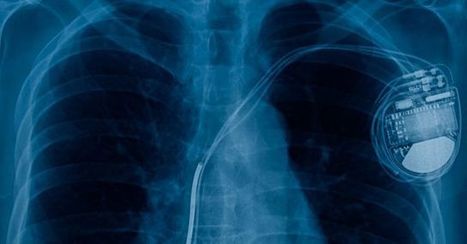
The US Food and Drug Administration (FDA) last month approved a firmware patch for pacemakers made by Abbott’s (formerly St Jude Medical) that are vulnerable to cybersecurity attacks and which are at risk of sudden battery loss.
Some 465,000 patients are affected. The FDA is recommending that all eligible patients get the firmware update “at their next regularly scheduled visit or when appropriate depending on the preferences of the patient and physician. At the time, cryptographic expert Matthew Green, an assistant professor at John Hopkins University, described the pacemaker vulnerability scenario as the fuel of nightmares. Learn more / En savoir plus / Mehr erfahren: https://www.scoop.it/t/securite-pc-et-internet/?&tag=Pacemakers+Hacking
|
|
Scooped by
Gust MEES
May 3, 2018 3:16 PM
|
Unser Tipp zum Welt-Passwort-Tag! Virenscanner, Firewall, getrennte Benutzerkonten und Verschlüsselung, Windows ist mit vielen Security-Tools bereits ausgestattet. Was fehlt ist eine Lösung für sichere Passwörter.
Mit Passwörtern ist es so eine Sache. Wir müssen uns zu viele von ihnen merken, was in den meisten Fällen dazu führt, dass man entweder verschiedene einfache Passwörter verwendet oder sich auf wenige sehr sichere konzentriert. Beide Strategien bergen ein hohes Risiko. Besser ist es, jedem Benutzerkonto ein eigenes sehr sicheres Passwort zu spendieren. Dafür braucht es aber eine Merkhilfe.
Natürlich können Sie auch Ihrem Browser Passwörter anvertrauen, wir raten aber zu einem anderen Ansatz. Tools wie KeePass packen Passwörter in eine verschlüssette Datei und versiegeln den Zugriff mit einem Masterpasswort. Sie müssen sich selbst also nur noch ein starkes Passwort merken.
Mit dem Entschlüsseln Sie Ihre Passwort-Datenbank und holen sich daraus die Passwörter für sämtliche Internet-Dienste. Der große Vorteil: So können Sie für jeden Dienst ein eigenes, sehr sicheres Passwort verwenden.
Sie geben die Passwörter auch nicht aus der Hand, wie bei LastPass & Co. Stattdessen haben nur Sie die Kontrolle über Ihre Passwörter.
Learn more / En savoir plus / Mehr erfahren: https://www.scoop.it/t/securite-pc-et-internet?page=2&tag=Passwords https://www.scoop.it/t/securite-pc-et-internet/?&tag=Password+Managers
|
|
Scooped by
Gust MEES
May 3, 2018 8:46 AM
|
VW bugs: "Unpatchable" remote code pwnage
Two security researchers have excoriated Volkswagen Group for selling insecure cars. As in: hackable-over-the-internet insecure.
They broke into a recent-model VW and an Audi, via the cars’ internet connections, and were able to jump from system to system, running arbitrary code. Worryingly, they fully pwned the unauthenticated control bus connected to some safety-critical systems—such as the cruise control.
But VW has no way to push updates to its cars, and won’t alert owners to visit a dealer for an update.
Yes, it’s the internet of **** again: Potentially safety-critical bugs caused by the conflict between convenience and security. In this week’s Security Blogwatch, we prefer classic, analog vehicles.
Your humble blogwatcher curated these bloggy bits for your entertainment. Not to mention: Globfinity War…
Learn more / En savoir plus / Mehr erfahren: https://www.scoop.it/t/securite-pc-et-internet/?&tag=Cars https://www.scoop.it/t/securite-pc-et-internet/?&tag=iot
|
|
Scooped by
Gust MEES
May 3, 2018 7:25 AM
|
Selon Threat Post, deux chercheurs en sécurité de l'entreprise hollandaise Computest, Daan Keuper et Thijs Alkemade, ont découvert des vulnérabilités dans le logiciel embarqué de la Volkswagen Golf GTE et de l'Audi3 Sportback e-tron
Ces vulnérabilités offrent pas mal d'amusements aux pirates : ouvrir le microphone pour écouter les conversation à l'intérieur du véhicule, accéder au carnet d'adresses complet, à l'historique des conversations, tracer le véhicule à travers son système de navigation, modifier l'affichage de l'écran du système..
Ce n'est pas tout... Poussant leurs investigations, les chercheurs ont constaté qu'il est possible de lire n'importe quel fichier sur le disque du système et même d'exécuter du code arbitraire à distance.
Volswagen commente l'affaire ainsi auprès de Threatpost : "Nous sommes en contact avec Computest depuis la mi-2017", la correction de bugs - en d'autres termes, l'élimination de la vulnérabilité - avait déjà eu lieu début mai 2016."
Fort bien... Toutefois en ce qui concerne les corrections des bugs, les chercheurs sont beaucoup plus nuancés : "Le système que nous avons étudié ne peut pas être mis à jour par l'utilisateur final, un utilisateur doit se rendre chez un revendeur officiel pour recevoir une mise à jour. Cependant, d'après notre expérience, il semble que les voitures qui ont été produites auparavant ne sont pas automatiquement mises à jour lorsqu'elles sont réparées chez un concessionnaire, elles sont donc toujours vulnérables à l'attaque décrite. Learn more / En savoir plus / Mehr erfahren: https://www.scoop.it/t/securite-pc-et-internet/?&tag=Cars https://www.scoop.it/t/securite-pc-et-internet/?&tag=iot
|
|
Scooped by
Gust MEES
April 30, 2018 6:20 PM
|
Over a million fiber routers can be remotely accessed, thanks to an authentication bypass bug that's easily exploited by modifying the URL in the browser's address bar.
The bug lets anyone bypass the router's login page and access pages within -- simply by adding "?images/" to the end of the web address on any of the router's configuration pages, giving an attacker near complete access to the router. Because the ping and traceroute commands on the device's diagnostic page are running at "root" level, other commands can be remotely run on the device, too.
The findings, published Monday, say the bug is found in routers used for fiber connections. These routers are central in bringing high-speed fiber internet to people's homes.
At the time of writing, about 1.06 million routers marked were listed on Shodan, the search engine for unprotected devices and databases. Half the vulnerable routers are located on the Telmex network in Mexico, and the rest are found on in Kazakhstan and Vietnam. Learn more / En savoir plus / Mehr erfahren: https://www.scoop.it/t/securite-pc-et-internet/?&tag=Router
|
|
Scooped by
Gust MEES
April 26, 2018 2:47 PM
|
Forscher der Princeton University haben kürzlich ein anspruchsvolles Tool entdeckt, dass den Namen „Session-Replay Script“ trägt. Damit sind Berichte über das User-Verhalten selbst bis ins kleinste Detail möglich. Die eingebetteten Code-Schnipsel beobachten und verfolgen jede Interaktion eines Webseitenbesuchers mit der Webseite in Echtzeit. Es ist so, als ob ihm jemand beim Surfen über die Schulter sieht. Anders ausgedrückt ermöglichen diese „Screen Recordings“ das Aufzeichnen jeder Tastatureingabe, jeder Mausbewegung oder jedes Page Scrollings. Alles wird zusammen mit dem Content der Webseite zu einem Paket geschnürt und an Third-Party Server – also an Dritte – zur Analysierung geschickt.
Wir haben die Session-Replay Scipts von sieben der beliebtesten Anbieter solcher Tools untersucht. Das Ergebnis: 482 der weltweit 50.000 meistbesuchten Webseiten benutzen eines der Scripte. Sicherlich ist das nur ein winziger Teil des Internets, wahrscheinlich liegt die tatsächliche Zahl der im Gebrauch befindlichen Scripts weitaus höher.
Was sind die Risiken von Session-Replay Scripts?
Eigentlich sind die Scripts für legitime Anwendungszwecke gedacht. Dazu gehört beispielsweise das Verstehen, wie die User mit der eigenen Webseite zurechtkommen oder das Aufspüren von unverständlichen Abschnitten. Der Einsatz von Session-Replay-Scripts kann aber profunde Auswirkungen auf die Privatsphäre und die Sicherheit haben. Am wichtigsten ist die Tatsache, dass so ein Script nicht zwischen sensiblen und profanen Daten unterscheidet. Ohne angemessene Sicherheitsmaßnahmen können sensible Nutzerdaten preisgegeben werden, wie Login-Daten, Kreditkartendaten oder Informationen zum Gesundheitszustand. Außerdem tracken die Scripts Informationen, die in Echtzeit in ein Feld eingegeben werden, ohne dass sie schon an den Server übermittelt sind – das Aufzeichnen von eigentlich gelöschten Eingaben ist damit möglich.
Weiterhin beabsichtigen die Scripts das Aufzeichnen und Abrufen von individuellen Browser Sessions. Anonymität kann dadurch nicht gewährleistet werden. Aus dem vorangegangenen Whitepaper geht hervor, dass einige Provider sogar echte Namen einzelnen User-Sessions zuordnen. Learn more / En savoir plus / Mehr erfahren: https://www.scoop.it/t/securite-pc-et-internet/?&tag=Session-Replay+Scripts https://www.scoop.it/t/securite-pc-et-internet/?&tag=tracking
|
|
Scooped by
Gust MEES
April 25, 2018 3:55 PM
|
A critical flaw in electronic locks left millions of hotel rooms worldwide vulnerable to hackers. Now, the security researchers who developed the attack are helping hotels patch the problem, literally door to door.
Tomi Tuominen and Timo Hirvonen, who both work for the international cybersecurity firm F-Secure, uncovered a design flaw in the software of electronic keys produced by VingCard, a global provider of hotel locking systems. By F-Secure’s count, the vulnerable software, Vision, is deployed in as many as 166 countries at over 40,000 buildings—millions of doors, in other words.
While hijacking and cloning hotel room keys is nothing new, the attack designed by Hirvonen and Tuominen is exceptional for a few reasons: First off, it allows the attacker to produce a master key for the entire building within a matter of minutes. All that’s needed is a regular hotel room key. It can even be expired.
“It can be your own room key, a cleaning staff key, even to the garage or workout facility,” Tuominen told Gizmodo. “We can even do it in an elevator if you have your key in your front pocket; we can just clone it from there.” Tuominen compared the following step to a scene in Terminator 2, in which John Connor brute forces open a safe open with (movie trivia alert!) an Atari Portfolio palmtop computer, circa 1989. Learn more / En savoir plus / Mehr erfahren: https://www.scoop.it/t/securite-pc-et-internet/?&tag=Traveling
|
|
Scooped by
Gust MEES
April 20, 2018 3:33 PM
|
Spätestens seit dem Cambridge-Analytica-Skandal stehen viele Menschen Facebook skeptisch gegenüber. Wie Forscher nun herausgefunden haben können beim "Login mit Facebook" Skripte von Drittfirmen die Facebook-Identität des Besuchers nachverfolgen.
Wenn ein Internet-Nutzer auf einer Webseite die Funktion "Login mit Facebook" verwendet, gibt er der Webseite, auf der er sich befindet, unter Umständen Zugriff auf sein öffentliches Facebook-Konto. Forscher der Princeton-Universität in den USA warnen nun davor, dass auf dieser Webseite eingebettete Skripte von Dritten ebenfalls Zugriff auf diese Daten haben. Laut den Forschern sammeln Tracker so die Informationen der Webseitenbesucher – in den meisten Fällen wohl ohne dass die betroffene Webseite davon Kenntnis hat. Derartige Scripte fanden sie auf 434 der eine Million meistbesuchten Seiten im Netz.
Die meisten der Dritt-Skripte fragen den Facebook-Namen und die E-Mail-Adresse des Besuchers ab, der sich über Facebook auf der Seite anmeldet. Zwar ist die ID, welche die Skripte abgreifen, erst einmal auf die Anmelde-Routine der besuchten Webseite beschränkt; wie die Forscher zeigen, lassen sich darüber allerdings die öffentlichen Facebook-Informationen des Besuchers extrahieren. Dazu gehört dessen Facebook-Name und sein Profilbild. Learn more / En savoir plus / Mehr erfahren: https://www.scoop.it/t/securite-pc-et-internet/?&tag=Facebook https://gustmees.wordpress.com/2013/12/21/privacy-in-the-digital-world-shouldnt-we-talk-about-it/
|
|
Scooped by
Gust MEES
April 19, 2018 2:35 PM
|
Nextcloud is pleased to announce that the German Federal Information Technology Center (ITZBund) has chosen Nextcloud as their solution for efficient and secure file sharing and collaboration in a public tender. Nextcloud is operated by the ITZBund, the central IT service provider of the federal government, and made available to around 300,000 users. ITZBund uses a Nextcloud Enterprise Subscription to gain access to operational, scaling and security expertise of Nextcloud GmbH as well as long-term support of the software.
IT service provider for the federal government
ITZBund is the central IT service provider of the German federal government and operates IT Services for over one million administrative and industrial users. It emerged from the merger of the Federal Agency for Information Technology (Division of the Federal Ministry of the Interior), the Federal Agency for IT Services (Division of the Federal Ministry of Transport and Digital Infrastructure) and the Center for Information Processing and Information Technology (division of the Federal Ministry of Finance). ITZBund employs about 2.700 people, mostly IT specialists, engineers and network and security professionals. Learn more / En savoir plus / Mehr erfahren: https://www.scoop.it/t/securite-pc-et-internet/?&tag=Privacy
|
|
|
Scooped by
Gust MEES
June 7, 2018 2:58 PM
|
MyHeritage, an Israeli DNA, and genealogy website has suffered a massive data breach in which email accounts and hashed passwords of 92 million users (92,283,889) who signed up to the service up to October 26, 2017, have been stolen.
The compromised MyHeritage data was discovered by a security researcher on a private server outside of MyHeritage and reported the incident to the company who after an in-depth analysis acknowledged the breach and published an official statement on June 4, 2018. Learn more / En savoir plus / Mehr erfahren: https://www.scoop.it/t/securite-pc-et-internet/?&tag=Cyber-Attacks
|
|
Scooped by
Gust MEES
May 27, 2018 10:52 AM
|
The Z-Wave wireless communications protocol used for some IoT/smart devices is vulnerable to a downgrade attack that can allow a malicious party to intercept and tamper with traffic between smart devices.
The attack —codenamed Z-Shave— relies on tricking two smart devices that are pairing into thinking one of them does not support the newer S-Wave S2 security features, forcing both to use the older S0 security standard.
The problem, as security researchers from Pen Test Partners have explained this week, is that all S0 traffic is secured by default with an encryption key of "0000000000000000."
An attacker that can trick a smart device into pairing with another device, a PC, or a smartphone app via the older S0 standard, can later decrypt all traffic exchanged between the two because the decryption key is widely known.
The Pen Test crew say they identified three methods that can be used to trick two devices into pairing via the old S0 instead of S2, even if both support the newer security standard.
Z-Shave attack is pretty dangerous
The Z-Shave attack is dangerous because devices paired via an older version of Z-Wave can become a point of entry for an attacker into a larger network, or can lead to the theft of personal property.
While this flaw might prove frivolous for some devices in some scenarios, it is a big issue for others —such as smart door locks, alarm systems, or any Z-Wave-capable device on the network of a large corporation. Learn more / En savoir plus / Mehr erfahren: https://www.scoop.it/t/securite-pc-et-internet/?&tag=iot
|
|
Scooped by
Gust MEES
May 17, 2018 12:47 PM
|
A bug that allowed two researchers to gain access to the backend systems of a popular internet-connected vehicle management system could have given a malicious hacker everything they needed to track the vehicle's location, steal user information, and even cut out the engine.
In a disclosure this week, the researchers Vangelis Stykas and George Lavdanis detailed a bug in a misconfigured server run by Calamp, a telematics company that provides vehicle security and tracking, which gave them "direct access to most of its production databases."
Car hacking has become a major focus in the security community in recent years, as more vehicles are hooked up to the cellular internet. But while convenient to control your car from your phone, it's also opened up new points for attack -- which could have real-world consequences.
You might not even realize you're a Calamp user. Many apps, including the vehicle tracking app Viper SmartStart, which lets users locate, start, and control their car from their phone, connects to the outside world using a Calamp modem to its cloud-based servers.
The researchers found that the Viper mobile app, while secure, was connecting to two different servers -- one used by Viper, and another run by Calamp.
Using the same credentials as the app, the researchers were also able to log in and gain complete access to the Calamp server, the researchers said in their write-up.
"You could easily exploit it and as we had full access to the database," said Stykas in an email. "We could do a lot of stuff -- pretty much any scenario that we could think of was disastrous, like mass stealing cars or turning off vehicle via panic button when going with a high speed," he said.
By querying the database, Stykas said it was possible to find a car by looking up nearby latitude and longitude coordinates, reset the password, unlock the driver's side door, start the engine, and drive away. Learn more / En savoir plus / Mehr erfahren: https://www.scoop.it/t/securite-pc-et-internet/?&tag=Cars
|
|
Scooped by
Gust MEES
May 5, 2018 2:55 AM
|
Ein Buffer Overflow ermöglicht es Hackern, eine in Infrastrukturanlagen viel genutzte Software anzugreifen - per Ddos oder Fremdcode. Die Lücken seien auch bereits ausgenutzt worden. Mittlerweile soll ein Patch zur Verfügung stehen.
Die Software im Kraftwerk anzugreifen, kann große Schäden verursachen.
IT-Security-Forscher des Unternehmens Tenable Security haben eine Sicherheitslücke entdeckt, die in essentieller Infrastruktursoftware auftritt. Über einen Buffer Overflow könnten Angreifer Zugriff auf ein Netzwerk erhalten, eine Denial-of-Sevice-Attacke starten oder böswilligen Code ausführen. Betroffen sind die Programme Indusoft Web Studio und Intouch Machine Edition vom Entwickler Schneider Electric. Beide werden beispielsweise in Wasserwerken, Gaskraftwerken oder Ölraffinerien eingesetzt, um die dortige Maschinerie zu verwalten und zu steuern - kritische Anlagen, bei denen Fehlfunktionen große Schäden anrichten können. Learn more / En savoir plus / Mehr erfahren: https://www.scoop.it/t/securite-pc-et-internet/?&tag=GRID
|
|
Scooped by
Gust MEES
May 3, 2018 5:04 PM
|
Twitter has admitted that user passwords were briefly stored in plaintext and may have been exposed to the company's internal tools.
In a blog post, the microblogging site urged users to change their passwords.
"When you set a password for your Twitter account, we use technology that masks it so no one at the company can see it. We recently identified a bug that stored passwords unmasked in an internal log," said Twitter in a statement.
Twitter didn't say how many accounts were affected, but Reuters reports -- citing a source -- that the number of affected users was "substantial" and that passwords were exposed for "several months."
It's unclear exactly why user passwords were stored in plaintext before they were hashed. Twitter said that it stores user passwords with bcrypt, a stronger password hashing algorithm, but a bug meant that passwords were "written to an internal log before completing the hashing process."
The company said it fixed the bug and that an investigation "shows no indication of breach or misuse" by anyone.
A spokesperson for Twitter reiterated that the bug "is related to our internal systems only," but it did not comment further.
"Since this is not a breach and our investigation has shown no signs of misuse, we are not forcing a password reset but are presenting the information for people to make an informed decision about their account," said the spokesperson. "We believe this is the right thing to do."
The company had 330 million users at its fourth-quarter earnings in February.
Read also: Twitter hopes trolls can be stopped by eradicating ignorance
Twitter is the second company to admit a password-related bug this week.
GitHub on Tuesday said it also exposed some users' plaintext passwords after they were written to an internal logging system.
It's not known if the two incidents are related, and a Twitter spokesperson would not comment in a follow-up email. Learn more / En savoir plus / Mehr erfahren: https://www.scoop.it/t/securite-pc-et-internet?page=2&tag=Passwords https://www.scoop.it/t/securite-pc-et-internet/?&tag=Password+Managers https://www.scoop.it/t/securite-pc-et-internet/?&tag=Twitter
|
|
Scooped by
Gust MEES
May 3, 2018 9:24 AM
|
Heute feiert das Netz den Tag des Passworts. Wir haben dies zum Anlass genommen, Ihnen acht Tipps für den sicheren Umgang mit Passwörtern und anderen Sicherheitsvorkehrungen zu geben. Und einigen von Ihnen den Spiegel vorzuhalten. Learn more / En savoir plus / Mehr erfahren: https://www.scoop.it/t/securite-pc-et-internet?page=2&tag=Passwords
|
|
Scooped by
Gust MEES
May 3, 2018 7:43 AM
|
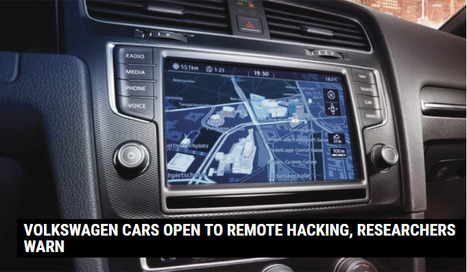
Vulnerable in-vehicle infotainment systems have left some Volkswagen cars open to remote hacking, researchers warn. Over the last few years, automakers like Ford, Jeep, Nissan and Toyota have all suffered car-hacking vulnerabilities in their vehicles. Now, it looks like Volkswagen has been pulled into the mix after researchers discovered that in-vehicle infotainment (IVI) systems in certain Volkswagen-manufactured cars could be remotely hacked. Not only that, but it’s possible to pivot to more critical systems. Related PostsApril 25, 2018 , 11:30 am April 25, 2018 , 9:30 am April 19, 2018 , 1:17 pm The vulnerability was discovered in the Volkswagen Golf GTE and an Audi3 Sportback e-tron, which were both manufactured in 2015. Computest researchers Daan Keuper and Thijs Alkemade, who discovered the flaw, said that under certain conditions the IVI vulnerability could enable attackers to commandeer the on-board microphone to listen in on the conversations of the driver, turn the microphone on and off, and access the system’s complete address book and the conversation history. There is also a possibility of hackers tracking the car through the navigation system at any given time, they said. A Volkswagen spokesperson told Threatpost that the vehicles impacted are those produced with Discover Pro infotainment systems – Golf GTE and Audi A3 e-tron. Learn more / En savoir plus / Mehr erfahren: https://www.scoop.it/t/securite-pc-et-internet/?&tag=Cars https://www.scoop.it/t/securite-pc-et-internet/?&tag=iot
|
|
Scooped by
Gust MEES
May 2, 2018 7:16 AM
|
A form of malware which uses fake Facebook Messenger messages to spread has suddenly surged back into life and has developed new tricks to steal passwords, steal cryptocurrency and engage in cryptojacking.
First uncovered in August last year, the malware used phishing messages over Facebook Messenger to direct victims to fake versions of websites like YouTube, at which point they are encouraged to download a malicious Chrome extension.
The malware has remained under the radar since then, at least until April when it appears to have suddenly spiked in activity, targeting Facebook users around the world.
Analysis by researchers at security company Trend Micro - which has dub the malware FacexWorm - said that while the malware is still spread via Facebook and exploits Google Chrome, many of its capabilities have been completely reworked.
New abilities include the capability to steal account credentials from selected websites, including Google as well as cryptocurrency websites. It also pushes cryptocurrency scams of its own and mines infected systems for additional currency.
But in order to conduct any of this activity, the malware needs to be installed on the system of a victim. Victims received a link out of the blue from a Facebook contact which directs to a fake YouTube page. Learn more / En savoir plus / Mehr erfahren: https://www.scoop.it/t/securite-pc-et-internet/?&tag=Facebook
|
|
Scooped by
Gust MEES
April 27, 2018 4:34 AM
|
Drupal-Seiten werden angegriffen
Schon wieder eine sehr kritische Drupal-Lücke: CVE-2018-7602 ermöglicht einem Angreifer die Übernahme von Drupal-Seiten. Erste Angriffe werden bereits nach wenigen Stunden registriert.
Angreifer haben nur wenige Stunden nach Bekanntwerden einer erneuten kritischen Sicherheitslücke im Content-Management-System (CMS) Drupal begonnen, den Bug für Attacken auszunutzen. Sie nutzen dabei Code eines Proof-of-Concepts, der online verfügbar ist. Learn more / En savoir plus / Mehr erfahren: https://www.scoop.it/t/securite-pc-et-internet/?&tag=Drupal
|
|
Scooped by
Gust MEES
April 25, 2018 8:26 PM
|
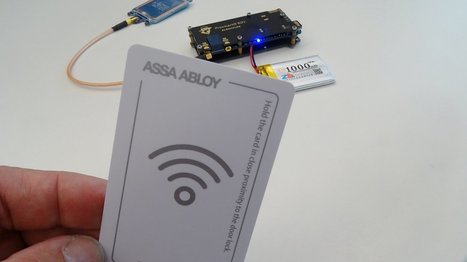
Die Schlösser von Millionen Hotelzimmern können Recherchen zufolge geknackt werden. Finnische IT-Experten fanden heraus, dass dazu eine einzige Hotelkarte ausreicht.
26. April 2018, 2:18 Uhr Quelle: ZEIT ONLINE, dpa, Reuters, ces
IT-Experte Timo Hirvonen hat das Rätsel um den Diebstahl eines Computers aus einem Hotelzimmer gelöst: diese Chipkarten. © Attila Cser/Reuters
Die elektronischen Schlösser in mehr als einer Million Hotelzimmertüren auf der ganzen Welt sind finnischen Sicherheitsexperten zufolge selbst mit alten Zugangskarten zu knacken. Zwei Mitarbeiter des Sicherheitsunternehmens F-Secure haben am Mittwoch eine Untersuchung zu der Schwachstelle veröffentlicht und damit wohl auch das Rätsel eines Laptop-Diebstahls 2003 in Berlin gelöst. Betroffen sind die Schlösser des Weltmarktführers Assa Abloy, eines schwedischen Unternehmens.
Timo Hirvonen und Tomi Tuominen zeigten Reportern von WDR, NDR und Süddeutscher Zeitung, wie der Einbruch ins Hotelzimmer gelingen kann, ohne Spuren zu hinterlassen. Lediglich eine einzige Hotelkarte reichte aus, um einen Generalschlüssel zu erstellen und damit alle Gästezimmer des jeweiligen Hotels zu öffnen. Der Vorgang dauert nur ein paar Sekunden. Darüber hinaus gelang es den IT-Experten über das Netzwerk der betroffenen Hotels auch Kundendaten auszulesen. Die beiden Finnen hatten sich zunächst in ihrer Freizeit damit beschäftigt, den ungeklärten Laptop-Diebstahl aufzuklären. Learn more / En savoir plus / Mehr erfahren: https://www.scoop.it/t/securite-pc-et-internet/?&tag=Traveling
|
|
Scooped by
Gust MEES
April 25, 2018 3:18 PM
|
A new form of cryptocurrency mining malware uses a leaked NSA-exploit to spread itself to vulnerable Windows machines, while also disabling security software and leaving the infected computer open to future attacks.
The Python-based malicious Monero miner has been uncovered by researchers at security company Fortinet who've dubbed it PyRoMine. It first appeared this month and spreads using EternalRomance, a leaked NSA-exploit which takes advantage of what until a year ago had been an undisclosed SMB vulnerability to self-propagate through networks.
EternalRomance helped spread BadRabbit ransomware and is similar in many ways to EternalBlue, a second leaked NSA exploit which helped fuel WannaCry and NotPetya. Both exploits look for public-facing SMB ports, allowing them to deliver malware to networks.
Researchers discovered the malware was downloadable from a particular web address as a zip file, bundled with Pyinstaller, a program which packages programs written in Python into stand alone executables, meaning there's no need for Python to be installed on the compromised machine.
The malicious code behind PyRoMine appears to have been directly copied from a publicly shared EternalRomance implementation. Learn more / En savoir plus / Mehr erfahren: https://www.scoop.it/t/securite-pc-et-internet/?&tag=crypto-currency
|
|
Scooped by
Gust MEES
April 19, 2018 5:58 PM
|
LinkedIn bug allowed data to be stolen from user profiles
Private profile data — like phone numbers and email addresses — could have been easily collected.
A bug in how LinkedIn autofills data on other websites could have allowed an attacker to silently steal user profile data.
The flaw was found in LinkedIn's widely used AutoFill plugin, which allows approved third-party websites to let LinkedIn members automatically fill in basic information from their profile -- such as their name, email address, location, and where they work -- as a quick way to sign up to the site or to receive email newsletters.
LinkedIn only allows whitelisted domains to have this functionality, and LinkedIn has to approve each new domain. Right now, there are dozens of sites in the top 10,000 websites ranked by Alexa that have been whitelisted by LinkedIn, including Twitter, Microsoft, LinkedIn, and more.
That means any of those websites can retrieve this profile data from users without their approval.
But if any of the sites contains a cross-site scripting (XSS) flaw -- which lets an attacker run malicious code on a website -- an attacker can piggy-back off that whitelisted domain to obtain data from LinkedIn.
And it turns out that at least one of them did. Learn more / En savoir plus / Mehr erfahren: https://www.scoop.it/t/securite-pc-et-internet/?&tag=LinkedIn
|

























The latest Facebook privacy SNAFU (Situation Normal, All Facebooked Up) is a bug that changed settings on some accounts, automatically suggesting that their updates be posted publicly, even though users had previously set their updates as “private”.
On Thursday, Facebook asked 14 million users to review posts made between 18 May and 22 May: that’s when the bug was changing account settings. Not all of the 14 million users affected by the bug necessarily had their information publicly, mistakenly shared, but best to check.
Facebook Chief Privacy Officer Erin Egan said in a post that as of Thursday, the company had started letting those 14 million people know about the situation. She stressed that the bug didn’t affect anything people had posted before that time, and even then, they could still have chosen their audience like they always have.
Normally, the audience selector is supposed to be sticky: every time you share something, you get to choose who sees it, and the suggestion is supposed to be based on who you shared stuff with the last time you posted. Friends only? Fine, that’s what should be automatically suggested for the next post, and the one after that, until you change it… or a weird little glitch like this pops up.
Learn more / En savoir plus / Mehr erfahren:
https://www.scoop.it/t/securite-pc-et-internet/?&tag=Facebook