 Your new post is loading...

|
Scooped by
Gust MEES
December 12, 2019 12:56 PM
|
The FBI says owners of IoT (Internet of Things) devices should isolate this equipment on a separate WiFi network, different from the one they're using for their primary devices, such as laptops, desktops, or smartphones.
"Your fridge and your laptop should not be on the same network," the FBI's Portland office said in a weekly tech advice column. "Keep your most private, sensitive data on a separate system from your other IoT devices," it added.
The same advice -- to keep devices on a separate WiFi network or LAN -- has been shared in the past by multiple IT and security experts [1, 2, 3, 4].
The reasoning behind it is simple. By keeping all the IoT equipment on a separate network, any compromise of a "smart" device will not grant an attacker a direct route to a user's primary devices -- where most of their data is stored. Jumping across the two networks would require considerable effort from the attacker.
However, placing primary devices and IoT devices on separate networks might not sound that easy for non-technical users. The simplest way is to use two routers. Learn more / En savoir plus / Mehr erfahren: https://www.scoop.it/t/securite-pc-et-internet/?tag=Smart+Home https://globaleducationandsocialmedia.wordpress.com/2014/01/21/why-is-it-a-must-to-have-basics-knowledge-of-cyber-security-in-a-connected-technology-world/ https://www.scoop.it/t/securite-pc-et-internet/?tag=SHODAN+Search+Engine https://www.scoop.it/t/21st-century-learning-and-teaching/?tag=Internet+of+Things https://www.scoop.it/t/securite-pc-et-internet/?tag=smart-TV https://www.scoop.it/t/securite-pc-et-internet/?tag=Internet+of+things https://globaleducationandsocialmedia.wordpress.com/2014/01/21/why-is-it-a-must-to-have-basics-knowledge-of-cyber-security-in-a-connected-technology-world/
|
|
Scooped by
Gust MEES
December 12, 2019 6:33 AM
|
A recent FBI report warned smart TV users that hackers can also take control of your unsecured TV. "At the low end of the risk spectrum, they can change channels, play with the volume, and show your kids inappropriate videos. In a worst-case scenario, they can turn on your bedroom TV's camera and microphone and silently cyberstalk you," explained the FBI.
Yow!
The risk isn't new. A few years ago, smart TVs from LG, Samsung, and Vizio were spying and reporting on your viewing habits to their manufacturers.
Today, the FBI is warning that "TV manufacturers and app developers may be listening and watching you." It added, "[A] television can also be a gateway for hackers to come into your home. A bad cyber actor may not be able to access your locked-down computer directly, but it is possible that your unsecured TV can give him or her an easy way in the backdoor through your router."
That's true, but while there have been relatively few cases of hackers invading homes via their smart TVs, it's only a matter of time until they're watching and listening to you. Learn more / En savoir plus / Mehr erfahren: http://www.scoop.it/t/securite-pc-et-internet/?tag=smart-TV http://www.scoop.it/t/securite-pc-et-internet/?tag=Internet+of+things
|
|
Scooped by
Gust MEES
December 12, 2019 5:32 AM
|
There has been a lot of hype around blockchain technology, including predictions for how it can make communications and data sharing more secure.
There are exciting possibilities for blockchain as a valuable platform for security professionals to protect important data. Yet the key features that advocates point to, such as the ability for participants to remain anonymous while sharing data with one another, can actually increase security risks for certain applications if not properly addressed. Because there is no platform with a concrete solution for validating the identity of participating entities, some blockchain technologies will be vulnerable to bad actors. Learn more / En savoir plus / Mehr erfahren: http://www.scoop.it/t/21st-century-learning-and-teaching/?tag=blockchain
|
|
Scooped by
Gust MEES
November 14, 2019 4:24 PM
|
Travelers are advised to avoid using public USB power charging stations in airports, hotels, and other locations because they may contain dangerous malware, the Los Angeles District Attorney said in a security alert published last week.
USB connections were designed to work as both data and power transfer mediums, with no strict barrier between the two. As smartphones became more popular in the past decade, security researchers figured out they could abuse USB connections that a user might think was only transferring electrical power to hide and deliver secret data payloads.
This type of attack received its own name, as "juice jacking." Learn more / En savoir plus / Mehr erfahren: http://www.scoop.it/t/securite-pc-et-internet/?tag=USB
|
|
Scooped by
Gust MEES
November 1, 2019 4:49 PM
|
Sources familiar with WhatsApp’s internal investigation into the breach said a “significant” portion of the known victims are high-profile government and military officials spread across at least 20 countries on five continents. Many of the nations are U.S. allies, they said.
The hacking of a wider group of top government officials’ smartphones than previously reported suggests the WhatsApp cyber intrusion could have broad political and diplomatic consequences.
WhatsApp filed a lawsuit on Tuesday against Israeli hacking tool developer NSO Group. The Facebook-owned software giant alleges that NSO Group built and sold a hacking platform that exploited a flaw in WhatsApp-owned servers to help clients hack into the cellphones of at least 1,400 users between April 29, 2019, and May 10, 2019.
The total number of WhatsApp users hacked could be even higher. A London-based human rights lawyer, who was among the targets, sent Reuters photographs showing attempts to break into his phone dating back to April 1.
While it is not clear who used the software to hack officials’ phones, NSO has said it sells its spyware exclusively to government customers. Learn more / En savoir plus / Mehr erfahren: https://gustmees.wordpress.com/2014/03/05/often-asked-questions-are-there-cyber-security-dangers-with-apps-and-whats-about-privacy/ http://www.scoop.it/t/securite-pc-et-internet/?&tag=WhatsApp...
|
|
Scooped by
Gust MEES
October 21, 2019 11:40 AM
|
Im WLAN-Treiber für den Einsatz von Realtek-Chips unter Linux findet sich ein Programmierfehler, der eine kritische Sicherheitslücke in Form eines Pufferüberlaufs im Kernel öffnet. Damit lässt sich in aller Regel Code einschleusen und ausführen. Der Sicherheitsforscher Nicolas Waisman hat den Fehler entdeckt und reichlich unkonventionell "mal eben einfach" auf Twitter veröffentlicht.
Betroffen von dem Fehler CVE-2019-17666 sind Systeme auf Linux-Basis, die Realtek-Chips einsetzen. Dazu gehören unter Umständen auch Android-Handys; jedenfalls findet sich der problematische Code auch in Googles Android-Sourcen. Auch WiFi-Router etwa auf Basis von OpenWRT könnten Opfer des Treiber-Bugs werden. Für einen Angriff muss lediglich WLAN eingeschaltet sein. Learn more / En savoir plus / Mehr erfahren: https://www.scoop.it/t/securite-pc-et-internet/?&tag=Linux
|
|
Scooped by
Gust MEES
October 17, 2019 5:51 PM
|
The Cybersecurity and Infrastructure Security Agency (CISA) issued an advisory warning of vulnerabilities in several medical IoT devices that could lead to remote code execution.
Advisory ICSA-19-274-01, which has a CVSS rating or 9.8, covers the following pieces of equipment: OSE by ENEA, INTEGRITY RTOS by Green Hills Software, ITRON, Zebos by IP Infusion, and VxWorks by Wind River. The vulnerabilities include stack-based buffer overflow, heap-based buffer overflow, integer underflow, improper restriction of operations within the bounds of a memory buffer, race condition, argument injection and null pointer dereference.
All are described as exploitable remotely, requiring only a low skill level to exploit and public exploits are available. This is an expanded advisory with the original being issued by DHS in July.
“The Interpeak IPnet stack vulnerabilities were first reported under ICSA-19-211-01 Wind River VxWorks. These vulnerabilities have expanded beyond the affected VxWorks systems and affect additional real-time operating systems (RTOS). CISA has reached out to affected vendors of the report and asked them to confirm the vulnerabilities and identify mitigations,” the advisory stated.
In response ENEA recommends affected users upgrade to a newer version of OSE or contact WindRiver (now the license holder for Interpeak) for compensating controls; Green Hills Software recommends affected users contact Wind River for compensating controls; ZebOS by IP Infusion has not yet responded to CISA inquiries. Learn more / En savoir plus / Mehr erfahren: https://www.scoop.it/topic/securite-pc-et-internet/?&tag=Medicine
|
|
Scooped by
Gust MEES
October 11, 2019 7:25 AM
|
Some types of two-factor authentication (2FA) security can no longer be guaranteed to keep the bad guys out, the FBI is reported to have warned US companies in a briefing note circulated last month.
FBI reporting identified several methods cyber actors use to circumvent popular multi-factor authentication techniques in order to obtain the one-time passcode and access protected accounts.
The simplest and therefore most popular bypass is SIM swap fraud, in which the attacker convinces a mobile network (or bribes an employee) to port a target’s mobile number, allowing them to receive 2FA security codes sent via SMS text.
Naked Security now regularly covers this kind of hack, almost always because it was used to empty people’s bank accounts, steal cryptocurrency from wallets or exchange accounts, or to attack services such as PayPal. Learn more / En savoir plus / Mehr erfahren: https://www.scoop.it/t/securite-pc-et-internet/?&tag=Two-factor+authentication
|
|
Scooped by
Gust MEES
October 6, 2019 5:30 PM
|
The US Department of Homeland Security and the US Food and Drug Administration (FDA) have published advisories this week warning about a much broader impact of the Urgent/11 vulnerabilities, which impact more operating systems than initially thought.
The Urgent/11 security flaws were initially disclosed over the summer by cyber-security firm Armis. They allow attackers to run malicious code and take over a wide range of devices, from routers to firewalls, and from printers to industrial equipment.
Security researchers initially believed Urgent/11 only impacted devices using VxWorks, a real-time operating system (RTOS) created by Wind River.
The actual issue was tracked down to IPnet, a TCP/IP networking library that was part of VxWorks. Learn more / En savoir plus / Mehr erfahren: https://www.scoop.it/topic/securite-pc-et-internet/?&tag=Urgent11 https://www.scoop.it/topic/securite-pc-et-internet
|
|
Scooped by
Gust MEES
September 16, 2019 11:01 AM
|
Password manager LastPass has released an update last week to fix a security bug that exposes credentials entered on a previously visited site.
FIX AVAILABLE
LastPass, believed to be the most popular password manager app today, fixed the reported issue in version 4.33.0, released last week, on September 12.
If users have not enabled an auto-update mechanism for their LastPass browser extensions or mobile apps, they're advised to perform a manual update as soon as possible.
This is because yesterday, Ormandy published details about the security flaw he found. The security researcher's bug report walks an attacker through the steps necessary to reproduce the bug. Learn more / En savoir plus / Mehr erfahren: https://www.scoop.it/t/securite-pc-et-internet/?&tag=Password+Managers https://www.scoop.it/t/securite-pc-et-internet/?&tag=Passwords
|
|
Scooped by
Gust MEES
September 13, 2019 5:32 PM
|
Thanks to the success of projects like Let’s Encrypt and recent UX changes in the browsers, most page-loads are now encrypted with TLS. But DNS, the system that looks up a site’s IP address when you type the site’s name into your browser, remains unprotected by encryption.
Because of this, anyone along the path from your network to your DNS resolver (where domain names are converted to IP addresses) can collect information about which sites you visit. This means that certain eavesdroppers can still profile your online activity by making a list of sites you visited, or a list of who visits a particular site. Malicious DNS resolvers or on-path routers can also tamper with your DNS request, blocking you from accessing sites or even routing you to fake versions of the sites you requested. Learn more / en Savoir plus / Mehr erfahren: https://www.scoop.it/topic/securite-pc-et-internet/?&tag=EFF https://www.scoop.it/topic/securite-pc-et-internet/?&tag=DNS
|
|
Scooped by
Gust MEES
September 9, 2019 4:59 PM
|
|
|
Scooped by
Gust MEES
September 9, 2019 4:32 PM
|
Security researchers have found another instance of a malware strain abusing the Windows Background Intelligent Transfer Service (BITS).
The malware appears to be the work of a state-sponsored cyber-espionage group that researchers have been tracking for years under the name of Stealth Falcon.
The first and only report on this hacking group has been published in 2016 by Citizen Lab, a non-profit organization focusing on security and human rights.
According to the Citizen Lab report, the Stealth Falcon group has been in operation since 2012 and was seen targeting United Arab Emirates (UAE) dissidents. Previous tools included a very stealthy backdoor written in PowerShell. Learn more / En savoir plus / Mehr erfahren: https://www.scoop.it/t/securite-pc-et-internet/?&tag=Cyberespionage
|
|
|
Scooped by
Gust MEES
December 12, 2019 6:50 AM
|
|
|
Scooped by
Gust MEES
December 12, 2019 5:41 AM
|
The temptation to get a machine to turn your lights on for you is very strong.
It makes you feel masterful and saves you from having to get up from the sofa.
There's a tiny catch about internet-of-things devices, however. They may not be entirely secure. Please don't take my word for it. For devices like Amazon Echo and Google Home are the subject of this week's tech warnings from the FBI.
Last week, as my colleague Jason Aten reported, it was smart TVs. This time, however, the Portland office of the FBI has released a slightly nerve-affecting warning about, well, I'll let the FBI itself delineate the devices:
Digital assistants, smart watches, fitness trackers, home security devices, thermostats, refrigerators, and even light bulbs are all on the list. Add to that all of the fun stuff: remote-controlled robots; games and gaming systems; interactive dolls; and talking stuffed animals ... well, the list seems endless.
Endlessness isn't good when you consider all the possible digital nooks and crannies into which nefarious beings might roam, thanks to this proliferation of devices. Learn more / En savoir plus / Mehr erfahren: https://www.scoop.it/topic/securite-pc-et-internet/?&tag=Amazon+Echo https://www.scoop.it/topic/securite-pc-et-internet/?&tag=iot
|
|
Scooped by
Gust MEES
December 2, 2019 7:48 AM
|
Ramsomware continues to be one of the biggest menaces on the internet. Clicking on the wrong link could be enough to set off a sequence of events that ends with all your data being encrypted by crooks, who will only unlock it in return for a hefty ransom -- usually in bitcoin or another hard-to-trace cryptocurrency.
One of the nastiest types of ransomware has just come back to life
How Bitcoin helped fuel an explosion in ransomware attacks
How Bitcoin helped fuel an explosion in ransomware attacks
Ransomware-as-a-service allows wannabe hackers to cash-in on cyber extortion
Now ransomware is taking aim at business networks
Criminal ransomware gangs are well financed (thanks to all those bitcoin ransoms) and employ increasingly sophisticated tactics. Only low-level crooks are interested in encrypting PCs one-by-one: the big gangs seek backdoors into corporate networks and then explore until they are ready to cause maximum chaos (and a big payday) by encrypting as many devices as possible in one go.
It's not just criminal gangs that have noticed the power of ransomware: state-backed hacking groups have also used ransomware to create both chaos and profit for their backers.
What we're seeing is an arms race between the crooks looking for new ways to compromise systems and businesses trying to plug every gap in their defences. Learn more / En savoir plus / Mehr erfahren: https://www.scoop.it/t/securite-pc-et-internet/?&tag=RANSOMWARE
|
|
Scooped by
Gust MEES
November 3, 2019 6:41 AM
|
Over the past six months, a new Android malware strain has made a name for itself after popping up on the radar of several antivirus companies, and annoying users thanks to a self-reinstall mechanism that has made it near impossible to remove.
Named xHelper, this malware was first spotted back in March but slowly expanded to infect more than 32,000 devices by August (per Malwarebytes), eventually reaching a total of 45,000 infections this month (per Symantec).
The malware is on a clear upward trajectory. Symantec says the xHelper crew is making on average 131 new victims per day and around 2,400 new victims per month. Most of these infections have been spotted in India, the US, and Russia.
INSTALLED VIA THIRD-PARTY APPS
According to Malwarebytes, the source of these infections is "web redirects" that send users to web pages hosting Android apps. These sites instruct users on how to side-load unofficial Android apps from outside the Play Store. Code hidden in these apps downloads the xHelper trojan. Learn more / En savoir plus / Mehr erfahren: https://gustmees.wordpress.com/2014/03/05/often-asked-questions-are-there-cyber-security-dangers-with-apps-and-whats-about-privacy/ https://www.scoop.it/topic/securite-pc-et-internet/?&tag=Android
|
|
Scooped by
Gust MEES
November 1, 2019 1:19 PM
|
Die Klage von WhatsApp-Mutter Facebook gegen den israelischen Überwachungssoftware-Hersteller NSO hat nach Reuters-Informationen einen brisanten Nebenaspekt. NSO war es im Frühjahr demnach nicht nur gelungen, über WhatsApp-Anrufe eine Spionagesoftware auf die Smartphones von Journalisten und Dissidenten zu verbreiten. Vielmehr sollen auch mehrere hochrangige Regierungsmitarbeiter und Militärs aus mindestens 20 Ländern unter den Betroffenen gewesen sein. Das sagten mehrere Personen, die mit einer internen Untersuchung der Facebook-Tochter vertraut sind.
Am Dienstag hatte Facebook in Kalifornien Klage gegen NSO eingereicht, weil sich die israelische Firma über eine - inzwischen geschlossene - WhatsApp-Sicherheitslücke Zugriff auf Hunderte Smartphones verschaffen wollte. Allein in weniger als zwei Wochen im April und Mai dieses Jahres habe die israelische Firma NSO rund 1400 Geräte angegriffen, erklärte Facebook.
Wer letztlich hinter den Hackerattacken gegen die Regierungsmitarbeiter und Militärs steckte, ist unklar. Sollten es staatliche Stellen sein, käme das Spionageversuchen mithilfe eines privaten Dienstleisters gleich. Die Facebook-Klage könnte deshalb eine politische Dimension bekommen. Learn more / En savoir plus / Mehr erfahren: https://gustmees.wordpress.com/2014/03/05/often-asked-questions-are-there-cyber-security-dangers-with-apps-and-whats-about-privacy/ http://www.scoop.it/t/securite-pc-et-internet/?&tag=WhatsApp...
|
|
Scooped by
Gust MEES
October 21, 2019 7:23 AM
|
Developer interfaces used by Security Research Labs researchers to turn digital home assistants into ‘Smart Spies’.
Researchers have found new ways that bad actors can exploit Alexa and Google Home smart speakers to spy on users. This time the hack not only includes eavesdroping, but also includes voice-phishing, or using people’s voice cues to determine passwords.
The vulnerability lies in small apps created by developers for the devices to extend their capability called Skills for Alexa and second app called Actions on Google Home, according to a report by Security Research Labs (SRLabs). These apps “can be abused to listen in on users or vish (voice phish) their passwords,” researchers said.
“The privacy implications of an internet-connected microphone listening in to what you say are further reaching than previously understood,” researchers wrote in their report. “Users need to be more aware of the potential of malicious voice apps that abuse their smart speakers.” Learn more / En savoir plus / Mehr erfahren: https://www.scoop.it/t/securite-pc-et-internet/?&tag=Privacy https://www.scoop.it/topic/securite-pc-et-internet/?&tag=Alexa
|
|
Scooped by
Gust MEES
October 17, 2019 4:44 PM
|
Two reports published in the last few months show that malware operators are experimenting with using WAV audio files to hide malicious code.
The technique is known as steganography -- the art of hiding information in plain sight, in another data medium.
In the software field, steganography -- also referred to as stego -- is used to describe the process of hiding files or text in another file, of a different format. For example, hiding plain text inside an image's binary format.
Using steganography has been popular with malware operators for more than a decade. Malware authors don't use steganography to breach or infect systems, but rather as a transfer method. Steganography allows files hiding malicious code to bypass security software that whitelists non-executable file formats (such as multimedia files).
All previous instances where malware used steganography revolved around using image file formats, such as PNG or JEPG. Learn more / En savoir plus / Mehr erfahren: http://www.scoop.it/t/securite-pc-et-internet/?&tag=Steganography
|
|
Scooped by
Gust MEES
October 11, 2019 4:50 AM
|
|
|
Scooped by
Gust MEES
October 6, 2019 9:29 AM
|
What could be more horrifying than knowing that a hacker can trick the plane's electronic systems into displaying false flight data to the pilot, which could eventually result in loss of control?
Of course, the attacker would never wish to be on the same flight, so in this article, we are going to talk about a potential loophole that could allow an attacker to exploit a vulnerability with some level of "unsupervised" physical access to a small aircraft before the plane takes off.
The United States Department of Homeland Security's (DHS) has issued an alert for the same, warning owners of small aircraft to be on guard against a vulnerability that could enable attackers to easily hack the plane's CAN bus and take control of key navigation systems.
Learn more / En savoir plus / Mehr erfahren: https://www.scoop.it/topic/securite-pc-et-internet/?&tag=Airlines
|
|
Scooped by
Gust MEES
September 16, 2019 8:18 AM
|
PERSONAL DATA ABOUT ALMOST EVERY ECUADOREAN CITIZEN HAS BEEN FOUND EXPOSED ONLINE.
Names, financial information and civil data about 17 million people, including 6.7 million children, was found by security company vpnMentor.
The massive cache of data was found on an unsecured Amazon cloud server almost anyone could look at.
Access to the server has now been restricted thanks to Ecuador’s computer emergency security team.
SERIOUS BREACH
“The data breach involves a large amount of sensitive personally identifiable information at the individual level,” wrote Noam Rotem and Ran Locar, from vpnMentor.
As well as basic identity data, the exposed files include:
official government ID numbers
phone numbers
family records
marriage dates
education histories
work records Learn more / En savoir plus / Mehr erfahren: https://www.scoop.it/t/securite-pc-et-internet/?&tag=DATA-BREACHES
|
|
Scooped by
Gust MEES
September 10, 2019 5:02 PM
|
A series of vulnerabilities have been discovered in some implemenations of Real-Time Operating System (RTOS) VxWorks whose systems are used in more than two billion devices including sectors such as health care, transportation, aviation and other industrial operations. Dubbed Urgent/11, these could lead to a WannaCry-like situation if exploited by malicious actors, say researchers.
"Urgent/11 vulnerabilities affects several devices we can find in our daily lives, especially in healthcare. In fact VxWorks is an operating system commonly used in real-time devices like MRI machines and patient monitors. Attacking these kinds of devices can lead to critical impacts like changing the behaviour of those devices and providing wrong information to doctors/patients," Alessandro Di Pinto, security research manager at Nozomi Networks, told SC Media UK.
First reported and analysed by Armis and further probed by Wind River, the vulnerabilities are particularly notable because they allow attackers to take over devices without user interaction.
"Urgent/11 is serious as it enables attackers to take over devices with no user interaction required, and even bypass perimeter security devices such as firewalls and NAT solutions. These devastating traits make these vulnerabilities ‘wormable,’ meaning they can be used to propagate malware into and within networks," said the Armis report, adding: "Such an attack has a severe potential, resembling that of the EternalBlue vulnerability, used to spread the WannaCry malware." Learn more / En savoir plus / Mehr erfahren: https://www.scoop.it/topic/securite-pc-et-internet/?&tag=Urgent11 https://www.scoop.it/topic/securite-pc-et-internet
|
|
Scooped by
Gust MEES
September 9, 2019 4:40 PM
|
The team behind Exim revealed that a bug in its email server software is currently exposing millions of email servers around the world to potential attacks. Exim is a mail transfer agent (MTA) that runs in the background of email servers. It aids in the sending and receiving of email messages and helps servers act as relays for other users’ emails. All versions of Exim up to and including version 4.92.1 are affected.
The Exim team said in a recent advisory that anyone who is currently running Exim over TLS connections is vulnerable. According to the developers, the bug is unrelated to the TLS libraries (usually a source of similar bugs), so all Exim email servers are impacted, regardless of the TLS library they use.
If the server uses TLS, then an attacker could send a Server Name Identification (SNI) ending in a backslash-null sequence during the initial TLS handshake. This would allow both local or remote attackers to run malicious code with root privileges. Exim vulnerability lets attackers run commands as root on remote email servers. Learn more / En savoir plus / Mehr erfahren: https://www.scoop.it/topic/securite-pc-et-internet/?&tag=Exim https://www.scoop.it/topic/securite-pc-et-internet/?&tag=Vulnerabilities
|


















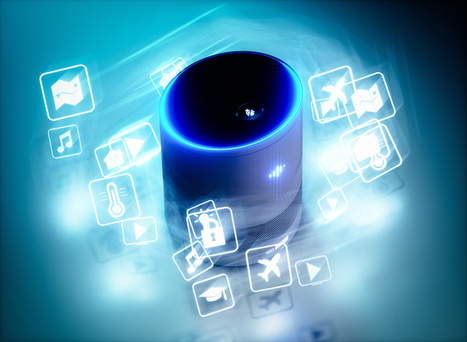










The FBI says owners of IoT (Internet of Things) devices should isolate this equipment on a separate WiFi network, different from the one they're using for their primary devices, such as laptops, desktops, or smartphones.
"Your fridge and your laptop should not be on the same network," the FBI's Portland office said in a weekly tech advice column. "Keep your most private, sensitive data on a separate system from your other IoT devices," it added.
The same advice -- to keep devices on a separate WiFi network or LAN -- has been shared in the past by multiple IT and security experts [1, 2, 3, 4].
The reasoning behind it is simple. By keeping all the IoT equipment on a separate network, any compromise of a "smart" device will not grant an attacker a direct route to a user's primary devices -- where most of their data is stored. Jumping across the two networks would require considerable effort from the attacker.
However, placing primary devices and IoT devices on separate networks might not sound that easy for non-technical users. The simplest way is to use two routers.
Learn more / En savoir plus / Mehr erfahren:
https://www.scoop.it/t/securite-pc-et-internet/?tag=Smart+Home
https://globaleducationandsocialmedia.wordpress.com/2014/01/21/why-is-it-a-must-to-have-basics-knowledge-of-cyber-security-in-a-connected-technology-world/
https://www.scoop.it/t/securite-pc-et-internet/?tag=SHODAN+Search+Engine
https://www.scoop.it/t/21st-century-learning-and-teaching/?tag=Internet+of+Things
https://www.scoop.it/t/securite-pc-et-internet/?tag=smart-TV
https://www.scoop.it/t/securite-pc-et-internet/?tag=Internet+of+things
https://globaleducationandsocialmedia.wordpress.com/2014/01/21/why-is-it-a-must-to-have-basics-knowledge-of-cyber-security-in-a-connected-technology-world/