 Your new post is loading...

|
Scooped by
Gust MEES
February 21, 2020 10:37 AM
|
The US agency in charge of secure communication for the White House has been the victim of a cyber-attack.
The US Department of Defence confirmed that computer systems controlled by the Defence Information Systems Agency (DISA) had been hacked, exposing the personal data of about 200,000 people.
The agency oversees military communications including calls for US President Donald Trump.
The data exposed included names and social security numbers.
The agency is responsible for the military cyber-security and it sets up communications networks in combat zones.
On its website, DISA says its vision is "to be the trusted provider to connect and protect the war fighter in cyber-space."
There are 8,000 military and civilian employees at the DISA, but through its operations, it handles data for many other individuals.
This is why the personal information for so many people was exposed. Learn more / En savoir plus / Mehr erfahren: https://www.scoop.it/t/securite-pc-et-internet/?&tag=DATA-BREACHES
|
|
Scooped by
Gust MEES
February 15, 2020 9:24 AM
|
Critical security issues caused by improper access controls in a WordPress plugin designed for GDPR cookie compliance have been resolved, but hundreds of thousands of websites may still be vulnerable to attack.
The GDPR Cookie Consent plugin, offered by developer Cookie Law Info through WebToffee, has been designed to help ensure websites are compliant with the EU's General Data Protection Regulation (GDPR); specifically, obtaining consent for cookies from visitors, the creation of a Privacy & Cookies Policy page and the enablement of banners showing compliance.
The plugin accounts for over 700,000 active installs according to the WordPress library.
On January 28, NinTechNet researcher Jerome Bruandet discovered a vulnerability affecting GDPR Cookie Consent version 1.8.2 and below. Learn more / En savoir plus / Mehr erfahren: https://www.scoop.it/t/securite-pc-et-internet/?&tag=WordPress https://www.scoop.it/t/wordpress-annotum-for-education-science-journal-publishing/?&tag=Cybersecurity
|
|
Scooped by
Gust MEES
February 13, 2020 12:08 PM
|
Researchers have documented the evolution of Loda, a Remote Access Trojan (RAT) which is leaving its simple roots to become an established threat in the US and other countries.
How to set up secure credential storage for Docker (TechRepublic)
Loda was first observed in 2016. According to Proofpoint, the AutoIT-based RAT is able to access and exfiltrate both system and user information, act as a keylogger, take screenshots, launch and close processes, and download additional malware payloads via a connection to a command-and-control (C2) server.
A new version of the Trojan has been tracked in past months, revealing an upgraded arsenal.
Deemed a "simple yet effective RAT that has matured over time," the malware has been spotted in recent campaigns targeting victims across the US, alongside South and Central America, Cisco Talos cybersecurity researcher Chris Neal said on Wednesday. Learn more / En savoir plus / Mehr erfahren: https://www.scoop.it/topic/securite-pc-et-internet/?&tag=RAT
|
|
Scooped by
Gust MEES
February 4, 2020 5:23 PM
|
Sudo is a very popular, very simple Unix-system sysadmin application. It enables users to switch identities for the purpose of running a single command. Usually, but not always, it lets you run a command as the root, system administrator, user. Sudo's easy to abuse, but it's so darn useful, until it's not. A recently discovered sudo bug once more spells out why you should be wary of this command.
In this latest security hole, CVE-2019-18634, Apple Information Security researcher Joe Vennix discovered that if the "pwfeedback" option is enabled in your sudoers configuration file, any user, even one who can't run sudo or is listed in the sudoers file, can crack a system. Learn more / En savoir plus / Mehr erfahren: https://www.scoop.it/t/securite-pc-et-internet/?&tag=Linux
|
|
Scooped by
Gust MEES
January 29, 2020 8:59 AM
|
Security researchers are warning that the technology underpinning many smart city deployments is susceptible to a range of cyber-attacks, enabling hackers to sabotage infrastructure in potentially life-threatening raids.
IOActive’s latest research paper covers LoRaWAN, or the Long-Range Wide Area Network protocol which many low-powered IoT devices use to connect to the internet in scenarios such as smart cities, industrial IoT, smart homes, utilities, vehicle tracking and healthcare.
It claimed that the root keys used to encrypt communications between smart devices, gateways and network servers are poorly protected.
Hackers could extract keys by reverse engineering device firmware, grab hard-coded keys that ship with some open source LoRaWAN libraries, compromise vulnerable LoRaWAN network servers, or even guess the keys in some circumstances, the report claimed.
Once encryption keys are in their possession, the black hats could launch denial of service attacks, or replace legitimate with false comms data. This could cause connected infrastructure to break or even explode, putting lives at risk, IOActive claimed.. Learn more / En savoir plus / Mehr erfahren: https://www.scoop.it/t/securite-pc-et-internet/?tag=Smart+Home https://globaleducationandsocialmedia.wordpress.com/2014/01/21/why-is-it-a-must-to-have-basics-knowledge-of-cyber-security-in-a-connected-technology-world/ https://www.scoop.it/t/securite-pc-et-internet/?tag=SHODAN+Search+Engine https://www.scoop.it/t/21st-century-learning-and-teaching/?tag=Internet+of+Things https://www.scoop.it/t/securite-pc-et-internet/?tag=smart-TV https://www.scoop.it/t/securite-pc-et-internet/?tag=Internet+of+things
|
|
Scooped by
Gust MEES
January 21, 2020 2:47 PM
|
Einem Medienbericht zufolge hat ein Hacker 515.000 Zugangsdaten für Router, Server und Smart-Home-Geräte auf der ganzen Welt ausgespäht und in einem einschlägigen Forum für Cyberkriminelle veröffentlicht.
Datendiebstahl: Fernsteuerung möglich
Hacker mit entsprechenden Absichten und Kenntnissen sind mit diesen Informationen in der Lage, Schadsoftware auf die Geräte zu spielen und diese in der Folge fernzusteuern. Der Diebstahl erfolgte laut Bericht zwischen Oktober und November 2019. Selbst wenn sich seither IP-Adressen der Geräte geändert haben, sei es Hackern weiterhin möglich, mit ein wenig Aufwand an die neuen Daten zu gelangen. Um die Informationen aufzutreiben, bediente sich der Hacker einer Schwachstelle vieler Internet-Provider. Die konfigurieren Endgeräte oft falsch, sodass der sogenannte Telnet-Port für Angreifer sichtbar ist. Dabei handelt es sich um eine Schnittstelle zur Fernsteuerung von Geräten über das Internet.
|
|
Scooped by
Gust MEES
January 19, 2020 11:26 AM
|
Let’s cut right to the chase: the number of severity of cyberattacks will explode in 2020. Cyberwarfare has now leveled the playing field in industry, in government, and in national defense: why spend ten or fifteen billion dollars on an aircraft carrier when you can disable it digitally? Why spend billions on new product R&D when you can hack into your competition’s strategic plans? Why not just phish around municipalities for a quick $100K?
Cyberwarfare is a cost-effective solution to all sorts of problems – and opportunities: cyberwar-fare is a revenue stream, a new business model, digital transformation with its own unique flavor. I’ve written about this before in several different ways, with all sorts of warnings. Not that I’m sounding a quiet alarm. The whole world is warning anyone who will listen about cyberwarfare. But regardless of inexplicably unheeded warnings, I predict 2020 will be different – much worse than it’s ever been. Why? Simply because it’s the cheapest, easiest, fastest and most effective form of warfare we’ve ever seen, and because cyberwarfare defenses are more vulnerable than they’ve ever been. Learn more / En savoir plus / Mehr erfahren: https://gustmees.wordpress.com/2012/05/21/visual-it-securitypart2-your-computer-as-a-possible-cyber-weapon/ https://www.scoop.it/t/securite-pc-et-internet/?tag=cyberwarfare https://www.scoop.it/t/securite-pc-et-internet/?tag=Cyberwar...
|
|
Scooped by
Gust MEES
January 12, 2020 7:56 AM
|
CES 2020 : Le secteur automobile préoccupé par la cybersécurité
Sécurité : Les voitures connectées ne sont pas infaillibles face aux risques de piratage. Une société israélienne de cybersécurité en fait la démonstration au CES de Las Vegas.
En matière de cybersécurité automobile, le risque zéro n'existe pas. La société israélienne de cybersécurité GuardKnox a simulé lors du CES la prise de contrôle à distance du poste de conduite d'une Formule 1, selon des informations rapportées par l'AFP.
"Prenons l’exemple d’un gros camion qui transporte du carburant. Imaginez un criminel qui parvient à en prendre le contrôle. Il peut l’envoyer dans le fossé ou dans un bâtiment. C’est le 11 septembre sur roues", a déclaré son directeur, Moshe Shlisel, sur le salon.
Les voitures comportent des dizaines de processeurs et de plus en plus d'applications sur l'ordinateur de bord. Autant de passerelles dont des hackers peuvent se servir. Learn more / En savoir plus / Mehr erfahren: https://www.scoop.it/t/securite-pc-et-internet/?&tag=Cars
|
|
Scooped by
Gust MEES
December 28, 2019 8:38 AM
|
|
|
Scooped by
Gust MEES
December 23, 2019 9:53 AM
|
Cyber criminals using a new form of ransomware are going after healthcare and technology companies across Europe, the US and Canada in what researchers describe as 'carefully chosen' attacks.
Named Zeppelin, the ransomware appears to be based on another family of network-encrypting malware – VegaLocker – but has been built upon and improved to such an extent that the security analysts at BlackBerry Cylance who discovered it have classed it as a new form of ransomware.
Analysis of the code reveals that Zeppelin was first compiled in early November this year, but in the space of a month alone it has been discovered targeting networks of tech and healthcare companies across Europe and North America. Learn more / En savoir plus / Mehr erfahren: https://www.scoop.it/t/securite-pc-et-internet/?&tag=RANSOMWARE
|
|
Scooped by
Gust MEES
December 23, 2019 7:13 AM
|
A team of cybersecurity researchers has disclosed a new severe vulnerability affecting most Linux and Unix-like operating systems, including FreeBSD, OpenBSD, macOS, iOS, and Android, that could allow remote 'network adjacent attackers' to spy on and tamper with encrypted VPN connections.
The vulnerability, tracked as CVE-2019-14899, resides in the networking stack of various operating systems and can be exploited against both IPv4 and IPv6 TCP streams.
Since the vulnerability does not rely on the VPN technology used, the attack works against widely implemented virtual private network protocols like OpenVPN, WireGuard, IKEv2/IPSec, and more, the researchers confirmed.
Learn more / En savoir plus / Mehr erfahren: https://www.scoop.it/t/securite-pc-et-internet/?&tag=Linux https://www.scoop.it/topic/securite-pc-et-internet/?&tag=VPN
|
|
Scooped by
Gust MEES
December 19, 2019 5:38 PM
|
Connecting to an open wireless network can be convenient — and it help you avoid data overage fees from your carrier. There’s a dangerous trade-off, however. You’re exchanging security for that convenience and that’s never a good idea in today’s rapidly-evolving threat landscape.
Using a free, unencrypted Wi-Fi network “is an open invitation for bad actors to access your device,” says the Bureau. Hackers “can load malware, steal your passwords and PINs, or even take remote control of your contacts and camera,” the warning continues. Learn more / En savoir plus / Mehr erfahren: https://www.scoop.it/t/securite-pc-et-internet/?&tag=VPN
|
|
Scooped by
Gust MEES
December 12, 2019 4:35 PM
|
Sophos’s Managed Threat Response (MTR) team has warned the industry of a dangerous new ransomware trick – encrypting data only after rebooting Windows PCs into ‘safe mode’.
Deployed recently by the Russian-developed ‘Snatch’ ransomware – named after the 2000 movie of the same name – it’s effective against much endpoint security software, which often doesn’t load when safe mode is in operation.
That’s despite the fact that in real-world attacks analysed by MTR, Snatch starts out like many other ransomware campaigns currently targeting business networks.
The attackers look for weakly secured Remote Desktop (RDP) ports to force their way into Azure servers, a foothold they use to move sideways to Windows domains controllers, often spending weeks gathering reconnaissance.
In one network attack, the attackers the installed the ransomware on around 200 machines using command and control (C2) after utilising a grab-bag of legitimate tools (Process Hacker, IObit Uninstaller, PowerTool, PsExec, Advanced Port Scanner) plus some of their own.
The same software profile was detected in other attacks in the US, Canada and several European countries, which also exploited exposed RDP. Learn more / En savoir plus / Mehr erfahren: https://www.scoop.it/t/securite-pc-et-internet/?&tag=RANSOMWARE
|
|
|
Scooped by
Gust MEES
February 21, 2020 10:26 AM
|
Bluetooth-related vulnerabilities can affect a dizzying array of devices. In the latest instance, a newly discovered round of 12 Bluetooth bugs potentially exposes more than 480 devices to attack, including fitness trackers, smart locks, and dozens of medical tools and implants.
Researchers from Singapore University of Technology and Design began developing techniques for analyzing Wi-Fi security in January 2019, and later realized they could apply those same methods to assess Bluetooth as well. By September they had found their first bug in certain implementations of Bluetooth Low Energy, the version of the protocol designed for devices with limited resources and power. Within weeks, they had found 11 more.
Collectively dubbed "SweynTooth," the flaws exist not in BLE itself, but in the BLE software development kits that come with seven "system on a chip" products—microchips that integrate all of a computer's components in one place. IoT manufacturers often turn to off-the-shelf SoCs to develop new products quickly. That also means, though, that SoC implementation flaws can propagate across a wide variety of devices. Learn more / En savoir plus / Mehr erfahren: https://www.scoop.it/t/securite-pc-et-internet/?&tag=Bluetooth https://www.scoop.it/topic/securite-pc-et-internet/?&tag=SweynTooth
|
|
Scooped by
Gust MEES
February 14, 2020 10:47 AM
|
Comme toutes les technologies, le Bluetooth n'échappe pas à son lot de vulnérabilités. Après la découverte par des chercheurs israëliens d'une faille CVE-2018-5383 pour intercepter ou endommager des données échangées entre terminaux, d'autres viennent d'être mises à nu. Trois chercheurs en technologie et design de l'université de Singapour, Matheus E. Garbelini, Sudipta Chattopadhyay et Chundong Wang, ont en effet trouvé une dizaine de failles relatives à la technologie Bluetooth Low Energy. Regroupées sous le nom de SweynTooth, elles exposent une quinzaine de systèmes sur puce (SoC) de plusieurs fabricants qui y recourent : NXP, Cypress, Dialog Semiconductors, Microchip, STMicroelectronics et Telink Semiconductor. « Les vulnérabilités peuvent être utilisées par un attaquant qui se trouve dans le champ d'émission Bluetooth et peuvent faire planter les appareils concernés, forcer un redémarrage, les bloquer ou contourner le mode de couplage BLE sécurisé et accéder aux fonctions réservées aux utilisateurs autorisés », indique Bleepingcomputer. Learn more / En savoir plus / Mehr erfahren: http://www.scoop.it/t/securite-pc-et-internet/?&tag=Bluetooth
|
|
Scooped by
Gust MEES
February 5, 2020 11:58 AM
|
In a statement published today, Twitter disclosed a security incident during which third-parties exploited the company's official API (Application Programming Interface) to match phone numbers with Twitter usernames.
In an email seeking clarifications about the incident, Twitter told ZDNet that they became aware of exploitation attempts against this API feature on December 24, 2019, following a report from tech news site TechCrunch. The report detailed the efforts of a security researcher who abused a Twitter API feature to match 17 million phone numbers to public usernames.
Twitter says that following this report it intervened and immediately suspended a large network of fake accounts that had been used to query its API and match phone numbers to Twitter usernames. Learn more / En savoir plus / Mehr erfahren: https://www.scoop.it/t/securite-pc-et-internet/?&tag=Two-factor+authentication https://www.scoop.it/topic/securite-pc-et-internet/?&tag=Twitter
|
|
Scooped by
Gust MEES
February 1, 2020 5:51 PM
|
Selon les informations d’ Associated Press, l’Organisation des Nations Unies aurait été victime d’un piratage informatique en 2019 qui a été délibérément passé sous silence. Les réseaux de informatiques de l’ONU à Genève et à Vienne ont été infiltrés dans le cadre d'une opération d'espionnage qui aurait été dissimulée par de hauts fonctionnaires. On ne sait pas exactement qui étaient les pirates ni à quelle quantité de données ils ont accédé.
Selon un document confidentiel interne divulgué à The New Humanitarian , des dizaines de serveurs auraient été compromis, notamment ceux du bureau des droits de l'homme des Nations Unies, où des données sensibles sont collectées. « L’ensemble du personnel, y compris moi, n'a pas été informé », a déclaré Ian Richards, président du Conseil du personnel des Nations unies. « Tout ce que nous avons reçu, c'est un courriel (le 26 septembre) nous informant de travaux de maintenance des infrastructures ».
|
|
Scooped by
Gust MEES
January 28, 2020 9:30 AM
|
Avast Antivirus verkauft massenhaft Browser-Daten seiner Nutzer
Über ein Tochterunternehmen soll der Antiviren-Software-Anbieter Avast massenhaft Browser-Daten von Nutzern verkauft haben.
Jumpshot ist Teil der Avast-Gruppe, die Antiviren-Software anbieten. Das Tochterunternehmen soll laut eines Berichts der Magazine Vice und PCmag massenhaft die Browser-Daten von Nutzern der Avast-Software an Drittunternehmen verkauft haben. Käufer sollen unter anderem Google, Yelp, Microsoft, McKinsey, Pepsi, Sephora, Condé Nast und viele mehr sein.
Zu den Daten, die Jumpshot verkauft hat, gehören nach einer Art Stichprobe von Vice und PCmag Angaben zu Google-Suchanfragen, GPS-Koordinaten von Google Maps, besuchte LinkedIn-Seiten, YouTube-Videos und auch Porno-Seiten samt eingegebener Suchbegriffe und daraufhin angeschauter Videos. Nicht enthalten sind personenbezogene Daten. Allerdings hat Avast für jeden Nutzer seiner Antiviren-Software eine ID, die bei der Installation gespeichert wird – und sich anscheinend weder verändert noch von Avast vergessen wird. Auch wenn Jumpshot diese nicht verkauft, aus den Bewegungsdaten und der Geräte-ID dürften Personen für die Käufer der Daten identifizierbar gewesen sein. Learn more / En savoir plus / Mehr erfahren: https://www.scoop.it/t/securite-pc-et-internet/?&tag=Privacy https://www.scoop.it/topic/securite-pc-et-internet/?&tag=Browsers https://www.scoop.it/topic/securite-pc-et-internet/?&tag=Avast
|
|
Scooped by
Gust MEES
January 20, 2020 7:09 PM
|
Das Start-up Clearview AI war der Öffentlichkeit bisher so gut wie unbekannt, und das war durchaus so gewollt. Die kleine Firma hat eine offenbar gut funktionierende, aber auf zahlreichen Ebenen problematische Gesichtserkennungstechnologie an Hunderte Polizeibehörden in den USA verkauft. Nun hat die "New York Times" dafür gesorgt, dass Clearview zum Inbegriff aller Befürchtungen wird, die mit Gesichtserkennung einhergehen. Die Zeitung schreibt vom potenziellen "Ende der Privatsphäre, wie wir sie kennen".
Revolutionär ist an der Technik eigentlich nichts, sie besteht aus lauter Versatzstücken, die es anderswo auch schon gibt. Aber im Zusammenspiel funktioniert sie so gut, dass Ermittler die Software gern und nach eigenem Bekunden auch erfolgreich einsetzen.
Sie müssen dazu nur ein einziges Bild eines Gesuchten bei Clearview hochladen – egal, ob das Bild frontal aufgenommen wurde und ob die Person zum Beispiel eine Sonnenbrille oder einen Hut trägt. Das Bild wird in ein mathematisches Modell des Gesichts umgerechnet, so wie es im Prinzip auch Apples Gesichtserkennung Face ID macht. Dieses Modell wird gegen eine Datenbank abgeglichen - und die hat es in sich: Angeblich besitzt die Firma Clearview eine Sammlung aus drei Milliarden Fotos, die sie ohne Erlaubnis von Facebook, Instagram, YouTube "und Millionen anderen Websites" per Scraping heruntergeladen haben soll.
Diese Fotos werden ebenfalls in mathematische Modelle umgewandelt und bei hinreichender Ähnlichkeit zum hochgeladenen Bild als mögliche Treffer angezeigt, mitsamt den Links zu den jeweiligen Quellen. Das ermöglicht eine schnelle Identifizierung. Learn more / En savoir plus / Mehr erfahren: http://www.scoop.it/t/securite-pc-et-internet/?&tag=Facial+Recognition
|
|
Scooped by
Gust MEES
January 13, 2020 12:29 PM
|
Forscher fanden insgesamt über eine Milliarde personenbezogene Patientendaten auf unsicher konfigurierten Servern im Internet. Das sei jedoch noch nicht die endgültige Zahl. Bereits im November 2019 sorgten Berichte über das Datenleck, das weltweit mehrere Millionen Patientendaten betraf, für Aufsehen.
Die nun veröffentlichten Informationen zeigen, dass sich bislang offenbar wenig an der Situation geändert hat. In Zusammenarbeit mit Techcrunch berichtet The Mighty von der Gefahr, die von den offen zugänglichen medizinischen Daten ausgehe und wofür Datendiebe diese nutzen können. Neben Gesundheitsschäden, etwa wenn Informationen über Allergien aus den Patientenakten verschwinden, zählen demnach zu den möglichen Folgen auch Schwierigkeiten beim Abschluss einer Lebensversicherung. Learn more / En savoir plus / Mehr erfahren: https://www.scoop.it/t/securite-pc-et-internet/?&tag=DATA-BREACHES
|
|
Scooped by
Gust MEES
January 9, 2020 12:39 PM
|
Check Point® Software Technologies Ltd. a révélé avoir découvert plusieurs vulnérabilités dans TikTok qui auraient pu permettre à des pirates de manipuler du contenu dans des comptes d’utilisateurs et d’extraire des informations personnelles confidentielles enregistrées sur ces comptes.
L’application TikTok est principalement utilisée par des adolescents et des enfants pour partager, enregistrer et conserver des vidéos privées (et parfois très confidentielles) d’eux-mêmes et de leurs proches. L’étude a révélé qu’un pirate pouvait envoyer un SMS falsifié contenant un lien malveillant à un utilisateur, et que si l’utilisateur cliquait sur ce lien, le pirate pouvait prendre le contrôle du compte TikTok et manipuler son contenu en supprimant des vidéos, en téléchargeant des vidéos non autorisées et en rendant publiques des vidéos privées ou « cachées ».
L’étude a également révélé que le sous-domaine https://ads.tiktok.com de Tiktok était vulnérable à des attaques XSS, un type d’attaque dans lequel des scripts malveillants sont injectés dans des sites web de confiance ou inoffensifs. Les chercheurs de Check Point ont exploité cette vulnérabilité pour récupérer des informations personnelles enregistrées sur les comptes d’utilisateurs, y compris les adresses email privées et les dates de naissance.
Check Point Research a informé les développeurs de TikTok des vulnérabilités exposées dans cette étude et un correctif a été déployé de manière responsable pour garantir que les utilisateurs puissent continuer d’utiliser l’application TikTok en toute sécurité. Learn more / En savoir plus / Mehr erfahren: https://www.scoop.it/topic/securite-pc-et-internet
|
|
Scooped by
Gust MEES
December 27, 2019 2:33 PM
|
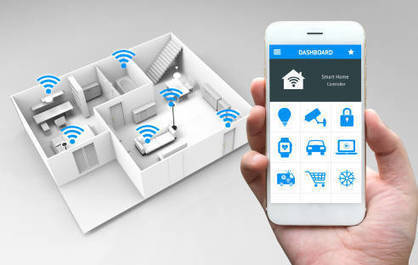
Sicherheitslücken sind auch bei Hardware keineswegs selten. Unser Ratgeber erläutert, welche Geräte besonders gefährdet sind, wie Sie zu Hause konkrete Schwachstellen aufspüren und wie sich das Eindringen von Schadcode verhindern lässt. Weniger im Bewusstsein dagegen ist die Bedrohung durch unzureichend geschützte Hardware. Dabei sind es meist gar nicht per se die Geräte, die böswillig Schaden anrichten. Vielmehr führen auch hier veraltete Gerätesoftware (Firmware), unzureichend geschützte Zugänge, schwache Passwörter und Ähnliches dazu, dass Schadcode eingeschleust und gegebenenfalls übers Heimnetz verbreitet werden kann. Als Angriffspunkte für Hacker eignen sich besonders die Komponenten, die direkt oder per Netzwerk mit dem Internet verbunden sind.
Dazu ein Beispiel: Ein Fernseher ohne Webzugang stellt keine Gefahr dar. Ist der Fernseher dagegen im Netz, was bereits für die Nutzung der Mediatheken erforderlich ist, ist er potenziell gefährdet. Die möglichen Szenarien reichen vom Unbrauchbarmachen durch einen Erpressungstrojaner bis zum Kapern von Kamera und Mikrofon. Einen solchen „großen Lauschangriff“ im Wohnzimmer wünscht sich wohl niemand. Ist das TV-Gerät zusätzlich ins Heimnetz integriert, droht der übrigen IT-Ausstattung Gefahr. Smarte Fernseher illustrieren die Gefahr besonders gut, weil sie mittlerweile in vielen Haushalten stehen, ohne dabei als „Gefahr“ wahrgenommen zu werden. Learn more / En savoir plus / Mehr erfahren: https://www.scoop.it/t/securite-pc-et-internet/?tag=Smart+Home https://globaleducationandsocialmedia.wordpress.com/2014/01/21/why-is-it-a-must-to-have-basics-knowledge-of-cyber-security-in-a-connected-technology-world/ https://www.scoop.it/t/securite-pc-et-internet/?tag=SHODAN+Search+Engine https://www.scoop.it/t/21st-century-learning-and-teaching/?tag=Internet+of+Things https://www.scoop.it/t/securite-pc-et-internet/?tag=smart-TV https://www.scoop.it/t/securite-pc-et-internet/?tag=Internet+of+things https://globaleducationandsocialmedia.wordpress.com/2014/01/21/why-is-it-a-must-to-have-basics-knowledge-of-cyber-security-in-a-connected-technology-world/
|
|
Scooped by
Gust MEES
December 23, 2019 8:17 AM
|
Researchers believe that criminals were able to obtain personal information for millions of Facebook users.
A database exposing the names, phone numbers and Facebook user IDs of millions of platform users was left unsecured on the web for nearly two weeks before it was removed.
Security researcher Bob Diachenko, who along with Comparitech discovered the unsecured Elasticsearch database, believe it belongs to a cybercriminal organization, as opposed to Facebook. Diachenko went to the internet service provider (ISP) managing the IP address of the server so that the access could be removed.
“A database this big is likely to be used for phishing and spam, particularly via SMS,” according to the Thursday report. “Facebook users should be on the lookout for suspicious text messages. Even if the sender knows your name or some basic information about you, be skeptical of any unsolicited messages.” Learn more / En savoir plus / Mehr erfahren: https://www.scoop.it/t/securite-pc-et-internet/?&tag=Facebook https://www.scoop.it/topic/securite-pc-et-internet/?&tag=DATA-BREACHES
|
|
Scooped by
Gust MEES
December 21, 2019 7:45 PM
|
Lazarus, an advanced persistent threat (APT) group, has expanded its reach with the development and use of a Trojan designed to attack Linux systems.
The APT, suspected to hail from North Korea, has previously been connected to global cyberattacks and malware outbreaks including the infamous WannaCry rampage, the $80 million Bangladeshi bank heist, and a new campaign impacting financial institutions worldwide.
Recent reports suggest that Lazarus has become a customer of Trickbot, a criminal enterprise that is offering the state-sponsored threat actors access to infected systems alongside a collection of hacking tools.
Lazarus may be willing to purchase tools from others but may also be capable of creating its own, such as in the case of a new Remote Access Trojan (RAT) spotted by researchers from Netlab 360. Learn more / En savoir plus / Mehr erfahren: https://www.scoop.it/t/securite-pc-et-internet/?&tag=Linux
|
|
Scooped by
Gust MEES
December 19, 2019 2:44 PM
|
How much do you know about the electric charging station where you plug in your electric vehicle?
New research at the University of Windsor is looking at security vulnerabilities of charging stations — not only could your payment information be stolen, but the electricity grid could be compromised too.
Mitra Mirhassani, an engineering professor, said not enough is being done when it comes to security of these stations.
"Most of the charging stations are placed wherever a company sees convenient," said Mirhassani. "These can be insecure roads and parking lots. Everyone seems to forget they are connected to infrastructure — to the energy grid."
Electric vehicle society 'encouraged' by approval of new charging locations
City of Windsor wants to add 11 dual-port electric vehicle charging stations
Mirhassani said if there was to be an attack on that energy infrastructure, there would be a lot of issues that couldn't be fixed quickly. Learn more / En savoir plus / Mehr erfahren: https://www.scoop.it/t/securite-pc-et-internet/?&tag=Cars https://www.scoop.it/t/securite-pc-et-internet/?&tag=GRID
|


























The US agency in charge of secure communication for the White House has been the victim of a cyber-attack.
The US Department of Defence confirmed that computer systems controlled by the Defence Information Systems Agency (DISA) had been hacked, exposing the personal data of about 200,000 people.
The agency oversees military communications including calls for US President Donald Trump.
The data exposed included names and social security numbers.
The agency is responsible for the military cyber-security and it sets up communications networks in combat zones.
On its website, DISA says its vision is "to be the trusted provider to connect and protect the war fighter in cyber-space."
There are 8,000 military and civilian employees at the DISA, but through its operations, it handles data for many other individuals.
This is why the personal information for so many people was exposed.
Learn more / En savoir plus / Mehr erfahren:
https://www.scoop.it/t/securite-pc-et-internet/?&tag=DATA-BREACHES