This collection includes resources for strengthening school climate, and improving health, safety, connectedness, and student engagement. Readers are encouraged to explore related links for further information. See also http://bit.ly/PreventDataHarms, http://bit.ly/edpsychtech, and http://bit.ly/screen_time. [Note: Views presented on this page are re-shared from external websites. The content may not necessarily represent the views nor official position of the curator nor employer of the curator.]
A company that provides training to police officers and private-security personnel is now offering its services to schools. [Credit: Illustration by Richie Pope]
By Douglas Starr
"About a year and a half ago, Jessica Schneider was handed a flyer by one of her colleagues in the child-advocacy community. It advertised a training session, offered under the auspices of the Illinois Principals Association (I.P.A.), in how to interrogate students. Specifically, teachers and school administrators would be taught an abbreviated version of the Reid Technique, which is used across the country by police officers, private-security personnel, insurance-fraud investigators, and other people for whom getting at the truth is part of the job. Schneider, who is a staff attorney at the Chicago Lawyers’ Committee for Civil Rights Under Law, was alarmed. She knew that some psychologists and jurists have characterized the technique as coercive and liable to produce false confessions—especially when used with juveniles, who are highly suggestible. When she expressed her concerns to Brian Schwartz, the I.P.A.’s general counsel, he said that the association had been offering Reid training for many years and found it both popular and benign. To prove it, he invited Schneider to attend a session in January of 2015.
The training was led by Joseph Buckley, the president of John E. Reid and Associates, which is based in Chicago. Like the adult version of the Reid Technique, the school version involves three basic parts: an investigative component, in which you gather evidence; a behavioral analysis, in which you interview a suspect to determine whether he or she is lying; and a nine-step interrogation, a nonviolent but psychologically rigorous process that is designed, according to Reid’s workbook, “to obtain an admission of guilt.” Most of the I.P.A. session, Schneider told me, focussed on behavioral analysis. Buckley described to trainees how patterns of body language—including slumping, failing to look directly at the interviewer, offering “evasive” responses, and showing generally “guarded” behaviors—could supposedly reveal whether a suspect was lying. (Some of the cues were downright mythological—like, for instance, the idea that individuals look left when recalling the truth and right when trying to fabricate.) Several times during the session, Buckley showed videos of interrogations involving serious crimes, such as murder, theft, and rape. None of the videos portrayed young people being questioned for typical school misbehavior, nor did any of the Reid teaching materials refer to “students” or “kids.” They were always “suspects” or “subjects.”
Laura Nirider, a professor of law at Northwestern University and the project director of the Center on Wrongful Convictions of Youth, attended the same session as Schneider. She told me that about sixty people were there. “Everybody was on the edge of their seat: ‘So this is how we can learn to get the drop on little Billy for writing graffiti on the underside of the lunchroom table,’” she said. One vice-principal told Nirider that the first thing he does when he interrogates students is take away their cell phones, “so they can’t call their mothers.”
The training included tricks to provoke a response that might indicate guilt. One was the punishment question: “What do you think should happen to the person who did this?” Schneider recorded in her notes that an innocent person will give a draconian answer, such as, “They should be suspended/expelled/fired.” A deceptive person will equivocate: “That depends on why they did it.” Another question involves baiting the subject with supposedly incriminating evidence. For example, you might falsely suggest that the school had surveillance cameras at the scene of the infraction and see how the student reacts. At one point in the workbook, the phrase “Handling tears” appears, with a blank space underneath for trainees to take down Buckley’s dictation. “Don’t stop,” Schneider wrote in her notes. “Tears are the beginning of a confession. Use congratulatory statement—‘Glad to see those tears, because it tells me that you’re sorry, aren’t you?’ ” Buckley’s only caveat during the session, according to Nirider and Schneider, was that children under the age of ten should not be interrogated. “It was pretty horrifying,” Schneider told me."...
"This collection includes research, updates, and resources related to EMF/RF radiation and screen time. For an excellent website with extensive documents for safe technology advocacy, please visit the National Association for Children and Safe Technology at http://nacst.org. For additional resources and updates in Education, please visit http://eduresearcher.com.'
"Hear from Principal Ramiro Rubalcaba in this webinar about how two urban high schools in California committed to changing school culture and took suspensions off the quick fix menu. In place of suspensions, the schools and staff implemented School-Wide Positive Behavior Interventions and Supports and committed to prevention and intervention."
This is a great video about a school who stopped suspending students and began to implement supports for behaviors of students. I hope this video will give ideas to administrators when looking for options other than suspensions.
"At Lyon Academy at Blow Elementary, a high-poverty preK–8 magnet school, behavior was a big issue. In fact, a couple years ago, our school had one of the highest percentages of out-of-school suspensions in St. Louis Public Schools. We wanted to reduce the number of suspensions and find ways to deter the behaviors that were putting students out of school.
After implementing Positive Behavior Interventions and Supports (PBIS), we decided that we needed a way to better track how teachers responded to student behaviors. One of our teachers created a spreadsheet to track student behavior, but it was inconsistently used, so we didn't always have supporting data when we met with parents to discuss behavior. The biggest problem, however, was that teachers were using the spreadsheet to track only negative behaviors, which made it challenging to create an environment where students felt safe and supported. With PBIS, we wanted students' positive choices to be acknowledged and used as the foundation for sustaining good behavior. But in practice, we were simply applying another punitive measure that put students on the defensive."...
This blog post provides a look into a schools journey in using PBIS to lessen the amount of suspensions. I hope that this journey can help our schools journey and start discussions on things we need to do differently.
"iCanHelpline is where schools and districts can call or email to get help in resolving problems that surface in social media – problems such as cyberbullying, sexting, and reputation issues involving students, staff or anyone in the school community. It’s a free service for schools, so we ask that individuals seeking help with a social media issue ask their school to contact us so we can all work together.
As the first step in developing a national helpline, iCanHelpline is being piloted in California during the 2015-’16 school year. It’s a joint project of California-based #iCANHELP and Net Family News Inc., national nonprofit organizations with more than a decade and a half of experience in education, student leadership and Internet safety."...
"Drug thought safe for teenagers linked to suicidal and self-harming behaviours."
"A common antidepressant thought safe for adolescents is actually ineffective, new research finds. Worse, it has been linked to serious side-effects.
The drug is called paroxetine, which is marketed as Paxil, Seroxat and Aropax.
The conclusions come from a re-evaluation of a study — known as ‘Study 329’ — carried out in 2001. Study 329, which was funded by the pharmaceutical company GlaxoSmithKline, originally claimed paroxetine was effective and safe. Not only were these conclusions wrong, the new analysis argues, but the drug has worrying side-effects.
Professor Jon Jureidini, who led the research, said: “Although concerns had already been raised about Study 329, and the way it was reported, the data was not previously made available so researchers and clinicians weren’t able to identify all of the errors in the published report.
It wasn’t until the data was made available for re-examination that it became apparent that paroxetine was linked to serious adverse reactions, with 11 of the patients taking paroxetine engaging in suicidal or self-harming behaviours compared to only one person in the group of patients who took the placebo.
Our study also revealed that paroxetine was no more effective at relieving the symptoms of depression than a placebo. This is highly concerning because prescribing this drug may have put young patients at unnecessary risk from a treatment that was supposed to help them.”
Professor Jureidini thinks pharmaceutical companies should make their data available for reanalysis.
He said: “Our reanalysis of Study 329 came to very different conclusions to those in the original paper.
We also learnt a lot about incorrect reporting and the considerable fall out that can be associated with distorted data. Regulatory research authorities should mandate that all data and protocols are accessible.
Although concerns about patient confidentiality and ‘commercial in confidence’ issues are important, the reanalysis of Study 329 illustrates the necessity of making primary trial data available to increase the rigour of evidence-based research.”
The research was published in the British Medical Journal (Noury et al., 2015).
"In this new documentary from Coleman Advocates (colemanadvocates.org), director Kevin Epps (kevepps.com) takes a look at the negative effects of harsh zero tolerance policies in schools and one community's inspiring response. Highlighting Coleman's landmark student-led Solutions Not Suspensions campaign in San Francisco and examining how young people are directly affected by school discipline policies, the film serves as an informative and inspiring education tool."...
"The Restorative Works learning network helps people become more knowledgeable and proficient in restorative practices. The fundamental premise of restorative practices is disarmingly simple: People are happier, more cooperative and productive, and more likely to make positive changes when those in positions of authority do things with them, rather than to them or for them.
This learning network is a project of the Restorative Practices Foundation. Restorative Works provides educational content, news and announcements, with more than 10 years of archived stories and videos from the International Institute for Restorative Practices (IIRP) Graduate School arranged by topic, current news about restorative applications from the eForum, and plenty of links to help you learn more. We hope you will enjoy learning with us."...
More and more students suffer from depression, anxiety and social phobia. Schools are adding counselors and therapists as the acuity of mental illness among children has sharpened, educators say, and it’s striking even elementary students.
“You got your little window to look outside and that’s really it. "I feel claustrophobic.” “It was cold, too. I was freezing.” “And I’d be getting overwhelmed and heated about it.” “I was scared out, like I was tired of being in this cell.” “Horrible, worst time in my life.”
We found a system that’s supposed to help kids, but often sets them adrift.
Presented by entrepreneur, music mogul and activist Russell Simmons and narrated by “Empire” actress Gabourey Sidibe, this hourlong documentary investigation, “Prison Kids,” is the result of Fusion’s work. It is a story about how to take children and ostracize them, derange them, outlaw them. It is the story of America’s crimes against children.
We are excited to announce three new webinars on professional learning for educators! Join us for these upcoming events on the impact of trauma on students, Smarter Balanced assessments and the Common Core, and non-cognitive factors in student success.
"The United States is experiencing a public health crisis: an epidemic of trauma, violence and toxic stress. In response, efforts to create trauma-informed change are growing exponentially across the nation. Learn how communities are responding and develop your own strategy to amplify change through four “Catalyst Sessions:”
COMMUNITIES
HEALTH CARE
THE JUSTICE SYSTEM
EDUCATION
Presentations will highlight effective collaborations, promising practices, programs at the state and local levels, as well as first-person experiences, including workforce systems and worker issues. Following the presentations, interactive sessions will facilitate participant discussions and strategic action planning in their local areas or agencies.
PARTICIPATE: There are three ways to participate:
Via webcast through an “Amplifier Site” which is a gathering of others interested in this issue (Click here to learn more about amplifier sites)
Register for participation using the tabs in blue on the left.
Please note that webcast participation is limited, so please register soon!
LEARN: From successful programs, policies and approaches being implemented across the country about how you can use these models, tools and resources in your work, organization or community.
HOST: An Amplifier site is a local gathering in your organization or community to screen and participate in the live webcast, then facilitate a post webcast conversation to catalyze action. (Click here for more information)
HEAR FROM: Outstanding speakers, including: Gary Slutkin, MD, Founder and Director, Cure Violence Nancy Hardt, MD, UF College of Medicine, Co-Founder, Peace4Gainesville Father Jeff Puthoff, Founder, Hopeworks 'N Camden Tina Marie Hahn, MD, Pediatrician from Michigan Naina Khanna, Executive Director of the Positive Women's Network Barb Trader, Executive Director of TASH Robin Delany-Shabazz, Associate Administrator, State and Community Development in the Office of Juvenile Justice and Delinquency Prevention at the Department of Justice And many others
HOSTED BY: The Federal Partners Committee on Women & Trauma is an active interagency collaboration including 13 Federal Departments, with more than 100 members, representing over 40 agencies and offices. This Committee is committed to advancing gender-responsive, trauma-informed approaches to improve the health and well-being of individuals across the country and around the world.
Dr. Michael Changaris, Adjunct Professor at John F. Kennedy University
Published November 1st, 2015
"This presentation explores the impact of PTSD on learning and education. It offers tools for educators, parents and families to increase learning, growth and development for the 10's of 1000's of children and adolescents who suffer from PTSD."
"This guide provides tools to assess and systematically address disparities in school discipline. It describes how to carry out a descriptive analysis of disparities in school discipline and how to conduct a root cause analysis to systematically address school-based factors that contribute to disparities. These analyses should result in an actionable understanding of the following:
Who is being disparately disciplined and what is happening to them
The systemic causes of disparities in school discipline and why they occur
How you can reduce and eliminate disparities in school discipline
The primary audience for this guide is school teams and school district teams. The guide helps willing education leaders and other stakeholders use a data-informed process to examine disparities in school discipline and systematically change policies and practices. It also is for use by schools and districts required to complete an assessment of disparities and change practices. The guide is written to support efforts that include all stakeholders invested in schools—students, families, community-based organizations, advocates, and agencies, including health and mental health professionals and those representing youth development, child welfare, law enforcement, courts, and juvenile justice agencies.
To assist in completing the tasks outlined in the guide, there are a suite of resources provided for your use. Other resources are noted throughout the guide, including tips for conducting the difficult conversations that need to occur to sensitively and productively address racial, ethnic, and cultural issues that may emerge. The table below summarizes and links to resources introduced throughout the guide.
View the presentation, Supporting School-Level Root Cause Analyses of Disproportionate Discipline Outcomes, presented to “Rethinking School Discipline” attendees at The White House on July 22, 2015.
"An interactive webinar for parents, youth, and those who support them about students’ rights in school discipline. Learn about the legal protections for students, including those with special needs, and how to advocate for yourself or your child. Find out more about strong alternatives to class and school removal that hold students accountable while also helping improve school success."
This event takes place on Wednesday, Sept. 2, 2015, 2 to 3 p.m. ET.
Content provided by Second Step (Committee For Children)
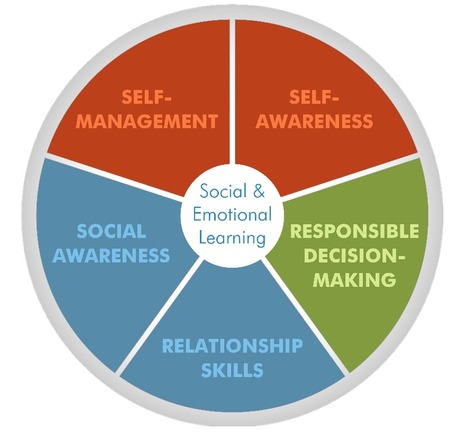
Schools that explicitly teach social-emotional learning (SEL) create positive learning environments and see an average 11 percent increase in academic achievement. Austin Independent School District (ISD) has transformed its entire learning ecosystem through a districtwide commitment to SEL. National leaders in SEL will share the research case for SEL as a key to improved student outcomes, innovative strategies for best-practice SEL implementation and sustainability, effect of SEL on Austin ISD schools, and lessons learned while transforming schools with SEL.
Paul Cruz, Austin ISD Superintendent, will highlight the distinguished panel of presenters. In his time with Austin ISD, graduation rates have improved to an all-time high of 84.1 percent, and post-secondary enrollment rates have increased significantly. Roger Weissberg, CASEL Chief Knowledge Officer, will share expertise in the field of social-emotional learning. Sherrie Raven, Austin ISD SEL Coordinator, will provide real-world examples and advice for successful school- and district-wide implementation.
Guests: Paul Cruz, superintendent, Austin Independent School District, Texas
Sherrie Raven, director of SEL, Austin Independent School District, Texas
Roger Weissberg, chief knowledge officer, Collaborative for Academic, Social, and Emotional Learning
Moderator:
Joan Cole Duffell, executive director, Committee for Children
"In the United States, two institutions guide teenagers on the journey to adulthood: college and prison. Sociologist Alice Goffman spent six years in a troubled Philadelphia neighborhood and saw first-hand how teenagers of African-American and Latino backgrounds are funneled down the path to prison — sometimes starting with relatively minor infractions."...
"In a victory for California students and schools, state lawmakers have passed a $10 million dollar project to train and support teachers and administrators over the next three years on how to use more positive, trauma-sensitive, and effective approaches to school discipline.
Fix School Discipline partners, Public Counsel, and the Alliance for Boys and Men of Color advocated for the state budget allocation, which will create funding for a statewide network of trainers, training programs and coaching, and grants to school districts to create and support a multi-tiered system of school-wide social emotional and positive behavior support, restorative justice, and training in cultural competency.
The supports range from changes in school climate--such as restorative circles to build strong relationships in classrooms --to interventions such as counseling for students at high risk. The goal is to keep students in school and build a culture that is respectful and supportive of all students. Learn more about how the funding will be allocated through EdSource's coverage below, including an op-ed by Public Counsel's Lisa Higuera, who shared her personal experiences with how punitive school discipline pushed out some of her friends and fellow students who were struggling in school in Los Angeles":
"The Restorative Schools Vision Project (RSVP) was founded as a response to the crisis in public school education brought about by the disproportionate impact of suspensions and expulsions on students of color, students with disabilities, LGBTQ youth, and other marginalized groups. We view the solution to the crisis as requiring a paradigm shift in school discipline away from punishment and zero tolerance and towards restorative justice, social emotional learning, and positive responses based on secular ethics. We believe that students can learn from their mistakes and that their mistakes should not be treated like quasi-criminal behavior. We teach a restorative process that combines the best of Restorative Justice (RJ), Social Emotional Learning (SEL), and Narrative Practices (separating the person from the problem).
We emphasize healing outcomes over and above formulaic procedures, favor collaborative solutions over authoritarian outcomes, and believe that relationships rather than rules are the key to lasting, positive changes in school climate. In sum, our training philosophy is solutions oriented."...
"Nicholas Carlisle is the CEO and founder of No Bully, an international anti-bullying NGO. Having experienced firsthand the reality of bullying in his teenage years at school, he is committed to creating schools where every student belongs. Nicholas graduated from Oxford University, practiced as a barrister in London and was chairman of the non-profit section of Amnesty International in Britain. He is licensed as a child and adult psychotherapist in California and a published researcher on the effects of school bullying. Nicholas is a seasoned conference speaker, expert witness and commentator on school bullying for radio and television."
This is a powerful TEDTalk underscoring the need to pay closer attention to the impacts of bullying on youth and to face our own blind spots as adults in the ways we may deny or contribute to situations of harm. Carlisle explains the futility of punitive approaches and shares promising solutions that involve restoring relationships and building on the strengths of the student community to re-shape social climates of care and support for one another.
For more information on the No Bully organization led by Mr. Carlisle, please visit: NoBully.org http://www.nobully.org/
To get content containing either thought or leadership enter:
To get content containing both thought and leadership enter:
To get content containing the expression thought leadership enter:
You can enter several keywords and you can refine them whenever you want. Our suggestion engine uses more signals but entering a few keywords here will rapidly give you great content to curate.


 Your new post is loading...