This collection includes resources for strengthening school climate, and improving health, safety, connectedness, and student engagement. Readers are encouraged to explore related links for further information. See also http://bit.ly/PreventDataHarms, http://bit.ly/edpsychtech, and http://bit.ly/screen_time. [Note: Views presented on this page are re-shared from external websites. The content may not necessarily represent the views nor official position of the curator nor employer of the curator.]
"Collaborative for Academic, Social, and Emotional Learning (CASEL) is the nation’s leading organization advancing the development of academic, social and emotional competence for all students. Our mission is to help make evidence-based social and emotional learning an integral part of education from preschool through high school. Through research, practice and policy, CASEL collaborates to ensure all students become knowledgeable, responsible, caring and contributing members of society."
"Emotions drive learning, decision-making, creativity, relationships, and health. The Yale Center for Emotional Intelligence uses the power of emotions to create a more effective and compassionate society. The Center conducts research and teaches people of all ages how to develop their emotional intelligence."
"NREPP is a searchable online registry of more than 200 interventions supporting mental health promotion, substance abuse prevention, and mental health and substance abuse treatment. We connect members of the public to intervention developers so they can learn how to implement these approaches in their communities. NREPP is not an exhaustive list of interventions, and inclusion in the registry does not constitute an endorsement."
"Jay Smooth is host of New York's longest running hip-hop radio show, the Underground Railroad on WBAI 99.5 FM in NY, and is an acclaimed commentator on politics and culture."
..."Many kids say or do mean things to others, but the vast majority of them do not bully. Calling all harmful behaviors bullying discounts the experiences of those who are bullied. As Emily Bazelon (author of Sticks and Stones) has argued, “…when every bad thing that happens to children gets called bullying, we end up with misleading narratives that obscure other distinct forms of harm.” Under most definitions, bullying is much worse than simply being mistreated, pushed, or generally made fun of. To be sure, the difference might simply be in the frequency with which one is targeted. Being pushed in a one-time altercation with a former friend might not be bullying, whereas being pushed by this same person several times over several days, weeks, or months is. Frequency does matter. For example, we were contacted a while back by an adult who recalled his experience of being bullied from over a half century earlier. He wasn’t physically harmed at all, but the names he was incessantly called created psychological scars that never fully healed. Without a doubt, being targeted over and over again, even with relatively mild forms of mistreatment, eventually takes a toll.
Likewise, calling all harmful behaviors bullying may also diminish the seriousness of incidents that are much worse than the term conveys. For example, if a student is attacked on the playground in a one-time incident, this is not bullying. Even if the student is physically beaten so severely that she ends up in the hospital for a week, it’s still not bullying. It is an assault, and should be identified and treated as such. If the assault is linked to other behaviors previously or subsequently perpetrated by the aggressor toward the target, then perhaps it is accurate to define the trajectory of events as bullying. In isolation, a one-time act–no matter how serious–is not bullying."...
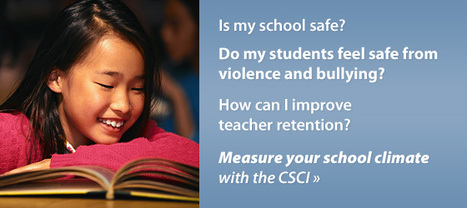
"School climate measurement involves a comprehensive assessment of student engagement, school safety, and the learning environment.
The measurement of school climate provides educators with the necessary data to identify school needs, set goals, and track progress toward improvement."
For main webpage with resources, click on title above or here:
"On April 9–10, 2014, the Board on Children, Youth, and Families of the Institute of Medicine and the National Research Council held a 2-day workshop titled Building Capacity to Reduce Bullying and Its Impact on Youth Across the Lifecourse. The purpose of this workshop was to bring together representatives of key sectors involved in bullying prevention to identify the conceptual models and interventions that have proved effective in decreasing bullying, to examine models that could increase protective factors and mitigate the negative effects of bullying, and to explore the appropriate roles of different groups in preventing bullying.
At the workshop, more than 20 presenters reviewed research on bullying prevention and intervention efforts, as well as efforts in related areas of research and practice, implemented in a range of contexts and settings, including:
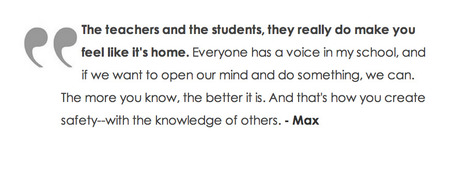
What would it take to weave social and emotional learning (SEL) into the daily fabric of our nation’s high schools? This new WKCD collection includes five case studies of a diverse collection of American high schools where SEL is core, research and commentary, student voices, and educator resources.
This is an excellent resource to hear students' experiences about social and emotional support in their schools. Highly recommend exploring this site and the related videos as great examples of how we can bridge research to practice in support of youth development.
Noe Estrada's curator insight, September 6, 2024 3:42 PM
SEL skills are crucial in the success of every student. The article educates us on the background of SEL. It mentions that SEL is a lot more focused on elementary education and far less on middle schools and high schools. The success seen in the case studies were on schools that worked on communication, collaboration, and determination. The best schools continuously evolve and use multimedia. One thing is very important. SEL is a daily task. Learning and documenting will help us understand more on SEL. Listening is key. Students already discuss SEL without us knowing. That is why establishing a teacher-student relationship will help us grow on SEL.
SEL skills are crucial to the success of every student. The article educates us on the background of SEL. It mentions that SEL is a lot more focused on elementary education and far less on middle schools and high schools. The success seen in the case studies were in schools that worked on communication, collaboration, and determination. The best schools continuously evolve and use multimedia. One thing is very important. SEL is a daily task. Learning and documenting will help us understand more on SEL. Listening is key. Students already discuss SEL without us knowing. That is why establishing a teacher-student relationship will help us grow on SEL.
"NO BULL Challenge is a social action organization that inspires teens and young adults from around the world to take a stand against bullying and to promote digital responsibility, leadership, and social action through filmmaking. We provide the framework and motivation to develop powerful short films and public service announcements that spark dialogue about bullying, one of the most critical issues of our time. In essence, through digital media, we provide teens and young adults the platform, incentives, and tools to create a global network for peer-to-peer learning and action."...
About BullyBust: Promoting a Community of Upstanders is nationwide bully prevention awareness effort launched by NSCC in 2009. BullyBust is designed to help students and adults become “upstanders”—people who stand up to bullying and become part of the solution to end harmful harassment, teasing, and violence in our nation's schools. BullyBust promotes valuable free supports to help schools-in-need put an end to bullying with targeted school-wide and classroom-based efforts. This site includes research-based resources for students, parents, and educators for addressing bullying incidences effectively and creating a culture of upstanders inside and out of school."
About NSCC "The National School Climate Center (NSCC) is an organization that helps schools integrate crucial social, emotional and civic learning with academic instruction to enhance student performance, prevent drop outs, reduce violence, and develop healthy and positively engaged adults."
"CHICAGO (AP) — Allegations that Minnesota Vikings running back Adrian Peterson injured one of his sons by spanking him with a tree branch are reviving a debate about corporal punishment in a country where it is on the decline but still widely practiced in homes and schools.
Here is some background about the practice and its prevalence:
___
Q: Where is it legal?
A: In every state in the country, a parent can legally hit their child as long as the force is "reasonable." What's considered reasonable varies from place to place and in many instances the question is left up to a jury in a kind of community-standard test. Generally, though, the law draws the line when the force causes an injury. The United Nations Committee on the Rights of the Child defines it as any physical punishment intended to cause some degree of pain or discomfort, however light.
In Texas, where Peterson is accused, punishment is abusive if it causes injury. While a blow that causes a red mark that fades in an hour is not likely to be judged abusive, a blow that leaves a bruise, welt, or swelling, or requires medical attention, could be judged abusive.
Q: How is it used in schools?
A: In 19 states, it's still legal for personnel in schools to practice "paddling." An estimated total of 223,190 students were subjected to it in the 2005-2006 school year, according to the most recent data gathered by the U.S. Department of Education's Office for Civil Rights. That was an 18 percent decline from the previous survey.
One of those states, Alabama, entered the spotlight in September last year when an outraged mother protested over a corporal punishment parental consent form sent home by her child's elementary school. It spelled out a requirement for parents who don't want their children physically disciplined to opt out and inform the principal on an annual basis.
A 2009 study by Human Rights Watch and the American Civil Liberties Union found a disproportionate number of students struck by educators were disabled, at 18.8 percent of the total during the 2006-2007 school year.
The issue is generally left up to states and individual school districts, but in Congress, U.S. Rep. Carolyn McCarthy, a New York Democrat, re-introduced legislation in June that would withhold federal funds from schools that permit corporal punishment. The bill has not advanced out of committee."...
"My most important back-to-school supply doesn't fit in a backpack, and it can't be ordered online. It's as essential as a pencil, but unlike a pencil, no technology can replace it. In a sense, like a fresh box of crayons, it can come in many colors. Better than the latest gadget, it's possible to equip every student with it, and even better, when we do, it can transform our world.
It's actually a "muscle" I've been working on all summer. It's empathy."
"The UCSF Healthy Environments and Response to Trauma in Schools (HEARTS) project is a comprehensive, multilevel school-based prevention and intervention program for children who have experienced trauma. The goal of UCSF HEARTS is to create school environments that are more trauma-sensitive and supportive of the needs of traumatized children. A main objective of this project is to work collaboratively with SFUSD to promote school success by decreasing trauma-related difficulties and increasing healthy functioning in students within the San Francisco Unified School District (SFUSD) who have experienced complex trauma. Trauma-sensitive school environments will likely benefit not only traumatized children, but also those who are affected by these children, including child peers and school personnel."
This situation is all too common. Preschoolers are expelled at three times the rate of children in kindergarten through 12th grade, with African-American boys being most vulnerable.
This boy — I’ll call him Danny — was lucky, though. His teacher received assistance from a specialist, Lauren Wiley, an early childhood mental health consultant. Wiley started off by listening...."
"Teachable moments are opportunities to move one step closer to creating welcoming schools for all children and families. Imagine scenarios like these:
A student walks by your classroom and says, “That’s so gay!” to her friends.
You overhear one student say to another, “How can he be your"...
"Facebook has partnered with Drs. Marc Brackett and Robin Stern from the Yale Center for Emotional Intelligence to provide resources and tools for dealing with bullying behavior and its consequences."
For the main page to access the tools and resources for students, parents, and teachers, check out http://www.facebook.com/safety/bullying or click on title above.
"After every horrific shooting, it is human nature to search for clues that might explain what happened, and how to keep it from happening again. Unfortunately, every case offers a few promising leads that seem to be contradicted by the next case. In the 1990s we had city shootings that generated concern about the stress of “urban war zones,” followed by rural school shootings attributed to the pressures on boys raised in small towns. The 1999 shooting at suburban Columbine High School convinced many people that the underlying problem was bullying.
Last year, Adam Lanza’s attack of Sandy Hook Elementary School aroused concern about school safety, and inspired calls to place armed guards in elementary schools. Santa Barbara shooter Elliott Rodger was interviewed by law enforcement officers who mistakenly concluded that he was not dangerous, prompting nationwide calls for better police training.
If we have learned anything, it should be that there is no simple solution to the problem of mass shootings and that we should be wary of quick-fix ideas. It is time to step back and look more objectively at the larger patterns and trends:
1. Yes, gun violence is ubiquitous in the United States.
According to data from the Centers for Disease Control and Prevention, there are approximately 81,300 nonfatal injuries and 31,672 deaths every year involving guns. That works out to about 308 shootings and 86 deaths every day. The cases we hear about in the news are highly selective and not representative"...
El acoso escolar puede ocurrirle a cualquiera, en cualquier lugar. Obtenga la información que necesita para ayudar a detener el acoso en la escuela, en línea y en la comunidad. Visite StopBullying.gov para obtener más información.
"NSCC is an organization that helps schools integrate crucial social and emotional learning with academic instruction. In doing so, we enhance student performance, prevent drop outs, reduce physical violence, bullying, and develop healthy and positively engaged adults.
For more than a decade NSCC has worked together with the entire academic community—teacher, staff, school-based mental health professionals, students and parents—to improve a climate for learning.
We help translate research into practice by establishing meaningful and relevant guidelines, programs and services that support a model for whole school improvement with a focus on school climate."
"The purpose of the Best Practices Registry (BPR) is to identify, review, and disseminate information about best practices that address specific objectives of the National Strategy for Suicide Prevention. The BPR is a collaborative project of the Suicide Prevention Resource Center (SPRC) and the American Foundation for Suicide Prevention (AFSP). It is funded by the Substance Abuse and Mental Health Services Administration (SAMHSA)."
As executive director of Restorative Justice for Oakland Youth, Fania Davis sees programs like hers as part of the way to end the school-to-prison pipeline.
"The School Discipline Consensus Report presents a comprehensive set of consensus-based and field-driven recommendations to improve conditions for learning for all students and educators, better support students with behavioral needs, improve police-schools partnerships, and keep students out of the juvenile justice system for minor offenses.
More than 100 advisors representing policymakers, school administrators, teachers, behavioral health professionals, police, court leaders, probation officials, juvenile correctional leaders, parents, and youth from across the country helped develop more than two dozen policies and 60 recommendations to keep more students in productive classrooms and out of court rooms.
An additional 600 individuals from various disciplines and perspectives shared examples of promising practices that are also presented in the report. The School Discipline Consensus Report draws on real-world strategies and research to promote truly multidisciplinary approaches to reducing the millions of youth suspended, expelled, and arrested each year while creating safe and supportive schools for all educators and students."...
"Relationships are too important to leave to chance.
Search Institute’s newest research-to-practice initiative focuses on studying and strengthening the developmental relationships that help young people succeed. A developmental relationship is a close connection between a young person and an adult or between a young person and a peer that positively shapes the young person’s identity and sense of a thriving mindset.
Search Institute is now testing and refining the Developmental Relationships Framework which includes the following strategies to build positive relationships with young people
To get content containing either thought or leadership enter:
To get content containing both thought and leadership enter:
To get content containing the expression thought leadership enter:
You can enter several keywords and you can refine them whenever you want. Our suggestion engine uses more signals but entering a few keywords here will rapidly give you great content to curate.


 Your new post is loading...