Your new post is loading...

|
Scooped by
Saclay Plant Sciences
Today, 5:48 AM
|
These are the articles citing SPS published this month by the research teams in our perimeter: Davière A, Jolivet S, Auger A, Clement G, Boutet S, Totozafy JC, Balliau T, Blein‐Nicolas M, Rouffet J, Soulié M, Fagard M. 2026. Apoplast multi‐omics profiling during fungal infection uncovers new players of basal and early induced immunity in Arabidopsis thaliana. New Phytologist. doi : 10.1111/nph.71596 Guyon‐Debast A, Javelle M, Perroud P, Pichon J, Paul W, Nogué F. 2026. Validation of a Modular Base Editing Strategy, Free‐BE, in Physcomitrium patens, Maize, and Wheat. Plant Direct ; 10(10). doi : 10.1002/pld3.70196 Hure V, Elmir MK, Piron-Prunier F, Guérois R, Déléris A. 2026. DNA methylation either antagonizes or promotes Polycomb recruitment at transposable elements in Arabidopsis. Nature Communications ; 17(1). doi : 10.1038/s41467-026-77108-9 Minasiewicz J, Jąkalski M, Martin M, Launay-Avon A, Figura T, Mleczko P, Lipińska MM, Ślusarz K, Selosse M, Delannoy E. 2026. Environmental context reveals distinct regulatory patterns in field-grown versus in vitro symbiotic protocorms of Dactylorhiza majalis (Orchidaceae). BMC Plant Biology ; 26(1). doi : 10.1186/s12870-026-09554-y Ovide N, Bruce AY, Gilles C, Boutet S, Laijiao L, Nicolas N, Bonoukpoé S, Enock M, Dan M, Abou T, Boddupalli P, Paul-André C. 2026. Constitutive metabolic signatures associated with partial resistance to fall armyworm (Spodoptera frugiperda) in tropical maize inbred lines. Phytoparasitica ; 55(1). doi : 10.1007/s12600-026-01446-z Raffoux X, Saayman X, Abuelgassim WA, Maret T, Venon A, Dumas F, Tattini L, Martin OC, Liti G, Falque M. 2026. Response to divergent selection on meiotic recombination in Saccharomyces cerevisiae. Genetics. doi : 10.1093/genetics/iyag239
|
|
Scooped by
Saclay Plant Sciences
October 27, 5:23 AM
|
The SPS Meeting 2026 was held on Tuesday October 13 at the INRAE Center in Versailles, with the participation of the members of the SPS International Scientific Advisory Board. The event, which takes place every two years and is reserved for the SPS community, representatives from our institutions and the ANR (French National Research Agency), focused on the progress of the SPS project.
|
|
Scooped by
Saclay Plant Sciences
October 19, 11:33 AM
|
Pierre Gautrat has been recruited as a CNRS researcher at the Institute of Plant-Sciences Paris-Saclay - IPS2 (CNRS/INRAE/UEVE/UPSaclay, Gif-sur-Yvette) the 1st of October 2026, within the SILAB team (Signaling pathways regulating Legume root system Architecture through Beneficial bacteria). He specializes in systemic (long-distance) signaling pathways regulating nitrogen nutrition and legume symbiotic nodulation, as well as their integration with other environmental cues to coordinate plant development and adaptation. After obtaining a Master’s degree in Plant Biology from Paris-Cité University, he carried out his PhD (2017–2020) at IPS2, where he extensively characterized the systemic regulation of nitrogen-fixing nodulation in legumes. His work identified root-shoot-root communication circuits that fine-tune symbiotic nodulation according to the plant’s nitrogen requirements. He was then awarded an EMBO postdoctoral fellowship to join Ronald Pierik’s laboratory at Utrecht University in the Netherlands. During this postdoc (2021–2024), Pierre investigated the integration of nitrogen and light signaling in Arabidopsis, uncovering new systemic signaling mechanisms triggered by nitrogen availability that modulate shade-avoidance responses. Back at IPS2 (2024–2026), he pursued a second postdoc investigating signaling peptides that modulate root vascular development to accommodate symbiotic nodulation. Pierre was then recruited as a CNRS researcher at IPS2 within the SILAB team. He is establishing his own research program focused on the systemic regulation of legume shoot development in response to different sources of nitrogen, whether mineral or symbiotic. His research notably aims to identify mobile molecular signals originating from the roots and decipher the mechanisms by which these signals are integrated to enable shoot adaptation to different nitrogen regimes.
|
|
Scooped by
Saclay Plant Sciences
September 28, 3:40 AM
|
A l’occasion de la Fête de la Science 2026, SPS vous donne rendez-vous au Village des Sciences Paris-Saclay du 2 au 4 octobre 2026 ! SPS proposera deux ateliers : « Des Plantes et des Hommes » et « Change de Plats pour le Climat ». Deux animations supplémentaires proposées par des laboratoires SPS viendront compléter le programme : l’une sur l’ADN en mouvement lors de la reproduction de la plante et l’autre qui explorera les multiples facettes des champignons. D’autre part une mini-conférence explorera le phénomène de cécité botanique. Pour plus d’informations et pour la programmation complète : https://saclay-plant-sciences.hub.inrae.fr/evenements/evenements-grand-public/sps-et-la-fete-de-la-science-2026
|
|
Scooped by
Saclay Plant Sciences
September 25, 5:06 AM
|
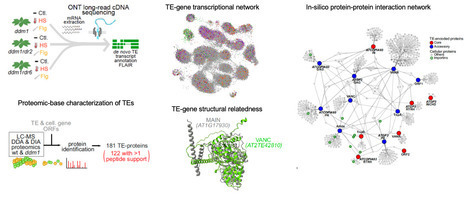
A functional atlas of transposon-encoded products and their integration into host networks
In a study published in Nature Communications, scientists from the QLAB team at the Paris-Saclay Institute of Plant Sciences conducted a large-scale exploration of transposon-derived products and their interactions with cellular networks in Arabidopsis thaliana.
Transposons are DNA sequences capable of replicating within genomes thanks to factors they encode themselves. However, the diversity of their RNAs and proteins, as well as their interactions with the host cell, remain poorly characterized. By combining long- and short-read sequencing, regulatory network analyses, high-depth proteomics, and structural predictions, the researchers established a functional atlas of transposon products. Their results show that the expression of these elements is integrated into the cell’s regulatory networks and depends in particular on DNA methylation and the action of transcription factors. More than a hundred transposon-derived proteins have also been identified with a high degree of confidence. Structural analyses reveal a wide variety of structures and potential interactions with plant proteins. They also highlight similarities between certain transposon proteins and cellular proteins, suggesting potential new cases of transposon domestication during evolution.
Contact: leandro.quadrana@universite-paris-saclay.fr
|
|
Rescooped by
Saclay Plant Sciences
from Plant Sciences
September 9, 3:50 AM
|
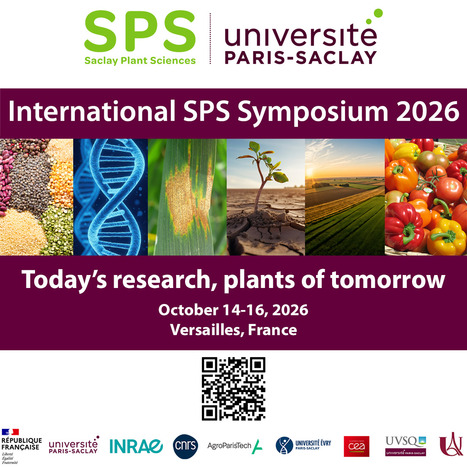
Don’t Miss the International SPS Symposium 2026 "Today’s research, plants of tomorrow"
This symposium offers 5 thematic sessions, 30+ talks (20 from submitted abstracts), 2 poster sessions, and networking opportunities with experts from the academic and industry sectors.
📅 October 14–16, 2026
📍 INRAE Center, Versailles (FR)
⏰ Registration until September 15 : Register now 🔗 All the information here : Learn more
|
|
Scooped by
Saclay Plant Sciences
August 31, 3:53 AM
|
Give a look at the publications citing SPS appeared during the summer (July and August) !
|
|
Scooped by
Saclay Plant Sciences
July 17, 11:27 AM
|
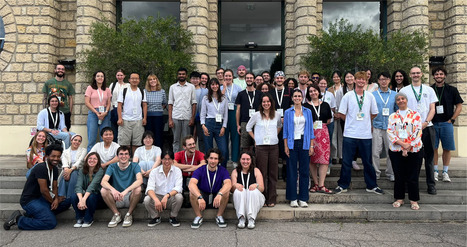
The tenth SPS Summer School took place at the Institute Jean-Pierre Bourgin for Plant Sciences from June 28 to July 3, 2026, on the theme “Plant single-cell RNA-Seq workshop: from current technologies to data analysis”. Once again, it was a great success!
|
|
Scooped by
Saclay Plant Sciences
July 16, 8:19 AM
|
The 2026 edition of the SEVE Doctoral School’s PhD Days, co-funded by SPS, took place from July 1 to 3, 2026, at the Institute Jean-Pierre Bourgin for Plant Sciences (Versailles). This event brought together more than 50 students from various laboratories within the SPS/Paris-Saclay perimeter.
|
|
Rescooped by
Saclay Plant Sciences
from Plant Sciences
June 30, 8:27 AM
|
🚨 The deadline for Early bird registrations and the abstract submission to be considered for a talk have been postponed to July 12 ! 🚨 Don’t Miss the International SPS Symposium 2026 "Today’s research, plants of tomorrow"
This symposium offers 5 thematic sessions, 30+ talks (20 from submitted abstracts), 2 poster sessions, and networking opportunities with experts from the academic and industry sectors.
📅 October 14–16, 2026
📍 INRAE Center, Versailles (FR)
⏰ Early Bird Registration ends June 30 : Register now 📢 Submit your abstract now : Submit here 🔗 All the information here : Learn more
|
|
Scooped by
Saclay Plant Sciences
June 24, 5:48 AM
|
Axelle Deroubaix, a third-year PhD student in the BIOGER research unit, shares her experience. Her PhD is fully funded by SPS
|
|
Scooped by
Saclay Plant Sciences
June 18, 4:00 AM
|
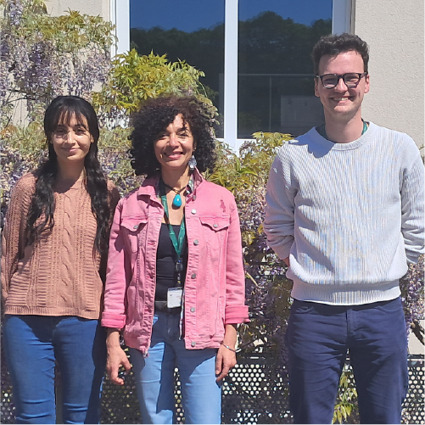
From Tunisia to Versailles: Hela Younsi and her supervisors at IJPB, Eoghan King et Alia Dellagi, look back at Hela’s mobility in Versailles, which was co-funded by SPS
|
|
Scooped by
Saclay Plant Sciences
June 15, 3:57 PM
|
To defend against pathogens (bacteria, fungi, etc.), plants have a complex immune system composed of two main lines of defense: Pattern-Triggered Immunity (PTI) triggered by the recognition of Pathogen-Associated Molecular Patterns (PAMPs) at the plasma membrane, and Effector-Triggered Immunity (ETI) triggered by the detection of microbial effectors within plant cells. Long considered independent, recent studies show that PTI and ETI interacts closely. For instance, the PAMP-induced Mitogen Activated Protein Kinases 3 and 6 (MPK3/6) are involved in the induction of certain immune genes, such as the SNC1 gene, coding for receptors of effectors. However, the underlying regulatory mechanisms remain largely unknown. In a research article published in Scientific Reports, researchers from the STRESS team at IPS2 have shown through genetic approaches that the chromatin remodeling factor 5 (CHR5) acts downstream of MPK3/6 to promote the expression of SNC1. The authors also showed that, while CHR5 does not regulate the abundance or activity of MPK3/6, the combination of autoimmune gain-of-function mutants for MPK3 and SNC1 leads to a strong synergistic effect. Overall, the results obtained identify a new MPK3/6-CHR5-SNC1 signaling module and thus contribute to a better understanding of the links between PTI and ETI.
|
|
|
Scooped by
Saclay Plant Sciences
October 29, 5:07 AM
|
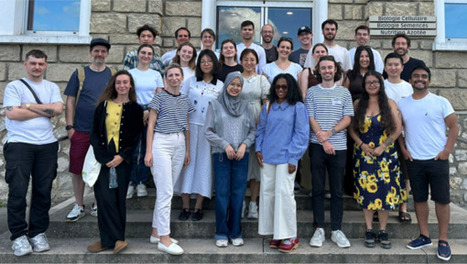
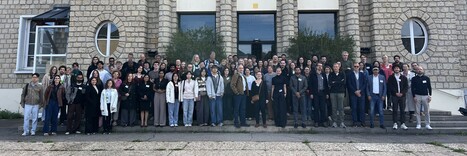
The International SPS Symposium 2026, “Today’s Research, Plants of Tomorrow”, which took place from October 14 to 16, brought together 110 scientists from 25 countries and representing 38 different nationalities for three days of sharing the latest discoveries in Plant Sciences, discussions, and networking. The participants’ feedback has been very positive: the variety of topics, the quality of the program, and the level of the presentations were highly appreciated.
“Fantastic organisation and communication prior to the conference, and globally a very enjoyable conference”
“I really enjoyed the scientific program and the welcoming atmosphere.”
“I was thoroughly impressed by the exceptional quality of the scientific sessions and the inspiring academic atmosphere.”
“It was a really nice conference and a great learning experience for me. Looking forward to the future opportunities from the people I met there.”
|
|
Scooped by
Saclay Plant Sciences
October 20, 5:51 AM
|
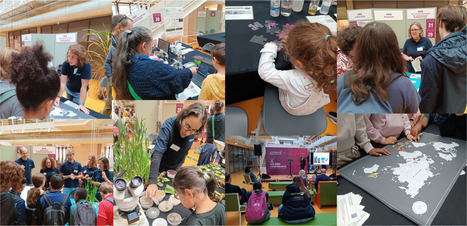
SPS participated in the French National Science Fair 2026 (Fête de la Science). Representatives from SPS and its laboratories were present at the Paris-Saclay Science Village. With its 14th participation in this event, SPS reaffirms the importance of knowledge transfer and the dissemination of science as part of its objectives.
|
|
Scooped by
Saclay Plant Sciences
September 30, 3:51 AM
|
These are the articles citing SPS published this month by the research teams in our perimeter: lvarez-Díaz JC, Soler-Garzón A, Teano G, Verdenaud M, Roudaut A, Klopp C, Préjean M, Pflieger S, Porch TG, Desbiez C, Latrasse D, Benhamed M, Delannoy E, Pedrosa-Harand A, Gratias A, Miklas PN, Geffroy V. 2026. The I gene defines a dynamic NLR cluster conferring broad potyvirus resistance in common bean. Nature Communications; 17(1). doi: 10.1038/s41467-026-73550-x Das JR, Lambret L, Marmagne A, Masclaux-Daubresse C. 2026. The crosstalk of autophagy and metabolism in plants. Current Opinion in Plant Biology, 94. doi: 10.1016/j.pbi.2026.102964 Dong F, Verdenaud M, Adam G, Tan F, Mouloud W, Drevensek S, Hanique M, Pichot C, Marcel F, Gilard F, Gakière B, Launay-Avon A, Delannoy E, Join B, Panten J, Dron M, Bendahmane A, Boualem A. 2026. Neofunctionalization underlies the evolutionary origin of sclareol biosynthesis in the mint family. Nature Communications; 17(1). doi: 10.1038/s41467-026-73637-5 Goldbecker ES, Varshney D, Holzhausen A, Darienko T, Zhou H, Dadras A, Pfeifer L, Pröschold T, Lopez-Gomez E, Woelken E, Permann C, Wollenweber TE, Becker K, König S, Hadacek F, Li F, Feussner, I, Fernandez-Pozo N, Holzinger A, … Rensing SA. 2026. The Spirogyra pratensis genome illuminates the evolution of developmental programs and spiral chloroplast biology. The Plant Cell; 38(8). doi: 10.1093/plcell/koag224 Madec, B, Sémery M, Lian Q, Yassine M, Léonard-Moniot L, Espagne É, Piquerez S, Girard C. 2026. Polymorphism can extensively reshape the genome-wide crossover landscape in Arabidopsis thaliana. Nature Communications; 17(1). doi: 10.1038/s41467-026-76213-z Prabhullachandran U, Urbánková I, Medaglia-Mata A, Creff A, Voxeur A, Buršíková V, Landrein B, Hejátko J, Robert HS. 2026. Long-term high temperatures affect seed maturation and seed coat integrity in Brassica napus. Plant Stress; 24. doi: 10.1016/j.stress.2026.101541 Thibivilliers SB, Cervantes-Pérez SA, Yang EJY, Li Y, Amini S, Pelletier JM, Meyer I, Xu H, Tennant S, Sprueill CM, Farmer AD, Coate JE, Nelissen H, Martin OC, Amézquita EJ, Goldberg RB, Harada JJ, Nichols J, Libault M. 2026. Decoding the landscape of cell-type-specific co-expressed transcription factors in soybean. Nature Plants. doi: 10.1038/s41477-026-02388-4 Xie D, Mühlenbeck JS, Schall P, Boyer J, Dian C, Sago L, Wang Y, Jomat L, Eirich J, Frottin F, Finkemeier I, Grimm B, Giglione C, Meinnel T. 2026. Rubisco functional integrity requires a dedicated three-step maturation pathway. Science Advances ; 12(37). doi: 10.1126/sciadv.aeh5060
|
|
Scooped by
Saclay Plant Sciences
September 25, 11:30 AM
|
Thanks to this event, SPS was able to offer its science outreach initiatives to a wide audience in a festive setting and reaffirm its commitment to making scientific knowledge accessible to everyone.
|
|
Scooped by
Saclay Plant Sciences
September 22, 8:45 AM
|
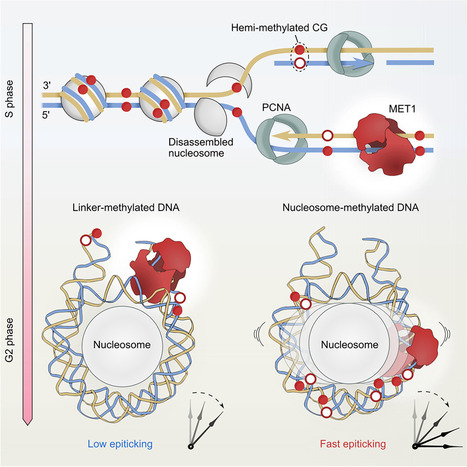
Replication-uncoupled MET1/DNMT1 activity shapes inheritance of DNA methylation In a study published in Cell Reports, the QLAB team at the Institute of Plant Sciences - Paris-Saclay (IPS2) sheds new light on the mechanisms that allow cells to maintain DNA methylation profiles during cell division.
Using a combination of approaches to track methylation in living cells, single-molecule sequencing, and genetic analyses, scientists have demonstrated in Arabidopsis thaliana that the maintenance of DNA methylation is not limited to replication. It continues into the G2 phase of the cell cycle.
The study also reveals that MET1, the primary enzyme responsible for maintaining CG methylation in plants, is capable of methylating DNA organized around nucleosomes and restoring certain lost methylation marks. Analyses based on genomic data from mammals suggest that this property is also shared by its homolog DNMT1.
These results thus highlight a previously underestimated component of the dynamics of DNA methylation, which may contribute to both the stability and the evolution of methylation profiles over time.
|
|
Scooped by
Saclay Plant Sciences
September 9, 3:37 AM
|
M1 and M2 students in the Master’s program Biology Agrosciences Plant Sciences just started the 2026-2027 academic year. SPS welcomes them and wishes them a year full of success !
|
|
Scooped by
Saclay Plant Sciences
July 27, 4:29 AM
|
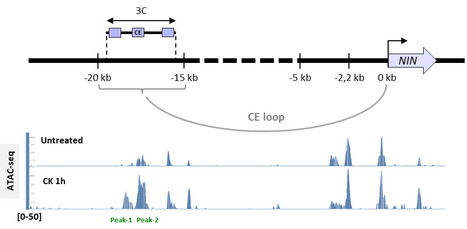
Legumes establish symbiotic interactions with soil-dwelling rhizobial bacteria, leading to the formation of nitrogen-fixing root nodules. This process requires extensive transcriptional reprogramming, which is associated with dynamic changes in DNA methylation and histone modifications. However, the role of three-dimensional (3D) genome architecture in symbiosis remains largely unexplored. In a new collaborative study published in Plant Communications between the teams of Florian Frugier (SILEG) and Moussa Benhamed (ChromD) at IPS2, we revealed using High-throughput Chromosome Conformation Capture (Hi-C), that the 3D chromatin landscape undergoes major reorganizations in nitrogen-fixing symbiotic nodules compared with non-symbiotic roots and non-nitrogen-fixing nodules. These changes involve alterations in A / B compartmentalization and the establishment of enhancer-promoter loops linked to the symbiotic program. Strikingly, we identified a long-range chromatin loop bridging a 15 kb distal enhancer to the proximal promoter of the NODULE INCEPTION ( NIN) gene, a master regulator of nodulation. This enhancer region contains multiple putative cytokinin (CK) response elements, and the CK-dependent induction of NIN in roots is associated with this enhancer-promoter interaction. Moreover, we demonstrated that the CK signaling transcription factor RESPONSE REGULATOR B3 (RRB3) binds specifically to this distal enhancer region and participates in forming enhancer-promoter looping. Altogether, these results uncovered a critical role for 3D chromatin reorganization in regulating gene expression during the legume-rhizobium symbiosis, highlighting a regulatory mechanism through which hormonal signaling shapes genome architecture and modulates NIN activation via long-range chromatin looping.
|
|
Scooped by
Saclay Plant Sciences
July 17, 9:07 AM
|
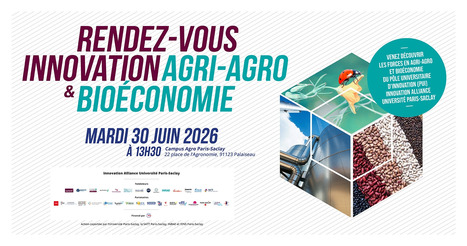
On June 30, SPS and its laboratories participated in the « Rendez-vous Innovation Agri-Agro & Bioéconomie » by running booths in three thematic areas and conducting BtoB meetings.
|
|
Scooped by
Saclay Plant Sciences
July 1, 8:57 AM
|
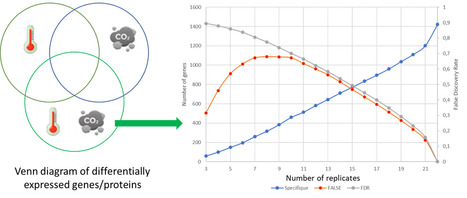
A very large proportion of false specific DEG when using few replicates and Venn Diagramms. Omics analyses represent a crucial step in the search for condition-specific events and often rely on Venn diagrams. In stress experiments for example, the presence of differentially expressed genes exclusively under combined stress conditions is frequently interpreted as evidence of non-additive effects: the effect of combined stresses would differ from the sum of the effects of individual stresses. In an article published in Nature Plants (Ferraro et al. 2026), to test the relevance of this line of reasoning, the Gnet team and the OGE team with several collaborators at IPS2, and the POPS, PAPPSO and Phenoscope platforms, generated a transcriptomic and proteomic dataset under a control condition, two single stresses, and the combination of both stresses, with 22 biological replicates. Analysing this dataset, Ferraro et al. demonstrate that identifying specific responses using Venn diagrams generates many false positives. This is explained by the low statistical power inherent in most omics studies that use too few replicates (typically around 3). Ferraro et al. 2026 thus highlights the need to interpret any claims about the specificity of such omics datasets with caution, and advocate for improvements in statistical modeling to avoid misleading biological interpretations. Figure: Evolution of the number of true and false specific DEGs as a function of the number of replicates. (Left) Venn diagram of DEGs under single and combined stress conditions; (Right) Number of genes correctly identified as specific (blue), falsely identified as specific (red), and falsely identified as differentially expressed (gray) as a function of the number of replicates.
|
|
Scooped by
Saclay Plant Sciences
June 30, 3:37 AM
|
These are the articles citing SPS published this month by the research teams in our perimeter. Well done to all the authors!
|
|
Scooped by
Saclay Plant Sciences
June 19, 3:26 AM
|
|
|
Scooped by
Saclay Plant Sciences
June 17, 3:08 AM
|
SPS supports the Thematic School Metabiodivex 2026 "From the analysis of complex mixtures to the characterization of specialized metabolites and small molecules: new approaches, new tools in NMR" which is starting today. Bringing together chemists, ecologists, structural biologists, metabolomics experts, phytochemists, and pharmacognosists, this school aims at sharing knowledge and experience, but also developing collaborative innovative projects.
|