Your new post is loading...

|
Rescooped by
Saclay Plant Sciences
from Plant Sciences
June 30, 8:27 AM
|
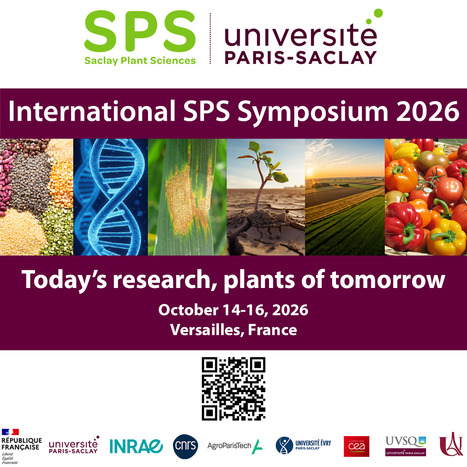
🚨 The deadline for Early bird registrations and the abstract submission to be considered for a talk have been postponed to July 12 ! 🚨 Don’t Miss the International SPS Symposium 2026 "Today’s research, plants of tomorrow"
This symposium offers 5 thematic sessions, 30+ talks (20 from submitted abstracts), 2 poster sessions, and networking opportunities with experts from the academic and industry sectors.
📅 October 14–16, 2026
📍 INRAE Center, Versailles (FR)
⏰ Early Bird Registration ends June 30 : Register now 📢 Submit your abstract now : Submit here 🔗 All the information here : Learn more
|
|
Scooped by
Saclay Plant Sciences
July 17, 11:27 AM
|
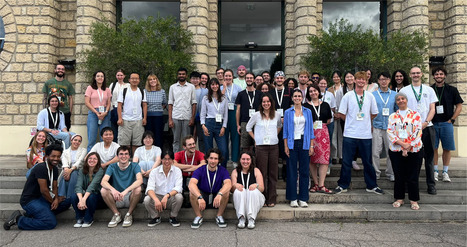
The tenth SPS Summer School took place at the Institute Jean-Pierre Bourgin for Plant Sciences from June 28 to July 3, 2026, on the theme “Plant single-cell RNA-Seq workshop: from current technologies to data analysis”. Once again, it was a great success!
|
|
Scooped by
Saclay Plant Sciences
July 16, 8:19 AM
|
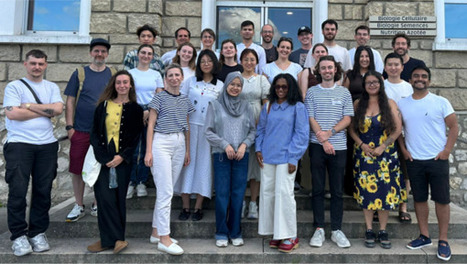
The 2026 edition of the SEVE Doctoral School’s PhD Days, co-funded by SPS, took place from July 1 to 3, 2026, at the Institute Jean-Pierre Bourgin for Plant Sciences (Versailles). This event brought together more than 50 students from various laboratories within the SPS/Paris-Saclay perimeter.
|
|
Scooped by
Saclay Plant Sciences
June 30, 3:37 AM
|
These are the articles citing SPS published this month by the research teams in our perimeter. Well done to all the authors!
|
|
Scooped by
Saclay Plant Sciences
June 19, 3:26 AM
|
|
|
Scooped by
Saclay Plant Sciences
June 17, 3:08 AM
|
SPS supports the Thematic School Metabiodivex 2026 "From the analysis of complex mixtures to the characterization of specialized metabolites and small molecules: new approaches, new tools in NMR" which is starting today. Bringing together chemists, ecologists, structural biologists, metabolomics experts, phytochemists, and pharmacognosists, this school aims at sharing knowledge and experience, but also developing collaborative innovative projects.
|
|
Scooped by
Saclay Plant Sciences
June 10, 4:17 AM
|
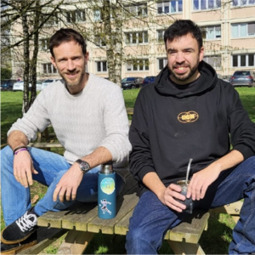
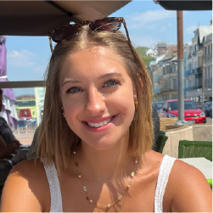
Meet our PhD students!
Emilie Baconnais, a graduate of the Master’s in Plant Sciences, joined the Institute Jean-Pierre Bourgin for Plant Sciences in 2023, where she is conducting her PhD research.
|
|
Scooped by
Saclay Plant Sciences
May 29, 5:20 AM
|
Check out the latest publications citing SPS (May). Great works!
|
|
Scooped by
Saclay Plant Sciences
May 27, 3:01 AM
|
On May 21st, nearly 60 high school students had the opportunity to participate in a special day organized by SPS in the framework of the Fascination of Plant Day 2026
|
|
Scooped by
Saclay Plant Sciences
May 21, 3:13 AM
|
Actively supported by SPS, the SPS teaching programs rely on close ties with stakeholders in the socio-economic sector.
|
|
Scooped by
Saclay Plant Sciences
May 13, 9:15 AM
|
From Argentina to Saclay : Rodigo Fernandez’s mobility experience
"Rodrigo Fernandez and his supervisor at I2BC, Pablo Calzadilla, look back at Rodrigo’s visit to Saclay, co-funded by SPS under the call Mobility for student"
|
|
Scooped by
Saclay Plant Sciences
May 6, 5:41 AM
|
Meet our Master's students - Léa Dehedin, a French student of the M1 in Integrative Biology and Physiology – Plant Sciences, who was awarded with an SPS scholarship.
|
|
Scooped by
Saclay Plant Sciences
April 23, 2:41 AM
|
Un collectif de généticiens, d’agronomes et de biologistes alerte, dans une tribune au « Monde », sur le risque d’une monopolisation accrue des semences par quelques multinationales, ce qui serait contraire à l’objectif affiché d’une agriculture durable.
|
|
|
Scooped by
Saclay Plant Sciences
July 27, 4:29 AM
|
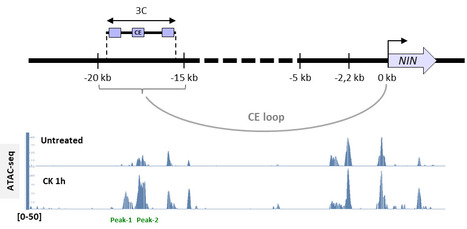
Legumes establish symbiotic interactions with soil-dwelling rhizobial bacteria, leading to the formation of nitrogen-fixing root nodules. This process requires extensive transcriptional reprogramming, which is associated with dynamic changes in DNA methylation and histone modifications. However, the role of three-dimensional (3D) genome architecture in symbiosis remains largely unexplored. In a new collaborative study published in Plant Communications between the teams of Florian Frugier (SILEG) and Moussa Benhamed (ChromD) at IPS2, we revealed using High-throughput Chromosome Conformation Capture (Hi-C), that the 3D chromatin landscape undergoes major reorganizations in nitrogen-fixing symbiotic nodules compared with non-symbiotic roots and non-nitrogen-fixing nodules. These changes involve alterations in A / B compartmentalization and the establishment of enhancer-promoter loops linked to the symbiotic program. Strikingly, we identified a long-range chromatin loop bridging a 15 kb distal enhancer to the proximal promoter of the NODULE INCEPTION ( NIN) gene, a master regulator of nodulation. This enhancer region contains multiple putative cytokinin (CK) response elements, and the CK-dependent induction of NIN in roots is associated with this enhancer-promoter interaction. Moreover, we demonstrated that the CK signaling transcription factor RESPONSE REGULATOR B3 (RRB3) binds specifically to this distal enhancer region and participates in forming enhancer-promoter looping. Altogether, these results uncovered a critical role for 3D chromatin reorganization in regulating gene expression during the legume-rhizobium symbiosis, highlighting a regulatory mechanism through which hormonal signaling shapes genome architecture and modulates NIN activation via long-range chromatin looping.
|
|
Scooped by
Saclay Plant Sciences
July 17, 9:07 AM
|
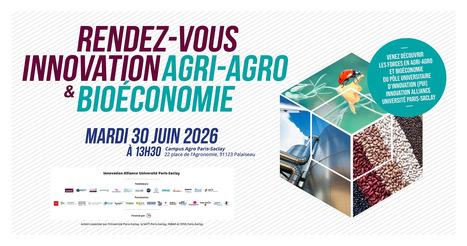
On June 30, SPS and its laboratories participated in the « Rendez-vous Innovation Agri-Agro & Bioéconomie » by running booths in three thematic areas and conducting BtoB meetings.
|
|
Scooped by
Saclay Plant Sciences
July 1, 8:57 AM
|
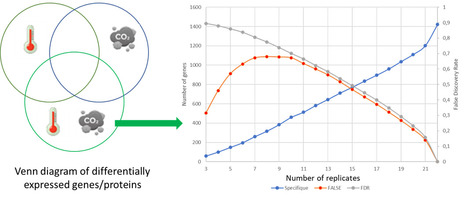
A very large proportion of false specific DEG when using few replicates and Venn Diagramms. Omics analyses represent a crucial step in the search for condition-specific events and often rely on Venn diagrams. In stress experiments for example, the presence of differentially expressed genes exclusively under combined stress conditions is frequently interpreted as evidence of non-additive effects: the effect of combined stresses would differ from the sum of the effects of individual stresses. In an article published in Nature Plants (Ferraro et al. 2026), to test the relevance of this line of reasoning, the Gnet team and the OGE team with several collaborators at IPS2, and the POPS, PAPPSO and Phenoscope platforms, generated a transcriptomic and proteomic dataset under a control condition, two single stresses, and the combination of both stresses, with 22 biological replicates. Analysing this dataset, Ferraro et al. demonstrate that identifying specific responses using Venn diagrams generates many false positives. This is explained by the low statistical power inherent in most omics studies that use too few replicates (typically around 3). Ferraro et al. 2026 thus highlights the need to interpret any claims about the specificity of such omics datasets with caution, and advocate for improvements in statistical modeling to avoid misleading biological interpretations. Figure: Evolution of the number of true and false specific DEGs as a function of the number of replicates. (Left) Venn diagram of DEGs under single and combined stress conditions; (Right) Number of genes correctly identified as specific (blue), falsely identified as specific (red), and falsely identified as differentially expressed (gray) as a function of the number of replicates.
|
|
Scooped by
Saclay Plant Sciences
June 24, 5:48 AM
|
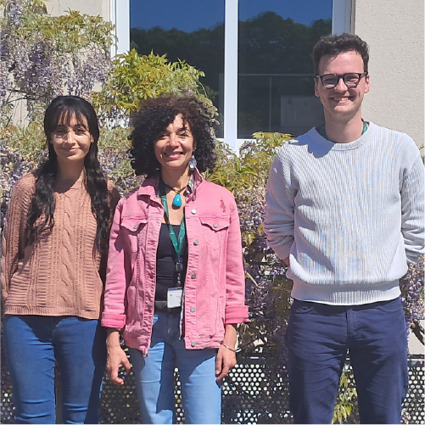
Axelle Deroubaix, a third-year PhD student in the BIOGER research unit, shares her experience. Her PhD is fully funded by SPS
|
|
Scooped by
Saclay Plant Sciences
June 18, 4:00 AM
|
From Tunisia to Versailles: Hela Younsi and her supervisors at IJPB, Eoghan King et Alia Dellagi, look back at Hela’s mobility in Versailles, which was co-funded by SPS
|
|
Scooped by
Saclay Plant Sciences
June 15, 3:57 PM
|
To defend against pathogens (bacteria, fungi, etc.), plants have a complex immune system composed of two main lines of defense: Pattern-Triggered Immunity (PTI) triggered by the recognition of Pathogen-Associated Molecular Patterns (PAMPs) at the plasma membrane, and Effector-Triggered Immunity (ETI) triggered by the detection of microbial effectors within plant cells. Long considered independent, recent studies show that PTI and ETI interacts closely. For instance, the PAMP-induced Mitogen Activated Protein Kinases 3 and 6 (MPK3/6) are involved in the induction of certain immune genes, such as the SNC1 gene, coding for receptors of effectors. However, the underlying regulatory mechanisms remain largely unknown. In a research article published in Scientific Reports, researchers from the STRESS team at IPS2 have shown through genetic approaches that the chromatin remodeling factor 5 (CHR5) acts downstream of MPK3/6 to promote the expression of SNC1. The authors also showed that, while CHR5 does not regulate the abundance or activity of MPK3/6, the combination of autoimmune gain-of-function mutants for MPK3 and SNC1 leads to a strong synergistic effect. Overall, the results obtained identify a new MPK3/6-CHR5-SNC1 signaling module and thus contribute to a better understanding of the links between PTI and ETI.
|
|
Scooped by
Saclay Plant Sciences
June 3, 3:56 AM
|
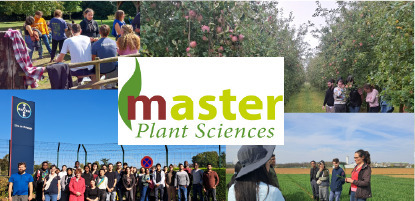
The 2025-2026 academic year marked the anniversaries of the two tracks of the Master’s 2 in Plant Sciences: the Research track celebrated its 10th anniversary, and the Professional track celebrated its 25th anniversary.
|
|
Scooped by
Saclay Plant Sciences
May 27, 9:55 AM
|
Don’t Miss the International SPS Symposium 2026 "Today’s research, plants of tomorrow"
This symposium offers 5 thematic sessions, 30+ talks (20 from submitted abstracts), 2 poster sessions, and networking opportunities with experts from the academic and industry sectors.
📅 October 14–16, 2026
📍 INRAE Center, Versailles (FR)
⏰ Early Bird Registration ends June 30 : Register now 📢 Submit your abstract now : Submit here 🔗 All the information here : Learn more
|
|
Scooped by
Saclay Plant Sciences
May 22, 7:33 AM
|
The Graduate School Network France, of which SPS is part, has launched its official website, where you can discover the research, mobility and collaboration activities, and the master training programs. Link: https://graduate-schools-network.fr/
|
|
Scooped by
Saclay Plant Sciences
May 19, 3:48 AM
|
Meet our Master's students - Karel Turquier, a French student of the M1 in Integrative Biology and Physiology – Plant Sciences, who was awarded with an SPS scholarship.
|
|
Scooped by
Saclay Plant Sciences
May 11, 5:15 AM
|
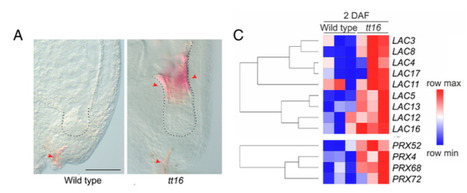
"Seeds evolved when plants retained the female spores inside the parent tissue. The growth of the spores was accommodated by removing part of the nucellus, the maternal tissue responsible for female meiosis. Here, we demonstrate that modification of galacturonic acid polymers in the cell wall leads to nucellus cell death and eventual elimination. This work highlights the crucial contribution of extracellular polysaccharides to the development of multicellular organisms."
|
|
Scooped by
Saclay Plant Sciences
April 30, 4:15 AM
|
The publications citing SPS appeared in the last month.
Congrats to all the authors! Affholder J, Lambret L, Penaranda S, Cornu D, Lebris P, Keita A, Delgrange S, Muños S, Téletchéa S, Boyer F, Pouvreau J, Delavault P, De Saint Germain A. Strigolactones and sesquiterpene lactones induce Orobanche cumana germination via KAI2d receptors through distinct processes. The Plant Journal; 126(1). doi: 10.1016/j.clay.2026.108209 Bigot S, Laufs P, Arnaud N. The coupling of local and global growth patterns governs leaf morphogenesis. Current Opinion in Plant Biology; 91. doi: 10.1016/j.pbi.2026.102872 Jeanne E, Torres M, Quéro A, Naquin D, Faure D. Carbon Metabolic Versatility of Agrobacterium tumefaciens in Tomato Roots and Galls. Environmental Microbiology ; 28(4). doi : 10.1111/1462-2920.70311 Lacroix M, Sehki H, Yu A, Le Masson I, Martinelli V, Vaucheret H. Cell-type-specific ablation of siRNAs by Arabidopsis RTL1 reveals a role of phloem companion cells in systemic post-transcriptional gene silencing. Nucleic Acids Res ; 54(8). doi: 10.1093/nar/gkag388 Stanek J, Fernandez O, Boudsocq M, Aggad D, Villaume S, Parent L, Dhondt-Cordelier S, Crouzet J, Dorey S, Cordelier S. Role of AtCPK5 and AtCPK6 in the regulation of the plant immune response triggered by rhamnolipids in Arabidopsis. PLOS ONE ; 21(4). doi: 10.1371/journal.pone.0346370
|