Your new post is loading...

|
Scooped by
mhryu@live.com
November 10, 3:42 PM
|
Bacterial microcompartments (BMC) are self-assembling protein nanocages involved in metabolic compartmentalization in bacteria. They consist of hexagonal and pentagonal protein subunits that tile the facets of polyhedral shells. BMCs can assemble a variety of morphologies, making them attractive platforms for engineering synthetic biomaterials and organizing catalysis. Here, a single 99-amino-acid hexameric shell protein from the BMC of Haliangium ochraceum is shown to self-assemble in vitro into a range of nanoscale and mesoscale architectures, including flat lattice sheets, nanorolls, single-walled nanotubes, and nanospheres. The assembly morphology can be controlled by modulating the ionic strength of the assembly buffer, which influences the anisotropic interactions between subunits. These structures represent model platforms for engineered synthetic nanoreactors and provide a framework for exploring the emergent physical, mechanical, and chemical properties of protein-based crystalline materials.
|
|
Scooped by
mhryu@live.com
November 10, 3:27 PM
|
The development of biodegradable soil-conditioning materials that improve water availability without increasing environmental impacts is important for climate-resilient agriculture. Here, we developed lignin-derived cryogels from agricultural waste lignin and evaluate their potential as multifunctional rhizosphere-engineering materials. The optimized formulation (LC1) exhibited 2.5-fold greater compressive strength than the lignin-free control and showed enhanced water absorption and sustained water retention at elevated temperatures. LC1 also underwent gradual biodegradation, reaching 32.7% mass loss after 130 days of soil burial, while germination indices exceeding 95% indicated negligible phytotoxicity. Agronomic performance was evaluated in three crop species (Triticum aestivum, Zea mays, and Brassica napus) under greenhouse and field conditions. LC1 consistently improved crop establishment and growth, with significant increases in plant height, biomass accumulation, chlorophyll content, soluble sugars, and protein levels. These responses coincided with improved root-zone moisture availability associated with the interconnected porous architecture and sustained hydration behavior of the cryogel. Collectively, the results establish experimentally supported structure–property–function relationships linking lignin-dependent modification of cryogel architecture with mechanical resilience, water regulation, biodegradation, and crop performance. This study demonstrates a bio-based strategy for converting underutilized lignin into biodegradable soil-conditioning materials and provides a framework for integrating biomass valorization with sustainable rhizosphere management and climate-resilient agriculture.
|
|
Scooped by
mhryu@live.com
November 10, 3:13 PM
|
Antibiotic resistance genes (ARGs) have profoundly exacerbated environmental risks to public health, evolving into a pressing ecological dilemma. Distinct from traditional pathways, outer membrane vesicles (OMV) are emerging as important vectors for horizontal gene transfer (HGT) in aquatic environments, yet their role in inter-phylum ARG dissemination remains unclear. In this study, we demonstrate that OMVs mediate bidirectional HGT of ARGs between the cyanobacterium Synechocystis sp. PCC 6803 and E. coli DH5α. Co-incubation experiments confirmed that OMVs derived from either strain could associate with the other, accompanied by successful functional expression of transferred resistance genes. In simulated aquatic environmental conditions, OMVs supplementation increased HGT frequency by 1.49–2.27 folds compared to the control group on day 5. Metagenomic analysis further revealed that OMVs carrying resistance genes induced subtle shifts in coastal microbial community composition. Our findings establish OMVs as mobile genetic packages that enable ARGs exchange between cyanobacteria and heterotrophic bacteria, highlighting a previously overlooked pathway for environmental dissemination of ARGs and providing a theoretical basis for mitigating antibiotic resistance risks in aquatic ecosystems.
|
|
Scooped by
mhryu@live.com
November 10, 12:49 PM
|
Citric acid is the most widely produced organic acid in industrial biotechnology, with a global annual output exceeding 2 million tons and broad applications across the food, pharmaceutical, chemical, and environmental sectors. Despite more than a century of industrial development since the discovery of citric acid fermentation by Aspergillus niger in 1917, current production systems are approaching critical bottlenecks in strain performance, process efficiency, and environmental sustainability. Increasing evidence indicates that citrate overproduction is not governed by a single metabolic pathway but emerges as a multi-constraint-driven systems phenomenon involving coordinated regulation of metabolism, cellular physiology, and environmental conditions. Recent advances in systems biology and synthetic biology have enabled a paradigm shift from empirical optimization to rational and programmable biomanufacturing. The integration of multi-omics data with genome-scale metabolic models has substantially deepened the understanding of citrate overflow metabolism. In parallel, the development of CRISPR/Cas9-based genome editing, dynamic gene regulation systems, and promoter engineering has enabled precise and multiplexed rewiring of metabolic networks. Targeted engineering strategies focusing on carbon uptake, mitochondrial metabolism, citrate transport, and morphology regulation have demonstrated that high-level production requires coordinated multi-layer optimization rather than single-gene modifications. At the process level, emerging strategies, including immobilized fermentation, in situ product recovery, and the utilization of alternative non-food feedstocks, are being increasingly integrated with engineered strains to enhance productivity and sustainability. These advances collectively point toward a transition from conventional fermentation to a multi-scale, integrated biomanufacturing framework. This review provides a comprehensive overview of recent progress in citric acid biomanufacturing, covering the evolution of industrial A. niger strains, systems-level mechanisms of citrate accumulation, synthetic biology-enabled tool development, rational chassis engineering strategies, and process intensification approaches. Finally, we discuss future directions, including dynamic metabolic control, artificial intelligence-assisted design, and circular biorefinery systems, aiming to establish a fully integrated, intelligent, and sustainable paradigm for next-generation citric acid production.
|
|
Scooped by
mhryu@live.com
November 10, 12:23 PM
|
To sustain supplies of key metals, policymakers should support the infrastructure needed to deploy mining biotechnologies on a large scale. bioleaching
|
|
Scooped by
mhryu@live.com
November 10, 12:10 PM
|
CRISPR/Cas gene editing holds great promise for applications in agricultural breeding and gene therapy; however, native Cas proteins face bottlenecks such as off-target effects, PAM limitations, and delivery challenges. This review explores a three-tiered, progressive, and synergistic analytical framework comprising directed evolution, rational structural design, and integrated protein engineering. Following the logic of “random exploration—precision modification—system integration,” it systematically clarifies the principles, advantages, disadvantages, and complementary interactions among these three optimization techniques. By comprehensively mapping the entire technical pathway for Cas protein improvement, this study fills a gap in systematic analysis within the field and provides a theoretical framework for tiered, synergistic modification to support the development of high-performance editors. The paper further analyzes a novel research and development paradigm in which AI and protein language models profoundly empower Cas modification. It summarizes intelligent toolchains such as structure prediction, virtual mutation, and de novo design of artificial Cas proteins, and highlights the unique advantages of AI in overcoming the performance trade-offs inherent in traditional protein engineering. At the same time, it identifies existing challenges, such as data scarcity and insufficient model interpretability, and looks ahead to how multimodal gene-editing large language models and automated closed-loop experimental systems will drive the iterative development of miniaturized, broad-spectrum, and highly precise editing tools, thereby facilitating the clinical and industrial implementation of gene-editing technologies.
|
|
Scooped by
mhryu@live.com
November 10, 1:28 AM
|
Bacteriophages have gained renewed attention as antibacterial agents because they inhibit bacteria through mechanisms distinct from those of antibiotics. However, the practical use of natural phages remains limited by their narrow host range and reduced activity in complex environments. Although phages are abundant in nature, the isolation and screening of phages with properties suited to specific applications can be time-consuming and labor-intensive. Phage engineering offers a means to overcome these limitations by modifying natural phage properties and introducing defined functions. Advances in genetic technologies have enabled the construction of engineered phages with tailored biological activities. Their host specificity and capacity to deliver genetic material also provide a basis for diverse biomedical applications. This review discusses major phage engineering strategies and their applications in bacterial control and detection. These applications include host-range modification, enhancement of antibacterial activity, suppression of bacterial virulence, programmable delivery of genetic payloads, phage-based nanotechnology, and bacterial detection. By integrating engineering strategies with functional applications, this review examines the development of engineered phages from genetic design and functional validation to clinical translation.
|
|
Scooped by
mhryu@live.com
November 10, 1:16 AM
|
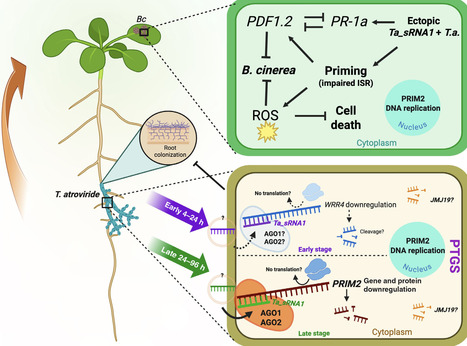
Beneficial root-colonizing fungi such as Trichoderma promote plant growth and immunity, yet the contribution of fungal small RNAs (sRNAs) to these interactions remains poorly understood. Here, we identified Ta_sRNA1, a highly abundant Trichoderma atroviride sRNA that accumulates in Arabidopsis root cells and associates with ARGONAUTE 1 and 2 (AGO1/2) complexes to modulate host gene expression. Using stem-loop reverse transcription quantitative polymerase chain reaction, AGO immunoprecipitation, transgenic lines and a fungal overexpression strain, we examined the function of Ta_sRNA1 and identified PRIM2, encoding the large subunit of DNA primase, as a host target associated with Ta_sRNA1 activity. Ta_sRNA1-mediated repression of PRIM2 restricts fungal overcolonization and enhances resistance to Botrytis cinerea. This regulation is associated with systemic immune priming, increased reactive oxygen species (ROS) accumulation and maintenance of plant growth. By contrast, PRIM2 overexpression suppresses ROS and increases pathogen susceptibility. These findings indicate that a Trichoderma-derived cross-kingdom sRNA modulates plant immunity by targeting the susceptibility-associated gene PRIM2. This mechanism fine-tunes the balance between beneficial colonization and defense responses, highlighting fungal sRNAs as regulators of plant immune homeostasis during beneficial plant–microbe interactions.
|
|
Scooped by
mhryu@live.com
November 10, 12:55 AM
|
The global microplastic crisis and the suboptimal material properties of biodegradable polyhydroxyalkanoates (PHAs) necessitate the engineering of efficient PHA synthases (PhaCs). However, the narrow substrate specificity of natural PhaCs limits the production of tailored PHA copolymers. Here we report a bioinformatics-guided strategy for the rational design of functional chimeric PhaCs, achieving a 100% success rate in generating 16 active chimeras from two complementary class I enzymes (high-activity PhaCCs and high-3HHx-incorporating PhaCBP-M-CPF4). The resulting chimeras, notably PhaCCSBP1, PhaCCSBP3, PhaCCSBP4, and PhaCCSBP5, combine high PHA yield, preserved 3HHx incorporation (up to 13.3 mol%), and a single-granule morphology ideal for downstream processing. Domain swapping and truncation experiments indicate that the catalytic domain primarily influences 3HHx incorporation and granule morphology, whereas the N-terminal domain (NTD) plays a modulatory role in both 3HHx incorporation and granule morphology. Structural inspection of the 3D model suggests a conserved hydrogen bond network between the NTD and the LID region of the CAP subdomain, formed by the last three α-helices of the NTD; disruption of this network is proposed to impair LID mobility and selectively exclude bulky 3-hydroxyhexanoate-CoA (3HHx-CoA). This work provides a predictive framework for chimerization of PhaCs, identifies a potential allosteric engineering target, and a mechanistic hypothesis for substrate gating.
|
|
Scooped by
mhryu@live.com
November 10, 12:44 AM
|
Open-source biomanufacturing hardware, such as liquid handlers and bioprinters, can approach commercial performance at substantially lower cost, but many designs remain poorly documented, inconsistently validated and difficult to maintain. To address these challenges, we developed the DIY Biofabrication Atlas, a public resource based on curated paper records and publication metadata, with standardized reporting of cost, components and performance.
|
|
Scooped by
mhryu@live.com
November 10, 12:29 AM
|
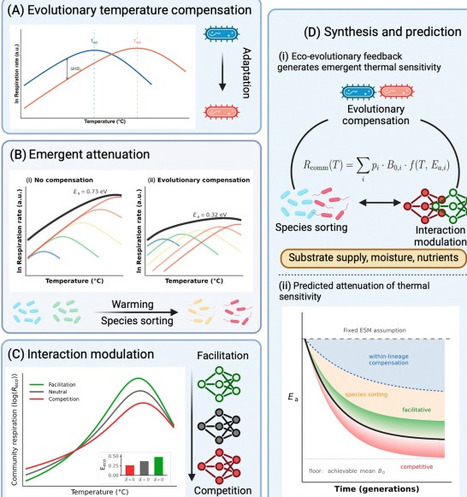
Earth System Models project a strong positive carbon–climate feedback from microbial respiration, the largest biotic carbon flux to the atmosphere. Yet experimental studies show that under sustained warming, the thermal sensitivity of microbial respiration often attenuates, through mechanisms that are debated and absent from models. I propose that attenuation is an emergent eco-evolutionary property: evolutionary temperature compensation lowers baseline respiratory rates within lineages; species sorting shifts biomass toward lineages with lower baseline rates; and species interactions reshape the aggregate response, all conditioned by substrate. The pace of these trait and compositional changes relative to warming determines how quickly attenuation develops. Embedding these dynamics in trait-based models could improve carbon–climate projections.
|
|
Scooped by
mhryu@live.com
November 9, 11:57 PM
|
Enzymatic assays are fundamental tools in clinical diagnostics and biomedical research owing to their high specificity and sensitivity for biomarker quantification. However, their translation from centralized laboratories to point-of-care (POC) and resource-limited settings remains limited by lengthy assay procedures, high reagent consumption, and reliance on conventional analytical instrumentation. Microfluidic technologies address many of these limitations by enabling precise fluid handling, reducing sample and reagent volumes, and integrating multiple analytical processes within miniaturized platforms. In this review, we critically examine recent advances in enzymatic microfluidic systems for biomarker analysis, with particular emphasis on their applicability to POC diagnostics. Rather than providing a descriptive overview, we systematically compare pressure-driven, centrifugal, droplet-based, and digital microfluidic platforms with respect to device architecture, reaction kinetics, detection strategies, analytical performance, system integration, and clinical applicability. We further discuss how microscale factors, including thermal regulation, mass transfer, surface interactions, and enzyme immobilization, influence the performance of enzymatic assays across different platforms. In addition, we critically assess the current level of experimental and clinical validation, highlighting persistent challenges related to reproducibility, standardization, scalability, and clinical translation. By linking microfluidic design principles with enzymatic assay performance, this review provides a conceptual framework for the rational development and future clinical implementation of next-generation microfluidic enzymatic assays.
|
|
Scooped by
mhryu@live.com
November 9, 11:50 PM
|
Aspergillus flavus poses a significant threat to global food security and public health, as it not only triggers severe mold spoilage in staple crops like peanuts and corn but also produces aflatoxin, a potent carcinogen. However, genetic manipulation of this fungus is notoriously challenging due to its inherent insensitivity to conventional antibiotics. To overcome this barrier, we established a robust, fully endogenous genetic transformation system for a highly toxigenic wild-type strain, A. flavus-SD, using polyethylene glycol (PEG)-mediated protoplast transfection with two selectable markers: pyrG (uracil auxotrophy/5-FOA counterselection) and a β-tubulin E198A point mutation (carbendazim resistance). We successfully constructed the tool strains with a ΔpyrG mutation, which were used for gene knockout and overexpression, and the β-tubulin E198A mutant was used for gene complementation. To validate the operational efficacy of this platform, we performed knockout, complementation, and overexpression of the nsdD gene as a test case. This study provides a reliable technical foundation for elucidating the molecular mechanisms governing aflatoxin biosynthesis and pathogenicity, thereby facilitating the identification of novel targets for A. flavus control.
|
|
|
Scooped by
mhryu@live.com
November 10, 3:30 PM
|
Autoregressive DNA language models generate sequences efficiently from left to right, but many genome-analysis and sequence-editing problems are naturally conditioned on both flanks. We introduce CreatiPhage, a 144.5M-parameter autoregressive DNA language model for bacteriophages, and its diffusion extension, CreatiPhage Diffusion DNA-LM (CPDD). CPDD is a 147.5M-parameter bidirectional discrete diffusion model initialized from the six-epoch CreatiPhage checkpoint. CPDD retains the pretrained Transformer, block attention residuals, and Engram conditional memory, while introducing non-causal attention, a MASK-aware base-5 Engram, centered depthwise convolution, and position-aligned nucleotide readout. Training combines masked and GIDD-style uniformly substituted bases with nucleotide- and amino-acid-level losses over a 10 kb, 32 kb, and whole-source context curriculum. On a screened panel of 522 phage CDSs, CPDD achieves higher random-mask restoration accuracy than a comparable diffusion model and performs well above codon-level references. In a mixed-corruption test, it restores 42.4% of visible incorrect bases. Frozen CPDD representations also support infA fitness prediction and seven-class phage virion protein subtype classification. Controlled evaluations further characterize how restoration depends on visible context and identify opportunities to improve longer-range sequence recovery. Together, these results support scaffold-conditioned sequence modeling as a step towards modular design of phage genomes.
|
|
Scooped by
mhryu@live.com
November 10, 3:24 PM
|
Over the next few decades, there is a compelling need to build a new sustainable energy infrastructure to replace the fossil fuel system that we have relied on since the 1700s. This infrastructure must not only replace what exists but also far exceed its capabilities, delivering more power to more people to meet the growing demands from both developing and advanced economies. But how do we increase energy use without harming the Earth? Biology drives the Earth's geochemical cycles, operating with far greater elemental and energy fluxes than all of human civilization. This suggests that synthetic biology could solve at least some of our environmental problems while providing access to much greater energy. However, leveraging biology remains a formidable challenge, in part because we do not yet understand nearly enough about the basic science underlying the biological systems that bring the most unusual and useful capabilities to sustainability and energy. This challenge is not unique to biology and sustainability – groundbreaking technologies of the past have required not only curiosity-driven basic research but also use-inspired basic research. Over the past decade, our lab has discovered new basic science needed to build synthetic biology technologies and established itself as a leader in sustainability and synthetic biology. This review summarizes breakthroughs from our lab over the past decade in three key areas: biomining, electrically driven metabolism, and hyper-engineerable microbes.
|
|
Scooped by
mhryu@live.com
November 10, 1:03 PM
|
Integrating synthetic gene circuits with endogenous mammalian gene expression programs enables genetic readouts of physiologically relevant cellular states. However, the performance of these readouts is often constrained by sensing promoters with low maximal output, modest fold changes, and high basal activity. Here, we use mathematical modeling and analysis to devise SensEnhance, a generalizable genetic circuit architecture that converts leaky, low-dynamic-range promoter signals into tightly controlled, high-dynamic-range outputs. SensEnhance combines sequestration-mediated suppression below a tunable response threshold with feedback-supported amplification above it. We implement SensEnhance through split intein-mediated protein trans-splicing and experimentally validate its predicted input–output behavior and threshold tunability. We apply SensEnhance to a YAP/TAZ-responsive mechanosensing promoter and stably integrate the circuit into NIH/3T3 fibroblasts, increasing output fold change between soft and stiff tissue-like hydrogels from 2.6-fold in the promoter-only configuration to over 20-fold using SensEnhance. When coupled to a STAT3-responsive promoter showing a 2.5-fold change in response to IL-6, SensEnhance increases this fold change to 14-fold, improving cytokine sensing and supporting its generic applicability across signaling pathways. These results establish SensEnhance as a modular strategy for improving the dynamic range and tunability of mammalian genetic biosensors.
|
|
Scooped by
mhryu@live.com
November 10, 12:44 PM
|
The human microbiome, the collection of microorganisms that inhabit the human body, has been extensively studied over the past two decades and has been shown to play a critical part in health and disease. These research efforts renewed interest in developing microbial therapeutics to promote human health and treat disease. However, the vast majority of human gut microbiome research has been focused on fecal microbial strains and communities, leaving most of the gastrointestinal tract understudied. The dynamic environment of the small intestine provides distinct opportunities for microorganisms to interact with the host and diet. In this Review, we discuss the current state of research on the microbiome of the small intestine, how interactions between the small intestine and its microbiome influence host physiology, and we posit that small intestinal microorganisms are a unique source of novel therapeutics for treating human disease. Next-generation microbial therapeutics that emerge from the small intestinal microbiome are anticipated to be relevant to improving small intestinal diseases as well as systemic human health. In this Review, Britton and colleagues examine the composition of the small intestinal microbiome and its interactions with the host, highlighting emerging insights into its roles in physiology and health. They also discuss the challenges of studying this understudied microbial community and its potential as a source of future microbial therapeutics.
|
|
Scooped by
mhryu@live.com
November 10, 12:21 PM
|
Lignocellulose is the most abundant renewable carbon resource in nature. However, its structural recalcitrance, arising from the complex association of cellulose, hemicellulose, and lignin, results in high pretreatment costs and inefficient enzymatic hydrolysis, thereby limiting its high-value utilization. The rumen harbors a diverse anaerobic microbial community with efficient lignocellulose-degrading capacity, interconnected metabolic networks, and considerable functional adaptability, making the rumen microbiome a promising biological platform for lignocellulose conversion. This review systematically summarizes the mechanisms of lignocellulose degradation by rumen microorganisms, the metabolic pathways underlying value-added chemical production, and the process-, community-, and genetic-level strategies used to improve lignocellulose conversion performance. It further discusses major constraints on the development of rumen-derived bioconversion systems, including the instability of in vitro microbial communities, limited control over metabolic flux, and difficulties in process scale-up. Finally, the potential of multi-omics analyses and synthetic biology to improve community stability, metabolic controllability, and product selectivity is highlighted. This review provides theoretical and technical guidance for developing sustainable lignocellulose valorization processes based on rumen microorganisms.
|
|
Scooped by
mhryu@live.com
November 10, 12:06 PM
|
Excessive intake of free sugars is a major modifiable risk factor for obesity, type 2 diabetes and cardiovascular disease, and it is a global public-health priority to reduce dietary sugar while preserving sensory quality. Referred to here as “healthy sugars”, the low-calorie monosaccharides D-allulose and D-tagatose combine sucrose-like sensory and bulking behavior with a distinct metabolic fate in humans and, for D-tagatose, with defence-inducing activity in plants. This review traces the evolution of sugar supply through four stages, from agricultural extraction of sucrose (Sugar 1.0) and enzymatic hydrolysis to high-fructose syrup (Sugar 2.0) to chemically synthesized high-intensity sweeteners (Sugar 3.0) and precision biomanufacturing of healthy sugars (Sugar 4.0). We review the molecular basis of healthy-sugar action in mammalian metabolic homeostasis and in plant sweet immunity, then compare manufacturing platforms, equilibrium-limited enzymatic epimerization, immobilized-enzyme and continuous-reactor processes, thermodynamically driven cell-free cascades, and cell-free CO2-to-hexose synthesis, through a consolidated cross-platform comparison of conversion, titer, yield, scalability and technology readiness. We then set out an amyloplast-targeted compartmentalised design for sugar-crop chassis, a distinct phosphorylated route for D-tagatose, and a climate-adaptive sugarcane, sugar beet, sorghum manufacturing crops. Finally we examine the conditions under which a plant-chassis route could offer cost or carbon advantages, comparing feedstock, energy, separation and carbon-balance considerations across platforms, and comparing the ingredient and biosafety requirements applying in the United States, the European Union and China. The plant-chassis route is presented throughout as a design proposal requiring crop-level validation, and the prerequisites for its projected advantages are stated explicitly.
|
|
Scooped by
mhryu@live.com
November 10, 1:22 AM
|
A recent study by Amundson et al. reconstructs plant cis-regulatory evolution over 300 million years, revealing widespread conservation of noncoding sequences. These ancient elements stabilize core developmental programs while enabling regulatory innovation, resolving a long-standing paradox in gene regulation and offering a comparative framework for precision engineering of plant traits.
|
|
Scooped by
mhryu@live.com
November 10, 1:01 AM
|
Rapid SARS-CoV-2 evolution drives continuous epidemic waves, harming vaccine protection and exerting heavy burden to population health. Predicting virus evolution holds the key for current and future medical countermeasures against infectious diseases by allowing well-matching vaccines and timely epidemic response. However, due to its high genetic diversity, fast transmissibility and evolutionary rate, accurate and timely prediction of SARS-CoV-2 evolution remains a challenge. To address this, we developed a computational framework, Beth-2, to predict key mutations of SARS-CoV-2 through analyzing within-host viral genome deep sequencing data. We leveraged the early fitness signals of variants exhibited within-host and their fitness pattern between-host to infer the emerging mutations with fitness potential. In retrospective data validation, 98.6% of the key SARS-CoV-2 mutations on receptor binding domain could be detected by our model with a median lead time of 9 mo before they reached predominance at population level. Among the 26 prospectively predicted mutations, 69% of them exhibited significantly enhanced transmissibility and five showed significant immune escape from plasma of subjects who received COVID-19 mRNA vaccine collected 6 mo after the prediction time. The mutations predicted by Beth-2 that are functionally enhanced include F456L, the defining mutation of multiple current circulating lineages, including KP.3, NB.1.8.1, and XFG. The model captures mutations of high fitness potential under the natural immune environment of host and is applicable to other pathogens. The framework can be implemented along with the existing genome surveillance network and offers an efficient and effective instrument for vaccine preparation and epidemic response.
|
|
Scooped by
mhryu@live.com
November 10, 12:50 AM
|
Methane emissions account for nearly a third of the Earth’s effective radiative forcing, with methanotrophs playing a critical role in mitigating emissions by oxidising methane in diverse environments. Despite their ecological importance, methanotrophic diversity and environmental distribution remain incompletely characterised due to cultivation challenges, incomplete or low-quality metagenome-assembled genomes, and limited taxonomic resolution in marker gene surveys. Here, we present a national study of the biogeography of novel and known methanotrophs across Denmark’s major natural, urban and agricultural habitats, using genome-resolved classification of 10,683 metagenomes and 102 new methanotrophic species. By linking metabolic potential to habitat-specific distributions, we reveal uncharacterised methanotrophs as dominant in natural ecosystems. These findings provide a comprehensive baseline of methanotroph diversity, reveal clear contrasts between natural and disturbed habitats, and highlight candidate species and habitats for future methane-mitigation strategies. In this study, the authors use metagenomics to map the diverse and previously unknown bacteria responsible for taking up methane across Denmark’s varied environments and highlight the natural habitats and methanotroph species with the potential for methane mitigation.
|
|
Scooped by
mhryu@live.com
November 10, 12:44 AM
|
Microbial cells adapt their physiology when growth is restricted by nutrient limitation, balancing survival with the capacity to produce proteins. Here, we investigated this adaptation in Saccharomyces cerevisiae by comparing retentostat cultures, in which specific growth rates reached below 0.001 h⁻¹, of a reference strain (ScNTi001) and a ∆msn2∆msn4 mutant (ScNTm001). We show that general stress-response transcription factors Msn2 and Msn4 are crucial for maintaining energy efficiency and for survival under this extreme calorie restriction. Their absence increased population heterogeneity and reduced viability, underscoring a role beyond merely stress resistance. To understand (heterologous) protein expression dynamics, we monitored how a stress-inducible promoter (PHSP12) and a constitutive promoter (PTEF1) impacted protein levels. The PHSP12 remained active at moderate to low growth rates, but expression sharply dropped below 0.001 h⁻¹, whereas the PTEF1 sustained protein expression, with activity linked to specific glucose uptake rates rather than growth rate. This decoupling revealed a trade-off: although PTEF1-driven ymNeongreen-specific production rates were 70% higher in the absence of ∆msn2∆msn4, overall product yields were 13% lower.
|
|
Scooped by
mhryu@live.com
November 10, 12:05 AM
|
Recycling carbon oxides from industrial off-gases and gasified organic waste using gas fermentation offers a sustainable route for biomanufacturing of fuels and chemicals. Acetogens are attractive biocatalysts here and fix CO and CO2 via the Wood-Ljungdahl pathway (WLP). However, the incomplete functional annotation of the associated C1-fixing gene cluster limits rational engineering of acetogen cell factories. Here, we investigated five highly conserved but previously uncharacterised C1-fixing cluster genes to quantify their contributions to the growth of the model-acetogen Clostridium autoethanogenum using targeted CRISPR/Cas9-mediated single-gene deletions, physiological characterisation, comparative computational structural analyses, CRISPRi, and functional genomics. Importantly, we identified acsV, lpdA, cooC, and cooC2 as essential for autotrophy but not heterotrophy, whereas deletion of gcvH reduced autotrophic growth and shifted carbon flux from acetate towards 2,3-butanediol. Amino acid supplementation experiments and computational analyses indicate that lpdA and gcvH do not primarily function in glycine or serine biosynthesis but instead fulfill specialized roles in WLP-associated C1 and redox metabolism. Furthermore, genetic and physiological analyses showed that the two CooC-family ATPases, CooC and CooC2, have non-redundant roles in growth, with only cooC2 deletion impairing heterotrophy. Acetate supplementation tests revealed that ΔacsV cells retained metabolic activity despite abolished autotrophy, and computational analyses suggest a likely role for acsV in ATP-dependent corrinoid activation. Surprisingly, CRISPRi-mediated repression of acsV was translationally buffered, resulting in altered carbon partitioning without impairing autotrophy. Together, our findings provide insights into the physiological importance of the C1-fixing cluster genes in acetogens and support their metabolic engineering as gas-fermenting cell factories.
|
|
Scooped by
mhryu@live.com
November 9, 11:53 PM
|
Accurate reference-free assessment of predicted RNA 3D structures is essential for large-scale RNA modeling, yet the impact of training data on deep learning–based quality predictors remains poorly understood. Here, we present a systematic cross-training analysis of three deep learning predictors for RNA 3D structure quality assessment, each originally developed on distinct training sets. By retraining each predictor on alternative (nonnative) datasets—including RNA3DQA, a new set created specifically for this project—and evaluating performance on independent RNA-Puzzles benchmarks, we systematically assess the relative contributions of model architecture and training data composition. Our results reveal pronounced differences in cross-dataset generalization, with predictors often performing better when trained on nonnative datasets than on their native ones. Notably, the impact of the training datasets varied across predictors, with RNA3DQA yielding the overall best accuracy and ranking stability results specifically for the ARES model. Native training sets yielded better performance for RNA3DCNN and lociPARSE. These findings demonstrate that the characteristics of the training data play a dominant, model-dependent role in shaping the performance and robustness of reference-free RNA 3D structure quality assessment methods. We conclude with practical recommendations for designing transferable training datasets and for benchmarking deep learning–based quality predictors in RNA structural bioinformatics.
|