Your new post is loading...

|
Scooped by
mhryu@live.com
April 3, 2018 2:42 PM
|
Here, all the RNA assembled de novo from roots of 12 willow trees, pot-grown in either contaminated or non-contaminated soil from a former petroleum refinery, was annotated and differential gene expression from any and all organisms identified was explored to see if the functionality of a successful phytoremediation system can be elucidated.
|
|
Scooped by
mhryu@live.com
April 3, 2018 2:33 PM
|
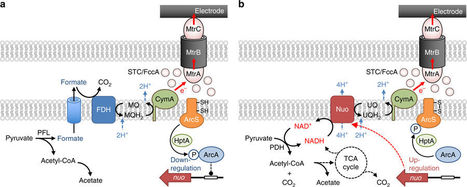
Electrochemically active bacteria (EAB) receive considerable attention for their utility in bioelectrochemical processes. Although electrode potentials are known to affect the metabolic activity of EAB, it is unclear whether EAB are able to sense and respond to electrode potentials. Here, we show that, in the presence of a high-potential electrode, a model EAB Shewanella oneidensis MR-1 can utilize NADH-dependent catabolic pathways and a background formate-dependent pathway to achieve high growth yield. We also show that an Arc regulatory system is involved in sensing electrode potentials and regulating the expression of catabolic genes, including those for NADH dehydrogenase. We suggest that these findings may facilitate the use of EAB in biotechnological processes and offer the molecular bases for their ecological strategies in natural habitats.
|
|
Scooped by
mhryu@live.com
April 3, 2018 2:16 PM
|
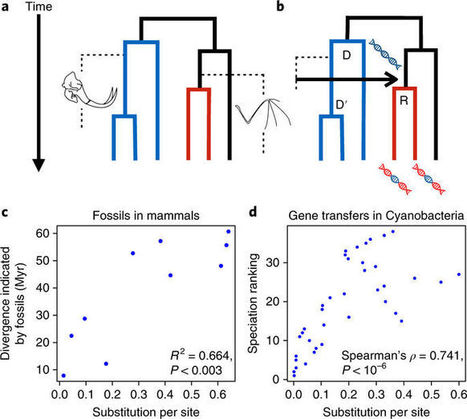
Biodiversity has always been predominantly microbial, and the scarcity of fossils from bacteria, archaea and microbial eukaryotes has prevented a comprehensive dating of the tree of life. Here, we show that patterns of lateral gene transfer deduced from an analysis of modern genomes encode a novel and abundant source of information about the temporal coexistence of lineages throughout the history of life. We use state-of-the-art species tree-aware phylogenetic methods to reconstruct the history of thousands of gene families and demonstrate that dates implied by gene transfers are consistent with estimates from relaxed molecular clocks in Bacteria, Archaea and Eukarya. We present the order of speciations according to lateral gene transfer data calibrated to geological time for three datasets comprising 40 genomes for Cyanobacteria, 60 genomes for Archaea and 60 genomes for Fungi. An inspection of discrepancies between transfers and clocks and a comparison with mammalian fossils show that gene transfer in microbes is potentially as informative for dating the tree of life as the geological record in macroorganisms.Article
|
|
Scooped by
mhryu@live.com
April 3, 2018 2:02 PM
|
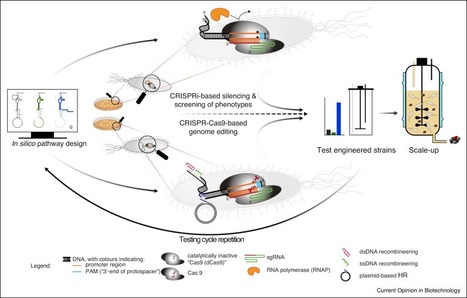
High engineering efficiencies are required for industrial strain development. Due to its user-friendliness and its stringency, CRISPR-Cas-based technologies have strongly increased genome engineering efficiencies in bacteria. This has enabled more rapid metabolic engineering of both the model host Escherichia coli and non-model organisms like Clostridia, Bacilli, Streptomycetes and cyanobacteria, opening new possibilities to use these organisms as improved cell factories. The discovery of novel Cas9-like systems from diverse microbial environments will extend the repertoire of applications and broaden the range of organisms in which it can be used to create novel production hosts. This review analyses the current status of prokaryotic metabolic engineering towards the production of biotechnologically relevant products, based on the exploitation of different CRISPR-related DNA/RNA endonuclease variants.
|
|
Scooped by
mhryu@live.com
April 3, 2018 8:18 AM
|
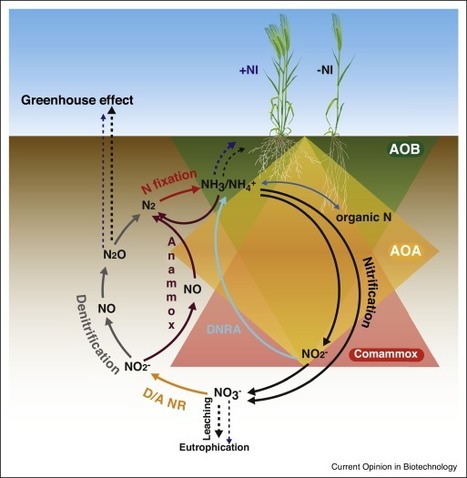
Nitrogen is one of the most important nutrients for plant growth and hence heavily applied in agricultural systems via fertilization. Nitrification, that is, the conversion of ammonium via nitrite to nitrate by soil microorganisms, however, leads to nitrate leaching and gaseous nitrous oxide production and as such to an up to 50% loss of nitrogen availability for the plant. Nitrate leaching also results in eutrophication of groundwater, drinking water and recreational waters, toxic algal blooms and biodiversity loss, while nitrous oxide is a greenhouse gas with a global warming potential 300× greater than carbon dioxide. Logically, inhibition of nitrification is an important strategy used in agriculture to reduce nitrogen losses, and contributes to a more environmental-friendly practice. However, recently identified and crucial players in nitrification, that is, ammonia-oxidizing archaea and comammox bacteria, seem to be under-investigated in this respect. In this review, we give an update on the different pathways in ammonia oxidation, the relevance for agriculture and the interaction with nitrification inhibitors. As such, we hope to pinpoint possible strategies to optimize the efficiency of nitrification inhibition.
|
|
Scooped by
mhryu@live.com
April 3, 2018 8:12 AM
|
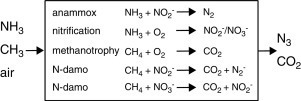
The efficient treatment of wastewater for the removal of nitrogen is of key importance to prevent eutrophication and deoxygenation of receiving water bodies. In addition, ineffective wastewater treatment can be a source of greenhouse gasses. The application of newly discovered microbial processes, such as nitrite/nitrate-dependent methane oxidation (N-damo), can make wastewater treatment systems more sustainable; especially when they are combined with anaerobic ammonium oxidation (anammox). A treatment system based on these microbial processes will need oxygen supply for the production of nitrite. This oxygen may inhibit N-damo and anammox and careful regulation of the oxygen supply is of key importance for the success of the application of N-damo in wastewater treatment.
|
|
Scooped by
mhryu@live.com
April 2, 2018 8:58 AM
|
Plants associated with symbiotic nitrogen fixing bacteria play important roles in early successional, riparian and semidry ecosystems. These so‐called nitrogen fixing plants are widely used for reclamation of disturbed vegetation and improvement of soil fertility in agroforestry. Yet, available information about plants that are capable of establishing nodulation is fragmented and somewhat outdated. This article introduces the NodDB database of nitrogen fixing plants based on morphological and phylogenetic evidence (available at http://dx.doi.org/10.15156/BIO/587469) and discusses plant groups with conflicting reports and interpretation such as certain legume clades and the Zygophyllaceae family. During angiosperm evolution, nitrogen fixing plants became common in the fabid rather than in the ‘nitrogen fixing’ clade. The global GBIF plant species distribution data indicated that nitrogen fixing plants tend to be relatively more diverse in savanna and semidesert biomes. The compiled and re‐interpreted information about nitrogen fixing plants enables accurate analyses of biogeography and community ecology of biological nitrogen fixation.
|
|
Scooped by
mhryu@live.com
March 31, 2018 3:38 PM
|
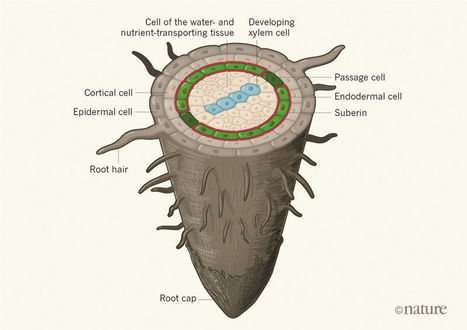
Water-conducting tissues inside plant roots are surrounded by impermeable cells. This protective barrier is punctured by ‘passage cells’, which are thought to regulate nutrient uptake. How these cells form has now been revealed. Plants need to take up water and nutrients through their roots, while keeping out pathogens and toxins. To achieve this, the roots’ inner transport tissues are enclosed in a protective, impermeable barrier of endodermal cells, interspersed with ‘openings’ in the form of a specific type of endodermal cell called a passage cell, which is thought to serve as a cellular gatekeeper, controlling access to the root interior1–4. In a paper in Nature, Andersen et al.5 describe molecular mechanisms that control the formation of passage cells, and show how the numbers of such cells are regulated by nutrient availability. The findings offer insights into the formation of these key plant cells, and link this to the patterning processes that form the embryonic root, providing an intriguing demonstration of the continuity of developmental mechanisms.
|
|
Scooped by
mhryu@live.com
March 30, 2018 5:08 PM
|
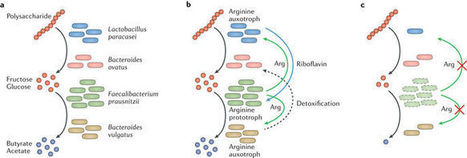
Microorganisms engage in complex interactions with other organisms and their environment. Recent studies have shown that these interactions are not limited to the exchange of electron donors. Most microorganisms are auxotrophs, thus relying on external nutrients for growth, including the exchange of amino acids and vitamins. Currently, we lack a deeper understanding of auxotrophies in microorganisms and how nutrient requirements differ between different strains and different environments. In this Opinion article, we describe how the study of auxotrophies and nutrient requirements among members of complex communities will enable new insights into community composition and assembly. Understanding this complex network over space and time is crucial for developing strategies to interrogate and shape microbial communities.
|
|
Scooped by
mhryu@live.com
March 29, 2018 3:02 PM
|
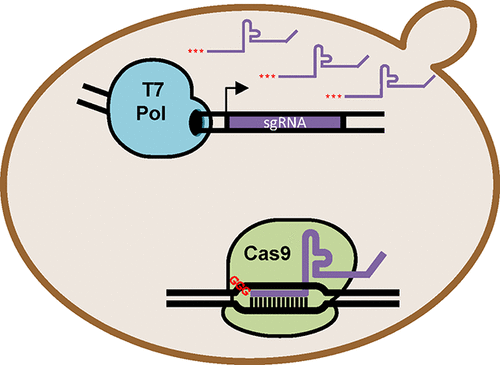
Efficient guide RNA expression often limits CRISPR-Cas9 implementation in new hosts. To address this limitation in fungal systems, we demonstrate the utility of a T7 polymerase system to effectively express sgRNAs. Initially, we developed a methodology in Saccharomyces cerevisiae using a modified version of the T7 P266L mutant polymerase with an SV40 nuclear localization signal to allow guide RNA expression immediately downstream of a T7 promoter. To improve targeting efficiency, guide RNA design was found to be tolerant to three mismatches or up to three additional bases appended to the 5′ end. The addition of three guanines to a T7-based guide RNA improved guide RNA expression 80-fold and achieved transcriptional output similar to the strong Pol III snr52 promoter. Resulting gene editing and dCas9-guided gene regulation with a T7-based guide RNA was on par with the commonly used snr52 system in S. cerevisiae. Finally, 96% and 60% genome editing efficiencies were achieved in Kluyveromyces lactis and Yarrowia lipolytica respectively with minimal optimization of this system. Thus, T7-based expression of sgRNAs offers an orthogonal method for implementing CRISPR systems in fungal systems.
|
|
Scooped by
mhryu@live.com
March 28, 2018 12:16 AM
|
Microbiome-wide association studies have established that numerous diseases are associated with changes in the microbiota1,2. These studies typically generate a long list of commensals implicated as biomarkers of disease, with no clear relevance to disease pathogenesis1,2,3,4,5. If the field is to move beyond correlations and begin to address causation, an effective system is needed for refining this catalogue of differentially abundant microbes and to allow subsequent mechanistic studies1,4. Here we demonstrate that triangulation of microbe–phenotype relationships is an effective method for reducing the noise inherent in microbiota studies and enabling identification of causal microbes. We found that gnotobiotic mice harbouring different microbial communities exhibited differential survival in a colitis model. Co-housing of these mice generated animals that had hybrid microbiotas and displayed intermediate susceptibility to colitis. Mapping of microbe–phenotype relationships in parental mouse strains and in mice with hybrid microbiotas identified the bacterial family Lachnospiraceae as a correlate for protection from disease. Using directed microbial culture techniques, we discovered Clostridium immunis, a previously unknown bacterial species from this family, that—when administered to colitis-prone mice—protected them against colitis-associated death. To demonstrate the generalizability of our approach, we used it to identify several commensal organisms that induce intestinal expression of an antimicrobial peptide. Thus, we have used microbe–phenotype triangulation to move beyond the standard correlative microbiome study and identify causal microbes for two completely distinct phenotypes. Identification of disease-modulating commensals by microbe–phenotype triangulation may be more broadly applicable to human microbiome studies.
|
|
Scooped by
mhryu@live.com
March 27, 2018 5:12 PM
|
Pseudomonas aeruginosa and Aspergillus fumigatus are common opportunistic bacterial and fungal pathogens, respectively. They often coexist in airways of immunocompromised patients and individuals with cystic fibrosis, where they form biofilms and cause acute and chronic illnesses. Hence, the interactions between them have long been of interest and it is known that P. aeruginosa can inhibit A. fumigatus in vitro. We have approached the definition of the inhibitory P. aeruginosa molecules by studying 24 P. aeruginosa mutants with various virulence genes deleted for the ability to inhibit A. fumigatus biofilms. The ability of P. aeruginosa cells or their extracellular products produced during planktonic or biofilm growth to affect A. fumigatus biofilm metabolism or planktonic A. fumigatus growth was studied in agar and liquid assays using conidia or hyphae. Four mutants, the pvdD pchE, pvdD, lasR rhlR, and lasR mutants, were shown to be defective in various assays. This suggested the P. aeruginosa siderophore pyoverdine as the key inhibitory molecule, although additional quorum sensing-regulated factors likely contribute to the deficiency of the latter two mutants. Studies of pure pyoverdine substantiated these conclusions and included the restoration of inhibition by the pyoverdine deletion mutants. A correlation between the concentration of pyoverdine produced and antifungal activity was also observed in clinical P. aeruginosa isolates derived from lungs of cystic fibrosis patients. The key inhibitory mechanism of pyoverdine was chelation of iron and denial of iron to A. fumigatus.
|
|
Scooped by
mhryu@live.com
March 27, 2018 2:50 PM
|
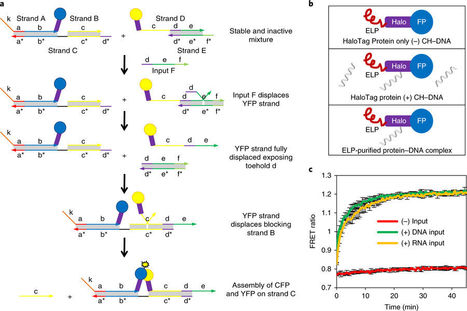
Inspired by the remarkable ability of natural protein switches to sense and respond to a wide range of environmental queues, here we report a strategy to engineer synthetic protein switches by using DNA strand displacement to dynamically organize proteins with highly diverse and complex logic gate architectures. We show that DNA strand displacement can be used to dynamically control the spatial proximity and the corresponding fluorescence resonance energy transfer between two fluorescent proteins. Performing Boolean logic operations enabled the explicit control of protein proximity using multi-input, reversible and amplification architectures. We further demonstrate the power of this technology beyond sensing by achieving dynamic control of an enzyme cascade. Finally, we establish the utility of the approach as a synthetic computing platform that drives the dynamic reconstitution of a split enzyme for targeted prodrug activation based on the sensing of cancer-specific miRNAs.
|
|
|
Scooped by
mhryu@live.com
April 3, 2018 2:36 PM
|
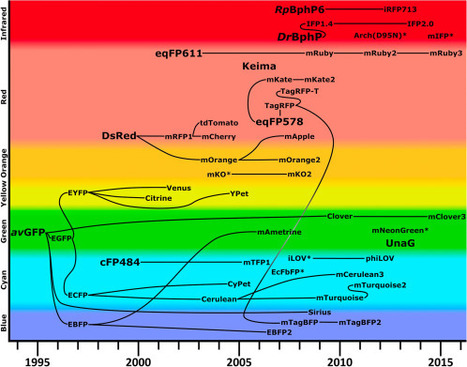
Genetically encoded fluorescent sensors are essential tools in modern biological research, and recent advances in fluorescent proteins (FPs) have expanded the scope of sensor design and implementation. In this review we compare different sensor platforms, including Förster resonance energy transfer (FRET) sensors, fluorescence-modulated single FP-based sensors, translocation sensors, complementation sensors, and dimerization-based sensors. We discuss elements of sensor design and engineering for each platform, including the incorporation of new types of FPs and sensor screening techniques. Finally, we summarize the wide range of sensors in the literature, exploring creative new sensor architectures suitable for different applications.
|
|
Scooped by
mhryu@live.com
April 3, 2018 2:25 PM
|
Plants associated with symbiotic nitrogen fixing bacteria play important roles in early successional, riparian and semidry ecosystems. These so‐called nitrogen fixing plants are widely used for reclamation of disturbed vegetation and improvement of soil fertility in agroforestry. Yet, available information about plants that are capable of establishing nodulation is fragmented and somewhat outdated. This article introduces the NodDB database of nitrogen fixing plants based on morphological and phylogenetic evidence (available at http://dx.doi.org/10.15156/BIO/587469) and discusses plant groups with conflicting reports and interpretation such as certain legume clades and the Zygophyllaceae family. During angiosperm evolution, nitrogen fixing plants became common in the fabid rather than in the ‘nitrogen fixing’ clade. The global GBIF plant species distribution data indicated that nitrogen fixing plants tend to be relatively more diverse in savanna and semidesert biomes. The compiled and re‐interpreted information about nitrogen fixing plants enables accurate analyses of biogeography and community ecology of biological nitrogen fixation.
|
|
Scooped by
mhryu@live.com
April 3, 2018 2:04 PM
|
In this special issue, the state of the art on several of those relatively new microbial biotechnologies are summarized and critically evaluated.
|
|
Scooped by
mhryu@live.com
April 3, 2018 2:00 PM
|
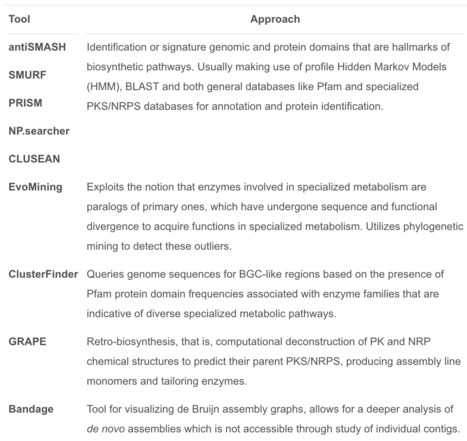
Microorganisms are Nature's little engineers of a remarkable array of bioactive small molecules that represent most of our new drugs. The wealth of genomic and metagenomic sequence data generated in the last decade has shown that the majority of novel biosynthetic gene clusters (BGCs) is identified from cultivation-independent studies, which has led to a strong expansion of the number of microbial taxa known to harbour BGCs. The large size and repeat sequences of BGCs remain a bioinformatic challenge, but newly developed software tools have been created to overcome these issues and are paramount to identify and select the most promising BGCs for further research and exploitation. Although heterologous expression of BGCs has been the greatest challenge until now, a growing number of polyketide synthase (PKS) and non-ribosomal peptide synthetase (NRPS)-encoding gene clusters have been cloned and expressed in bacteria and fungi based on techniques that mostly rely on homologous recombination. Finally, combining ecological insights with state-of-the-art computation and molecular methodologies will allow for further comprehension and exploitation of microbial specialized metabolites.
|
|
Scooped by
mhryu@live.com
April 3, 2018 8:16 AM
|
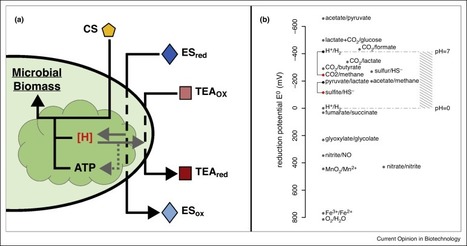
Microbial communities present the next research frontier. We argue here that understanding and engineering microbial communities requires a holistic view that considers not only species–species, but also species–environment interactions, and feedbacks between ecological and evolutionary dynamics (eco-evo feedbacks). Due this multi-level nature of interactions, we predict that approaches aimed soley at altering specific species populations in a community (through strain enrichment or inhibition), would only have a transient impact, and species–environment and eco-evo feedbacks would eventually drive the microbial community to its original state. We propose a higher-level engineering approach that is based on thermodynamics of microbial growth, and that considers specifically microbial redox biochemistry. Within this approach, the emphasis is on enforcing specific environmental conditions onto the community. These are expected to generate higher-level thermodynamic bounds onto the system, which the community structure and function can then adapt to. We believe that the resulting end-state can be ecologically and evolutionarily stable, mimicking the natural states of complex communities. Toward designing the exact nature of the environmental enforcement, thermodynamics and redox biochemistry can act as coarse-grained principles, while the use of electrodes — as electron providing or accepting redox agents — can provide implementation with spatiotemporal control.
|
|
Scooped by
mhryu@live.com
April 2, 2018 9:02 AM
|
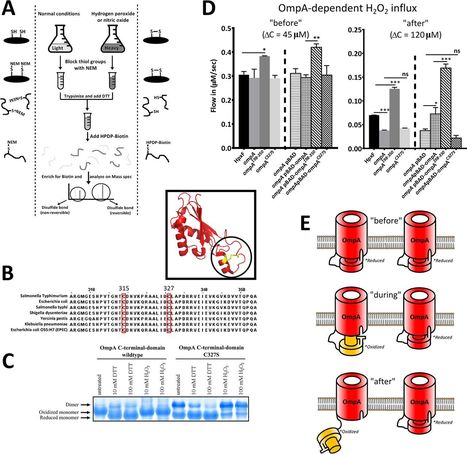
Next Section ABSTRACT The outer membrane (OM) of Gram-negative bacteria provides protection against toxic molecules, including reactive oxygen species (ROS). Decreased OM permeability can promote bacterial survival under harsh circumstances and protects against antibiotics. To better understand the regulation of OM permeability, we studied the real-time influx of hydrogen peroxide in Salmonella bacteria and discovered two novel mechanisms by which they rapidly control OM permeability. We found that pores in two major OM proteins, OmpA and OmpC, could be rapidly opened or closed when oxidative stress is encountered and that the underlying mechanisms rely on the formation of disulfide bonds in the periplasmic domain of OmpA and TrxA, respectively. Additionally, we found that a Salmonella mutant showing increased OM permeability was killed more effectively by treatment with antibiotics. Together, these results demonstrate that Gram-negative bacteria regulate the influx of ROS for defense against oxidative stress and reveal novel targets that can be therapeutically targeted to increase bacterial killing by conventional antibiotics.
|
|
Scooped by
mhryu@live.com
April 1, 2018 4:07 PM
|
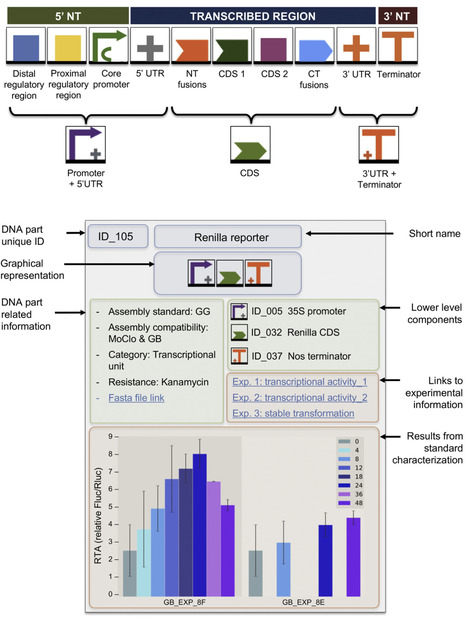
• Low-level codes have increased our ability to program novel genetic functions into plants. • Standardization of DNA assembly methods has enabled reactions to be miniaturized and automated. • It is possible to engineer the endogenous genes of many plant species. • Synthetic biology prescribes the use of interoperable standard DNA parts. • This is driving changes in exchange of biological materials and the information held about them.
|
|
Scooped by
mhryu@live.com
March 31, 2018 3:31 PM
|
Symbiotic N2 fixation research thus far, has been primarily focused on bacteria selection. However, little progress in impacting crop yields has resulted from this approach. Bacteria introduced in field soils rarely compete well with indigenous bacteria, including mutated lines selected for high nitrogen fixation capacity. Consequently, introduction of ‘elite’ bacteria in fields commonly does not result in crop yield increase. This review highlights that the primary regulation of N2 fixation is a result of response of integrated physiological activity at the plant level. Nitrogen feedback from the host plant plays an important role in regulating N2 fixation rate. Rapid sequestration of fixed nitrogen by the plant is especially important for high N2 fixation activity. In addition, water cycling in the plant between the shoot and nodules plays a key role in sustaining high N2 fixation activity. Therefore, attention in selecting host plant genotype is suggested to be the next step to increasing N2 fixation activity of grain legumes.
|
|
Scooped by
mhryu@live.com
March 29, 2018 3:06 PM
|
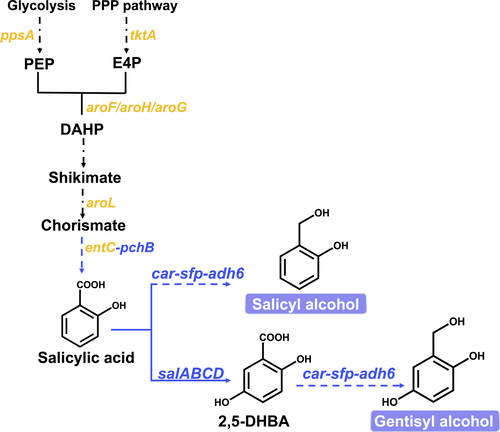
Salicyl alcohol and gentisyl alcohol are two important phenolic alcohols that possess significant biological activities and pharmaceutical properties. Here, we report establishment of novel biosynthetic pathways for microbial production of salicyl alcohol and gentisyl alcohol from renewable feedstocks. We first examined the promiscuity of the carboxylic acid reductase CAR toward salicylic acid and 2,5-DHBA, which enabled efficient synthesis of salicyl alcohol and gentisyl alcohol. Then, we employed a novel salicylic acid 5-hydroxylase to achieve 2,5-DHBA production from salicylic acid. After that, the de novo biosynthetic pathways were assembled and optimized by programming the carbon flux into the shikimate pathway. The final titers of salicyl alcohol and gentisyl alcohol reached to 594.4 mg/L and 30.1 mg/L, respectively. To our knowledge, this work achieved microbial production of salicyl alcohol and gentisyl alcohol for the first time. Our present study also demonstrated application of enzyme promiscuity to establish non-natural biosynthetic pathways for the production of high-value compounds.
|
|
Scooped by
mhryu@live.com
March 28, 2018 1:52 AM
|
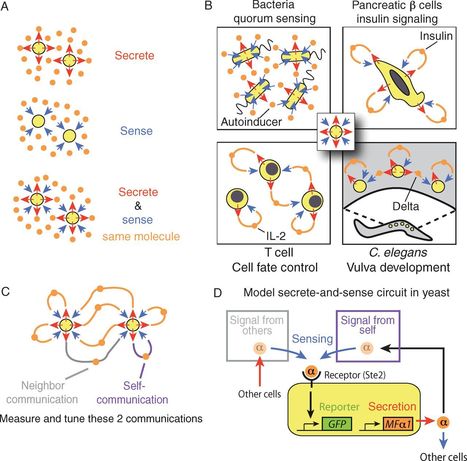
Cells that secrete and sense the same signaling molecule are ubiquitous. To uncover the functional capabilities of the core “secrete-and-sense” circuit motif shared by these cells, we engineered yeast to secrete and sense the mating pheromone. Perturbing each circuit element revealed parameters that control the degree to which the cell communicated with itself versus with its neighbors. This tunable interplay of self-communication and neighbor communication enables cells to span a diverse repertoire of cellular behaviors. These include a cell being asocial by responding only to itself and social through quorum sensing, and an isogenic population of cells splitting into social and asocial subpopulations. A mathematical model explained these behaviors. The versatility of the secrete-and-sense circuit motif may explain its recurrence across species.
|
|
Scooped by
mhryu@live.com
March 28, 2018 12:14 AM
|
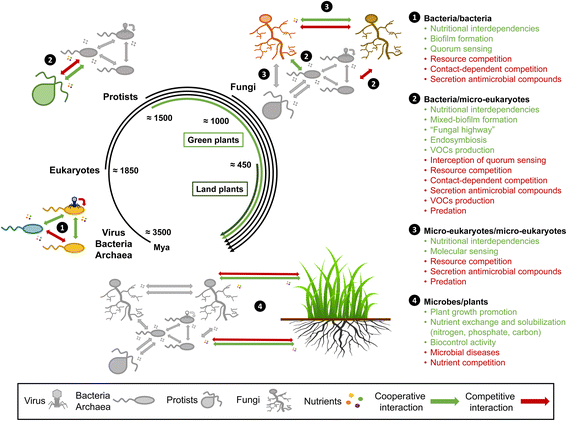
Since the colonization of land by ancestral plant lineages 450 million years ago, plants and their associated microbes have been interacting with each other, forming an assemblage of species that is often referred to as a “holobiont.” Selective pressure acting on holobiont components has likely shaped plant-associated microbial communities and selected for host-adapted microorganisms that impact plant fitness. However, the high microbial densities detected on plant tissues, together with the fast generation time of microbes and their more ancient origin compared to their host, suggest that microbe-microbe interactions are also important selective forces sculpting complex microbial assemblages in the phyllosphere, rhizosphere, and plant endosphere compartments. Reductionist approaches conducted under laboratory conditions have been critical to decipher the strategies used by specific microbes to cooperate and compete within or outside plant tissues. Nonetheless, our understanding of these microbial interactions in shaping more complex plant-associated microbial communities, along with their relevance for host health in a more natural context, remains sparse. Using examples obtained from reductionist and community-level approaches, we discuss the fundamental role of microbe-microbe interactions (prokaryotes and micro-eukaryotes) for microbial community structure and plant health. We provide a conceptual framework illustrating that interactions among microbiota members are critical for the establishment and the maintenance of host-microbial homeostasis.
|
|
Scooped by
mhryu@live.com
March 27, 2018 2:59 PM
|
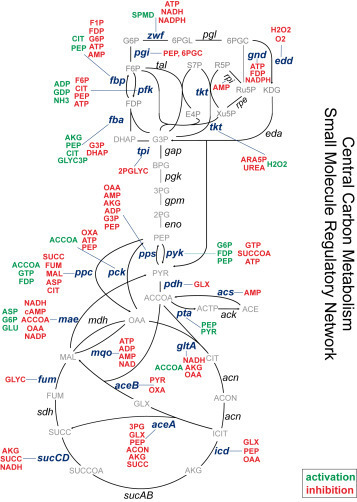
Metabolic flux is in part regulated by endogenous small molecules that modulate the catalytic activity of an enzyme, e.g., allosteric inhibition. In contrast to transcriptional regulation of enzymes, technical limitations have hindered the production of a genome-scale atlas of small molecule-enzyme regulatory interactions. Here, we develop a framework leveraging the vast, but fragmented, biochemical literature to reconstruct and analyze the small molecule regulatory network (SMRN) of the model organism Escherichia coli, including the primary metabolite regulators and enzyme targets. Using metabolic control analysis, we prove a fundamental trade-off between regulation and enzymatic activity, and we combine it with metabolomic measurements and the SMRN to make inferences on the sensitivity of enzymes to their regulators. Generalizing the analysis to other organisms, we identify highly conserved regulatory interactions across evolutionarily divergent species, further emphasizing a critical role for small molecule interactions in the maintenance of metabolic homeostasis.
|