RMH
37.6K views | +113 today
Follow
RMH
Your new post is loading...
Scooped by mhryu@live.com
February 23, 2018 3:53 PM
Scoop.it!

Transcriptomic Studies of the Effect of nod Gene-Inducing Molecules in Rhizobia: Different Weapons, One Purpose

Transcriptomic Studies of the Effect of nod Gene-Inducing Molecules in Rhizobia: Different Weapons, One Purpose | RMH | Scoop.it
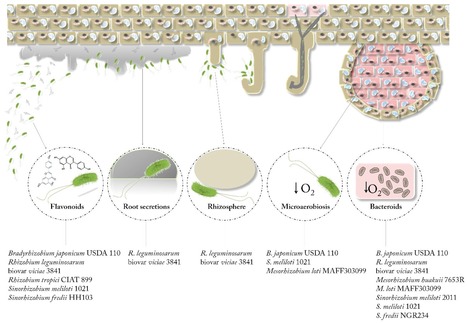
Simultaneous quantification of transcripts of the whole bacterial genome allows the analysis of the global transcriptional response under changing conditions. RNA-seq and microarrays are the most used techniques to measure these transcriptomic changes, and both complement each other in transcriptome profiling. In this review, we exhaustively compiled the symbiosis-related transcriptomic reports (microarrays and RNA sequencing) carried out hitherto in rhizobia. This review is specially focused on transcriptomic changes that takes place when five rhizobial species, Bradyrhizobium japonicum (=diazoefficiens) USDA 110, Rhizobium leguminosarum biovar viciae 3841, Rhizobium tropici CIAT 899, Sinorhizobium (=Ensifer) meliloti 1021 and S. fredii HH103, recognize inducing flavonoids, plant-exuded phenolic compounds that activate the biosynthesis and export of Nod factors (NF) in all analysed rhizobia. Interestingly, our global transcriptomic comparison also indicates that each rhizobial species possesses its own arsenal of molecular weapons accompanying the set of NF in order to establish a successful interaction with host legumes.
mhryu@live.com's insight:

also check 

The Rhizobium tropici CIAT 899 NodD2 protein regulates the production of Nod factors under salt stress in a flavonoid-independent manner

mhryu@live.com's comment, February 23, 2018 4:02 PM
salt can induce nod expression
Scooped by mhryu@live.com
February 23, 2018 11:23 AM
Scoop.it!

The Phyre2 web portal for protein modeling, prediction and analysis NProt

Protocol
mhryu@live.com's insight:

protein modeling tool

No comment yet.
Scooped by mhryu@live.com
February 23, 2018 12:44 PM
Scoop.it!

The extra bits of a grant application: a cheat sheet : Naturejobs Blog

The extra bits of a grant application: a cheat sheet : Naturejobs Blog | RMH | Scoop.it
No comment yet.
Scooped by mhryu@live.com
February 23, 2018 11:19 AM
Scoop.it!

Single-cell bioluminescence imaging of deep tissue in freely moving animals

Single-cell bioluminescence imaging of deep tissue in freely moving animals | RMH | Scoop.it
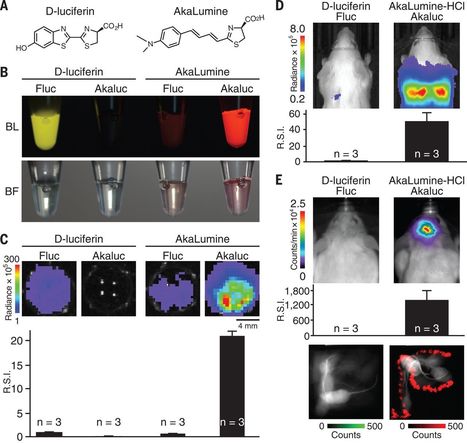
Bioluminescence imaging is a tremendous asset to medical research, providing a way to monitor living cells noninvasively within their natural environments. Advances in imaging methods allow researchers to measure tumor growth, visualize developmental processes, and track cell-cell interactions. Yet technical limitations exist, and it is difficult to image deep tissues or detect low cell numbers in vivo. Iwano et al. designed a bioluminescence imaging system that produces brighter emission by up to a factor of 1000 compared with conventional technology (see the Perspective by Nasu and Campbell). Individual tumor cells were successfully visualized in the lungs of mice. Small numbers of striatal neurons were detected in the brains of naturally behaving marmosets. The ability of the substrate to cross the blood-brain barrier should provide important opportunities for neuroscience research.

Science , this issue p. [935][1]; see also p. [868][2]

[1]: /lookup/doi/10.1126/science.aaq1067
[2]: /lookup/volpage/359/868?iss=6378
mhryu@live.com's insight:

wonder how this luciferase works in microbes and plants. What is the minimum conc. of AkaLumine (substrate) for luminescence?

No comment yet.