 Your new post is loading...

|
Scooped by
mhryu@live.com
November 4, 3:58 PM
|
Ribosomal frameshifting, an uncommon translational recoding event, is best known for its regulatory roles in viral gene expression, whereas its physiological relevance in mammals remains poorly understood. Here we show that specific codon pairs trigger efficient −1 frameshifting preferentially in cancer cells. Mechanistically, this recoding arises from ribosomal pausing associated with tRNA and amino acid availability, and is amplified by impaired ribosome quality control and sustained phosphorylation of ribosomal protein S6. We found that this codon-pair-specific frameshifting represents an intrinsic state of translational dysregulation, which is prevalent across cancer cells and reshapes protein synthesis. Taking advantage of this frameshifting-permissive state in cancer cells, we engineered a frameshifting-activated synthetic therapeutic circuit (FAST) that conditionally expresses the pyroptotic effector gasdermin D. FAST is activated across diverse cancer cell types, inducing potent and selective pyroptosis, while sparing normal tissues from detectable toxicity. As a proof of concept, systemic AAV9-mediated delivery of FAST in mouse models of colorectal and pancreatic cancer elicited pronounced tumour regression, robust immune activation and synergistic effects with immune checkpoint blockade. Collectively, these findings reveal codon-pair-dependent ribosomal frameshifting as a feature of translational dysregulation in cancer cells and establish translation-coupled gene circuits as a strategy for cancer-selective therapy. Codon-pair-dependent ribosomal frameshifting is a feature of translational dysregulation in cancer cells.
|
|
Scooped by
mhryu@live.com
November 4, 3:47 PM
|
Translatable circular RNAs (circRNAs) have emerged as a promising alternative to conventional mRNA therapy due to their improved stability that results in a prolonged expression window. The translation of circRNAs is mainly driven by internal ribosome entry site (IRES) or IRES-like elements, which is tightly regulated by various trans-acting RNA binding proteins (RBPs). Here we develop a cell-based system to systematically screen RBPs that enhance translation of circRNAs, identifying 68 proteins as putative activators of noncanonical translation. These translation activators are involved in a broad range of biological processes including RNA processing, ribosomal biogenesis, and translation initiation. We further design a machine learning algorithm to extract common sequence features of these activators and predict more potential RBPs with translation activator activities. The newly identified and predicted activators are subsequently validated to promote the IRES-mediated circRNA translation in a context-dependent fashion. Overall, this study provides new insights into IRES-related trans-acting factors and expands the toolbox for engineered RBPs in RNA synthetic biology. Circular RNAs are promising therapeutics due to their stability. Here, the authors identified 68 RNA-binding proteins that enhance circRNA translation, built a predictive machine learning model, and showed these activators promote IRES-driven translation in a context-dependent manner, expanding tools for circRNA therapeutics.
|
|
Scooped by
mhryu@live.com
November 4, 3:28 PM
|
Bacterial membranes are dynamic interfaces that adapt to changing physiological and environmental conditions. Throughout the growth cycle of a bacterial culture, nutrient depletion and accumulation of metabolic byproducts impose progressively tighter environmental constraints. Bacteria respond through coordinated remodeling of the cell envelope, including changes in membrane lipid composition and protein abundance or activity. However, how these changes affect molecular transport across individual barriers of the Gram-negative cell envelope throughout the bacterial life cycle, and how they contribute to bacterial adaptation to antimicrobial stress, have yet to be characterized. We employed time-resolved second-harmonic light scattering (SHS) to quantify the transport kinetics of malachite green (MG), a cationic antimicrobial compound, across the outer membrane (OM), peptidoglycan mesh (PM), and cytoplasmic membrane (CM) of living E. coli throughout the lag, exponential, stationary, and death phases. Extracellular pH was monitored as a temporal indicator of environmental change, and complementary antimicrobial susceptibility assays were performed to examine phase-dependent responses to MG exposure. MG transport was highest in the lag and early exponential phases and declined progressively thereafter: transport across the CM decreased by more than three orders of magnitude from the lag phase to the death phase, whereas OM transport decreased by approximately 60-fold. In contrast, MG transport kinetics across the PM remained relatively stable across growth phases. Adsorption free energies at the membrane interfaces varied by less than 1 kcal/mol, suggesting that the transport changes were not primarily associated with altered interfacial adsorption energetics. Antimicrobial susceptibility, as measured by cell viability, decreased progressively from the lag phase to the death phase. The pronounced and barrier-specific changes in MG transport kinetics demonstrate that molecular transport across the bacterial envelope is a dynamic property that changes substantially throughout the bacterial life cycle. The strong suppression of OM and CM transport from the lag to death phases is consistent with growth-phase-dependent remodeling of OM porins and CM lipid composition reported in previous studies. The correlation observed between reduced MG transport and susceptibility to MG further suggests that, for antimicrobial compounds whose activity requires cellular entry, efficacy may decrease as transport rate decreases.
|
|
Scooped by
mhryu@live.com
November 4, 3:07 PM
|
The rise of multidrug-resistant pathogens underscores the need for precise antimicrobial strategies beyond conventional antibiotics. Conjugation-based approaches offer a powerful yet underexploited means of delivering targeted genetic interventions within microbial communities. Here, we combine selective killing modules with optimized conjugative vectors to target antibiotic-resistant pathogens and clinically relevant resistance plasmids. First, we engineered toxin–intein modules, programmable cassettes that restrict toxic activity to specific regulatory contexts. We developed modules targeting Shigella spp., Salmonella enterica, and bacteria carrying the resistance plasmid pOXA-48, demonstrating tunable and selective activity at both species and strain levels. To identify the optimal delivery platform, we compared mobilizable and conjugative plasmids, finding that conjugative systems consistently outperform mobilizable ones by approximately one order of magnitude. We then streamlined the broad-host-range plasmid RP4 and enhanced its functionality by incorporating the metabolic fos locus, a type IV pilus operon or both features combined. Integration of the anti-pOXA-48 module into these vectors enabled effective suppression of resistance plasmid spread in complex microbial communities. Together, these results advance the use of conjugative plasmids as programmable antimicrobial platforms and identify delivery efficiency and ecological competitiveness as key determinants of the success of such interventions.
|
|
Scooped by
mhryu@live.com
November 4, 12:50 AM
|
Soil contamination continues to threaten ecosystem health and agricultural productivity worldwide. However, rhizosphere-mediated bioremediation has emerged as a nature-inspired, sustainable approach for mitigating these impacts. This review advocates field-scale implementation of rhizosphere microbiome engineering by exploiting interactions among plants, microorganisms, and soil. Unlike previous reviews that primarily summarize rhizosphere-mediated remediation processes, it integrates mechanistic, ecological, and engineering perspectives to identify critical barriers limiting field performance. This review synthesizes recent advances in rhizosphere microbiome engineering, with an emphasis on root-exudate manipulation, synthetic microbial communities (SynComs), biochar-assisted remediation, and multi-omics technologies. The evidence reviewed indicates that root exudates are key regulators of microbial recruitment, biofilm formation, and expression of contaminant-degrading genes, while engineered microbial consortia enhance functional complementarity and pollutant transformation. A comparative analysis of laboratory and field studies reveals substantial performance gaps, with highly efficient degradation observed under controlled conditions often declining following field deployment because of microbial competition, environmental variability, and contaminant sorption dynamics. The review further shows that integration of SynComs with biochar carriers and precision root-exudate engineering can improve microbial establishment and remediation efficiency. Advances in metagenomics, metabolomics, and systems biology are enabling more predictive design and monitoring of rhizosphere processes. Collectively, this review provides a mechanistic synthesis, identifies key translational bottlenecks, and outlines practical directions for developing scalable rhizosphere-based remediation technologies.
|
|
Scooped by
mhryu@live.com
November 4, 12:39 AM
|
A dogma of RNA synthesis is that promoter activity and termination are unrelated processes governed by completely different DNA sequences. Serendipitously, we find that two class II (non-hairpin) terminators for bacteriophage T7 RNA polymerase (RNAP), the natural T7 concatemer junction (CJ) and the artificial vesicular stomatitis virus (VSV) terminator, are context-dependent strong promoters for Escherichia coli RNAP. However, the third class II member, the artificial human preproparathyroid hormone (PTH) terminator, is not a promoter. Transcription start site mapping and mutagenesis for CJ and VSV reveal a σ70 extended TGn promoter motif including −11A that is lacking in PTH and the involvement of the −35 box region. Furthermore, results resolve the prior paradox of class II termination apparently occurring only in vitro, not in vivo, enabling demonstration of class II termination in vivo by both T7 and E. coli RNAPs. In addition, engineering of T7 RNAP increases its efficiency of class II termination in vivo. Given that prokaryotic synthetic biology is reliant on class I (hairpin) terminators, with TΦ being almost the only option in constructs for T7 RNAP, recombination is an issue in large constructs. Thus, small class II terminators, now better understood with respect to terminator and promoter activities in the context of various DNA sequences and RNAPs, extend the synthetic biology toolkit.
|
|
Scooped by
mhryu@live.com
November 4, 12:25 AM
|
Unraveling protein function at scale remains challenging. Gain-of-function (GOF) screens harnessing open reading frame libraries enable systematic annotation of proteins that drive cell behavior and drug action. However, non-uniform gene coverage and undesired coding sequence variations compromise ORF library integrity and constrain the obtainable biological insight. In contrast, sequencing methods for characterizing current and next-generation ORF libraries remain limited. Here, we developed the scalable library deep sequencing workflow PPLseq (pooled plasmid library sequencing) for cost-effective, barcode-free ORF sequencing with single-nucleotide resolution. In a prototypical superfamily library of >300 human G protein-coupled receptors (GPCRs), PPLseq validated ORF identities and revealed sequence and coverage variation. Integration of PPLseq into high-throughput gene engineering facilitated assembly of a new GPCR fusion library. Systematic imaging-based phenotyping identified robustly expressed yet understudied receptors. Collectively, these results demonstrate broadly applicable, accessible, and accurate genetic library sequencing in library-to-phenotype profiling toward deeper insights into proteome function.
|
|
Scooped by
mhryu@live.com
November 4, 12:10 AM
|
Quorum sensing (QS) enables bacteria to coordinate collective behaviors in response to population density. However, the mechanisms by which QS circuits are reset or attenuated remain poorly understood. In Pseudomonas aeruginosa, the LuxR-type transcription factor RhlR controls virulence gene expression at high cell density, requiring both its cognate acyl-homoserine lactone signal and the accessory protein PqsE for full activity. Here, we show that RhlR abundance is actively controlled by ATP-dependent proteolysis through a self-limiting negative feedback loop. We identify an N-terminal degron within RhlR that is protected from protease recognition by PqsE binding and is required for degradation by both the Lon and the ClpP1-ClpP2 protease complex. Removal of this degron stabilizes RhlR, advancing the timing of QS-regulated gene expression, enhancing biofilm formation, imposes a competitive fitness cost in vitro, and reduced virulence in an acute mouse lung infection. Mechanistically, RhlR directly activates transcription of clpP2, encoding a subunit of the protease complex required for its own degradation, establishing a self-limiting negative feedback loop. Disruption of RhlR DNA binding stabilizes the receptor through dual effects on reduced clpP2 expression and increased PqsE availability via the loss of RhlR-dependent repression of pqsE. Together, these findings reveal proteolytic turnover as an underappreciated regulatory layer of QS-activation and establish a mechanism for how receptor turnover may facilitate the transition away from high-cell density states.
|
|
Scooped by
mhryu@live.com
November 3, 11:01 PM
|
All known life uses a canonical alphabet of 20 amino acids, yet which residues are structurally essential remains untested at proteome scale. Isoleucine was recently eliminated from ribosomal proteins in E. coli, establishing that amino acid alphabet reduction is feasible. Here we ask whether an entire amino acid can be eliminated from a proteome, and develop a computational framework to identify the best target. Using two independent approaches — ProteinMPNN structure-based probabilities and multiple sequence alignment conservation — we define “keep-score” as the fraction of positions where the native residue is optimal. Both methods converge on an unexpected candidate: glutamine has the lowest keep-score, with proline and glycine the highest — counter to substitution-matrix intuition. Glutamine’s low keep-score is not explained by a single obvious substitute; glutamate is preferred in only 14% of replacements. Removing this target proteome-wide, we replaced every glutamine across 4,148 proteins with ProteinMPNN-optimal alternatives and modeled the resulting sequences with AlphaFold2. The recoded proteome maintained native-like structures: 85.5% of models exceeded a TMscore of 0.8, indistinguishable from the 85.9% baseline for rebuilt native sequences. Orthogonal validation — ESMFold predictions, Rosetta energy calculations, and conformational ensemble comparisons — revealed no evidence of systematic misfolding attributable to glutamine removal. As a consistency check, a glutamine-free TEM-1 β-lactamase designed with ProteinMPNN conferred ampicillin resistance in E. coli, indicating fold preservation can extend to biological function. Evolutionary evidence further supports these findings: 24% of E. coli proteins have glutamine-free orthologs in prokaryotic genomes, and glutamine ranks lowest in keep-score in Saccharomyces cerevisiae. These results show that an entire amino acid can be removed from a proteome with folds broadly preserved, establishing keep-score as a general framework and glutamine as the primary candidate for recoding. Crucially, this reflects a computational analysis of structural replaceability, not a demonstration of biological dispensability.
|
|
Scooped by
mhryu@live.com
November 3, 5:30 PM
|
Synthetic microbial communities provide experimentally tractable systems for studying community assembly, stability, and function and for integrating quantitative experiments with mathematical models of community dynamics. These applications require accurate and reproducible absolute quantification of individual community members, yet commonly used methods rely on relative abundance measurements or suffer from amplification bias and limited reproducibility. Here, we present a simplified and scalable multiplexed digital droplet PCR-based workflow for absolute quantification of species abundance in synthetic microbial communities. Using a four-member community composed of Bacillus subtilis, Pseudomonas fluorescens, Rhodococcus ruber, and Enterobacter asburiae, we developed an integrated experimental workflow encompassing DNA isolation, primer and probe design, and multiplex assay configuration. A hybrid targeting strategy was adopted, substituting a single-copy gyrB gene target for Bacillus subtilis to avoid 16S rRNA gene cross-reactivity, while retaining 16S rRNA gene targets for the remaining three members. Key assay parameters were systematically optimized to enable robust discrimination and simultaneous quantification of all community members within a single reaction. The method exhibits high linearity across a broad dynamic range, resistance to amplification bias, and tolerance to common polymerase chain reaction inhibitors. This streamlined approach, intended for experimental characterization of defined synthetic microbial communities under controlled experimental conditions rather than for microbial diagnostics or clinical detection, enables reproducible absolute quantification of defined microbial consortia and provides a quantitative foundation for systems-level analyses and model-informed studies of microbial community behavior, with species specificity being defined operationally within this community and scaling to additional targets to require manual tuning.
|
|
Scooped by
mhryu@live.com
November 3, 5:13 PM
|
The growth rate of a bacterial population is a fundamental quantity in microbiology, but hard to predict from mechanistic single-cell models. Simulating exponentially growing cell populations is computationally infeasible, and single-lineage estimates are biased as they do not account for phenotypic selection between cells. We present computational algorithms to efficiently estimate growth rates with arbitrary accuracy by combining ideas from branching processes and particle filtering. These can be used with general agent-based cell models at a cost quadratic in the desired accuracy, bypassing the exponential complexity of naïve approaches. Applying these methods to single-cell models of Escherichia coli, we study how single-cell heterogeneity in antibiotic responses shapes population dynamics, and how bacterial locomotion and chemotaxis in fluctuating environments affect their long-term growth.
|
|
Scooped by
mhryu@live.com
November 3, 4:14 PM
|
High-resolution structure determination of RNA remains a major challenge due to its conformational flexibility, intrinsic heterogeneity, and susceptibility to degradation. Although RNA plays central roles in gene regulation, viral replication, and cellular homeostasis, RNA-only structures represent a small fraction of entries in the Protein Data Bank. Overcoming the limitations associated with RNA has therefore required the development of innovative engineering strategies to stabilize defined conformations and facilitate structural analysis. In this review, we describe RNA engineering approaches that enable structure determination of medium- to large-sized RNAs by X-ray crystallography and cryo-EM. These advances include the use of stable tetraloops to promote proper folding and crystal packing, scaffold-based strategies employing tRNA and 5S rRNA for recombinant RNA production and stabilization, and bacteriophage Φ29 prohead RNA as well as group I and group II intron scaffolds to facilitate cryo-EM structure determination. Together, these approaches repurpose natural RNA structural features and host processing mechanisms into practical tools for RNA stabilization, large-scale production, and structural characterization.
|
|
Scooped by
mhryu@live.com
November 3, 4:07 PM
|
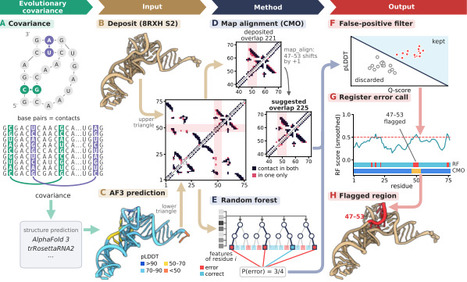
Understanding the molecular mechanisms of life depends on accurate macromolecular structures. RNA, in particular, poses a particular challenge for structural biology due to its inherent flexibility and dynamic nature. The challenging nature of structure determination experiments and their interpretation have led to the development of validation approaches to prevent or fix errors in solved structures. Existing methods for RNA structure validation can, as with proteins, be broadly split into two types. Map-based validation tools seek to detect discrepancies between the experimental data and the determined structure. They are excellent for fixing all types of errors, but only when high-resolution experimental data are available. Model-only validation methods, which usually focus on molecular geometry, are excellent for fixing short-length-scale issues even when experimental resolution is low. Conkit-validate is a mapless method for protein validation, which is not based on chemical plausibility, but rather on the similarity between experimental models and structure predictions for the same protein. By comparing contact patterns, this tool leverages evolutionary covariance information, learned by state-of-the-art structural prediction models, into a mapless validation method capable of detecting sequence assignment issues, with notable success in detecting register errors. Here, we extend the conkit-validate method to work on RNA.The results show performance similar to that previously achieved for proteins. We also show how this new method can detect errors missed by map-based approaches when the experimental data is of low resolution. In a scan of the PDB, its detection rate does not depend on the local resolution of the density, so it remains applicable where map-based approaches are not, and case studies show it can identify register errors where the density alone cannot decide between models.Together, this highlights the complementary value of a contact-prediction based validation approach using information orthogonal to map- and geometry-based approaches to ensure the quality of deposited RNA structures against varying criteria.The performance of the method can be expected to track ongoing improvements in RNA structure prediction methods.
|
|
|
Scooped by
mhryu@live.com
November 4, 3:52 PM
|
Alterations in the microbial composition of the human gut have been associated with a wide range of chronic diseases. Yet species-level composition alone can obscure extensive within-species genetic diversity and functional variation. This has driven a shift towards strain-resolved, genetic-level analysis of the microbiome, leveraging microbial genetic variation to identify disease-relevant genes and pathways. Here we conducted a phenome-wide association study (PheWAS) analysing 12.8 million gut microbial single-nucleotide variants (SNVs) with 244 host health phenotypes and environmental exposures in 10,781 individuals from 6 independent cohorts. We identify 940 independent associations across 69 host factors, including age, sex and cardiovascular and metabolic parameters. Structural analyses identified host-phenotype-associated SNVs in functionally important regions of proteins, findings that inform mechanistic hypotheses about how microbial genetic changes relate to environmental and host physiological factors. For example, we identified an age-associated SNV in Faecalibacterium prausnitzii that affects an amino acid within the protein pocket that binds glutathione. To support future efforts, all study summary statistics are provided in an online catalogue ( https://fulab.web.rug.nl/SNV-MWAS/ ). Together, these results identify new biological connections between the human host and microbial genetic variants at base pair resolution and provide a resource for hypothesis generation that will aid future understanding of the strain-level functionality of the gut microbiota. Gut microbial single-nucleotide variants across 10,781 individuals reveal 940 associations that link strain-level genetic variation to 69 host traits, with structural analyses pinpointing host phenotype-associated variants, providing a base pair-resolution resource for mechanistic hypothesis generation.
|
|
Scooped by
mhryu@live.com
November 4, 3:32 PM
|
Synthetic trans-kingdom signaling systems with tunable transduction properties provide a unique avenue to explore how communication between organisms coordinate behaviors without the confounding complexity of natural systems. However, existing trans-kingdom signaling systems suffer from either toxic signal molecules, a need for rare precursors for signal generation, or transduction machinery which is either species-specific or cannot be easily tuned. This limits their capacity to be broadly applied across kingdoms and their utility as a model system to study trans-kingdom interactions. In this work we elucidate the design principles for a trans-kingdom signaling system based on the plant phytohormone, Indole 3-Acetic Acid (IAA, auxin), that overcomes these challenges. We demonstrate how auxin biosynthesis can be engineered into a model sender organism, the cyanobacteria Synechococcus elongatus PCC 7942, and how this signal can be tuned with low leak and high dynamic range. We also show these signals can be connected to gene expression using tunable synthetic auxin-responsive signaling systems across multiple kingdoms. We demonstrate that S. elongatus generated auxin signals can tune gene expression in co-cultured Saccharomyces cerevisiae via auxin-induced degradation. Additionally, we show that when the S. elongatus are associated with the roots of the model plant, Arabidopsis thaliana, the auxin they generate can control gene expression via auxin-responsive synthetic transcription factors expressed from the plants genome. Taken together, our results demonstrate the design principles for a tunable auxin-based trans-kingdom signaling system that can be broadly applied across species.
|
|
Scooped by
mhryu@live.com
November 4, 3:15 PM
|
Fine-tuning transgene levels is crucial in fundamental and applied research. Native promoters are broadly utilized to regulate transgene expression. However, their large size and structural complexity hinder predictable tuning, constrain compatibility with viral vectors with limited capacity, and increase the risk of homologous recombination. Synthetic promoters are short de novo sequences, typically consisting of an enhancer region, which is positioned upstream of a minimal promoter that determines transcription initiation efficiency. Enhancer optimization typically yields coarse activation shifts, alters response curves, and requires case-by-case optimization. Synthetic minimal promoter architecture enables fine-tuning that is potentially compatible with any enhancer region. In this study, we systematically optimized minimal promoter sequences, core element composition, and regulatory motif sequences. Our findings support a modular model of minimal promoter function in which cis-regulatory elements from different minimal promoters can be mixed, altered, added, or deleted to yield predictable expression outcomes. We shortened and thereby enhanced the efficiency of known minimal promoters, engineered modular tunable minimal promoters, and generated candidate regulatory elements spanning 7–8 nucleotides that drive efficient transcription when combined with artificial untranslated regions (5'UTRs) that function as an additional regulatory layer. This framework broadens the utility of synthetic promoters for next-generation applications.
|
|
Scooped by
mhryu@live.com
November 4, 2:55 PM
|
Vibrio cholerae injects toxic type VI secretion system (T6SS) effectors to lyse sensitive intestinal commensals, but how this bacterial antagonism enhances mucosal host immune responses and its pathogenicity remains unknown. To mimic T6SS-mediated killing, we engineered V. cholerae lysis strains by using CRISPR interference (CRISPRi) to knockdown essential genes in peptidoglycan biogenesis or lipopolysaccharide (LPS) transport. Our results indicate that controlled bacterial lysis in vivo leads to divergent mucosal immune responses that directly modulate colonization and pathogenicity of a bystander, non-lysing V. cholerae ΔT6SS strain. Mass spectrometric analysis of the lysis debris revealed proinflammatory muropeptides correlating with these changes. We confirmed that oral co-administration of a synthetic peptidoglycan-derived metabolite with a V. cholerae ΔT6SS mutant, but not the wild type, shows dramatic enhancement of disease symptoms. These findings show that intestinal exposure to discrete bacterial cell wall metabolites can differentially modulate host innate immune responses and consequently bacterial pathogenesis.
|
|
Scooped by
mhryu@live.com
November 4, 12:41 AM
|
Fine-tuning the expression level of multigene pathways remains a major challenge in engineering eukaryotic microbial cell factories. Modifications to individual pathway genes and CRISPR-based approaches often require repeated genome reconstruction, large regulatory components, or complex guide-array assembly. Here, we developed a lightweight, post-transcriptional RNAi-based strategy that enables fine-tuning gene expression without iterative genome editing. Size-selected small-RNA sequencing and functional testing were used to identify endogenous Pol III promoters spanning graded transcriptional strengths in Schizochytrium sp. Combining promoter strength with multiple short hairpin RNA (shRNA) target positions expanded the accessible repression range and enabled high-resolution gene-dosage tuning. The RNAi-based combined regulation strategy was applied to the three-gene carotenoid pathway of Schizochytrium sp. and the nine-gene docosahexaenoic acid (DHA) pathway of Yarrowia lipolytica, significantly enhancing the product production in both hosts. Integration of RNAi screening and dosage optimization further identified and tuned bypass pathways, increasing the ratio of DHA to docosapentaenoic acid (DPA) by 4.50-fold versus wild type. These gains were maintained during 5-L fermentation and serial passaging. This work establishes a compact and scalable regulatory framework for engineering complex biosynthetic pathways in eukaryotic microbial hosts.
|
|
Scooped by
mhryu@live.com
November 4, 12:30 AM
|
To thrive in nature, bacteria must constantly balance growth with long-term survival in response to nutrient availability. Although sporulation in Bacillus subtilis is a classical survival strategy, how the sporulation program is regulated by nutrient conditions during exponential growth remains elusive. Here we show that the Spo0A-mediated sporulation program is strongly modulated during exponential phase across different carbon sources and is accompanied by pronounced population heterogeneity on poor carbons. We further identify the transition-state regulator AbrB as a key modulator that integrates growth and sporulation, promoting growth under favorable conditions while facilitating sporulation under poor nutrients. On good carbon sources, AbrB optimizes cellular resource allocation by directly suppressing the unnecessary expression of adaptive pathways. In contrast, on poor carbon sources, where the Spo0A-signaling pathway is strongly activated, AbrB promotes sporulation by repressing the expression of a plasmid-encoded Rap-family phosphatase gene, which otherwise interferes with the Spo0A signaling pathway. Together, these findings reveal a dual-control strategy that fine-tunes the trade-off between growth and survival and promotes bet-hedging under poor growth conditions, with important implications for both fundamental biology and synthetic biology.
|
|
Scooped by
mhryu@live.com
November 4, 12:18 AM
|
Trans-aconitate (TAA) is a valuable bio-based chemical for nematicides and polymer synthesis. We repurposed the industrial citrate producer Aspergillus niger for efficient TAA biosynthesis. Heterologous AexA enabled extracellular aconitate export. However, overexpressing aconitases from various sources, targeted to the cytoplasm or mitochondria, failed to increase titers. Although mitochondria proved the optimal site for cis-aconitate accumulation, the bottleneck likely persisted due to thermodynamic constraints. To overcome this, we designed a push–pull strategy: a pull module using mitochondrial MttA to export cis-aconitate to the cytosol, where TbrA isomerizes it to TAA, coupled with a push module enhancing cytosolic acetyl-CoA via the phosphoketolase pathway. Multicopy tbrA expression was critical. The final strain produced 34.30 g/L total aconitate (>90% TAA) in a 5-L bioreactor within 6 days. This work highlights a compartmentalized push–pull strategy exploiting mitochondrial-cytosolic organization to convert a citrate chassis into a high-yield TAA cell factory.
|
|
Scooped by
mhryu@live.com
November 3, 11:44 PM
|
From protein structure prediction to novel protein generation, challenging protein engineering tasks have been made possible by advancements in machine learning (ML). While largely driven by ML architecture refinements, these advancements in ML-based protein engineering campaigns have left the impact of data curation underexplored. In light of the growing wealth of labeled sequence data, data-centric advances (e.g. prioritizing improvements in ML protein engineering tools through the curation of high-quality, domain-specific training data) are increasingly preferred over model-centric advancements. Implementing datasets that accurately reflect biological complexity and diversity has been shown to improve the efficiency of training protein engineering ML tools. Here, we evaluate an ancestral sequence reconstruction (ASR)-informed data augmentation strategy for training generative and representation-learning models in protein engineering. Using ethylene-forming enzyme (EFE) as a model system, we show that variational autoencoder models trained on ancestral and near-ancestral sequence datasets generate variants with improved predicted and experimentally measured thermostability relative to variants generated from modern-sequence training data. All experimentally tested ancestral and ML-generated EFEs produced detectable ethylene, although ML-generated variants showed reduced activity relative to wild-type EFE, indicating that the approach more strongly captured stability-associated features than catalytic optimization. We further evaluated ASR-enriched sequence sets for fine-tuning ESM2 representations in endolysin and lysozyme C stability-classification tasks, where ancestral representations were competitive with modern-sequence fine-tuning in selected settings. Overall, this work supports ASR-informed data augmentation as a promising strategy for stability-oriented protein sequence generation and motivates future work to couple ancestral sequence diversity with explicit functional selection.
|
|
Scooped by
mhryu@live.com
November 3, 10:50 PM
|
The rapid advancement of high-throughput sequencing technologies has vastly increased the number of known protein sequences, but the experimental characterization of their structures and functions lags behind. This gap in knowledge impedes our understanding of biological mechanisms of these proteins, hinders the interpretation of high-throughput experiments, and exposes a significant challenge in modern biology: deducing the structural and functional information of proteins based on their sequences. Most computational approaches rely on homology with well-annotated proteins, yet many proteins lack identifiable homologues, reducing the power of this approach. Here, we integrated cutting-edge protein structure and function prediction methods to develop a complete sequence-structure-function pipeline that predicts structures and functions based on primary sequences. We applied this pipeline to predict the structure and function of all proteins in E. coli UTI89, a model strain of uropathogenic E. coli. Based on the predicted functions, we performed enrichment analysis on the whole genome and revealed the possible roles and related biological mechanisms of poorly annotated proteins in this organism. Moreover, the performance of our pipeline was further validated through detailed case studies of the UTI89_C0931 and ybtS genes. Finally, we compiled the UTI89 structure and function database (https://seq2fun.dcmb.med.umich.edu/UTI89), offering it as a crucial resource to aid researchers in elucidating the roles of unannotated proteins. This database aims to bridge critical knowledge gaps in microbial pathogenicity and resistance, enhancing our capacity to tackle emerging health threats.
|
|
Scooped by
mhryu@live.com
November 3, 5:25 PM
|
Antimicrobial resistance (AMR) presents a pressing need to ensure that the right antimicrobials are used to target the right microbes at the right time. Ideally, the appropriate antimicrobial is selected after patient samples have been cultured and assessed with antimicrobial sensitivity testing (AST). However, the time needed for culture-based diagnosis leads to immediate empirical treatment, often with broad-spectrum and/or high-tier antimicrobials. Direct nanopore metagenomic whole-genome sequencing to identify pathogens and predict their AMR is a rapid and patient-side alternative. A limitation of this approach is potential inconsistencies in i predicted AMR phenotypes. Here, we benchmarked the current performance of in silico AMR prediction strategies for nanopore-generated long-read data. Using real-world nanopore data paired with AST phenotyping for 201 samples representing 27 bacterial species, we assessed the impact of basecalling mode, data volume and assembly strategy and compared the performance of eight in silico AMR prediction tools with seven AMR databases. We found that basecalling accuracy mode does not significantly affect the overall accuracy of in silico AMR predictions but assembly strategy and data volume both do. Prediction tools using the ResFinder database scored best for balanced accuracy (0.80±0.02 for both ResFinder and ABRicate), whilst DeepARG scored best for sensitivity (0.65±0.03); predictions were more accurate for some antibiotic classes and genera than others. However, even the best-performing in silico AMR prediction strategy missed some resistance identified by lab-based AST. We conclude, therefore, that currently in silico AMR prediction can supplement lab-based AST but cannot yet replace it.
|
|
Scooped by
mhryu@live.com
November 3, 4:18 PM
|
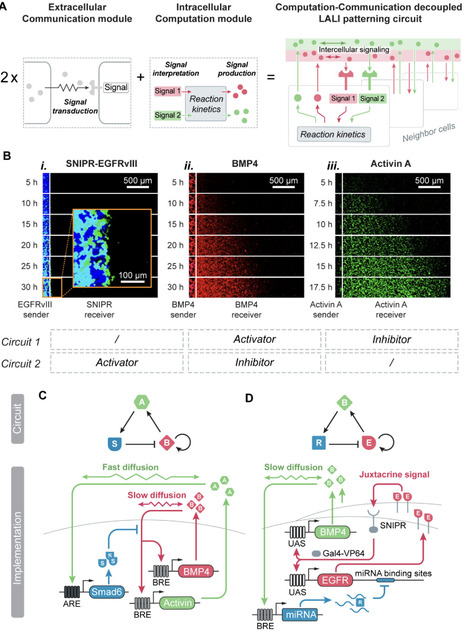
During development, periodic patterns arise through reaction-diffusion (RD) circuits involving local activation and long-range inhibition (LALI). Natural systems are complex, typically entangling regulation and transport in the same morphogens. It remains unclear what minimal circuits are sufficient for LALI patterning in mammalian cells, and whether they can be implemented in a modular fashion, allowing independent control of regulation and transport. Here, we designed synthetic LALI circuits using three natural and synthetic signaling systems, BMP, Activin, and the SNIPR pathway, and showed that they generate spatial patterns with distinct characteristic spatial scales. Model-guided design allowed flexible morphogen reassignment, with BMP4 acting as either short-range activator or long-range inhibitor. Gene expression noise degraded long-range order but preserved the dominant local spatial scale. Together, these results provide a modular, extensible synthetic framework for engineered patterning in mammalian cells.
|
|
Scooped by
mhryu@live.com
November 3, 4:10 PM
|
Biosurfactants (BS) are amphiphilic microbial metabolites that are biodegradable, low in toxicity, and environmentally compatible, making them attractive for applications in food, pharmaceutical, and bioremediation industries. This study investigated the phylogenetic composition and biosurfactant-producing potential of marine oil snow (MOS)-associated microbial consortia from the Churchill Marine Observatory, western Hudson Bay. MOS aggregates were cultivated in mineral Bushnell–Haas (BH) medium supplemented with 3% (w/v) NaCl, using motor oil as the sole hydrocarbon source. Enrichment cultures capable of growth in BH medium were subsequently evaluated for biosurfactant production using qualitative and quantitative assays at 4 °C and 20 °C. All cultures were maintained as enrichment consortia throughout the study. A total of eight enrichment cultures were identified as biosurfactant-producing consortia. 16S rRNA gene sequencing revealed that Pseudoalteromonas dominated all consortia, while Paraglaciecola, Marinomonas, and other taxa were present at varying relative abundances. Although none of the consortia exhibited high emulsification activity (E24 > 40%), biosurfactant yields were significantly higher at 4 °C. Additionally, three consortia tested positive for rhamnolipid-type biosurfactant production.
|










1str, gasdermin D (the N-terminal domain, GSDMD-N) as the effector.
GSDMD-N is a constitutively active pore-forming fragment. Normally gasdermin D is cleaved by inflammatory caspases to release this domain,