 Your new post is loading...

|
Scooped by
mhryu@live.com
November 5, 12:15 AM
|
Obtaining sufficient quantities of purified proteins in their intended molecular states is essential for biological research and protein engineering. Advances in computational protein design have expanded the functional capabilities of de novo proteins and accelerated candidate generation. However, reliable methods for ranking expected monomeric yield of candidate de novo designs, including molecular binders, fluorescent proteins and enzymes, have yet to be established. Standardized measurements of monomeric yield across diverse sequences remain scarce, limiting our understanding of its determinants and the development of accurate predictors for candidate selection. Here we developed a scalable pooled assay combining peptide barcodes, size-exclusion chromatography and mass spectrometry to quantify monomeric yield for over 39,000 natural protein domain variants, de novo proteins and nanobodies under uniform and standardized E. coli production conditions. We used this dataset to (1) quantify the relationship between folding stability and monomeric yield, (2) benchmark inverse-folding methods, (3) evaluate the utility of structure-prediction confidence metrics in selecting high-yield design candidates, and (4) identify sequence and structural patterns in nanobodies associated with monomeric yield and monomer-to-dimer yield ratios. We further developed ESMC-MonoYield, a protein language model fine-tuned to predict monomeric yield from amino acid sequence alone, and prospectively demonstrated enrichment of high-yield candidates among BindCraft-designed binders. Our approach enables standardized, large-scale measurement of monomeric yield across diverse proteins, and establishes monomeric yield as a sequence-encoded property that can be learned, predicted and ultimately designed.
|
|
Scooped by
mhryu@live.com
November 5, 12:06 AM
|
The increasing availability of microbial multi-omics datasets has created new opportunities to explore complex biological systems. However, exploration remains limited by the lack of accessible, reproducible workflows that integrate multiple omics layers and deliver easily interpretable visualizations of functional and pathway-level insights. Here, we present an R-based workflow for integrated analysis and network-based interpretation of microbial multi-omics data. The workflow enables microbiologists to analyse transcriptomic, proteomic and metabolomic datasets either individually or in combination, apply univariate and multivariate approaches for biomarker discovery and generate interpretable visualizations of functional and pathway-level signatures. Implemented as a multi-step R Markdown workflow, the resource leverages established open-source tools, including mixOmics for biomarker identification and omics integration and clusterProfiler for functional enrichment analysis. Functional integration is then performed on the enrichment results themselves rather than on individual features. By combining functional annotations from distinct omics layers, strains or conditions into a unified network, it enables simultaneous visualization of functional connectivity and of the sources from which each response was recovered, so that conserved and condition-specific responses can be identified directly rather than reconciled across separate outputs. A dedicated Shiny application makes this framework fully dynamic, allowing users to interactively filter, interpret and prioritize shared and condition-specific biological responses. We demonstrate its utility using a publicly available Streptococcus pyogenes dataset, revealing both shared and strain-specific functional responses to human serum. This resource provides an adaptable framework for systematic multi-omics analysis, improving accessibility and reproducibility and facilitating functional interpretation of microbial responses to diverse environments.
|
|
Scooped by
mhryu@live.com
November 5, 12:01 AM
|
Adenosine deaminases acting on RNA (ADARs) convert adenosine positioned within double-stranded RNA (dsRNA) to inosine (A-to-I). This reaction can be redirected to a specific target transcript by exogenous guide RNAs (gRNAs) that recruit abundant endogenous ADARs without the need for exogenous protein delivery. Approximately 16,000 pathogenic G > A mutations are correctable by A-to-I conversion, thus representing a broad scope for therapeutic A-to-I editing. This review covers the key advances in gRNA engineering for endogenous ADAR-mediated RNA editing. We first discuss how ADAR biology informs rational gRNA design. We then survey gRNA design strategies that increase on-target editing efficiency and diminish bystander editing. Delivery modalities are then discussed for both unmodified and modified gRNAs as a strategy to minimize transcriptome-wide off-target editing. We conclude by outlining the outstanding challenges and future opportunities, including computational gRNA design, to guide the next generation of gRNAs towards the path of approved RNA editing medicines.
|
|
Scooped by
mhryu@live.com
November 4, 11:36 PM
|
Hyperuricemia is associated with renal injury and disturbances in gut microbial ecology. Intestinal urate clearance by engineered probiotics is limited by antibiotic-free functional maintenance and the oxygen requirement of urate oxidase (UOX). We reprogrammed the native cryptic plasmids of E. coli Nissle 1917 (EcN) to construct M12U, a marker-free dual-plasmid strain. pMUT2 carried an HucR-regulated urate-responsive UOX module, while pMUT1 encoded a low-oxygen-responsive UOX module and Tat-targeted Vitreoscilla haemoglobin (tat-VHB). M12U degraded urate in vitro and retained activity under low-oxygen conditions. In hyperuricemic mice (n = 5 per group), oral M12U reduced serum urate, creatinine, blood urea nitrogen, inflammatory cytokines and renal histopathological injury. 16S rRNA profiling showed increased microbial richness and a partial shift in community composition toward healthy controls. Shotgun metagenomics revealed enrichment of Lactobacillus johnsonii and Bacteroides acidifaciens, together with increased metabolic potential related to the pentose phosphate pathway and glutathione metabolism. Faecal metabolomics showed reduced uric acid abundance and increased thiamine monophosphate and argininosuccinic acid. These results support further evaluation of dual-native-plasmid architectures for gut-directed urate clearance.
|
|
Scooped by
mhryu@live.com
November 4, 10:52 PM
|
Artificial intelligence is reshaping scientific discovery across diverse fields. Yet scientific AI remains constrained by data curation, which demands substantial manual effort and deep domain expertise, creating major cost and scalability barriers. Here we present the Agentic Intelligent Data Engine (AIDE), a multi-agent framework that automates data curation for scientific AI. AIDE collects, selects, and organizes data in three stages, providing an end-to-end pipeline that turns a data request into training-ready datasets. We benchmarked AIDE on 14 tasks across biomedical and chemical domains. Scientific AI models built with AIDE-curated datasets matched or outperformed those built with manually curated data, and AIDE’s fully automated preparation delivered significant gains in efficiency and data utilization without compromising quality. These findings provide consistent evidence of AIDE’s applicability across scientific domains and usage paradigms and demonstrate its potential to accelerate scientific AI development and democratize access to scientific AI. Here, authors develop AIDE, a multiagent framework that automates scientific data curation, and demonstrate across biomedical and chemical tasks that its automatically curated datasets can match or outperform manually curated data while improving efficiency.
|
|
Scooped by
mhryu@live.com
November 4, 10:33 PM
|
Dimethylsulfoniopropionate (DMSP) is one of Earth’s most abundant organosulfur compounds, made by marine algae, bacteria, corals and plants to cope with diverse environmental stressors and predation. Once released into the environment, DMSP serves as a widespread signalling molecule and a source of carbon, sulfur and/or energy for marine organisms. Diverse organisms can also produce a suite of DMSP-related compounds (DRCs) with important biological roles and environmental impacts, including the climate-cooling gases dimethylsulfide and methanethiol (MeSH) that are generated through microbial DMSP catabolism or H2S/MeSH S-methylation. This Review reports the current understanding of DMSP and DRC biosynthesis and catabolism, emphasizing recent discoveries that challenged common beliefs on their sources and fates. It explores the biodiversity, regulation and importance of the genes and pathways that drive the production, import and degradation of these sulfur compounds. Finally, it highlights current challenges and priority areas to guide future DMSP and DRC research. This Review reports the current understanding of the microbially mediated dimethylsulfoniopropionate cycle—the biodiversity, regulation and importance of genes and pathways that impact this sulfur compound.
|
|
Scooped by
mhryu@live.com
November 4, 6:13 PM
|
Protein language models (pLMs) learn rich sequence semantics from vast volume of protein sequences, yet the information encoded in their high-dimensional embeddings remains largely a black box, posing an interpretability challenge. Here we show that semantic features learned by pLMs can be decoded to reveal biologically meaningful signals using coevolutionary analysis without downstream supervised-training. Building on this insight, we developed MaskNGly, a zero-shot framework that identifies protein N‑glycosylation sites directly from PLM-embeddings while achieving performance comparable to state-of-the-art supervised predictors. MaskNGly is computationally efficient and intrinsically transferable, enabling omics-scale characterization of protein glycosylation landscape. Applied across proteomes, it reveals that canonical N-X-S/T motifs gain higher glycosylation propensities with increasing organismal complexity and that glycosylation preferentially occurs at structured, solvent‑exposed regions. Mutations altering high-scoring motifs are more frequently disease-associated. The framework also captures signatures of glycosylation‑mediated protein allostery. These results establish an interpretable and scalable route to study glycobiology from pLM-embeddings.
|
|
Scooped by
mhryu@live.com
November 4, 5:52 PM
|
Searching large databases of predicted protein structures can reveal remote homologs, but reliable discovery requires accurate significance estimates. We show that native E-values reported by protein structure search tools such as Foldseek and Reseek can be unreliable, leading to false discoveries or missed homologs. To address this problem, we introduce Struct-Caliper, which provides reliable query-specific p-values for protein structure search. The method uses representation-aware query randomization to generate background queries and compares observed alignment scores with the highest scores from randomized searches of the same database. In simulations, SG p-values generally kept reported false positive at or below the chosen cutoff under the evaluated randomization procedures. In searches of 15,177 ASTRAL40 structures, SG p-values increased Foldseek homolog recovery by 18.2% with slightly fewer false discoveries compared with native E-values at a cutoff of 0.01. For Reseek, false discoveries even decreased by 99.5%. Across 73 queries searched against more than two million AlphaFoldDB structures, SG p-values increased the mean recovery of DALI-supported matches by 23.5% at the same cutoff. These results show that Struct-Caliper can improve the reliability of structure searches and help prioritize discoveries for further biological analysis.
|
|
Scooped by
mhryu@live.com
November 4, 5:39 PM
|
Agrobacteria can deliver transfer DNA (T-DNA) into plant cells, causing tumorous growth. This process, agrobacteria-mediated transformation (AMT), underlies plant genetic engineering and has been regarded as an evolutionary innovation specific to these pathogens. By screening 63,759 alphaproteobacterial genomes for T-DNA border sequences, we identify mini-T-DNAs in diverse rhizobial genera. Each typically encodes a single cargo, a RolB/RolC family protein or a distant rhizobial homologue. We show that native rhizobia-mediated transformation (RMT) systems deliver these mini-T-DNAs into the root nodules of common bean, pea, and chickpea, where the cargo genes are expressed, with no signal in adjacent root tissue. RMT systems share VirG-dependent activation of the core virulence regulon but respond to distinct upstream signals. Our genome screen identifies many additional candidate T-DNA transfer systems, and phylogenetic analysis places their genes into two of the many type IV secretion system (T4SS) clades. RMT systems occur in both clades, together with other systems unrelated to T-DNA transfer, and typically have an ancestral-like T4SS configuration. In contrast, AMT systems occupy a single subclade, consistent with later acquisition of their T4SS module. AMT and RMT thus represent two specialized outcomes of an older, more widespread capability for bacteria-to-plant DNA transfer.
|
|
Scooped by
mhryu@live.com
November 4, 5:08 PM
|
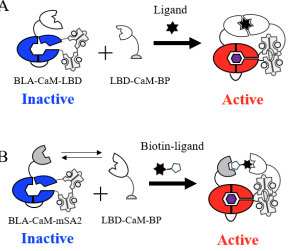
Protein biosensors are important analytical and diagnostic tools that convert molecular recognition into measurable activity. Most common two-component biosensors require two non-competing recognition domains, yet binding affinity and specificity alone do not reliably predict their compatibility with the rest of the biosensor. We report a modular platform that exploits monomeric streptavidin (mSA2) as a surrogate recognition domain, enabling rapid functional evaluation of candidate binders in the context of biosensor scaffold without requiring a second ligand-specific binding protein. We established a chromatography-free protocol for recovering functional mSA2-based biosensor components from Escherichia coli. Using biotinylated small molecules methotrexate and vitamin D3, as well as heart failure protein biomarkers galectin-3 and S100A7 we demonstrate ligand-dependent reporter biosensor activation. The developed platform provides a scalable approach for rapid binder evaluation and biosensor prototyping, streamlining biosensor development using binding domains generated by directed evolution or computational protein design.
|
|
Scooped by
mhryu@live.com
November 4, 4:48 PM
|
Circadian clocks allow organisms to anticipate predictable environmental changes across the day-night cycle. Here we show that the bacterium E. coli exhibits intrinsic timekeeping that anticipates daily temperature cycles. E. coli biofilms entrained to daily temperature shifts, producing 24-hour rhythms in curli plaque formation that persisted under constant temperature. Mechanistically, genetic analyses localized the autonomous timing machinery to the Rcs phosphorelay, which exhibits structural and conceptual parallels with other circadian systems. The BluFR sensory pathway, which acts upstream of the Rcs phosphorelay, linked temperature and blue-light cycles to rhythmic curli production. Flagellar promoter activity and curli production peaked at opposite times of day, suggesting daily coordination of adhesion and motility programs. These findings identify an intrinsic timing system in E. coli that expands our understanding of biological timekeeping.
|
|
Scooped by
mhryu@live.com
November 4, 4:37 PM
|
RNA language models have achieved strong performance across diverse downstream tasks by leveraging large-scale sequence data. However, RNA function is fundamentally shaped by hierarchical structure, making structural information important for pre-training. Existing approaches often depend on noisy annotations or task-specific objectives that can limit generalizability. Here we present structRFM, a structure-guided RNA foundation model trained on 21 million RNA sequence–structure pairs by integrating base-pairing interactions into masked language modelling through a pair-matching operation. We also introduce MUSES, a multi-source ensemble of secondary structures designed to mitigate predictor bias, and a dynamic masking ratio that balances structure-guided and nucleotide-level masking. structRFM learns joint sequence and structure representations as sequence-level, nucleotide-level and pairwise features for broad downstream adaptation. It ranks highly in zero-shot homology classification and establishes new benchmarks for secondary-structure prediction. Its tertiary-structure adaptation, Zfold, consistently improves both three-dimensional predictions and their extracted secondary structures, with performance comparable to AlphaFold3 across CASP15-natural, CASP16 and RNA-Puzzles. structRFM also improves performance on function-prediction tasks and generalizes to newly released RNA families and long non-coding RNAs. Together, these results demonstrate the effectiveness of structure-guided pre-training and highlight multimodal RNA language models for robust structural and functional inference. The complete 21-million-pair dataset, model weights and source code are openly available to support multimodal RNA foundation-model development. structRFM, a structure-guided RNA foundation model pre-trained on 21 million sequence–structure pairs, learns multimodal representations that improve secondary and tertiary structure prediction, functional inference and zero-shot generalization across diverse RNA families.
|
|
Scooped by
mhryu@live.com
November 4, 4:07 PM
|
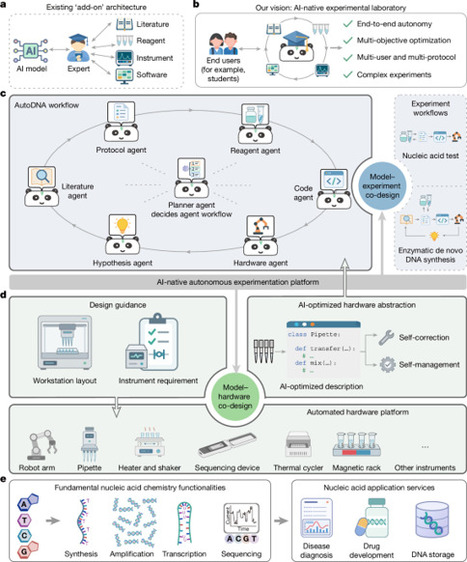
Developing artificial intelligence (AI)-native experimental laboratories for autonomous scientific exploration with minimal human intervention represents a long-standing goal. Although autonomous experimental systems are emerging, especially in chemical and materials science, they remain largely confined to domains with singular objectives, well-defined workflows and simple instrumentation. This limitation may reflect an ‘add-on’ architecture that uses AI as a task-specific tool rather than providing it with a global understanding of experiments, especially under engineering-oriented circumstances. Here we present AutoDNA, an AI-native autonomous biomolecular engineering laboratory targeting multi-objective experiments across diverse instruments. Through the co-design of models, experiments and instruments, AutoDNA realizes the co-evolution of AI and the automation system within an end-to-end multi-user framework. The system autonomously orchestrates over 20 types of instruments across more than 11,000 steps to execute core nucleic acid operations including synthesis, transcription, amplification and sequencing, while human intervention is limited to hardware maintenance tasks, such as reagent and labware replenishment. Across four representative applications, AutoDNA matched expert-optimized enzymatic DNA synthesis yields, accelerated concurrent protocol execution by 3.2-fold, completed an end-to-end DNA data storage cycle with exact recovery of the original digital content, and identified and validated a clinically detected KRAS G13D mutation. AutoDNA establishes a blueprint towards science-as-a-service, accelerating biological discovery and advancing various applications in synthetic biology and information storage. AutoDNA is an artificial intelligence (AI)-native autonomous biomolecular engineering laboratory targeting multi-objective experiments across diverse instruments, realizing the co-evolution of AI and the automation system within an end-to-end multi-user framework.
|
|
|
Scooped by
mhryu@live.com
November 5, 12:10 AM
|
Statistical literacy is frequently treated in undergraduate and graduate life science training as a technical competency peripheral to experimental practice rather than as a central component of scientific reasoning. This separation is especially problematic in life sciences and related disciplines, where biological variability is intrinsic to living systems and often gives rise to heterogeneous, skewed, multiplicative and non-normal data. Consequently, the interpretation of biological measurements depends not only on the data themselves but also on how variability, distributions, measurement scale, uncertainty and inference are understood. This perspective argues that stronger statistical appreciation is urgently needed in the life sciences, particularly during early scientific training. Emphasis is placed on the biological origins of variability, the interpretation of distributions, the importance of multiplicative thinking and lognormality, the appropriate use of means, medians, geometric means and logarithmic transformations, and the distinction between variability, uncertainty and effect size. The article further discusses replication, outliers, the limitations of significance testing and why statistical thinking should be embedded within bioscience education as an integral part of scientific reasoning rather than taught as an isolated analytical skill.
|
|
Scooped by
mhryu@live.com
November 5, 12:03 AM
|
CRISPR-Cas systems are adaptive immune systems that protect prokaryotes from invading genetic elements through acquisition of foreign nucleic acid sequences and RNA-guided recognition of target molecules. Among the diverse CRISPR-Cas families, type III systems represent a highly complex and versatile branch that couples sequence-specific interference with nucleotide-based signaling and activation of diverse downstream immune responses. Recent discoveries have substantially expanded the functional diversity of type III CRISPR-Cas systems, revealing new subtypes, ancillary effectors, nucleotide second messengers, signal-degrading enzymes, and viral counter-defense strategies. Here, we summarize current mechanistic and structural insights into type III CRISPR-Cas biology, from adaptation and target recognition to immune signaling, ancillary effector-mediated responses, and defense regulation. We further discuss emerging biotechnological applications of type III systems and highlight key unanswered questions shaping future research in this rapidly evolving field.
|
|
Scooped by
mhryu@live.com
November 4, 11:52 PM
|
Purple non-sulfur bacteria (PNSB) are metabolically versatile microorganisms that inhabit diverse environments taking advantage of a remarkably efficient photosynthetic machinery. In this work, we describe the creation of a workflow for experimental studies aiming to compare the light absorption properties of structural variants of the light-harvesting complex 2 (LH2) of PNSB. Through the creation of a library of LH2 variants using site-directed mutagenesis, we engineered proteins with different spectral properties to be expressed in a LH2-defficient mutant of the model PNSB Rhodobacter sphaeroides. We validated this approach by reproducing a previously described mutant with a blue-shift in the B850 absorption peak, in addition to identifying a novel mutant exhibiting a red-shift of this peak. We characterised the fluorescence lifetime of the purified LH2 spectral variants in vitro. Our results suggest that directed evolution approaches can be used to systematically explore the landscape of light absorption in LH2s variants.
|
|
Scooped by
mhryu@live.com
November 4, 11:03 PM
|
Long-read amplicon sequencing profiles communities at high resolution, but taxonomic accuracy depends on the reference, classifier and the parameters used. Here, we present HiFiTaxa, a reproducible, single command Nextflow pipeline for PacBio HiFi 16S rRNA gene and fungal ITS amplicons. It builds versioned references from current GTDB and UNITE releases and supports Bayesian lowest common ancestor (BLCA) and naive Bayes (NB) classifiers and the read level profilers Emu (16S rRNA gene) and EMITS (ITS). We benchmarked them on mock communities and on holdouts with 10% of GTDB or UNITE databases sequences withheld. On the 16S rRNA gene mock of 20 species, BLCA detected all 20 species and reported two false positives, NB detected 17 and reported none, and Emu detected all 20 and reported eight. In the GTDB holdout, for taxa represented in the reference, BLCA reached 80.0% species level accuracy against 48.1% for the exact matching species step of NB. However, NB produced fewer incorrect assignments for taxa absent from the reference. On fungal ITS, BLCA had slightly higher holdout accuracy at species level(54.7%) against 52.2% for NB. NB was more conservative for novel taxa, and EMITS detected the most mock species. HiFiTaxa therefore offers a single reproducible workflow that uses current GTDB and UNITE releases and enables users to choose between different classifier algorithms depending on their needs.
|
|
Scooped by
mhryu@live.com
November 4, 10:50 PM
|
The methanotroph Methylococcus capsulatus encodes the carbon dioxide (CO2)-fixing enzyme ribulose-1,5-bisphosphate carboxylase/oxygenase (RubisCO), which, along with CO2 and methane (CH4), are required for growth of this bacterium. This unique, dual one-carbon metabolism is present in phylogenetically diverse methanotrophs and is likely widespread in nature, but the connection between organic and inorganic carbon metabolism in these methanotrophs is unclear. Here we used a systems approach to investigate the requisite role of CO2 in M. capsulatus metabolism and physiology. We show that atmospheric CO2 levels are sufficient for M. capsulatus cultivation, and that CO2 assimilation is linked to cellular redox balance. In the absence of CO2, M. capsulatus elicits a global transcriptional response that includes induction of RubisCO- and other inorganic carbon assimilation-encoding genes with a concomitant decrease in ribosome biogenesis and nitrogen assimilation genes typical of a bacterial stringent response. This CO2 starvation response balances biosynthesis with carbon availability. Genetic and biochemical evidence show that a LysR-type transcriptional regulator (CbbR) activates RubisCO and other CO2 assimilation gene transcription via direct promoter binding in response to elevated intracellular RubisCO substrate, ribulose-1,5-bisphosphate, in CO2-starved cells. These results offer insights into the essentiality of CO2 for M. capsulatus metabolism and establish a function for CbbR-family regulators in methanotrophs beyond their canonical association with CO2 fixation in autotrophic bacteria.
|
|
Scooped by
mhryu@live.com
November 4, 6:19 PM
|
The function of microbial communities is often dominated by additive and pairwise interactions, raising the question of whether this reflects intrinsic biological simplicity or fundamental limits of detection. Here, we leverage the theory of fitness landscapes to bridge microbial ecology and genetics, and show that this apparent simplicity is a generic consequence of structural and statistical constraints rather than evidence for intrinsically weak higher-order interactions. We separate the detectability of individual epistatic interactions from their contribution to functional variance, and demonstrate that local k-order interactions suffer from exponential noise amplification while their contributions to total variance are intrinsically suppressed by order-dependent geometric dilution arising from the combinatorial structure of the landscape. Applying this framework to a fully sampled experimental microbial landscape, we find that only first- and second-order interactions are distinguishable from experimental noise. Furthermore, generalized Lotka–Volterra landscapes reveal that experimental noise alone can generate the illusion of higher-order structure in communities where all direct mechanistic interactions are pairwise and indirect interactions are weak. Our findings identify universal, order-dependent limits on the quantification of epistasis that apply to high-dimensional landscapes across ecology and genetics, providing a principled foundation for rational community design.
|
|
Scooped by
mhryu@live.com
November 4, 6:07 PM
|
Accurate and reproducible metagenomic analysis is essential for effective infectious disease surveillance. Targeted diagnostics such as culturing, antigen assays, and multiplex PCR panels identify only predefined organisms and can fail to identify atypical or novel infections. Shotgun metagenomics offers hypothesis-free detection, but adoption is limited by workflow complexity, dependence on mutable reference databases, and high computational cost. To combat these challenges, we introduce MicrobeRT, an integrated suite of genomic language models fine-tuned to classify metagenomic sequencing reads across three tasks: (i) species level taxonomic identification, (ii) antibiotic resistance gene detection, and (iii) pathogenicity assessment. The framework builds on three pre-trained genomic language models - Nucleotide Transformer (Dalla-Torre et al 2025), DNABERT (Ji et al 2021, Zhou et al 2024), and HyenaDNA (Nguyen et al 2024) - leveraging their large-scale genomic pre-training, adaptability to downstream tasks, and, in the case of HyenaDNA, ability to capture long-range sequence dependencies. The models are fine-tuned on large, curated datasets spanning microbial, viral, fungal, and human genomes, including more than 500,000 genomes and 250,000 antibiotic resistance gene sequences. To evaluate the performance of our fine-tuned genomic language models across classification tasks, we developed a benchmarking framework that compares MicrobeRT against state-of-the-art (SOTA) bioinformatics tools. Across both simulated and empirical datasets, the models achieve strong performance while reducing computational overhead. MicrobeRT is released as open-source software, enabling further fine-tuning and reproducible integration of alternative models and classifiers. We also demonstrate seamless, drop-in integration by incorporating our fine-tuned taxonomic classification models as an optional add-on within the open-source TaxTriage pipeline (Merritt et al 2026). MicrobeRT demonstrates the feasibility of three clinically relevant multi-label analyses, offering a practical path to scalable, reproducible metagenomic diagnostics and enabling broader deployment of AI/ML-enhanced infectious disease testing.
|
|
Scooped by
mhryu@live.com
November 4, 5:47 PM
|
Engineered native gut bacteria could offer persistent, programmable therapeutic delivery in the gut, but many dominant taxa remain genetically intractable. Members of one such family of obligate anaerobic Clostridia, Lachnospiraceae, are prevalent in the human gut microbiome and produce metabolites linked to intestinal and metabolic health. Here we report a modular toolkit for engineering Lachnospiraceae, including constitutive and inducible expression, chromosomal integration and secretion systems. Applying this toolkit to gut native Coprococcus comes, we programmed the secretion of cytokine interleukin-22 (IL-22) in the mouse intestinal tract, where it induces epithelial defence transcriptional programmes. In a mouse model of metabolic dysfunction-associated steatotic liver disease, IL-22-secreting C. comes improved glucose homeostasis, reduced systemic endotoxemia and attenuated hepatic steatosis. This work demonstrates that native Lachnospiraceae can be genetically programmed to modulate host metabolic and immune physiology. The toolkit provides a foundation for the development of Lachnospiraceae-derived engineered therapeutics and for dissecting causal relationships between commensal gene programmes and host physiology. The development of expression and secretion systems for the gut Lachnospiraceae family enables the engineering of a member species to deliver therapeutics in mouse models of metabolic dysfunction-associated steatotic liver disease.
|
|
Scooped by
mhryu@live.com
November 4, 5:26 PM
|
AlphaFold 3 (AF3) models RNA and protein-RNA complexes, but when its predictions and confidence metrics can be trusted is unclear. We evaluated AF3 on more than 1,300 protein-RNA complexes and about 270 RNA-only systems, and compared post-cutoff RNAs with pre-cutoff candidates selected by sequence and fold similarity. On structurally novel RNAs, AF3 largely preserves the protein fold, while RNA-fold and interface accuracy drop sharply with little change in predicted RNA confidence score. Input ablations show that protein alignments and templates from RNA-bound proteins govern complex assembly, whereas RNA alignments matter most for single-chain and long RNAs. The most frequent failed interface retains protein-side contacts but places an often-misfolded RNA in the wrong pose. RNA interface confidence only partly distinguishes this error from correct placements. Against CLIP-seq, SELEX and RNAcompete motifs, AF3 usually places the protein against the experimentally observed motif-bearing RNA segment, even where the interface fails, but often not in the native pose. In protein-RNA complexes released in 2026, a score combining AF3 confidence with RNA familiarity and template use ranked RNA chains with accurate folds and correctly placed interfaces better than AF3's ranking score.
|
|
Scooped by
mhryu@live.com
November 4, 4:57 PM
|
Despite growing demand for biocompatible materials that regulate ice crystallization in cryopreservation, antifreeze peptide discovery remains constrained by limited candidate sequence diversity and reliance on known protein scaffolds. Here, we establish an AI-guided discovery framework integrating multimodal antifreeze protein prediction, generative sequence expansion and local sequence-pattern analysis. AFPFusionLM combines protein sequence and structure-aware representations, achieving an AUROC of 0.937 and an AUPRC of 0.957 on an independent reference set. Antifreeze-domain-adapted protein sequence generation and multimodel consensus screening of UniProt, glacier metagenomes and generated sequences yielded 87,305 candidate protein records. Large-scale sequence analysis revealed recurring periodic sequence architectures across multiple candidate protein clusters, enabling the identification of short-peptide families with shared repeat features and their natural variants. Experimental evaluation revealed ice recrystallization inhibition activity in multiple peptides from repeat-associated families, with inhibitory effects comparable to or greater than those of reference peptides reported in the literature. Cell-based experiments using a representative peptide-containing formulation also supported its cryoprotective potential under reduced-DMSO conditions. These findings show that large-scale sequence exploration can reveal function-associated peptide sequence architectures, providing a research framework for the systematic discovery and subsequent optimization of antifreeze peptides.
|
|
Scooped by
mhryu@live.com
November 4, 4:42 PM
|
The adenosine triphosphate (ATP)-regulated GroEL/ES chaperonin of E. coli promotes protein folding by transiently encapsulating unfolded substrate protein in a nano-cage formed by the cylindrical GroEL and the lid-shaped GroES. How this confinement modulates the folding energy landscape, allowing accelerated protein folding unimpaired by aggregation, remains incompletely understood. Prompted by recent observations suggesting that the chaperonin cavity may favor unfolding, here we reinvestigated the effect of encapsulation on protein thermodynamic stability. To allow thermal unfolding of an encapsulated substrate protein, we generated a destabilized variant of maltose-binding protein (MBP) by introducing four mutations, quadruple mutant-MBP (QM-MBP), lowering the melting temperature (Tm) from 63.6 °C to 44.3 °C. GroEL/ES accelerated the slow spontaneous folding of QM-MBP ~20-fold. The protein reached a native-like structure while encapsulated inside GroEL:ES, as demonstrated using hydrogen/deuterium exchange and single molecule fluorescence resonance energy transfer analyses in presence and absence of the ligand maltose. Importantly, confinement in the thermally stable chaperonin shifted the cooperative unfolding transition of QM-MBP to a Tm of 52.4 °C, corresponding to a stabilization by 4.6 kcal mol−1. In-cage thermal unfolding was reversible, indicating that the environment of the chaperonin cavity is conducive to folding. These findings suggest that a thermodynamically stabilizing effect of the GroEL:ES cage contributes to promoting protein folding.
|
|
Scooped by
mhryu@live.com
November 4, 4:26 PM
|
Algal bloom demise, often caused by viruses, is a major driver of carbon cycling in the surface ocean. However, although blooms collapse synchronously, fewer than 30% of algal cells are actively infected by viruses, indicating the involvement of additional mortality agents. Here we quantified tripartite interactions within a synthetic community composed of the abundant coccolithophore Gephyrocapsa huxleyi, bacteria and viruses isolated during a bloom. We found that bacteria significantly enhanced virus-induced algal mortality in G. huxleyi as well as in three other globally widespread microalgae. We quantified this interaction using two new metrics: the synergy index, which measures viral–bacterial interaction strength, and the benefit index, which assesses changes in bacterial fitness. We identified Alteromonas bacteria as drivers of viral–bacterial co-infection, with consistently high synergy index and benefit index. We found that during algal blooms, Alteromonas displayed high chemoattraction towards infected cell extracts, accumulated in aggregates derived from bloom demise, and increased in abundance during oceanic bloom collapse. Viral–bacterial synergy represents a previously unrecognized mortality agent that controls bloom termination, modulating the balance between the carbon-recycling viral shunt and the carbon-exporting viral shuttle pathways, which influence global carbon cycling. Viral–bacterial synergy accelerates algal bloom collapse by enhancing virus-induced mortality, driven by Alteromonas chemoattraction and co-infection, revealing a previously unrecognized mortality agent that influences oceanic carbon cycling .
|











1str, higher soluble yield does not necessarily translate to higher monomeric yield, because soluble proteins can also form unintended oligomers.
The model was trained mainly on small de novo domains (padded to 71 residues), and it is only supported for ranking designs in this same workflow. It transferred poorly to nanobodies (r = 0.23)
Inverse folding methods: differences among ProteinMPNN, CarbonDesign, HyperMPNN and Boltz-IF were modest. Boltz-IF, ProteinMPNN at temperature 0.3, CarbonDesign and HyperMPNN were among the higher yielding. SolubleMPNN showed no clear advantage over standard ProteinMPNN.