Your new post is loading...

|
Scooped by
mhryu@live.com
Today, 1:23 AM
|
Naturally occurring magnetotactic bacteria have an inherent ability to sense and align to earth's geomagnetic field due to the presence of magnetosomes—membranous microstructures containing iron oxide nanoparticles. These functionalities can be exploited for tuning movements and guided spatial patterning in controlled magnetic field. While being arduous to culture in laboratories, these organisms have complex genetic make-up with tight regulation on their magnetosome synthesis. Inspired by the magnetotactic bacteria, we aim to render magnetic behavior to E. coli. We mimic the magnetosomes in magnetotactic bacteria by employing a membraneless proteinaceous compartment from the thermophilic iron storage protein, ferritin, fused with a magnetite-forming peptide, m6A. To enhance iron accumulation, the E. coli iron metabolism is engineered by tailoring the expression of iron influx and efflux genes. Numerical simulations support our observations of a highly responsive magnetic E. coli. This study presents a strategy to engineer magnetic response in E. coli which can be adopted to other bacteria.
|
|
Scooped by
mhryu@live.com
Today, 12:45 AM
|
Artificial intelligence is moving from stand-alone models towards systems of interacting agents. These systems do not merely classify, predict or generate: they plan, exchange messages, call tools, divide labour, adapt and coordinate action across tasks and time. This shift has made agentic AI one of the dominant frames for the next phase of the field. Understanding how these agents interact will therefore be as important as improving what each agent can do alone. Here, the authors argue that agentic AI requires a shift from evaluating individual agents alone to analyzing interaction architectures, proposing a framework that links agent interactions, collective configurations and time-dependent outcomes.
|
|
Scooped by
mhryu@live.com
Today, 12:31 AM
|
Replication origins are essential for both chromosome duplication and plasmid maintenance; however, their annotation remains challenging across different replicon types and across diverse phylogenetic lineages. DoriC 14.0, the latest update of the database of replication origins in prokaryotic genomes, restructures and greatly expands this resource, with particular emphasis on plasmid replication. The latest release contains 530 178 computationally derived origin records, associated with 432 232 distinct sequence accessions, including 434 060 chromosomal and 96 118 plasmid records from bacteria and archaea. For bacterial plasmids, OriV-Finder was applied with RNA II-based refinement, whereas a customized OriV-Finder pipeline was employed for archaeal plasmids, which relies on archaeal replication-associated proteins and origin recognition box motifs. DoriC 14.0 combines literature evidence with computational predictions, maintains traceable record identifiers, and offers versioned data with release history. New features include comparative sequence support, related-origin links, interactive candidate replication initiation protein (RIP) sequence-similarity networks, plasmid-level analyses of origin recurrence, RIP profiles, and RNA II variation. The updated website provides filter-based browsing, record-level views, BLAST searches, and standardized downloads, and is freely accessible at https://tubic.org/doric/ and https://tubic.tju.edu.cn/doric/ without registration.
|
|
Scooped by
mhryu@live.com
Today, 12:20 AM
|
Quantitative binding affinities and three-dimensional protein–ligand structures provide complementary information essential for structure-based drug discovery, yet these data remain largely disconnected across existing databases and the biomedical literature. We present BioLiP3, a major extension of BioLiP that expands quantitative affinity coverage 13-fold within its structure-centered framework for biologically relevant interactions. BioLiP3 contains 593 423 affinity records, of which 591 820 are linked to three-dimensional protein–ligand structures: 45 386 experimentally resolved PDB complexes, 528 732 BindingDB-derived records with computationally generated structures, and 17 702 structure-linked records derived from LLM-mined biomedical literature. For records lacking experimental complex structures, we generate structural models using available experimental or predicted receptor structures, binding-site identification, and molecular docking, with experimental and computational structures explicitly distinguished. To complement existing databases, we developed a hybrid literature-mining workflow combining large language models with rule-based validation and independent verification to extract Ki, Kd, IC50, and EC50 measurements from PubMed abstracts while preserving provenance. BioLiP3 further integrates ligand-binding sites and protein, functional, and structural annotations via cross-references to PDB, UniProt, NCBI Taxonomy, PubChem, and original literature. Taken together, these advances make BioLiP3 a unified resource for data-driven protein–ligand interaction studies and structure-based drug design. BioLiP3 is freely accessible at https://zhanggroup.org/BioLiP/.
|
|
Scooped by
mhryu@live.com
Today, 12:10 AM
|
Human milk oligosaccharides (HMOs) are a component of breast milk which improve infant health outcomes by modulating immune responses, inhibiting pathogen adhesion, and promoting healthy gut microbiota. Although their effects are well-documented, few HMOs have been clinically or biochemically studied because only a handful of the simplest HMOs out of >200 species are currently possible to chemically synthesize or produce in microbes via metabolic engineering in microbial hosts. In contrast, plants are naturally adept at biosynthesizing a wide range of complex polysaccharides, and they have recently been established as a heterologous system for HMO production. However, much of the structural diversity of HMOs has not yet been reproduced in a plant, particularly fucosylations. Four fucosidic linkages can be found in fucosylated HMOs, but only Fucα1–2Gal has been biosynthesized in planta. Here, we screened bacterial fucosyltransferases using the model plant Nicotiana benthamiana to produce 3-fucosyllactose (Fucα1–3Glc), lacto-N-fucopentaose II (Fucα1–4GlcNAc), and lacto-N-fucopentaose III (Fucα1–3GlcNAc), demonstrating that all four fucosidic linkages can be made in planta. Just twelve glycosidic linkages make up all the HMOs found in breast milk, and our findings increase the number of linkages made in planta from seven to ten, greatly expanding the variety of HMOs accessible in a plant.
|
|
Scooped by
mhryu@live.com
Today, 12:00 AM
|
Genome editing technologies hold significant promise for the treatment of genetic disorders, but safe and efficient delivery remains a major barrier to their clinical translation. Cell-derived particles, including extracellular vesicles (EVs) and virus-like particles (VLPs), have emerged as promising non-viral delivery platforms, offering biological compatibility and the capacity to package and deliver genome editors as ribonucleoprotein (RNP) complexes in a transient manner that reduces the risk of off-target editing. The surface composition of these vehicles is shaped by their biogenesis pathway and their cell of origin, which in turn govern their cellular tropism. Through various engineering strategies, including producer cell engineering, viral-glycoprotein pseudotyping, and post-isolation surface modifications, this tropism can be expanded or redirected toward cell types and tissues beyond the liver. Here, we review the biology underlying cell-derived particle surface composition and the targeting strategies employed to engineer cell-type specificity.
|
|
Scooped by
mhryu@live.com
November 5, 11:48 PM
|
Metabolic traits mediate microbial interactions and underpin mechanistic models of community assembly. With the rapid expansion of genomic data and bioinformatic tools, it is widely assumed that metabolic traits such as substrate utilization can be reliably inferred from genomes alone. Here, we systematically evaluate this assumption by comparing genome-based predictions from four commonly used tools to high-throughput growth phenotypes of 186 marine bacteria. For simple substrates, prediction accuracy was limited and highly variable across taxa and substrates, with many strains predicted at or near chance levels. For three of four tools, most errors were false positives, indicating that apparent pathway completeness frequently fails to translate into growth under laboratory conditions. In contrast, genomic prediction of polysaccharide utilization based on carbohydrate-active enzyme content performed substantially better, suggesting that traits that depend on a few highly specific enzymes are easier to predict. While genome-based approaches can recover broad statistical patterns in metabolic strategies, their limited strain-level reliability constrains ecological inference and modelling. For the foreseeable future, large-scale experimental phenotypic characterization will remain an indispensable component of microbial ecology, both to reveal trait distributions and to ground-truth and improve genomic predictions.
|
|
Scooped by
mhryu@live.com
November 5, 11:11 PM
|
Bidirectional promoters (BDPs), intergenic regions that coordinate transcription of oppositely oriented genes, pervade eukaryotic genomes, yet sequence signatures remain poorly defined. Existing approaches to BDP identification rely on distance thresholds and cannot infer activity from DNA. Here, we use Evo2, a genomic language model, to predict BDP activity and uncover sequence-encoded regulatory principles across four plant species (Arabidopsis, maize, rice, and wheat). We stratify BDPs by co-expression strength and compare Evo2-derived embeddings against k-mer profiles, transcription factor binding site matrices, and convolutional neural networks trained on sequence. Evo2 embeddings outperform all baselines, demonstrating that genomic language models capture regulatory information underlying BDP activity. Models trained on one or multiple species transfer to held-out species, and in planta validation in Spartina alterniflora confirms predicted high-activity BDPs. Sparse autoencoder analysis links Evo2 embeddings to nucleosome positioning and species-specific transcription factor landscapes, providing insight into sequence determinants underlying BDP activity . This work establishes how genomic language models can extract bidirectional promoter logic from sequence and identify conserved regulatory rules across plants. Bidirectional promoters (BDPs) are intergenic regions that initiate transcription of two oppositely oriented genes. Here, the authors report a framework that employs Evo2 genomic language model embeddings to predict BDP activity directly from raw DNA sequence.
|
|
Scooped by
mhryu@live.com
November 5, 10:24 PM
|
Vaults are the largest ribonucleoprotein particles in eukaryotic cells, built from 78 copies of the major vault protein (MVP), yet their function remains unknown four decades after their discovery. MVP homologs occur in prokaryotes and bacteriophages, but whether they form vaults is unknown. Here, we show that prokaryotic and bacteriophage MVP homologs assemble into vault particles. We surveyed approximately 15 billion proteins, found MVP homologs in 29 bacterial and 4 archaeal phyla, and used size-exclusion chromatography to rapidly screen and isolate vault particles of eight homologs expressed in Escherichia coli. Cryo-electron microscopy structures of the phage homolog L05 at high resolution reveal a shell of 96 MVP chains enclosing a volume ~25% larger than human vaults, among the largest protein shells of defined size outside virus capsids. Prokaryotic MVPs typically carry seven wall repeats and eukaryotic MVPs nine, and adding wall repeats to L05 yields larger vaults. Prokaryotic vaults expand the known diversity of vault architecture and offer a tractable system for studying vault assembly and a size-tunable scaffold for cargo encapsulation.
|
|
Scooped by
mhryu@live.com
November 5, 4:56 PM
|
An article published by Liu et al. ( 2026, https://doi.org/10.1111/nph.71579) provides compelling evidence that manipulating Ca2+ channel activity can enhance crop resistance to devastating pathogens. The authors studied rice blast, caused by the hemibiotrophic ascomycete fungus Magnaporthe oryzae, which is a devastating disease of rice world-wide. By identifying a hyperactive allele of the rice, CYCLIC NUCLEOTIDE-GATED CHANNEL13 ( OsCNGC13), the authors demonstrate that altered Ca2+ influx can trigger hypersensitive response-like cell death and confer broad-spectrum resistance against rice blast. The hypermorphic allele of rice OsCNGC13, designated elicitor-triggered cell death 1 ( etd1), was identified by a forward genetic screen and exhibits spontaneous cell death and a pronounced hypersensitive response (HR)-like phenotype following exposure to M. oryzae elicitors. etd1 enhances blast resistance by restricting M. oryzae colonization with cell death, and remarkably, it displayed resistance against all 108 tested M. oryzae isolates. Genetic analysis revealed that a single glycine to glutamate substitution (G483E) within the highly conserved CNGC gating region, renders the etd1-encoded version of OsCNGC13 a hyperactive Ca2+-permeable channel. The mutation alters Ca2+ permeability, thereby amplifying the cellular response to pathogen-derived stimuli. This finding demonstrates that a single amino acid substitution in a Ca2+ channel can confer exceptionally broad disease resistance without the need to introduce additional pathogen-recognition specificities.
|
|
Scooped by
mhryu@live.com
November 5, 4:40 PM
|
Lager beer, made by fermentation of barley malt using the hybrid yeast Saccharomyces pastorianus, is extremely popular worldwide. The low genetic variation of S. pastorianus strains limits the scope of development for novel lager beer types. The wild ancestor Saccharomyces eubayanus has potential for use in lager brewing, but its application is constrained by formation of phenolic off-flavours (POF+ phenotype) and limited uptake of the wort α-oligoglucosides maltose and maltotriose. Here, we addressed both limitations, using screening and evolutionary engineering of the Himalayan S. eubayanus strain ABFM5L.1, one of the closest known relatives of S. eubayanus subgenome of modern hybrid lager yeasts. Prior to improving α-oligoglucoside utilisation, 4-vinylguaiacol formation was abolished by mutagenesis and screening for POF⁻ mutants. Subsequently, evolution for improved sugar utilisation and reverse engineering identified SeMALR1 (the S. eubayanus ortholog of S. cerevisiae MAL63) as a key regulatory control point. Single-nucleotide substitutions in this maltose regulon activator gene enabled rapid maltose uptake and partial maltotriose utilisation in a previously maltose-negative background. The evolved non-genetically modified POF⁻ strains showed near-complete maltose consumption (>90%–95%) and partial maltotriose consumption (∼25%–32%) in industrial wort. These results reveal substantial regulatory flexibility in Holarctic S. eubayanus and support its further development as a novel lager brewing yeast.
|
|
Scooped by
mhryu@live.com
November 5, 4:27 PM
|
Heterologous production of metabolites and proteins requires the transfer of foreign DNA into a host. One common barrier to the genetic engineering of bacteria is their plethora of phage defense systems. Targeted deletion of defense system components can improve DNA transfer for downstream applications. We sought to improve the transformation efficiency of Burkholderia sp. FERM BP-3421, a β-proteobacterial host that has great potential for the high-titer production of bioactive small molecules. We investigated restriction-modification systems and the recently described Kiwa phage defense system. Through deletion of three restriction enzyme genes, transformation efficiency was improved nearly 7-fold. The electroporation protocol was also optimized with respect to temperature, cell density, and buffer composition, which resulted in an additional 40-fold improvement in transformation efficiency, reaching 1 × 10⁶ CFU/µg plasmid DNA. Interestingly, a mimicry by methylation approach, where DNA is pre-methylated using two host DNA methyltransferases, outperformed the transformation efficiency obtained with restriction enzyme deletion mutants nearly 3-fold. Moreover, contrary to previous reports in E. coli, deletion of the Kiwa system did not improve transformation efficiency into Burkholderia sp. FERM BP-3421. Understanding the impact of bacterial innate immune systems on genetic tractability is vital to improving non-model host strains to produce high-value molecules of interest.
|
|
Scooped by
mhryu@live.com
November 5, 4:21 PM
|
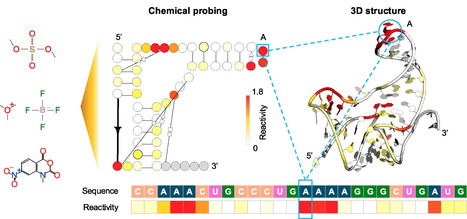
RNA chemical probing generates nucleotide-resolved profiles in vitro and in cells, while X-ray crystallographic or cryo-electron microscopy models provide high-resolution structural models but remain comparatively low throughput. Aligning these experiments from different modalities may provide insights into RNA structure formation and molecular functions. Here, we present Ribocentre-FoldBridge (https://foldbridge.ribocentre.org/), an AI-assisted, curator-reviewed database linking curated chemical-probing profiles with experimentally determined 3D structures. This database catalogues 12 types of RNAs, linking 256 929 probing profiles across five experimental categories to 5321 structure-linked cases. It interactively visualizes the probing profiles that align with RNA secondary and tertiary structures at nucleotide resolution. We demonstrate probe-specific reactivity patterns across paired, unpaired, and solvent-accessible structural contexts. The database aims to provide a reproducible evidence layer for examining RNA structure–function relationships across heterogeneous experiments, and thus facilitate the development of new RNA structure or function prediction programs.
|
|
|
Scooped by
mhryu@live.com
Today, 1:12 AM
|
Plant factories with artificial lighting (PFALs) are enclosed vertical cultivation systems equipped with customisable LED spectral regulation, whose stacked spatial structure and controlled light environments substantially differ from open fields and conventional greenhouses, bringing unique and specialised challenges to precise plant phenotyping. Driven by high-throughput sensing technologies and artificial intelligence (AI), plant phenotyping in PFALs has achieved considerable advances. This review comprehensively summarises progress in PFALs plant phenotyping, covering sensing techniques including RGB imaging, multispectral imaging, hyperspectral imaging, and 3D point cloud reconstruction, as well as advanced analytical models integrating machine learning, deep learning, large language models, and AI agents for phenotypic data mining. We further highlight the important bottlenecks restricting the industrial application of PFALs phenotyping: commercial phenotyping devices are generally bulky, costly, and incompatible with compact vertical cultivation layouts, while the shortage of PFALs-specific phenotypic datasets and scenario-adaptive optimisation models hinders large-scale industrial translation. To clarify the differentiated technical characteristics of PFALs phenotyping, we systematically compare the discrepancies in phenotyping strategies, technical demands, and application scenarios between PFALs and traditional greenhouses. On this basis, we propose targeted solutions and prospective development directions for PFALs phenotyping, focusing on miniaturised and integrated phenotyping equipment, optimised AI-driven analytical frameworks, and multi-omics intelligent breeding. Distinct from previous general phenotyping reviews, this paper specifically targets the vertical, controlled PFALs cultivation scenario, systematically sorting out its exclusive technical challenges and corresponding coping strategies, and providing actionable insights for the future intelligent upgrading and industrialisation of PFALs / vertical farm plant phenotyping technology.
|
|
Scooped by
mhryu@live.com
Today, 12:37 AM
|
Uridine diphosphate-dependent glycosyltransferases (UGTs) coupled with sucrose synthase (SuSy) offer a selective and highly efficient route to natural product glycosylation. However, harnessing the full potential of these biocatalysts at industrial scale is challenged by their low operational stability. Enzyme mining and engineering offer a powerful strategy to address this challenge. A vast array of in silico tools supports this effort, which use sequence, structure, and thermodynamic knowledge to discover, predict and screen thermostabilized variants. In this review, we discuss the recent applications of those tools to improve the thermostability of UGTs and SuSy jointly, and their resulting impact on UGT-SuSy glycosylation cascades. We highlight integrated methodological approaches that predict and filter candidate mutations, allowing the reduction of false positives without sacrificing activity. These efforts have substantially advanced UGT thermostability, with melting temperatures reaching up to 90 °C and half-lives extending to several days at 60 °C. Comparatively fewer studies, however, have applied similar strategies to SuSy, and none have yet achieved the magnitude of improvement reported for UGTs. This asymmetry positions SuSy as a comparatively underexplored target, emphasizing the need for further mining and engineering to obtain stable variants that perform alongside UGTs under industrial conditions.
|
|
Scooped by
mhryu@live.com
Today, 12:26 AM
|
The Evolutionary Classification of Domains (ECOD) organizes protein domains into a hierarchy of evolutionary relationships, encompassing both experimentally determined and computationally predicted structures. ECOD now classifies 2.9M domains, of which ∼1.37M derived from the Protein Data Bank and 1.51M from predicted models in the AlphaFold Protein Structure Database. The principal development we report here is a complete rebuild of the ECOD web resource. Search has been reconstructed around three modalities: (i) sequence, (ii) structure, and (iii) keyword. Foldseek now is the primary search method for the ECOD web page, searching a ∼457k representative domain database that is also distributed for local use. Results are presented through a Mol* interactive viewer, and a new API has been developed for programmatic access to the database. Alongside the interface, the pipeline for classifying new PDB entries has been rebuilt and returned to a regular cadence, family groups have been synchronized with Pfam v38.2, the bulk distributables have been reorganized and now include the search databases, the ligands in contact with each domain are recorded for experimental structures and annotated with drug cross-references from DrugDomain, and a registry has been introduced through which ECOD assigns stable identifiers to gene-called proteins and records the structures it predicts. ECOD is freely available at http://prodata.swmed.edu/ecod.
|
|
Scooped by
mhryu@live.com
Today, 12:16 AM
|
Gluten, the main storage protein in wheat, barley, and rye, contains sequences rich in proline and glutamine that resist complete gastrointestinal degradation resulting in generation of immunogenic peptides. The peptides contain immunogenic epitopes that, following deamidation by tissue transglutaminase 2 (TG2), can be presented by HLA-DQ2/DQ8 molecules to gluten-specific CD4 + T cells, resulting in intestinal inflammation. This gluten-induced intestinal inflammation is known as celiac disease (CD) in susceptible individuals. A gluten-free diet (GFD) has been recognised as gold standard treatment to date, which requires lifelong strict compliance, therefore demanding alternative novel therapies. Fermented foods have emerged as promising reservoirs for selection of gluten-degrading probiotic strains as adjunctive therapeutic candidates. These strains may hydrolyse gluten and its immunogenic gluten peptides through specialised array of proteolytic enzymatic systems comprising endopeptidases, prolyl endopeptidases, aminopeptidases and dipeptidyl peptidases. This review critically examines the significance of gluten-degrading microorganisms with probiotic potential from fermented foods and their proteolytic enzyme system. Owing to their origin from fermented foods, the effect of fermentation parameters such as pH, strain selection, and substrate composition is also highlighted. The assessment of studies indicates that the fermentation mediated by selected gluten-degrading strains reduces the gluten content; however, these did not detoxify the immunogenic peptides completely. The potential strains support intestinal health through modulation of gut microbiota and attenuation of inflammatory responses which has been validated through in vitro and clinical studies, although their efficacy in managing CD remains unestablished. However, strain-specific differences, incomplete degradation of immunogenic peptides, and the lack of standardised protocols for evaluating gluten detoxification remain significant barriers to their application.
|
|
Scooped by
mhryu@live.com
Today, 12:04 AM
|
Bacterial cyclic-oligonucleotide-based antiphage signaling systems (CBASS) are evolutionarily related to the mammalian cyclic GMP-AMP synthase-stimulator of interferon genes (cGAS-STING) pathway. The bacterial CdnB-Cap14 CBASS system is notable for producing 2′,3′-cyclic GMP-AMP (2′,3′-cGAMP), the same second messenger used by the mammalian cGAS-STING pathway; however, its functional mechanism has remained unclear. Here, we show that CdnB-Cap14 protects against phage infection through abortive infection (Abi) by triggering cell death. Structures of apo CdnBΔC and its complexes with ATP and guanosine triphosphate (GTP), together with inactive and activated 2′,3′-cGAMP-bound Cap14, reveal that CdnB is autoinhibited by its C-terminal AGS-C domain and becomes activated by DNA together with intracellular ATP/GTP depletion to synthesize 2′,3′-cGAMP in vitro. This signal drives Cap14 assembly from dimers into zipper-like two-layered filaments that partition the membrane and disrupt its integrity. We further show that phage-encoded Acb2 sequesters 2′,3′-cGAMP to block signaling. These findings reveal mechanistic parallels between bacterial CBASS and eukaryotic cGAS-STING immunity and provide a molecular basis for therapeutic engineering.
|
|
Scooped by
mhryu@live.com
November 5, 11:54 PM
|
Watson–Crick base-pairing defines the classical paradigm of nucleic-acid interactions, but growing research reveals noncanonical modes beyond this framework. Here we uncover a mode of interactions by which two DNA strands associate through a ligand-induced conformational rearrangement. Upon binding a small molecule, a structure-switching primary aptamer folds into a conformation that exposes a previously inaccessible docking interface. An independently evolved secondary aptamer recognizes this interface primarily through noncanonical interactions rather than sequence complementarity, reporting the ligand-bound state of the primary aptamer. This interaction is conformation-sensitive: single base-pair changes in the primary aptamer modulate secondary aptamer recognition. Across four chemically distinct small-molecule targets—serotonin, dopamine, testosterone and deoxycorticosterone 21-glucoside—secondary aptamers were identified for three, and the serotonin system was translated into surface-based sandwich assays. These results demonstrate that a ligand-induced conformational state, rather than sequence complementarity or the chemical identity of the ligand, can serve as the epitope for nucleic-acid recognition, expanding the molecular features that DNA can be evolved to detect. Aptamers have generally been understood as nucleic acids that recognize a specific ligand. Now it has been shown that secondary aptamers can recognize the ligand-bound conformation of a primary aptamer, enabling recognition of molecules that lack multiple binding sites for sandwich assays. This mechanism can be integrated into lateral flow assays for targets, including serotonin.
|
|
Scooped by
mhryu@live.com
November 5, 11:39 PM
|
The high redundancy of many bacterial proteomes can be used to evaluate proteome quality and identify sequence errors. We have used MMseqs2 clustering with subsequent filtering to identify clusters that contain sequences from at least 50% of the clustered proteomes to build sets of core proteins that include proteins from 95% of the clustered bacteria. These clusters typically capture >80% of proteins in the bacteria. Because these clusters have highly uniform length (the median cluster has >99% of its proteins at the mode length), short (<75% of mode length) or long (>133%) proteins are likely artifacts. Most “outlier” proteins are found in fewer than 10% of clusters, and “high-outlier” clusters are over-represented in a small fraction of proteomes, which often have poor proteome BUSCO fragment scores. Short-outlier proteins are artifacts; at least 80% of short-outlier genomes contain mode-length copies of the protein, which were missed because of frameshifts, termination codons, or initiation codon choice. MMseqs2 clustering with 50% participation provides robust sets of core bacterial proteins and can be used to identify lower-quality proteomes and proteins.
|
|
Scooped by
mhryu@live.com
November 5, 10:47 PM
|
Robust gene regulatory architectures are critical for proper development, response to environmental cues, and adaptation in plants. Owing to technical limitations imposed by the cell wall, the understanding of gene regulation in plants has lagged behind that of other organisms. However, innovation in molecular profiling techniques now make identifying active regulatory sequences across diverse cellular, developmental, and environmental contexts in a wide range of plant species routine. Despite these advances, most studies of plant regulatory elements have focused on regulatory dynamism within a single individual organism. As a result, the functional implications and mechanistic rules governing gene regulatory evolution remain less understood. With rates of genetic diversity in plants often far greater than metazoan species, plant models are uniquely positioned to address outstanding questions in regulatory evolution. Here, we review recent advances in the fundamental principles underlying gene regulatory evolution and the consequences towards molecular, cellular, and organismal phenotypes in plants.
|
|
Scooped by
mhryu@live.com
November 5, 5:01 PM
|
Microbial life strategies are shaped by a fundamental ecological trade-off: specialization enables peak performance in a narrow niche, while generalization allows persistence across diverse environments, but may constrain maximal growth rates. In soils, this trade-off is particularly relevant in the rhizosphere and detritusphere—and at their interface, where co-occurring living roots and decaying residues are hypothesized to generate emergent biogeochemical conditions. Using H₂¹⁸O quantitative stable isotope probing (qSIP), we measured bacterial and fungal growth rates in the rhizosphere, the detritusphere, and in the combined presence of rhizosphere + root detritus. We classified taxa operationally as specialists (defined as microbes actively growing only within a single habitat) or generalists (defined as microbes actively growing in two or more habitats), reflecting realized growth breadth under the conditions tested. Bacterial specialists exhibited faster growth than generalists within the habitats where they grew, a pattern consistent with a trade-off between niche breadth and growth rate. Net relatedness and nearest taxon indices showed that total bacterial communities were phylogenetically clustered, while specialist and generalist communities were phylogenetically random, consistent with functional traits—rather than lineage—predicting realized growth-breadth strategy. In annual grassland soils, fast-growing specialists may dominate ecosystem processes when resources abound, and slow-growing generalists may sustain element transformations when conditions shift; understanding this interplay may inform predictions of soil-carbon trajectories.
|
|
Scooped by
mhryu@live.com
November 5, 4:47 PM
|
Coiled coils are a versatile class of α-helical protein motifs characterized by recurring sequence patterns that direct their assembly into defined oligomeric bundles and underpin a wide range of biological functions. The well-established sequence-structure relationships governing coiled-coil formation enable predictive control over stability, specificity, and oligomerization state, making them attractive and chemically tractable building blocks for biosensor design in applications ranging from single-molecule detection to synthetic biochemical circuits and functional nanomaterials. After revisiting the theoretical foundations of coiled-coil architecture, this review outlines strategies to engineer programmable binding interfaces that can be rationally tuned to generate orthogonal, high–affinity interaction pairs, enabling flexible and modular biosensor platforms. Particular emphasis is placed on recent advances in computational and data-driven design approaches, including machine-learning and AI-based strategies, alongside established rational and empirical methods for coiled-coil construction. These complementary design principles underpin the development of coiled-coil-based biosensors and are discussed together with selected application examples to illustrate how engineered coiled-coil interactions support sensitive and specific molecular recognition as well as switchable control in synthetic biology and chemical biology. Overall, this review highlights coiled coils as programmable, stable, and highly designable scaffolds at the interface of molecular engineering, computation, and chemical biology.
|
|
Scooped by
mhryu@live.com
November 5, 4:36 PM
|
msDNA, or multi-copy single-stranded DNA, is a small satellite DNA observed in DNA extracts from a bacterial cell. A genetic element, usually found on the chromosome, called a retron, is responsible for producing msDNA. This small single-stranded DNA has a unique structure and is synthesized by reverse transcription from an RNA template. Retrons and msDNA are found in a large variety of different bacterial species. The msDNA molecule has also been developed into an important tool for genetic engineering and genome editing. But the biological function of this unique DNA molecule remained a mystery for decades. Recent discoveries show that a retron element can protect bacteria from infection with a virus (phage) using an abortive infection strategy. And the msDNA molecule is required for this anti-phage property. A historical perspective on this unusual DNA molecule, recent breakthroughs into its functions, and a discussion of the current and possible future directions of study are presented herein.
|
|
Scooped by
mhryu@live.com
November 5, 4:22 PM
|
The gut microbiome plays an important role in maintaining human health. Despite the rapid growth of literature and publicly accessible data on the gut microbiome, a large-scale, well-curated database integrating a unified matrix with multiple analytical tools is still lacking. Here, we introduced GutBiomeDB, a comprehensive database and analysis platform for the human gut microbiome. GutBiomeDB contains 168 464 samples from 482 BioProjects, spanning 72 countries, 224 disease conditions, and seven life stages. To improve the reusability and accessibility of data, the uniformly processed taxonomic profiles generated by Abdill et al. were reused without reprocessing to construct a matrix of 4680 taxa and 3142 genera, and disease, life-stage, sex, and geographic metadata were manually curated by our team. Additionally, GutBiomeDB offers four tools for in-depth analysis: “Differential Analysis” for comparing diversity and abundance of user-selected cohorts and performing random-effects meta-analysis across projects; “Interaction Network” for comparing disease and healthy-control co-occurrence networks; “Lifecycle Atlas” for visualizing genus trajectories across seven life stages; and “Health Index” for searching similar samples and scoring uploaded genus profiles. GutBiomeDB serves as a versatile and valuable resource for advancing a broad spectrum of gut microbiome research and clinical relevance. GutBiomeDB is freely accessed at https://gutbiomedb.online.
|