 Your new post is loading...

|
Scooped by
mhryu@live.com
Today, 4:57 PM
|
bioRxiv - the preprint server for biology, operated by openRxiv, a nonprofit organization dedicated to advancing scientific communication
|
|
Scooped by
mhryu@live.com
Today, 4:36 PM
|
Metagenomic studies of arthropod-associated microbiomes have generated vast amounts of sequence data, yet the functional and structural organization of these proteins remains largely unexplored. Here, we present ArthroVerse, the first comprehensive database of protein families derived from arthropod-associated metagenomes. Non-redundant protein families were generated after rigorous filtering, deduplication, and clustering. The protein families were further annotated with microbial taxonomy, host associations, protein structural information, and carbohydrate-active enzymes predictions. The resulting dataset integrates both metagenomic and reference genome-derived proteins, enabling systematic exploration of functional diversity, evolutionary relationships, and host-microbe interactions in insect microbiomes. ArthroVerse provides a valuable resource for the study of microbial ecology and arthropod physiology, offering unprecedented insight into the protein landscape of insect-associated microbial communities. ArthroVerse is publicly accessible at https://envofams.org/arthroverse/.
|
|
Scooped by
mhryu@live.com
Today, 4:31 PM
|
The vast majority of trait-associated genetic variants reside in noncoding cis-regulatory elements (CREs), yet most regulatory sequences remain functionally uncharacterized. CRISPR-based screens enable direct perturbation of CREs in their native genomic context and have expanded into a diverse toolkit, including CRISPRi/CRISPRa, nuclease-mediated editing, base editing, prime editing, and continuous mutagenesis. Moreover, these approaches can be paired with phenotypic, transcriptomic, or chromatin readouts at single-cell resolution. However, a limitation of conventional pooled CRISPR screens is that cells are assigned by sgRNA identity rather than by the genotype installed. New genotype-resolved approaches address this gap by directly reading the edited endogenous sequence. Because sequence variants in CREs are associated with human disease, continued development of CRISPR-based technologies may help advance new therapies. In this review, we discuss diverse CRISPR-based modalities and their limitations, emerging genotype-resolved techniques, their applications in gene therapy, and computational approaches for predicting the function of regulatory sequences.
|
|
Scooped by
mhryu@live.com
Today, 12:05 PM
|
Enzyme immobilization is essential for translating biocatalytic processes from the laboratory to industrial applications by improving enzyme stability, recovery, and reuse. It underpins sustainable processes in pharmaceuticals, biofuels, and food production, but conventional immobilisation strategies involve inherent trade-offs. Covalent attachment prevents enzyme leaching but may distort the active site, whereas physical adsorption better preserves enzyme conformation but allows enzyme leaching. Furthermore, carrier-based methods frequently encounter mass-transfer limitations and may require external cross-linkers, hindering broader industrial application. Recent advances in synthetic biology and materials science have accelerated the development of protein-based materials for biocatalysis. This review examines protein self-assembly as a unifying design principle for enzyme immobilisation, enabling programmable assembly under relatively mild conditions to overcome key limitations of conventional strategies. We discuss naturally derived structures such as bacterial microcompartments and engineered systems including virus-like particles, elastin-like polypeptides, and SpyTag/SpyCatcher, which support programmable enzyme organisation and enable compartmentalised multi-enzyme cascade reactions. Building on this, a major focus is placed on catalytically active inclusion bodies (CatIBs). As robust, intrinsically self-immobilised protein aggregates, CatIBs represent a simplified, carrier-free platform offering potential process and cost advantages for industrial biocatalysis. llps
|
|
Scooped by
mhryu@live.com
Today, 1:02 AM
|
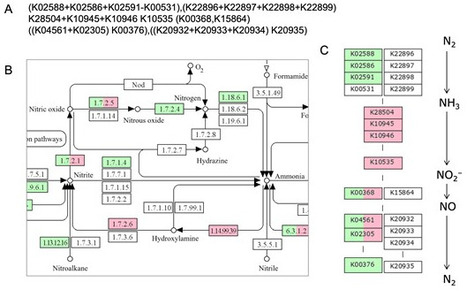
The KEGG database (https://www.kegg.jp) has been developed as a model of the biological systems. By organizing knowledge of cellular and organism-level functions in the form of molecular wiring diagrams, the model enables generating new knowledge and finding practical applications. The KO (KEGG Orthology) dataset plays the basic role of organizing knowledge. KO is an ortholog with functional relevance, generalizing experimental evidence in specific organisms to other organisms. KEGG molecular networks, including pathway maps and modules, are generic networks with KOs as network nodes, and thus KEGG mapping from genomes to pathways can be applied to any organism. As the number of KOs increases and the KO annotation rate improves, KEGG mapping is further expanded. A set of KOs in the genome and a set of modules in the metabolic pathways are now used to characterize various data objects in the biosphere, including organisms, organism groups, microbiomes, viruses, and their combinations, such as endosymbiont–host, microbiome–host, and virus–host relationships. Furthermore, a simple measure of similarity either by KO compositions or module compositions is introduced to compare organism groups. The resulting similarity dendrograms possibly reflect similarity of cellular functions or, more specifically, metabolic functions, which can be compared with phylogenetic trees.
|
|
Scooped by
mhryu@live.com
Today, 12:40 AM
|
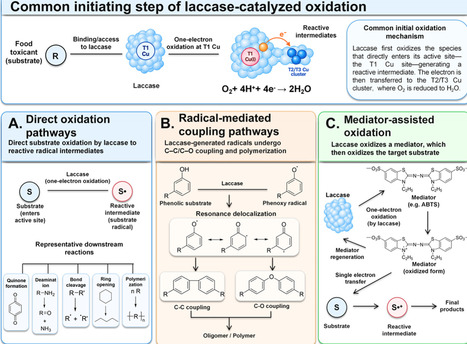
As a copper-containing polyphenol oxidase, laccase (EC 1.10.3.2), first isolated from the Japanese lacquer tree (Rhus vernicifera), is widely present in fungi, plants, and bacteria. It has shown considerable potential in food detoxification owing to its mild reaction conditions, broad substrate range, and environmental compatibility. This allows laccase to oxidize structurally diverse substrates, although catalytic efficiency varies with substrate structure, redox potential, and accessibility to the active site. Laccase can promote the degradation, transformation, removal, or detoxification of food toxic substances, including biogenic amines, polycyclic aromatic hydrocarbons, phenolic compounds, mycotoxins, and pesticide residues, through substrate oxidation initiated by electron transfer at copper-containing active sites. This review summarizes the mechanisms underlying laccase-mediated degradation, transformation, removal, and detoxification of food toxicants, together with optimization strategies including protein engineering, mediator regulation, and immobilization, supporting its development as a versatile biocatalyst for food safety control.
|
|
Scooped by
mhryu@live.com
October 26, 11:44 PM
|
Genomic duplication is a common type of structural variation that has important roles in gene dosage regulation and contributes to the development of various human diseases including cancer and inherited disorders. However, current genome-editing technologies are limited in their ability to introduce precise and efficient DNA duplications. Amplification editing (AE) is a genome-editing strategy that enables efficient and precise duplication of genomic sequences ranging from tens of base pairs to chromosomal scales. AE offers high precision and efficiency and the ability to duplicate endogenous sequences across multiple targeting sites and in diverse cell types. Here, we describe detailed procedures for the design, execution and analysis of AE-based genomic duplication. These include protocols for duplicating endogenous loci across a range of fragment sizes, as well as workflows to quantify editing efficiency and validate duplication outcomes. In addition, we provide guidance for optimizing AE performance and extending its applicability across diverse genomic targets and experimental contexts. Most AE experiments can be completed within 2 weeks, supporting efficient implementation of targeted genomic duplication in mammalian cells. Here, the authors provide a protocol for amplification editing, a genome-editing strategy using prime editors that enables efficient and precise duplication of genomic sequences ranging from tens of base pairs to chromosomal scales in diverse cell types.
|
|
Scooped by
mhryu@live.com
October 26, 11:10 PM
|
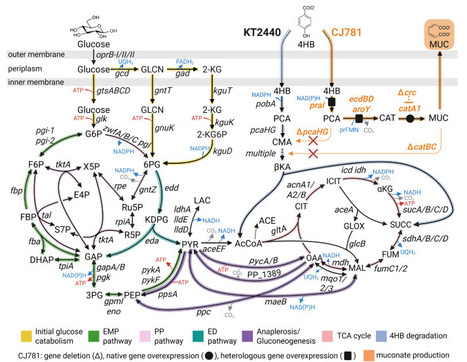
Muconic acid is a versatile platform chemical that can be biologically produced from lignocellulosic substrates, including from lignin-related aromatic compounds. Pseudomonas putida has been previously engineered to convert lignin-related aromatic compounds to muconate at quantitative molar yields. This high atom efficiency requires a supplemental carbon and energy source to support bacterial growth, and central carbon metabolic efficiency and its interaction with aromatic catabolism are underexplored. Here, we applied proteomics, metabolomics, and 13C-fluxomics to quantitatively compare central carbon and energy metabolism in wild-type P. putida KT2440 and a muconate-producing strain, P. putida CJ781. During cultivation on glucose and 4-hydroxybenzoate, CJ781 showed increased glucose uptake, reconfigured central fluxes, and increased extracellular leakage of aliphatic acids relative to wild type. These altered fluxes supported a 3-fold higher intracellular ATP concentration and a model-predicted 2.5-fold increase in apparent ATP excess over anabolic demand. Pyruvate and acetate secretion in CJ781 was mitigated by debottlenecking TCA-cycle entry via citrate synthase overexpression. Furthermore, tuned expression of the catechol dioxygenase and protocatechuate decarboxylase enabled the production of 36.3 g L-1 muconate at 1.1 g L-1 h-1. Overall, this work reveals how P. putida redirects carbon and energy fluxes to support aromatic bioconversion for improved bioproduction from renewable feedstocks.
|
|
Scooped by
mhryu@live.com
October 26, 5:46 PM
|
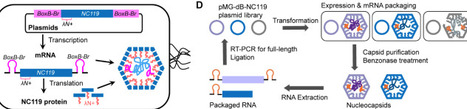
Molecular self-assembly provides a route to nanoscale structures with defined sizes and shapes. Protein cages assembled from repeated subunits form compartments that can package molecular cargoes. Although amino acid substitutions can alter intersubunit interactions and cage architecture, how protein backbone connectivity relates to the cage architectures accessible during laboratory evolution remains unclear. Here we evolved an artificial nucleocapsid from a circularly permuted variant of Aquifex aeolicus lumazine synthase (AaLS). Laboratory evolution increased the yield of purified nucleocapsids relative to the progenitor, and the evolved variant, NC119-3, packaged its encoding mRNA. Cryo-electron microscopy revealed a heterogeneous population of cages, within which we resolved 180- and 210-subunit cage families composed of 36 and 42 pentamers, respectively. Within each resolved family, particles with the same subunit stoichiometry differed in the arrangement and orientation of their pentameric building blocks. A 2.90 Å reconstruction of a tetrahedral 180-subunit cage further revealed that sequence-identical subunits adopt distinct conformations depending on their positions within the assembly. These pentamer-based architectures differ from the domain-swapped T = 4 cage previously reported for nucleocapsids evolved from an AaLS variant with a different circular permutation site. Together with previous work, these findings show that RNA-packaging nucleocapsids evolved from scaffolds with different backbone connectivity can adopt distinct cage architectures.
|
|
Scooped by
mhryu@live.com
October 26, 5:27 PM
|
RNA viruses encode multiple layers of information within a single molecule, which functions simultaneously as a template for protein synthesis and as a structured regulatory RNA. These structures control key aspects of viral gene expression, govern host interactions, and mediate immune evasion. Although the prevalence of RNA structure in viral genomes is now well established, only recently have functional and mechanistic studies begun to uncover how these elements act as regulatory modules that shape infection outcomes. With their compact genomes and experimentally tractable life cycles, RNA viruses represent powerful model systems for uncovering the fundamental building blocks of riboregulation and illuminating principles of gene control conserved across eukaryotes. Here, we review current mechanistic understanding of RNA structure-based regulation across diverse viral families and draw parallels to structure-mediated gene control in eukaryotic transcriptomes, highlighting RNA structure as a central regulatory layer in gene expression with broad therapeutic and synthetic biology potential.
|
|
Scooped by
mhryu@live.com
October 26, 3:01 PM
|
Droplet microfluidics underpins many single-cell, precision biomedical, and nanomaterial techniques. However, implementing these methods reproducibly remains challenging outside specialized laboratories due to high equipment costs, operational inflexibility, mechanical impracticality at the microscope stage, as well as open-source pumping solutions that are inadequately validated for low-flow stability. We present an accessible, research-grade, open-source droplet microfluidics platform integrating a compact, microfluidics-optimized microscopy stage with networked syringe-pump control. Designed for local digital fabrication, primarily 3D printing, and widely available components, the platform supports reproducible builds across diverse settings. This setup enables stable droplet generation, observation of rapid droplet dynamics, and automation-ready networked workflows. The microscopy module uses a Raspberry Pi camera and microsecond stroboscopic illumination to capture sharp images of fast-moving droplets without the need for a high-speed camera. A modular hardware interface and extensible, web-accessible software stack provide a path to integrate additional modules and laboratory automation beyond the configuration evaluated here. For infusion, we introduce an open-source syringe pump optimised for low reliable flow rather than maximum rates, combining gearbox-assisted stepper mechanics with workflow-centric control that enables manual intervention (keypad control) and remote operation (web interface and automation hooks). We benchmark droplet regimes, size tuning, and time-stability under low-flow conditions (between 25 and 2500 uL/h) relevant to advanced assays and demonstrate biomedical readiness through the encapsulation and incubation of cells, beads, and bacteria in monodisperse droplets. The platform has been replicated across laboratories in Latin America and globally, including independent builds, supporting reproducibility. All design files, firmware/software, analysis notebooks, and benchmark datasets are openly released.
|
|
Scooped by
mhryu@live.com
October 26, 2:13 PM
|
Calcium phosphate biomineralization plays a crucial role in the formation of geological deposits, biological materials, and environmental remediation. While microorganisms are known to influence calcium phosphate precipitation, the relative contributions of bacterial cell surfaces and extracellular polymeric substances (EPS) remain poorly defined. This study presents the first microscale investigation of the distinct roles of Gram-positive and Gram-negative bacterial cells and EPS in regulating hydroxyapatite (HAp) mineralization, employing abiotic, EPS-mediated, and bacterial precipitation systems. Zeta potential measurements and Fourier Transform Infrared Spectroscopy (FTIR) revealed that both bacterial cells and isolated EPS provide negatively charged, chemically distinct interfaces capable of interacting with dissolved Ca2+ ions. Solution chemistry demonstrated greater phosphate and calcium ion depletion in biotic systems, consistent with enhanced crystal precipitation compared to abiotic controls. Field emission scanning electron microscopy (FESEM) and Brunauer–Emmett–Teller (BET) analyses showed that biological interfaces produced distinct crystal morphologies and surface characteristics. X-ray diffraction (XRD) revealed significant differences in phase composition: abiotic precipitation produced mixed calcium phosphate phases, whereas EPS-mediated precipitation promoted nucleation but remained dominated by precursor phases. In contrast, whole-cell systems favored HAp formation, with Sporosarcina pasteurii producing phase-pure crystalline HAp and Pseudomonas fluorescens producing HAp-dominant precipitates. Acid dissolution experiments further confirmed the increased stability of biogenic precipitates. These findings demonstrate that the spatial organization of bacterial surface functional groups, rather than surface charge alone, governs hydroxyapatite phase evolution, crystal growth, and mineral stability. While localized metabolic activity may contribute to microenvironmental conditions, the results highlight the importance of bacterial cell surfaces and EPS as key determinants of hydroxyapatite biomineralization, providing a mechanistic basis for the design of biologically mediated mineral materials.
|
|
Scooped by
mhryu@live.com
October 26, 10:53 AM
|
Recent advances in biological foundation models have enabled new opportunities for data-driven molecular engineering. However, designing programmable RNA devices remains challenging because of the vast, nonlinear sequence-structure-function landscape. Here, we present Ernie-Switcher, a deep learning framework built upon the RNA foundation model (RNAErnie), comprising three coupled components: (i) integration of RNAErnie-derived sequence-phenotype representations for realistic design generation and filtering; (ii) characterization of RNA landscape navigability as a theoretical basis for sequence optimization; and (iii) incorporation of biophysical constraints to maintain optimization trajectories within biologically plausible bounds. We validated Ernie-Switcher using RNA toehold switches. Theoretically, the observed lower bound on threshold navigability (86.4%) of the RNA landscape supports the theoretical feasibility of RNA switch sequence optimization. Experimentally, the optimized toehold switches achieved ON/OFF expression ratios of up to 35-fold in E. coli. Collectively, RNAErnie-guided sequence optimization provides a scalable strategy for engineering high-performance RNA devices. To facilitate broad adoption, we deployed Ernie-Switcher as a freely accessible web platform.
|
|
|
Scooped by
mhryu@live.com
Today, 4:57 PM
|
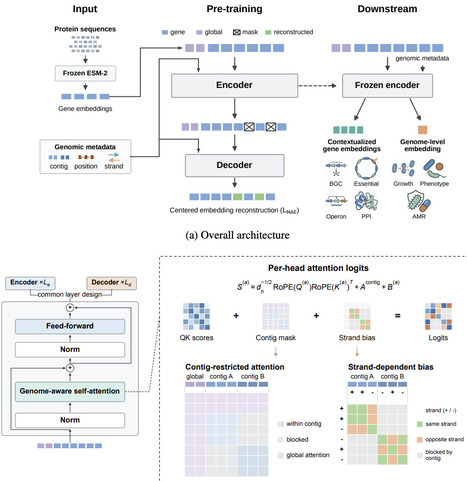
Genomic-context models have shown that contextualizing protein embeddings can improve predictions of microbial function. We observe that a gene's protein embedding is partially predictable from the embeddings of neighboring genes in the genome, motivating high-ratio masking that requires reconstruction from sparser genomic context. Genomic modeling must also distinguish biological relationships from assembly conventions, since the ordering of separate contigs does not imply adjacency and strand labels depend on the reference orientation. We therefore introduce VenusGenome, a gene-resolution masked autoencoder that combines visible-only encoding with genome-aware attention incorporating contig boundaries, relative strand orientations, and gene positions. We pretrain this model on a curated corpus of over 1.7 million microbial genome assemblies from isolate and metagenomic sources, using frozen protein embeddings as gene-level inputs. Across genome-level phenotype prediction and gene-level tasks, the resulting frozen representations achieve the highest mean performance among the evaluated models on nine of eleven primary metrics. An exploratory gene-input perturbation analysis further links representation sensitivity to experimentally measured fitness defects. Ablations support the contribution of genome-aware attention and show the benefits of masked autoencoding over BERT-style masked modeling, with further gains from higher masking ratios.
|
|
Scooped by
mhryu@live.com
Today, 4:33 PM
|
Beyond their primary sequence, viral genomes contain structural information encoded in the ability of DNA and RNA to fold into alternative conformations. These dynamic non-canonical nucleic acid structures include G-quadruplexes (G4s), i-Motifs (iMs), R-loops, G4-associated R-loops and left-handed Z-conformations. Among them, G4s have been most extensively investigated in viruses and have been reported to modulate transcription, replication, translation, latency and immune evasion. However, the functional interpretation of these structures remains highly context-dependent: similar topologies can either promote or restrict infection depending on genomic location, folding dynamics, protein interactors and the stage of the viral life cycle. Here, we discuss recent advances in viral non-canonical nucleic acid structures, emphasizing the level of evidence supporting their formation and function. We also assess emerging antiviral strategies based on structure-targeting ligands, highlighting both their translational potential and the unresolved challenges of selectivity, target engagement and pharmacological validation in infected cells.
|
|
Scooped by
mhryu@live.com
Today, 12:08 PM
|
AND-gating is a mechanism capable of generating nonlinear biological responses because a productive output requires the joint satisfaction of several necessary molecular events. AND gates are considered here in the context of gene expression. Three minimal architectures are discussed, parallel AND gates, kinetic AND gates, and a serial arrangement of AND gates. In a parallel AND gate, output depends on the simultaneous engagement of several modules. In a kinetic AND gate, output requires the completion of several events within a finite time window. In a serial arrangement, the output of one gate becomes the input of the next. These architectures can generate S-shaped responses even when the elementary processes are non-cooperative. Although transcription is our main focus, the same logic applies to other processes. The sigmoidal responses produced by these AND gates provide a phenomenological explanation for how a reduction in the abundance or activity of a dosage-sensitive molecule can generate more-than-proportional downstream effects, a hallmark of haploinsufficiency (HI), a form of dominance. The same AND-gate logic also sheds light on dominant-negative effects, where a mutant protein interferes with its wild-type counterpart. These models illustrate how AND gate architectures can contribute to biological threshold generation and to nonlinear genotype–phenotype relationships, which underlie dominance.
|
|
Scooped by
mhryu@live.com
Today, 10:06 AM
|
Microbial volatile organic compounds (mVOCs) suppress growth and virulence traits of soil-borne pathogens, yet their ecological roles in disease suppression remain unclear. Here, we show that the sesquiterpene humulene from Streptomyces acts as a multifunctional regulator that suppresses bacterial wilt through coordinated inhibition of Ralstonia solanacearum, plant metabolic reprogramming, and rhizosphere microbiome modulation. We combined in vitro pathogen assays, pot experiments, microbiota transplantation, rhizosphere 16S rRNA profiling, root-exudate metabolomics, and plant and pathogen transcriptomics to investigate the direct and microbiome-mediated effects of humulene. Humulene reduced disease severity and pathogen abundance via a microbiome-dependent mechanism. Microbiota transplantation confirmed that the humulene-conditioned microbiome retains transferable disease-suppressiveness. Humulene also selectively enriched antagonistic Streptomyces, not by direct growth promotion, but by reprogramming tomato root exudation to produce lipid-derived petroselinic acid, which promoted Streptomyces growth, humulene production, and pathogen suppression. Root transcriptomics further revealed activation of lipid metabolic pathways involving alternative fatty acid desaturation and oxylipin signaling. Together, humulene functions as an ecological signal that integrates pathogen suppression, host lipid metabolism, and microbiome assembly to establish a disease-suppressive rhizosphere, enabling microbiome-informed control of bacterial wilt.
|
|
Scooped by
mhryu@live.com
Today, 12:55 AM
|
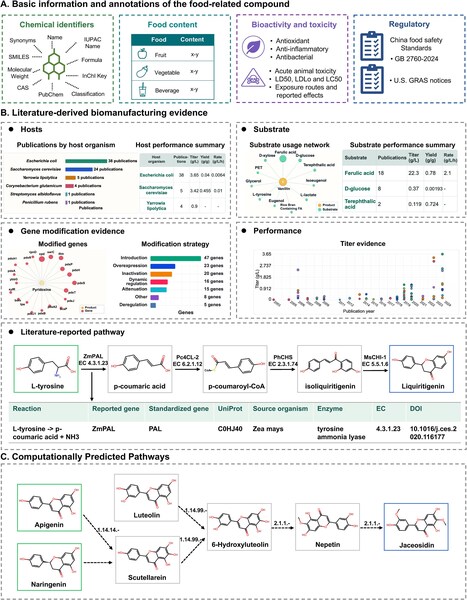
Enabled by synthetic biology and metabolic engineering, microbial biomanufacturing is reshaping the production of food-related compounds by offering sustainable alternatives to resource-intensive extraction and conventional chemical synthesis. However, information linking food-related compounds to biosynthetic pathways and microbial biomanufacturing evidence remains fragmented across the literature and poorly represented in existing food-oriented resources, hindering cross-study comparison, evidence synthesis, and rational design of microbial production systems. Here, we present SynBioFooDB (https://synbiofoodb.biodesign.ac.cn/), a knowledgebase dedicated to synthetic biology-driven food biomanufacturing. SynBioFooDB integrates 74 237 food-related compounds with standardized chemical identities and annotations covering food occurrence, bioactivity, toxicity, and regulatory information. It further provides expert-curated biomanufacturing evidence for 1054 compounds from 5592 publications, linking microbial hosts, substrates, genetic modifications, and quantitative production metrics through structured and traceable records. The database also contains 2002 literature-reported biosynthetic pathways for 971 compounds, enabling comparison of alternative precursors, enzyme combinations, and pathway architectures. For compounds without literature-reported pathways, SynBioFooDB provides computationally predicted candidate pathways to facilitate pathway prioritization and experimental evaluation. By integrating compound-level context, biomanufacturing evidence, and biosynthetic pathway information, SynBioFooDB supports systematic exploration, comparison, and rational design of microbial production strategies for food-related compounds.
|
|
Scooped by
mhryu@live.com
Today, 12:06 AM
|
Metagenomic sequencing has transformed our view of the global viral diversity, yet a fundamental bias limits our understanding of the diversity of complete viral genomes. Current quality assessment tools rely on identifying circular contigs, systematically underestimating the completeness of linear DNA and RNA viruses, thus leaving a large fraction of the virosphere uncharacterized. Here, we overcome this bias, by leveraging within-species genomic termini conservation across diverse metagenomic datasets. Applying this approach to the metaVR database, we recover and validate 1,585 conserved, complete linear viral genomes, representing a 21-fold increase in recognized linear completeness. Our results reveal previously uncovered complete monopartite RNA genomes and individual segments of multipartite viruses across 13 classes, alongside deeply branching viral dark matter. Furthermore, we expand the known physical boundaries of linear DNA viruses, by recovering intact megaphages up to 220 kb and distinguishing true complete genomes from highly transcribed operons. Ecological profiling reveals a strong enrichment of these reassigned as complete linear viruses in specific ecosystems, highlighting their ecological relevance. By enabling systematic recovery of complete linear genomes, this framework unlocks a previously hidden fraction of the virosphere and reshapes our understanding of viral diversity and evolution. Metagenomic tools underestimate linear viral genome completeness due to circularity bias. In this study, the authors track within-species genomic termini conservation across metagenomic datasets to recover and validate 1,585 complete linear viral genomes, revealing a 21-fold expansion of hidden RNA and DNA viruses.
|
|
Scooped by
mhryu@live.com
October 26, 11:36 PM
|
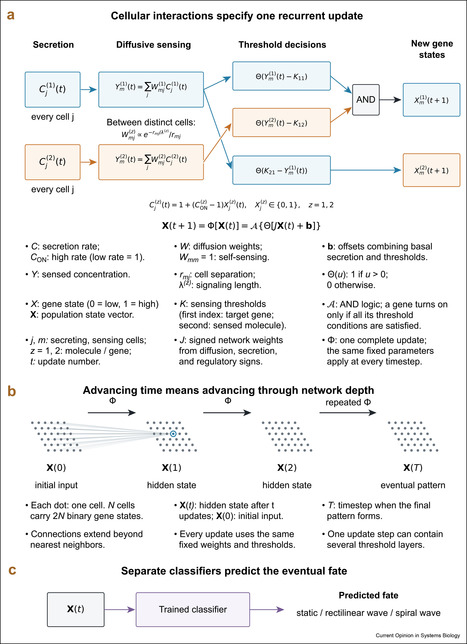
Biological systems have long supplied ideas about computation. Abstracting self-reproduction helped establish cellular automata, while abstracting neural interactions yielded models of associative memory and learning. Biological self-organization offers another, timely opportunity: to investigate how collective dynamics contribute to computation and what limits our ability to predict its outcome. Here we review models of communicating cells, tracing their development from cellular autonomy and effective energy landscapes to persistent spatial dynamics and dynamically constructed predictability. A generalized cellular automaton of secrete-and-sense cells admits an exact representation as a recurrent threshold network, with long-range cellular interactions specifying its connections. This mapping lets us follow self-organization as computation through successive hidden states. In this deterministic model, tested machine-learning predictors initially failed to forecast an already-determined fate but succeeded as self-organization constructed structures that enabled prediction. Recent neural-network studies identified collective modes that supported signal propagation, suggesting further connections between self-organization and machine-learning inference. Together, these findings show how abstracting biological rules gives us a way to investigate fundamental questions about computation: how interactions generate computational capabilities, how collective structures make outcomes predictable, and how much computational effort prediction requires.
|
|
Scooped by
mhryu@live.com
October 26, 6:06 PM
|
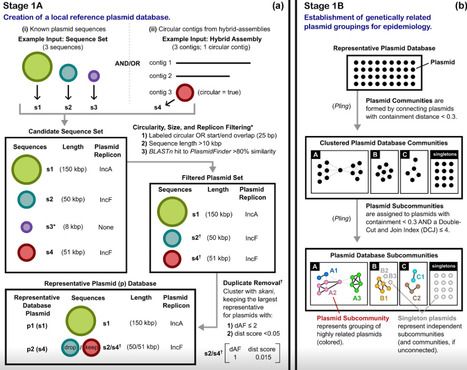
Plasmids are extrachromosomal mobile genetic elements that often carry genes responsible for antimicrobial resistance. Plasmid epidemiology aims to track the evolution and spread of plasmids, but the field currently faces significant barriers that make practical implementation using whole-genome sequence data difficult. Hybrid-assembled genomes remain the most reliable way to identify and track complete plasmids; however, most genomic surveillance data exist in the form of short-read sequencing, which lacks the resolution required to accurately resolve plasmids. Despite recent advances, long-read-only assemblies have not yet reached the consistency seen in hybrid assemblies. The ideal approach to plasmid epidemiology using whole-genome sequence data would consider the limitations of sequencing technologies and the constraints of existing genomic surveillance infrastructure, in addition to the unique evolutionary biology of plasmids. Here, we present Assembly-based Circular Contig Identification for Outbreaks (ACCIO), a tool which creates a reference plasmid database and uses it to infer which plasmids, and genetically related plasmid groupings, are present in an input assembly (Illumina, Nanopore or hybrid assembly). We validated ACCIO using an internal dataset of 303 plasmid-harboring bacterial clinical and surveillance isolates collected from a single acute tertiary care centre. When highly related database plasmids were grouped together, ACCIO achieved 100% sensitivity and 92.1% positive predictive value (PPV) for detection of plasmid groups using hybrid assemblies, and comparably strong performance for Illumina (93.0% sensitivity, 86.6% PPV) and Nanopore (79.3% sensitivity, 91.4% PPV) assemblies. Evaluation on three external datasets yielded consistently high performance. Finally, when benchmarked against MOB-suite, a tool for reconstruction and typing of plasmids, ACCIO demonstrated superior performance across nearly all assembly types and plasmid grouping levels. By integrating database construction, clustering, and plasmid calling into a single workflow compatible with all major sequencing platforms, ACCIO is intended to help advance plasmid epidemiology beyond its current technological and infrastructural barriers.
|
|
Scooped by
mhryu@live.com
October 26, 5:39 PM
|
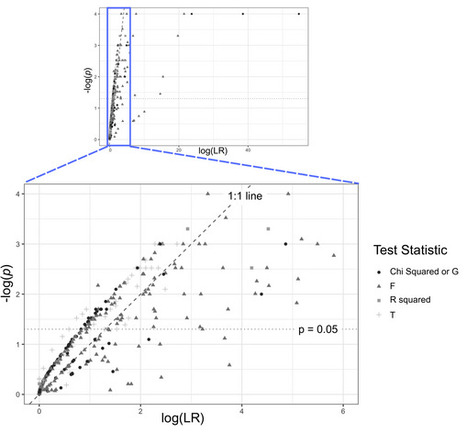
The use of p-values and statistical significance testing as the primary mode of inference in science has been long debated among statisticians and more recently among ecologists. Ecological literature has discussed embracing other modes of inference, such as Bayesian statistics and the use of direct likelihood inference. We reviewed ecology, evolution, and environmental science literature covering the past three decades to investigate trends in the use of different modes of inference over time and to assess the degree of discrepancy between reported p-values and calculated likelihood ratios. p-Values and likelihood ratios were found to scale in a more direct way for single degree of freedom tests, but in a more complex manner for models with more than one parameter. These results demonstrate the degree to which the likelihood ratio (a measure of evidence) differs from a p-value, a measure of uncertainty that is widely presented as a measure of evidence among publications within the fields of ecology and evolution. Additionally, our investigation revealed that modes of inference within ecological studies changed little over the 20-year time period, indicating a failure to adopt alternative modes of inference. We also found downward trends in the reporting of p-value thresholds (e.g., “p < 0.05”) in two journals, with no change in three others. The prevalence of the divergence in the measure of evidence and the p-value measure of uncertainty remains to be confirmed in other journals, time points, and subfields. An overreliance on p-values alone can alter the conclusions drawn from research, impacting management of species and ecosystems. We recommend that authors report both a measure of evidence and uncertainty, and justify their mode of inference in an attempt to produce statistical results that are comprehensive, replicable, and reliably interpretable.
|
|
Scooped by
mhryu@live.com
October 26, 5:13 PM
|
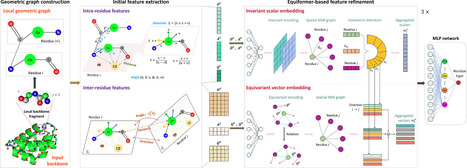
Designing amino acid sequences that uniquely fold into target three-dimensional conformations defines the protein inverse folding problem, a formidable bottleneck in de novo protein design. Current computational paradigms, including deep learning-based approaches, often struggle to reconcile high sequence accuracy with structural stability, computational efficiency, and generalizability across diverse protein families. Here, we present EquiDesign, a deep learning framework that surmounts these constraints via a novel multistep Equiformer-enhanced architecture. By disentangling geometric features into invariant scalars and equivariant vectors, EquiDesign preserves the intrinsic directional topology of the protein backbone during message passing. This is achieved through spatial K-nearest neighbor graph construction and geometric attention mechanisms that hierarchically fuse multiscale contextual information, yielding a physically grounded representation of protein conformations. Extensive benchmarking demonstrates that EquiDesign achieves superior sequence recovery on standard and challenging test sets compared with state-of-the-art methods. Critically, the generated sequences exhibit exceptional structural fidelity, folding stability, and sequence diversity, as validated by comprehensive controls against training-set memorization, compositional bias, and physical energy landscapes, alongside targeted diversity sampling. These results establish EquiDesign as a robust, scalable, and generalizable inverse folding solution, driven by SE(3)-equivariant encoding and multiscale geometric attention, thus propelling de novo protein design toward unprecedented structural precision.
|
|
Scooped by
mhryu@live.com
October 26, 2:38 PM
|
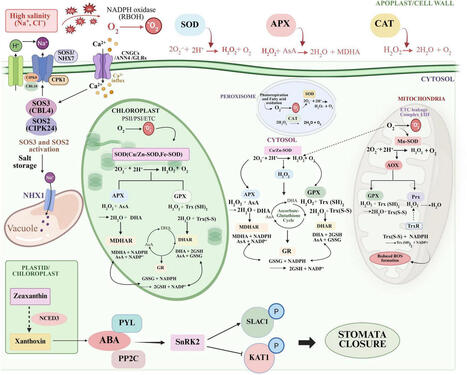
Salinity stress represents a significant environmental challenge that affects plant growth, resulting in adverse impacts on crop productivity and overall yield. Salt accumulation in plants affects cellular homeostasis and provokes osmotic and ionic imbalance. It stimulates higher reactive oxygen species (ROS) production leading to oxidative stress damage and eventual cellular dysfunction. Beneficial microorganisms like plant growth-promoting rhizobacteria, arbuscular mycorrhizal fungi, endophytic fungi, and rhizosphere-associated microbes have recently emerged as resources for sustainable solutions to enhance plant resiliency against salinity stress. Their effects can involve osmotic adjustment, ion sequestration, oxidative-stress mitigation, phytohormone regulation, and rhizosphere-mediated stress buffering. The mechanisms to impart such benefits may include improved nutrients acquisition, assist in osmotic regulation, modulation of phytohormones signaling, and maintenance of cellular ion homeostasis. Often, beneficial microorganisms carry the potential to trigger both enzymatic and non-enzymatic antioxidant defense mechanisms. These responses contribute to oxidative-stress mitigation, yet, their interpretation requires contemplation of fine balance between oxidative damage and plant responses. For example, selected microbial inoculation studies have reported changes in the activity of crucial antioxidant enzymes, like superoxide dismutase, ascorbate peroxidase, catalase, and glutathione reductase. However, the magnitude and the direction of these responses are context dependent. Multi-omics approaches, including amplicon and shotgun metagenomics, metatranscriptomics, host transcriptomics, proteomics, and metabolomics, have expanded our understanding of the taxa, genes, transcripts, proteins, and metabolites associated with plant–microbe interactions under salinity. Therefore, here an effort has been made to present the evidential support for reported microbial effects and their proposed mechanisms of salt tolerance, with a focus on enzymatic and non-enzymatic defense mechanisms and the learnings of multi-omics studies. Frontier integrative mechanisms, including microbiome engineering, synthetic microbial consortia, and systems biology frameworks, are discussed for cultivating climate-resilient crops and sustainable agricultural systems in the salt-affected environments.
|
|
Scooped by
mhryu@live.com
October 26, 1:59 PM
|
Improving the fidelity of computational eukaryotic models will require an enormous amount of high quality and reproducible data from biological experiments. In this study we present and demonstrate a modular 12-channel micro-chemostat system. This micro-chemostat is designed for use by Genesis, a Robot Scientist developed to automate scientific research in yeast systems biology. We performed bioreactor characterization experiments to evaluate the performance of the micro-chemostat system. We also cultivated the Saccharomyces cerevisiae reference strain, BY4741, at three different dilution rates (0.1, 0.2, and 0.3 h−1) and under two aeration conditions (microaerobic and aerobic), resulting in six different conditions. The bioreactor performance fulfilled our requirements, and enabled substrate-limited continuous cultivation of yeast. Furthermore, the empirical results from the biological experiments were consistent with the literature, suggesting that results obtained from our system are comparable to those reported for other platforms in the field. Based on the evidence presented in this study, we conclude that the 12-channel micro-chemostat system is a suitable platform for yeast systems biology research. The modular design of the micro-chemostat system enables future scaling to hundreds or thousands of concurrent chemostats and facilitates integration with autonomous agents for automated optimization and improvement of eukaryotic model systems.
|
















performed a rigorous statistical comparison between EquiDesign and 4 representative methods (ProteinMPNN, PiFold, GeoSeqBuilder, and ProtSeqGen)