Your new post is loading...

|
Scooped by
mhryu@live.com
Today, 12:08 PM
|
Lignocellulosic biomass is a renewable feedstock for sustainable fuels and chemicals, yet industrial conversion remains constrained by carbohydrate solubilization. Inspired by herbivore rumen microbiomes, we engineered an anaerobic fungal–bacterial consortium that converts native lignocellulose into medium-chain fatty acids (MCFAs) without pretreatment. Systematic screening identified the anaerobic fungus isolated here, Neocallimastix sp. FC1, together with Megasphaerahexanoica, as a top-performing consortium, achieving a lignocellulose-to-MCFA yield of 21.0% (carbon-to-carbon basis) through tight lactate cross-feeding without competition for soluble sugars. Fungal lactate production limited the growth of M. hexanoica in co-culture, and the bacterium reallocated protein from growth toward chain elongation, resulting in increased MCFA production. These findings identify fungal lactate production as the primary biological constraint, and balancing lactate production and consumption as a key engineering strategy for improving lignocellulose-to-MCFA conversion. Techno-economic analysis identified high cultivation medium costs as the primary economic constraint and established quantitative cost–yield targets for profitable MCFA production.
|
|
Scooped by
mhryu@live.com
Today, 11:57 AM
|
Iron (Fe) limitation restricts plant growth in diverse soils, and root-associated microbes can alleviate plant Fe starvation. Whether plants integrate the edaphic environment and microbial activities into their Fe uptake strategies remains unclear. We show that bacterium-mediated alleviation of Fe deficiency in Arabidopsis functions at varying environmental pH and is taxonomically widespread among root microbiota isolates from soils with different edaphic profiles. This process is regulated by host-controlled and pH-adapted root exudation of different coumarin chemotypes. These exometabolites interact with root-associated bacteria to mobilize Fe either via bacterial siderophore-mediated chelation at circumneutral pH or redox-sensing-controlled, reduction-based pathways at acidic pH. The corresponding bacterial genes are prevalent in the root microbiota, and they likely evolved before the emergence of land plants. Our findings suggest that Fe malnutrition-induced exudation of redox-active metabolites by non-graminaceous plant species is a widespread adaptation for Fe mobilization from soil, mediated by the co-option of ancient microbial processes.
|
|
Scooped by
mhryu@live.com
Today, 11:42 AM
|
Microbial biomass is a central functional trait governing nutrient turnover and trophic transfer in aquatic ecosystems, yet how chemical stress reshapes biomass at the level of individual cells remains poorly resolved. Conventional toxicity assays primarily detect population-level growth inhibition and overlook sublethal physiological responses and heterogeneity within microbial populations. Here, we quantify single-cell dry-mass, a label-free proxy for cellular biomass and biosynthetic state, in the fast-growing marine bacterium Vibrio natriegens. Across thousands of cells, we assessed how exposure to copper, zinc, diclofenac, bisphenol A, bisphenol E, and bisphenol Z alters cellular biomass. Chemical stress elicited contrasting responses: copper, zinc, and diclofenac reduced median dry-mass by up to 36%, whereas bisphenols increased median dry-mass by up to 24%. These changes were not simply proportional to population-level growth inhibition. Beyond shifts in central tendency, stress altered the shape and variability of biomass distributions, revealing additional distribution-level responses that are not detectable in bulk measurements. These results identify single-cell dry-mass as an integrative trait of microbial stress physiology and show that chemical perturbations can drive opposing cellular biomass responses that are not fully captured by population growth measurements. By linking chemical stress to microbial biomass traits, this work provides a controlled framework for testing cellular-scale responses in more complex ecological settings.
|
|
Scooped by
mhryu@live.com
Today, 9:10 AM
|
For machine learning models in molecular biology, explanation is as important as prediction. Encoding prior knowledge and treating interpretability as a first-class design objective accomplish both. We provide design elements and a checklist for the next generation of foundation models in molecular biology that are as interpretable as they are powerful.
|
|
Scooped by
mhryu@live.com
Today, 12:56 AM
|
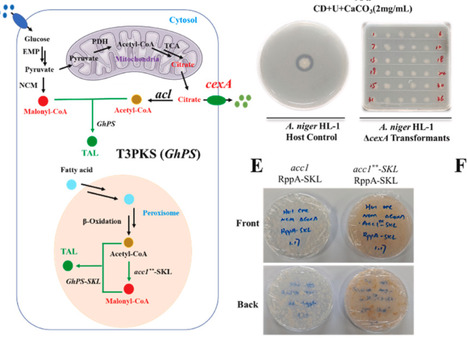
Polyketides are a diverse class of natural products with broad pharmacological activities and substantial industrial relevance; however, their scalable biosynthesis is often constrained by inefficient heterologous expression platforms. In this study, a systematic evaluation of multiple microbial hosts identified Aspergillus niger HL-1 as an efficient fungal chassis for polyketide production. Subcellular compartmentalization analysis revealed that cytosolic biosynthesis significantly outperformed peroxisomal localization, leading to a 5.88-fold increase in triacetic acid lactone (TAL) production. To further enhance production, intracellular acetyl-CoA and malonyl-CoA supplies were engineered and integrated with compartmentalized metabolic rewiring to redirect carbon flux toward polyketide biosynthesis. In addition, increasing the copy number of polyketide synthase genes further improved titers. As a result, monacolin J and TAL reached 1.68 g/L and 7.50 g/L in shake-flask cultures, respectively, and were further elevated to 2.61 g/L and 25.08 g/L in a 1.5-L bioreactor. Finally, a versatile type III polyketide synthase (PKS) expression platform was established, enabling the functional expression of ten heterologous PKSs. By further disrupting the endogenous katA gene to decelerate p-coumaric acid consumption, the competitive catabolic pathway was successfully blocked, yielding a naringenin shake-flask titer of 384.91 mg/L from p-coumaric acid. This work establishes a robust and scalable fungal platform for the efficient production of both complex polyketides and flavonoids, providing a promising strategy for biotechnological applications.
|
|
Scooped by
mhryu@live.com
Today, 12:14 AM
|
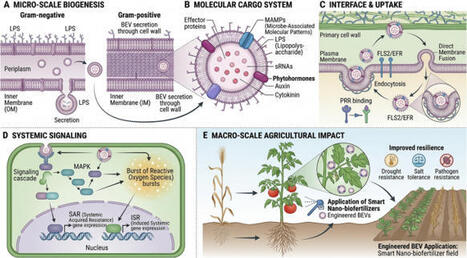
Bacterial extracellular vesicles (BEVs) are nanosized membrane-bound nanoparticles naturally secreted by Gram-negative and Gram-positive bacteria. These vesicles mediate intercellular communication through delivery of diverse bioactive cargo, including proteins, lipids, nucleic acids, metabolites, and signaling molecules. Initially recognized as virulence determinants in pathogenic bacteria, BEVs are increasingly recognized as multifunctional platforms with potential applications in sustainable agriculture. This review examines BEV biogenesis, cargo composition, plant uptake, and emerging roles in plant growth promotion, stress adaptation, and disease resistance. Emphasis is placed on BEV-mediated modulation of plant immunity through pattern recognition receptors (PRRs), pattern-triggered immunity (PTI), and induced systemic resistance (ISR). Potential roles of vesicle-associated phytohormones, ACC deaminase, siderophores, extracellular enzymes, and regulatory RNAs in nutrient acquisition, phytohormone homeostasis, and stress responses are critically evaluated. Emerging evidence linking BEVs to drought, salinity, heat, heavy metal, and nutrient-deficiency responses is examined, with emphasis on antioxidant defense, osmotic adjustment, ion homeostasis, and stress-responsive signaling. The review also discusses engineered BEVs as potential biostimulants, nano-biofertilizers, biocontrol agents, and precision delivery systems, including CRISPR-based engineering, synthetic vesicles, AI-guided cargo optimization, and smart nanoformulations. Major challenges include scalable production, standardization, biosafety, regulation, and field validation. However, critical knowledge gaps remain regarding BEV perception, cellular uptake, cargo delivery, and the causal basis of plant responses, together with uncertainties surrounding biosafety, reproducibility, and performance under field conditions. Collectively, BEVs represent promising biological nanocarriers for climate-resilient and sustainable agriculture, but further mechanistic, methodological, and field-based research is required to establish their reliability and practical agricultural potential. Graphical abstract
|
|
Scooped by
mhryu@live.com
Today, 12:01 AM
|
Gut microbiome disruption is often characterized by the loss of obligately anaerobic bacteria, which may lead to altered production of microbial metabolites that can be detected peripherally. The application of widely used sequencing-based microbiome analyses to clinical settings is limited by cost, turnaround time, and challenges with patients with very low stool output. Since some products of strictly bacterial metabolism are detectable in blood, peripheral metabolites may provide a rapid and scalable indicator of gut microbiome composition and function. We performed a systematic review and meta-analysis of studies reporting circulating microbial metabolites and gut microbiome composition to evaluate whether peripheral microbial metabolites could identify gut microbiome perturbation. Candidate metabolites were identified systematically across an independent set of studies reporting metabolite-microbiome associations, enabling the assessment of reproducibility across disease states and cohorts. We performed a meta-analysis of 19 human cohorts comprising 3,242 participants with paired blood metabolite and stool microbiome data. Anaerobe depletion (obligate anaerobe relative abundance <0.70) was associated with decreased plasma concentration of products of anaerobic microbial metabolism. Combinations of metabolites distinguished individuals with anaerobe-depleted microbiomes from those without. Circulating metabolite levels distinguished between cases and controls with similar performance as gut microbiome composition across a range of health/disease states and changed markedly within patients experiencing gut anaerobe depletion after antibiotic exposure. Circulating microbial metabolites are potentially informative indicators of gut microbiome disruption and may serve as a rapid and scalable method for patient stratification in clinical trials or acute care settings.
|
|
Scooped by
mhryu@live.com
October 7, 5:58 PM
|
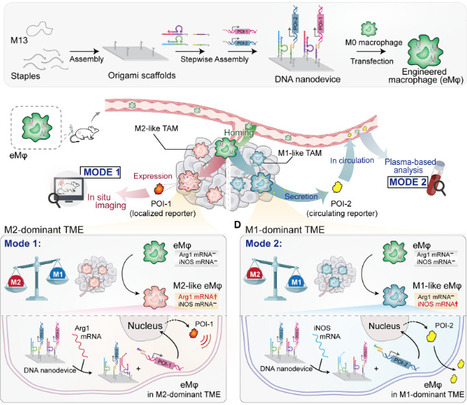
Exploiting macrophages as cell-autonomous reporters of their polarization states represents a promising strategy for interrogating tumor-associated macrophage (TAM) phenotypes in cancer. Here, we develop a macrophage-based sensing platform, termed eMφ. This platform is created by engineering macrophages with a modular and multiplexable DNA origami nanodevice to report TAM polarization states within the tumor microenvironment. Upon tumor infiltration, microenvironmental cues drive macrophage polarization, triggering the engineered system to convert endogenous signals (e.g., Arg1 or iNOS mRNA) into distinct, state-specific reporter outputs. The integration of local and circulating reporters enables compartment-resolved, multiscale readouts of macrophage state. Following intravenous administration, eMφ facilitates tumor detection across multiple murine models, including B16F10 melanoma and lung metastasis, and enables precise evaluation of macrophage-reprogramming immunotherapy. Overall, this work establishes DNA nanodevice-programmed macrophages as a novel class of synthetic-living hybrid systems, paving the way for programmable and precise immune-state diagnostics and therapy.
|
|
Scooped by
mhryu@live.com
October 7, 4:34 PM
|
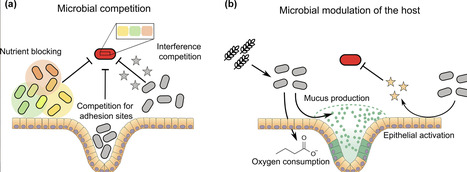
The failure of antibiotic treatment is a growing concern, driven in large part by the rising incidence of antimicrobial resistance (AMR). Increasing evidence points to the importance of microbial competition in preventing the colonization of disease-causing pathogens and the spread of AMR. Crucially, the pathogens we target with antibiotics do not exist in isolation but instead compete and interact with the microbial communities that colonize the human body, microbiomes. Here, we therefore argue that the key to approaching the challenge of antibiotic treatment failure is understanding the strategies and mechanisms that microbes use to succeed in microbiomes. We discuss how microbial competition influences the colonization of pathogens and the spread of resistance via horizontal gene transfer. We then discuss how microbial competition may be used to synergize with antibiotic treatment or even replace it. Overall, we argue that studying microbial interactions offers a powerful approach to understanding and even mitigating antibiotic treatment failure.
|
|
Scooped by
mhryu@live.com
October 7, 2:32 PM
|
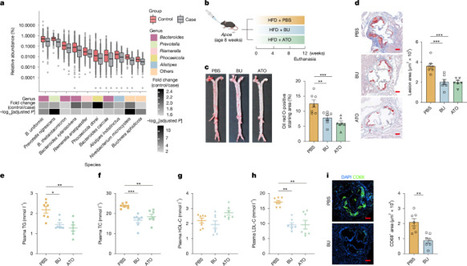
The gut microbiota plays a pivotal part in human health, yet the molecular mechanisms that underlie its effects are largely unexplored. Bacteroides, a dominant genus in the human gut microbiota, is depleted in patients with atherosclerosis, but its causal relationship with disease remains unclear. Here, using a mouse model, we show that administration of Bacteroides uniformis alleviates atherosclerosis through the upregulation of hepatic low-density lipoprotein receptor expression. Bioactivity-guided screening revealed pentadecanoic acid (PA, C15:0), a saturated odd-chain fatty acid, as a principal bioactive metabolite. PA supplementation reduced atherosclerotic plaque burden by around 50% and significantly improved plasma lipid profiles, a result that underscores its therapeutic potential. Mechanistically, PA enhances cholesterol clearance by directly inhibiting HMG-CoA reductase, suppressing hepatic cholesterol biosynthesis and promoting plasma low-density lipoprotein cholesterol removal. Analyses of 100 gut bacterial strains revealed that PA production occurs across multiple Bacteroidota genera. Notably, PA is markedly depleted in patients with dyslipidaemia. In summary, a Bacteroidota-derived odd-chain fatty acid regulates gut–liver crosstalk, and modulation of the microbial–metabolic axis has atheroprotective potential. The administration of Bacteroides uniformis in mice can mitigate atherosclerosis via pentadecanoic acid, which directly inhibits HMG-CoA reductase to promote hepatic cholesterol clearance.
|
|
Scooped by
mhryu@live.com
October 7, 12:24 PM
|
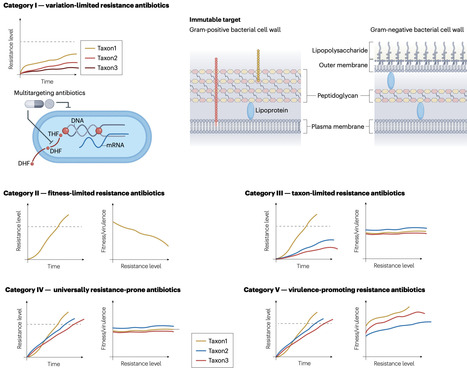
Antibiotic resistance has emerged as a major bottleneck in antibiotic development, frequently undermining promising drug candidates and negating years of research and pharmaceutical investment. Despite growing recognition of this issue, discovery pipelines still emphasize potency and target specificity whereas resistance potential is often considered later in the development process. Predicting resistance remains challenging owing to the diversity of genetic mechanisms, species-specific adaptive pathways and potential side effects of resistance on bacterial viability. However, technological advances now enable systematic mapping of resistance evolution, the dissemination of resistance genes and prediction of the clinical impact. To improve early identification of resistance-prone antibiotic candidates, it is crucial to evaluate five key parameters, including de novo resistance evolvability across pathogens, resistance–fitness–virulence trade-offs, resistance stability, cross-resistance potential and health risk of resistance genes. Integrating these factors provides a systematic, resistance-based framework for classifying new antibiotic candidates and guiding compound prioritization and refinement. Utilizing this framework within the antibiotic development pipeline shifts resistance prediction from retrospective observation to a prospective guiding principle in drug design. Resistance emergence is a major challenge to antibiotic development, often undermining promising drug candidates and negating years of research and pharmaceutical investment. In this Review, Pál and colleagues propose a resistance-based classification system for antibiotic development that integrates early resistance predictions into the prospective development of new antibiotics.
|
|
Scooped by
mhryu@live.com
October 7, 11:58 AM
|
Recombinant protein production can be a challenging process. To help users troubleshoot and optimize experiments in E. coli we have compiled and characterized a toolbox of biosensor plasmids. It contains a biosensor that monitors the translational efficiency of the recombinant protein and quality control biosensors that detect unwanted events, such as protein misfolding in the cytoplasm, inefficient translocation through the Sec translocon, or protein misfolding in the periplasm. The biosensors were combined with different fluorescent proteins so that multiple events could be measured in parallel, in the same cell. The toolbox is a resource for diagnosing protein production problems and evaluating solutions that mitigate these problems.
|
|
Scooped by
mhryu@live.com
October 7, 11:46 AM
|
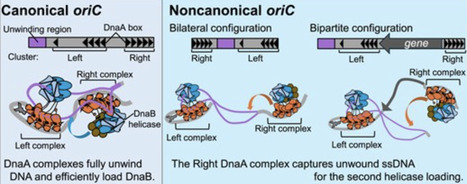
The E. coli chromosomal origin, oriC, contains a duplex-unwinding element (DUE) flanked by two clusters of the initiator DnaA-binding sites (DnaA boxes). ATP-DnaA oligomerizes to construct Left- and Right–DnaA subcomplexes on these clusters. These complexes coordinately promote DUE unwinding and DnaB helicase loading onto the unwound region for replication initiation. However, despite the strong conservation of DnaA and DnaB across bacterial species, oriC architectures vary largely. Remarkably, bipartite and bilateral configurations contain the two DnaA box-clusters separated by an insertion of the dnaA gene or positioned on both sides of the DUE, respectively. Here, we demonstrate that E. coli oriC variants mimicking these configurations remain fundamentally functional. Notably, DnaB loading activity of these variants showed increased dependence on single-stranded DUE binding by the relocated DnaA subcomplex and on the AT cluster upstream of the DUE, reflecting reduced stability of DUE unwinding. Consistent with these in vitro results, these variants supported cellular replication initiation with only slow cell growth rates. Together, these findings reveal remarkable architectural flexibility, mechanistic robustness, and a conserved mechanism in oriC. Also, those highlight unwinding stability as a key determinant of oriC adaptation to rapid cell growth, providing insight into the evolution of oriC architecture.
|
|
|
Scooped by
mhryu@live.com
Today, 12:00 PM
|
Alternative splicing (AS) is a major driver of transcriptomic diversity, yet its computational analysis remains challenged by inconsistent event definitions across tools and by the sensitivity of quantification methods to annotation quality. Here, we present a comprehensive benchmark of seven AS detection tools—replicate Multivariate Analysis of Transcript Splicing (rMATS), Super-fast Pipeline for alternative splicing analysis, version 2 (SUPPA2), Modeling Alternative Junction Inclusion Quantification + Visualization Of Inferred Local splicing Alternatives (MAJIQ+VOILA), EventPointerST (EPST), Shiba, LeafCutter, and the newly introduced EventPointer BAM (EPBAM)—evaluated across three complementary datasets: reverse transcription PCR (RT-PCR) validated experiments, simulated data, and Lexogen Spike-In RNA Variant (SIRV). The inclusion of SIRV, which provide experimentally derived sequencing data with fully controlled ground truth, is central to our evaluation framework, enabling rigorous assessment of quantification accuracy under real technical conditions. We assess tool performance under three annotation scenarios—complete, incomplete, and overloaded—reflecting the annotation uncertainty commonly encountered in practice. EPBAM extends the EventPointer framework by enabling de novo event detection coupled with a coverage-corrected Ψ quantification strategy. Our results demonstrate that annotation quality substantially drives tool performance: annotation-dependent tools achieve peak accuracy under complete annotations, whereas EPBAM exhibits the most robust and consistent behaviour across annotation conditions, recovering unannotated events with low false discovery rates. No single tool dominates across all evaluation metrics, highlighting the importance of dataset diversity and standardized benchmarking practices for meaningful tool comparison in the AS field.
|
|
Scooped by
mhryu@live.com
Today, 11:48 AM
|
Identifying sustainable alternatives to animal proteins is a central challenge for global food system transformation. Replacing animal proteins requires preserving food functionalities—such as gelation, foaming, and emulsification—that arise from the collective behavior of heterogeneous protein mixtures within food matrices. While these properties are assessed experimentally at the ingredient level, systematically comparing the vast diversity of natural proteins remains difficult, and most artificial intelligence (AI)-based protein models focus on individual proteins rather than proteome-level behavior. Here, we present AlterProtX, an AI-enabled framework that integrates molecular- and proteome-scale features to guide alternative protein discovery. AlterProtX predicts protein thermal stability, a processing-relevant property, and integrates it with six intermolecular interaction attributes into distribution-based proteome representations. This multiscale approach enables mechanistic comparison between animal and non-animal proteomes, revealing molecular features underlying functional similarity and divergence. By integrating allergenic potential and nutritional adequacy, AlterProtX supports early-stage prioritization of candidate protein sources and provides an interpretable platform for proteome-level evaluation of food proteins.
|
|
Scooped by
mhryu@live.com
Today, 11:32 AM
|
The activation of many chromosomally integrated mobile genetic elements by RecA-DNA nucleoprotein filaments may represent an adaptation to evading deletion through homologous recombination. Consistent with bacterial transformation facilitating such eliminations of inserted viral DNA, cross-taxa comparisons found isolates’ prophage content was negatively associated with homologous recombination rates. Assaying the effect of the composition of the extracellular DNA pool on transformation of a lysogen demonstrated that DNA from conspecific donors drove both prophage activation and deletion, whereas DNA originating from different species triggered only prophage activation. Accordingly, rates of horizontal DNA transfer mechanisms varied across bacterial ecologies, with homologous recombination common relative to prophage accumulation when DNA originated from fewer donor species.
|
|
Scooped by
mhryu@live.com
Today, 1:06 AM
|
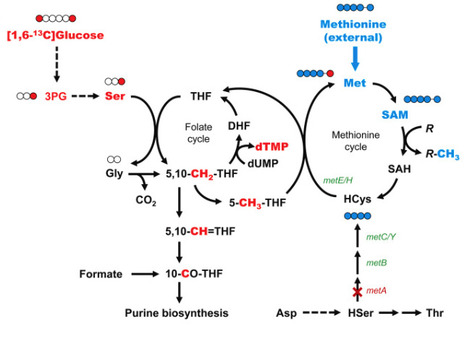
In this study, we investigated how methionine availability influences the phenotype and metabolism of the methionine-auxotrophic E. coli ΔmetA strain. To identify metabolic and physiological changes, the strain was cultured under two conditions: i) a methionine excess condition, where 1 mM of methionine was added to the medium; and ii) a methionine limited condition, where the medium did not contain any methionine, but instead methionine was fed slowly to maintain methionine concentration below 1 μM. To quantify metabolic fluxes, isotopic tracers [1,2-13C]glucose and [1,6-13C]glucose were applied and 13C-metabolic flux analysis (13C-MFA) was performed. To obtain acceptable fits of the labeling data the metabolic network model had to be updated. First, secretion reactions for four amino acids, i.e. glutamate, threonine, lysine and glycine, were added, which were found to accumulate in the medium under methionine limitation, both under growth and non-growth conditions. Second, a reaction was added to one-carbon metabolism that explicitly captures the incorporation of labeled methyl carbon derived from glucose into methionine. This cycle has thus far been overlooked in 13C-MFA models, however, our results suggest that taking the methylation of methionine into consideration is critical for successfully implementation of 13C-MFA. Under methionine limitation, we observed: 1) reduced oxidative pentose phosphate pathway flux; 2) significant increase in the TCA cycle flux and anaplerotic flux into the TCA cycle; 3) activation of a normally dormant pathway from threonine to glycine; 4) secretion of glutamate, threonine, lysine and glycine; and 5) recycling of 15% of intracellular methionine through the methylation cycle. In contrast, when the ΔmetA strain was grown in the presence of excess methionine, all of the unique features of this strain were masked and the flux phenotype simply reflected wild-type E. coli phenotype with only minor flux changes directly related to the gene knockout itself. We also performed co-culture experiments using ΔmetA and ten different auxotrophic E. coli strains, and cultured the same strains on spent medium from ΔmetA culture. We found that the growth behavior of the co-cultures matched with the growth behavior observed for the auxotrophic strains grown on ΔmetA's spent medium. Taken together, this study presents a robust, high-resolution approach to dissect nutrient-limited metabolism and provides novel insights that can advance our understanding of syntrophic interactions in microbial communities.
|
|
Scooped by
mhryu@live.com
Today, 12:48 AM
|
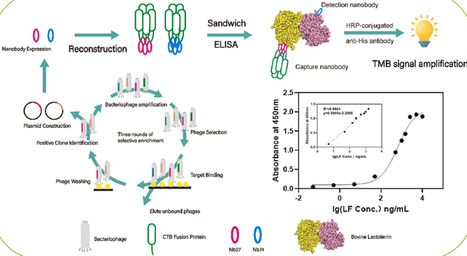
As an important bioactive protein in dairy products, accurate quantification of bovine lactoferrin (bLF) is essential for quality control and nutritional evaluation. In this study, two nanobodies targeting distinct epitopes, Nb27 and Nb74, were isolated from a phage display nanobody library through biopanning. A multivalent nanobody was constructed by fusing the cholera toxin B subunit (CTB) tag to the N-terminus of Nb27, which significantly enhanced the detection signal through pentamerization. Based on this, a sandwich ELISA was established with CTB-Nb27 as the capture antibody and Nb74 as the detection antibody. This immunoassay achieved a linear range of 5–1000 ng/mL and a detection limit of 0.8 ng/mL. Spike recovery tests across different dairy matrices yielded recoveries of 90.4%–112.6%, with intra-batch coefficients of variation (CVs) below 13%, confirming satisfactory accuracy and precision. These findings establish this method as a reliable tool for the quantification of bLF in dairy products.
|
|
Scooped by
mhryu@live.com
Today, 12:07 AM
|
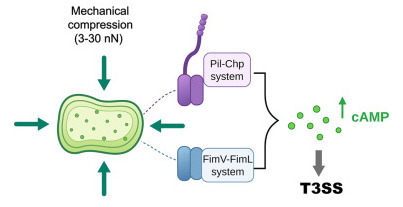
In Pseudomonas aeruginosa, cyclic AMP (cAMP) is a central regulator of virulence, including the type III secretion system (T3SS), yet the signals that activate cAMP remain incompletely understood. Using the real-time cAMP biosensor Gflamp1, we show that mechanical compression elevates cAMP, with an estimated activation force of approximately 3–30 nN. This mechanoresponse requires the Pil-Chp system, the FimV-FimL module, and the adenylate cyclase CyaB. Productive surface piliation and pilus extension or retraction are dispensable, whereas the major pilin PilA remains required. We further show that the histidine kinase ChpA interacts with the polar scaffold FimV and that FimL modulates FimV-dependent ChpA polar localization. Fluorescence lifetime imaging microscopy-Förster resonance energy transfer (FLIM-FRET) analysis supports compression-dependent changes in the apparent proximity of ChpA to PilG and FimL. Finally, compressed-state growth increases T3SS-associated transcription, suggesting that compression-induced cAMP signaling may link confined growth to virulence-associated gene expression.
|
|
Scooped by
mhryu@live.com
October 7, 11:47 PM
|
Plant-parasitic nematodes (PPNs) cause major crop losses, while current nematicides face increasing regulatory restrictions and often show inconsistent efficacy. We tested whether nematode-associated cues activate rhizosphere microbiomes and cuticle-associated fungi to produce suppressive metabolites that impair nematodes and stimulate host defence. Maize rhizosphere microbiomes from different soils and fungal isolates recovered from nematode cuticles were exposed to Meloidogyne hapla, after which cell-free filtrates were assessed for juvenile mortality, root invasion, gall formation, egg production and reactive oxygen species (ROS) accumulation in tomato. Nematode-conditioned microbiome filtrates increased M. hapla juvenile mortality relative to nonconditioned controls across soils, although the magnitude of this effect varied with soil origin. Several fungal isolates also showed suppressive activity against Pratylenchus penetrans in maize and M. hapla in tomato, with distinct outcomes across biological assays. Among them, Akanthomyces sp. F20/JKI73389 was selected for mechanistic follow-up: stimulation by M. hapla, or by nematode-derived molecules, induced F20 to release a filtrate that reduced nematode root invasion and triggered a strong ROS response in host tissue. UHPLC-MS analysis further revealed a distinct nematode-induced metabolite profile in F20, including six candidate features that were absent from non-stimulated controls and were provisionally associated with enhanced nematode mortality. These results support a model in which nematode-derived cues alter the metabolite output of indigenous rhizosphere microbes and associated fungi in ways linked to nematode suppression and host defence, highlighting their potential as environmentally compatible tools for PPN management.
|
|
Scooped by
mhryu@live.com
October 7, 5:48 PM
|
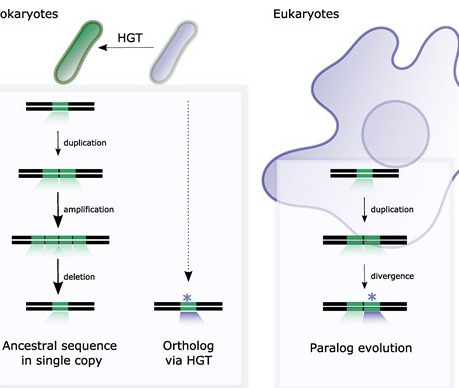
Gene copy-number mutations are frequent and prevalent yet often overlooked. While initially considered to be the neutrally evolving raw material needed for the emergence of new genes through the process of gene duplication and divergence, recent technical advances and renewed interest start to unravel a fundamentally different picture for duplications in bacteria: rather than being neutral, duplications have strong direct and indirect fitness effects, and rather than giving rise to evolutionary novelty through protein family expansions, duplications allow to transiently simply make more of the same. Tandem duplications arise at frequencies orders of magnitude higher than single nucleotide polymorphisms (SNPs), and they collapse at an even higher rate still. Understanding the biological idiosyncrasies of copy-number mutations is pivotal to understanding their fundamental role in bacterial evolution. Having multiple copies of a gene influences its evolutionary dynamics in surprising ways, slowing down divergence, acting along with purifying selection as a force of conservation, and facilitating “bet-hedging” in fluctuating environments or under diversifying selection. Paying careful attention to structural variation in genomic sequence analyses will yield a more comprehensive understanding of bacterial evolution, especially when it comes to the emergence of novel bacterial lineages, such as human pathogens.
|
|
Scooped by
mhryu@live.com
October 7, 3:33 PM
|
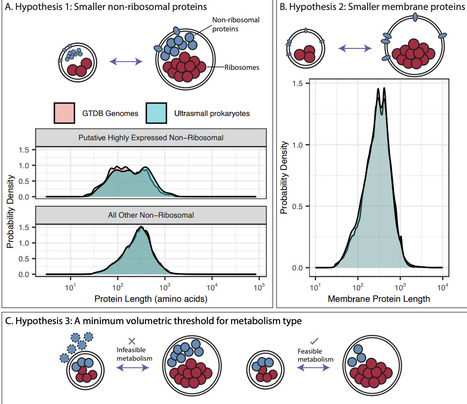
The maximum growth rate of microbes plays a central role in shaping ecological outcomes and is a major target of bioengineering efforts. Previous data compilations suggest single cell maximum growth rates mostly decrease with cell volume across species, except for an initial increase from the very smallest microbes to an intermediate size. Here we hypothesized that this unimodal relationship is shaped by the volumetric requirements of ribosomes and the surface area-dependence of nutrient supply. We developed a mechanistic model relating ribosomal protein mass fraction to growth rate and cell size. Predictions from this model were empirically supported by proteomic data from 97 prokaryotes ranging over 3 orders of magnitude in cell volume. Our analysis suggests that the smallest cells' growth rates are restricted by the volumetric constraints on ribosomes per cell and rely on compact, heterotrophic metabolisms. In contrast, growth rates of the largest prokaryotes face geometric constraints on specific resource acquisition rates, capping growth rates and investment in ribosomal protein, but allowing investment in protein-expensive metabolisms including phototrophy and sulfur oxidation. Prokaryotic cells of intermediate size face neither constraint and exhibit a higher maximum growth rate potential, which, we hypothesize, is associated with elevated metabolic diversity.
|
|
Scooped by
mhryu@live.com
October 7, 2:22 PM
|
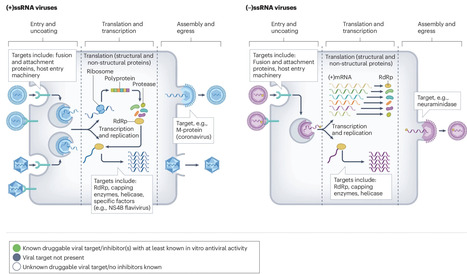
Small molecule antiviral drugs have transformed the management of infections such as those caused by HIV, hepatitis B virus, hepatitis C virus, herpesviruses and influenza viruses. Effective antiviral therapeutics remain unavailable for many other often life-threatening viral infections, many of which are caused by RNA viruses. The development of potent, safe and orally available antivirals is therefore essential both to address current unmet medical needs and to strengthen epidemic and pandemic preparedness. In this Review, we discuss the rationale for building a diversified portfolio of broader-spectrum antivirals against RNA viruses with activity spanning multiple genera, entire families or even crossing viral families. We provide a non-exhaustive overview of approved and investigational antiviral agents active against RNA viruses and discuss the biological determinants that underlie their antiviral spectrum. Finally, we outline the clinical development frameworks required to accelerate the evaluation of such drugs, in particular in the context of outbreaks. In this Review, Neyts and colleagues discuss the rationale for developing broader-spectrum antivirals against RNA viruses, survey promising antiviral targets and agents, and outline strategies to accelerate clinical development and strengthen outbreak preparedness.
|
|
Scooped by
mhryu@live.com
October 7, 12:12 PM
|
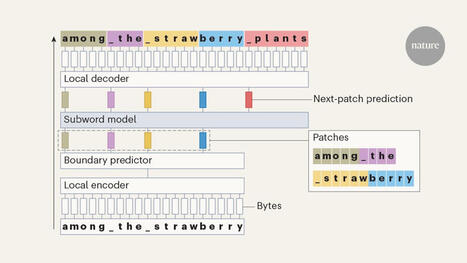
Most LLMs cannot reliably evaluate text on the level of individual letters. A technique called byteification retrofits existing models to enable it. Strawberry contains the letter ‘r’ three times, but when asked, many large language models (LLMs) answer that the letter appears twice. This happens because most LLMs encode words as ‘tokens’ that represent sequences of letters. LLMs that operate in this way can achieve excellent performance, but they cannot access the individual characters in each word, which are encoded as binary sequences called bytes. Writing in Nature, Minixhofer et al.1 now report an approach called byteification that retrofits token-based LLMs to operate at the byte level. The authors show that byteified models can achieve competitive performance while retaining the ability to read individual characters.
|
|
Scooped by
mhryu@live.com
October 7, 11:51 AM
|
CRISPR–Cas9 DNA cleavage requires R-loop extension to activate the histidine–asparagine–histidine (HNH) nuclease domain, yet how heteroduplex maturation gates catalytic commitment remains unclear. Using extensive molecular dynamics simulations across seven experimentally trapped heteroduplex states (6–18 nt), we define a three-stage activation pathway: unlocking, preorganization, and precatalytic gating. At the 18-nt checkpoint, HNH and REC2 regain mobility but do not adopt a fully cleavage-competent orientation; this dynamically frustrated metastate is consistent with a conformational-proofreading model. Here, dynamic frustration is used operationally to describe renewed mobility and weakened directional coupling without commitment to the cleavage-competent state, rather than a formal energetic frustration calculation. Two sensors, Y450 at the sgRNA: DNA hybrid interface and K1200 in the PI domain, respond to distinct maturation milestones, encoding heteroduplex length into domain-specific conformational outputs. Integrating these insights with two deep-learning analyses and deep mutational scanning recovers known high-fidelity positions and prioritizes three unannotated residues for testing. In a cellular cleavage reporter assay, R1210D reproduces the attenuated low-completion phenotype of eSpCas9, identifying it as a candidate for direct specificity testing, while destabilizing L1-linker substitutions increase cleavage efficiency. These results connect atomic-level dynamics to experimentally testable, structure-mechanism-informed engineering hypotheses; direct matched-versus mismatched validation is required to establish effects on discrimination fidelity.
|