Your new post is loading...

|
Scooped by
mhryu@live.com
Today, 12:39 AM
|
Our understanding of protein function and evolution is largely based on the relationship between amino acid sequence and overall fold, now effectively captured by computational models. Yet predicting how mutations—shaped by epistasis—alter protein behavior, especially in dynamic or structurally ambiguous regions, remains difficult. Here we present D2D, which combines a self-supervised protein language model with protein-specific evolutionary information to predict mutational effects using little to no task-specific labeled data. D2D captures long-range epistatic interactions, accurately predicts single and higher-order mutation effects on protein thermostability and binding, without being trained on the task. When fine-tuned, D2D outperforms state-of-the-art methods on latent driver cancer mutations and co-occurring proliferation-enhancing mutations across independent experimental studies. Unlike most existing approaches, D2D avoids biases linked to solvent accessibility or to multiple sequence alignment depth and quality, making it particularly effective for disordered or surface binding regions where structure-based predictors typically falter. Overall, D2D provides a general framework for modeling mutational effects in proteins with limited experimental or structural information.
|
|
Scooped by
mhryu@live.com
Today, 12:35 AM
|
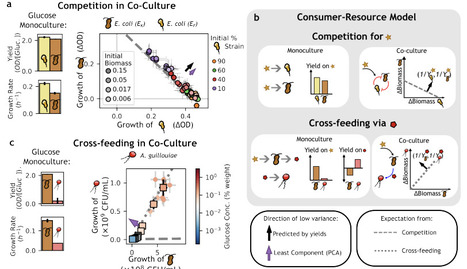
How microbial communities maintain robust and reproducible ecological functions despite their extraordinary taxonomic diversity remains an open question. Here we show that functional organization in microbial communities can be uncovered by repurposing Principal Component Analysis to focus on directions of lowest variance in taxon abundance data, rather than maximal variance. These least-variance components are statistically significant and correspond to ecological constraints on taxon abundances that are consistently fulfilled across samples. Using consumer-resource models, we show that these constraints arise from resource-mediated interactions and express biomass conservation, effectively grouping taxa into producer and consumer guilds. We validate this interpretation in simulated communities and experimental systems under competition and cross-feeding. Finally, we show that low-variance structure is ubiquitous in natural microbial communities and reveals a sparse network of taxa with disproportionate influence on community structure. Together, our results establish low-variance components as indicators of ecological constraints linking taxonomic diversity to functional organization.
|
|
Scooped by
mhryu@live.com
May 26, 10:35 PM
|
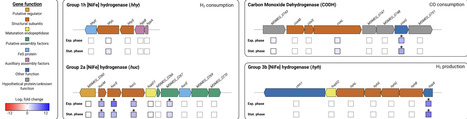
Certain hydrogenases are capable of converting the trace amounts of molecular hydrogen constantly present in Earth’s atmosphere to supply cells with a little energy during periods of starvation. Recently, Kropp and colleagues investigated the regulation of one of these “high-affinity” hydrogenases in response to different growth conditions for the ubiquitous soil bacterium Mycobacterium smegmatis (A. Kropp, J. D. Archer, M. Jespersen, T. D. Watts, et al., mSystems 11:e01678-25, 2026, https://doi.org/10.1128/msystems.01678-25). A mutation in the gylR gene, whose product acts as a positive transcriptional regulator of the genes involved in glycerol catabolism, causes the corresponding mutant strain to grow very slowly on glycerol, while the activity of the high-affinity hydrogenase reached levels more than 50 times higher than those of the wild-type strain of M. smegmatis. The results of this study suggest that the synthesis of the hydrogenase is subject to a regulatory mechanism similar to carbon catabolite repression, which is entirely consistent with the cellular function of this enzyme.
|
|
Scooped by
mhryu@live.com
May 26, 7:22 PM
|
Faster drug discovery, optimized drug design, even programmable therapeutics: AI is impacting R&D. Data and development bottlenecks remain. Some of 2026’s largest IPOs, deals and venture rounds are AI-powered. Generate Biomedicines pulled off a $400 million IPO in February 2026 for its protein generation platform. Eli Lilly in March paid $115 million up front for a drug discovery partnership with Insilico Medicine, itself hot off the back of a $293 million Hong Kong listing. In the first three months of 2026, AI and machine learning (ML)-based drug discovery firms raised $1.8 billion in venture funding, about a quarter of the sector total. That included an $80 million seed round for New York and Boston-based Proxima, whose plans include reprogramming proteins and “decoding the structure of life.”
|
|
Scooped by
mhryu@live.com
May 26, 6:55 PM
|
Hydroponic horticulture will play a key role in future food production as the growing global population becomes increasingly urbanised. Tomato (Solanum lycopersicum) is a widely grown and consumed crop that is already cultivated hydroponically in glasshouses in areas of the world with cooler climates, such as Northern Europe. Hydroponic growing systems enable high yields but can enhance disease susceptibility which increases the risk of devastating yield losses. Manipulation of the hydroponic microbiome has been proposed as a strategy to protect plants against disease. However, this hypothesis remains largely untested. We examined whether introducing synthetic communities of plant-beneficial microbes (SynComs) could offer a sustainable disease protection solution for hydroponic tomato production. We identified individual microbes and in turn two SynComs that induce systemic disease resistance during the vulnerable early stages of development. The two SynComs were evaluated further in a commercial-scale greenhouse trial. Although both SynComs reduced early growth, they had no adverse effects on yield or fruit quality. Strikingly, while only one SynCom strain consistently persisted in the hydroponic stone wool substrate throughout the six-month trial, the introduction of disease-suppressive SynComs at sowing had significant and similar impacts on bacterial community structure six months later. Our findings demonstrate that microbial SynComs can reduce disease susceptibility of hydroponically grown tomato without compromising yield, offering a viable and sustainable approach for crop protection in controlled environment agriculture.
|
|
Scooped by
mhryu@live.com
May 26, 5:55 PM
|
Plasmids drive evolution by transferring traits across microbial hosts. Transmission depends on both host–plasmid (infection) and plasmid–plasmid (compatibility) interactions, yet how the structure of these networks shapes transmission remains poorly understood. We hypothesized that these two ecological networks interact in non-additive ways to influence community outcomes. To test this, we developed a stochastic agent-based model that embeds both network structures and simulates coupled host–plasmid dynamics. We systematically varied the structure of each network, both individually and in combination, to isolate the effect of structure on host-plasmid dynamics. A modular (interactions organized into clusters) and hub (interactions concentrated on the highly connected) plasmid-plasmid compatibility network promoted transient host coexistence, while a modular host-plasmid infection network promoted plasmid diversity and stable host coexistence. Importantly, structured networks interacted non-additively, and their impact was most apparent when plasmid carriage imposed a moderate fitness cost on hosts. For example, combining a modular infection network with a hub compatibility network reversed the expected plasmid prevalence patterns, demonstrating that the structure of one network can counteract the effects of the other. We further re-parameterized our model to recapitulate empirical host-plasmid community dynamics, showing that infection network structure can strongly shape plasmid prevalence even in the presence of substantial biological heterogeneity. Our results highlight the necessity of jointly considering host–plasmid infection and plasmid–plasmid compatibility networks to understand host–plasmid community dynamics and their eco-evolutionary potential. More broadly, this work provides an initial mechanistic framework for generating testable hypotheses and underscores that systems involving multiple hosts and infectious agents require explicit consideration of how different ecological networks interact to shape community dynamics.
|
|
Scooped by
mhryu@live.com
May 26, 5:46 PM
|
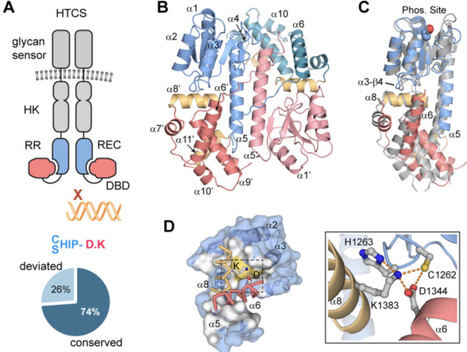
Human gut microbes, such as Bacteroides, rely on specialized gene clusters known as polysaccharide utilization loci (PULs) to metabolize diverse dietary and host-derived glycans. A major class of transcription regulators of these PULs is the hybrid two-component system (HTCS) containing a histidine sensor kinase and a response regulator (RR) within a single transmembrane polypeptide chain. Characterizing HTCS-mediated PUL regulation is often challenging because the specific glycan signals required to activate most HTCSs remain unknown. Here, we characterized structural details of a highly conserved HTCS activation mechanism and developed a universal activation strategy by mutating the interdomain latch motif that inhibits the DNA-binding activities. Using the RR portion of BT4124 from Bacteroides thetaiotaomicron as a model system, crystallographic analyses reveal a “closed” inactive conformation anchored by a hydrogen-bond network formed by the conserved latch residues between the receiver and DNA-binding domains. Molecular dynamic simulation with the deep-learning BioEmu shows that the “AD” mutation of the latch residues destabilizes the inhibitory interface, shifting the conformation equilibrium predominantly to an active, “open” conformation. This constitutively active variant, BT4124RAD, allows us to map specific DNA-binding sites within the potential regulated promoters in vitro and characterize transcription regulation in cells. Induced expression of BT4124RAD not only down-regulates local homogalacturonan (HG) utilization genes but also cross-represses multiple PULs associated with other HG-related pectic glycans. These findings highlight a complex cross-regulatory network governing pectin degradation and establish the targeted latch mutation as a potential broadly applicable tool for deciphering the regulatory networks of HTCSs in Bacteroides.
|
|
Scooped by
mhryu@live.com
May 26, 5:28 PM
|
Methanol has emerged as a sustainable C1 feedstock owing to its compatibility with existing infrastructure and the potential for renewable production from CO₂ and green hydrogen. Methylotrophic yeasts, including Komagataella phaffii (Pichia pastoris) and Ogataea polymorpha, can natively assimilate methanol and therefore represent attractive hosts for biomanufacturing. However, industrial application of methanol-based processes remains constrained by cytotoxicity, redox imbalance, and limited productivity compared to sugar-based fermentations. To address these challenges, extensive metabolic engineering strategies have been implemented to enhance methanol assimilation and redirect carbon flux toward value-added products. Over the past decade, remarkable progress has been achieved through the development of synthetic methylotrophy in non-methylotrophic yeasts, the expansion of product portfolios to glycans, fatty acid derivatives, polyketides, terpenoids, organic acids, and polyols, and the integration of multi-omics tools for systems-level design. This review summarizes recent advances in methanol assimilation enhancement, synthetic pathway construction, and fermentation engineering, highlighting strategies such as metabolic engineering and dynamic bioprocess control. In addition, current challenges and future perspectives are discussed with an emphasis on overcoming toxicity, improving efficiency, and establishing advanced methylotrophic yeasts as robust cell factories for sustainable C1-based biomanufacturing.
|
|
Scooped by
mhryu@live.com
May 26, 5:21 PM
|
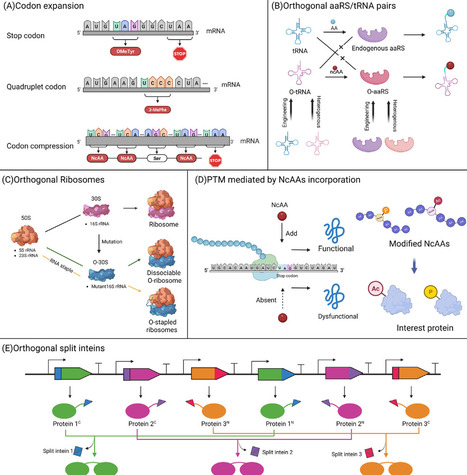
Precise regulation of protein abundance is essential for cellular function and physiology. Conventional approaches are often limited by insufficient resolution or unintended crosstalk. In contrast, orthogonal control technologies enable programmable and precise modulation of protein abundance while remaining insulated from native networks. In this review, we summarize the development and application of regulation technologies with different orthogonality across multiple levels. Orthogonal transcriptional control primarily involves the design and engineering of orthogonal RNA polymerases and transcription factors; orthogonal translational regulation focuses on advances in genetic codon expansion and post-translational modifications; targeted protein degradation and compartmentalized regulation are also discussed. Finally, we highlight the integration across the different levels described above. This review might bring disruptive insights and conceptual breakthroughs to precision medicine and sustainable biomanufacturing.
|
|
Scooped by
mhryu@live.com
May 26, 5:16 PM
|
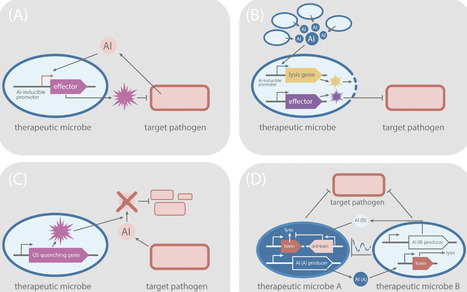
Quorum sensing (QS) is a cell–cell communication mechanism that enables bacteria to coordinate gene expression in response to population density and community composition. In many pathogens, QS plays a central role in host colonization and virulence, making it an attractive target for antimicrobial intervention. Synthetic biology offers powerful tools to exploit this vulnerability by either disrupting QS signaling or engineering microorganisms with QS-based circuits to detect and eliminate pathogens. In this review, we examine how QS and QS interference can be harnessed for QS circuit engineering and translated into applications such as therapeutic microorganisms. We also highlight the transition of QS research from fundamental microbiology to translational biotechnology, underscoring its potential to drive innovative strategies against microbial virulence and antimicrobial resistance.
|
|
Scooped by
mhryu@live.com
May 26, 5:07 PM
|
Fungal exopolysaccharides (EPSs) are increasingly recognized as structurally programmable microbial polymers with applications spanning biomedicine, materials engineering, food systems, and environmental technologies. While previous reviews have often addressed fungal EPS diversity, production variables, or application domains separately, an integrated framework linking biosynthesis, molecular architecture, process control, and translational manufacturing remains underdeveloped. This review positions fungal EPSs as next-generation biomaterials by integrating (i) biochemical and genetic regulation of EPS biosynthesis, (ii) structure–function mapping across major polymer classes, (iii) cultivation and downstream processing workflows that enable reproducible product specifications, and (iv) industrial translation pathways within scalable and sustainability-aligned biomanufacturing systems. Gene-cluster–resolved case studies and process-to-product design principles illustrate how metabolic flux, fermentation parameters, and polymer modification shape functional performance. Current bottlenecks—including strain-dependent variability, purification complexity, quality harmonization, and techno-economic constraints—are critically evaluated to distinguish laboratory potential from scalable feasibility. By shifting from descriptive cataloging toward platform-based engineering logic, this review provides a translational roadmap for rational fungal EPS design within standardized and application-driven manufacturing frameworks.
|
|
Scooped by
mhryu@live.com
May 26, 3:46 PM
|
The tricarboxylic acid (TCA) cycle is an essential part of the central metabolic hub that provides energy and biosynthetic precursors. Efficient regulation of central carbon flux is critical for maintaining optimal productivity of microbial cell factories (MCFs). However, biosensors capable of sensing TCA intermediates remain limited. Here, we engineered the catabolite control protein C (CcpC) from Bacillus species to reconstruct citrate-responsive biosensors in E. coli. Through hybrid promoter engineering, we systematically characterized and identified the functional roles of two CcpC binding sites. By applying the hybrid promoter, the engineered biosensor BcCcpC-PLBs exhibited the broadest dynamic range and highest expression level among its counterparts. Ligand profiling revealed the diverse responsiveness of BcCcpC to multiple metabolites of the TCA cycle. By structure-guided mutagenesis of BcCcpC, the obtained variant BcCcpC(S138L) exhibited an improved dynamic range of up to 3.02-fold under 80 mM citrate induction. This work establishes the first transcription factor (TF)-based citrate-responsive biosensor, which broadens the regulatory toolkit for central metabolism engineering.
|
|
Scooped by
mhryu@live.com
May 26, 1:31 AM
|
DNA methylation plays critical roles in gene regulation in bacteria, from regulating essential processes like the cell cycle to phenotypes of practical interest like pathogenicity and motility. Synthetic manipulation of global methylation levels has broad impacts on cellular physiology, changing expression patterns of hundreds of genes. However, whether or how environmental variation in natural settings similarly impacts DNA methylation patterns has been unclear. In this work, using the alphaproteobacteria Methylobacterium extorquens and Caulobacter crescentus as model systems, we discover the methylome is highly fluid in response to environmental variation, with different environments leading to distinct patterns of increased or decreased methylation levels along the chromosome. Despite a heterogeneous effect of different environments on methylation patterns, we find a general principle where the dependence of methylation states on position in the genome decreases in proportion to growth rate. A simple model that considers the methylation state through different phases of the cell cycle as a function of distance from an origin provides a framework to interpret the effects of different stressors upon the observed environmental responsiveness of the methylation patterns. Our work highlights how sequencing data alone can shed light on important aspects of microbial physiology.
|
|
|
Scooped by
mhryu@live.com
Today, 12:36 AM
|
Tandem gene duplication drives antibiotic resistance, metabolic adaptation, and gene-family expansion in bacteria, but no tool detects them in reference genomes, discovers their junctions in isolate sequencing, and quantifies the junctions in population samples. Existing callers (e.g. breseq) detect duplications without classifying formation mechanisms and often fail to quantify the duplication. Tandem has 3 modules. Module 1 detects reference-genome duplications by NUCmer self-alignment and classifies each by homologous-recombination signature and the junction microhomology length. Module 2 confirms junctions in whole-genome sequencing at user-nominated coordinates after user inspecting the coverage plot. Module 3 quantifies known junction in population sequencing using the novel Junction Read Ratio (JRR). On 280 artificial population tests across seven bacterial species, Tandem achieves 100% recall and 4.3% mean absolute error. Applied to experimentally evolved Pseudomonas fluorescens SBW25 populations, Tandem resolves multiple co-segregating duplication fragments.
|
|
Scooped by
mhryu@live.com
Today, 12:32 AM
|
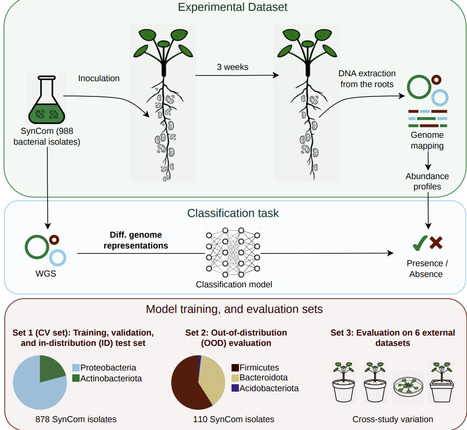
Root competence, the ability of soil bacteria to establish and grow on plant roots, is a key ecological trait influencing plant nutrition, growth, and health. However, identifying genomic determinants of root competence across bacteria remains challenging, in part because model generalizability depends strongly on how genomes are represented. Traditional approaches based on curated annotations are incomplete and biased toward well-characterised organisms and functions, limiting generalization. Sequence-similarity clustering improves coverage but yields high-dimensional features relative to dataset size, hindering training. Foundation models offer an alternative by learning compact representations without relying on prior annotation. Here, we compared pretrained genome representations from protein and DNA foundation models (ESM-2, Bacformer, DNABERT-S) with annotation- and clustering-based features (KEGG orthology, OrthoFinder protein families) for predicting root competence using synthetic microbial community data from Arabidopsis thaliana and assessed generalisability across bacteria. When training and test sets contained taxonomically related bacteria, most approaches performed similarly. However, when test bacteria belonged to phyla entirely absent from training, reflecting high evolutionary separation across all levels of bacterial classification, only pretrained protein representations retained predictive performance. Bacformer-derived representations, which incorporate genomic context, supported the strongest generalisation, suggesting that conserved genomic organisation contributes to predicting root competence. Feature attribution quantifying protein contributions to model decisions linked root competence to TonB/SusD-dependent receptors, small-molecule transporters, and unannotated proteins with conserved regulatory motifs and homology to carbon starvation-response loci. Protein foundation models support generalisation across evolutionarily distant bacteria and identify genomic determinants of root competence, including unannotated proteins.
|
|
Scooped by
mhryu@live.com
May 26, 7:29 PM
|
Building a living cell from scratch requires overcoming a bottleneck that has remained unresolved despite decades of progress: orchestrating the spatiotemporal integration of core functional modules. To tackle this barrier, the SynCell Asia Initiative outlines a strategy for developing core functional modules followed by their systems-level integration through the establishment of a centralized, artificial intelligence (AI)-driven biofoundry.
|
|
Scooped by
mhryu@live.com
May 26, 7:08 PM
|
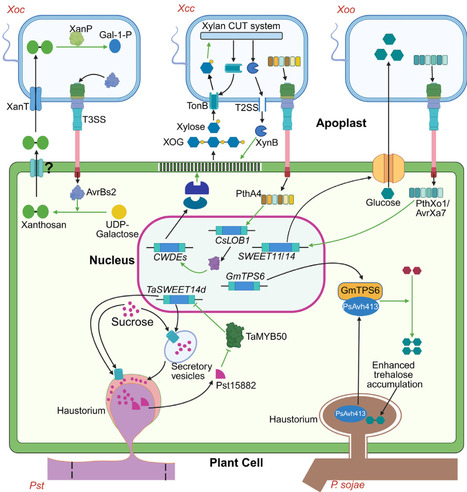
Besides suppressing immunity, pathogen effectors hijack host biosynthetic pathways, sugar transporters, enzymes, and transcriptional regulators for nutritional gain. In Xanthomonas, AvrBs2 drives de novo nutrient synthesis from a host metabolite, while PthA4 hijacks fruit ripening to release sugars. These findings pave the way for ‘anti-nutrition’ approaches for durable crop resistance.
|
|
Scooped by
mhryu@live.com
May 26, 6:03 PM
|
To meet the needs of a growing human population, agricultural management practices have undergone substantial intensification, specialization and industrialization. This has contributed to biotic homogenization and a loss of diversity in microbial communities within agricultural systems. In this Perspective, we summarize recent studies that report microbial homogenization due to agricultural intensification. We propose a definition of microbial homogenization and explore how intensive agricultural practices can cause taxonomic, physiological, genetic and functional homogenization of microbial communities. Our analysis indicates that globally the diversity of rare taxa is lower in intensively managed agricultural lands compared with less-intensive lands and that agricultural intensification suppresses beneficial microorganisms and promotes pathogenic taxa. We identify microbial taxa that are sensitive to intensification and discuss how the disproportionate impact on rare microbiota can threaten agro-ecosystem functions and food security. Finally, we outline key challenges and suggest areas that require further research. In this Perspective, Banerjee, Dasgupta and van der Heijden discuss how intensive agricultural practices can lead to the taxonomic, physiological, genetic and functional homogenization of microbial communities and disproportionately affect rare microbiota.
|
|
Scooped by
mhryu@live.com
May 26, 5:49 PM
|
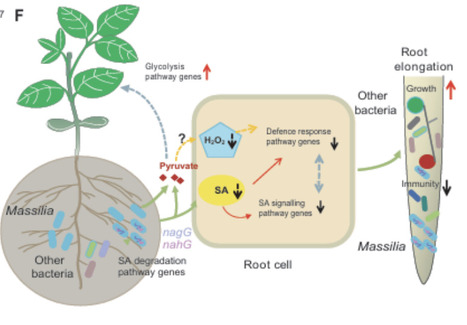
Rhizosphere microbiota play an important role in maintaining plant root growth. However, the physiological and molecular basis of microbial regulation of root traits remains poorly understood. Here, we report that Massilia efficiently colonizes roots and promotes root elongation. In particular, the M117 strain of Massilia significantly inhibits salicylic acid (SA)-related immune signalling, which is required for M117-mediated root elongation. M117 can directly degrade SA, thereby reducing SA levels in the roots. Integrated omics reveal the presence of multiple SA hydrolytic pathways in M117. Among them, the NagGHAaAb pathway is strongly induced by SA. This pathway regulates root growth and is nonrandomly distributed across Massilia species. Finally, we show that M117 colonization enriches specific bacterial taxa within roots. Our findings reveal a specific pathway employed by rhizosphere bacteria to colonize roots and promote their growth and highlight a useful microbial strategy and information for balancing host immunity and growth.
|
|
Scooped by
mhryu@live.com
May 26, 5:36 PM
|
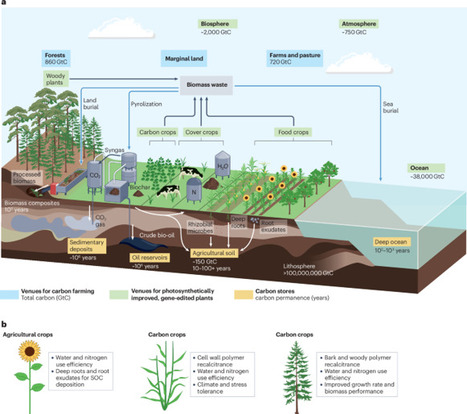
Anthropogenic carbon emissions have destabilized Earth’s carbon cycle, triggering cascading effects on climate and biodiversity. Plant-based carbon dioxide removal (CDR) presents a scalable, economically viable path to atmospheric carbon sequestration through soil carbon deposition, dedicated biomass cultivation and strategic agroforestry. Although photosynthesis drives terrestrial carbon capture, effective CDR strategies demand genetic optimization of carbon assimilation, retention and storage. The regulatory landscape is restrictive towards transgenic crops yet permissive of genome editing, creating a window for intervention. Advances in CRISPR-based editing, computational plant trait prediction and delivery systems for gene-editing tools in planta enable precision engineering of plant phenotypes to increase photosynthetic efficiency and carbon sequestration capacity. In this Review, we map the molecular and physiological innovations required to realize plant-based CDR at climate-relevant scales. Beyond optimizing carbon capture itself, we examine strategies to engineer enhanced biomass accumulation, improve nitrogen and water use efficiency, and stabilize carbon storage in plant and soil systems. We further assess the opportunities, implementation challenges and the potential of deploying genome-edited crops as a cornerstone of global carbon management. Gene editing to enhance photosynthesis in crop plants offers a strategy to boost plant carbon capture and mitigate climate change. This Review explores the agronomic, molecular and technical challenges in engineering photosynthesis for carbon sequestration as well as the genetic tools and editing technologies that can improve plant productivity and carbon storage.
|
|
Scooped by
mhryu@live.com
May 26, 5:25 PM
|
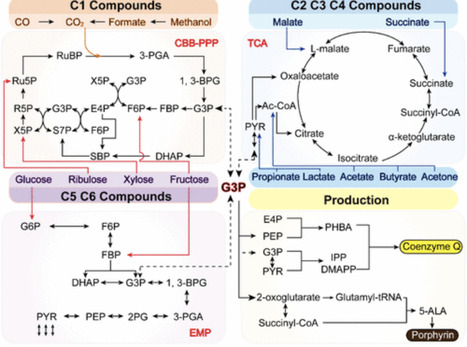
Rhodobacter sphaeroides, a purple nonsulfur photosynthetic bacterium, displays exceptional metabolic versatility, enabling growth under both aerobic and anaerobic conditions and utilization of diverse carbon sources. Its flexible metabolism, combined with native pathways for terpenoid and tetrapyrrole biosynthesis, makes it a highly promising microbial chassis for the production of valuable compounds. Advances in metabolic and synthetic biology have allowed the engineering of R. sphaeroides for the efficient synthesis of coenzyme Q10 (CoQ10) and porphyrin derivatives through strategies such as precursor supply enhancement, pathway optimization, modulation of redox and energy balance, manipulation of global regulatory systems, and fermentation control. Beyond CoQ10 and porphyrins, this organism holds the potential to produce hydrogen, carotenoids, and other high-value terpenoids. This review summarizes the metabolic features, native regulatory networks, and engineering approaches in R. sphaeroides, highlighting its versatility and robustness as a platform organism. The insights provided here underscore its potential as a chassis for synthetic biology applications and industrial bioproduction of a wide range of bioactive compounds.
|
|
Scooped by
mhryu@live.com
May 26, 5:18 PM
|
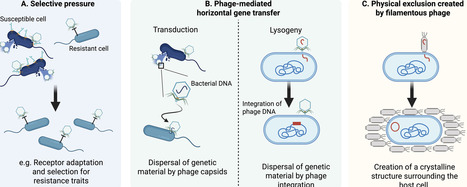
Microbial communities deliver essential functions in ecosystems. In plant environments, the plant microbiome facilitates nutrient uptake, supports plants during abiotic stress, and counteracts disease. As implementation of synthetic microbial communities becomes more of a realistic strategy for mitigating the effects of biotic and abiotic stressors on plant productivity, it is increasingly important to understand how interactions between microbes, which are essential for ecosystem function (hub microbes), are maintained. Recent research highlights the ecological role of bacteriophages, the viruses of bacteria, in host-associated microbial communities. Current evidence demonstrates the influence of the phageome on microbiomes, ranging from effects on an individual (transduction, lysogenic conversion, and evolutionary pressure) to entire populations and communities, such as Kill-the-Winner dynamics. These dynamics appear to affect the overall function of microbial communities and support plant growth. In this review, we lay out recent insights on the role of bacteriophages in plant-associated microbiomes through an eco-evolutionary lens and future directions of research to broaden our understanding of the ecological implications of bacteriophages.
|
|
Scooped by
mhryu@live.com
May 26, 5:09 PM
|
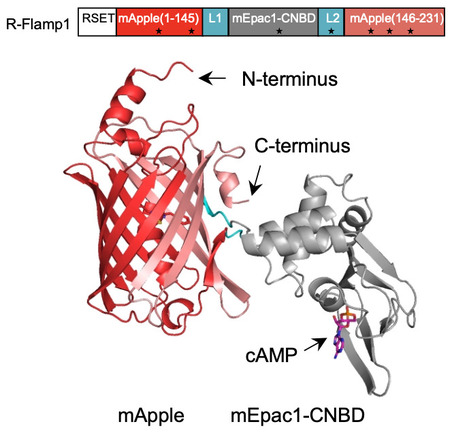
Circularly permuted green fluorescent protein (cpGFP)-based high-performance cAMP sensors have enabled real-time monitoring of cAMP dynamics with high spatiotemporal resolution in living animals. However, their utility is hampered by significant spectral overlap with other green/yellow fluorescent indicators and blue/cyan light-activated optogenetic actuators, limiting their compatibility in multiplexed imaging applications. While existing red cAMP sensors offer great spectral separation, they often suffer from a limited dynamic range ( < 1.5-fold in HEK293T cells), low cellular brightness, aggregation, or significant blue-light-induced photoactivation. Here, we report R-Flamp1, a red cAMP sensor with a large dynamic range ( > 10-fold in HEK293T cells), enhanced cellular brightness, appropriate cAMP affinity (Kd ~1.9 μM), subsecond response kinetics, and minimal photoactivation under blue or cyan light exposure. Using R-Flamp1, we visualized region-specific cAMP dynamics, and when paired with green indicators, revealed differential activation patterns between cAMP and neuromodulators or calcium using two-photon imaging and fiber photometry during various behaviors. These findings provide valuable insights into the role of cAMP signaling in complex behaviors. R-Flamp1 is a high-performance red fluorescent cAMP sensor and the authors monitor region-specific cAMP dynamics in vivo and reveal distinct activation patterns between cAMP, calcium, and neuromodulators via two-photon imaging and fiber photometry in animals.
|
|
Scooped by
mhryu@live.com
May 26, 3:47 PM
|
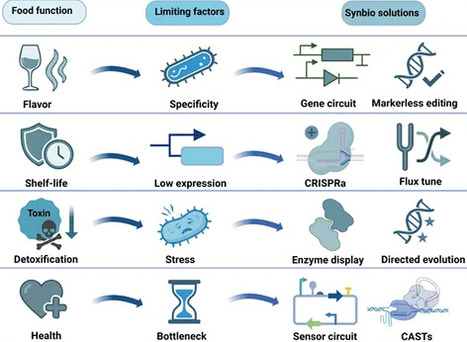
Lactic acid bacteria (LAB), as one of the key microorganisms in the food industry, play a crucial role in functional food fermentation. However, current LAB strains are limited by challenges, such as plasmid instability, low gene expression efficiency, and complex regulation of metabolic fluxes, which hinder their broader application. This review provides an overview of the traditional applications of LAB while highlighting current limitations that constrain their effective use. Then, it focuses on synthetic biology-driven strategies for precisely designing and expanding functions through gene editing, metabolic engineering, and genetic circuits. Finally, this review discusses how to improve gene expression efficiency in LAB and the use of directed evolution to optimize exogenous genes, offering perspectives for future research in the development of personalized food applications. The emerging tools of synthetic biology will further improve the production efficiency and product diversity and meet the needs of consumers for high-quality, multifunctional, and personalized food.
|
|
Scooped by
mhryu@live.com
May 26, 1:37 AM
|
The endosymbiotic evolution of plastids and mitochondria was central to the origin and success of eukaryotes. One of the most prominent molecular machineries thought to have disappeared early in eukaryote evolution is the multi-subunit bacterial DNA polymerase III (DNApol-III), which is the principal enzyme complex supporting DNA replication in bacteria. Here, we combined worldwide metagenomics and cultivation to characterisz the mosaic genomic landscape of abundant phytoplankton lineages of Teleaulax (Cryptophyceae), which contain an endosymbiotically-derived nucleomorph genome. Unexpectedly, the nuclear, plastid and nucleomorph genomes of Teleaulax contain ubiquitously expressed genes for plastid-targeted DNApol-III subunits. These genes shed light on the functioning of Teleaulax genomes when sequestered by the ciliate Mesodinium during its kleptoplastidic photosynthetic activity. In particular, the alpha subunit gene (encoding the polymerase activity), which resides in the nucleomorph genome, is continuously expressed in Mesodinium in controlled laboratory experiments. This provides a mechanistic explanation for the replication of Teleaulax plastid genomes weeks after the nuclear genome is lost. Beyond Teleaulax and close relatives, we also identified genes encoding plastid-targeted DNApol-III subunits (including alpha) in nuclear genomes of unicellular and multicellular lineages of Archaeplastida that form, along with those of Cryptophyceae, monophyletic clades firmly positioned within Cyanobacteria. Together, our results reveal a previously overlooked retention of bacterial DNA replication machinery from plastid primary endosymbiosis in Archaeplastida, its acquisition by Cryptophyceae during secondary endosymbiosis, and its direct role in contemporary plankton as a facilitator of kleptoplastidic photosynthetic activity by heterotrophic ciliates.
|