Your new post is loading...

|
Scooped by
mhryu@live.com
Today, 1:19 AM
|
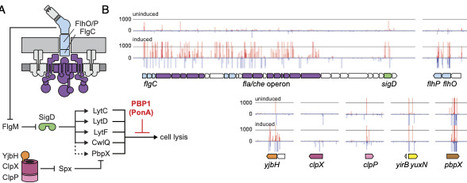
Flagella are large transenvelope nanomachines but how they transit the peptidoglycan in gram-positive bacteria is poorly understood. A recent model suggested that flagellar basal bodies diffuse in the membrane and become captured at locations in the peptidoglycan with a pore diameter that could accommodate the axle-like flagellar rod. To test the role of pore size on flagellar assembly, cells were disrupted for penicillin binding protein 1 (PBP1/PonA), a cell wall synthesis protein thought to decrease peptidoglycan pore frequency and/or diameter. The absence of PBP1 in the ancestral strain of Bacillus subtilis however resulted in a severe growth defect and cell lysis that was dependent on flagellar synthesis. Genetic analysis indicated that toxicity was due to completion of the flagellar hook, which activated the flagellar sigma factor SigD. SigD, in turn, activated a suite of peptidoglycan degrading enzymes that caused cellular lysis when PBP1 was absent. In addition, mutations that resulted in high levels of the stress response transcription factor Spx could lessen the toxicity, while PBPX, a putative teichoic acid D-alanylase, was required for autolysis. In sum, our results indicate that flagellar synthesis, not normally associated with cell viability, causes cell wall stress and under some conditions, cell death. Moreover, the cost of flagellar synthesis on envelope integrity may be underappreciated due to strain domestication, and specialized systems may be needed to compensate for the assembly of transenvelope machines in general.
|
|
Scooped by
mhryu@live.com
Today, 1:07 AM
|
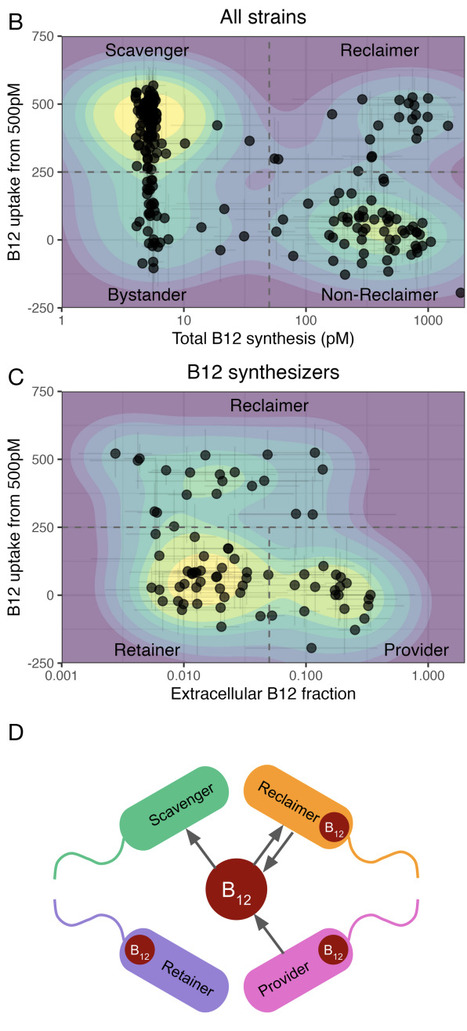
Vitamin availability often shapes microbial communities, as many microbes use vitamins they cannot synthesize. Yet how vitamins become available to users remains poorly understood. To explore this process, we quantified vitamin B12 synthesis, uptake, and extracellular accumulation across hundreds of diverse soil, freshwater, and marine bacterial isolates. These measurements revealed distinct source-sink phenotypes and showed that producers vary substantially in the amount of B12 they provide extracellularly. B12 synthesis was predictable across divergent bacterial lineages from genome content, whereas uptake and extracellular accumulation were not. Controlled cell-death experiments and independently parameterized models showed that extracellular B12 could be quantitatively predicted from release by dead cells and reuptake by surviving cells. Thus, extracellular B12 availability is governed not by synthesis alone, but by the balance between release and uptake, with producer reuptake acting as a previously overlooked sink.
|
|
Scooped by
mhryu@live.com
Today, 12:58 AM
|
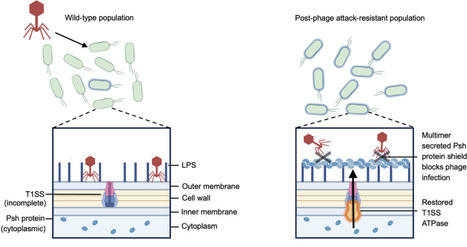
Broad-spectrum phage resistance offers an important layer of protection against bacterial fermenter crashes during biomanufacturing processes, yet the underlying mechanisms are often poorly defined or come at a fitness cost. Using experimental evolution, we generated two Pseudomonas putida strains that were resistant to at least six phage genera. Genome sequencing revealed a single frameshift deletion in each strain that restored functionality of a Type I secretion system (T1SS) ATPase. We also found strong transcriptional upregulation of a nearby protein, PP_1794, which we coin Phage shielding helix rich protein (Psh). Overexpression experiments show that Psh protein is secreted by this restored T1SS to confer complete phage resistance. When compared to wild-type P. putida KT2440, no growth or expression defects were evident, but pyoverdine production was reduced. The Psh gene and T1SS are widely distributed across Gram-negative bacteria. These findings uncover a previously uncharacterized phage defense system in P. putida based on secretion-mediated receptor masking.
|
|
Scooped by
mhryu@live.com
Today, 12:34 AM
|
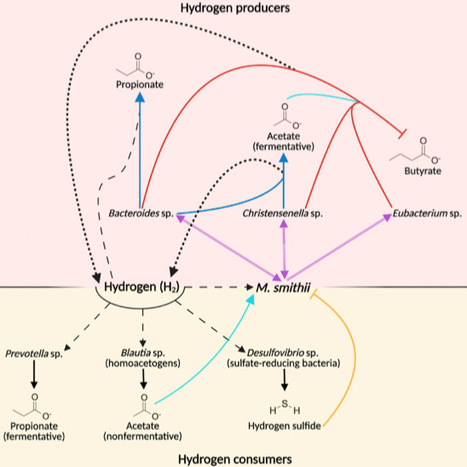
Methanogens are an ancestral group of archaea that occupy a unique niche within the human gut microbiome by virtue of their methane production. In this process, they serve as hydrogen sinks, allowing continued bacterial fermentation and influencing short-chain fatty acid production. Available evidence suggests that methanogen abundance may be declining in parallel with the broader reduction in gut microbial diversity accompanying industrialization. We describe the evolution of methanogens, their ecological roles in the human microbiome, and evidence for their apparent decline. If confirmed, reductions in methanogen prevalence and abundance may have substantial metabolic consequences, reframing these archaea as keystone species in need of scientific attention and conservation efforts.
|
|
Scooped by
mhryu@live.com
September 3, 11:51 PM
|
Biological containment strategies are widely used to reduce possible risks associated with genetically modified microorganisms (GMMs). In the biosafety literature, the performance of these systems is often benchmarked against a maximum escape frequency of one cell per 108 cells. This value is commonly attributed to the USA National Institutes of Health Guidelines for Research Involving Recombinant DNA. However, the guideline refers specifically to laboratory certification of certain host-vector systems and does not define an acceptable escape frequency for applications outside controlled laboratory environments. Despite this limited scope, the 10−8 criterion has been repeatedly cited in research articles and reviews as a general biosafety standard for GMMs. At the same time, quantitative data on escape frequency and survival of genetically modified microorganisms under realistic environmental conditions remain scarce. This lack of empirical evidence complicates environmental risk assessment and can hinder regulatory approval and technology transfer for applications intended to operate beyond the laboratory. Here, we clarify the origin and scope of the 10−8 escape criterion and discuss why it should not be interpreted as a universal biosafety standard. We argue that experimentally validated measurements of escape and survival under application-relevant conditions are urgently needed to support evidence-based biosafety assessment and the responsible development and deployment of GMMs.
|
|
Scooped by
mhryu@live.com
September 3, 5:26 PM
|
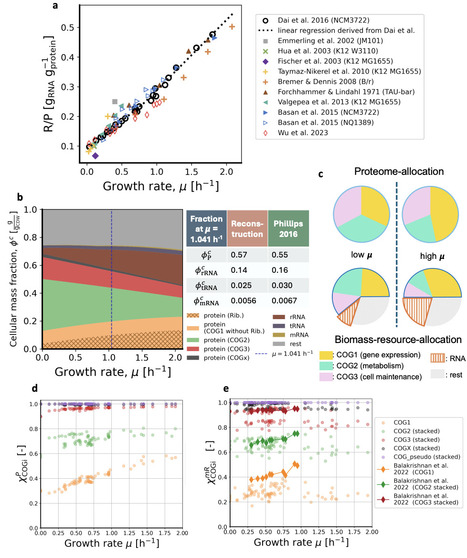
Translation frequency in bacteria depends on how ribosomes, mRNAs, and initiation factors are allocated across growth conditions. Here, we developed a mechanistic ODE-based model of E. coli translation that represents initiation, elongation, termination, and coupled auxiliary processes. Growth-dependent abundances were derived from physiological relationships and reprocessed omics data, and simulated outputs were compared with translation-frequency and active-ribosome references. The model predicts a continuous shift from complex-formation-limited toward ribosome-limited behavior as growth increases. This shift is characterized by a decline in free-ribosome abundance, whereas initiation-factor pools remain largely unbound and do not become depleted in parallel. Together with the implemented IF-dependent kinetic term, this preserved availability provides a model-internal route through which productive initiation can be maintained despite increasing ribosome utilization. Consistently, transcript-wide ribosome loading remains below its theoretical maximum, while COG-level simulations reveal distinct sector-specific translation-frequency trajectories. The study therefore provides a resource-allocation framework for interpreting how mRNA--ribosome interactions shape bacterial translation across growth conditions.
|
|
Scooped by
mhryu@live.com
September 3, 4:59 PM
|
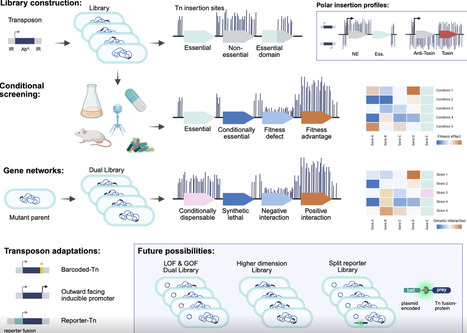
Transposon-insertion sequencing (Tn-seq) couples transposon mutagenesis with next-generation sequencing to identify the transposon insertion site for thousands of mutants in parallel. It is a powerful technology with a myriad of uses beyond the identification of essential genes required for a cell to grow and divide. Tn-seq is particularly useful as a high-throughput method to assign function to function-unknown genes, which have increased steadily with the abundance of newly sequenced bacterial genomes. Tn-seq has now been adapted for use in over 100 bacterial species. Here, we summarize the applications of Tn-seq for querying bacterial physiology and discuss some of the possible applications for the future.
|
|
Scooped by
mhryu@live.com
September 3, 4:07 PM
|
Natural transformation enables bacteria to internalize extracellular DNA, driving adaptation and the spread of antibiotic resistance. The membrane protein ComEC mediates translocation of single-stranded DNA (ssDNA) across the cytoplasmic membrane while degrading the complementary strand, yet the structural basis of its activity remains incompletely defined. Here, we report a cryo-electron microscopy structure of full-length ComEC from Neomoorella carbonis in a pre-translocation state, revealing a three-domain architecture and a conserved transmembrane channel captured in a closed conformation. Structural analysis indicates that conformational rearrangements of channel-lining helices would be required to accommodate ssDNA. Biochemical assays show that, relative to the isolated β-lactamase-like domain, full-length ComEC degrades DNA more efficiently and exhibits position-dependent cleavage of phosphodiester bonds within the DNA substrate. Importantly, coating of the DNA by the periplasmic DNA receptor ComEA suppresses endonucleolytic cleavage and enhances 5’ʹ terminal cleavage, thereby directing ComEC towards productive processing of transforming DNA during natural transformation.
|
|
Scooped by
mhryu@live.com
September 3, 1:02 PM
|
Live-cell monitoring of sequence-specific nucleic acids is essential to understanding genome organization, RNA regulation, and disease progression. CRISPR-cas and Argonaute (Ago) systems provide programmable, guide-directed recognition of DNA or RNA and are increasingly used as platforms for in vivo bioimaging. This review summarizes the structural and mechanistic features of representative CRISPR and Ago effectors and discusses design strategies for sensitive, specific, and multiplexed imaging of genomic loci, extrachromosomal DNA, and endogenous RNA in living cells. We compare the analytical performance and limitations of CRISPR- and Ago-based imaging, with particular emphasis on the major technical and biological challenges affecting their accuracy, applicability, and reliability. Finally, this review offers insights into developing high-resolution and user-friendly bioimaging platforms for fundamental biology and future translational applications.
|
|
Scooped by
mhryu@live.com
September 3, 12:39 PM
|
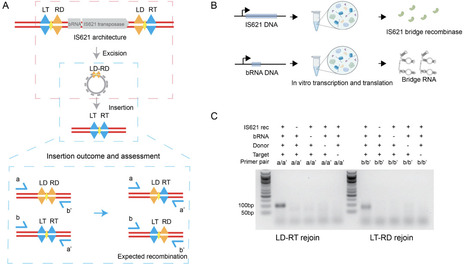
IS110-family bridge recombinases are a recently identified class of compact, RNA-guided editors in which a bridge RNA (bRNA) directs the recombination of a donor DNA into a target site. In the current model, the bRNA engages fully complementary donor and target sequences within a single synaptic complex to drive double-stranded recombination, implying that the transposon is cut from its donor site rather than copied, yet neither the strandedness of the excised intermediate nor the requirement for full complementarity has been tested directly. Here we reconstituted IS621 recombination in a cell-free transcription–translation system, building representative arrangements of the excision and insertion reactions and characterizing the outcomes. We find that IS621 predominantly excises a single strand, releasing a single-stranded circle and leaving the donor site intact, consistent with copy-and-paste transposition. By introducing mismatches into the bRNA target sequences, we further find that excision proceeds independently of target-site complementarity, relying strictly on donor-arm recognition; we term this "half-match" recombination, because a substrate matching only half of the bRNA is sufficient. We also find half-match activity during insertion, both in vitro and in a published genome-editing experiment, where it accounts for approximately half of non-target insertion reads. Half-match recombination provides both a mechanistic explanation for off-target insertion and a framework for the rational design of high-fidelity bridge recombinases.
|
|
Scooped by
mhryu@live.com
September 3, 11:35 AM
|
An RNA polymerase identified in the genome of Pseudomonas phage Njord offers a promising tool for the synthesis of mRNA and other therapeutic nucleic acids. Originating from a marine microbial ecosystem, Njord RNAP transcribes RNA at high yield even under low temperature conditions. Key properties of the enzyme relevant to mRNA synthesis are presented including transcriptional fidelity, promoter specificity, incorporation of modified nucleotides, and the impurity profile of the RNA. Specific attention is given to the formation of contaminating double-stranded RNA (dsRNA) species. Analysis of transcription reactions shows that DNA-templated promoter-independent transcription is a major source of detectable dsRNA impurities and that Njord RNAP displays a minimal level of this activity. Consistent with the known inflammatory role of dsRNA in synthetic mRNA, transcriptomic analysis of cell culture and a live animal study demonstrates that mRNA synthesized with Njord RNAP elicits only a minimal immune response. This natural enzyme enables efficient mRNA synthesis at ambient temperature and produces transcripts essentially free of dsRNA, offering significant potential to streamline mRNA manufacturing processes.
|
|
Scooped by
mhryu@live.com
September 3, 1:47 AM
|
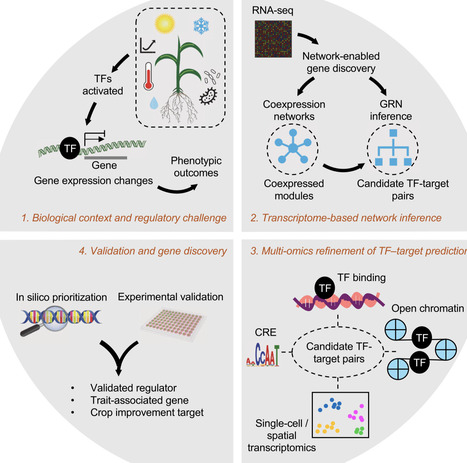
Identifying transcriptional regulators that control important biological pathways in plants is fundamental to understanding regulatory mechanisms, network hierarchy, and phenotypic variation. This remains challenging because transcription factors (TFs) and their targets operate within highly interconnected, dynamic, and often redundant regulatory networks. Over the past two decades, advances in omics technologies, sequencing data generation, and computational tools have shifted gene discovery from single-gene studies to network-level investigation. At the same time, these advances have created a new challenge: how to extract biologically meaningful regulatory relationships from increasingly complex and high-dimensional datasets. Recent progress in multi-omics integration and artificial intelligence (AI), including machine learning (ML), deep learning, and emerging foundation-model approaches, is beginning to address this challenge and is reshaping how transcriptional regulators, targets, and regulatory relationships are predicted in plants. In this review, we summarize advances in network-enabled gene discovery, discuss how multi-omics and AI are transforming transcriptional target prediction, and consider how these developments may lead to predictive models of plant gene regulation with applications in crop improvement and synthetic biology.
|
|
Scooped by
mhryu@live.com
September 3, 1:42 AM
|
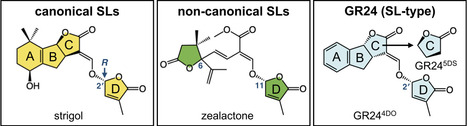
Strigolactones (SLs) are a class of plant hormones that regulate diverse developmental processes and environmental responses. SLs also play important roles as allelochemicals in interactions with arbuscular mycorrhizal fungi (AMF) and root parasitic plants in the rhizosphere. Since their discovery as plant hormones nearly 20 years ago, SL biosynthesis, transport, and signaling have been extensively studied, primarily by characterizing mutants with increased shoot branching and by utilizing reverse genetic approaches in various plant species. Emerging evidence has revealed a series of new components of SL biology, expanding our knowledge of how a single plant species produces various types of SLs with diverse chemical structures and how SLs are released from roots into the soil. However, the bioactive forms of SLs that function as plant hormones and the mechanisms underlying their root-to-shoot transport have not yet been clearly elucidated. In this review, we summarize the current understanding of SL biosynthesis and transport in Arabidopsis thaliana and Oryza sativa. In addition, we discuss the physiological functions of different SL species as plant hormones and rhizosphere signaling molecules, which largely remain unresolved.
|
|
|
Scooped by
mhryu@live.com
Today, 1:12 AM
|
Eukaryotes show extraordinary diversity in form, function, and behavior, underpinned by a vast range of life history strategies shaped by selection, ancestry, and ecological constraints. Life history theory explains how organisms allocate limited energy and time to survival, growth, and reproduction. Finite resources impose unavoidable trade-offs, preventing the evolution of any single universally optimal life history strategy. Instead, eukaryotes have evolved manifold approaches to solve the problem of persistence. This review explores life history variation across eukaryotes, tracing key developments in life history theory. We synthesize core concepts including trade-offs, environmental variability, and major evolutionary innovations, including multicellularity, sexual reproduction, and life-cycle compartmentalization. To conclude, we highlight critical knowledge gaps and propose future research directions, emphasizing the value of comparative and experimental approaches that more fully span eukaryotic diversity. Integrating micro- and macroevolutionary perspectives, our review provides a concise synthesis of the principles governing life history variation in eukaryotes.
|
|
Scooped by
mhryu@live.com
Today, 1:03 AM
|
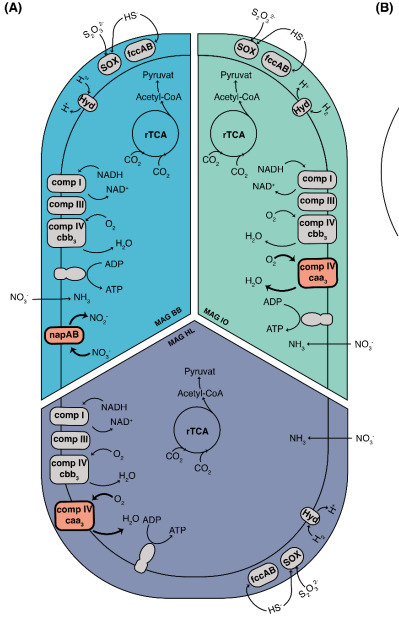
Autotrophic carbon fixation, the conversion of inorganic carbon into biomass, underpins life on Earth. Prokaryotes can carry out this process via at least seven biochemically distinct pathways, yet the phylogenetic and environmental distribution of most remains poorly resolved. Screening approximately 40 billion genes from reference genomes, metagenome-assembled genomes (MAGs) and unbinned metagenomic contigs, we provide a global assessment of the phylogeny and ecophysiology of prokaryotic autotrophs. Most pathway marker genes occurred in unbinned contigs and low-quality MAGs, representing phylogenetically distinct lineages absent from isolate genomes and quality filtered MAGs. Established autotrophs accounted for the large majority of pathway detections in quality filtered MAGs, largely recapitulating known biology from cultivated model organisms. Against this backdrop, the reductive TriCarboxylic Acid (rTCA) cycle, long considered restricted to anoxic environments, was detected in three phylogenetically distinct Campylobacterota lineages from oxygenated surface seawater, suggesting a previously unrecognized and unexpected niche for this pathway. We show that all three MAGs share an enzyme variant, previously described in other oxygen-tolerant lineages, that likely underlies their presence in the oxygenated surface ocean. Read mapping across global ocean metagenomes indicates that the organisms carrying it could be far more widespread than the scarcity of recovered MAGs alone would suggest. Together, these findings illustrate that the current view of global autotrophic carbon fixation is largely shaped by what genome-resolved methods can readily recover, while the true phylogenetic and ecological distribution of autotrophic carbon fixation appears to be much broader.
|
|
Scooped by
mhryu@live.com
Today, 12:46 AM
|
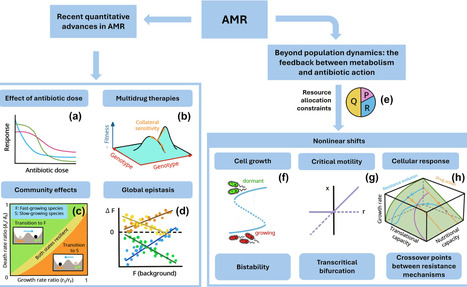
Antimicrobial resistance (AMR) is a critical global health challenge that is increasingly being addressed through quantitative and systems-level approaches. Beyond evolutionary genetics and mutational adaptation, bacterial survival under antibiotics also reflects physiological state transitions and metabolic constraints. We review mathematical models across scales, from population-level approaches to dose optimization, multidrug therapy, community effects, and global epistasis to cellular frameworks based on proteome partitioning and resource allocation. These coarse-grained models reveal how metabolic constraints shape antibiotic action, genetically encoded resistance, and non-genetic tolerance or persistence, particularly for ribosome inhibitors and increasingly for other bacteriostatic and bactericidal drugs. They also identify nonlinear behaviors, including bistability, threshold effects, and regime-dependent resistance strategies. Despite the substantial gap between laboratory models and clinical application, this multiscale framework clarifies the interplay among bacterial metabolism, population dynamics, and antibiotic action. We discuss the achievements and limitations of current approaches and the challenges that must be overcome for clinical translation.
|
|
Scooped by
mhryu@live.com
Today, 12:19 AM
|
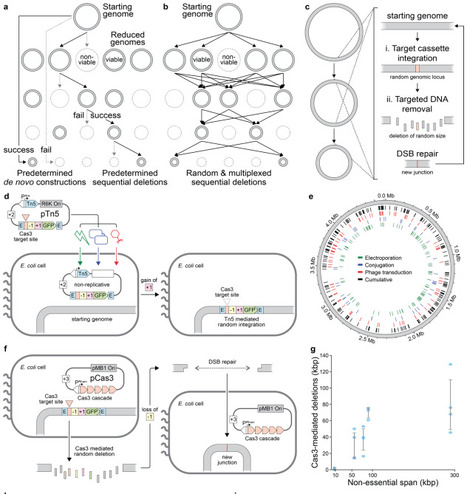
The genome is a complex, integrated system where the functions and regulatory interactions of its many components remain poorly understood. Genome minimization aims to reduce genomic complexity by removing non-essential elements to reveal the fundamental building blocks of cellular life. However, current minimization strategies are often slow and species-specific due to a reliance on prior information, and limited to producing single, isolated strains, which obscures the diverse ways a genome can adapt to large-scale DNA removal. Here we show the development and application of Stochastic Lineage-based Iterative Minimization (SLIM) a modular, high-throughput platform for unbiased genome reduction across phylogenetically diverse bacteria. We apply SLIM to generate a library of genome-reduced E. coli lineages. We then interrogate the lineages, identifying both universal and lineage-specific transcriptional and translational reprogramming in response to deletions. We demonstrate that these expression dynamics drive environment-dependent fitness, allowing us to pinpoint a single gene deletion in one genome-reduced lineage as the driver of a measurable environmental growth defect. Beyond E. coli, we successfully deploy SLIM in phylogenetically distinct bacterial taxa to rapidly reduce the genomes of Shigella flexneri and Pseudomonas putida, distinct genus and order respectively from E. coli, without species-specific optimization. Our results establish a scalable, generalizable framework for navigating the vast landscape of minimized genomes, providing a powerful new tool for functional discovery and the rational design of synthetic genomic chassis.
|
|
Scooped by
mhryu@live.com
September 3, 11:07 PM
|
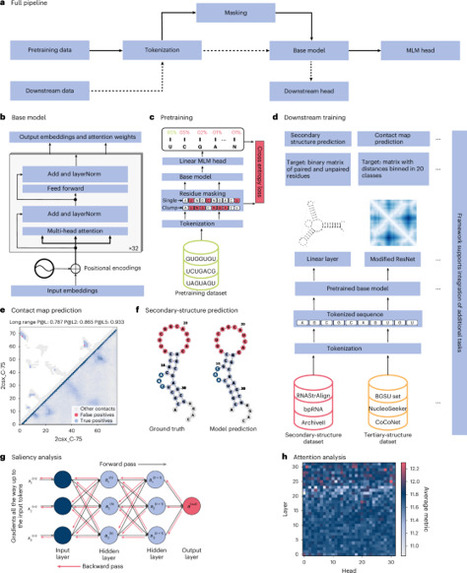
Much of the human genome’s non-protein-coding fraction acts directly through RNA, yet the structural and functional roles encoded in these sequences remain poorly understood. Applying deep learning is hindered by scarce RNA structural data and it remains unclear what biological constraints such models can recover directly from the abundant RNA sequences alone. Here, to address these challenges, we developed NucleicBERT, a self-supervised masked-language model that learns contextual representations from single sequences without evolutionary information. Explainable artificial intelligence analyses show that the model organizes RNA sequences in latent space and encodes structural properties indicating that biologically meaningful constraints are learned from sequence correlations alone. When fine-tuned for downstream structural and functional tasks, NucleicBERT requires only single sequences while matching or exceeding current RNA prediction models. This alignment-free framework addresses the scarcity of annotated 3D RNA data while providing a rapid, computational complement to experimental techniques. By bridging abundant unlabelled sequence data with scarce structural annotations, NucleicBERT advances RNA structure prediction and informs how large language models encode biological information. RNA structure and function are hard to infer because annotations are scarce, despite abundant sequence data. Upadhyay et al. trained a self-supervised model on large-scale RNA data that derives biologically meaningful patterns from sequence correlations.
|
|
Scooped by
mhryu@live.com
September 3, 5:02 PM
|
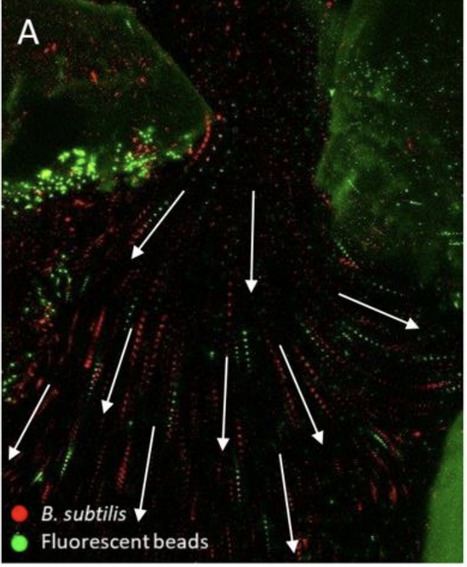
Nutrient availability in soil is temporally and spatially heterogeneous, and, as a result, microbial migration is critical for many species. The nature of microbial movement in soil, however, is unknown due to a lack of observations and experimental data. We developed live-imaging and image-analysis techniques to track the movement of single cells through soil to elucidate how Bacillus subtilis utilizes pore space during the early root colonization. The study reveals that the bacterium can modify fluid pathways to create streams, even at low bulk cell density. The phenomenon was influenced by pore structure, distance from the root and the viscosity of the soil solution. By generating macroscopic fluid motion, bacteria may also be able to travel faster and farther than individually, while limiting energy expenditure.
|
|
Scooped by
mhryu@live.com
September 3, 4:11 PM
|
GENKI (Generative ENsemble KPI-Informed) is a variational autoencoder-based framework for large-scale kinetic modeling of metabolism. Developed for metabolic engineering applications, GENKI is designed to improve the recovery of kinetically feasible models that reproduce experimentally observed phenotypes under genetic and environmental perturbations. The framework is trained on feasible kinetic model ensembles and uses phenotype-based key performance indicators (KPIs), derived from multi-omics and bioprocess data, to label and enrich models according to their agreement with mutant and condition-specific observations. This enables targeted generation of biologically relevant parameter sets with improved predictive performance. Crucially, GENKI recovers kinetic parameter sets that jointly reproduce wild-type and multiple perturbed physiologies within a single model. We apply GENKI to large-scale kinetic models of E. coli and Saccharomyces cerevisiae under enzyme perturbations and oxygen shifts. In both systems, GENKI enriches kinetic ensembles with models that more accurately reproduce experimentally observed physiologies across multiple perturbations and conditions. GENKI therefore provides a practical framework for perturbation-aware kinetic model refinement within iterative Design–Build–Test–Learn workflows.
|
|
Scooped by
mhryu@live.com
September 3, 1:13 PM
|
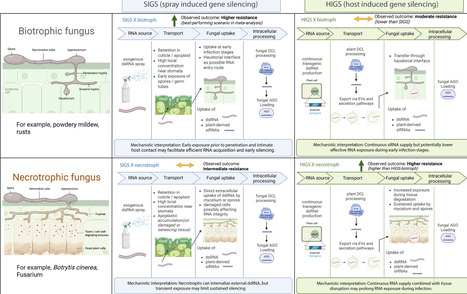
RNA interference (RNAi) shows great potential to protect crops against fungal diseases, yet reported protection efficiencies vary greatly, and our understanding of the factors responsible for this variance remains limited. In this meta-analysis, we evaluated 89 studies that compare the efficiency of host-induced gene silencing (HIGS) and spray-induced gene silencing (SIGS) in controlling fungal diseases, focusing on biotrophic, hemibiotrophic, and necrotrophic fungi, the use of formulations, and the dsRNA design as explanatory factors for differences between reported efficiency values. Our results indicate that SIGS is slightly more effective, particularly against biotrophs. Surprisingly, SIGS studies using formulations did not outperform those applying naked dsRNA. We also assessed parameters of RNA design. Differences in dsRNA length and the number of constructs and number of targets showed no consistent significant effect on resistance in either HIGS or SIGS. However, HIGS studies reported significantly higher efficiency when targeting genes closer to the 3′ end and SIGS when targeting genes closer to the 5′ end. We discuss potential reasons for the reported patterns, such as variability in dsRNA uptake mechanisms, intercellular trafficking, and Dicer processing, and conclude that more research is needed to understand the biological mechanisms determining RNAi efficiency for fungal control.
|
|
Scooped by
mhryu@live.com
September 3, 12:56 PM
|
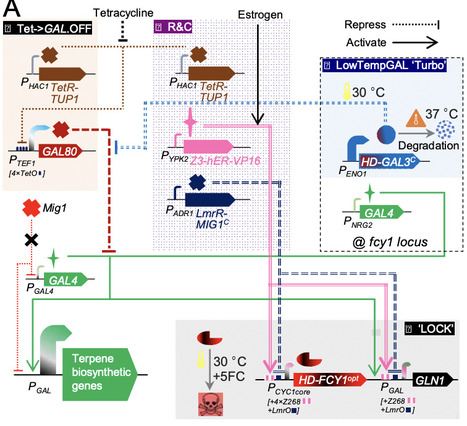
Synthetic genetic circuits enable microbial differentiation from growth to production, yet metabolic burden, imbalance and toxicity frequently drive strain degeneration. Yeast strains engineered to produce different terpene products exhibited divergent genetic responses to metabolic stresses, but commonly underwent progressive loss of induction of synthetic GAL regulatory circuits, either across the entire population or within subpopulations. Using di- and tri-input biocomputing circuits, the essential glutamine synthetase gene GLN1 was coupled to GAL induction, thereby enabling stabilization and evolutionary adaptation of the synthetic genetic circuits and stressful heterologous terpene synthetic pathways. The integrated biocomputing and metabolic coupling circuit systems not only prevent strain degeneration but also enable interrogation of non-degenerative evolutionary shifts, providing a platform for metabolic engineering optimisation.
|
|
Scooped by
mhryu@live.com
September 3, 12:21 PM
|
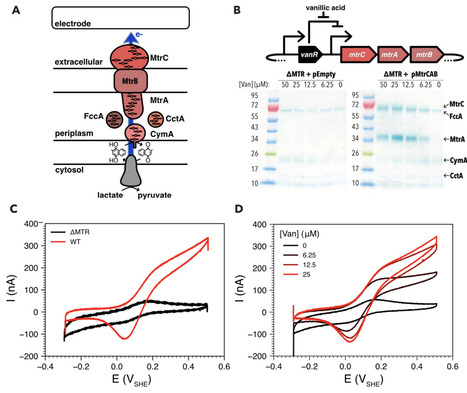
Electroactive bacteria, like Shewanella oneidensis, can couple the oxidation of organic electron donors to the reduction of external conductive surfaces, such as minerals and electrodes, by utilizing multiheme cytochromes to carry charge from within the cell to external surfaces. Additionally, multiheme cytochromes facilitate gateable, long-distance (micrometer-scale) redox conduction along the outer membrane and across multiple cells bridging electrodes. While electroactive microbes are being used to develop bioelectrochemical devices, there have been limited efforts to use synthetic biology to exert additional control over microbes serving as device components. Thus, this work implements an optogenetic biofilm patterning gene circuit and a small molecule sensor in S. oneidensis to simultaneously control cell deposition and cytochrome expression. This allows for photolithographic patterning of biofilms possessing tunable electrical properties controlled with small molecules. This system demonstrates tunable electrochemical activity, redox conduction, intrinsic biofilm conductivity, and negative differential transconductance as a function of cytochrome expression. Additionally, temperature-dependent measurements of this tunable biofilm conduction reveal changes in activation energy as a function of cytochrome expression. Through this combination of synthetic biology and electrochemistry, simultaneous control over biofilm geometry and conductivity sheds light on fundamental microbial electron transport processes, and it enables the construction of living electronic devices.
|
|
Scooped by
mhryu@live.com
September 3, 9:43 AM
|
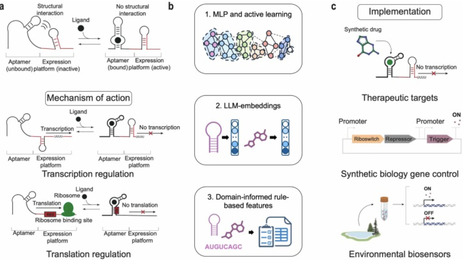
Riboswitches are RNA regulatory elements that sense small molecules and regulate gene expression through ligand-induced conformational changes in an aptamer domain. They enable synthetic biology applications such as biosensing and gene circuit design. Accurate prediction of riboswitch–ligand binding affinity, quantified by the dissociation constant (Kd), is essential for rational riboswitch engineering. We present a neuro-symbolic framework in which LLM-derived embeddings encode riboswitch sequences, secondary structures, and ligand representations into a unified representation that captures riboswitch–ligand interaction context, while domain-informed rules encode explicit biochemical priors. Despite limited labeled data, this framework achieves strong predictive performance and improved data efficiency. It predicts min–max log-scaled pKd values and supports binary classification of binding strength, particularly by mitigating systematic overestimation of affinity. More broadly, the results suggest that LLM-based neuro-symbolic representations provide an effective route for modeling riboswitch–ligand interactions under data-limited conditions.
|
|
Scooped by
mhryu@live.com
September 3, 1:45 AM
|
Plants are a vast reservoir of natural products with diverse structural scaffolds, making them an invaluable source for discovering novel enzymes that catalyze unique and evolutionarily specialized metabolic transformations in biosynthetic pathways. Rapid advances in genomics, metabolomics, protein structure prediction, and heterologous pathway reconstruction have enabled the identification of numerous cryptic biosynthetic enzymes responsible for key scaffold-forming and tailoring reactions in metabolism. Particularly notable are the discoveries of plant-derived enzymes that catalyze challenging chemical transformations, including oxidative carbon-carbon bond rearrangements, atypical cycloadditions, radical-mediated coupling reactions, and iterative scaffold remodeling. This review summarizes major advances in enzyme discovery in plant natural product biosynthesis in recent years, focusing on emerging catalytic mechanisms, strategies for elucidating pathways, and evolutionary relationships, and highlights their implications for synthetic biology, metabolic engineering, and the sustainable production of valuable natural products.
|