Your new post is loading...

|
Scooped by
Robin Landis
November 30, 2012 3:09 AM
|
This blog post comes from XPEREDON CHARITY NEWS. The response and appeal is due to a mounting food crisis as families and children flee the latest surge of violence in the region. ...WFP's Martin Ohlsen says: "Food assistance is crucial as the displaced people have absolutely no means to access food...Their situation is even harder as food prices are increasing dramatically on the local market...”
|
|
Scooped by
Robin Landis
November 27, 2012 1:32 AM
|
The Democratic Republic of Congo, which imports over US$240 million worth of food a year, has seen sharply rising staple food and fuel prices since the beginning of 2012, according to the UN Food and Agriculture Organization (FAO) and a local consumer rights body. "All the prices of imported frozen products have increased because of corruption in the supply chain [from entry at the port of Pointe-Noire to small retailers]...
..."There are too many unofficial taxes and too many checkpoints in the supply chain. Retailers and other importers are corrupt at all levels. In the end, they pass on any losses to poor consumers - hence the surge in commodity prices."
|
|
Scooped by
Robin Landis
November 21, 2012 11:00 AM
|
Michigan State University researchers will use a $7.8 million grant from the Bill & Melinda Gates Foundation to help eight African nations improve their sustainable farming methods. The grant, from the Gates Foundation Global Development Program, will be used to help guide policymaking efforts to intensify farming methods that meet agricultural needs while improving environmental quality in Kenya, Malawi, Mali, Nigeria, Burkina Faso, Zambia, Ethiopia and Tanzania.... During the next four years, the team will work with 10 African universities, institutes and government ministries to promote effective government strategies that help African farmers become more productive and food secure. The team also will build the capacity of national policy institutes to guide and support their own countries' agriculture ministries and eventually accept and manage international grants.
|
|
Scooped by
Robin Landis
November 23, 2012 4:45 AM
|
[UNDP] This new report – which is based on surveys conducted in more than 3,000 households in south central Somalia, Puntland and Somaliland - reveals that although the majority of Somali youth believe they have a right to be educated (82%) and a right to decent work (71%), they feel disempowered by multiple structural barriers built into the family, institutions, local government and society at–large. This lack of viable education and employment opportunities – in addition to clan and cultural prejudices – has created a high level of frustration and discontentment among young people. Therefore, radical shifts in policies and attitudes are needed in order to empower and place them at the core of the development agenda. The report examines key drivers of youth exclusion, working from a conflict-sensitive perspective, and investigates holistic options to engage youth in peacebuilding and development. It advocates that policy makers and other stakeholders move away from a traditional, state-centric conception of security to one that concentrates equally on the security of individuals, especially youth.
|
|
Scooped by
Robin Landis
November 21, 2012 10:54 AM
|
A new study by the World Bank Group warns that without increased efforts to reduce greenhouse gas emissions, the world could warm by as much as four degrees Celsius by 2100, a trend that would cause extreme weather events, severe droughts, and major floods.
|
|
Scooped by
Robin Landis
November 21, 2012 10:51 AM
|
|
|
Scooped by
Robin Landis
November 20, 2012 1:53 AM
|
As part of an effort to help area farmers – and their children – adapt to changing climate conditions 10 primary schools in dry parts of northern and eastern Kenya have formed Junior Farmers Clubs. Each member is allocated a small portion of land to grow crops and fruit trees. Through weekly lessons moderated by extension officers from ActionAid Kenya, farmers learn about improved crops that can flourish despite lack of rain, techniques of planting with limited soil moisture, and how to manage the crops in tough climatic conditions. “These are the same lessons we are taking to school going-children. … We encourage teachers to offer agricultural lessons based on experiments for children to learn good agricultural and life practices” [ActionAid].
|
|
Scooped by
Robin Landis
November 18, 2012 2:23 AM
|
A report, produced by UN Environement Programme (UNEP) in collaboration with the International Fund for Agricultural Development (IFAD), the Food and Agriculture Organization (FAO), the World Bank, the World Food Programme (WFP) and the World Resources Institute (WRI), took a holistic approach to analyzing the food system. Inefficiencies along the food delivery chain further complicate the challenge, and the report highlights that an estimated one-third of food produced for human consumption is lost or wasted, amounting to 1.3 billion tonnes per year. The debate on food security so far has largely revolved around availability, access, utilization and stability as the four pillars of food security, barely touching on the resource base and ecosystem services that prop up the whole food system. Twelve scientists and experts authored the report, covering many different areas of expertise including food consumption patterns, agricultural production, marine fisheries and inland fisheries. They found that while agriculture provides 90 per cent of the world's total caloric intake, and world fisheries provide the other 10 per cent, these life-supporting industries face many threats, all of which are exacerbated by underlying driving forces such as population growth, income growth and changing lifestyles/diets linked to urbanization. Download the report: http://www.unep.org/publications/ebooks/avoidingfamines/
|
|
Scooped by
Robin Landis
November 16, 2012 1:16 AM
|
Researchers from five countries of Uganda, Kenya, Tanzania, Ethiopia, and Rwanda have launched an initiative that will analyse regional trends in food prices. This is expected to bridge the information gap for policymakers and help them come up with solutions to boost food security in the participating countries. The gathered information will be posted on a portal accessible to the public on www.efpdp.org
|
|
Scooped by
Robin Landis
November 16, 2012 1:13 AM
|
“We are losing the battle against hunger in Africa and the Near East,” the Director-General of the Food and Agriculture Organization (FAO), Jose Graziano da Silva, told participants at the International Conference on Food Security in Drylands, which is being held in Doha, Qatar. Drylands, or ecosystems characterized by a lack of water, cover some 40 per cent of the world’s terrain, ranging from cultivated lands and grasslands to savannas and deserts. They are home to 38 per cent of the world’s population, or 2.7 billion people, and account for half of global livestock production. The two-day conference brings together members of governments, academia, civil society and the private sector from 60 countries to discuss food security, water and investment in dryland countries. The gathering seeks to come up with recommendations to boost agricultural production, enhance food security, and increase resilience to future prices shocks.
|
|
Scooped by
Robin Landis
November 15, 2012 3:14 AM
|
As Kenya heads into elections on 4 March 2013, The Daily Nation outlines the 12 key challenges facing the nation -- Food Security is Number 2.
|
|
Scooped by
Robin Landis
November 13, 2012 8:46 AM
|
Pictures from Kenya where the brunt of the food crisis is being borne by nomadic pastoralists, whose way of life - that has been largely intact for some 6,000 years - is now likely to disappear. Photos by Keith Morris.
|
|
Scooped by
Robin Landis
November 14, 2012 2:32 AM
|
This report presents the findings of an effectiveness review carried out on Oxfam's response to the 2010/11 drought-related food crisis in Ethiopia that was undertake through the application of Oxfam's Humanitarian Indicator Tool. Overall the drought response partially met seven of the 12 standards. The report describes how all projects struggled to articulate Oxfam’s internal and external standards and to integrate practices that would benefit the affected communities beyond the immediate relief period. However, specific contextual challenges are identified and the report highlights the speed at which the programme responded to the needs of Somali refugees.
|
|
|
Scooped by
Robin Landis
November 23, 2012 7:03 AM
|
"What surprised me on this trip, however, were the enormous logistical challenges faced by humanitarians who were trying to help and protect both the refugees and the communities that host them." "...The UN refugee agency (UNHCR), World Food Program, and others did attempt to stockpile foods and other supplies last winter and spring, but larger-than-expected numbers of refugees arriving right before the start of the rainy season meant that even more was needed. And, while it is possible to fly in relief supplies, this is an extremely expensive way to deliver aid. More food and other necessities can be provided to the refugees when cheaper methods of transport are available..." Air drops do make a stirring sight at Yida. The large World Food Program cargo plane flies overhead and then circles back several times. At each pass, the rear hatch of the plane opens and white packages rain down from it. When the packages hit the ground, puffs of red-yellow dirt fly up in the air, temporarily creating a cloud hovering right above the airfield. Upon closer inspection, the white packages turn out to be sacks of grains and pulses, like lentils. They have been packed in four or five bags because they find that even if some bags split upon impact, others will hold. For those few bags that do have burst seams, teams of women with small brushes (really twigs) and dustpans follow behind to collect up what has spilled and take it to be cleaned." Author: Anne C. Richard, US Assistant Secretary of State for Population, Refugees, and Migration
|
|
Scooped by
Robin Landis
November 20, 2012 9:27 AM
|
As the target date for the Millennium Development Goals (MDGs) approaches, a number of processes have been put in place to seek inputs from country, regional and global levels, into the “Post-2015 Development Agenda and Framework”. This consultation is facilitated by FAO and WFP and is part of a broader process put in place to help shape the post-2015 Development Agenda, including other thematic consultations held both within and outside the UN system (see: http://www.worldwewant2015.org). The consultation is seeking inputs on: Key lessons learned during the current Millennium Development Goal; How to move forward and build on existing initiatives and institutions; and what targets we should aim for. Shifting demographics, urbanization trends and changing dietary patterns have been identified among the main challenges the post 2015 development agenda should respond to (see the UN Report, Realizing the Future We Want for All). Your inputs would be particularly welcome and help in making sure the urban agenda gets the attention it deserves. E-Consultation– the next 4 weeks
Over the next four weeks, this e-consultation will draw on the widest possible group of stakeholders and interested parties on how best to address hunger, food insecurity and malnutrition at all levels, and to seek your inputs on the elaboration of a new agenda for action beyond the current MDG framework. You are invited to submit papers, findings, or on-going work on the topic of hunger, food and nutrition security. FAO and WFP are co-chairing the thematic consultation on Hunger, Food and Nutrition Security, together with the other Rome-based agencies, IFAD and Bioversity International, and with support of Special Representative of the SG for Food Security and Nutrition. Contributing partners include UNDP, UNICEF, UNFPA, UNIDO, and UNDESA. HOW TO PARTICIPATE: You can see the three themes, guiding questions and leave a comment at:
http://www.fao.org/fsnforum/post2015/ Or, send your comment to: fsn-moderator@fao.org Comments in Arabic, Chinese, English, French, Russian and Spanish are welcome.
|
|
Scooped by
Robin Landis
November 23, 2012 5:29 AM
|
[IFRC] One year after the Kenyans for Kenya Drought Initiative began, one of the areas, Walda Location in Sololo District, Moyale is already reaping the fruits of the work. The integrated food security and livelihood project aimed to improve the food security situation of an estimated 2,100 people through irrigation projects, greenhouse farming and training of farmers. The project also identified 60 acres of land for farming, and seedbeds were established. One year later, the residents of Walda are recording bumper harvests of tomatoes, buttercups, kale and spinach.
|
|
Scooped by
Robin Landis
November 23, 2012 2:18 AM
|
Kenya Public Health Minister Beth Mugo announced a ban on all GMO foods to be implemented “with immediate effect”. Mrs Mugo was reacting to recent concerns by French researchers that GMO maize had caused cancers and damaged other body organs in rats. Thousands of Kenyans relying on relief supplies would be the hardest hit by the ban on the importation of genetically modified foods. “We have not yet assessed how this will affect the supplies at hand, let alone those in the pipeline,” Mrs Rose Ogola, a communication officer with the World Food Programme, told the Nation on Thursday.
|
|
Scooped by
Robin Landis
November 23, 2012 4:23 AM
|
"The 2012 Human Development Report for Africa explores why dehumanizing hunger remains pervasive in the region, despite abundant agricultural resources, a favorable growing climate, and rapid economic growth rates. It also emphasizes that food security – the ability to consistently acquire enough calories and nutrients for a healthy and productive life - is essential for human development." "To boost food security, it argues for action in four interrelated areas: agricultural productivity, nutrition, access to food, and empowerment of the rural poor. It asserts that increasing agricultural productivity in sustainable ways can bolster food production and economic opportunities, thereby improving food availability and increasing purchasing power. Effective nutrition policies can create conditions for the proper use and absorption of calories and nutrients. Finally, empowering the rural poor - especially women - and harnessing the power of information, innovation, and markets can promote equitable allocation of food and resources within families and across communities."
|
|
Scooped by
Robin Landis
November 20, 2012 2:28 AM
|
A two day International Conference on Food Security in Dry Lands (FSDL) that included a Ministerial Dialogue with the participation of 13 Ministers. Two sessions were held to focus on the Energy-Water-Food Nexus and Financing Dry Land Agriculture and Food Production. An urgent need exists to promote sound policies for agricultural and rural development...a call for governments to allocate 10 percent of national budgetary resources for the implementation of a declaration that came out of this conference.
The Declaration calls for increased allocations of national expenditure through agriculture and food production. The Support of Qatar's initiative at national, regional and international levels to establish a Global Dry Land Alliance (GDLA) was also acknowledged and the need to establish a permanent secretariat for the FSDL under the Qatar National Food Security Programme, to support and enhance food security in dry lands, in partnership with governments, multilateral organizations, business, research and academic institutions was also brought to the table.
Participants also cited a need to "Establish, with the support of FAO, the World Bank, UNESCO and others, an information system in the field of agricultural production for food security and the trading of commodities between markets and countries in dry lands and Establish and enhance Early Warning Systems at national and regional levels to minimize the negative impacts of droughts, floods, desertification, and pests."
|
|
Scooped by
Robin Landis
November 18, 2012 1:26 PM
|
This document reviews food security in the Horn of Africa, including a brief overview of the 2011 crisis, current issues and forecasts for the future.
|
|
Scooped by
Robin Landis
November 18, 2012 2:10 AM
|
Problems around diseases and food insecurity for vulnerable rural communities in the developing world go hand in hand. So, too, do the impacts of government policies and strategies of non-state actors focusing on health care and food. In a meeting with regional experts on vector-borne diseases, the group explored what these scenarios could mean for the future of three diseases - Malaria, Rift Valley Fever and Schistosomiasis - and the capacity of the region to prevent and treat them. Participants developed an inventory of interventions to tackle these diseases – such as the analysis of rainfall information through mobile networks as an early warning system for Malaria, disease risks in livestock insurance programs, the introduction of non-susceptible animals and the pairing of water-related disease mitigation policies with irrigation schemes.
|
|
Scooped by
Robin Landis
November 18, 2012 2:05 AM
|
A new study, “Climate Variability and Conflict Risk in East Africa, 1990-2009,” published last month found that while there is “no statistically significant relationship” between precipitation and conflict, increased heat is correlated with more conflict in East Africa. Still, they also found that other factors, like population size and the space-time lag for violence, predict conflict more reliably than either of the climate-related elements. Though the relationship between the direct effects of climate change (more extreme weather, higher temperatures, etc.) and conflict is still cloudy, the impact of secondary effects (like decreased agricultural productivity) is slightly clearer. Climate change is already linked to lower yields in the tropics, where many of the world’s poorest countries are located, and fluctuations in food prices have been linked to political instability in the past. In addition, a new United Nations Environment Programme report, "Avoiding Future Famines: Strengthening the Ecological Foundation of Food Security through Sustainable Food Systems" [UNEP, IFAD, World Bank, WFP] looks at the possibilities of changing food production and consumption to improve food security for the nearly one billion “left behind” by the Green Revolution last century.
|
|
Scooped by
Robin Landis
November 15, 2012 9:14 AM
|
This paper considers the political contexts in Ethiopia, Kenya and Somalia, how these affected the response to the 2011 Horn of Africa emergency, and the implications for future response. Chatham House: Programme Paper by Jason Mosley, November 2012
|
|
Scooped by
Robin Landis
November 14, 2012 2:47 AM
|
Armed conflict has devastated large swathes of the Democratic Republic of Congo since 1997. Civilians in many parts of the eastern provinces still face constant threats of forced displacement, sexual violence, abduction, and extortion, not only from militia groups but in many cases from those who are mandated to protect them. Oxfam's protection programme in the DRC aims to strengthen the ability of communities to advocate for their rights, including the right to protection from violence and exploitation. Evaluation of the programme's impact shows that in a situation where so many people's rights are abused and violated, empowering women often means including and empowering men in the humanitarian response too.
|
|
Scooped by
Robin Landis
November 14, 2012 2:45 AM
|
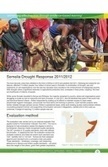
This report presents the findings of an effectiveness review carried out on Oxfam's response to the 2010/11 drought-related food crisis in Somalia, undertaken through the application of Oxfam's Humanitarian Indicator Tool. For a slow onset crisis, where there was an established early-warning system, Oxfam was slow to react. Having scaled-up its internal capacity, the programme was notable for taking on the challenge needed to expand and ensure that a significant proportion was focused in the worst affected areas and, ultimately, providing assistance to over 900,000 people. The report provides examples of innovative measures taken to ensure standards of accountability were met despite the contextual challenges and the need to manage the programme remotely.
|