Your new post is loading...

|
Scooped by
Robin Landis
January 3, 2013 2:02 AM
|
Pastoralism and Development in Africa: Dynamic Change at the Margins, edited by Andy Catley, of the Feinstein International Center, at Tufts University; Jeremy Lind, of the Institute of Development Studies at the University of Sussex and Future Agricultures Consortium; and Ian Scoones, of the Institute of Development Studies, the STEPS Centre and the Future Agricultures Consortium. Published in 2012, it includes a chapter by scientists at the International Livestock Research Institute (ILRI): Climate change in sub-Saharan Africa: What consequences for pastoralism?
Thirty-six experts in pastoral development provide updates on pastoral development in the Greater Horn of Africa, highlighting innovation and entrepreneurialism, cooperation and networking and diverse approaches rarely in line with standard development prescriptions. The book highlights diverse pathways of development, going beyond the standard ‘aid’ and ‘disaster’ narratives. The editors argue that ‘by making the margins the centre of our thinking, a different view of future pathways emerges’. Contributions to the book were originally presented at an international conference on The Future of Pastoralism in Africa, held at ILRI’s campus in Addis Ababa, Ethiopia, in Mar 2011.
|
|
Scooped by
Robin Landis
January 4, 2013 12:31 AM
|
Blog post by Alex Thurston. ..."Turning to the Greater Horn...four areas I’ll be watching are: (1) the efforts of the new government in southern Somalia to consolidate military and political control, with help from African and other partners; (2) the status of negotiations over border demarcation, security, oil, and other issues between Sudan and South Sudan (as well as the trajectory of rebel and protest movements within each country); (3) the shape of the ongoing political transition in Ethiopia in the wake of Prime Minister Meles Zenawi’s death last year, and the shape of relations between the state and the Ethiopian Muslim community, which has been protesting alleged government interference in Muslim affairs since late 2011; and (4) the Kenyan elections of March 4. If one broad theme connects these cases, it is the interactions between transitions taking place in the realm of formal politics (elections, successions, agreements) and forms of dissent and contestation (rebellions, protests, ethnic violence) occurring alongside these transitions.
|
|
Scooped by
Robin Landis
January 4, 2013 5:42 AM
|
Through the North Karamoja Development Project and other complementary initiatives, Oxfam directly supported 10 women’s groups in Kotido and Kaabong districts of Uganda’s Karamoja sub-region from 2007 to 2011. These full and summary reports document the findings of a quasi-experimental impact evaluation carried out in August 2011 used to assess the effectiveness of this support.
|
|
Scooped by
Robin Landis
January 3, 2013 1:43 AM
|
Helping farmers adapt to climate change is the goal of a new Oxfam project, funded by the Scottish Government. Parts of Shinyanga are now "food insecure" for the first time, which means people are going hungry. It is a worrying new reality created not by the actions of the area's rice farmers, but in part by the polluting industries and lifestyles of developed countries thousands of miles away – including Scotland. Tanzania has the potential to be a key food producer in East Africa, which is still recovering from the food crisis of 2011 that hit 13 million people, sparked in part by poor rainfall, The Scottish Government-funded project in Tanzania is helping to build resilience – before new disaster strikes.
|
|
Scooped by
Robin Landis
December 27, 2012 9:55 PM
|
As part of its Growth and Transformation Plan, the Government of Ethiopia has renewed strategies to maximize land and resource productivity and demonstrated commitment to natural resource management.
The U.S government developed a new five year Pastoralist Resilience Improvement and Market Expansion (PRIME) programme to promote adaptation to climate change, food security and livestock market development in pastoralist areas of Ethiopia. PRIME will support improved Natural Resource Management (NRM) in the pastoral areas at a landscape level. The programme proposes a multistakeholder engagement approach to NRM.
The programme valued at 52 million USD was recently launched in the presence of State Minister of Agriculture, federal and regional government officials, private sector representative, local and international implementing partners.
|
|
Scooped by
Robin Landis
December 26, 2012 12:34 AM
|
Africa's first commercial bank founded, run and owned by women started a soft launch in November.
Women have bought around 70% of the more than 7,000 shares sold since 2009 in Ethiopia's Enat Bank – which means 'mother' in Amharic.
Enat will provide services like any other bank, but also capacity-building services to women who struggle to access finance, especially when they have difficulty borrowing against collateral.
Its initial plans are to offer traditional banking services through three branches based in Addis Ababa before launching a range of services targeted at women in 2013.
|
|
Scooped by
Robin Landis
December 26, 2012 12:24 AM
|
Rwanda has enormous potential in water resources that needs to be exploited in order to improve nutrition, income levels and the welfare of Rwandans.” According to the Ministry of Agriculture, the governments of Rwanda and Vietnam have strong bilateral ties that made it possible for the four staff members of the ministry to go for further studies. Rwanda has a huge opportunity to learn from Vietnam’s growth of the fish industry, since the two countries have similar landscapes...Vietnam uses inexpensive technology that farmers in Rwanda can easily adopt.
|
|
Scooped by
Robin Landis
December 21, 2012 6:05 AM
|
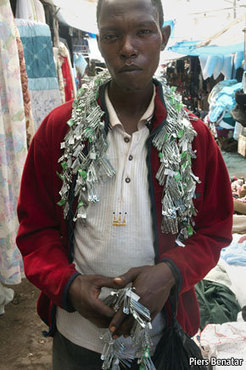
Boomtown slum: A day in the economic life of Africa’s biggest shanty-town Kibera may be the most entrepreneurial place on the planet. Residents have no choice but to look after themselves. If they want to escape poverty—and have the necessary drive—they will try to strike out on their own. ...During the day, Kibera is a rough place but a safe one. Guns are rare. No tolls are charged, no protection fees paid. Most of its markets are free of cartels. The slum is so vast and diverse that no ethnic group dominates it. But what is a virtue during the day turns into a danger at night. With nobody ruling the roost, muggers and thieves have a free rein...
|
|
Scooped by
Robin Landis
December 18, 2012 9:20 AM
|
Since Africa's first mobile phone network went live in 1994, mobile phone penetration has shot up to 65 percent; access to the internet is also increasing rapidly.
ICT in the humanitarian and development sector is said to be entering a new era of maturity, with people and agencies sharing resources, embracing transparency, and improving effectiveness.
The article looks at the use of crowd-sourcing, Twitter, satellite imagery, internet and radio as tools for emergency management and development
|
|
Scooped by
Robin Landis
December 16, 2012 3:59 PM
|
Resilience is about using existing development dollars more effectively in disaster prone regions, so that less humanitarian assistance is needed in the future.
Almost half US funding consistently goes to countries classified as “long term recipients” of U.S. humanitarian aid, with 75% of USAID’s humanitarian aid going to 10 countries over the last decade. Making it easy to predict “where and who” is likely to be affected: Sub-Saharan Africa. Tragically, this region has experienced more than “1,000 disasters” over the past four decades. These fairly cyclical humanitarian crises disproportionately impact areas defined by chronic poverty and conflict. Such despair can strip humans of their dignity and create conditions that extremists exploit – something that rings all too true in the Horn of Africa.
...This new policy is about getting at the root causes of the circumstances that can lead to the need for humanitarian interventions and then, deploying new technologies and forging new partnerships to break this cycle.
|
|
Scooped by
Robin Landis
December 16, 2012 3:50 PM
|
The Tanzania government has formed a Social, Behavioural Change Communication Consultative Committee (SBCC) to advise on how the country can scale up nutrition.amid reports that under-nutrition contributes to about 130 children deaths a day in the country.
The SBCC National Consultative Committee foresees interventions and the development of a national SBCC Strategy Implementation Plan and budget.
|
|
Scooped by
Robin Landis
December 10, 2012 7:52 AM
|
Tackling the limits to adaptation: An international framework to address 'loss and damage' from climate change impacts ActionAid International (ActionAid); Cooperative for Assistance and Relief Everywhere - International Secretariat (CARE); World Wide Fund For Nature (WWF), 2012 This document argues that current and future scale of climate change implies serious loss and damage, especially to the lives and livelihoods of those who are poor, most vulnerable and least to blame. It presents a comprehensive framework to address the issue, also discusses institutional support for the prevention of loss and damage, institutional leadership and global co-ordination, international mechanism on compensation and rehabilitation, general obligations under international law, legal obligations under the UNFCCC, and moral context of climate change impact.
|
|
Scooped by
Robin Landis
December 10, 2012 2:42 AM
|
"Resilience is simple as a concept but it's such a challenge to the system...It is very difficult to implement." [Luca Alinovi, FAO Somalia] The $1.3 billion appeal will be for 369 humanitarian projects. FAO, WFP and Unicef will lead the programme, which will involve 177 national and international NGOs and other UN agencies operating in Somalia. The three-year programme marks an attempt to blend humanitarian and development efforts, breaking with the "linear" thinking on emergencies. Current logic is based on sequencing with humanitarian agencies moving in first to deal with an emergency before development workers take over. In Somalia, however, that approach does not fit the reality where the crisis is so deep it does not allow people to bounce back. One reason the appeal is for more than three years, rather than just one, is to provide support over time that will – it is hoped – enable Somalis to become self-sufficient. "It is a single strategy, a single concept with all three agencies working on resilience, and there is zero cost on co-ordination with all our teams realigning themselves." [Alinovi, FAO]
|
|
|
Scooped by
Robin Landis
January 3, 2013 6:42 AM
|
The debates on how aid investment can be reoriented towards supporting resilience are usually framed in terms of risk, and of people’s ability to cope with shocks. ‘Resilience’ is sometimes promoted because of its positive perspective about what people can do for themselves...The paper suggests ways in which people’s ability to invest in their futures can be analysed, and how this could form the basis for more useful ways of monitoring any interventions. Authors: Adam Pain and Simon Levine Overseas Development Institute (ODI) Humanitarian Policy Group November 2012
|
|
Scooped by
Robin Landis
January 3, 2013 7:16 AM
|
A list of 10 facts that help explain why hunger is the single biggest solvable problem facing the world today.
|
|
Scooped by
Robin Landis
January 3, 2013 1:47 AM
|
Médecins Sans Frontières (MSF) is deeply concerned about the medical consequences following recent public statements from Kenyan authorities exhorting thousands of Somali refugees in Kenya to leave urban areas and go to remote and already saturated camps. Any potential influx of new arrivals will put further pressure on the existing precarious situation. “Since the beginning of December and the heavy rains which have caused floods, the shelter and sanitation situation that was already precarious in the camps, has become even more deplorable...This has had dramatic consequences on the population’s health.”
|
|
Scooped by
Robin Landis
December 27, 2012 10:09 PM
|
A recent survey showed that the overwhelmingly negative portrayal of Africa to the British public is undermining popular support for efforts to bring an end to hunger on the continent. When asked to select what they thought were the three most pressing problems facing Africa in 2013, almost half (47%) of more than 2,000 people surveyed by YouGov identified hunger. Nearly 3 in 4 (74%) of respondents thought it was ultimately possible to bring an end to hunger across the continent, but only 1 in 5 believed they could play an active role in solving the problem in Africa and elsewhere. The survey suggests over-exposure to negative media and advertising portrayals of Africa and developing countries in other parts of the world may be contributing to this sense of disempowerment. Respondents described this portrayal as ‘depressing, manipulative and hopeless’, with 43% of respondents saying it made them feel that conditions for people living in the developing world would never improve. Three out of five of those polled said they were or had become desensitised to images depicting issues such as hunger, drought and disease and almost 1 in 4 (23%) admitted they turned away when confronted by such images. In response, Oxfam’s Food for All campaign aims to re-energise British public support for the fight to end hunger in Africa and around the world. Alongside its survey, Oxfam has published a briefing note on development progress in sub-Saharan Africa. Africa Is Wide Awake But Still Hungry underlines that countries in sub-Saharan Africa have enjoyed annual economic growth averaging 4.6% since the turn of the century. This has led to reductions in poverty levels and the rate of mortality amongst children under 5, which has dropped from 17.4% to 12.1% in the years since 1990, with the pace of decline continuing to accelerate.
|
|
Scooped by
Robin Landis
December 26, 2012 12:38 AM
|
The biggest international development buzzword of the year had to have been RESILIENCE. Devex polled their Facebook followers and these are the top 10 development words of the year:
10. Convergence 9. Social enterprise 8. Smallholder 7. Capacity building 6. Public-private partnership 5. Inclusive growth 4. Post-2015 3. Supply chains 2. Sustainability 1. Resilience
|
|
Scooped by
Robin Landis
December 26, 2012 12:27 AM
|
New research lead by a James Cook University researcher shows people with a strong connection to their community have better success in recovering from extreme weather events.
In addition, residents who remained living in a community after a disaster were those who were more likely to be resilient to the disaster’s impacts.
“Successful recovery from disaster was influenced by financial capacity, family and neighbour support and how much people knew about climate change and how well they trusted public communication sources.”
|
|
Scooped by
Robin Landis
December 21, 2012 6:22 AM
|
The success of one nation depends on the success of its neighbors. It happened in Asia, now we are seeing this in the Eastern African region. The Eastern African region is a region with robust growth leading to a 'New Normal' for Africa. Integration has provided stability. The region and the countries within it have a vision and are working towards it. Rwanda and Kenya for instance have set targets for 2020 and 2030 that have already led to much progress. Better regional transportation and logistics will consolidate the supply chain and empower farmers; allow their produce to reach the global markets; enable inputs to reach factories in the region at lower cost and more efficiently. The importance of good logistics can be illustrated through the example of the Kenyan company Export Trading Group (ETG). The company is backed by US Carlyle group and South African PE investors. It operates across the region, procures and distributes nearly 1.4 million metric tons of 25 different commodities including maize, pulses, wheat, rice, cashew nuts, soya, fertilizer, sugar, coffee and tea. Most of the produce is procured from smallholder farmers. Individually, these farmers have limited opportunity to even access neighboring economies. ETG capitalizes on its regional footprint and access to international markets, to consolidate hundreds of thousands of farmers into a supply chain. Each improvement in the regional landscape of transport and logistics could only improve the endgame for these farm holders... ...Regional integration is a pivotal for building more Pan-African champions, especially in the thriving and youthful East African corridor... Blog by Manisha Dookhony and Ibrahim Sagna
|
|
Scooped by
Robin Landis
December 21, 2012 6:00 AM
|
In the midst of this year's refugee crisis in South Sudan, a survey by an MSF team found that over-50s were more than four times more likely to die than the five-to-50 age group, and were twice as likely to die as under-fives. Even allowing for the obvious fact that people die naturally when they get older, these are unacceptably high figures and should not be ignored. Institutional donors do not treat humanitarian assistance for older people as a priority. Although, in 2010, 12.5% of the world's population was aged over 60, only 0.3% of humanitarian projects funded through the UN Consolidated Appeals Process included any activity specifically targeting the needs of older people. In 21 countries around the world there have been no projects aimed at older people in the past two years. Blog by Dr Unni Karunakara
|
|
Scooped by
Robin Landis
December 18, 2012 9:01 AM
|
A new report on the EU's Food Facility, set up in 2008 to counter the negative effects of the food crisis, show that in three years, the EU has improved the lives of over 59 million people in 49 countries, and provided indirect support for 93 million others (by for instance enabling people to benefit from increased opportunities for trade in the area, and to learn improved skills from neighbouring farmers).
The evaluation report shows that the €1 billion facility has led to the vaccination of over 44.6 million livestock, and helped to train 1.5 million people in agricultural production.
The Food Facility, which finished at the end of 2011, was designed to bridge the gap between emergency humanitarian aid and longer term development.
|
|
Scooped by
Robin Landis
December 16, 2012 3:54 PM
|
KEY MESSAGES:
The October to December rains are expected to cease normally later this month and may have already stopped in the northern receiving areas. The overall October to December rainfall performance has been mixed with some localized areas having significant cumulative rainfall deficits, including parts of the southeastern lowlands, the Northeast, and the southern coastal marginal acticultural areas of Kenya, the Afder Zone of Somali Region in Ethiopia, neighbouring Dolo and Luuq Districts of southern Somalia, and the northern coastal areas of Tanzania.
October to December rains over surplus-producing cropping areas in Uganda, South Sudan, Rwanda, Tanzania, western Kenya, and western Ethiopia have been well above normal contributing to expected increases in agricultural production during October to February harvests.
Long-term forecasts from European Center for Medium-Range Weather Forecasts (ECMWF), the U.S. National Oceanic and Atmospheric Administration (NOAA), and the International Research Institute for Climate and Society of Columbia University (IRI) suggest that there is an increased likelihood for normal to below normal rainfall forecast for the March to May 2013 rainy season in the eastern Horn.
|
|
Scooped by
Robin Landis
December 15, 2012 9:25 AM
|
Source: African Development Bank Country
An estimated 150,000 people from pastoral communities, including students and teachers from six schools based in Kenya's Baringo, Kiambu West and Laikipia districts, are to benefit from a €690,000...
The grant will support a Kenya Rainwater Association (KRA) pilot program designed to help communities build resilience to droughts and adapt to climate change through Integrated Rainwater Harvesting Management (IRHM), with potential for greater reach in the Horn of Africa.
The Kenya project is one of six case studies conducted in Ethiopia, Kenya, Tanzania and Uganda designed to evaluate the performance of rainwater harvesting systems in the region with the aim of promoting “best practices” in water management for improving water supply and food security.
|
|
Scooped by
Robin Landis
December 10, 2012 3:26 AM
|
This article is about the Sahel, but it has relevance for other regions. "There is a clear linkage between hunger and conflict; food security and peace in Africa...Investing in food security in the Sahel is also an investment in a peaceful and more stable future” [Graziano da Silva, Director General, FAO]. The western part of the Sahel region, which stretches from the Atlantic Ocean to the Red Sea, and includes Chad, Mali, Mauritania, Niger, and parts of Sudan, Cameroon and Nigeria, is currently facing a swathe of problems, which are not only political but also involve security, humanitarian resilience and human rights. In addition to political instability in Mali, the region suffers from extreme poverty, with human development levels among the lowest in the world, porous borders that present significant security challenges, as well as human rights problems. Added to that is the humanitarian crisis affecting the region this year, in which over 18 million people are estimated to be at risk of food insecurity and over one million children risk severe acute malnutrition. “It is essential to step up support and also combine short-term humanitarian responses with longer-term development actions...We need to make livelihoods more resilient. And we need to ensure that our interventions in different areas – food security and nutrition, agriculture, health, education and security – are as integrated as possible.”
|