Mbabazi, who represented President Museveni, made a commitment on behalf of the Uganda Government to implement the Uganda Nutrition Action Plan with a target to reduce stunting in children under five years to 27%, to reduce underweight in children under five years to less than 10% and to increase exclusive breast feeding in children up to six months of age to 75% by 2016.
Uganda will ensure a functional multi-sectoral coordination mechanism to promote nutrition right from the central to local government level and will also put in place an integrated nutrition surveillance system that takes stock of nutrition status at community, district and national level...
...The Office of the Prime Minister will coordinate the implementation of the Uganda Nutrition Action Plan and strengthen the policy and legal framework for nutrition.
Published this week in the journal PLOS ONE and developed by humanitarian nutrition think tank, Sight and Life, these 'Hidden Hunger Index' maps and rankings offer the health and development community an evidence-based tool to target the alleviation of multiple micronutrient deficiencies, which is critical to achieving many of the Millennium Development Goals.
Hidden hunger accounts for approximately seven percent of the global disease burden. Iron deficiency anemia, zinc and vitamin A deficiencies rank among the 15 leading causes of disease burden, costing 180 billion USD annually. The Hidden Hunger Index maps, for the first time, show the combined prevalence in preschool children of multiple micronutrient deficiencies: vitamin A, zinc and iron, as well as iodine.
The full paper with maps and indices can be viewed at
INTERVIEW WITH DAVID NBARRO Scaling Up Nutrition (SUN)
...It's all the sectors concerned with gender and women's issues, sectors concerned with social welfare, sectors concerned with agriculture and food, water and sanitation, employment, education and health. And I don't want to underestimate the need for the health sector to be nutritionally sensitive because if it isn't it tends to miss things....
...Ethiopia, which is one of our star countries, had been moving very strongly in this direction with very powerful community-level platforms. But also Tanzania, Mali, Mauritania, Uganda, and Zimbabwe - Zimbabwe has done the multi-sectoral thing very well. Kenya has a very strong program led by the minister for health, and Ghana has also had good inter-sectoral efforts. The fact is whether we're looking at East Africa, southern Africa, Central Africa, the Sahel or Maghreb, we are very impressed by what we're seeing...
...It's really exciting to see the regional organizations like the African Union focus on food security and nutrition with more energy, and also the regional economic commissions moving forward in this area. I think it's only happened because they've come to understand that malnutrition is an economic drain on society. It probably leads to a loss of about five percent of GDP each year...
...But that's what really matters. You can't really make a difference to nutrition if you try to do it all just at the national capital. So the real issue is a strong decentralized approach for scaling up nutrition....
...Some people think it's impossible to ensure good nutrition in countries that are affected by war or civil strife where perhaps government is not very strong. But some of the countries that have come into the SUN movement are countries that have experienced or continue to experience quite a lot of difficulty in terms of violent conflict. Yet we see real capacity within those countries for local organizations and for national government to continue to prioritize nutrition - both short-term issues and longer term issues like dealing with the immediate shortage of food, and longer term issues like linking together agriculture, social welfare, women's empowerment and nutrition....
...Malnutrition is the cause of 3.1 million deaths each year in children under five years old, accounting for almost half of all child mortality. Yet, many deaths could be prevented if existing nutrition schemes are scaled-up, according to the series of papers on maternal and child nutrition in The Lancet...
...Nutritional interventions include treating severe malnutrition with high-nutrient foods, promoting breastfeeding and providing micronutrient supplements — such as vitamin A and zinc — for mothers and children.
By scaling up ten existing interventions to reach 90 per cent of people in the 34 countries with the highest malnutrition rates — primarily in Sub-Saharan Africa, South and South-East Asia — 900,000 deaths of children under five could be prevented each year...
...And this could be achieved with an annual investment of US$9.6 billion.
The UN's World Food Programme (WFP) says "poor climatic conditions, inaccessibility, poverty and underdevelopment, and occasional insecurity" have pummelled the area, driving food insecurity.
"Many parts of the Greater Kapoeta are semi-arid, receiving low rainfall with some extreme cases where there is less than 200mm of rain per year. This makes it a difficult environment for agricultural production without a huge investment in issues such as irrigation," said WFP public information officer George Fominyen...
...The UN Food and Agriculture Organization (FAO) is already assisting 3,500 households "in a very difficult area for agricultural cultivation", giving tools and seeds for "an improved variety of sorghum, allowing harvest within three months of planting, as well as cassava cuttings, maize, sesame, cowpeas, and ground nut seeds," says communications specialist Sally Cooper...
Heavy rains cut off Kapoeta for several months of the year, also causing "chronic food insecurity where households that depend on markets for food can't access the food," or cannot cope with inflated prices from transportation costs, WFP's Fominyen says.
...While providing food assistance, WFP is also working on a food-for-assets programme to try to counter the climatic and conflict-related shocks, such as cattle-rustling, that can disrupt livelihoods.
"These involve clearing and construction of community access roads that help connect communities to markets and social services in exchange for food," says Fominyen, adding that finding technical partners in the region to implement projects is another challenge. "The Governor of Eastern Equatoria has often urged international partners to work on conditional food assistance programmes - such as our food-for-assets projects - to avoid encouraging a culture of food aid dependency."
However, he added, a lack of technical partners to carry out nutrition and livelihoods projects was a problem.
"...We are also concerned about Somaliland's decision on May 14 to ban UN flights over Somaliland airspace. This could harm the humanitarian situation there and affect the provision of food, shelter, water and sanitation, and other support by humanitarian organizations. OCHA estimates that approximately 413,000 people in Somaliland need humanitarian aid, including 39,000 children who suffer from malnutrition. More than 85,000 people remain displaced due to recurrent drought and conflict..."
According to a new report, Smallholders, Food Security and the Environment, an estimated 2.5 billion people who manage 500 million smallholder farm households provide over 80 per cent of the food consumed in much of the developing world, particularly Southern Asia and sub-Saharan Africa
The report, commissioned by the UN Environment Programme’s World Conservation Monitoring Centre (UNEP-WCMC) and the International Fund for Agricultural Development (IFAD), also shows that most of the 1.4 billion people living on less than $1.25 a day live in rural areas and depend largely on agriculture for their livelihoods.
Already, 1 billion people go to sleep hungry each night. Food security after all not only covers availability, accessibility and a safe food supply but it should be available at all times.
In 2050 when the world poppulation increases to 9 billion, we will need double the food supply we have today.
The Lancet published a new Series of paperscontaining the strongest evidence to date that urgent progress on nutrition can and must take place.
...the 2013 Lancet Series on Maternal and Child Nutrition provides a road map that guides the reader through the most updated evidence on: 1) the current state of nutrition globally; 2) specific interventions to address the immediate causes of malnutrition; 3) opportunities for relevant sectors to make their approaches more sensitive to improved nutrition; and 4) strengthening political will and creating an enabling environment to translate decisions into sustainable, effective actions.
...the World Bank announced projections that will nearly triple its direct financing for maternal and early childhood nutrition programs in developing countries in 2013-14 to $600 million, up from $230 million in 2011-12.
Poor health and losses in productivity caused by malnutrition are costing the global economy US$500 per person per year, or a staggering $3.5 trillion annually, according to a new report by the UN Food and Agriculture Organization (FAO).
The 2013 edition of FAO’s annual State of Food and Agriculture (SOFA) report, underlines the need to ensure all the institutions and people responsible for producing and processing food “align to support good nutrition”.
The report also provides an overview of the linkages between agriculture, quality food, health and the economy, emphasizing that “agriculture and the entire food system... can contribute much more to the eradication of malnutrition”. But while discussions on these linkages have been taking place for at least three decades, the problem of malnutrition remains unresolved...
...The report urges policymakers to address malnutrition through changes in food systems, public health and education, as well as improvements in supply chains and agricultural productivity.
Sidama Elto is one of 16 cooperative unions in Ethiopia that have signed forward contracts with the WFP for the purchase of more than 28,000 metric tons of maize grown by their smallholder farmer members. The maize, which is part of 112,000 tons of food the WFP purchased in Ethiopia last year, will be used for WFP relief distributions in the country. Ten years ago, many of those farmers and their families were receiving food aid from the WFP...
...The WFP's partnership with Sidama Elto is part of its Purchase for Progress (P4P) program, which uses the WFP's purchasing power to create markets for smallholder farmers. Supported by the Bill & Melinda Gates Foundation, and implemented in collaboration with the government of Ethiopia through the Agricultural Transformation Agency (ATA), P4P works with the farmers to improve the quality of their crops and the post-harvest handling.
Uganda's maternal deaths have been reducing at an annual rate of 5.1% in the past 10 years, a just released World Health Organisation (WHO) report has said.
The report pointed out that the country is still lagging behind in the reduction of maternal deaths which by 2010, stood at 310, over twice the 150 target set by the UN to be realized by 2015.
It is eighth among the African countries that are making progress in reducing maternal mortality with Rwanda leading the pack with an annual reduction of 8.7% between 2000 and 2010...
...under-nutrition coupled with infectious diseases contributed to almost half of all child deaths. Levels of stunting which is a form of growth failure resulting from chronic under-nutrition remain unacceptably high in virtually all the 75 countries...
The report also asked that nutrition must continue to be emphasized as an essential ingredient of maternal, new born and child programmes," it said. It also called for more efforts to deal with the high fertility levels and the unmet need for family planning.
DEVELOPING smallholder agriculture can be effective in reducing poverty and hunger in low income countries but only through sustainable access to markets can poor farmers increase the income from their labour and lift themselves and their families out of poverty.
According to two new reports out today (Wednesday), the majority of poor farmers are not linked to markets for a variety of reasons including remoteness, low production and low farmgate prices.
TheLeaping & Learning: Linking Smallholders to Markets in Africa and 8 Views for the G8: Business Solutions for African Smallholder Farmers to Address Food Security and Undernutrition reports have been released ahead of the G8 summits next month.
View this week's Global Food for Thought News Brief.
The Global Food for Thought blog, twitter feed, and facebook wall, provide updated information, commentary, and analysis on breaking developments on international agriculture, food, and related issues.
The Chicago Council and the Global Agricultural Development Initiative do not endorse the opinions expressed in this blog, twitter, and facebook but merely provide a forum for this information, commentary, and debate.
You can follow the link to sign up to receive Global Food for Thought by email.
The Global Nutrition Policy Review is based on a questionnaire survey conducted during 2009–2010, in which 119 WHO Member States and 4 territories participated. The Review analysed the information on whether the countries have nutrition policies and programmes and if so, what topics the policies cover, how they are being implemented, what the implementation coverage is, who the stakeholders are, what coordination mechanism exists, and how the monitoring and evaluation are being implemented.
The results are presented in this report according to the regions of the World Health Organization (WHO). The analyses presented in this report are also complemented by the results of the in-depth country assessments conducted as part of the project on Landscape Analysis on Countries’ Readiness to Accelerate Action in Nutrition which was initiated by WHO in 2008 in close collaboration with partner agencies. Selected case studies illustrate the reasons for successes and the gaps in the implementation of policies and programmes in some countries.
The Washington-based global development lender said its direct funds for nutrition programs should rise to $600 million for 2013-14 from $230 million in 2011-12.
Ninety percent of those funds will be disbursed through the World Bank’s fund for the poorest, the International Development Association (IDA), and go largely to Africa and South Asia.
More than 75 per cent of overweight children live in developing countries with the prevalence in Africa almost doubling in the last 20 years. Obese children are more likely to be obese as adults, with an increased risk of diabetes and other diseases...
To assist countries close the policy gaps, WHO has recommended a consolidated package of 24 Essential Nutrition Actions, which outline the effective ways countries can improve their peoples’ nutritional status by preventing both under nutrition and overweight.
Among the interventions include improving nutrition of pregnant and breastfeeding women, while encouraging exclusive breastfeeding for the first six months, then continued breastfeeding up to two years.
The Children’s Investment Fund Foundation (CIFF), which is funded from the profits of TCI... is run by Jamie Cooper-Cohn, the wife of TCI’s star fund manager Chris Hohn.
Mrs Cooper-Hohn said: “We back issues where the evidence is that with specific action you transform lives, at scale. The magnitude of malnutrition, and having the chance to eradicate it, is extremely compelling.”
She said the efforts of the next seven years would be different to famine aid.
“Hunger, while incredibly disturbing, is not the same thing as malnutrition. Eat as much maize and rice as you can and you will be pudgy but, without extra nutrients, you will be still be stunted and your brain won’t have developed properly.
Many farmers countrywide are already registering a drop in food harvests due to loss of soil nutrients and climate change...
A 2013 report by the National Environment Management Authority (Nema) on food security states, “the subject of food security in Uganda has not received a lot of attention as it has always been assumed that the country has fertile soils and sufficient amounts of rainfall. However, with the spread of global warming and climate change, seasons are changing and becoming more severe thereby affecting seasonal food production.”
Environment experts say, food loss is a major driving factor to the rapid loss in natural resources including water, nutrients, land and labour and are unnecessarily contributing to greenhouse gas emissions and global warming. Nema has warned that if the food chain is not adequately managed to avoid waste, soon food production may dwindle...
...If food is saved, however, most of the nutrient used in producing the food would not go to waste. Karekaho observes, the food loss starts right from poor farming practices and bad land use like overgrazing, over cultivation, use of polythene bags and dumping them in the soil to poor storage methods and poor planning and over consumption by certain individuals.
Council of the European Union 3241st FOREIGN AFFAIRS Council meeting conclusions on Food and Nutrition Security in external assistance.
The Council adopted the following conclusions:
"1. The Council recalls EU policies on food security, humanitarian food assistance, resilience, social protection1, policy coherence for development, and other relevant EU policies, and its invitation in May 2010 to the Commission to develop a Communication on nutrition and a food security implementation plan.
2. The present Council Conclusions build on those existing EU policies by endorsing a new EU Policy Framework to enhance maternal and child nutrition in external assistance as well as a new EU Food and Nutrition Security Implementation Plan.
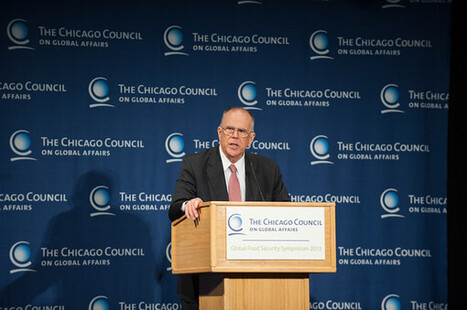
On 8th June, world leaders including SUN countries came together to sign a global compact that will prevent at least 20 million children from being stunted and save at least 1.7 million lives by 2020. The Global Nutrition for Growth Compact was endorsed by 90 stakeholders, including development partners, businesses, scientific and civil society groups. An ambitious set of individual commitments to beat hunger and improve nutrition were made including a $4.15 billion financial commitment.
The Global Nutrition for Growth Compact outlines bold targets to achieve by 2020, including:
--Improving the nutrition of 500 million pregnant women and young children;
--Reducing the number of children under 5 who are stunted by an additional 20 million; and
--Saving the lives of at least 1.7 million children by preventing stunting, increasing breastfeeding, and improving treatment of severe and acute malnutrition.
This book is a work in progress that seeks to share the knowledge about a vital tool for nourishing the bodies and minds of future generations. The time has come to pay school feeding programmes the attention they need and deserve.
See Case Study 10: Two different ways of doing school feeding – the case of Kenya on page 57
A social enterprise 'Farm Shop' is building a franchise network of agro dealers located in rural, underserved areas of Kenya. Farm Shop says its retail shops are clean, modern, and professionally managed. The business wants to increase the earnings and productivity of Kenyan farmers by providing them with high quality products, services and information. Madison Ayer and Farouk Jiwa, founders of Farm Shop, told How we made it in Africa’s Dinfin Mulupi about how they want to transform smallholder farming in Kenya.
To get content containing either thought or leadership enter:
To get content containing both thought and leadership enter:
To get content containing the expression thought leadership enter:
You can enter several keywords and you can refine them whenever you want. Our suggestion engine uses more signals but entering a few keywords here will rapidly give you great content to curate.


 Your new post is loading...