A study recently conducted by FAO's Food Security and Nutrition Analysis Unit, based on interviews with over 700 households in Puntland and Somaliland, estimated that 42% of the population relies on remittances. These funds are used for basic food, education and medical expenses, as well as to start up small businesses and settle debts. One third of recipients said that if remittances were stopped they would not be able to afford basic food. More than 80% of the sample relies on a single sender of remittance support, and 93% of recipients get their money through Somali money transfer organisations.
Ten years after African leaders promised to spend at least 10 percent of their national budgets on agriculture, development and farmers' groups have called on African governments to invest more and better in the sector, focusing on smallholders, women and livestock.
...the GROW campaign - backed by Oxfam and several West African networks - reported "a sad state of affairs" on the 10th anniversary of the signing of the Maputo Declaration in which the spending pledge was made, with an initial deadline of 2008. Only seven African countries consistently reached the 10 percent target between 2003 and 2009, five of them in West Africa, it noted...
...Last week, the African Union said 10 of its 54 member states had now reached the 10 percent minimum for public investment in agriculture. They include Burkina Faso, Ethiopia, Ghana, Guinea, Malawi, Mali, Niger and Senegal - which have already exceeded the goal.
According to the New Partnership for Africa's Development (NEPAD), 10 countries have surpassed a further Africa-wide target to achieve at least 6 percent growth in agricultural production, with another four states reaching growth of between 5 and 6 percent.
Despite individual success stories, the vast majority of African states are still underfunding a sector that is pivotal in preventing hunger and poverty. And even where they do spend the agreed amount, too much of the money is going to large farms and government operational expenses, the GROW campaign said...
Ethiopia has recently launched a two-and-a-half-year nutrition program to help relieve chronic malnutrition, which many children suffer from in the country.Children in conflict-ridden nations in Africa suffer the most from malnutrition.
A key piece of the puzzle is the Scaling Up Nutrition movement (SUN) movement that has worked with 40 countries, including 24 in Africa, to develop plans to improve nutrition. Currently 16 of these plans have had their costs calculated, and the Nutrition for Growth event was an important step in filling the funding gaps in these plans. One thing is clear: to fully fund all the plans will take a mix of increases in both donor money and domestic funding, varying by country and over time. Nutrition for Growth was a critical first step but we must maintain this momentum and ensure that ambitious pledges are realised and prevent undernutrition from robbing another generation.
Malnutrition and food crisis are inseparable. Children and women are disproportionately affected by hunger and malnutrition. Girls, particularly, are more disadvantaged in food insecurity situations...
...“Malnutrition and food crisis are inseparable. Children and women are disproportionately affected by hunger and malnutrition. Girls, particularly, are more disadvantaged in food insecurity situations...
...As part of its Food Assistance and Nutrition Unit - a dedicated facility to prevent and manage malnutrition and food crisis in pre-disaster, disaster and recovery settings - Plan International has supported hundreds of thousands of people facing food insecurity in sub-Saharan Africa...
In 2012, United Nations Secretary-General Ban Ki-moon launched the Zero Hunger Challenge and called upon all sectors to step up the fight against hunger and malnutrition...
...Working with a diverse group of experts, the Community for Zero Hunger team will conduct a comprehensive assessment to identify context-specific needs and gaps in the fight against hunger and malnutrition. Together with 50 companies from around the world, the Community for Zero Hunger will also identify private-sector knowledge, capabilities and experiences that could help fill those gaps in a context-appropriate manner...
The Community for Zero Hunger is a 24-month initiative whose outputs and insights will be shared via an open-access, web-based platform.
The World Food Prize Foundation announced that Mary-Dell Chilton, the founder and Distinguished Science Fellow of Syngenta Biotechnology, Inc., along with two other distinguished scientists, has won the prestigious 2013 World Food Prize. The announcement was made at the U.S. Department of State in Washington, D.C. with U.S. secretary of State John Kerry and Ambassador Kenneth M. Quinn, president of the World Food Prize. The prize is the foremost international award recognizing an individual who has enhanced human development by improving the quality, quantity or availability of food in the world.
...the G8 leaders will have to reconcile two competing visions of the New Alliance. Some argue that the New Alliance, although well intended, will not result in sustainable or responsible investments. Big global companies only understand large-scale intensive single crop production models, which are often highly destructive to biodiversity and the social fabric of smallholder farming communities. While the flow of corporate investment and the adoption of modern farm management, skills, and technology will increase agricultural production, these benefits would come at a high cost. Investments will also go toward exportable products and not the local market, making smallholder farmers increasingly dependent on volatile international markets.
Others contend that the New Alliance aligns public and private resources with country-led strategies that are consistent with host-country priorities and needs. The initiative is also supportive of multinational guidelines on the governance of land, fisheries, and forests, designed to guard against land grabs and social disruption. Proponents argue that corporate investors, NGOs, and development partners will assist smallholder farmers integrate into agriculture value chains by helping them organize into cooperatives and engage in contract farming. Public-private partnerships (PPPs) and innovative business models will ensure both development and commercial goals are achieved.
Which narrative is right? Each holds some merit....
-- Food security outcomes have improved in many countries in East Africa although 12.9 million people remain in Stressed (IPC Phase 2), Crisis (IPC Phase 3), and Emergency (IPC Phase 4) in Sudan, South Sudan, Somalia, Ethiopia, Kenya, Djibouti, Uganda, Burundi, Tanzania, and Rwanda (Figure 1). The main reason for the improved food security outcomes is average to above average agricultural and livestock production in many parts of the region. Further improvements in food security are anticipated with upcoming harvests in June/July.
-- Food security is expected to deteriorate through September in the conflict-affected parts of Sudan, the border areas of Sudan and South Sudan, and areas affected by conflict within South Sudan. Food security is also expected to deteriorate in the Belg producing areas of the northeastern highlands of Ethiopia. In the areas relying on the June to September rains and harvest between October and January in Ethiopia, Sudan, and South Sudan, food security is expected to seasonally deteriorate with the start of the May/June to September lean seasons.
-- The IGAD Climate Prediction and Applications Centre (ICPAC) consensus climate outlook for the Greater Horn of Africa (GHA) region for June to September indicates increased likelihood of average to below average total rainfall over much of the region. Increased likelihood of near average to above average rainfall is indicated over central parts of the northern sector as well as the coastal and extreme western parts of the equatorial sector.
There's been a lot of debate recently in the US about food aid reform, especially since the US Agency for International Development (USAid) proposed a shift toward more cash programmes and increased local and regional purchase of food aid. But what's lost in the lively discussion on the hows and whys of food aid is a sense of long-term focus.
While emergency intervention is all too often necessary, focusing on building capacity at the farm level offers long-term sustainability in addressing the root causes of food insecurity...
...But building the capacity of smallholders and strengthening markets to sustain them is pivotal and sustainable, and can render food aid unnecessary in many, if not most, cases. We don't read about the food crisis that doesn't happen...
...Well-conceived 21st century food aid programmes had helped create market systems that worked. Not for all though as, tragically, the drought still caused hunger. But in Ethiopia and Kenya conditions that year didn't spiral out of control as they had before. Unfortunately, in Somalia, where the dysfunctional government had prevented agriculture and development initiatives, the result was a famine that killed more than 250,000 Somalis, half of them children...
...Necessary food aid and deliberate long-term agricultural development aren't an either-or proposition. We will likely, unfortunately, always have urgent crises that require food aid. Having all tools available – more cash, increased local and regional purchase as well as donor country-sourced food aid – will enable smart and successful emergency interventions.
The Chicago Council on Global Affairs released a report on urban food security from its Emerging Leaders Class of 2013. The group of 21 Chicago leaders has spent the last year developing an action plan for analyzing and addressing urban food security and the dual challenges of under-nutrition and obesity that have beset many urban centers.
Representatives of the Emerging Leaders Class of 2013 will present their report, Feeding an Urban World: A Call to Action, at a Chicago Council public event this evening. In it they propose Chicago utilize its extensive corporate, academic, philanthropic, and public policy resources to assume a leadership role and become a model for other cities in addressing the challenges of feeding urban populations.
Healthy, safe, nutritious food at an affordable price is particularly difficult to come by in urban centers with concentrated poverty such as Nairobi, Mumbai, and Jakarta. In many ways, Chicago and other urban centers in the developed world are no different. As a long-standing leader in food production and distribution, historically earning the city the titles of ‘Nature’s Metropolis’ and ‘Hog Butcher to the World,’ Chicago is well positioned to spearhead efforts to address the emerging urban food issues of the 21st century.
The 21 Emerging Leaders who contributed to the report have experience in business, education, public affairs, law, and civic leadership in Chicago. They devoted a year to in-depth study of urban food security, including a trip to Washington DC and discussions with thought leaders across the country.
The Cost of Hunger in Africa study estimated that Uganda loses around $899 million per year -- around 5.6 per cent of its gross domestic product -- as a result of workers getting sick more often and being less productive because they lacked the right nutrition as children...
...The findings in Uganda were the first to emerge from the Cost of Hunger in Africa report, a study carried out in 12 countries across the region with the support of the African Union Commission, a body which includes the New Partnership for Africa’s Development, the UN Economic Commission for Africa and WFP...
...According to the report, malnourished children dropping out or underperforming at school subtracts around $116 million from an economy in need of educated workers. Lower productivity in sectors such as agriculture cost Uganda another $201 million per year...
...The country spends around $254 million per year treating cases of diarrhoea, anaemia and respiratory infections linked to malnutrition. Enough children die each year of causes related to hunger to reduce Uganda’s labor force by some 3.8 per cent. That amounts to some 934 million working hours lost every year due to an absent workforce...
...To ascertain the economic impact of hunger on countries like Uganda, the authors of The Cost of Hunger in Africa report looked at data going back to 2009. Findings for Egypt, Ethiopia and Swaziland will be released in the coming weeks.
On top of the increase in volume, the context-dependant aspect of cash based interventions requires programmes to adopt great flexibility. This results in very diverse programme modalities according to the situation in which they are implemented. Cash transfer programmes have been frequently used in the food security and livelihood sector but is now rising in other sectors such as WASH, shelter or in cross-sectorial interventions.
In this period of increasing use and diversification of cash based intervention, there is a need to globally assess how cash programmes are being implemented. CaLP is developing a cash mapping tool aiming to visually represent the usage of cash transfer programmes at a global level.
The Cash Atlas will be released on August 1st.
If you would like more information, please write to Yoann Tuzzolino at this address: cash-atlas@cashlearning.org
The Eastern Africa Grain Council (EAGC) believes that despite being relatively poor, there exists an opportunity for these small farmers to turn their agricultural production into profitable cash returns...
...it's important to have a one-stop shop that brings together players in the agro-industry and the users of the services; including the producers, processors and traders to exchange and compare notes on the latest technology in agribusiness.
The Scaling Seeds and Technologies Partnership to help tackle hunger and poverty in Africa...[is a] ...$47 million, three-year partnership intended to accelerate smallholder farmer access to transformative agricultural technologies...[it] will work in four countries within the G8’s New Alliance for Food Security -- Ethiopia, Ghana, Mozambique, and Tanzania -- where it will help governments strengthen their seed sectors and promote the commercialisation, distribution and adoption of improved seeds and other key technologies.
The Partnership will help strengthen seed sectors, including regulatory systems, and create new local seed companies, ensuring that game-changing technologies can reach and improve the lives of millions of smallholders...The United States will continue to support this and other New Alliance efforts through Feed the Future, President Obama’s global hunger and food security initiative...
The U.S. Feed the Future program helped more than 7 million farmers in 19 countries adopt improved agricultural technologies or practices in 2012, increased the value of commodity exports by $84 million, and helped bring almost 4 million hectares of farmland under better cultivation...
...With a focus on small-holder farmers, particularly women, Feed the Future engages the private sector, citizen groups and the research community...
...[A] report notes that in 2012 Feed the Future forged more than 660 public-private partnerships to improve food security and generated $150 million in agricultural and rural loans. Overall, the program has reached 9 million households through increased farm yields and better nutrition...
...Looking ahead, the report says that in five years Feed the Future aims to reduce poverty and child stunting by 20 percent. The program seeks to build resilience to reduce the number of people who are vulnerable to food-price or climate shocks or who have limited connections to local and regional markets that can provide them with sustainable incomes. It works to make growth lasting by incorporating technology and innovation.
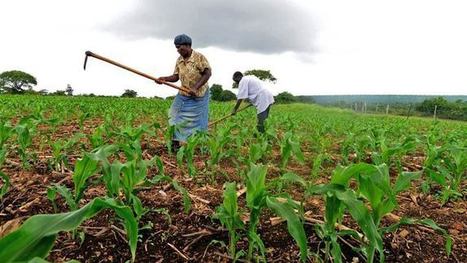
Transformation of smallholder farming systems should be an important part of the solution to providing food security, improved nutrition and equitable growth in African countries [Practical Action]...
..."Smallholder farmers are marginalised from everything and have extremely limited access to inputs or market information. The farmer is successful in proportion to access to inputs and value chains. Farmers without access to seed and fertiliser will not succeed [One Acre Fund]...
...Electronic cash transfers have been helping elevate subsistence farming to a profit-generating activity in Ethiopia under the country's Agricultural Transformation Agency (ATA). Last year, 10,000 of the poorest, food-insecure people in Ethiopia received electronic money transfers directly into their bank accounts for the first time. This is an intervention aimed at the country's previously "unbanked" or "under-banked" farmers...
...Electronic transfers are conditional on the recipient's pledge to participate in public works that improve community assets, boost food security, and combat the effects of drought. The Ethiopia government's cash transfer programme, which has been operating since 2005, aims to reduce food insecurity by providing transfers to over 7.5 million people...
However... there is a risk that making Africa's smallholder farmers dependent on value chains could skewer the impact of well-intentioned interventions as these chains are bound to market forces and could expose hungry communities to volatile global food prices and the rapacity of large multinational agricultural companies...
US Government Fact Sheet on Food Security in Africa
Since coming into office in 2009, President Obama has made global food security a foreign policy priority. At last year’s Camp David G-8 Summit, President Obama joined with other G-8 leaders, African heads of state, the African Union and private sector leaders in launching the New Alliance for Food Security and Nutrition, with an ambitious pledge to lift 50 million people out of poverty in sub-Saharan Africa by 2022.
“No matter what you invest in the education of a child, they will not achieve their potential and neither will their countries.” [Bill Gates].
"...investments in agriculture and nutrition can be the breakthrough force towards development...if we do this together we can crack the hunger and poverty cycle that leaves families trapped for generations. We have seen this happen before our eyes in Latin America, Brazil while in Africa there is Ethiopia, Senegal and in Asia Bangladesh and India to some extent.”
...“We are asking donor countries to follow the agenda being set by African leaders. This is a transformational shift in development agenda as we focus on what African leaders prioritise via CAADP/SUN, rather than the continuation of donor countries putting funds where they want.”
...The official launch of the project to accelerate the achievement of the Millennium Development Goals (MDGs) 1c, PROPA-O was held on May 31st, 2013, and was presided over by Gervais Rufyikiri, Second Vice-President of the Republic of Burundi...
...It is part of the objective of modernizing the agricultural sector. The Objective of the Millennium Development Goals, 1c aimed at reducing, between the years 1990 and 2015, the proportion of people who suffer from hunger...
...According to the Second Vice-President of the Republic, this project which is jointly funded by the European Union, UNICEF, WFP and the government of Burundi is in perfect harmony with the strategic directions of the Government for the agricultural sector.
Two new reports, launched this month ahead of the 2013 G8 Summit, discuss business-based solutions by compiling a set of guidance and case studies on linking African smallholder farmers to markets more effectively.
The first report, “Leaping and Learning: Linking Smallholders to Markets”, provides a review of previous efforts to link smallholder farmers to markets and highlights a number of recommendations for policymakers, donors, NGOs and investors.
The second report, entitled “8 Views for the G8: Business Solutions for African Smallholder Farmers to Address Food Security and Nutrition”, compiles the collective insights of eight leading agricultural NGOs whose work has given them extensive experience in what it takes to effectively connect African smallholders to markets.
The reports highlight the ways in which market-based solutions can be adopted equitably and sustainably to improve the lives of smallholder farmers. They stress the importance of linking smallholders to domestic, regional and global markets, but acknowledge that it is often a lengthy process that involves risk.
...A number of factors are critical to ensure that the goals of growth and development are both being met. Firstly, smallholders are incredibly diverse, with many still unprepared or otherwise unable to participate in markets effectively. Safety nets must remain in place for those who cannot be reached or who try but fail in their efforts.
Secondly, when scaling up successful agricultural programmes such as the ones discussed above, it is vital to recognise that agroecological zones and socio-economic conditions can vary dramatically throughout Africa, and solutions must be adapted to local circumstances if they are to succeed.
Thirdly, there is a danger that some commodity value chains will be developed while others, particularly those commodities grown and consumed by poor people, will be neglected. High-value cash crops such as cocoa and coffee often see higher returns on investment than staple crops and therefore require less public stimulus. Staple crop development alongside the development of export markets should be actively supported – at least, initially – to address access issues and to boost production and productivity...
SEVERAL parts of Karamoja have been hit by a severe food shortage. According a report by the Office of the Prime Minister (OPM), Kaabong district is the most hard-hit area, where there were reports that 41 people could have died as a result of food insecurity.
Another 59 elderly people were saved from starvation by the OPM according to the three page report titled 'Summary assessment report on disaster risks and food insecurity in Karamoja region' released recently...
...the report was compiled in May and June after two assessments by a team including, Save the Children and UN agencies like World Food Programme, UNFPA, World Health Organisation and the Food and Agricultural Organisation, led by OPM.
The report, The Cost of Hunger in Africa, launched on 18 June in the capital, Kampala, was conducted by the Ugandan government with the support of the African Union Commission, the New Partnership for Africa's Development, the UN Economic Commission for Africa and the UN World Food Programme (WFP).
"Hunger and under-nutrition are both a cause and effect of poverty," Sory Ouane, WFP’s country director, said at the report's launch. "Cutting hunger and achieving food and nutrition security in Africa is not only one of the most effective means of reducing vulnerability and enhancing the resilience of national economies, it also produces high returns for social and economic development."...
...In the chronically food insecure northeast, food shortages are affecting school attendance and deaths from hunger have been reported. WFP is distributing relief food in the region.
"We expect to reach an estimated 155,000 people, targeting children, [the] elderly, disable[d] and chronically ill," said country director Ouane in a recent communiqué. "However we have a funding gap of $2 million."
...Smallholder farmers, especially women, who produce 80% of our food, do not need charity. They need legal land ownership, the support to build their own seed banks and finance for power, irrigation and water in the first few years. Smallholder farmers are the most valuable part of the market, of the entrepreneurial value chain...
Yet they are largely excluded. They are the unrecognised foundation of the market system. Many have said...“Help us improve their productivity through provision of extension support, and ensure that we are able to connect to the market and keep the major part of the value – then we will feed Africa and the world.”
The next day in a GAIN-hosted workshop on agriculture and nutrition, President Jakaya Mrisho Kikwete of Tanzania says in his keynote speech:
“I know that my ancestors who lie in the ground will not allow me to take the land that belongs to my people and give it away. We need smart partnerships that ensure that value goes to the smallholder farmer also. We also need to change our eating habits, even if it goes against what our tradition teaches us. Science has shown us that it is not just the amount of food we eat but the quality of the food that is important. Our mothers and children must get the right nutrients to be healthy and productive."
Professor Ruth Oniang'o speaking on a panel, remarks, “You look good, Mr. President, because your mother and your wife feed you. Talk to your counterparts in Africa that nutrition and food security are two sides of one coin. Make them understand that women smallholder farmers are the centre of the agriculture value chain. If they go on strike, Africa will starve.”.
To get content containing either thought or leadership enter:
To get content containing both thought and leadership enter:
To get content containing the expression thought leadership enter:
You can enter several keywords and you can refine them whenever you want. Our suggestion engine uses more signals but entering a few keywords here will rapidly give you great content to curate.


 Your new post is loading...