



idk managers Defending World Cup champion Marcel Hirscher narrowly avoids being hit by a drone during an Alpine slalom race in Italy.

 Your new post is loading...
 Scoop.it! idk managers Defending World Cup champion Marcel Hirscher narrowly avoids being hit by a drone during an Alpine slalom race in Italy. 
No comment yet.
Sign up to comment
Scoop.it!

Multicopters are one of the hottest consumer gadgets on the market, and for good reason. They're cheap, easy to fly, a ton of fun, and by far the easiest way to get into radio controlled flying. This Drone School series is our way to help new flyers get off the ground, and over the next few weeks we'll get into some exercises to build your skills and capabilities for maximum fun with minimal crashes. For starters, let's look at how to pick a good beginner quadcopter. Via John Evans
Scoop.it!

Tokyo’s police force has come up with a clever solution for dealing with rogue drones: they’re going to catch them using larger drones and giant nets.
Scoop.it!

New hybrid drone has 15-mile range and will be first in a new family of drones
Jason Miller's insight:
Is Amazon really able to develop this technology while a razor's edge behind FAA regulatory requirements? I think that's a tall order, unless they are developing in Europe or Canada (which is likely). Whatever they are doing, we at CI need to keep pace!
Scoop.it!

Here are five fields that are reaping the benefits of 3D printing technology.
Scoop.it!

Our array of 3D printers in the AARR laboratories allow us to print replacement parts of create new capabilities by generating new parts we have brainstormed. Rather than sending some schematic of…
PIRatE Lab's insight:
We have talked quite a bit about our robots, but not as often about the technology that makes our endeavors possible. It seemed about time that we provide a brief overview about this technology and how we use it.

PIRatE Lab's curator insight,
October 9, 2015 3:41 AM
We have talked quite a bit about our robots, but not as often about the technology that makes our endeavors possible. It seemed about time that we provide a brief overview about this technology and how we use it.
Scoop.it!
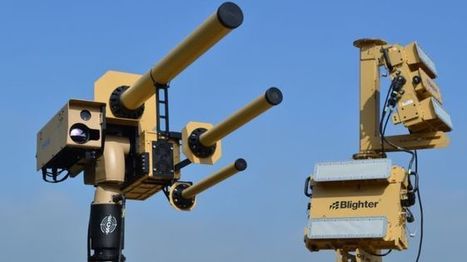
Three British companies have created a device to deter drones from entering sensitive areas by freezing them mid-flight.
PIRatE Lab's insight:
Freeze frame...
I love the not-so-subtle dig at the FAA.
Scoop.it!

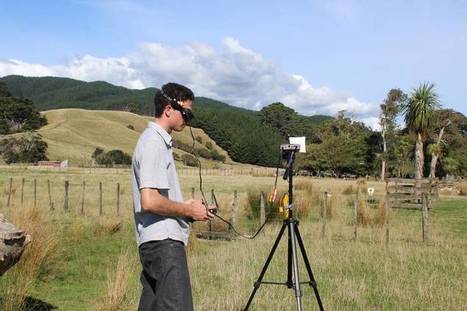
The crowd at East Grinstead makes for an odd sight — most of them are wearing plastic goggles with long antennas sticking up, apparently ignoring their surroundings and staring out into empty...
PIRatE Lab's insight:
Ummmm...yeah. Its a thing.
Scoop.it!
FAIRFAX, Va. --- Unmanned Aerial Vehicles (UAVs) continue as the most dynamic growth sector of the world aerospace industry this decade, report Teal analysts in their latest market analysis. New unmanned combat aerial vehicle programs, commercial and consumer spending all promise to drive more than a tripling of the market over the next decade.
Scoop.it!
From
www

Some tech-savvy farmers are opting for copters over canines; ‘you don’t have to feed it.’
Scoop.it!
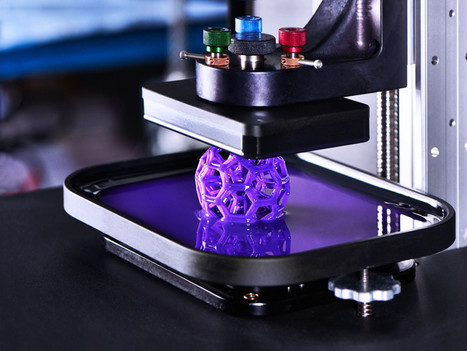
IT MIGHT BE the future of manufacturing, but 3-D printing is built on a 2-D foundation: A MakerBot is essentially an inkjet printer that spits out plastic instead of ink. Keep printing in the same spot, over and over, and the layers will eventually form a 3-D object from the bottom up. But an outfit called Carbon3D is taking the opposite tack: Its new rig creates objects from the top down, in one continuous motion. It’s faster and eliminates the layering that can result in weak, jagged objects. Via John Evans
PIRatE Lab's insight:
Pretty triply new way to print in 3D much faster.
Scoop.it!

Women on the other end of the drop — abortion activists in the fiercely Catholic country — will be waiting to collect the pills at a yet-to be-disclosed location.
PIRatE Lab's insight:
Another case of people using this tech and getting way ahead of the laws and regulations: transnational medication delivery and political activism.
Scoop.it!
Jason Miller's insight:
Researchers at the Naval Postgraduate School put 50 sUAS into the air where they flew autonomously and interacted, sharing data, for a period of time, then landed. Swarm operations like this are hard, so this is remarkable.
The picture, above, misleads. Take a look at the below post for real pics of the effort and a short video of the launches:
|
Scoop.it!

Drones can be an extremely powerful search and rescue tool. But how to best integrate pilots into existing systems is still up in the air.
Jason Miller's insight:
Neat article about crowdsourcing search and rescue. Good idea?
Scoop.it!

The U.S. Department of Transportation’s Federal Aviation Administration (FAA) today announced a streamlined and user-friendly web-based aircraft registration process for owners of small unmanned aircraft (UAS) weighing more than 0.55 pounds (250 grams) and less than 55 pounds (approx. 25 kilograms) including payloads such as on-board cameras.
PIRatE Lab's insight:
Currently only private operators are required to register their UAVs. See the last paragraph (thanks to Paul and Jason for the flagging).
Scoop.it!

This past Saturday several members of our AARR Team trekked down to the Los Angeles Convention Center in downtown Los Angeles. We checked out the second annual International Drone Expo, a mixture …
Scoop.it!

As the way we learn and work has evolved, teaching styles, curriculum and classroom spaces must change as well. Our students need to think “like innovators” in order to solve increasingly complex, global and multi-disciplinary problems. These problems require skills like flexible thinking, resilience and curiosity — skills that are not nurtured in today’s traditional educational models. As architects, we know that design can profoundly affect and enhance teaching and learning. School design must not only accommodate 21st century learning methods, but also reinforce the skills students will need for an evolving society. Thoughtful, creative and flexible design of these spaces is critical in realizing the learning goals. Via John Evans
Scoop.it!
The US DOT is getting into the registration of UAVs. Look out, they are talking about being "agile."
PIRatE Lab's insight:
These guys are working on a registration framework for UAVs.
Scoop.it!

A Singaporean package delivery firm flies a t-shirt and letter to a small island - but how long will it be before the tech is ready for regular use?
PIRatE Lab's insight:
Baby steps.
Scoop.it!

As is often the case with innovations in learning and teaching, getting started with that first lesson or project is the biggest hurdle. So it is with making, a learning approach that allows students to learn by doing and solve problems with tinkering and trial and error. Via John Evans
Scoop.it!

With our new, formalized cooperation between the university and NOAA, we are able to share resources in multiple ways, from sharing of equipment to vessel usage to training and much more. The NOAA Center of Excellence for Unmanned Technologies invited our team to come observe a test mission using the AeroVironment Puma UAV aboard the research vessel the R/V Shearwater. This last Monday, team leader Paul Spaur, robotics coder extraordinaire Tim Holcombe, and Dr. Anderson joined the multi-disciplinary NOAA team on the R/V Shearwater for a Santa Barbara Harbor departure to the islands. The ship set out into the Santa Barbara Channel and ran a series of 10+ flight missions, launching the UAV while at sea.
PIRatE Lab's insight:
We had a great time out on the R/V Shearwater last week!
Scoop.it!

Gov. Jerry Brown on Saturday vetoed a trio of bills that would have prohibited civilians from flying aerial drones over wildfires, schools, prisons and jails, despite alarm over close calls with firefighting aircraft.
Scoop.it!

Drones aren't just for spying and unmanned warfare. Farmers are finding uses for herding cattle, spraying pesticides and a host of other farm chores.
Scoop.it!

A week after being named as potentially responsible for forest fires blanketing Southeast Asia with haze pollution, most of the companies involved have stayed silent.
PIRatE Lab's insight:
Fires like our recent ones across California are a global problem. Perhaps the classic case is the situation right now in Indonesia where fires are tearing through rainforest in western Sumatra, destroying vast landscapes.
These Sumatran fires have caused a thick, polluted and dangerously unhealthy haze to settle over much of the island, nearby Singapore, and parts of Malaysia. Indonesia has sent thousands of rescue teams to fight the blaze, but is mostly anxiously awaiting the expected annual rains later this month.
This isn’t some new crazy disaster. This happens every year on Sumatra. This year just happens to be one of the worst on record. And corruption, an ineffectual governance, and poverty are the key drivers.
Scoop.it!

Perfect Storm: an expression that describes an event where a rare combination of circumstances will aggravate a situation drastically. The term is also used to describe an actual phenomenon that happens to occur in such a confluence, resulting in an event of unusual magnitude. Via John Evans
|







And to think: some risk managers feel that training folks to safely operate these instruments is "too dangerous." Not training folks is WAY MORE dangerous.