Your new post is loading...

|
Scooped by
jean lievens
February 17, 2012 3:27 AM
|
Today about 82 percent of Americans live in cities (only about two percent are as rural as in 1931) and hardly anyone knows most of their neighbors. People ignore street screams of people being murdered because it is none of their business. And birthday and Valentine cards are giving way to Facebook and other Internet connections, often with so many "friends" that the meaning of friendship is undergoing revision.
|
|
Scooped by
jean lievens
February 17, 2012 2:58 AM
|
One of the nice things about living in London is that, should the inconceivable happen and you start to feel a bit blasé about the city, a timely and well-chosen tour can shake you out of that state, whether it's by exploring the best street art of the East End, Charles Dickens' London, or even a tour of London regeneration projects. So when Occupy London, the city's arm of the global protest movement against economic inequality, announced free organised tours of the wealthy Mayfair district, home to many of its hedge funds and private equity firms, I was certainly curious.
|
|
Scooped by
jean lievens
February 17, 2012 2:56 AM
|
Jakarta GlobeOn the Internet Everyone is a JournalistJakarta GlobeThe notion of citizen journalism enables everyday people to voice their opinions, which supports the fundamental elements of democracy.
|
|
Scooped by
jean lievens
February 17, 2012 2:55 AM
|
A year and a half ago, Alexis Goldstein was working as a business analyst for Deutsche Bank’s New York headquarters, helping traders on the global equity derivatives desk. Now she’s huddling every week with Occupy Wall Street in a glass-walled atrium next door to her old workplace, trying to rein in the kind of banks that once employed her.
|
|
Scooped by
jean lievens
February 17, 2012 2:53 AM
|
Facts are facts, and Blanchflower shows (for the umpteenth time) that those economies that avoided “austerity” are climbing out of the “lesser depression.” Those that followed the advice of the budget scolds?
|
|
Scooped by
jean lievens
February 17, 2012 2:47 AM
|
“Events, like Occupy Wall Street, are crucial because, on the one hand, they demonstrate that the problem is capitalism as such. This was the big issue in the 20th century, but somehow disappeared in the last decades from the traditional left, where the focus became specific issues such as racism and sexism.”
|
|
Scooped by
jean lievens
February 17, 2012 2:38 AM
|
There is a strange redness to America’s safety net. Why do the regions that need the helping hand elect politicians who want to tear it down?
|
|
Scooped by
jean lievens
February 17, 2012 2:37 AM
|
So here we are once again, arguing over how to honor religious liberty without it becoming the liberty to impose on others moral beliefs they don't share. Our practical solution is the one Barack Obama embraced the other day: protect freedom of religion -- and protect freedom from religion. Can't get more American than that.
|
|
Scooped by
jean lievens
February 17, 2012 2:36 AM
|
It is the stick with which the greens are beaten daily: if we spend money on protecting the environment, the poor will starve, or freeze to death, or will go without shoes and education. Most of those making this argument do so disingenuously: they support the conservative or libertarian politics that keep the poor in their place and ensure that the 1% harvest the lion's share of the world's resources.
|
|
Scooped by
jean lievens
February 17, 2012 2:35 AM
|
Just as the Occupy Movement has seemed to lose its steam, along come an organized reboot of the popular financial and social justice movement. Meet 99% Spring. (Think Occupy is Over?
|
|
Scooped by
jean lievens
February 17, 2012 2:33 AM
|
The social revolution, which the Russian urban and rural proletariat is working hand in hand to carry out, will be anti-statist in its methods of struggle, syndicalist in its economic content and federalist in its political tasks.
|
|
Scooped by
jean lievens
February 17, 2012 2:29 AM
|
Newspapers played a vital role in organizing the League of Revolutionary Black Workers during the upsurge of the 1960s and '70s.
|
|
Scooped by
jean lievens
February 16, 2012 5:45 PM
|
In April, OR Books published Tweets from Tahrir, a book of tweets sent from Ground Zero of the democratic revolution that played out in Egypt last year. The book, its promotions declare, "brings together a selection of key tweets in a compelling, fast-paced narrative, allowing the story of the uprising to be told directly by the people in Cairo's Tahrir Square. History has never before been written in this fashion."
|
|
Scooped by
jean lievens
February 16, 2012 5:42 PM
|
The Fresh Juice Party, a group that describes itself as “a politically progressive media group” that writes, records and performs music, designs visuals and creates happenings, is holding a conference in support of whistleblowers and whistleblowing at UC Berkeley this weekend. The conference called, “Occupy the Truth: Whistleblowers Conference,” will intentionally bring together information activists that support transparency and members of the Occupy movement from Occupy Oakland and other parts of California. It will happen February 17-19.
|
|
Scooped by
jean lievens
February 16, 2012 5:40 PM
|
How can winning a Nobel Prize in economics seem like it’s no big deal? Well, if you’ve already won the John Bates Clark Medal—an honor bestowed biennially on the American economist under 40 who has made major contributions to his profession—you’ve already taken home a piece of hardware considered by many economists to be slightly harder to win than a Nobel. Only 12 people have won both, including Paul Krugman, who collected the 1991 Clark and then snagged the Nobel (and its $1.4 million check) in 2008.
|
|
Scooped by
jean lievens
February 16, 2012 12:57 PM
|
November 28, 2011 – Links International Journal of Socialist Renewal -- “Turning-points in the history of humanity,” a contributor to the left-wing Algerian newspaper Le Matin observed in the summer of 2001, “are never simple for contemporaries to understand. Rarely are people able fully to assess the significance of these episodes, or their consequences. The developments concerned do not proceed in the manner, or at the time and place, that people expect. The early years of the twenty-first century have seen this rule reaffirmed. During this time, new and increasingly powerful trends have been mingled with the heritage of the past, dragging us back. History, however, operates through these new forces, which gradually but inevitably will succeed in overcoming the inertia of the past.” (1)
|
|
Scooped by
jean lievens
February 16, 2012 12:52 PM
|
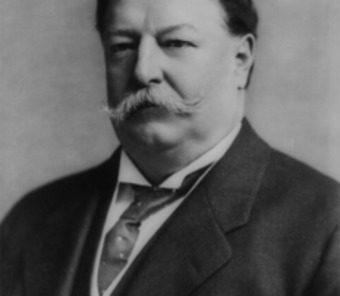
A century ago, in one of his last acts of office, President William Howard Taft attempted to solve the problem of inequality in America. In August 1912, on the cusp of a brutal third-place finish in the presidential election, he created a Commission on Industrial Relations to investigate “the general condition of labor in the principal industries.”
|
|
Scooped by
jean lievens
February 16, 2012 12:51 PM
|
A group of 'hacktivists' calling themselves L0NGwave99 took on the stock exchange earlier this week after announcing their intentions on Sunday. Through coordinated Distributed Denial of Service (DDoS ) attacks the group, which acted in conjunction with the formless and international hacker collective Anonymous, and in support of the Occupy Wall Street movement, temporarily shut down the public websites for NASDAQ, BATS stock exchange and the Chicago Board options Exchange (CBOE). Although the attack made it difficult for internet users to access the websites it had no effect on the actual trading system.
|
|
Scooped by
jean lievens
February 16, 2012 12:48 PM
|
Democracy used to take time-time that citizens are no longer willing to spend. Now, influencing public policy takes money-money that corporations are more than willing to spend to buy political influence. The little people used to have a big say and needed no money to say it. Now the Supreme Court has given big corporations the same rights as individual citizens. With unlimited money to make sure everyone hears the corporate perspective–over and over again–the “big say” has gone corporate.
|
|
Scooped by
jean lievens
February 16, 2012 11:32 AM
|
Digital campaigning group Avaaz rallies mass outrage on the internet, via online petitions and social media. But was it really responsible for the delay to the BDkyB deal, and is this activism or '...
|
|
Scooped by
jean lievens
February 16, 2012 8:09 AM
|
One recurring complaint and or question I have heard from the media, as well as those who oppose or are confused about the Occupy protests is this: What do you all want anyway? For the rich to pay more taxes? For an apology from Wall Street? What??? On one hand, "What do you want" is a good question being asked of the 99% protesters. This is a common question asked whenever there is a movement protesting perceived wrongs. If you have a problem with something, what is your proposed solution? However, this is a "top-down" representative democracy approach to problems, rather than a "bottom-up" participatory democracy philosophy. The Occupy movement is a bottom-up philosophical movement. As such, it is important to understand the difference between these two approaches and why the "what are your demands" question is not really an appropriate question to ask at this moment in time.
|
|
Scooped by
jean lievens
February 16, 2012 8:05 AM
|
Chris Hedges' recent articles starting with “The Cancer in Occupy” (Truthdig, Feb. 6) have created quite a controversy among supporters of the Occupy movement.
|
|
Scooped by
jean lievens
February 16, 2012 8:00 AM
|
ATLANTA -- Former President Jimmy Carter said on Wednesday that Occupy organizers have created a "relatively successful" movement because they focused national discussion on wealth disparity despite lacking leadership and a unifying set of goals.
|
|
Scooped by
jean lievens
February 16, 2012 8:00 AM
|
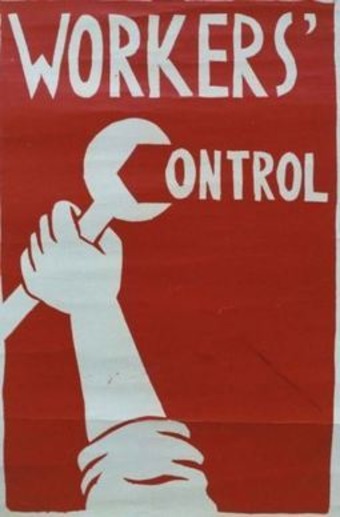
Here it is! Done! The workers at Eleftherotypia, one of the biggest and most prestigious Greek daily newspapers, go forward undertaking the great endeavour of editing their own newspaper ‘Workers at Eleftherotypia‘!
|
|
Scooped by
jean lievens
February 16, 2012 5:57 AM
|
A must watch: In this presentation, American world systems theorist Immanuel Wallerstein compares the world revolution of 2011-? to that of 1968 and places both within broader perspective of 500 years of global capitalism.
|

Curated by jean lievens
Economist, specialized in political economy and peer-to-peer dynamics; core member of the P2P Foundation
|