At a Paris press conference on Thursday night, Bruce Springsteen was asked whether he was advocating an armed uprising in America. He laughed at the idea, but that the question was even posed at all gives you some idea of the fury of his new album Wrecking Ball.
"The Internet as a “new” medium is not an extension or an extra platform of the traditional media; it is qualitatively different because it turns the passive media consumer (the couch potato) into an active contributor."
At the end of last semester, Gazette editors Jon Emont ’12 and Hanna Kozlowska ’12 had a chance to sit down with Robert Putnam ’63, author of Bowling Alone: The Collapse and Revival of American Community, which argued that Americans are becoming disconnected from their communities with dire implications for democracy. On the day after Obama’s State of the Union Address, we decided to publish Putnam’s interview, where he touches on many of the same themes that Obama did last night.
Gorton has been fighting tirelessly to make cities friendlier to cyclists and pedestrians. He makes no effort to hide his disdain for cars, and he has lobbied endlessly for more equitable transportation polices. Even Gorton isn’t so naive as to call for the eradication of the automobile, but he wants to see policies that aggressively discourage their use.
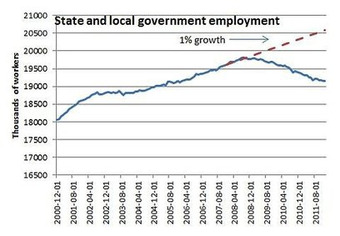
One question that arises when we talk about the possibility of reversing the disastrous push for austerity runs something like this: “OK, you say you want more government spending, but what should it spend money on?” The truth is that I think the perceived lack of shovel-ready projects was overstated even in 2009, but it was a real concern.
Thanks to the Occupy Wall Street movement, there's a deeper understanding about the power that corporations wield over the great majority of us. It's not just in the financial sector, but in all facets of our lives.
WikiLeaks denounced UNESCO for banning WikiLeaks from tomorrow’s international conference about WikiLeaks. The large two-day conference, which has 37 speakers listed, is to be held UNESCO Headquarters in Paris. US organizers have stacked the conference with WikiLeaks opponents and blocked all speakers from WikiLeaks, stating that the decision to censor WikiLeaks representation was an exercise in ’freedom of expression... our right to give voice to speakers of our choice’.
Are you concerned about the effects of television and advertising on children? Have you ever thought that kids today have too much stuff? Then check out the documentary Consuming Kids . . . it’s free and only takes an hour to watch.
There's an old idea gaining new life - the idea that sharing what you have is better than spending to get more. But can a sharing economy take root in Middle America? Find out more about the sharing economy and what it means to you.
Dr Michael Dauderstaedt, Director of the Economic and Social Policy Department of the Friedrich-Ebert-Stiftung, discusses the Eurozone crisis and its impact on social democracy in Germany.
"Indeed, the European crisis may be providing a mere foretaste of what will likely be the central political debate of the first half of the twenty-first century: how to resolve the tension between global markets and national politics."
Along these lines, the policy paper outlines a “social democratic set of indicators” which succinctly captures the core brand of social democracy. These indicators include: (i) income distribution as an indicator of social justice; (ii) opportunities for social advancement as an expression of social mobility; (iii) median household income as a measure of financial resources; and (iv) access to meaningful work as a source of self-realisation and social participation.
Why do some people behave morally while others do not? Sociologists at the University of California, Riverside and California State University, Northridge have developed a theory of the moral self that may help explain the ethical lapses in the banking, investment and mortgage-lending industries that nearly ruined the U.S. economy.
When Foster Friess, the billionaire backer of Rick Santorum’s presidential campaign, suggested yesterday that women should simply place aspirin between their legs rather than use contraception, it was the latest salvo of a culture war that has been raging for months. “Culture war,” in fact, increasingly seems too vague a term for the current conversation in the country about women’s rights. That conversation is acquiring an increasingly retrograde tone, one that should cause liberals to be alarmed.
The Sharing Economy movement has gone mainstream. According to a national consumer study, not only did a 60 percent of overall respondents find the concept of sharing appealing, but a full 71 percent of those who have used shareable products expect to continue.
Campbell Mithun created this overview of the Sharing Economy trend for its February 2012 live-streamed Talkinar discussion about the topic (which also is called collaborative consumption). View the full archived discussion at: www.cmithun.com/talkinar
"I don’t want to be just a consumer. I don’t even want to be predominantly a consumer. To be reduced to a consumer is to leave out most of what I am, of what makes me me. To be treated as a consumer is to be reduced to being used by another or reduced to a product for someone else’s use. It makes little difference whether the using is in a generous or selfish cause it is reduction. Widespread consumerism results in extensive depersonalization. And every time depersonalization moves in, life leaks out.”
There are currently 30 million African migrants who have left their home countries to find work elsewhere. They support more than 300 million people in their home countries, remitting essential food and goods, and in aggregate represent more than $10b in annual economic activity. This is an economy without an infrastructure, however, relying on informal channels and bribes to function.
Terry Eagleton is a British literary theorist and is regarded as one of Britain's most influential living literary critics. His books, which include On Evil, Why Marx Was Right, and the forthcoming The Event of Literature, are breathtakingly candid and refreshingly witty. Here he discusses his Irish Catholic upbringing, his views on religion, his academic training and his writing.
Schools from New York's Columbia to Chicago's Roosevelt University are offering courses on the "Occupy" movement. This has inspired some derision from the right, but I think that derision is misplaced. There is much that a course on the Occupy movement might profitably cover. Here are some possible lessons:
If there was any doubt on Wednesday, there should be no doubt today: income taxes are definitely on the horizon for “the rich” – whether Democrats are in power next year or Republicans. Who is defined as rich and what types of income will be subject to higher taxes remains to be seen. But, for now it’s pretty clear that we are headed in that direction.
To get content containing either thought or leadership enter:
To get content containing both thought and leadership enter:
To get content containing the expression thought leadership enter:
You can enter several keywords and you can refine them whenever you want. Our suggestion engine uses more signals but entering a few keywords here will rapidly give you great content to curate.


 Your new post is loading...