


An Egyptian father has decided to name his new daughter 'Facebook' to mark his country's recent revolution.

 Your new post is loading...
 Scoop.it! An Egyptian father has decided to name his new daughter 'Facebook' to mark his country's recent revolution.

No comment yet.
Sign up to comment
Scoop.it!
Michael Hudson: Greek crisis used to find out how far finance can drive down wages and privatize...
Scoop.it!
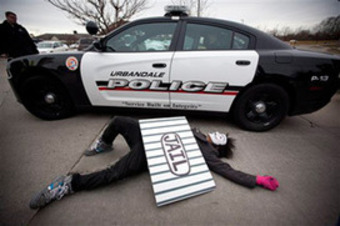
There is a recipe for breaking popular movements. I watched it play out over five years in the war in El Salvador. I now see these familiar patterns in the assault against the Occupy movement.
Scoop.it!

Why are mainstream economists, right and left, so determined to push back any attempt to subsidize manufacturing in America?
Scoop.it!

The Story of Electronics employs the Story of Stuff style to explore the high-tech revolution's collateral damage—25 million tons of e-waste and counting, poisoned workers and a public left holding the bill. Host Annie Leonard takes viewers from the mines and factories where our gadgets begin to the horrific backyard recycling shops in China where many end up. The film concludes with a call for a green 'race to the top' where designers compete to make long-lasting, toxic-free products that are fully and easily recyclable.
Scoop.it!

"It is rare that we as Socialists and Democrats agree with the rating agencies but one thing is clear: neither the markets nor the people accept the strict austerity policies imposed on people today. We strongly criticise economic policymaking in Europe today".
Scoop.it!

The 19th-century historian Jacob Burckhardt spoke of modern times as an "age of brutal simplifiers". Today, the crossed effect of desires for reassuring solidarity amid economic insecurity is to render social life brutally simple: "us-against-them" coupled with "you-are-on-your-own". But I'd insist that we dwell in the condition of "not yet". Modernity's brutal simplifiers may repress and distort our capacity to live together, but do not, cannot, erase this capacity. As social animals we are capable of co-operating more deeply than the existing social order envisions, for Montaigne's emblematic, enigmatic cat is lodged in ourselves.
Scoop.it!

One thing everyone always says is that while this Lesser Depression may be bad, it’s nothing like the Great Depression.
Scoop.it!
Noam Chomsky answers questions after delivering speech at the University of Maryland Friday, January 27, 2012 Full speech at www.therealnews.com...
Scoop.it!

John Gray (Delusions of grandeur, Review, 11 February) writes that "it is impossible to avoid the conclusion that, for Chomsky, America is virtually the sole obstacle to peace in the world". This and other furious charges (eg that I think the US is uniquely evil, can solve every problem in the world, etc) is based entirely on the fact that the collection of op-eds that he reviews (Making the Future) focuses on US and British policies and commentary, a natural and entirely appropriate concern. The stunning irrationality of his inferences renders comment superfluous.
Scoop.it!

That is an example of something that author Terry Eagleton describes in this breezy, easy to read book: "You can tell the capitalist system is in trouble when people start taking about capitalism. It indicates that the system has ceased to be as natural as the air we breathe, and can be seen instead as the historically rather recent phenomenon that it is."
Scoop.it!

Colby Keller isn’t your regular gay porn star. The tall and scruffy former art student has distinguished himself from the rest of the industry not only by his unconventionally hipster aesthetic, but by his unconventional interests. In his well-read blog, the Big Shoe Diaries, Keller writes about everything from Marxism to Foucault to his and his friends’ art projects. Keller’s blog is a testament to the way porn celebrity is changing in the 21st century, as performers face the increasingly difficult task of distinguishing themselves in a sea of free or pirated content. It’s also incredibly charming.
Scoop.it!
Today, New Democracy leader Antonis Samaras finally buckled down to the demands of the Eurozone finance ministers and the Troika to pledge in writing that he would back the fiscal austerity measures and the other conditions of the EU-IMF bailout package. Samaras said he was “committed” to the “objectives and key policies” of the country’s new loan deal with its foreign creditors, adding that “if New Democracy wins the next election in Greece, we will remain committed to the program’s objectives, targets and key policies”.
Scoop.it!

For a long time, a ride on an Amtrak train meant leaving digital technology at the station. Now, the U.S. rail operator is working to leap ahead ̵ (Major technology upgrades in the works for Amtrak.
Scoop.it!

On January 1, the Nigerian government eliminated the subsidies used to keep petrol prices at reasonable rates. The Associated Press reported prices to increase from $1.70 per gallon to upwards of $3.50 per gallon.
Scoop.it!

For the past five months, states across the nation have permitted law enforcement officials to abuse Occupy protesters will near-total impunity. It's true that U.S. District Judge Thelton Henderson told Oakland police they really shouldn't cover up their name tags during protests because that's a blatant violation of department rules, but sadly Henderon's insistence that police abide by the law is an exception, and not the rule.
Scoop.it!

"For all Sennett's critique of party-line politics, though, he stays firmly on the non-dogmatic left. When it comes, the verdict on David Cameron's "Big Society" model of volunteer-led social repair is utterly implacable. For Sennett, in poor areas where global businesses have ruined all competition and now siphon off what cash remains, "the local community, like the colony, is stripped of wealth, then told to make up for that lack by its own efforts".
Scoop.it!

Love is an alternative currency. Occupy is a worldwide movement for change, not short-change. Money as the dominant value has failed practically as well as ideologically. This is a generational opportunity to reclaim love as the proper basis for all that we do – marriage partners or business partners. No longer all of the planet and all of its peoples as one vast money-making machine, but a place we can call home.
Scoop.it!

At the end of the day, political change in Germany must happen if Europe is to survive, much less thrive. Ordinary Germans don’t like being hated by the rest of Europe. Moreover, a growing number of ordinary Germans are coming to realise that German economic success rests on an unsustainable export-led growth model financed by flat wages. The great unknown is whether this lesson will be understood by the more ‘progressive’ elements of Germany’s political class.
Scoop.it!

The global financial crisis has shattered this myth. Who bailed out the banks, pumped in the liquidity, engaged in fiscal stimulus, and provided the safety nets for the unemployed to thwart an escalating catastrophe? Who is re-writing the rules on financial-market supervision and regulation to prevent another occurrence? Who gets the lion’s share of the blame for everything that goes wrong? The answer is always the same: national governments. The G-20, the International Monetary Fund, and the Basel Committee on Banking Supervision have been largely sideshows.
Scoop.it!
What is Open Culture’s Mission? Open Culture brings together high-quality cultural & educational media for the worldwide lifelong learning community. Web 2.0 has given us great amounts of intelligent audio and video. It’s…
Scoop.it!
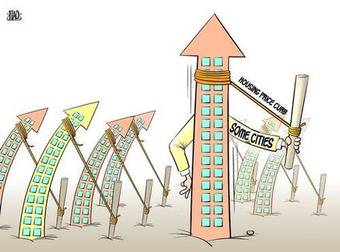
When I first visited Shanghai in 1990, I was invited into the home of a man who lived near the Bund. The house was in the French colonial style, beautiful and historic, but also tiny and made of wood. Walking up its rickety staircase we passed the room of a 90 year-old woman. It was barely large enough for her to lie down in. The man lived with his wife, his son and mother in a compact single room, so small, that minimal tasks required careful synchronization and organization. Such housing conditions were normal in urban China. When I returned to Shanghai in 2001, I gazed at a forest of endless skyscrapers that had replaced the city I knew. Throughout China, the story was similar: A towering sea of concrete, steel and glass swept away all in its path.
Scoop.it!
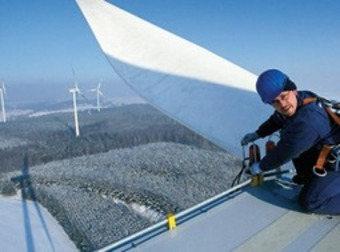
More than 1.1 million people have jobs in Europe’s renewable energy sector, according to new figures released from EurObserv’ER, a renewable energy tracking project supported by the European Commission.
Scoop.it!

Virtually every company has the potential to successfully incorporate complementary economic and environmental efficiencies into their business models, which could transform sustainable products and services from a niche market to the mass market. The challenge that remains is figuring out how to inspire this cultural shift. If we make a commitment to address every step in the consumption cycle, and consumers continue to reap the economic and social benefits, societal norms will adjust in concert. By viewing business through the lens of sustainable growth, we have the potential to pave the way for the radical, transformative shift needed to address the challenges of today at the speed and scale that their magnitude and complexity demand.
|

Curated by jean lievens
Economist, specialized in political economy and peer-to-peer dynamics; core member of the P2P Foundation
Other Topics

Anders en beter
Met P2P voorbij markt en staat: voor een progressieve coalitie rond de commons. Met nieuws over op p2p gebaseerde praktijken en hoe de overheid, de politiek en de zakenwereld ermee (kunnen) omgaan...

money money money
on money and what it is

music-all
From the Great White Way to the West-End and beyond

Peer2Politics
on peer-to-peer dynamics in politics, the economy and organizations

real utopias
Not TINA (There Is No Alternative) but TAPAS: THERE ARE PLENTY OF ALTERNATIVES
|




