Conscients de l'énorme potentiel de monétisation que recèlent les datas de leurs véhicules, les groupes automobiles se préparent à gérer cette nouvelle facette de leur métier.
Via KParticulier

Données de santé, études et rapports : qualité, interopérabilité, recherche, IA, cybersécurité et gouvernance. Une veille sélectionnée par Lionel Reichardt, Pharmageek, pour comprendre les chiffres, examiner les méthodes et relier les données à leur utilité pour le soin et les décisions.
 Your new post is loading...
 Scoop.it! Conscients de l'énorme potentiel de monétisation que recèlent les datas de leurs véhicules, les groupes automobiles se préparent à gérer cette nouvelle facette de leur métier. Via KParticulier 
No comment yet.
Sign up to comment
Scoop.it!
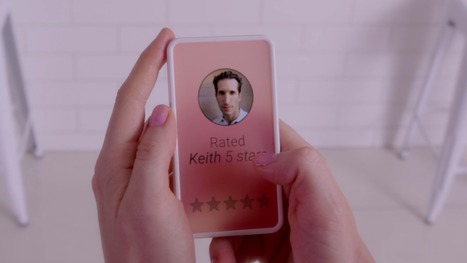
Le système de notation des citoyens a déjà empêché 11,14 millions de trajets en avion et 4,25 millions en train, selon des données d'un organe de presse gouvernemental chinois. Ce système de « crédit social » devrait entrer complètement en vigueur d'ici 2020.
Scoop.it!
Les bienfaits du partage de données | Institut de la Protection Sociale Européenne #hcsmeufr #esante
La Commission Européenne reconnait l’importance des nouvelles technologies et plus particulièrement du transfert de données dans le domaine de la... Via Festival Communication Santé
Scoop.it!

Fitbit va donc utiliser la nouvelle API Google Cloud HealthCare, une solution de géant de la recherche pour faciliter le stockage et la transmission de données médicales. Alors que Google a commencé ses partenariats avec des acteurs historiques comme Stanford, un partenariat avec Fitbit lui ouvre les portes du B2C. Son concurrent historique, Jawbone, a lui fait un choix encore plus fort en s’orientant à 100% sur le B2B, après l’échec de son approche grand public. Aux États-Unis, les assureurs utilisent déjà ces données pour majorer ou minorer leurs primes annuelles pour les utilisateurs. Via France Silver Eco
Scoop.it!

Les antibiotiques ne sont pas automatiques, et pourraient bientôt devenir inutiles. Afin de lutter contre la résistance antimicrobienne, la communauté scientifique cherche à collecter davantage de données à ce sujet pour convaincre les gouvernements et législateurs de prendre des mesures.
Scoop.it!

Fitbit et Google Cloud annoncent un partenariat autour des données de santé. Grâce à l'API Cloud Healthcare de Google, les médecins pourront accéder aux données des utilisateurs de bracelets et autres wearables Fitbit. Via Vigipharm, DIRECT MEDICA by Webhelp
Scoop.it!

Avec l’arrivée des applications et des objets connectés spécialisés dans le domaine de la santé, le volume des big data santé suit une courbe ascendante. Le secteur devrait connaître un essor exceptionnel d’ici 2025.

Jean-Christophe Lévêque's curator insight,
May 3, 2018 5:11 AM
L'utilisation de la #BigData dans la #santé va croitre de manière exponentielle. Les prévisions indiquent que le secteur public va s'en saisir avec un essor exceptionnel. Un des sujets majeurs sera l'adaptation des traitements et de la sécurité des données de santé face à cette déferlante. #hcsmeufr #esanté #MBAMCI.
Scoop.it!
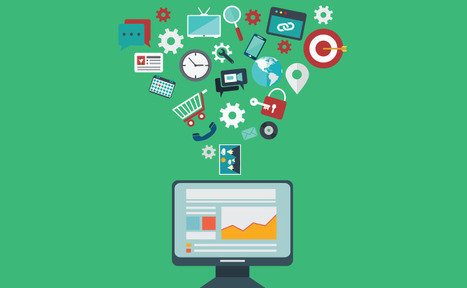
Clinical documentation improvement (CDI) ensures that health services are accurately documented and helps healthcare coders and physicians work toward improved patient care while also streamlining productivity.
When meaningful clinical data is captured, organizations can ensure improved quality reporting, clinician productivity, and even better clinical information delivered at the point of care.
Phoenix Children’s Hospital recently opted for CDI at its outpatient clinics with Medicomp Systems.
It’s important to help physicians make patient care faster, safer, and more efficient.
Every single symptom, sign, medication, surgery, drug, operation procedure, almost a repository of more than 360,000 terms, they have structured and coded with every possible common coding schema, such as ICD-10,” he continued.
Having 360,000 terms can be overwhelming, but they were built along disease patterns. If a physician entered that a patient had asthma, or tried to research asthma in the database, it went out to all related items that were related to asthma and it brought them together in a manner of an automatic template that was a quick, rapid initial draft.
There is no magic formula with clinical documentation and finding an applicable system for an organization. “You cannot take shortcuts. You cannot not capture things that are critical and essential,”
Via nrip

ScientificAnimations's comment,
May 22, 2018 8:46 AM
Blockchain is a system that makes health information accessible to doctors from anywhere, anytime, and on any electronic medical system. http://sco.lt/5yVeuP
Scoop.it!

Les pays nordiques et anglo-saxons ont "pris une longueur d’avance" sur la France dans le domaine du "chaînage" des données comme accélérateur de la transformation des systèmes de soins, selon une étude réalisée par l'association LIR (Laboratoires internationaux de recherche) avec le cabinet de consulting EY, publiée le 19 avril.
Scoop.it!

For decades, innovators have been holding a candle for the potential of Big Data to one day revolutionize health care. Via Florian Morandeau

Florian Morandeau's curator insight,
April 12, 2018 1:19 AM
Are we finally at the point where big data can lead to tangible changes in health care?
Scoop.it!

Rencontre avec le Dr Xavier MIRABEL, oncologue et radiothérapeute - cancer et radiothérapie au Centre Oscar Lambret (COL).
Scoop.it!

Alors que les sénateurs ont donné leur feu vert au projet de loi Cnil 2, qui permet notamment la transposition du règlement européen sur la protection des données personnelles (RGPD), le cabinet d’avocats Houdart et associés a organisé la semaine dernière une table ronde consacrée à cette réforme clé pour le secteur de la santé.
|
Scoop.it!

Healthcare continued to be a lucrative target for hackers in 2017 with weaponized ransomware, misconfigured cloud storage buckets and phishing emails dominating the year. In 2018, these threats will continue and cybercriminals will likely get more creative despite better awareness among healthcare organizations at the executive level for the funding needed to protect themselves. Via Florian Morandeau
Florian Morandeau's curator insight,
May 31, 2018 1:20 AM
This collection highlights some of the biggest breaches across the healthcare industry.
Scoop.it!

Le règlement général européen relatif à la protection des données personnelles (RGPD), qui est entré en vigueur le 25 mai, prévoit plusieurs nouvelles obligations qui s'appliquent à tous les acteurs traitant des données personnelles à grande échelle, dont les données de santé.
Scoop.it!

Les députés ont définitivement adopté le 14 mai à main levée le projet de loi relatif à la protection des données personnelles qui permet notamment la transposition du règlement européen sur la protection des données personnelles (RGPD).
Scoop.it!

As healthcare professionals, it seems we can’t escape the buzz and hype of artificial intelligence (AI) today. However, unlike other industries, healthcare’s adoption of AI is still in its infancy, in part, due to many providers still updating their tools and processes for the digital age. According to an Accenture analysis, growth in the AI health market is expected to reach $6.6 billion by 2021 and key clinical health AI applications can potentially create $150 billion in annual savings for the US healthcare economy by 2026.
Scoop.it!

Fitbit and Google have entered a partnership focused on better leveraging wearables and cloud-based technologies for digital health, the companies announced this morning. The effort will be largely focused on refining EHRs to give medical practitioners a comprehensive look into a patient’s health during treatment, according to a statement from Fitbit. Via Philippe Marchal
Scoop.it!
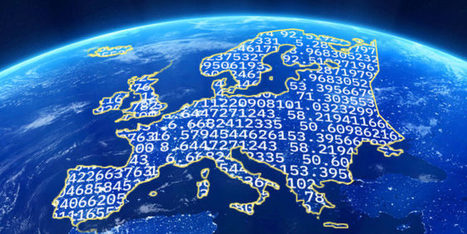
L’Union européenne veut faciliter le partage des données de santé
Scoop.it!

Like footprints in the snow, a distinct trail remains every time we access a digital device that follows us from website to website and from app to app. While it would seem our time spent online—for fun or work—is our own, it turns out these digital footprints don’t serve us as much as they serve the artificial intelligence constantly looking over our collective shoulders and gathering that information for later use. Each time we tap on a smartphone screen—which we each do an average of more than 2,600 times every day—the data we access is tracked and stored. (Eighty percent of our smartphone app usage is consumed by querying Google or interacting on Facebook.) Much of the information we leave behind on the internet is widely available to anyone with the interest and (moderate) computer skills to track it down. (And the ongoing uproar over the Facebook/Cambridge Analytica debacle demonstrates just how easy it is to have personal information shared far more broadly than users expect or want.) Social media sites, where many of us often share very personal details and input detailed user profiles, are used to extract information which is later used to serve us ads. This isn’t a concern when the ad depicts a household appliance or new car, but should we be concerned when advertisers start selling medications and treatments based on what we’ve posted? Do Hashtags Equal #Depression? Research from Arizona State University and Georgia Tech explores the images and hashtags used on social media, specifically Instagram (owned by Facebook), and how “dark” images may be very informative regarding mental health status. As part of the study, they added more than 2 million images to an artificial-intelligence engine to secure results relating to the apparent, downward spiraling mental health status of specific users. In other words (no pun intended), a picture (and a handful of hashtags) is worth more than a thousand words when it comes to attempting to diagnose mental health from afar. Today, some social media outlets have already taken on the task—and potential risk—of monitoring users themselves, which is problematic since they are not healthcare professionals: “Although Instagram and other social media platforms have put in place some intervention policies to bring help to those users who engage in mental health disclosure, at best, they can be called ‘blanket’ strategies,” according to the ASU/Georgia Tech research. “This is because the interventions are neither tailored to the individual or the context, nor do they leverage nuanced and subtle cues manifested in shared content.” Data Mining to Serve Ads But what happens when you’re not shopping websites, but, rather, posting about a bad day at work on social media? The post is likely public (although users are becoming more aware of privacy issues) and you likely remain the copyright holder, but the social media site “owns” your post in other ways. As more companies mine social media data to publish relevant advertising, there’s a persistent risk in how personal information is used, especially in when it comes to mental or physical health. (The ASU/Georgia Tech researchers, for example, accessed user data via Instagram’s readily-available application programming interface, which included user bios from which they were able to extract additional detail.) Ethical or not, it seems the logical next step in the data mining sphere is to sell culled information to companies that will use it to, for example, buy ads for prescription drugs and place them in the social media feeds of or the websites visited by those who portray depression through photos or text. This, of course, again raises the issue that these companies are not healthcare providers and the suggested medications may be contraindicated or unnecessary. And just last week CNBC revealed Facebook was in talks with several healthcare organizations to acquire de-identified patient data and apply it to Facebook data in a process called “hashing,” which allows the two unrelated data sets to be combined in such a way that it’s possible to bring the information together to match people found in both data sets. Although the matched person technically remains anonymous, Facebook or another organization would have enough information to market healthcare products to a specific person. Will Advertising Dollars Force the Issue? Very few people are prepared to go cold turkey and stop using the internet altogether, so users will need to decide how—or if—they want to interact with the artificial intelligence that keeps an eye on our online movements. How far are we prepared to go to protect our privacy? It will take a combination of social media companies, healthcare organizations, data brokers and, most importantly, social media and internet users coming together to reign in potential misuse and formulate acceptable use of this data. In the meantime, it remains important that internet users be circumspect when posting health information to social media, lest the data be misinterpreted by an algorithm: Artificial intelligence should be used to help us in our daily lives, not make it more complex. Phil Walsh is Chief Marketing Officer for Healthcare and Life Sciences at Cognizant, a Fortune 500 company. Via Plus91
Scoop.it!

Dans le cadre des Etats généraux, le personnel médical de l’établissement de la Somme discutait de la possibilité de faire rentrer un algorithme dans la prise en charge aux urgences.
Scoop.it!

The technology appears capable of safeguarding sensitive patient data, but it has yet to make a big footprint outside the cryptocurrency community. Via Florian Morandeau
Florian Morandeau's curator insight,
April 26, 2018 1:24 AM
Blockchain might have applications that help secure health data from hackers.
Scoop.it!
Une étude met en lumière le potentiel des données de santé françaises accessibles et la dynamique enclenchée avec la création du Système national des données de santé.
Scoop.it!
Premier site français d’information en continu sur les technologies de l’information et de la communication (TIC, NTIC) dans la santé
Scoop.it!

Emmanuel Macron a annoncé un "Hub" rassemblant les dossiers médicaux des hôpitaux et des médecins de ville. Pas gagné.
|