Complexity and Random Overlaps
829 views |
+0 today


 Your new post is loading...
 Your new post is loading...
Your new post is loading...
 Scoop.it!

To investigate the dynamics of social networks and the formation and evolution of online communities in response to extreme events, we collected three datasets from Twitter shortly before and after the 2011 earthquake and tsunami in Japan. We find that while almost all users increased their online activity after the earthquake, Japanese speakers, who are assumed to be more directly affected by the event, expanded the network of people they interact with to a much higher degree than English speakers or the global average. By investigating the evolution of communities, we find that the behavior of joining or quitting a community is far from random: users tend to stay in their current status and are less likely to join new communities from solitary or shift to other communities from their current community. While non-Japanese speakers did not change their conversation topics significantly after the earthquake, nearly all Japanese users changed their conversations to earthquake-related content. This study builds a systematic framework for investigating human behaviors under extreme events with online social network data and our findings on the dynamics of networks and communities may provide useful insight for understanding how patterns of social interaction are influenced by extreme events. Network Structure and Community Evolution on Twitter: Human Behavior Change in Response to the 2011 Japanese Earthquake and Tsunami Scientific Reports 4, Article number: 6773 http://dx.doi.org/10.1038/srep06773 Via Complexity Digest 
Scoop.it!

What allows a creative enterprise—a film studio, a design firm, a start-up—to flourish? It's an old question, but one that has become increasingly relevant in the transition to an information economy. In the new book Collective… Via june holley
Liz Rykert's insight:
Check out the new book referenced in the article - Collective Genius: The Art and Practice of Leading Innovation.
Scoop.it!
Intersting exampl eof Vox is a general interest news site for the 21st century. Its mission is simple: Explain the news. Politics, public policy, world affairs, pop culture, science, business, food, sports, and everything else that matters are part of our editorial ambit. Our goal is to move people from curiosity to understanding.
Liz Rykert's insight:
Interesting example of how to present content online in ways that support browsing and exploring and help people go deep when they need or want to.
Scoop.it!

We have known for at least 100 years that a brain is organized as a network of connections between nerve cells. But in the last 10 years there has been a rapid growth in our capacity to quantify the complex topological pattern of brain connectivity, using mathematical tools drawn from graph theory. Complex network theory and the brain http://rstb.royalsocietypublishing.org/site/2014/network.xhtml Via Complexity Digest, june holley
Scoop.it!
The importance of complexity is well-captured by Hawking's comment: "Complexity is the science of the 21st century". From the movement of flocks of birds to the Internet, environmental sustainability, and market regulation, the study and understanding of complex non-linear systems has become highly influential over the last 30 years.
Via Complexity Digest
Scoop.it!
Liz Rykert's insight:
the title says it all: Build trust, embrace networks, manage complexity
Scoop.it!

Last week I spoke at Measurefest. The topic of my talk was, "Network mapping and visualising relative influence" Via luiy, june holley

luiy's curator insight,
May 30, 2014 6:55 AM
Using conversational data from influencer networks to inform and evaluate content strategy.
Use an author based query (not keyword based) to grab everything they’re saying (e.g. our primary @measurefest influencer list). Then without bias, we can see what topics are being discussed right now amongst this group. This can then be used to inform content planning decisions.
Inform:What are your target audience / influencers talking about?Evaluate:Have you managed to influence the conversation with your content?What volume of mentions from your target audience relate to your content?Basic influencer identificationFinds generally influential people onlineWho define themselves as experts, or talk a lot about a topicAdvanced influencer network mappingConsiders the relevance of an influencer within a niche networkCreates a visual to illustrate the value of the method to senior stakeholders
Scoop.it!
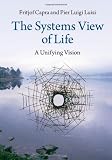
Over the past thirty years, a new systemic conception of life has emerged at the forefront of science. New emphasis has been given to complexity, networks, and patterns of organisation leading to a novel kind of 'systemic' thinking. This volume integrates the ideas, models, and theories underlying the systems view of life into a single coherent framework. Taking a broad sweep through history and across scientific disciplines, the authors examine the appearance of key concepts such as autopoiesis, dissipative structures, social networks, and a systemic understanding of evolution. The implications of the systems view of life for health care, management, and our global ecological and economic crises are also discussed. Written primarily for undergraduates, it is also essential reading for graduate students and researchers interested in understanding the new systemic conception of life and its implications for a broad range of professions - from economics and politics to medicine, psychology and law. Via Complexity Digest
Liz Rykert's insight:
Looking forward to this book. Friitjof Capra is an accessible writer who was one of the people to really get me thinking about seeing with a whole systems lens.
Scoop.it!

An interactive site that gives you all the steps you need to take to find a job that makes money and does good.
Liz Rykert's insight:
Love this new site - thanks to Arti Freeman for sharing!
Scoop.it!
Scoop.it!

U.S. universities and colleges face a host of challenges. But a number of large and small experiments across the nation point the way forward.
Liz Rykert's insight:
Interesting to watch impact of shifts due to huge disintermediaiton trends out there - shifting from hierarchical structures to distributed networked ones.
|
Scoop.it!

As the new year approaches, many of us will resolve to transform our bodies -- but what about our minds?
Liz Rykert's insight:
I love this time of year when all the "best of.." or "Top Ten" lists appear. I particularly liked this one. My fav was how it is more powerful to say "I don't..." as opposed to I can't..." For example research has found you are much more successful at keeping your resolutions around food if you say: I don't eat cookies rather than I can't eat cookies. I am thinking this might be useful right about now. :)
Scoop.it!

I am in an improvisational theater performing group. We improvise full-length plays with nothing planned in advance. No structure. No outline. No character or plot development. Nothing, except for 2 locations we get from the audience at the beginning of...
Liz Rykert's insight:
Love the seven simple rules identified for improv and complex adaptive systems. Thanks to Lisa Kimball for tweeting this story!
Scoop.it!
Artificial, neurobiological, and social networks are three distinct complex adaptive systems (CASs), each containing discrete processing units (nodes, neurons, and humans, respectively). Despite the apparent differences, these three networks are bound by common underlying principles which describe the behavior of the system in terms of the connections of its components, and its emergent properties. The longevity (long-term retention and functionality) of the components of each of these systems is also defined by common principles. Here, I will examine some properties of the longevity and function of the components of artificial and neurobiological systems, and generalize these to the longevity and function of the components of social CAS. In other words, I will show that principles governing the long-term functionality of computer nodes and of neurons, may be extrapolated to the study of the long-term functionality of humans (or more precisely, of the noemes, an abstract combination of “existence” and “digital fame”). The study of these phenomena can provide useful insights regarding practical ways that can be used to maximize human longevity. The basic law governing these behaviors is the “Law of Requisite Usefulness,” which states that the length of retention of an agent within a CAS is proportional to the agent's contribution to the overall adaptability of the system. Technological integration and hyperconnectivity: Tools for promoting extreme human lifespans Complexity http://dx.doi.org/10.1002/cplx.21626 Via Complexity Digest
Liz Rykert's insight:
Interesting article that looks at neural networks and computer networks and human networks and concludes one can learn form these two and apply them to human networks. Quote: "show that principles governing the long-term functionality of computer nodes and of neurons, may be extrapolated to the study of the long-term functionality of humans"
Scoop.it!

As long as there have been people watching birds, there have been theories as to how and why they do what they do. In the modern era, theories about why birds flock and why they migrate in v-formations have abounded, yet answers have been few. But new research using creative technology on both starling murmurations and bald ibis’ migration reveals that complex flight dynamics and rapid-fire adjustments based on sensory feedback previously believed impossible for birds are indeed occurring. Via Miguel Prazeres
Scoop.it!

In his physics laboratory, Ajay Sood watches hundreds of tiny brass pins spontaneously align themselves into flower-shaped patterns in experiments where he’s coaxed non-living matter to behave like flocks of birds flying in synchrony.
The millimetre-sized tapered pins, initially scattered in a disordered manner on a smooth metal surface, jump into action when the surface vibrates and align themselves within seconds into a highly-ordered pattern, as if each pin knows exactly where to go.
The experiments by Sood and his colleagues at the Indian Institute of Science (IISc), Bangalore, and the Tata Institute of Fundamental Research (TIFR) Centre for Interdisciplinary Sciences, Hyderabad, are among the first to display spontaneous alignment of speed and orientation by non-living and non-robotic objects.
The scientists have used their results to construct a new theoretical model of flocking which challenges current ideas that some species of birds, fish and insects display flocking behaviour through the so-called nearest-neighbour effect: individuals merely mimic the movement of nearest neighbours, but the group shows collective behaviour. The findings of the IISc-TIFR team appeared today in the journalNature Communications.
“We’re studying the physics of non-living objects to understand better a phenomenon widely observed in the biological world,” Sood said. Via Ashish Umre
Scoop.it!

“What is network Centred Leadership? The definition of insanity is doing the same thing over and over and expecting different results. – Albert Einstein… - Charles Carnegie - Google+”
Via june holley
Scoop.it!

A number of social-ecological systems exhibit complex behavior associated with nonlinearities, bifurcations, and interaction with stochastic drivers. These systems are often prone to abrupt and unexpected instabilities and state shifts that emerge as a discontinuous response to gradual changes in environmental drivers. Predicting such behaviors is crucial to the prevention of or preparation for unwanted regime shifts. Recent research in ecology has investigated early warning signs that anticipate the divergence of univariate ecosystem dynamics from a stable attractor. To date, leading indicators of instability in systems with multiple interacting components have remained poorly investigated. This is a major limitation in the understanding of the dynamics of complex social-ecological networks. Here, we develop a theoretical framework to demonstrate that rising variance—measured, for example, by the maximum element of the covariance matrix of the network—is an effective leading indicator of network instability. We show that its reliability and robustness depend more on the sign of the interactions within the network than the network structure or noise intensity. Mutualistic, scale free and small world networks are less stable than their antagonistic or random counterparts but their instability is more reliably predicted by this leading indicator. These results provide new advances in multidimensional early warning analysis and offer a framework to evaluate the resilience of social-ecological networks. Early Warning Signs in Social-Ecological Networks. PLoS ONE 9(7): e101851. doi:10.1371/journal.pone.0101851 (2014) Suweis Samir, D'Odorico Paolo Code of the analysis available at https://github.com/suweis http://www.plosone.org/article/info%3Adoi%2F10.1371%2Fjournal.pone.0101851 Via Complexity Digest
Scoop.it!

Recently much attention has been paid to the study of the robustness of interdependent and multiplex networks and, in particular, the networks of networks. The robustness of interdependent networks can be evaluated by the size of a mutually connected component when a fraction of nodes have been removed from these networks. Here we characterize the emergence of the mutually connected component in a network of networks in which every node of a network (layer) alpha is connected with q_alpha its randomly chosen replicas in some other networks and is interdependent of these nodes with probability r. We find that when the superdegrees q_alpha of different layers in a network of networks are distributed heterogeneously, multiple percolation phase transition can occur. We show that, depending on the value of r, these transition are continuous or discontinuous. Via Claudia Mihai, Complexity Digest
Scoop.it!

It is time to move from innovation as an ideology to innovation as a process.
Liz Rykert's insight:
Important conversation about Innovation in the social sector. Three points highlighted: "First, innovation is often perceived as a development shortcut; thus innovation becomes overrated. The tremendous value that is created by incremental improvements of the core, routine activities of social sector organizations gets sidelined. Therefore pushing innovation at the expense of strengthening more routine activities may actually destroy rather than create value. Second, innovation in social sector organizations often has little external impact to show when it is enacted in unpredictable environments. Even proven innovations often fail when transferred to a different context. Yet the cumulative learning from failures may be tremendously valuable in understanding how a particular context ticks. This potentially builds and strengthens an organization’s capacity for productive innovation over time. In other words, if we evaluate innovation primarily by its outcome in the form of external impact, we may undervalue the positive internal organizational impact that comes from learning from failed innovation. Third, the hoped-for success factors for innovation that researchers and consultants have identified ignore the power of negative organizational factors, such as bad leadership, dysfunctional teams, and overambitious production goals." Worth the read...
Scoop.it!


Erin Walsh's curator insight,
May 22, 2014 2:55 PM
Infographics are a great way to grab someones attention and get your information out there 
Marja Oilinki's curator insight,
May 23, 2014 5:21 AM
Toistaiseksi Pro-versiona ilmainen melkoisen intuitiivisesti toimiva ja tyylikäs infografiikkatyökalu Sprites sopii yhteen Googlen työkalujen kanssa. Esimerkiksi tilaston muuttaminen havainnolliseen muotoon on todella helppoa. 
BI Media Specialists's curator insight,
May 30, 2014 7:54 AM
I love an infographic! Such a great way to get information across to visual learners. Right now you can sign up for a free pro account!
Scoop.it!
Complex systems have multilevel dynamics emerging from interactions between their parts. Networks have provided deep insights into those dynamics, but only represent relations between two things while the generality is relations between many things. Hypergraphs and their related Galois connections have long been used to model such relations, but their set theoretic nature has inadequate and inappropriate structure. Simplicial complexes can better represent relations between many things but they too have limitations. Hypersimplices, which are defined as simplices in which the relational structure is explicit, overcome these limitations. Hypernetworks, which in the simplest cases are sets of hypersimplices, have a multidimensional connectivity structure which constrains those dynamics represented by patterns of numbers over the hypersimplices and their vertices. The dynamics of hypernetwork also involve the formation and disintegration of hypersimplices, which are seen as structural events related to system time. Hypernetworks provide algebraic structure able to represent multilevel systems and combine their top-down and bottom-up micro, meso and macro-dynamics. Hypernetworks naturally generalise graphs, hypergraphs and networks. These ideas will be presented in a graphical way through examples which also show the relevance of hypernetworks to policy. It will be argued that hypernetworks are necessary if not sufficient for a science of complex systems and its applications. The talk will be aimed at a general audience and no prior knowledge will be assumed. 10th ECCO / GBI seminar series. Spring 2014 From networks to hypernetworks in complex systems science April 18, 2014, Brussels Jeffrey Johnson Open University, UK Slides, references and more: http://ecco.vub.ac.be/?q=node/231 Via Complexity Digest
Liz Rykert's insight:
I am fascinated with the role of networks in complex systems as the scaffolds that connect and conduct.
Scoop.it!

Control: It’s the essence of management. We’re trained to measure inputs, throughputs, and outputs in hopes of increasing efficiency and producing desired results. In a world of linear processes, such as in the factories of the Industrial Age, that made sense. But in today’s knowledge economy, where enterprises are complex, adaptive systems, it’s counterproductive. The real problem is confusion between control and order. Control implies centralized control and hierarchical relationships. The person with control tells others what to do and whether they are successful or not. Order, on the other hand, emerges from self-organization. There may not be anyone telling others what to do, yet things get done—often with great efficiency and effectiveness. People know what is expected of them and what they can expect of others. But how can this be true? Mustn’t an orchestra have a conductor? A dance troupe, a choreographer? A company, a CEO? Not necessarily. Nature abounds with examples of what is known as swarm intelligence. Termites build intricate dwellings without the benefit of set of plans or engineers with advanced degrees. Birds migrate thousands of miles in formations where the lead position rotates to optimize their collective capacity. There are no marching orders or hierarchies dictating who leads. Massive flocks of starlings engage in intricate maneuvers known as murmuration with neither collisions nor confusion. There is order without overarching control. Indeed, our obsession with control helps explain why human-designed organizations fail to achieve such beautiful synchronicity. Via Kenneth Mikkelsen

Steve Bax's comment,
April 23, 2014 4:42 AM
This ties with the Belasco and Stayer thinking. Humans tend to seek control. Feeling out of control of ourselves and our lives can cause physiological effects. So passing it to others is tough.
Steve Bax's curator insight,
April 23, 2014 4:43 AM
Another stimulating scoop from Kenneth. This ties with the Buffalo and Geese theory from Belasco and Stayer. Passing control to others is not always easy. 
Tony Brugman (Bright & Company)'s curator insight,
June 5, 2014 5:12 AM
Good blog on the difference between 'control' and 'order' (and what we can learn from swarms) |