 Your new post is loading...

|
Scooped by
Jeff Domansky
July 29, 2016 2:50 AM
|
Social media is playing a transformative role in this presidential election. Donald J. Trump and Hillary Clinton are heavily utilizing social media platforms to connect with voters. And it’s working.Millions of people follow Trump and Clinton on Facebook, Twitter, Instagram, and the numbers are growing every day. Via these platforms, people are tuning in to see what the candidates have to say, whether Clinton and Trump’s platforms align with their views. People are invested in the Clinton and Trump brands. After rising to the top of the political social sphere, it’s safe to say Trump and Clinton can teach us a few things about using social media to boost our own personal branding. Here are five social media takeaways from Clinton and Trump’s social media campaigning....
|
|
Scooped by
Jeff Domansky
July 29, 2016 1:50 AM
|
Digital advertising, once touted as the savior of newspaper publishing, is proving to be yet another drag for many companies’ bottom lines. The New York Times Co. announced that its digital ad revenues slipped again in the second quarter of the year, marking two consecutive quarters of year-over-year declines. NYTCO reported that total digital ad revenues sank 6.8% to $45 million in the second quarter, which president and CEO Mark Thompson attributed to a drop in traditional Web display advertising, canceling out growth in newer digital ad categories including mobile and video. The digital decline compounded print losses, down 14.1%, for a total ad revenue decline of 11.7%, to $131.2 million. The ad declines were partially offset by continued growth in circulation revenues, due mainly to the success of NYTCO’s digital subscription strategy, with total circ revenues up 3% to $219.5 million....
|
|
Scooped by
Jeff Domansky
July 28, 2016 2:06 AM
|
However, with Instagram’s timeline now also algorithmically sorted and the aforementioned growth in engagement with video on the platform, it’s likely that these engagement rates will continue to rise. It’s important to note that having a successful Instagram video strategy does not mean you’ll be able to directly transplant it to other networks. Although there are some elements that will cross over, and if the video itself is unique enough it will take off regardless, Instagram is very much its own place. There will be differences from platform to platform, so assuming that the videos that you produce for your Facebook page will be immediate success on Instagram is a bad idea. We took a closer look at Instagram videos in Spike to see what the most successful videos on the platform have in common....
|
|
Scooped by
Jeff Domansky
July 28, 2016 1:39 AM
|
You know what's really difficult?Being succinct. Seriously ... it's ridiculously hard. If you don't believe me, just grab yourfavorite copywriter and ask them. It's especially difficult to express a complex emotional concept in just a couple of words -- which is exactly what a slogan does. That's why we have a lot of respect for the brands that have done it right. The ones that have figured out how to convey their value proposition to their buyer persona in just one, short sentence -- and a quippy one, at that. So if you're looking to get a little slogan inspiration of your own, take a look at some of our favorite company slogans from both past and present. (Note: We've updated this post to include some suggestions from the comment section.)...
|
|
Scooped by
Jeff Domansky
July 28, 2016 1:09 AM
|
Today, 80 percent of internet users own a smartphone, and consumers are "multi-screening" (browsing on both mobile and desktop devices). EThat's why you must create consistent experiences across an array of devices. "The latest data shows that we are now well past the tipping point," says Smart Insights, as "mobile digital media time in the U.S. is now significantly higher at 51 percent compared to desktop (42 percent)." This is about more than simply making your site responsive to mobile devices. It means thinking about how the vertical screen changes the way we write and structure content. Below we debunk three myths that can trip up content marketers writing for mobile:...
|
|
Scooped by
Jeff Domansky
July 28, 2016 12:52 AM
|
The Internet is no place for sissies. Competition is fierce and you need to be seriously committed to making a killer blog if you want yours even to be seen by anyone searching for what you offer. This post is for those who are serious about creating a site that rocks, and if you follow the tips here, it’s likely you will desecrate your competition who are too lazy to do what it takes to get down ‘n dirty. Here’s the quick recipe for creating a killer WordPress blog, and I’ll go into the details further along:...
|
|
Scooped by
Jeff Domansky
July 27, 2016 2:16 PM
|
Over the past three years, Scotch whisky has struggled to regain growth, hit by softness in key markets, notably China, Russia and Latin America.
However, the Scotch Whisky Association (SWA) recently confirmed that the sector’s export declined slowed to -2.4% in 2015, compared to -7% in 2014, indicating positive growth prospects for the year ahead.
Growth is skewed towards single malts as the blended category declined in terms of both value and volume.
This dynamic is reflected our list of the top 10 best-selling Scotch whisky brands – all unsurprisingly blends and many still struggling to claw back growth....
|
|
Scooped by
Jeff Domansky
July 27, 2016 12:46 PM
|
In 2014 the number of mobile users eclipsed desktop users. Since then, mobile technology has continued to change the way we browse the web and connect with brands. “The latest data shows that we are now well past the tipping point.” says Smart Insights, as “mobile digital media time in the US is now significantly higher at 51% compared to desktop (42%).”
Today, 80% of internet users own a smartphone and consumers are “multiscreening” (browsing on both mobile and desktop devices), meaning it’s more important than ever to create consistent experiences across devices. This is about more than simply making your site mobile responsive. It means thinking about how the vertical screen changes the way we write and structure content.
Below we debunk 3 myths that mislead content marketers when writing for mobile so you create better content, regardless of the screen size....
|
|
Scooped by
Jeff Domansky
July 27, 2016 8:55 AM
|
Color wields enormous sway over our attitudes and emotions. When our eyes take in a color, they communicate with a region of the brain known as the hypothalamus, which in turn sends a cascade of signals to the pituitary gland, on to the endocrine system, and then to the thyroid glands. The thyroid glands signal the release of hormones, which cause fluctuation in mood, emotion, and resulting behavior. Research from QuickSprout indicates that 90% of all product assessments have to do with color. “Color,” writes Neil Patel, is “85% of the reason you purchased a specific product.” It’s a no-brainer fact of any website that color affects conversions. Big time. So, the bottom line is: use the right colors, and you win....
|
|
Scooped by
Jeff Domansky
July 27, 2016 2:51 AM
|
We surveyed approximately 9,800 full-time workers, ages 19 to 68, in Brazil, China, Germany, India, Mexico, Japan, the UK, and the U.S. Our most striking finding was that fewer than half of all surveyed professionals have a high amount of trust in their companies: Only 46% place “a great deal of trust” in their employers, and 15% report “very little” or “no trust at all.” (The rest, 39%, say they have “some trust,” which is not completely pessimistic but does want for enthusiasm.) There clearly is room to improve for all of us, and companies (including EY) should pay attention to what’s discouraging the most distrusting group of workers. Among those with little or no trust in their employer, the top five reasons were: “Employee compensation is not fair,” their employer “does not provide employees with equal opportunity for pay and promotion,” there’s a “lack of strong senior leadership,” “too much employee turnover — voluntary and/or involuntary,” and the employer does not foster a “collaborative work environment.”...
|
|
Scooped by
Jeff Domansky
July 27, 2016 2:25 AM
|
Smartphones accounted for 45.1 percent of all shopping traffic online in the first quarter of 2016. According to a study from Demandware, phones barely took the lead over computers, which accounted for 45 percent of all traffic. The e-commerce software provider predicts that phones will account for 60 percent of all e-commerce traffic by the end of 2017. As e-commerce continues to grow – it accounted for 7.8 percent of retail sales in the first quarter, up from 1.3 percent in 2002 – the importance of mobile also grows. "If they can get it right on mobile today and tomorrow, that's where they're going to see a lot of value going forward," Rick Kenney, author of the study and head of consumer insights for Demandware, told Star-Telegram. Sales from mobile more than doubled from 2013 to 2015, according to ComScore....
|
|
Scooped by
Jeff Domansky
July 27, 2016 1:14 AM
|
The results make for interesting reading. Reagan and co say that their techniques all point to the existence of six basic emotional arcs that form the building blocks of more complex stories. They are also able to identify the stories that are the best examples of each arc. The six basic emotional arcs are these:A steady, ongoing rise in emotional valence, as in a rags-to-riches story such as Alice’s Adventures Underground by Lewis Carroll. A steady ongoing fall in emotional valence, as in a tragedy such as Romeo and Juliet. A fall then a rise, such as the man-in-a-hole story, discussed by Vonnegut. A rise then a fall, such as the Greek myth of Icarus. Rise-fall-rise, such as Cinderella. Fall-rise-fall, such as Oedipus. Finally, the team looks at the correlation between the emotional arc and the number of story downloads to see which types of arc are most popular. It turns out the most popular are stories that follow the Icarus and Oedipus arcs and stories that follow more complex arcs that use the basic building blocks in sequence. In particular, the team says the most popular are stories involving two sequential man-in-hole arcs and a Cinderella arc followed by a tragedy....
|
|
Scooped by
Jeff Domansky
July 26, 2016 11:36 PM
|
Search engine optimization is incredibly important for marketers. When you optimize your web pages -- including your blog posts -- you're making your website more visible to people who are looking for keywords associated with your brand, product, or service via search engines like Google.
But it can be a pretty tricky tactic to master with Google's copious algorithm updates.
How do you know what matters and what doesn't? What are today's blog SEO best practices, and what's considered "old-school"? How on earth can you keep it all straight?
We understand confusion is a common issue facing inbound marketers -- and we want to help. In this post, we'll cover how to optimize your blog posts for the keywords you care about, along with a few other optimization tactics you should keep in mind....
|
|
|
Scooped by
Jeff Domansky
July 29, 2016 2:37 AM
|
Early last year, our company, Duarte Inc., was well into a great season of change. We had turned our org chart on its side, so that nearly every person in the company either had a new boss or was a new boss. We had moved to a different building. We had implemented new software tools. We were about to release a new book. And we did all this while trying to perform our jobs at the highest possible level. People were tired and stressed. We knew deep down how much we really enjoyed and respected one another, but the pain of change made it difficult to for us to connect with that feeling. We had to do something special to rekindle it. So we set aside some time over the course of a week for employees to meet in small groups and talk about how we could best move forward, strong and united. Then, that Friday afternoon, everyone gathered in a large, open area in the office. The seats were arranged in a semi-circle, and a large drum stood in front of each seat. Over the next two hours, all of us (100-plus employees) beat our drums — first chaotically like a first-grade music class, and then, with the help of a music coach, in unison....
|
|
Scooped by
Jeff Domansky
July 29, 2016 1:38 AM
|
Q: What trends has 2016 seen for eCommerce in the mobile space, and what do you expect for the remainder of the year? A: We’re seeing big brands invest in apps because apps are playing a critical role in eCommerce. It finally gives brands a platform where they can engage with their users, and when done right – push the right message at the right time – increase sales significantly. Urban Outfitters and The Gap are two good examples, but there are many more. These brands have invested in apps offering a better user interface, which is essential for maintaining and growing the customer relationship. At the same time, apps also make it easier for brands to reengage shoppers and learn about their likes and dislikes. One of the key things about mobile is it bridges the divide between online and offline (eCommerce and the store). Home Depot is using mobile to navigate their stores, and when that data is combined with loyalty program data and push notifications, it yields a very clear picture of consumer behavior. Brands are also deploying beacons to increase the targeted use of push notifications, delighting the user in the right time. And increasingly, as eCommerce brands are relying more on apps, the UI around it has also gotten more sophisticated. Using data in a smart way to acquire engaged users, for example layering data, into Facebook creating smart look alike audiences reaching like -minded users. Platforms such as Facebook are spending a lot of efforts to improve their offering, including carousel ads and dynamic product ads....
|
|
Scooped by
Jeff Domansky
July 28, 2016 1:50 AM
|
Given the expanse and importance of LinkedIn, most people try to add and accept meaningful connections on the professional network. Still, there are reasons why you might not be making the connections you are hoping for....
|
|
Scooped by
Jeff Domansky
July 28, 2016 1:20 AM
|
Mobile search is essential. In fact, according to Forrester’s Mobile Audience Data, Q4 2015, 87% of US smartphone owners rely on browser-based search on mobile devices. And the data reveals that Google’s search engine is the most common path to a mobile site even for well-known brands such as Amazon, Walmart and Kmart. As a top discovery resource, companies can’t afford to wait any longer to implement a mobile-first search strategies. The biggest seen mistake today? Either lacking a strategy completely, or treating mobile search the same way as desktop search. As Forrester Research’s Dr. James McQuivey says, “When businesses first adopt a technology, they do old things in new ways. When they internalize a technology, they begin to do new things.” Consumers use mobile phones very differently than they use desktop computers. So must Marketers. Forrester conducted an in-depth analysis of how consumers use Google search on mobile versus desktop devices to parse-out how consumers use the two devices differently. Today, Forrester finds that consumers purchase a range of categories on their smartphones: insurance, travel, financial services products, and even pet food. For this research we focused on the travel category because consumers are so likely to research and book travel on mobile devices – Forrester’s Mobile Audience Online Survey, Q4 2015 reveals that 29% of mobile users have purchased hotel rooms and 22% an airline ticket on their smartphone....
|
|
Scooped by
Jeff Domansky
July 28, 2016 12:59 AM
|
Every Monday morning, you find yourself sitting down to send 10-15 emails to people you’d love to get responses from. Maybe they are cold prospects, or potential joint venture partners, or press outlets you’re hoping to get coverage in. Regardless of why you email, to ultimately get what you want the other person has to open and reply to your email, lost in the over 205 Billion emails sent per day according to Radicati Group. Over the past 2 months, for every 100 emails I sent to influencers, A-Listers, and CEO’s, 97 were opened and 92 were replied to, using 3 nifty secrets built into this tool called Send Later for Gmail....
|
|
Scooped by
Jeff Domansky
July 27, 2016 3:23 PM
|
In total, 2016 Prime Day was the biggest U.S. sales day ever, surpassing Cyber Monday 2015 by 19%, according to Slice Intelligence, which measures all digital commerce activity and customer loyalty. Slice also found that, on Prime Day, Amazon held 74% of the market share of all U.S. consumer ecommerce.
Sales totals aside, here are some significant takeaways from Prime Day pertaining to Amazon’s customer relationships: - By offering exclusive deals to members, Amazon continued to showcase the value and advantages of Amazon Prime. Membership continues to grow, from an estimated 75 million at the end of 2015 to 85 million now — with projections that it will reach 110 million by the end of 2016.
- The deepest discounts seemed to be for Amazon devices such as the Tap, Echo and Kindle Fire. Despite the low cost, the premium devices align consumers even more closely with Amazon and make it easier for them to shop and order – thereby facilitating future purchases with the online retailer.
- Prime Day also stimulated customer engagement through the Amazon app. Survey Monkey, which tracks mobile app usage, reported 12 million mobile users on Prime Day, a 50% increase from the 8 million users on an average day. Usage for the week went up 35% in all. Research further showed that 50% of Walmart app users also use the Amazon app — however, very few Amazon app users also use Walmart’s app, demonstrating Amazon’s dominance in the category.
- The opportunity to reach new customers outweighed the negative experiences of others. Some glitches were reported, such as problems with checkouts early in the day and complaints on social media that sale prices applied to a limited number of products. But the record number of new subscribers far surpassed the number of shoppers who were dissatisfied with the event. Ultimately, Amazon may view that as a worthwhile trade-off, banking on the recurring revenue from new customers who will spend more time on Prime and increase their lifetime value....
|
|
Scooped by
Jeff Domansky
July 27, 2016 1:14 PM
|
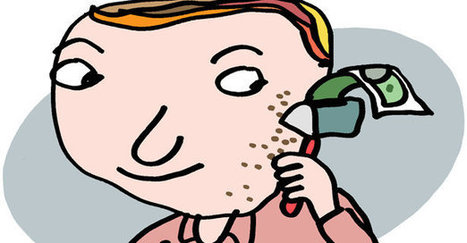
The world might be a mess, but look on the bright side: Men’s shaving products are much better than they used to be.
Thanks to several online shaving start-ups, razors, creams, gels and other paraphernalia are now cheaper, of higher quality and more convenient to purchase than ever before. Last week one of the upstarts, Dollar Shave Club, was acquired by the consumer products giant Unilever for $1 billion. For shaving behemoths like Gillette, it is the first skirmish in the coming guerrilla war for men’s faces, not to mention other parts. (Dollar Shave also makes bathroom wipes for men.)
This column usually focuses on the technology industry, an area that sounds far removed from shaving. But the Dollar Shave acquisition signals something bigger than a mere improvement in shaving — it also underscores a consumer products revolution that would not have been possible without technology.
Hilarious online ads passed along social networks allowed Dollar Shave to create instant customer recognition — in other words, a brand — far more quickly, and for far less money, than a shaving company could have managed a decade ago. Online distribution allowed it to get products into consumers’ hands without a costly retail presence. In fact, by cutting out on retail, and shipping products to people’s homes on a subscription basis, the company made buying shaving products more convenient than going to a store....
|
|
Scooped by
Jeff Domansky
July 27, 2016 9:09 AM
|
Facebook is all about connecting with others. Your connections are called “friends” whether you actually know them in real life or not. Men and women both friend others on the network, but they’re very different in how they do it. Social media has become ubiquitous. It seems like everyone has a Facebook or Twitter account these days. It’s actually more common to hear some say, “Message me on Facebook,” than it is to hear them say, “call me” or “email me”. Social networks have become our online homes where we interact and communicate with friends and family, as well as with businesses that we patronize. It’s a social world out there, but there are some striking differences between how different people use those social networks, particularly when comparing the different ways that men and women use Facebook...
|
|
Scooped by
Jeff Domansky
July 27, 2016 3:00 AM
|
The rate of eCommerce growth as steadily outpaced total retail growth by a multiple of three to four times, Amazon.com’s growth has outpaced eCommerce by one to two times, giving it a dominant lead in many of the world’s most mature eCommerce markets. According to Forrester, Amazon drove 60% of total US online sales growth in 2015, capturing $23 billion more in U.S. eCommerce sales in 2015 than the previous year (up from $77 billion in 2014 to $100 billion). Alex McCord of Compass Marketing, an agency which works with some of the world’s largest CPG brands: “We’re now seeing the advent of what I’ll call e-commerce native companies: companies that come onto Amazon and other e-retailers and who are able to gain traction through getting a ton of recent reviews. They know how to work the Amazon algorithm and then launch products that, from the perspective of a brand in the brick-and-mortar world, have as low as zero market share. But in the world of unbranded search on Amazon and other retailers, they’re enormous players.” So who is winning on Amazon? Profitero analyzed our Amazon FastMovers reports between January-May 2016 to rank the best-selling products at Amazon in several key categories. We then identified the number of products that featured in the top 100 best sellers by brand to determine best-selling brands by category....
|
|
Scooped by
Jeff Domansky
July 27, 2016 2:34 AM
|
If you follow the right people, that's what Instagram can do for you. There are a lot of really talented artists and designers out there who use Instagram as a sort of mini art gallery -- a social portfolio, if you will. And it's a jackpot for people who love browsing gorgeous design work. To help you narrow your search, I've carefully curated some of the best Instagrams to follow for design inspiration. I did my best to place them in categories -- illustration, graphic design, pop art and installation, color palettes, street art, photography, typography, and calligraphy -- although you'll notice some of their work could fall into a number of different lists. Whether you're a designer looking for inspiration, or you simply harbor an appreciation for art and design, you'll want to check out (and follow) these accounts. ...
|
|
Scooped by
Jeff Domansky
July 27, 2016 1:23 AM
|
You’re doing a presentation, so you should start with the facts you want to get across right? Wrong! A good public speaker takes their audience on a journey, leaving them feeling inspired, motivated and completely on board with your message. But structuring your speech to get your ideas across and keep your audience engaged all the way through to the end can be tricky. Experienced public speakers tell stories to get their point across. They do this because humans are hardwired for stories. They love heroes, journeys, suspense, surprises, layers and happy endings. Why Is Storytelling Important? Before we talk about the basic building blocks of a story, let’s take a step back and briefly talk about why storytelling is so powerful. Humans have an instinctive predilection for stories. Think about it, Gurg the caveman hunts the big wooly mammoth and he returns to tell his story by painting pictures on the cave walls. Today, Claire, comes back from a big night out at the bars and shares her story by posting gossip and photos on her Facebook wall. We all tell stories. We tell stories of romantic love. We tell stories about the challenges we face. We tell stories that explain how we got that distinctive scar on our knee. If you’re trying to inform, persuade, motivate, or entertain, you need to incorporate stories. That means every time you speak, you should think about how to enhance your message with stories....
|
|
Scooped by
Jeff Domansky
July 26, 2016 11:43 PM
|
And considering social media cover photos are likely something you'll want to update regularly to align with new campaigns, cover photo design can be an ongoing process -- not to mention how frequently social networks redesign their layouts, inevitably affecting cover photo sizes by cropping, warping, and mucking up your existing design.
This is definitely not ideal for brands looking to put their best foot forward in social media. So what's a poor marketer to do when the only scalable option is to take graphic design into their own hands?
To make things easier on social media managers and non-designers doing design, we created an essential cheat sheet containing the most up-to-date social media cover photo dimensions -- something you can bookmark and reference when you're ready to create or re-create a cover photo for Facebook, Twitter, LinkedIn, YouTube, or Google+.
We also created free, downloadable PowerPoint templates that are already pre-sized for each channel's specific cover photo dimensions so you can easily customize them for your own business. Just add your creative, save it as an image file, and upload it to your social media business page....
|


























It's social grudge match.