 Your new post is loading...

|
Scooped by
Jeff Domansky
May 23, 2017 10:33 PM
|
Most content marketers are familiar with the concept of content curation, even if they’re not practicing it themselves just yet. Sometimes this can be because they don’t have any good examples to go off. As they say in storytelling, it’s often better to show rather than tell. To this end Curata decided to showcase several businesses successfully curating content for their brands, whether business or consumer-facing, on their own platform or through social channels. The ten companies below are doing curation right....
|
|
Scooped by
Jeff Domansky
May 23, 2017 9:59 AM
|
Quality storytelling and narrative matter more than ever, and must be first and foremost in your mind when approaching “branded” content. The quotes are intentional. It is an opportune time to drop the word “branded” from that phrase and from your vocabulary. Content is content. Good content is good content. If a story is moving, no one is going to care that it’s brought to you by a brand. Rather, they’re going to be happy the brand brought it to them. And by the same token, content that is annoying is now amplified rather than ignored (because no one can resist a good call-out) and can be more harmful to a brand than ever....
|
|
Scooped by
Jeff Domansky
May 23, 2017 9:42 AM
|
For the more than 1.8 billion active monthly users on Facebook, scrolling through the feed and catching up with the latest news is easy enough. But for the social media managers and marketers managing successful Facebook pages, there’s a lot that goes on behind the scenes – Making it a challenge to keep up with all of the new features they’re rolling out on a daily basis. That’s why it’s important (and fun) for us to share all of this useful Facebook marketing information so that we can create a better experience for our audiences. Because at the end of the day, it’s all about the user. In the spirit sharing, here are 10 hidden Facebook marketing features and hacks for social media marketers to try today!...
|
|
Scooped by
Jeff Domansky
May 23, 2017 9:26 AM
|
The neural network can be trained to write recipes, invent Pokemon, and invent superhero names. But can it learn to tell a joke? @researchbuzz generously provided me with a list of 200 knock-knock jokes - brief and highly formulaic, they seemed to be the form of joke best-suited for a neural network to reproduce. I figured it would quickly learn the formula, but would never, never manage to tell an actual joke. It proved me wrong....
|
|
Scooped by
Jeff Domansky
May 23, 2017 8:48 AM
|
Colors can affect our feelings and behavior in ways so profound that studies have been conducted on how we can better use them in life, and in society, to “hack” culture. This covers subjects from what colors to wear to a job interview … to the ideal shade for prisons. Because of this odd relationship we have with color, the colors we choose, and what we name them, become meaningful shorthands for much bigger stories. Every year, Pantone selects a “Color of the Year” that thematically puts us on the right track for the next 12 months. We project as much onto Pantone’s choices as the brand seeks to project onto us. (This year’s color was “Greenery.”) With all this in mind, research scientist and neural network geek Janelle Shane decided to see how well artificial intelligence fares at both selecting colors and naming them. A writer at Ars Technica calls her results “the greatest work of artificial intelligence I’ve seen to date.” On Tumblr, Shane describes both the terms of the experiment and its output. “I gave the neural network a list of about 7,700 Sherwin-Williams paint colors along with their RGB values (RGB = red, green, and blue color values),” she writes. “Could the neural network learn to invent new paint colors and give them attractive names?”...
|
|
Scooped by
Jeff Domansky
May 21, 2017 9:10 AM
|
A three year research report from IDTechEx estimates that the global wearable technology market will be worth over $30 billion in 2016. The report says that the market will grow in three stages: 9% annually to over $40 billion in 2018, but then accelerating to 23% through to over $100 billion by 2023, before slowing to 10% to reach over $150 billion by 2026.The report details IDTechEx's coverage of the wearable technology ecosystem, which looks at the industry from many different perspectives, with detailed discussion framing core primary research and market forecasting. It studies the historical context for wearable technology products, looking at key yet contrasting sectors such as medical devices and commodity infotainment items like headphones or electronic watches.The report includes sections on key product areas such as fitness trackers, smartwatches, smart clothing, smart eyewear (including AR and VR), smart skin patches, headphones, etc. It also looks separately by application sector, including healthcare and medical, fitness and wellness, professional sports, infotainment, enterprise, military and fashion....
|
|
Scooped by
Jeff Domansky
May 21, 2017 12:41 AM
|
One thing that really got me thinking is how Instagram only allows you to link to 1 website or page in your profile’s description (unless you’re paying for ads). This really changes the playing field and limits a brand’s opportunities to promote the sale – at least by traditional standards. We’ve all seen those awe-inspiring accounts where it seems like Instagrammers are raking in serious cash just by posting selfies. Unfortunately, looks can be deceiving. The reality is that it’s a gradual process. In fact, when it’s the talk of brands, 50 percent of Instagrammers follow at least 1 business, but only 5 percent of them take action (like shopping) after being inspired by a post....
|
|
Scooped by
Jeff Domansky
May 19, 2017 10:10 AM
|
No one, it seems, has come up with a good way to harness all the videos, photos and tweets that budding creators post every day on YouTube, or the Facebook media juggernaut, or its smaller Snap-pier rivals. Stepping into the breach is Social Native, a company with a fresh $8 million in financing and a well-pedigreed executive team that’s hoping to give brands a way to use social images and messaging as a more effective advertising channel.It’s not a new idea, but it’s one that was able to draw in SoftBank Capital to finance the company’s planned investment in an algorithmically based tool that identifies prolific social media users whose content meets certain standards. “Early on, we human audited creators to understand content quality & eventually built an AI algorithm to better understand & predict content quality,” wrote Bhaji Illuminati, the company’s chief marketing officer, in an email. “Over time, creators are vetted via participation in the marketplace, as content is rated & repurposed by brands as creator value increases.”...
|
|
Scooped by
Jeff Domansky
May 19, 2017 8:48 AM
|
The Mirai is Toyota’s car of the future. It runs on hydrogen fuel cells, gets 312 miles on a full tank and only emits water vapor. So, to target tech and science enthusiasts, the brand is running thousands of ads with messaging crafted based on their interests. The catch? The campaign was written by IBM’s supercomputer, Watson. After spending two to three months training the AI to piece together coherent sentences and phrases, Saatchi LA began rolling out a campaign last week on Facebook called “Thousands of Ways to Say Yes” that pitches the car through short video clips. “When we started to look at the people who were going to be interested in this car, we realized it was people who were new technology adopters,—it was psychologists; it was engineers,” said Chris Pierantozzi, ecd at Saatchi LA. “So we wanted to make an ad for almost every single potential buyer of this car—one for every type of Mirai driver. ”First, Saatchi LA wrote 50 scripts based on location, behavioral insights and occupation data that explained the car’s features to set up a structure for the campaign. The scripts were then used to train Watson so it could whip up thousands of pieces of copy that sounded like they were written by humans....
|
|
Scooped by
Jeff Domansky
May 19, 2017 9:34 AM
|
According to a report from Nielsen, 70% of people will trust a review from someone they’ve never even met. Consumers have more access to information than ever before, and they put a lot of stock into what their peers are saying about the brands they use. Most consumers are researching products and services before they even engage with your business. The power of social proof is undeniable, and it could be the key to optimizing your next marketing campaign....
|
|
Scooped by
Jeff Domansky
May 19, 2017 9:09 AM
|
With limited time and resources, creating a unique post for each social media channel can be a challenge, but it’s well-worth the effort. So what does the perfect post for each social network look like? In this article, we’ll guide you through the process of creating epic, engaging and beautifully crafted messages for Facebook, Twitter and Instagram....
|
|
Scooped by
Jeff Domansky
May 18, 2017 9:04 AM
|
Imagine opening your morning newspaper (itself a novelty these days) and finding a story about, not just life, but entire civilizations on another planet, attributed to one of the world’s foremost astronomers. Would you believe it, or might you suspect that some “alternative facts” had found their way to your doorstep? Back in 1835, many readers in New York ended up believing just such a tale. The New York Sun, then one of the city’s leading newspapers, printed an elaborate six-part series about exotic animals living on the moon (including human-like creatures with wings), purportedly discovered through a gigantic newfangled telescope. The source of the information was Sir John Herschel, who was an actual real-life astronomer but had nothing whatsoever to do with the Sun’s scoop. Rough image of lithograph of “ruby amphitheater” described in the New York Sun newspaper in August 1835. Public domain image.Somebody at the Sun (just who remains something of a mystery) made the whole thing up, in an effort to goose its circulation. The hoax did eventually unravel, although the newspaper never retracted the story. Today, of course, we are battling similarly fake news, found not only in dark corners of the Internet but in mainstream venues such as Facebook. Yet, even in our “post-truth” world, it is still virtually unthinkable that a major newspaper in a major U.S. city would publish information that it knew to be demonstrably false....
|
|
Scooped by
Jeff Domansky
May 18, 2017 1:47 AM
|
Want to improve your cost per click for Facebook ads?Wondering how much influence visuals have on Facebook ad performance? From font style to background images, the design choices you make can have a deep impact on the overall results of your Facebook ad campaigns. In this article, you’ll discover five tips for creating B2B Facebook ad images that generate results....
|
|
|
Scooped by
Jeff Domansky
May 23, 2017 10:10 AM
|
Think back to the best shopping experience you ever had. Chances are it involved a well-informed and upbeat salesperson who engaged with you, asked about your needs and guided you through the purchase. You left knowing you made the right decision. This kind of conversation-driven sale—high on empathy and knowledge, low on price and haggling—has long been a staple of successful retail loyalty. It focuses on understanding the needs of consumers and delivering an exceptional experience. But in today’s continually upended shopping environment, that conversation between seller and buyer is as likely to take place with an AI-driven bot as it is with a friendly associate. Welcome to the age of conversational commerce. Coined by Chris Messina, the inventor of the hashtag, the term “conversational commerce” refers to the ability of a digital tool to interact with a consumer using natural language. Combining rich interfaces and AI, retail brands are using tools like virtual assistants and chatbots to scale relevant, personal and helpful interactions with their customers. And the timing couldn’t be better for an industry that needs to tip the scale back to providing a great shopping experience....
|
|
Scooped by
Jeff Domansky
May 23, 2017 9:52 AM
|
In recent years, marketing technology—or simply “mar tech,” in industry parlance—has gone from fledgling to flourishing, growing from a niche that once included a few hundred players to a vast universe of 5,000-plus companies. Their offerings include software for social media, email, search engine optimization, e-retail targeting, video, consumer rewards, campaign measurement and creative workflow, just to name a few. But behind all this magical cognitive content are brilliant, forward-thinking women and men who are rapidly reimagining marketing and advertising technology (since major cloud players are increasingly blurring the line), pitching a new world order where CRM and digital ads work hand in hand. Here, Adweek salutes the leading figures and trailblazers in the burgeoning field of mar tech....
|
|
Scooped by
Jeff Domansky
May 23, 2017 9:34 AM
|
In 2017, the industry's love affair with Instagram isn't showing any signs of slowing down. Digiday recently checked in with a number of fashion and beauty social media insiders at SXSW's Decoded Fashion and Create & Cultivate events, confirming that Instagram remains a top priority in their digital marketing strategies. "Instagram is always a priority for us," Rosi Sanchez, a social media strategist at Fossil, told Digiday. "We have more reach and a larger new follower group there, so it leads to more conversions. Until we get to 1.5 million or 2 million followers, it’s going to be our number one priority." Fossil isn't alone. Social media strategists from more established brands like L’Oréal USA, Shopbop, and Murad also indicated that Instagram was their top social media priority for the foreseeable future. Brands from any industry looking to level up their visual storytelling chops should keep a close eye on fashion brands for inspiration. To help get you started, we've compiled a list of 15 fashion accounts -- both big and small -- who are crushing the Instagram game. Take a look below, and start planning your next big Instagram push. For a deeper dive on how to build a presence on Instagram, check out our complete guide to Instagram marketing.
|
|
Scooped by
Jeff Domansky
May 23, 2017 9:17 AM
|
The job search has gone almost completely digital and increasingly social. In fact, a good portion of job seekers use Facebook and Twitter to research companies, while recruiters use LinkedIn to vet potential candidates. However, for younger job seekers, Instagram is becoming an important place for learning about the culture of potential workplaces. Jobvite surveyed more than 2,000 American workers with the goal of demystifying the supposed rift among American job seekers. What it discovered was that the idea of the “divided America” was a myth, and job seekers are as diverse as the nation in which they live. There are, however, some distinct perspectives depending on race, gender and generation....
|
|
Scooped by
Jeff Domansky
May 22, 2017 10:06 AM
|
Professional writing isn’t easy. As a blogger, journalist or reporter, you have to meet several challenges to stay at the top of your trade. You have to stay up to date with the latest developments and at the same time write timely, compelling and unique content. The same goes for scientists, researchers and analysts and other professionals whose job involves a lot of writing. With the deluge of information being published on the web every day, things aren’t getting easier. You have to juggle speed, style, quality and content simultaneously if you want to succeed in reaching your audience. Fortunately, Artificial Intelligence, which is fast permeating every aspect of human life, has a few tricks up its sleeve to boost the efforts of professional writers....
|
|
Scooped by
Jeff Domansky
May 21, 2017 12:48 AM
|
When I discovered these two facts, I was shocked. 44% of salespeople give up after one follow-up. 80% of sales require five follow-ups. In other words, 44% of salespeople aren't putting in 1/5 of the effort needed to close the deal. Too often we give up after one follow-up email, despite data proving that multiple follow-ups are required. Yet persistence is only one lesson that can be learned from the following 107 sales statistics. There are countless others to be revealed. Check out this SlideShare to sell smarter, stop wasting time on useless tasks, and start closing more deals in less time:...
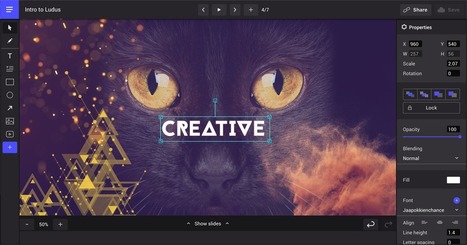
The web is full of beautiful ideas and services. Ludus is the first one to provide an easy way to gather them all in a single place.
Via Baiba Svenca
|
|
Scooped by
Jeff Domansky
May 19, 2017 10:00 AM
|
In 2013, while sitting at a bar with a friend, Danny Nieves had a thought. He was helping a friend advertise his Cuban restaurant and told him that he would post his menus onto doors by rubber-banding them to doorknobs in his neighborhood. The idea was a hit. It garnered local attention and had business booming at his friend's restaurant. This bright idea spawned into the thought that, if it could work for his friend's Cuban restaurant, maybe other nearby restaurants would pay him to add their menus to doorknobs. Nieves got to work. Stapling together menu after menu, he began dropping them off on every single doorknob he could. The business idea saw explosive growth. Sales for those restaurants skyrocketed and he knew he was onto something. But he hated stapling together the menus and having to attach them one by one. However, it was at that bar, scrawled on a drink napkin, that he planned out his approach, detailing how he would saturate the homes with advertisements....
|
|
Scooped by
Jeff Domansky
May 19, 2017 9:46 AM
|
Millennials are different than older generations in many ways. According to new research, that generation gap is even wider when it comes to the sharing economy. March 2017 data from Maru/Matchbox, which surveyed 1,000 adult internet users in North America, found that millennials participate in many aspects of the sharing economy at a greater level than older respondents. Millennials were almost three times as likely to use a space to stay, like Airbnb, or use professional services, like tax preparation, than people ages 35 and older. They were also more likely to use car services like Uber. For example, 32% of millennials said they use ride-hailing services, while only 12% of respondents ages 35 and older said they did so....
|
|
Scooped by
Jeff Domansky
May 19, 2017 9:22 AM
|
Instagram has become the favorite social network of many -- and not just for teens or Millennials. In fact, according to the Pew Research Center, 32% of online adults use Instagram -- up 5% from the previous year. Compare that, for example, to 24% on Twitter. Plus, folks don't just use Instagram casually -- 35% of them use it several times each day. But for those who have never used the platform before, or those who just want to take their usage to the next level, Instagram has some lesser-known tricks and features. That's why we set out to find them and list them all in one place. Whether you're a recruiter looking to showcase your company's culture, a marketer in the e-commerce industry, or an individual who's just looking to use Instagram in the best ways possible, there are tips and features here for you....
|
|
Scooped by
Jeff Domansky
May 19, 2017 8:55 AM
|
Market to known individuals instead of unknown personas. For years, this has been what brands hoped for—but couldn’t achieve—from their digital marketing. Now we’re finally at the point where aspiration is becoming reality. It’s not just about doing “good” programmatic, or email or search. It’s about mastering highly targeted, effective, personalized marketing, driven by insights that are informed by a robust customer database. It’s about delivering those messages throughout the customer life cycle and across the entire spectrum of media and channels. It’s about applying the same level of intelligence to creating an inbound experience that we have been using to create outbound experiences for years. It’s people-based marketing....
|
|
Scooped by
Jeff Domansky
May 18, 2017 1:57 AM
|
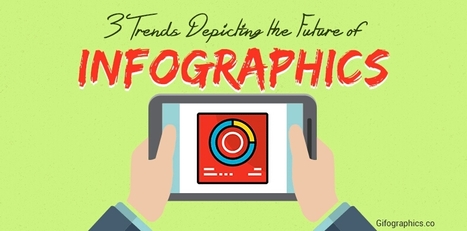
As a marketer, your content strategy is very important. Blogs, articles, social media posts, slide presentations, etc. There are so many ways to market your content. But in the last few years, infographics have caught the attention of online marketers and media professionals. They feature a combination of text, design, and images to convert complex data into an easy-to-read piece of content.With evolving visual communication, infographics are now focusing on driving flexibility, shareability, and audience engagement. The three trends that will help you in doing so are...
|



















Lots of learning from these 10 leading content curation sites.