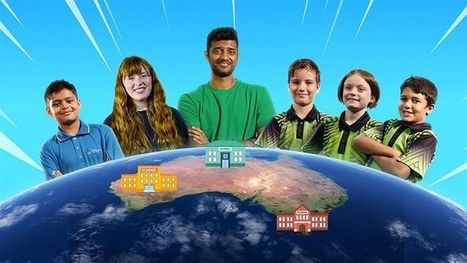
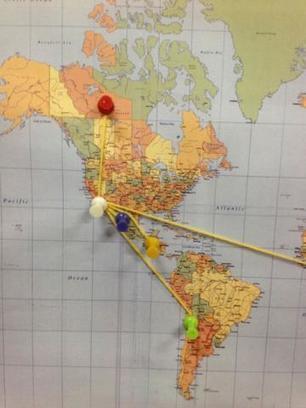
Travelbugs is an online community exclusively for school students to learn about different cultures around the world by communicating, collaborating and sharing information with children living in different countries. Students can view photos and written posts that other children publish as well as share their own knowledge by writing about their own country in which they live. Overall, students are able to explore and compare the daily life of people from different places in an authentic way which addresses outcome GE2-2 as students "describe the ways people, places and environments interact" (Board of Studies NSW, 2012). It also allows students to move from the local to a more global perspective which is important to help students make deeper connections and understandings of their world (Kriewaldt, 2012, p. 182).
Links with English and ICT:
There are links with English and ICT as students develop their literacy skills through reading and writing online posts as well as learning how to use and navigate websites. As Jacobs (2013) suggests, technology-rich environments help students to develop multiliteracies as they make meaning using a variety of cues including “visual, gestural, audio, spatial and linguistic modes” (pp. 100-102).
Safe, responsible and ethical use of ICT:
While the use of online blogs can enhance the learning environment, there could be potential teaching implications if teachers do not allocate time to teach students about the “safe and responsible use of the Internet” (Morgan, 2014, p. 380). For instance, students should be reminded not to reveal any private information and to be respectful at all times as published posts will be available for others to see and should be monitored closely by teachers.
References:
Board of Studies NSW. (2012). Geography K-10 syllabus: NSW syllabus for the Australian curriculum. Sydney Board of Studies NSW.
Jacobs, G. E. (2013). Multi, Digital, or Technology? Journal of Adolescent & Adult Literacy, 57(2), 99-103. doi: 10.1002/JAAL.227
Kriewaldt, J. (2012). Progression in understanding in geography. In T. Taylor, C. Fahey, J. Kriewaldt & D. Boon. Place and Time. Explorations in Teaching Geography and History. Frenchs Forest: Pearson Australia
Morgan, H. (2014). Taking advantage of web 2.0 technologies: Classroom blogging basics. Childhood Education, 90(5), 379-381.
Via Jessica So


 Your new post is loading...