Your new post is loading...

|
Scooped by
Jean-Michel Ané
June 1, 2021 9:10 AM
|
Nitrogen (N) is an essential but generally limiting nutrient for biological systems. Development of the Haber-Bosch industrial process for ammonia synthesis helped to relieve N limitation of agricultural production, fueling the Green Revolution and reducing hunger. However, the massive use of industrial N fertilizer has doubled the N moving through the global N cycle with dramatic environmental consequences that threaten planetary health. Thus, there is an urgent need to reduce losses of reactive N from agriculture, while ensuring sufficient N inputs for food security. Here we review current knowledge related to N use efficiency (NUE) in agriculture and identify research opportunities in the areas of agronomy, plant breeding, biological N fixation (BNF), soil N cycling, and modeling to achieve responsible, sustainable use of N in agriculture. Amongst these opportunities, improved agricultural practices that synchronize crop N demand with soil N availability are low-hanging fruit. Crop breeding that targets root and shoot physiological processes will likely increase N uptake and utilization of soil N, while breeding for BNF effectiveness in legumes will enhance overall system NUE. Likewise, engineering of novel N-fixing symbioses in non-legumes could reduce the need for chemical fertilizers in agroecosystems but is a much longer-term goal. The use of simulation modeling to conceptualize the complex, interwoven processes that affect agroecosystem NUE, along with multi-objective optimization, will also accelerate NUE gains.
|
|
Scooped by
Jean-Michel Ané
May 30, 2021 12:21 PM
|
Most land plants entertain a mutualistic symbiosis known as arbuscular mycorrhiza with fungi (Glomeromycota) that provide them with essential mineral nutrients, in particular phosphate (Pi), and protect them from biotic and abiotic stress. Arbuscular mycorrhizal (AM) symbiosis increases plant productivity and biodiversity, and is therefore relevant for both, natural plant communities and crop production. However, AM fungal populations suffer from intense farming practices in agricultural soils, in particular Pi fertilization. The dilemma between natural fertilization from AM symbiosis and chemical fertilization has raised major concern and emphasizes the need to better understand the mechanisms by which Pi suppresses AM symbiosis. Here, we test the hypothesis that Pi may interfere with AM symbiosis via the phytohormone gibberellic acid (GA) in the Solanaceous model systems Petunia hybrida and Nicotiana tabacum. Indeed, we find that GA is inhibitory to AM symbiosis, and that Pi may cause GA levels to increase in mycorrhizal roots. Consistent with a role of endogenous GA as an inhibitor of AM development, GA-defective N. tabacum lines expressing a GA-metabolizing enzyme (GA methyltransferase; GAMT), are colonized more quickly by the AM fungus Rhizoglomus irregulare, and exogenous Pi is less effective in inhibiting AM colonization in these lines. Systematic gene expression analysis of GA-related genes reveals a complex picture, in which GA degradation by GA2 oxidase plays a prominent role. These findings reveal potential targets for crop breeding that could reduce Pi suppression of AM symbiosis, thereby reconciling the advantages of Pi fertilization with the diverse benefits of AM symbiosis.
|
|
Scooped by
Jean-Michel Ané
May 30, 2021 12:15 PM
|
CTLH/CRA/RING-containing proteins have been shown to possess E3-ligase activities and are crucial for the regulation of numerous cellular signaling pathways. In our previous studies, SIE3 (SymRK-Interacting E3 ubiquitin ligase), a CTLH/CRA/RING-containing protein from Lotus japonicus, has been shown to associate with both Symbiosis Receptor Kinase (SymRK) and SIP1 (SymRK interacting protein 1) transcription factor, and ubiquitinate SymRK (Yuan et al. Plant Physiol 160 (1):106–117, 2012; Feng et al. Front Plant Sci 11: 795, 2020). Besides, we previously also demonstrated that the residue, cysteine-266 in the CRA (CT11-RanBPM) domain is required for homodimerization of SIE3 and cysteine-266 residue-mediated homodimerization is important for the symbiosic function of SIE3 (Feng et al. 2020). In this report, SIE3 was shown to induce the ubiquitination and degradation of SIP1. The cysteine-266 residue is essential for the E3-ligase activity and is highly conserved in the SIE3-like proteins. Our works refined the working model that homodimerization of SIE3 is required for ubiquitin-related degradation of SIP1 and found a conserved cysteine residue plays a key role in the activity of a plant dimeric E3 ligase.
|
|
Scooped by
Jean-Michel Ané
May 30, 2021 12:08 PM
|
Problem statement: Despite the structural and functional similarities between the nitrogenase that performs biological nitrogen fixation reaction and the Dark Protochlorphyllide Oxidoreductase (DPOR) that performs chlorophyll-biosynthesis, attempts to substitute nitrogenase-components with DPOR-components have hitherto failed. This investigation was undertaken to test if Chlamydomonas reinhardtii protochlorophyllide (Pchlide) reductase (ChlL) that shares some structural similarity with Nitrogenase Reductase (NifH) could complement the functions of NifH in biological nitrogen fixation of Azotobacter vinelandii. Approach: Genetic complementation studies were performed to test if the chlL gene and its mutants cloned under transcriptional control of nifH promoter (nifHp) in a broad-host range low copy plasmid pBG1380 could render a Nif+ phenotype to NifH-deficient A. vinelandii strains. Results: Expression of ChlL could render Nif+ phenotype to NifH-deficient A. vinelandii only in the absence of NifM, a nif-specific PPIase essential for biogenesis of NifH. The ChlL mutants Cys95Thr and Cys129Thr were unable to substitute for NifH. Thus, the conserved cysteine ligands of [4Fe-4S] cluster in ChlL are essential for successful substitution of NifH by ChlL. Since C-termini of NifH and ChlL demonstrated the least similarity and Pro258, a substrate for the PPIase activity of NifM, is located in the C-terminus of NifH, we posited that replacing the C-terminus of NifH with that of ChlL would render NifM-independence to NifH. The NifH-ChlL chimera could support the growth of NifH- and NifM-deficient A. vinelandii in nitrogen limiting conditions implying that it has acquired NifM-independence. Conclusion/Recommendations: Collectively, these observations suggest that NifM, an evolutionarily conserved nif-specific PPIase, could have contributed to the functional divergence of biological nitrogen fixation and photosynthesis during evolution by virtue of its ability to exert opposing effects on structurally similar substrates, ChlL and NifH.
|
|
Scooped by
Jean-Michel Ané
May 30, 2021 12:06 PM
|
Bacteria have cell communication in a population density dependent type which involves the production of pheromone like molecule called autoinducer. When a bacterial cell grows in population, the intracellular signals regulate differential gene expression which leads to specific behaviours. Primarily plants have the narrow recognizable range for low molecular weight nitrogen component, hence are dependent on products release through N-mineralization such as ammonia and nitrate for biomolecule production. Diazotrophic bacteria release signalling molecule like AHL (Acyl-homoserine lactone) which is involved in communication between plants and bacteria. This signalling channel promotes the production of exoenzymes like chitinase and protease to enhance mineralization of low molecular weight nitrogen source present in the soil. Symbiotic diazotrophic bacteria belonging to Rhizobium spp have role in quorum sensing through the production of signal molecules like AHL. The CinI gene present in R. leguminosarum expresses long-chain AHL. Nitrogen fixation was found to be decreased by 50% when mutant strain for CinI gene was inoculated in pea plant. Studies have been affirmed that the activity of glutamate synthetase is enhanced in response to AHL treatment. Moreover, glutamate in combination with glutamine plays a key role assimilation of ammonia into amino acids and further array to other nitrogen containing biomolecule. In rhizosphere soil of plant Glycine max and Vigna radiata nodule occurs due to correlation with diazotrophs and legumes. These symbiotic associations amalgamate AHL QS signals triggering the production of exopolysaccharides, increase nodulation efficiency and regulation of nif-genes. Many reports have suggested a significant role of QS in the regulation of nitrogen cycle. The review aims at recent developments at a molecular level, mechanism and methods for optimization of QS signal involve in the rhizosphere to aid nitrogen fixation in plants.
|
|
Scooped by
Jean-Michel Ané
May 30, 2021 12:02 PM
|
•Maize cultivars with a mycorrhizal fungus responded differently in polluted soils.
•Responses differed according to cultivar, plant organ, and metal (Pb, Zn, and Cd).
•Cultivar responses to the metals ranged from exclusion to accumulation.
•Both the altered metals and triggering antioxidants alleviated Cd, promoted maize growth.
•Cultivars must be bred for safe production/phytoremediation with mycorrhizal fungi.
|
|
Scooped by
Jean-Michel Ané
May 29, 2021 1:04 PM
|
Arbuscular mycorrhizal fungi (AMF) represent important players in the structure and function of many ecosystems. Yet, we learn about their roles mostly from greenhouse-based experiments, with results subjected to cultivation bias. This study explores multiple aspects of this bias and separates the effect of increased nutrient availability from other cultivation specifics. For 15 grassland plant species from two functional groups (C3 grasses vs dicotyledonous forbs), we compared AMF communities of adults collected from non-manipulated vegetation with those in plants grown in a greenhouse. Nutrient availability was comparable to field conditions or experimentally elevated. We evaluated changes in AMF community composition, diversity, root colonisation, and the averages of functional traits characterising hyphal soil exploration. Additionally, we use the data from the greenhouse experiment to propose a new plant functional trait—the change of AMF colonisation in response to nutrient surplus. The AMF community differed profoundly between field-collected and greenhouse-grown plants, with a larger change of its composition in grass species, and AMF community composition in grasses also responded more to fertilisation than in forbs. Taxonomic and phylogenetic diversity declined more in forbs under cultivation (particularly with elevated nutrients), because in their roots, the AMF taxa from families other than Glomeraceae largely disappeared. A decline in AMF colonisation was not caused by greenhouse cultivation itself but selectively by the elevation of nutrient availability, particularly in grass host species. We demonstrate that the extent of decrease in AMF colonisation with elevated nutrients is a useful plant functional trait explaining an observed response of the plant community to manipulation.
|
|
Scooped by
Jean-Michel Ané
May 28, 2021 11:39 AM
|
Professor Britt Koskella began her talk by introducing her interest in defining diversity and answering the questions on how it’s generated and maintained over time. Both ecology and evolution are filled with theories and empirical tests of mechanisms, by which diversity is explained. However, Professor Koskella is specifically interested in how many of these translate over to the microbiome and what makes the microbiome unique.
Professor Koskella sectioned her talk by focusing on four factors that shape the microbiome: environment, competition and cooperation, parasites and predators, and host-symbiont (co)evolution:
|
|
Scooped by
Jean-Michel Ané
May 28, 2021 11:28 AM
|
Cowpea is a grain legume of major importance in sub-Saharan Africa where it is cultivated by smallholder farmers on poor soils and production is often constrained by the parasitic weed Striga gesnerioides. Experiments were conducted to assess the potential of rhizobium inoculation in mitigating Striga infestation and increasing cowpea productivity. We tested under basal P application and artificial S. gesnerioides inoculation the impact of cowpea genotypes (G) (nine Striga-resistant and 11 Striga–susceptible genotypes) and bradyrhizobium inoculation (N) (two bradyrhizobium strains USDA3384 and IRJ2180A, and uninoculated control) on Striga dynamics and cowpea yield. Additional treatments included N supplied as urea (with and without), and no input (i.e., soil inherent N and P) that served as negative check. A first experiment was carried out in potted sterile soils in the screen house excluding addition of N-fertilizers. Significant G x N interactions were observed in counts of nodule (P = 0.012), Striga attachment (P < 0.0001) and emergence (P = 0.005), and cowpea shoot growth (P = 0.016). Cowpea nodulated poorly across host lines, Striga counts were the lowest for resistant varieties with no emerged plants. Rhizobial inoculants depressed Striga counts with consistent differences found across cowpea genotypes. Inoculation with IRJ2180A performed the best against Striga attachment in resistant genotypes, and its emergence in susceptible genotypes. In the field trial, nodule numbers were lowest in cowpea without inputs (P < 0.0001). The G x N interaction was significant in emerged Striga plants (P < 0.0001). Resistant genotypes were free of emerged Striga while for susceptible ones, Striga emergence was the highest without any input addition. Significant G x N interaction was observed in cowpea grain yield (P < 0.0001). Yield response to inoculation was most obvious for resistant genotypes inoculated with the strain IRJ2180A (P = 0.0043). The integrated use of Striga-resistant cowpea lines and elite bradyrhizobium inoculant under moderate application of P-based fertilizer could be a promising approach for mitigating Striga infestation and increasing productivity.
|
|
Scooped by
Jean-Michel Ané
May 27, 2021 4:27 PM
|
Although RNA sequencing has been becoming the main transcriptomic approach in the model legume Medicago truncatula, there is currently no genome-wide gene expression atlas covering the whole set of RNAseq data published for this species. Nowadays, such tool is highly valuable to provide a global view of gene expression in a wide range of conditions and tissues/organs. Here, we present MtExpress, a gene expression atlas that compiles an exhaustive set of published M. truncatula RNAseq data (https://medicago.toulouse.inrae.fr/MtExpress). MtExpress makes use of recent releases of M. truncatula genome sequence and annotation, as well as up-to-date tools to perform mapping, quality control, statistical analysis and normalization of RNAseq data. MtExpress combines semi-automated pipelines with manual re-labelling and organization of samples, to produce an attractive and user-friendly interface, fully integrated with other available Medicago genomic resources. Importantly, MtExpress is highly flexible, in terms of both queries, e.g. allowing searches with gene names and orthologous gene IDs from Arabidopsis and other legume species, and outputs, to customize visualization and redirect gene study to relevant Medicago webservers. Thanks to its semi-automated pipeline, MtExpress will be frequently updated to follow the rapid pace of M. truncatula RNAseq data publications, as well as the constant improvement of genome annotation.
|
|
Scooped by
Jean-Michel Ané
May 27, 2021 12:53 PM
|
A new species S. deformata, that occurs in six locations of marine sand dunes along the eastern Mediterranean coast of Spain is described and illustrated from spores. In the field, the species occurred in the rhizosphere of Ammophila arenaria (Poaceae), Elymus farctus (Poaceae), Otanthus maritimus (Asteraceae), and Echinophora spinosa (Apiaceae). Morphological characters related with outer, middle and inner wall of the glomerospores as well as phylogenetic analysis (partial SSU, ITS1-5.8S region and the partial LSU nrDNA) support the hypothesis that the fungus is a new species of the Scutellosporaceae.
|
|
Scooped by
Jean-Michel Ané
May 27, 2021 11:53 AM
|
Plant association with arbuscular mycorrhizal fungi (AMF) can increase their ability to overcome multiple stresses, but their impact on plant interactions with herbivorous insects is controversial. Here we show higher mortality of the leaf-chewer Spodoptera exigua when fed on tomato plants colonized by the AMF Funneliformis mosseae, evidencing mycorrhiza-induced resistance. In search of the underlying mechanisms, an untargeted metabolomic analysis through ultra-performance liquid chromatography tandem mass spectrometry (UPLC-MS) was performed. The results showed that mycorrhizal symbiosis had a very limited impact on the leaf metabolome in the absence of stress, but significantly modulated the response to herbivory in the damaged area. A cluster of over accumulated metabolites was identified in those leaflets damaged by S. exigua feeding in mycorrhizal plants, while unwounded distal leaflets responded similar to those from non-mycorrhizal plants. These primed-compounds were mostly related to alkaloids, fatty acid derivatives and phenylpropanoid-polyamine conjugates. The deleterious effect on larval survival of some of these compounds, including the alkaloid physostigmine, the fatty acid derivatives 4-oxododecanedioic acid and azelaic acid, was confirmed. Thus, our results evidence the impact of AMF on metabolic reprograming upon herbivory that leads to a primed accumulation of defensive compounds.
|
|
Scooped by
Jean-Michel Ané
May 27, 2021 11:21 AM
|
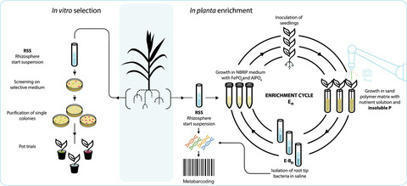
Phosphorus (P) is despite its omnipresence in soils often unavailable for plants. Rhizobacteria able to solubilize P are therefore crucial to avoid P deficiency. Selection for phosphate-solubilizing bacteria (PSB) is frequently done in vitro; however, rhizosphere competence is herein overlooked. Therefore, we developed an in planta enrichment concept enabling simultaneous microbial selection for P-solubilization and rhizosphere competence. We used an ecologically relevant combination of iron- and aluminium phosphate to select for PSB in maize (Zea mays L.). In each consecutive enrichment, plant roots were inoculated with rhizobacterial suspensions from plants that had grown in substrate with insoluble P. To assess the plants’ P statuses, non-destructive multispectral imaging was used for quantifying anthocyanins, a proxy for maize’s P status. After the third consecutive enrichment, plants supplied with insoluble P and inoculated with rhizobacterial suspensions showed a P status similar to plants supplied with soluble P. A parallel metabarcoding approach uncovered that the improved P status in the third enrichment coincided with a shift in the rhizobiome towards bacteria with plant growth-promoting and P-solubilizing capacities. Finally, further consecutive enrichment led to a functional relapse hallmarked by plants with a low P status and a second shift in the rhizobiome at the level of Azospirillaceae and Rhizobiaceae.
|
|
|
Scooped by
Jean-Michel Ané
May 30, 2021 12:24 PM
|
The success of a Rhizobium sp. inoculant depends on a product with a high number of live bacteria that can nodulate a leguminous plant. Culture media and oxygen transfer were studied to improve the production of R. phaseoli in chemically defined and undefined media for scale-up from shake flasks to a pneumatic bioreactor. The effects of carbon and phosphate on R. phaseoli growth were evaluated, and the specific volumetric oxygen transfer coefficient (KLa) was determined in shake flasks and scale-up to bioreactors. Six-fold more viable biomass was obtained by increasing the phosphate concentration by 7.5-fold when using glucose. However, this increase was not observed when succinate was used. In the undefined medium, glucose induced a higher production of R. phaseoli in comparison with other carbon sources. The KLa of 6–11 h-1 produced a five-fold growth of biomass in shake-flask cultures. This KLa was used to produce a R. phaseoli-based inoculant in a bioreactor. The formation of nitrogen-fixing nodules was confirmed in bean plants (Phaseolus vulgaris). The improvement of culture media with a suitable oxygen transfer demonstrates that R. phaseoli can be used as an inoculant that exerts beneficial effects on the initial growth of bean plants.
|
|
Scooped by
Jean-Michel Ané
May 30, 2021 12:15 PM
|
•Faxon fir responds to varying site conditions by changes in ECM foraging types.
Nutrient availability determined ECM types and soil foraging behavior.
•Warming and drying increase carbon cost for development of ECM associations.
•Faxon fir may sustain regional climate change by adjusting ECM foraging strategies.
|
|
Scooped by
Jean-Michel Ané
May 30, 2021 12:11 PM
|
Legumes preferentially associate with and reward beneficial rhizobia in root nodules, but the processes by which rhizobia evolve to provide benefits to novel hosts remain poorly understood. Using cycles of in planta and in vitro evolution, we experimentally simulated lifestyles where rhizobia repeatedly interact with novel plant genotypes with which they initially provide negligible benefits. Using a full-factorial replicated design, we independently evolved two rhizobia strains in associations with each of two Lotus japonicus genotypes that vary in regulation of nodule formation. We evaluated phenotypic evolution of rhizobia by quantifying fitness, growth effects and histological features on hosts, and molecular evolution via genome resequencing. Rhizobia evolved enhanced host benefits and caused changes in nodule development in one of the four host–symbiont combinations, that appeared to be driven by reduced costs during symbiosis, rather than increased nitrogen fixation. Descendant populations included genetic changes that could alter rhizobial infection or proliferation in host tissues, but lack of evidence for fixation of these mutations weakens the results. Evolution of enhanced rhizobial benefits occurred only in a subset of experiments, suggesting a role for host–symbiont genotype interactions in mediating the evolution of enhanced benefits from symbionts.
|
|
Scooped by
Jean-Michel Ané
May 30, 2021 12:08 PM
|
A non-diazotrophic cyanobacterium is engineered for N2-fixation activity
The addition of DCMU protects the expressed O2-sensitive intracellular nitrogenase
The e-BNF supplies adequate external electrons and improves the turnover of nitrogenase
The secreted NH3 generated from the turnover of nitrogenase is successfully quantified
|
|
Scooped by
Jean-Michel Ané
May 30, 2021 12:03 PM
|
We investigated the soil physicochemical property and arbuscular mycorrhizal fungi (AMF) resilience to the degradation and deforestation of the Chilimo dry evergreen Afromontane forest (CF). Topsoil (1-10cm) physicochemical property, AMF spore abundance (SA), and AMF infectivity were determined across four land uses, viz., natural forest (NF), shrubland (ShL), cropland (CrL), and grazing land (GrL). According to the PERMANOVA and NMDS results, soil physicochemical property was resilient to degradation (NF-ShL conversion) but not deforestation (NF-CrL or NF-GrL conversions) of CF. The one-way ANOVA results indicated that most soil physicochemical variables were significantly (p<0.05) affected by land-use change. Soil organic matter and total nitrogen, in particular, reduced significantly (p<0.05) by up to 48 and 57% due to NF-CrL and NF-GrL conversions respectively. Whereas SA was found to be resilient to both CF degradation and deforestation, AMF infectivity was resilient only to NF-CrL conversion. Generally, our results did not show a similar pattern in soil physicochemical properties, SA, and AMF infectivity resilience to degradation and deforestation. However, in the case of NF-GrL conversion, both soil physicochemical property and AMF infectivity exhibited significantly (p<0.05) low resilience. Based on our results, we conclude that soil physicochemical property and AMF are important factors to consider in CF restoration planning. When planting sites are either the croplands or grazing lands, soil amendment could be recommended. AMF inoculation, however, could be recommended when the planting sites are grazing lands. These recommendations may also apply widely to dry evergreen Afromontane forests restoration but additional studies are required.
|
|
Scooped by
Jean-Michel Ané
May 30, 2021 11:59 AM
|
To explore the effects of arbuscular mycorrhizal fungi (AMF) on the growth of legume crop, pot and field experiments with soybean were conducted. Treatments of inoculation (+AMF) and non-inoculation with AMF (-AMF) were set up for the pot experiment, and AMF mycelium non-limited and limited for the field experiment. Results of the pot experiment showed that inoculation with AMF significantly increased soybean aboveground biomass (16.5%) and root nodules number (131.4%), above-ground plant phosphorus and nitrogen concentrations and uptakes. In the field trial, the above-ground and root biomasses and root nodules number under AMF mycelium non-limited were significantly increased by 123.6%, 61.5%, and 212.5% compared with those under the limited condition, respectively. Plant phosphorus uptake, nitrogen concentration and uptake, and soil available nitrogen and phosphorus concentrations were significantly higher under AMF mycelium non-limited than the limited both in both shoot and root. Our findings provide theoretical reference for further understanding the relationship between legume crop and AMF, as well as the efficient utilization of phosphorus fertilizer.
|
|
Scooped by
Jean-Michel Ané
May 29, 2021 1:03 PM
|
Recent studies have demonstrated that drought leads to dramatic, highly conserved shifts in the root microbiome. At present, the molecular mechanisms underlying these responses remain largely uncharacterized. Here we employ genome-resolved metagenomics and comparative genomics to demonstrate that carbohydrate and secondary metabolite transport functionalities are overrepresented within drought-enriched taxa. These data also reveal that bacterial iron transport and metabolism functionality is highly correlated with drought enrichment. Using time-series root RNA-Seq data, we demonstrate that iron homeostasis within the root is impacted by drought stress, and that loss of a plant phytosiderophore iron transporter impacts microbial community composition, leading to significant increases in the drought-enriched lineage, Actinobacteria. Finally, we show that exogenous application of iron disrupts the drought-induced enrichment of Actinobacteria, as well as their improvement in host phenotype during drought stress. Collectively, our findings implicate iron metabolism in the root microbiome’s response to drought and may inform efforts to improve plant drought tolerance to increase food security.
|
|
Scooped by
Jean-Michel Ané
May 28, 2021 11:38 AM
|
The Fe–S clusters of nitrogenases carry out the life-sustaining conversion of N2 to NH3. Although progress continues to be made in modelling the structural features of nitrogenase cofactors, no synthetic Fe–S cluster has been shown to form a well-defined coordination complex with N2. Here we report that embedding an [MoFe3S4] cluster in a protective ligand environment enables N2 binding at Fe. The bridging [MoFe3S4]2(μ-η1:η1-N2) complex thus prepared features a substantially weakened N–N bond despite the relatively high formal oxidation states of the metal centres. Substitution of one of the [MoFe3S4] cubanes with an electropositive Ti metalloradical induces additional charge transfer to the N2 ligand with generation of Fe–N multiple-bond character. Structural and spectroscopic analyses demonstrate that N2 activation is accompanied by shortened Fe–S distances and charge transfer from each Fe site, including those not directly bound to N2. These findings indicate that covalent interactions within the cluster play a critical role in N2 binding and activation.
|
|
Scooped by
Jean-Michel Ané
May 27, 2021 5:25 PM
|
This book highlights the latest discoveries about the nitrogen cycle in the soil. It introduces the concept of nitrogen fixation and covers important aspects of nitrogen in soil and ecology such as its distribution and occurrence, soil microflora and fauna and their role in N-fixation. The importance of plant growth-promoting microbes for a sustainable agriculture, e.g. arbuscular mycorrhizae in N-fixation, is discussed as well as perspectives of metagenomics, microbe-plant signal transduction in N-ecology and related aspects.
This book enables the reader to bridge the main gaps in knowledge and carefully presents perspectives on the ecology of biotransformations of nitrogen in soil.
|
|
Scooped by
Jean-Michel Ané
May 27, 2021 1:49 PM
|
•In some soils, suppression of AMF activity had a biotic component.
•A Fusarium isolate from a suppressive soil inhibited the AMF activity.
•This isolate produced greater amounts of antimicrobial VOCs than other isolates.
•AMF suppression increased at low pH across several soils.
•For these soils, Al toxicity played a major role in suppressiveness at pH ≤ 5.0
|
|
Scooped by
Jean-Michel Ané
May 27, 2021 11:59 AM
|
Intensive exchange of nutrients is a crucial part of the complex interaction between a host plant and fungi within arbuscular mycorrhizal (AM) symbiosis. For the first time, the present study demonstrates how inoculation with AMF Rhizophagus irregularis affects the pea (Pisum sativum L.) root metabolism at key stages of plant development. These correspond to days 21 (vegetation), 42 (flowering initiation), and 56 (fruiting-green pod). Metabolome profiling was carried out by means of a state-of-the-art GC-MS technique. The content shifts revealed include lipophilic compounds, sugars, carboxylates, and amino acids. The metabolic alterations were principally dependent on the stage of plant development but were also affected by the development of AM fungi, a fact which highlights interaction between symbiotic partners. The comparison of the present data with the results of leaf metabolome profiling earlier obtained did not reveal common signatures of metabolic response to mycorrhization in leaves and roots. We supposed that the feedback for the development and symbiotic interaction on the part of the supraorganismic system (root + AM fungi) was the cause of the difference between the metabolic profile shift in leaf and root cells that our examination revealed. New investigations are required to expand our knowledge of metabolome plasticity of the whole organism and/or system of organisms, and such results might be put to use for the intensification of sustainable agriculture.
|
|
Scooped by
Jean-Michel Ané
May 27, 2021 11:48 AM
|
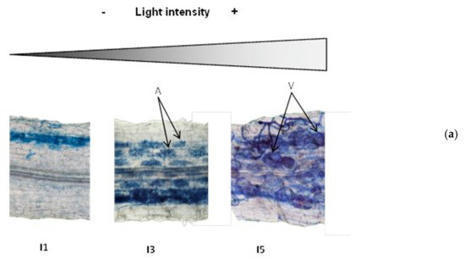
The use of microbial inoculants, particularly arbuscular mycorrhizal fungi, has great potential for sustainable crop management, which aims to reduce the use of chemical fertilizers and pesticides. However, one of the major challenges of their use in agriculture is the variability of the inoculation effects in the field, partly because of the varying environmental conditions. Light intensity and quality affect plant growth and defense, but little is known about their impacts on the benefits of mycorrhizal symbioses. We tested the effects of five different light intensities on plant nutrition and resistance to the necrotrophic foliar pathogen Botrytis cinerea in mycorrhizal and non-mycorrhizal lettuce plants. Our results evidence that mycorrhiza establishment is strongly influenced by light intensity, both regarding the extension of root colonization and the abundance of fungal vesicles within the roots. Light intensity also had significant effects on plant growth, nutrient content, and resistance to the pathogen. The effect of the mycorrhizal symbiosis on plant growth and nutrient content depended on the light intensity, and mycorrhiza efficiently reduced disease incidence and severity under all light intensities. Thus, mycorrhiza-induced resistance can be uncoupled from mycorrhizal effects on plant nutrition. Therefore, mycorrhizal symbioses can be beneficial by providing biotic stress protection even in the absence of nutritional or growth benefits.
|