 Your new post is loading...

|
Scooped by
Jean-Michel Ané
June 7, 2021 9:39 AM
|
Nutrient amendment diminished bacterial functional diversity, consolidating carbon flow through fewer bacterial taxa. Here, we show strong differences in the bacterial taxa responsible for respiration from four ecosystems, indicating the potential for taxon-specific control over soil carbon cycling. Trends in functional diversity, defined as the richness of bacteria contributing to carbon flux and their equitability of carbon use, paralleled trends in taxonomic diversity although functional diversity was lower overall. Among genera common to all ecosystems, Bradyrhizobium, the Acidobacteria genus RB41, and Streptomyces together composed 45–57% of carbon flow through bacterial productivity and respiration. Bacteria that utilized the most carbon amendment (glucose) were also those that utilized the most native soil carbon, suggesting that the behavior of key soil taxa may influence carbon balance. Mapping carbon flow through different microbial taxa as demonstrated here is crucial in developing taxon-sensitive soil carbon models that may reduce the uncertainty in climate change projections.
|
|
Scooped by
Jean-Michel Ané
June 6, 2021 9:54 PM
|
Intercropping of legumes and cereals is an important management method for improving yield stability, especially in organic farming systems. However, knowledge is restricted on the relevance of different nutrient transfer pathways. The objective of the study was to quantify nitrogen (N) and carbon (C) transfer from peas to triticale by (1) direct root contact (= R), (2) arbuscular mycorrhizal fungi (AMF; = A), and (3) diffusion (= D). Pea (Pisum sativum cv. Frisson and P2) and triticale (Triticum × Secale cv. Benetto) plants as intercrop were grown for 105 days. Treatment ADR enabled all transfer paths between the two crops. Treatment AD with root exclusion enabled AMF and diffusion transfer between peas and triticale. Treatment A with a diffusion gap barrier only allowed AMF transfer. Pea plants were labelled every 14 days with a 13C glucose and 15N urea solution, using the cotton wick technique. Direct root contact resulted in the highest pea rhizodeposition and thus the largest absolute amounts of N and C transfer to triticale. Root exclusion generally changed composition of rhizodeposits from fine root residues towards root exudates. Pea plant-N consisted of 17% N derived from rhizodeposition (NdfR) in treatment ADR but only 8% in the treatments AD and A, independently of pea variety, whereas pea plant-C consisted of 13% C derived from rhizodeposition (CdfR), without pea variety and transfer path treatment effects. Averaging all transfer path treatments, 6.7% of NdfR and 2.7% of CdfR was transferred from Frisson and P2 to triticale plants. Approximately 90% of this NdfR was transferred by direct root contact from Frisson to triticale and only 10% by AMF, whereas only 55% of CdfR was transferred to triticale by direct root contact, 40% by AMF and 5% by diffusion. Similar percentages were transferred from mutant P2 to triticale. Root exclusion generally changed RD composition from fine root residues towards root exudates.
|
|
Scooped by
Jean-Michel Ané
June 6, 2021 9:45 PM
|
•We quantified contributions of C inputs via shoot, roots, and AMF to SOC turnover.
•Soils with higher fertility sequestered more shoot-, root- and AMF-derived C.
•Root-derived C contributed more to new SOC formation than shoot- and AMF-derived C.
•Priming effect induced by root-derived C were greater than that by AMF-derived C.
•Root-derived C caused no net SOC changes but AMF-derived C induced net SOC losses.
|
|
Scooped by
Jean-Michel Ané
June 6, 2021 9:21 PM
|
Epichloë festucae forms a mutualistic symbiotic association with Lolium perenne. This biotrophic fungus systemically colonizes the intercellular spaces of aerial tissues to form an endophytic hyphal network, and also grows as an epiphyte. However, little is known about the cell wall remodelling mechanisms required to avoid host defence and maintain intercalary growth within the host. Here we use a suite of molecular probes to show that the E. festucae cell wall is remodelled by conversion of chitin to chitosan during infection of L. perenne seedlings as the hyphae switch from free-living to endophytic growth. When hyphae transition from endophytic to epiphytic growth the cell wall is remodelled from predominantly chitosan to chitin. This conversion from chitin to chitosan is catalysed by chitin deacetylase. The genome of E. festucae encodes three putative chitin deacetylases, two of which (cdaA and cdaB) are expressed in planta. Deletion of either of these genes results in disruption of fungal intercalary growth in the intercellular spaces of plants infected with these mutants. These results establish that these two genes are required for maintenance of the mutualistic symbiotic interaction between E. festucae and L. perenne.
|
|
Scooped by
Jean-Michel Ané
June 6, 2021 9:09 PM
|
Target of rapamycin (TOR) is a conserved central growth regulator in eukaryotes that has a key role in maintaining cellular nutrient and energy status. Arbuscular mycorrhizal (AM) fungi are mutualistic symbionts that assist the plant in increasing nutrient absorption from the rhizosphere. However, the role of legume TOR in AM fungal symbiosis development has not been investigated. In this study, we examined the function of legume TOR in the development and formation of AM fungal symbiosis. RNA-interference-mediated knockdown of TOR transcripts in common bean (Phaseolus vulgaris) hairy roots notably suppressed AM fungus-induced lateral root formation by altering the expression of root meristem regulatory genes, i.e., UPB1, RGFs, and sulfur assimilation and S-phase genes. Mycorrhized PvTOR-knockdown roots had significantly more extraradical hyphae and hyphopodia than the control (empty vector) roots. Strong promoter activity of PvTOR was observed at the site of hyphal penetration and colonization. Colonization along the root length was affected in mycorrhized PvTOR-knockdown roots and the arbuscules were stunted. Furthermore, the expression of genes induced by AM symbiosis such as SWEET1, VPY, VAMP713, and STR was repressed under mycorrhized conditions in PvTOR-knockdown roots. Based on these observations, we conclude that PvTOR is a key player in regulating arbuscule development during AM symbiosis in P. vulgaris. These results provide insight into legume TOR as a potential regulatory factor influencing the symbiotic associations of P. vulgaris and other legumes.
|
|
Scooped by
Jean-Michel Ané
June 3, 2021 1:25 PM
|
•Control engineering enables rigorous analysis and design of microbial systems.
•Feedback control is essential to the design of robust and reliable biological systems.
•Microbes can be engineered to sense, decide and respond to internal and external signals.
•Intracellular, intercellular and cybercellular control unlock various bioengineering applications.
|
|
Scooped by
Jean-Michel Ané
June 3, 2021 10:39 AM
|
Deep-rooted plants can obtain water and nutrients from the subsurface, making them more resilient to climatic changes such as drought. In addition, the deeper root network also allow the plants to recruit bacteria from a larger reservoir in the soil. These bacteria might contribute to nutrient acquisition and provide other plant beneficial traits to the plant. However, the deep rhizosphere communities' compositions and their assembly dynamics are unknown. Here, we show, using three perennial crops, Kernza, lucerne and rosinweed, grown in 4 m RootTowers, that deep rhizosphere bacterial communities are plant specific, but clearly distinct from the shallow communities. We found that the diversity decreased with depth in the rhizosphere, whereas abundance of 16S rRNA gene copies did not change with depth in lucerne and rosinweed. Furthermore, we identified a subgroup (4-8%) of ASVs in the rhizosphere communities that could not be retrieved in the corresponding bulk soil communities. The abundances of genes determined by qPCR involved in N-cycling: amoA, nifH, nirK, nirS and nosZ differed significantly between plant species, suggesting differences in N content in the root exudates of the plant species. Our results suggest that colonization of the rhizosphere by bulk soil bacteria is not limited by carbon supply, but rather by dispersal. Furthermore, the abundance of N cycling genes indicate that deep rhizosphere bacteria have the potential to provide N through nitrogen fixation.
|
|
Scooped by
Jean-Michel Ané
June 2, 2021 11:11 PM
|
Ectomycorrhizal (ECM) symbiosis is an evolutionary biological trait of higher plants for effective nutrient uptakes. However, little is known that how the formation and morphological differentiations of ECM roots mediate the nutrients of below- and aboveground plant tissues and the balance among nutrient elements across environmental gradients. Here, we investigated the effects of ECM foraging strategies on root and foliar N and P concentrations and N:P ratio Abies faxoniana under variations of climate and soil conditions.
The ECM symbionts preferentially mediated P uptake under both N and P limitations. The uptake efficiency of N and P was primarily associated with the ECM root traits, for example, ECM root tip density, superficial area of ECM root tips, and the ratio of living to dead root tips, and was affected by the ECM proliferations and morphological differentiations. The tissue N and P concentrations were positively associated with the abundance of the contact exploration type and negatively with that of the short-distance exploration type.
Our findings indicate that the nutritional status of both below- and aboveground plant tissues can be strongly affected by ECM symbiosis in natural environments. Variations in the ECM strategies in response to varying environmental conditions significantly influence plant nutrient uptakes and trade-offs.
|
|
Scooped by
Jean-Michel Ané
June 2, 2021 11:09 PM
|
Motivation
Arbuscular mycorrhizas are the most widespread plant symbioses and involve the majority of crop plants. The beneficial interaction between plant roots and a group of soil fungi (Glomeromycotina) grants the green host a preferential access to soil mineral nutrients and water, supporting plant health, biomass production and resistance to both abiotic and biotic stresses. The nutritional exchanges at the core of this symbiosis take place inside the living root cells, which are diffusely colonized by specialized fungal structures called arbuscules. For this reason, the vast majority of studies investigating arbuscular mycorrhizas and their applications in agriculture require a precise quantification of the intensity of root colonization. To this aim, several manual methods have been used for decades to estimate the extension of intraradical fungal structures, mostly based on optical microscopy observations and individual assessment of fungal abundance in the root tissues.
Results
Here we propose a novel semi-automated approach to quantify AM colonization based on digital image analysis and compare two methods based on image thresholding and machine learning. Our results indicate in machine learning a very promising tool for accelerating, simplifying and standardizing this critical type of analysis, with a direct potential interest for applicative and basic research.
|
|
Scooped by
Jean-Michel Ané
June 2, 2021 11:06 PM
|
Terpenoids are natural compounds predominantly present in plants. They have many pharmaceutical and/or nutritional functions, and have been widely applied in medical, food, and cosmetics industries. Recently, terpenoids have been used in the clinical treatment of COVID-19 due to the good antiviral activities. The increasing demand for terpenoids in international markets poses a serious threat to many plant species. For environmentally sustainable development, microbial cell factories have been utilized as the promising platform to produce terpenoids. Nevertheless, the bioproduction of most terpenoids cannot meet commercial requirements due to the low cost-benefit ratio until now. The biosynthetic potential of endophytes has gained attention in recent decades owing to the continual discovery of endophytes capable of synthesizing plant bioactive compounds. Accordingly, endophytes could be alternative sources of terpenoid-producing strains or terpenoid synthetic genes. In this review, we summarized the research progress describing the main and supporting roles of endophytes in terpenoid biosynthesis and biotransformation, and discussed the current problems and challenges which may prevent the further exploitation. This review will improve our understanding of endophyte resources for terpenoid production in industry in the future.
|
|
Scooped by
Jean-Michel Ané
June 2, 2021 11:02 PM
|
Identification and selection of nitrogen-fixing bacterial strains for inoculation into native leguminous tree species can assist in the recovery of degraded areas. Additionally, native strains from these areas are genetic resources adapted to these conditions and are thus suitable for selection. The aim of this study was to symbiotically and genetically characterize 18 bacterial strains from the Rhizobium and Bradyrhizobium genera isolated from Machaerium nyctitans, Platypodium elegans, and Ormosia arborea grown in a nursery in an iron mining area. Three experiments were conducted under axenic conditions in a greenhouse. The nodulation capacity of the strains was evaluated by the number (NN) and dry matter (NDM) of nodules. Symbiotic efficiency was evaluated based on the following parameters: SPAD index (SPAD), shoot dry matter (SDM), root dry matter (RDM), and total dry matter (TDM) of the plants, relative efficiency (RE), shoot nitrogen content (SNC), and total nitrogen content in the plant (TNC). The atpD and gyrB housekeeping genes and the nifH gene were sequenced for phylogenetic analysis, and the nodC and nodD symbiotic genes of the strains were amplified. Out of the 18 strains, 16 were authenticated by nodulation capacity in the species of origin. The SPAD variable allowed for the detection of differences between treatments before the SDM. Additionally, the SPAD index showed correlation with TNC, and the strain Bradyrhizobium sp., UFLA01-839, which may represent a new species, was outstanding in Machaerium nyctitans. The nifH, nodD, and nodC genes were detected in UFLA01-839.
|
|
Scooped by
Jean-Michel Ané
June 2, 2021 10:25 PM
|
The application of plant growth-promoting rhizobacteria (PGPR) in the field has been hampered by a number of gaps in the knowledge of the mechanisms that improve plant growth, health, and production. These gaps include (i) the ability of PGPR to colonize the rhizosphere of plants and (ii) the ability of bacterial strains to thrive under different environmental conditions. In this review, different strategies of PGPR to colonize the rhizosphere of host plants are summarized and the advantages of having highly competitive strains are discussed. Some mechanisms exhibited by PGPR to colonize the rhizosphere include recognition of chemical signals and nutrients from root exudates, antioxidant activities, biofilm production, bacterial motility, as well as efficient evasion and suppression of the plant immune system. Moreover, many PGPR contain secretion systems and produce antimicrobial compounds, such as antibiotics, volatile organic compounds, and lytic enzymes that enable them to restrict the growth of potentially phytopathogenic microorganisms. Finally, the ability of PGPR to compete and successfully colonize the rhizosphere should be considered in the development and application of bioinoculants.
|
|
Scooped by
Jean-Michel Ané
June 1, 2021 9:15 AM
|
The resource availability hypothesis predicts that plants adapted to infertile soils have high levels of anti-herbivore leaf defences. This hypothesis has been mostly explored for secondary metabolites such as phenolics, whereas it remains underexplored for silica-based defences. We determined leaf concentrations of total phenols and silicon (Si) in plants growing along the 2-million-year Jurien Bay chronosequence, exhibiting an extreme gradient of soil fertility. We found that nitrogen (N) limitation on young soils led to a greater expression of phenol-based defences, whereas old, phosphorus (P)-impoverished soils favoured silica-based defences. Both defence types were negatively correlated at the community and individual species level. Our results suggest a trade-off among these two leaf defence strategies based on the strength and type of nutrient limitation, thereby opening up new perspectives for the resource availability hypothesis and plant defence research. This study also highlights the importance of silica-based defences under low P supply.
|
|
|
Scooped by
Jean-Michel Ané
June 6, 2021 9:56 PM
|
C-TERMINALLY ENCODED PEPTIDEs (CEPs) control diverse responses in plants including root development, root system architecture, nitrogen demand signalling, and nutrient allocation influencing yield and there is evidence that different ligands impart different phenotypic responses. Thus, there is a need for a simple method that identifies bona fide CEP hormone-receptor pairings in vivo and examines if different CEP family peptides bind the same receptor. We used formaldehyde or photo-activation to cross-link fluorescently tagged group 1 or group 2 CEPs to receptors in semi-purified Medicago truncatula or Arabidopsis thaliana leaf vascular tissues to verify that COMPACT ROOT ARCHITECTURE 2 (CRA2) is the Medicago CEP receptor, and to investigate if sequence diversity within the CEP family influences receptor binding. Formaldehyde cross-linked the fluorescein isothiocyanate (FITC)-tagged Medicago group 1 CEP (MtCEP1) to wild-type Medicago or Arabidopsis vascular tissue cells, but not to the CEP receptor mutants, cra2 or cepr1. Binding competition showed that unlabelled MtCEP1 displaces FITC-MtCEP1 from CRA2. By contrast, the group 2 CEP, FITC-AtCEP14, bound to vascular tissue independently of CEPR1 or CRA2, and AtCEP14 did not complete with FITC-MtCEP1 to bind CEP receptors. The binding of a photo-activatable FITC-MtCEP1 to the periphery of Medicago vascular cells suggested that CRA2 localises to the plasma membrane. We extracted and visualised a fluorescent 105 kDa protein corresponding to photo-cross-linked FITC-MtCEP1-CRA2 complex using SDS-PAGE. Mass spectrometry identified CRA2-specific peptides in this protein band. These results indicate that FITC-MtCEP1 binds to CRA2, MtCRA2 and AtCEPR1 are functionally equivalent, and that the binding specificity of group1 and group 2 CEPs are distinct. Using formaldehyde or photo-activated crosslinking of biologically-active, fluorescently-tagged ligands may find wider utility by identifying CEP-CEP receptor pairings in diverse plants.
|
|
Scooped by
Jean-Michel Ané
June 6, 2021 9:48 PM
|
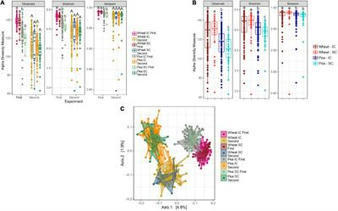
Plant-plant associations, notably cereal-legume intercropping, have been proposed in agroecology to better value resources and thus reduce the use of chemical inputs in agriculture. Wheat-pea intercropping allows to decreasing the use of nitrogen fertilization through ecological processes such as niche complementarity and facilitation. Rhizosphere microbial communities may account for these processes, since they play a major role in biogeochemical cycles and impact plant nutrition. Still, knowledge on the effect of intecropping on the rhizosphere microbiota remains scarce. Especially, it is an open question whether rhizosphere microbial communities in cereal-legume intercropping are the sum or not of the microbiota of each plant species cultivated in sole cropping. In the present study, we assessed the impact of wheat and pea in IC on the diversity and structure of their respective rhizosphere microbiota. For this purpose, several cultivars of wheat and pea were cultivated in sole and intercropping. Roots of wheat and pea were collected separately in intercropping for microbiota analyses to allow deciphering the effect of IC on the bacterial community of each plant species/cultivar tested. Our data confirmed the well-known specificity of the rhizosphere effect and further stress the differentiation of bacterial communities between pea genotypes (Hr and hr). As regards the intercropping effect, diversity and structure of the rhizosphere microbiota were comparable to sole cropping. However, a specific co-occurrence pattern in each crop rhizosphere due to intercropping was revealed through network analysis. Bacterial co-occurrence network of wheat rhizosphere in IC was dominated by OTUs belonging to Alphaproteobacteria, Bacteroidetes and Gammaproteobacteria. We also evidenced a common network found in both rhizosphere under IC, indicating the interaction between the plant species; this common network was dominated by Acidobacteria, Alphaproteobacteria, and Bacteroidetes, with three OTUs belonging to Acidobacteria, Betaproteobacteria and Chloroflexi that were identified as keystone taxa. These findings indicate more complex rhizosphere bacterial networks in intercropping. Possible implications of these conclusions are discussed in relation with the functioning of rhizosphere microbiota in intercropping accounting for its beneficial effects.
|
|
Scooped by
Jean-Michel Ané
June 6, 2021 9:44 PM
|
Purpose
Beneficial soil microbes, such as rhizobia, engage in facultative symbioses in the roots of leguminous host plants to exchange nitrogen for products of photosynthesis, and these symbioses can be altered by biotic and abiotic factors. Here, we investigated how soil nitrate supply and aboveground insect herbivory interact to influence biological nitrogen fixation in Medicago sativa (alfalfa or lucerne).
Methods
Using field and greenhouse experiments, we quantified above- and belowground allocation of rhizobially fixed nitrogen using isotopic nitrogen ratios in plants with different combinations of herbivory and nitrate supplementation. We caged Empoasca fabae (potato leafhopper) on fixing and non-fixing cultivars of M. sativa and supplemented soils with varied nitrate concentrations.
Results
We detected strong changes in legume above- and belowground allocation of fixed nitrogen in response to both herbivory and nitrate supply. Moderate nitrate soils, irrespective of herbivory, induced little to no fixed nitrogen allocation across both field and greenhouse experiments. In the field only, non-supplemented soil increased aboveground allocation of fixed nitrogen following herbivore damage but resulted in no changes belowground. In contrast, non-supplemented and high nitrate soils in the greenhouse increased above- and belowground fixed nitrogen allocation relative to moderate nitrate soils.
Conclusion
Our results demonstrate herbivory drives distinct plant allocation strategies across soil nitrate levels, advancing our understanding of how rhizobia influence legumes both above- and belowground. Herbivory-induced changes in rhizobia-legume symbioses are likely widespread across both agricultural and natural ecosystems.
|
|
Scooped by
Jean-Michel Ané
June 6, 2021 9:18 PM
|
Plants interact with a large number of microorganisms that greatly influence their growth and health. Among the beneficial microorganisms, rhizosphere bacteria known as Plant Growth Promoting Bacteria increase plant fitness by producing compounds such as phytohormones or by carrying out symbioses that enhance nutrient acquisition. Nitrogen-fixing bacteria, either as endophytes or as endosymbionts, specifically improve the growth and development of plants by supplying them with nitrogen, a key macro-element. Survival and proliferation of these bacteria require their adaptation to the rhizosphere and host plant, which are particular ecological environments. This adaptation highly depends on bacteria response to the Reactive Oxygen Species (ROS), associated to abiotic stresses or produced by host plants, which determine the outcome of the plant-bacteria interaction. This paper reviews the different antioxidant defense mechanisms identified in diazotrophic bacteria, focusing on their involvement in coping with the changing conditions encountered during interaction with plant partners.
|
|
Scooped by
Jean-Michel Ané
June 3, 2021 2:44 PM
|
Rhizobia are a phylogenetically diverse group of soil bacteria that engage in mutualistic interactions with legume plants. Although specifics of the symbioses differ between strains and plants, all symbioses ultimately result in the formation of specialized root nodule organs that host the nitrogen-fixing microsymbionts called bacteroids. Inside nodules, bacteroids encounter unique conditions that necessitate the global reprogramming of physiological processes and the rerouting of their metabolism. Decades of research have addressed these questions using genetics, omics approaches, and, more recently, computational modeling. Here, we discuss the common adaptations of rhizobia to the nodule environment that define the core principles of bacteroid functioning. All bacteroids are growth arrested and perform energy-intensive nitrogen fixation fueled by plant-provided C4-dicarboxylates at nanomolar oxygen levels. At the same time, bacteroids are subject to host control and sanctioning that ultimately determine their fitness and have fundamental importance for the evolution of a stable mutualistic relationship.
|
|
Scooped by
Jean-Michel Ané
June 3, 2021 1:24 PM
|
Agricultural production must increase due to increase in population. Inorganic fertilizers are used to promote growth of plants. The use of inorganic fertilizers is rising day by day, which is very expensive and is a huge cause of environmental pollution. We need to find out strategies to improve our agricultural productivity by using environmental friendly approach. Arbuscular mycorrhizal fungi form symbiotic association with majority of plants and provide the plants with essential nutrients especially phosphorus; hence, there is less need for inorganic fertilizers. Most of the species of AMF belong to sub-phylum Glomeromycotina. Four orders of arbuscular mycorrhizal fungi (Glomerales, Archaeosporales, Paraglomerales, and Diversisporales) have been identified in this sub-phylum. There are transport proteins located in the fungus and plant plasma membranes, which help in the transport of different nutrients. Roots of different plants release certain exudates after contact with AM fungi, these fungi also respond to plant’s exudates by releasing certain compounds such as sesquiterpenes, hence after a mutual dialogue, AM fungi associate itself with the roots of plants. Identification of AMF involves the use of DNA markers such as smallest subunit (SSU) rRNA gene, the internal transcribed spacer (ITS), and the large subunit (LSU) rRNA gene. Plants having AM association are more tolerant to metals, drought, salinity, heat, and adverse environmental conditions. Soil structure and soil nutrients are improved due to AMF association. Plants having mycorrhizal association can better cope with the biotic and abiotic stress conditions than the non-mycorrhizal plants and can be well adapted to the changing environment conditions. There is a positive impact on the stability of ecosystem due to the presence of mycorrhizal plants. AMF plays important role in sustainable development of agriculture and may also increase resistance of plants to pathogens attack.
|
|
Scooped by
Jean-Michel Ané
June 2, 2021 11:14 PM
|
The legume nodules are a rich source not only of rhizobia but also of endophytic bacteria exhibiting plant growth-promoting mechanisms with potential as plant biostimulants. In this work we analyzed the genomes of Phyllobacterium endophyticum PEPV15 and Rhizobium laguerreae PEPV16 strains, both isolated from Phaseolus vulgaris nodules. In silico analysis showed that the genomes of these two strains contain genes related to N-acyl-homoserine lactone (AHL) and cellulose biosynthesis, involved in quorum sensing and biofilm formation, which are essential for plant colonization. Several genes involved in plant growth promotion such as those related to phosphate solubilization, indole acetic acid production, siderophore biosynthesis and nitrogen fixation were also located in both genomes. When strains PEPV15 and PEPV16 were inoculated in lettuce and carrot in field assays, we found that both significantly increased the yield of lettuce shoots and carrot roots by more than 20% and 10%, respectively. The results of this work confirmed that the genome mining of genes involved in plant colonization and growth promotion is a good strategy for predicting the potential of bacterial strains as crops inoculants, opening new horizons for the selection of bacterial strains with which to design new, effective bacteria-based plant biostimulants.
|
|
Scooped by
Jean-Michel Ané
June 2, 2021 11:11 PM
|
Legumes are an excellent source of proteins and health-promoting phytochemicals. Recognizing their importance in human nutrition and sustainable agricultural production, significant efforts are currently being made to accelerate genetic gain related to yield, stress resilience, and nutritional quality. Recent increases in genomic resources for multiple legume crops have laid a solid foundation for application of transformative breeding technologies such as genomic selection and genome editing for crop improvement. In this review, we focus on the recent plant-specific advances in CRISPR/Cas9-based gene editing technology and discuss the challenges and opportunities to harnessing this innovative technology for targeted improvement of traits in legume crops. Gene-editing methods have been successfully established for soybean, cowpea, chickpea, and model legumes such as Medicago truncatula and Lotus japonicus. However, the recalcitrance of other legumes to in vitro gene transfer and regeneration has posed a serious challenge to application of gene editing. We discuss various modifications to in vitro culture methods, in terms of the choice of explant, media composition, and DNA delivery and gene-editing detection methods that can potentially improve the rate of transformation and regeneration of whole plant in legume crops. Although gene-editing technology can bring enormous benefits to legume breeding, regulatory hurdles are a cause for serious concern. We compare the regulatory environments existing in the European Union and the United States of America. A favorable regulatory framework and public acceptance are important factors in realizing CRISPR's potential benefits to global food security.
|
|
Scooped by
Jean-Michel Ané
June 2, 2021 11:06 PM
|
Maize is an essential cereal crop and the third most essential food crop globally. The extensive dependence on pesticides and chemical fertilizers to control pests and increase crop yield, respectively, has generated an injurious impact on soil and animal health. Plant growth-promoting rhizobacteria (PGPR), which depict a broad array of bacteria inhabiting the root vicinity and root surface, have proven to be a better alternative. These organisms expressly or by implication foster the growth and development of plants by producing and secreting numerous regulatory compounds in the rhizosphere. Some rhizobacteria found to be in association with Zea mays rhizosphere include Bacillus sp., Azotobacter chroococcum, Burkholderia spp., Streptomyces spp., Pseudomonas spp., Paenibacillus spp., and Sphingobium spp. For this review, the mechanism of action of these rhizospheric bacteria was grouped into three, which are bioremediation, biofertilization, and biocontrol.
|
|
Scooped by
Jean-Michel Ané
June 2, 2021 11:03 PM
|
Microalgae have been identified to produce a plethora of bioactive compounds exerting growth stimulating effects on plants. The objective of this study was to investigate the plant-growth-promoting effects of three selected strains of eukaryotic green microalgae. The biostimulatory effects of two Chlorella species (MACC-360 and MACC-38) and a Chlamydomonas reinhardtii strain (cc124) were investigated in a Medicago truncatula model plant grown under controlled greenhouse conditions. The physiological responses of the M. truncatula A17 ecotype to algal biomass addition were characterized thoroughly. The plants were cultivated in pots containing a mixture of vermiculite and soil (1:3) layered with clay at the bottom. The application of live algae cells using the soil drench method significantly increased the plants’ shoot length, leaf size, fresh weight, number of flowers and pigment content. For most of the parameters analyzed, the effects of treatment proved to be specific for the applied algae strains. Overall, Chlorella application led to more robust plants with increased fresh biomass, bigger leaves and more flowers/pods compared to the control and Chlamydomonas-treated samples receiving identical total nutrients.
|
|
Scooped by
Jean-Michel Ané
June 2, 2021 11:00 PM
|
The ubiquitous diazotrophic soil bacterium Azotobacter vinelandii has been extensively studied as a model organism for biological nitrogen fixation (BNF). In A. vinelandii, BNF is regulated by the NifL-NifA two-component system, where NifL acts as an anti-activator that tightly controls that activity of the nitrogen fixation specific transcriptional activator, NifA, in response to redox, nitrogen, and carbon status. While several studies reported mutations in A. vinelandii nifL resulted in the deregulation of nitrogenase expression and the release of large quantities of ammonia, knowledge about the specific determinants for this ammonia-excreting phenotype is lacking. In this work, we report that only specific disruptions of nifL lead to large quantities of ammonia accumulated in liquid culture (~ 12 mM). The ammonia excretion phenotype is solely associated with deletions of NifL domains combined with the insertion of a promoter sequence in the opposite orientation to nifLA transcription. We further demonstrated that the strength of the inserted promoter could influence the amounts of ammonia excreted by affecting rnf1 gene expression as an additional requirement for ammonia excretion. These ammonia-excreting nifL mutants significantly stimulate the transfer of fixed nitrogen to rice. This work defines the discreet determinants that bring about A. vinelandii ammonia excretion and demonstrates that strains can be generated through simple gene editing to provide promising biofertilizers capable of transferring nitrogen to crops.
|
|
Scooped by
Jean-Michel Ané
June 2, 2021 10:23 PM
|
During and after the green revolution in the last century, agrochemicals especially nitrogen (N) were extensively used. However, it resulted in a remarkable increase in crop yield but drastically reduced soil fertility; increased the production cost, food prices, and carbon footprints; and depleted the fossil reserves with huge penalties to the environment and ecological sustainability. The groundwater, rivers, and oceans are loaded with N excess which is an environmental catastrophe. Nitrogen emissions (e.g., ammonia, nitrogen oxide, nitrous oxide) play an important role in global climate change and contribute to particulate matter and acid rain causing respiratory problems, cancers, and damage to forests and buildings. Therefore, the nitrogen-polluted planet Earth needs concerted global efforts to avoid the disaster. Improved agricultural N management focuses on the synchronization of crop N demand and N supply along with improving the N-use efficiency of the crops. However, there is very little focus on the natural sources of N available for plants in the form of diazotrophic bacteria present inside or on the root surface and the rhizosphere. These diazotrophs are the mini-nitrogen factories that convert available (78%) atmospheric N2 to ammonia through a process known as “biological nitrogen fixation” which is then taken up by the plants for its metabolic functioning. Diazotrophs also stimulate root architecture by producing plant hormones and hence improve the plant’s overall ability to uptake nutrients and water. In recent years, nanotechnology has revolutionized the whole agri-industry by introducing nano-fertilizers and coated/slow-releasing fertilizers. With this in mind, we tried to explore the following questions: To what extent can the crop N requirements be met by diazotroph inoculation? Can N input to agriculture be managed in a way leading to environmental benefits and farmers saving money? Can nanotechnology help in technological advancement of diazotroph application? The review suggests that an integrated technology based on slow-releasing nano-fertilizer combined with diazotrophs should be adopted to decrease nitrogen inputs to the agricultural system. This integrated technology would minimize N pollution and N losses to much extent.
|









Awesome study. Bradyrhizobium, the Acidobacteria genus RB41, and Streptomyces rule...