Your new post is loading...

|
Scooped by
Jean-Michel Ané
November 27, 2021 5:10 PM
|
Rhizobium leguminosarum (Rl) is a common name for several genospecies of rhizobia able to form nitrogen-fixing nodules on the roots of pea (Pisum sativum L.) and undergo terminal differentiation into a symbiotic form called bacteroids. In this work, we compared the genomes of the free-living and differentiated forms of the Rl strain RCAM1026 using Oxford Nanopore long reads. No significant genome rearrangements were observed, but the relative abundances of replicons were different between the cell states. GANTC, GGCGCC and GATC methylated motifs have been found in the genome, along with genes for methyltransferases with matching predicted targets. Methylation patterns for the GANTC and GATC motives differed significantly depending on the cell state, which indicates their possible connection to the regulation of symbiotic differentiation. The GGCGCC motif was completely methylated in both bacteria states, and, apparently, is a target for the modification-restriction system. Currently, the methylation patterns in symbiotic bacteria are not extensively studied, so a further investigation of the topic coupled with gene expression data is needed to elucidate the function of differential methylation in terminal differentiation of R. leguminosarum and other rhizobia.
|
|
Scooped by
Jean-Michel Ané
November 26, 2021 6:54 PM
|
•Association between plant roots and arbuscular mycorrhizal fungi (AMF) is common.
•AMF colonization is traditionally evaluated by microscopic observations.
•Microscopic observation requires high experience of the operators.
•qPCR is a promising method but is still rarely used to quantify AMF colonization.
|
|
Scooped by
Jean-Michel Ané
November 23, 2021 4:16 PM
|
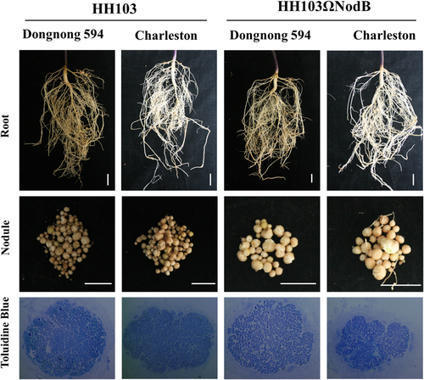
Soybean, which originated in China, is an important oil crop. The soybean–rhizobium symbiotic relationship provides soybean plants with abundant nitrogen. The Nod factor, which is an early signalling factor, affects the establishment of this symbiosis. In this study, the generated Sinorhizobium fredii HH103ΩNodB mutant exhibited defective Nod factor synthesis. The nodulation of 30 core collections, including ‘Dongnong594’ and ‘Charleston’, by the NodB mutant differed from the nodulation by the wild-type strain. Soybean recombinant inbred lines derived from a ‘Dongnong594’ × ‘Charleston’ cross were used for mapping soybean genes related to the Nod factor signalling pathway. Eleven QTLs related to nodule number and eight QTLs related to nodule dry weight were revealed. On the basis of a qRT-PCR analysis, Glyma.03G120700, Glyma.08G296000 and Glyma.15G21560 were identified as candidate genes Genes that control a nodule number difference between LCO-dependent nodulation and a mixture of LCO-dependent and independent nodulation. Am I the only one to think that we cannot conclude anything here?influencing the NF interaction. These genes were differentially expressed following the inoculations with the wild-type rhizobium and the NodB mutant. This study provides important insights into the mechanism mediating soybean responses to the NF after the soybean–rhizobium symbiosis is established.
|
|
Scooped by
Jean-Michel Ané
November 23, 2021 3:55 PM
|
•Some arbuscular mycorrhizal (AM) fungal strains referred as AMF dikaryons carry thousands of nuclei originating from two parental strains.
•The ratio of coexisting nucleotypes in AMF dikaryons is affected by abiotic factors.
•The ratio of coexisting nucleotypes in AMF dikaryons is harmonized when the mycelium encounters multiple abiotic factors simultaneously.
•The observed ratios are stable across conditions.
|
|
Scooped by
Jean-Michel Ané
November 23, 2021 3:43 PM
|
The present study is aimed at disclosing metabolic profile alterations in the leaves of the Medicago lupulina MlS-1 line that result from high-efficiency arbuscular mycorrhiza (AM) symbiosis formed with Rhizophagus irregularis under condition of a low phosphorus level in the substrate. A highly effective AM symbiosis was established in the period from the stooling to the shoot branching initiation stage (the efficiency in stem height exceeded 200%). Mycorrhization led to a more intensive accumulation of phosphates (glycerophosphoglycerol and inorganic phosphate) in M. lupulina leaves. Metabolic spectra were detected with GS-MS analysis. The application of complex mathematical analyses made it possible to identify the clustering of various groups of 320 metabolites and thus demonstrate the central importance of the carbohydrate and carboxylate-amino acid clusters. The results obtained indicate a delay in the metabolic development of mycorrhized plants. Thus, AM not only accelerates the transition between plant developmental stages but delays biochemical “maturation” mainly in the form of a lag of sugar accumulation in comparison with non-mycorrhized plants. Several methods of statistical modeling proved that, at least with respect to determining the metabolic status of host-plant leaves, stages of phenological development have priority over calendar age.
|
|
Scooped by
Jean-Michel Ané
November 21, 2021 9:43 PM
|
•Both barley and faba bean rotations promoted tomato growth and yield.
•Faba bean precession increased both P and N uptake in tomato aboveground tissues.
•S. roseocinereus MS1B15 promoted plant growth and nutrient use.
•The effect of microbial biostimulation is buffered under faba bean rotation.
|
|
Scooped by
Jean-Michel Ané
November 16, 2021 10:02 PM
|
Because of ongoing climate change, drought is becoming the major factor limiting productivity of all plants, including legumes. As these protein-rich crops form symbiotic associations with rhizobial bacteria — root nodules — they readily lose their productivity under drought conditions. Understanding the underlying molecular mechanisms might give access to new strategies to preserve the productivity of legume crops under dehydration. As was shown recently, development of drought response is accompanied by alterations in the patterns of protein glycation and formation of advanced glycation end products (AGEs) that might be a part of unknown regulatory mechanisms. Therefore, here we address the effects of moderate drought on protein dynamics and AGE patterns in pea (Pisum sativum) root nodules. For this, plants inoculated with rhizobial culture were subjected to osmotic stress for one week, harvested, the total protein fraction was isolated from root nodules by phenol extraction, analyzed by bottom-up LC-MS-based proteomics, and AGE patterns were characterized. Surprisingly, despite the clear drought-related changes in phenotype and stomatal conductivity, only minimal accompanying expressional changes (14 rhizobial and 14 pea proteins, mostly involved in central metabolism and nitrogen fixation) could be observed. However, 71 pea and 97 rhizobial proteins (mostly transcription factors, ABC transporters and effector enzymes) were glycated, with carboxymethylation being the major modification type. Thereby, the numbers of glycated sites in nodule proteins dramatically decreased upon stress application. It might indicate an impact of glycation in regulation of transport, protein degradation, central, lipid and nitrogen metabolism. The data are available at Proteome Xchange (accession: PXD024042).
|
|
Scooped by
Jean-Michel Ané
November 16, 2021 10:01 PM
|
Early terrestrial plants colonizing land likely relied on arbuscular mycorrhizal (AM) associations to meet their nutrient needs (Smith and Read 2008 but see Bidartondo et al. 2011). Despite occasional diversifications towards other mycorrhizal association strategies (Hoeksema 2010; Feijen et al. 2018), the AM symbiosis shows a remarkable persistence over evolutionary time (Brundrett and Tedersoo 2018). Not all plants, however, benefit equally from associating with mycorrhiza (Wilson and Hartnett 1998), and it remains unclear why some plant species for which we often observe negative responses (such as Bromus inermis, Poa pratensis and Koeleria pyramidata in Wilson and Hartnett 1998) to mycorrhiza continue to associate with AM fungi.
|
|
Scooped by
Jean-Michel Ané
November 16, 2021 9:53 PM
|
Legumes balance nitrogen acquisition from soil nitrate with symbiotic nitrogen fixation. Nitrogen fixation requires establishment of a new organ, which is a cytokinin dependent developmental process in the root. We found cytokinin biosynthesis is a central integrator, balancing nitrate signalling with symbiotic acquired nitrogen. Low nitrate conditions provide a permissive state for induction of cytokinin by symbiotic signalling and thus nodule development. In contrast, high nitrate is inhibitory to cytokinin accumulation and nodule establishment in the root zone susceptible to nodule formation. This reduction of symbiotic cytokinin accumulation was further exacerbated in cytokinin biosynthesis mutants, which display hypersensitivity to nitrate inhibition of nodule development, maturation and nitrogen fixation. Consistent with this, cytokinin application rescues nodulation and nitrogen fixation of biosynthesis mutants in a concentration dependent manner. These inhibitory impacts of nitrate on symbiosis occur in a Nlp1 and Nlp4 dependent manner and contrast with the positive influence of nitrate on cytokinin biosynthesis that occurs in species that do not form symbiotic root nodules. Altogether this shows that legumes, as exemplified by Lotus japonicus, have evolved a different cytokinin response to nitrate compared to non-legumes.
|
|
Scooped by
Jean-Michel Ané
November 16, 2021 9:52 PM
|
Plant growth-promoting bacteria (PGPB) and humic substances (HSs) are promising options for reducing the use of pesticides and mineral fertilizers. Although many studies have shown the effects of PGPB and HSs separately, little information is available on plant responses to the combined application of these biostimulants despite the great potential for the simultaneous action of these biological inputs. Thus, the objective of this review is to present an overview of scientific studies that addressed the application of PGPB and HSs to different crops. First, we discuss the effect of these biostimulants on biological nitrogen fixation, the various effects of the inoculation of beneficial bacteria combined with the application of HSs on promoting the growth of nonleguminous plants and how this combination can increase bacterial colonization of plant hosts. We also address the effect of PGPB and HSs on plant responses to abiotic stresses, in addition to discussing the role of HSs in protecting plants against pathogens. There is a lack of studies that address the role of PGPB + HSs in biocontrol. Understanding the factors involved in the promotion of plant growth through the application of PGPB and HSs can assist in the development of efficient biostimulants for agricultural management. This approach has the potential to accelerate the transition from conventional cultivation to sustainable agrosystems.
|
|
Scooped by
Jean-Michel Ané
November 11, 2021 9:33 PM
|
Soil is a living ecosystem, the health of which depends on fine interactions among its abiotic and biotic components. These form a delicate equilibrium maintained through a multilayer network that absorbs certain perturbations and guarantees soil functioning. Deciphering the principles governing the interactions within soils is of critical importance for their management and conservation. Here we focus on the soil microbiota and discuss the complexity of interactions that impact their composition and function in their interaction with plants. We discuss how physical aspects of soils influence its microbiota composition and how microbiota-plant interactions support plant growth and its response to nutrient deficiencies. We predict that understanding the principles determining the configuration and functioning of soil microbiota will contribute to the design of microbiota-based strategies to preserve natural resources and develop more environmentally-friendly agricultural practices.
|
|
Scooped by
Jean-Michel Ané
November 11, 2021 9:30 PM
|
Cellular processes rely on the intimate interplay of different molecules, including DNA, RNA, proteins, and metabolites. Obtaining and integrating data on their abundance and dynamics at high temporal and spatial resolution are essential for our understanding of plant growth and development. In the past decade, enzymatic proximity labeling (PL) has emerged as a powerful tool to study local protein and nucleotide ensembles, discover protein–protein and protein–nucleotide interactions, and resolve questions about protein localization and membrane topology. An ever-growing number and continuous improvement of enzymes and methods keep broadening the spectrum of possible applications for PL and make it more accessible to different organisms, including plants. While initial PL experiments in plants required high expression levels and long labeling times, recently developed faster enzymes now enable PL of proteins on a cell type-specific level, even with low-abundant baits, and in different plant species. Moreover, expanding the use of PL for additional purposes, such as identification of locus-specific gene regulators or high-resolution electron microscopy may now be in reach. In this review, we give an overview of currently available PL enzymes and their applications in mammalian cell culture and plants. We discuss the challenges and limitations of PL methods and highlight open questions and possible future directions for PL in plants.
|
|
Scooped by
Jean-Michel Ané
November 9, 2021 5:57 PM
|
Soil-dwelling, nitrogen-fixing rhizobia signal their presence to legume hosts by secreting lipo-chitooligomers (LCOs) that are decorated with a variety of chemical substituents. It has long been assumed, but never empirically shown, that the LCO backbone is synthesized first by NodC, NodB, and NodA, followed by addition of one or more substituents by other Nod proteins. By analyzing a collection of in-frame deletion mutants of key nod genes in the bacterium Rhizobium sp. IRBG74 by mass spectrometry, we were able to shed light on the possible substitution order of LCO decorations, and we discovered that the prevailing view is probably erroneous. We found that most substituents could be transferred to a short chitin backbone prior to acylation by NodA, which is probably one of the last steps in LCO biosynthesis. The existence of substituted, short chitin oligomers offers new insights into symbiotic plant–microbe signaling.
|
|
|
Scooped by
Jean-Michel Ané
November 26, 2021 6:57 PM
|
Root exudation is one of the primary processes that mediate interactions between plant roots, microorganisms, and the soil matrix. Previous research has shown that plant root exudate profiles vary between species and genotypes which can likely support different microbial associations. Here, utilizing distinct sorghum genotypes as a model system, we characterized the chemical heterogeneity between root exudates and the effects of that variability on soil microbial membership and metabolisms. Distinct exudate chemical profiles were quantified and used to formulate synthetic root exudate treatments, a High Organic acid Treatment (HOT) and a High Sugar Treatment (HST). Root exudate treatments were added to laboratory soil reactors and 16S rRNA gene profiling illustrated distinct microbial membership in response to HST or HOT amendments. Alpha and beta diversity metrics were significantly different between treatments, (Shannon’s, p < 0.0001, mrpp = 0.01, respectively). Exometabolite production was highest in the HST, with increased production of key organic acids, non-proteinogenic amino acids, and three plant growth-promoting phytohormones (benzoic acid, salicylic acid, indole-3-acetic acid), suggesting plant-derived sugars fuel microbial carbon metabolism and contribute to phytohormone production. Linking the metabolic capacity of metagenome-assembled genomes in the HST to the exometabolite patterns, we identified potential plant growth-promoting microorganisms that could produce these phytohormones. Our findings emphasize the tractability of high-resolution multi-omics tools to investigate soil microbiomes, opening the possibility of manipulating native microbial communities to improve specific soil microbial functions and enhance crop production.
|
|
Scooped by
Jean-Michel Ané
November 26, 2021 6:52 PM
|
The rhizosheath, the layer of soil that adheres strongly to roots, influences water and nutrients acquisition. Pearl millet is a cereal crop that plays a major role for food security in arid regions of sub Saharan Africa and India. We previously showed that root-adhering soil mass is a heritable trait in pearl millet and that it correlates with changes in rhizosphere microbiota structure and functions. Here, we studied the correlation between root-adhering soil mass and root hair development, root architecture, and symbiosis with arbuscular mycorrhizal fungi and we analysed the genetic control of this trait using genome wide association (GWAS) combined with bulk segregant analysis and gene expression studies. Root-adhering soil mass was weakly correlated only to root hairs traits in pearl millet. Twelve QTLs for rhizosheath formation were identified by GWAS. Bulk segregant analysis on a biparental population validated five of these QTLs. Combining genetics with a comparison of global gene expression in the root tip of contrasted inbred lines revealed candidate genes that might control rhizosheath formation in pearl millet. Our study indicates that rhizosheath formation is under complex genetic control in pearl millet and suggests that it is mainly regulated by root exudation.
|
|
Scooped by
Jean-Michel Ané
November 23, 2021 4:07 PM
|
Aims
We explored how long-term agricultural practices affect arbuscular mycorrhizal (AM) fungal traits and community structure.
Methods
We sampled soil and roots from a 26-year-old field experiment comprising 16 replicated treatments, in which we manipulated tillage intensity (moldboard vs. chisel plow), fertilization (organic vs. mineral) and crop rotation (continuous barley vs barley-forage rotations) in a factorial design (N = 64). We measured AM fungal community-aggregated traits, namely the abundance of vesicles, arbuscules, extraradical mycelium (ERM) and spores. We characterized root-borne and soil-borne AM communities using Illumina sequencing.
Results
Crop rotation was the main factor controlling AM fungal traits, with more arbuscules and ERM found in forage rotation plots, and more vesicles and spores found in continuous barley plots. Members of the Glomeraceae family were preferentially associated with continuous barley whereas the Gigasporaceae and Diversisporaceae families were overrepresented in the first stage of crop rotation. Trait-based and phylogenic filtering of AM fungal communities allowed us to speculate on different life history strategies among taxonomic families. AM community structure in soil responded to fertilizer type, whereas root-borne communities responded to crop rotation. We found the first evidence of temporal niche partitioning as a potential driver of coexistence among AM fungal taxa, resulting in higher species richness (i.e. storage effects).
Conclusions
Crop rotation scheme strongly influences functional traits and coexistence of AM fungi, more so than soil disturbance intensity or fertilization regime. Future work is required to understand the implications of these shifts in AM fungal community structure for crop productivity.
|
|
Scooped by
Jean-Michel Ané
November 23, 2021 3:43 PM
|
ously treated with cytokinin showed stunted phenotype of root, shoot and significantly reduced nodule numbers. Genome-wide identification of LRR-RLKs in chickpea and Medicago resulted in 200 and 371 genes respectively. Gene duplication analysis revealed that LRR-RLKs family expanded through segmental duplications in chickpea and tandem duplications in Medicago. Expression profiling of LRR-RLKs revealed their involvement in cytokinin signaling and plant organ development. Overexpression of KLAVIER ortholog of chickpea, Ca_LRR-RLK147, in roots revealed its localization in the membrane but showed no effect on root nodulation despite increased cle peptide levels. Two findings (i) drastic effect on nodule number by exogenous cytokinin treatment to only shoot and restoration to normal nodulation by treatment to both root and shoot tissue and (ii) no effect on nodule number by overexpression of Ca_LRR-RLK147 establishes the fact that despite presence of cle peptides in root, the function of Ca_LRR-RLK147 was shoot mediated during AON.
|
|
Scooped by
Jean-Michel Ané
November 21, 2021 9:44 PM
|
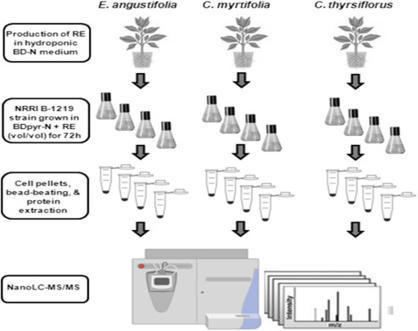
Frankia and actinorhizal plants exchange signals in the rhizosphere leading to specific mutual recognition of partners and nitrogen-fixing nodule organogenesis. Frankia soli strain NRRL B-16219, from the Elaeagnus specificity group, colonizes the root tissues of its actinorhizal host through direct intercellular penetration of root epidermis cells and cortex. Here, we studied the early proteogenomic response of strain NRRL B-16219 to treatment with root exudates from compatible Elaeagnus angustifolia, and incompatible Ceanothus thyrsiflorus and Coriaria myrtifolia, host plants grown in nitrogen depleted hydroponic medium. Next-generation proteomics was used to identify the main Frankia proteins differentially expressed in response to the root exudates. No products of the nod genes present in B-16219 were detected. Proteins specifically upregulated in presence of E. angustifolia root exudates include those connected to nitrogen fixation and assimilation (glutamate synthetase, hydrogenase and squalene synthesis), respiration (oxidative phosphorylation and citric acid cycle pathways), oxidative stress (catalase, superoxide dismutase, and peroxidase), proteolysis (proteasome, protease, and peptidase) and plant cell wall degrading proteins involved in the depolymerization of celluloses (endoglucanase, glycosyltransferase, beta-mannanases, glycoside hydrolase and glycosyl hydrolase). Proteomic data obtained in this study will help link signaling molecules/factors to their biosynthetic pathways once those factors have been fully characterized.
|
|
Scooped by
Jean-Michel Ané
November 17, 2021 1:26 PM
|
Most land plants symbiotically interact with soil-borne fungi to ensure nutrient acquisition and tolerance to various environmental stressors. Among these symbioses, arbuscular mycorrhizal and ectomycorrhizal associations can be found in a large proportion of plants, including many crops. Split-root assays are widely used in plant research to study local and systemic signaling responses triggered by local treatments, including nutrient availability, interaction with soil microbes, or abiotic stresses. However, split-root approaches have only been occasionally used to tackle these questions with regard to mycorrhizal symbioses. This review compiles and discusses split-root assays developed to study arbuscular mycorrhizal and ectomycorrhizal symbioses, with a particular emphasis on colonization by multiple beneficial symbionts, systemic resistance induced by mycorrhizal fungi, water and nutrient transport from fungi to colonized plants, and host photosynthate allocation from the host to fungal symbionts. In addition, we highlight how the use of split-root assays could result in a better understanding of mycorrhizal symbioses, particularly for a broader range of essential nutrients, and for multi-partite interactions.
|
|
Scooped by
Jean-Michel Ané
November 16, 2021 10:02 PM
|
As other arbuscular mycorrhizal fungi, Gigaspora margarita contains unculturable endobacteria in its cytoplasm. A cured fungal line has been obtained and demonstrated to be capable of establishing a successful mycorrhizal colonization. However, previous OMICs and physiological analyses have demonstrated that the cured fungus is impaired in some functions during the pre-symbiotic phase, leading to a lower respiration activity, lower ATP and antioxidant production. Here, by combining deep dual-mRNA sequencing and proteomics applied to Lotus japonicus roots colonized by the fungal line with bacteria (B+) and by the cured line (B-), we tested the hypothesis that L. japonicus i) activates its symbiotic pathways irrespective of the presence or absence of the endobacterium, but ii) perceives the two fungal lines as different physiological entities. Morphological observations confirmed the absence of clear endobacteria-dependent changes in the mycorrhizal phenotype of L. japonicus, while transcript and proteomic datasets revealed the activation of the most important symbiotic pathways. They included the iconic nutrient transport and some less-investigated pathways, such as phenylpropanoid biosynthesis. However, significant differences between the mycorrhizal B+/B- plants emerged in the respiratory pathways and lipid biosynthesis. In both cases, the roots colonized by the cured line revealed a reduced capacity to activate genes involved in antioxidant metabolism, as well as the early biosynthetic steps of the symbiotic lipids which are directed towards the fungus. Similarly to its pre-symbiotic phase, the intraradical fungus revealed transcripts related to mitochondrial activity, which were down-regulated in the cured line, as well as perturbation in lipid biosynthesis.
|
|
Scooped by
Jean-Michel Ané
November 16, 2021 9:58 PM
|
The garden pea (Pisum sativum L.), like most members of Fabaceae family, is capable of forming symbioses with beneficial soil microorganisms such as nodule bacteria (rhizobia), arbuscular mycorrhizal (AM) fungi and plant growth promoting bacteria (PGPB). The autoregulation of nodulation (AON) system is known to play an important role in controlling both the number of nodules and the level of root colonization by AM via root-to-shoot signaling mediated by CLAVATA/ESR-related (CLE) peptides and their receptors. In the pea, mutations in genes Sym28 (CLV2-like) and Sym29 (CLV1-like), which encode receptors for CLE peptides, lead to the supernodulation phenotype, i.e., excessive nodule formation. The aim of the present study was to analyze the response of pea cv. ‘Frisson’ (wild type) and mutants P64 (sym28) and P88 (sym29) to complex inoculation with rhizobia, AM fungi and PGPB, with regard to biomass accumulation, yield and transcriptomic alterations. The plants were grown in quartz sand for 2 and 4 weeks after inoculation with either rhizobia (Rh) or complex inoculation with Rh + AM, Rh + PGPB, and Rh+AM+PGPB, and the biomass and yield were assessed. Transcriptome sequencing of whole shoots and roots was performed using a modified RNAseq protocol named MACE (Massive Analysis of cDNA Ends). In the experimental conditions, P88 (sym29) plants demonstrated the best biomass accumulation and yield, as compared to the wild type and P64 (sym28) plants, whereas P64 (sym28) had the lowest rate of biomass and seed yield. The transcriptome analysis showed that both supernodulating mutants more actively responded to biotic and abiotic factors than the wild-type plants and demonstrated increased expression of genes characteristic to late stages of nodule development. The roots of P64 (sym28) plants responded to AM+Rh treatment with upregulation of genes encoding plastid proteins, which can be connected with the activation of carotenoid biosynthesis (namely, the non-mevalonate pathway that takes place in root plastids). The more active response to symbionts in P88 (sym29) plants, as compared to cv. ‘Frisson’, was associated with counterregulation of transcripts involved in chloroplast functioning and development in leaves, which accompanies successful plant development in symbiotic conditions. Finally, the effect of retardation of plant aging upon mycorrhization on a transcriptomic level was recorded for cv. ‘Frisson’ but not for P64 (sym28) and P88 (sym29) mutants, which points towards its possible connection with the AON system. The results of this work link the plant’s autoregulation with the responsiveness to inoculation with beneficial soil microorganisms.
|
|
Scooped by
Jean-Michel Ané
November 16, 2021 9:52 PM
|
The concept of a root economics space (RES) is increasingly adopted to explore root trait variation and belowground resource-acquisition strategies. Much progress has been made on interactions of root morphology and mycorrhizal symbioses. However, root exudation, with a significant carbon cost (~5-21% of total photosynthetically fixed carbon) to enhance resource acquisition, remains a missing link in this RES. Here, we argue that incorporating root exudation into the structure of RES is key to a holistic understanding of soil nutrient acquisition. We highlight the different functional roles of root exudates in soil phosphorus and nitrogen acquisition. Thereafter, we synthesise emerging evidence that illustrates how root exudation interacts with root morphology and mycorrhizal symbioses at the level of species and individual plant, and argue contrasting patterns in species evolved in P-impoverished versus N-limited environments. Finally, we propose a new conceptual framework, integrating three groups of root functional traits to better capture the complexity of belowground resource-acquisition strategies. Such a deeper understanding of the integrated and dynamic interactions of root morphology, root exudation and mycorrhizal symbioses will provide valuable insights into the mechanisms underlying species coexistence, and how to explore belowground interactions for sustainable managed systems.
|
|
Scooped by
Jean-Michel Ané
November 14, 2021 9:40 PM
|
To improve the nitrogen fixation, legume crops are often inoculated with selected effective rhizobia. However, there is large variation in how well the inoculant strains compete with the indigenous microflora in soil. To assess the success of the inoculant, it is necessary to distinguish it from other, closely related strains. Methods used until now have generally been based either on fingerprinting methods or on the use of reporter genes. Nevertheless, these methods have their shortcomings, either because they do not provide sufficiently specific information on the identity of the inoculant strain, or because they use genetically modified organisms that need prior authorization to be applied in the field or other uncontained environments. Another possibility is to target a gene that is naturally present in the bacterial genomes. Here we have developed a method that is based on amplicon sequencing of the bacterial housekeeping gene rpoB, encoding the beta-subunit of the RNA polymerase, which has been proposed as an alternative to the 16S rRNA gene to study the diversity of rhizobial populations in soils. We evaluated the method under laboratory and field conditions. Peanut seeds were inoculated with various Bradyrhizobium strains. After nodule development, DNA was extracted from selected nodules and the nodulating rhizobia were analyzed by amplicon sequencing of the rpoB gene. The analyses of the sequence data showed that the method reliably identified bradyrhizobial strains in nodules, at least at the species level, and could be used to assess the competitiveness of the inoculant compared to other bradyrhizobia.
|
|
Scooped by
Jean-Michel Ané
November 11, 2021 9:32 PM
|
Arbuscular mycorrhiza (AM) is a widespread symbiosis between roots of the majority of land plants and Glomeromycotina fungi. AM is important for ecosystem health and functioning as the fungi critically support plant performance by providing essential mineral nutrients, particularly the poorly accessible phosphate, in exchange for organic carbon. AM fungi colonize the inside of roots and this is promoted at low but inhibited at high plant phosphate status, while the mechanistic basis for this phosphate-dependence remained obscure. Here we demonstrate that a major transcriptional regulator of phosphate starvation responses in rice PHOSPHATE STARVATION RESPONSE 2 (PHR2) regulates AM. Root colonization of phr2 mutants is drastically reduced, and PHR2 is required for root colonization, mycorrhizal phosphate uptake, and yield increase in field soil. PHR2 promotes AM by targeting genes required for pre-contact signaling, root colonization, and AM function. Thus, this important symbiosis is directly wired to the PHR2-controlled plant phosphate starvation response.
|
|
Scooped by
Jean-Michel Ané
November 10, 2021 9:58 PM
|
Arbuscular mycorrhizal fungi (AMF) are beneficial soil microbes that interact with many land plant species. AMF colonize the inner cortical cells of their host roots, where they exchange mineral nutrients taken up through their extraradical hyphal network with carbon provided by the host plant (Roth and Paszkowski, 2017). It has been proposed that bidirectional nutrient exchange between the symbiotic partners is governed by “reciprocal rewards” mechanisms, i.e. the more nutrients an AMF provides to a plant, the more carbon it receives in return (Kiers et al., 2011). The vast hyphal network of AMF extends beyond the rhizosphere of their host plant, which not only allows them to efficiently take up nutrients such as nitrogen (N) and phosphorous (P), but also to interact with several plants at the same time (common mycorrhizal network). Thus, in natural ecosystems, AMF can act as mediators of interspecific interactions between plants and influence species diversity. In a common mycorrhizal network, AMF may enhance species competition by transferring nutrients to the plant that constitutes the strongest nutrient sink or the better carbon provider at the expense of the weaker nutrient sink/carbon source (Weremijewicz et al., 2016). Conversely, plants may benefit from common mycorrhizal networks by reduced individual carbon investments (Walder et al., 2012). Previous research on grassland species revealed that plant community composition is strongly dependent on soil N availability and the presence of AMF: while high soil N enhanced the dominance of grass species and decreased legume biomass in mixed communities, the addition of AMF to the system resulted in a more balanced community composition (Jia et al., 2021). Understanding the complex relationships among plant species and beneficial fungi as well as their dependency on soil nutrient properties is an important prerequisite for optimized grassland management.
|


 Scoop.it!