 Your new post is loading...

|
Scooped by
Jean-Michel Ané
April 14, 2022 10:25 AM
|
Biological nitrogen fixation (BNF) performed by diazotrophs is vital to our understanding of ecosystem functions, as plant nitrogen (N) is commonly a limiting nutrient for primary productivity. However, significant limitations have remained in our knowledge of the controls and rates of this process, due to technical difficulties in directly quantifying nitrogen (N2) fixation rates. To address this, we developed a novel compound-specific 15N-stable isotope probing method involving analysis of acid hydrolysable soil amino acids (AAs) by gas chromatography-combustion-isotope ratio mass spectrometry (GC-C-IRMS) for the quantification of BNF in soils. By analysing 15N-enriched AAs (as N-acetyl, O-isopropyl derivatives), this new approach aimed to provide greater specificity compared to existing methods, and to contribute previously unobtainable quantitative information on the capture and flow of N2 fixed in soils. Laboratory incubations using 15N2 gas were carried out on surface peat over 15 days to obtain quantitative measures of N2 fixation by the microbial community. Longer incubations with the addition of a glucose energy source significantly increased the level of 15N enrichment, i.e. N fixed. The enhanced detection limits of 15N-AAs by GC-C-IRMS, compared to bulk soil δ15N value determinations, was key to assessments of N2 fixation. Valuable insights into the assimilation pathway of the applied 15N2-substrate were revealed; for peat soils, 15N incorporation into glutamate dominated over other AAs.
|
|
Scooped by
Jean-Michel Ané
April 13, 2022 6:49 PM
|
LUX ARRHYTHMO (LUX) plays a key role in circadian rhythms and flowering. Here, we identified the MtLUX gene which is the putative ortholog of LUX in Medicago truncatula. The roles of MtLUX, in both the nodulation belowground and leaf movement aboveground, were investigated by characterizing a loss-of-function mtlux mutant. MtLUX was required for the control of flowering time under both long-day and short-day conditions. Further investigations showed that the early flowering in the mtlux mutant was correlated with the elevated expression level of the MtFTa1 gene but in a CO-like independent manner. MtLUX played a conserved role in the regulatory interactions with MtLHY, MtTOC1, and MtPRR genes, which is similar to those in other species. Meanwhile, the unexpected functions of MtLUX were revealed in nodule formation and nyctinastic leaf movement, probably through the indirect regulation in MtLHY. Its participation in nodulation is of interest in the context of functional conservation and the neo-functionalization of the products of LUX orthologs.
|
|
Scooped by
Jean-Michel Ané
April 13, 2022 6:45 PM
|
•Monitoring of intracellular redox changes in S. meliloti using 2 roGFP2-based probes.
•Real-time redox measurements in different genetic backgrounds.
•Real-time redox measurements in different environmental conditions.
•Imaging of intracellular H2O2 level and GSH redox potential in nodule bacteria.
•An oxidative shift in redox balance occurs in differentiating intracellular rhizobia.
|
|
Scooped by
Jean-Michel Ané
April 13, 2022 6:28 PM
|
The paper presents a brief review of research on symbiotic nitrogen fixation on peas conducted at the Federal Scientific Center of Legumes and Groat Crops during 1974–2017. Methods for assessing symbiotic nitrogen fixation included counts of the number and weight of nodules and measurements of its intensity using the acetylene method on a Color 106 chromatograph. Based on long-term data, it was found that mineral nitrogen at doses exciding 60 kg/ha in terms of the active substance inhibits the process of symbiotic nitrogen fixation; the stronger, the higher the dose of nitrogen. Straw, along with stubble and root residues, partially removes the negative effect of nitrogen, which is used for its decomposition followed by its gradual release into the soil with the plasma of cellulolytic microorganisms. The authors found that the presence of wild (spontaneous) strains of nodule bacteria in the soil is not a reason to refuse artificial inoculation of pea seeds. There is a positive trend of increasing symbiotic nitrogen fixation and yield with this method. The authors registered cases of complete suppression of symbiotic nitrogen fixation in the cultivation of peas on black fallow, especially in dry years with high temperatures during the growing season. In cases of uncontrolled reproduction of nodule weevil, there is a possibility of total destruction (eating) of nodules by the larvae of this pest. The reduction of active symbiotic nitrogen uptake due to early lysis of nodules was observed when plants were affected by root rot.
|
|
Scooped by
Jean-Michel Ané
April 13, 2022 6:21 PM
|
Brassica juncea L. is a significant member of the Brassicaceae family, also known as Indian mustard. Water is a limiting factor in the successful production of this crop. Here, we tested the effect of water shortage in B. juncea plants supplemented with or without the application of silicon and arbuscular mycorrhizal fungi in total 8 different treatments compared under open filed conditions using a randomised complete block design (RCBD). The treatments under control conditions were control (C, T1); C+Silicon (Si, T2); C+My (Mycorrhiza; T3); and C+Si+My (T4). In contrast, treatments under stress conditions were S (Stress; T5); S+Si (T6); S+My (T7) and S+Si+My (T8), respectively. In total, we evaluated 16 traits, including plant response to stress by evaluating peroxidase (POD), superoxide dismutase (SOD), and catalase (CAT) activity. The fresh weight (g) increased only 7.47 percent with mycorrhiza (C+My) and 22.39 percent with silicon (C+Si) but increased 291.08 percent with both mycorrhiza and silicon (C+Si+My). Using mycorrhiza (S+My) or silicon (S+Si) alone produced a significant increase of 53.16 percent and 55.84 percent in fresh weight, respectively, while using both mycorrhiza and silicon (S+Si+My) together produced a dramatic increase of 380.71 percent under stress conditions. Superoxidase dismutase concentration (Ug−1 FW) was found to be increased by 29.48 percent, 6.71 percent, and 22.63 percent after applying C+My, C+Si and C+Si+My, but treatment under stress revealed some contrasting trends, with an increase of 11.21 percent and 19.77 percent for S+My, S+Si+My, but a decrease of 13.15 percent for S+Si. Finally, in the presence of stress, carotenoid content (mg/g FW) increased by 58.06 percent, 54.83 percent, 183.87 percent with C+My, and 23.81 percent with S+My and S+Si+My, but decreased by 22.22 percent with S+Si. Silicon application proved to be more effective than AMF treatment with Rhizophagus irregularis, and the best results were obtained with the combination of Si and AMF. This work will help to suggest the measures to overcome the water stress in B. juncea.
|
|
Scooped by
Jean-Michel Ané
April 13, 2022 2:59 PM
|
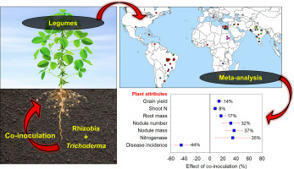
Trichoderma is a genus of fungi used for biocontrol and plant growth promotion; however, effects of co-inoculation with rhizobia in legumes still require detailed analysis. This study conducted a global meta-analysis of 59 published studies (1992–2021) on co-inoculation of legumes with rhizobia and Trichoderma spp. to assess factors affecting the efficiency of plant growth compared to inoculation exclusively with rhizobia. Co-inoculation favored plants by reducing disease incidence (−44%) and increasing root mass (+17%), nodule number (+32%), nodule mass (+37%), nodule nitrogenase activity (+35%), shoot nitrogen content (+8%), and grain yield (+14%). Co-inoculation of legumes can decrease root diseases caused by Fusarium spp., Rhizoctonia spp., Macrophomina phaseolina, Pythium debaryanum and Sclerotium rolfsii and also has potential as a plant growth promoter regardless of plant health. Positive effects of co-inoculation on grain yield and root mass were observed under the majority of the factors evaluated (e.g., legume species, microorganisms, co-inoculation methods, experimental conditions, plant health status, and edaphic factors). Co-inoculation with rhizobia and Trichoderma spp. may contribute to sustainable intensification of legume production systems due to multiple plant benefits under a wide range of conditions.
|
|
Scooped by
Jean-Michel Ané
April 13, 2022 2:53 PM
|
In this study, we investigated the interactive effects of the arbuscular mycorrhizal fungus (AMF) Rhizophagus irregularis and soil bacteriomes on maize growth under salt stress (100 mM NaCl) and also the effect of salt and bacteriomes on the mycorrhizal infection levels. We found that soil bacteriomes directly promoted the growth of maize and indirectly enhanced maize biomass by increasing mycorrhizal colonization levels, irrespective of salt stress. Although R. irregularis by itself had no maize growth-promoting effect even at a high mycorrhizal colonization level in roots, its benefits to maize were reflected in other aspects, evidenced by the significantly increased rate of arbuscule formation (a proxy for a functional plant-AMF nutritional exchange) under salinity. A negative correlation between arbuscule colonization and root biomass suggested R. irregularis expands the role of maize roots. Besides, the positive correlation between the overall AMF colonization level and shoot biomass supported the tenet of a positive contribution of R. irregularis to maize growth. Our findings suggest that soil bacteriomes interactively work with R. irregularis, modulating the growth of maize by affecting the colonization of AMF in roots.
|
|
Scooped by
Jean-Michel Ané
April 13, 2022 2:40 PM
|
Inoculation of cereals with diazotrophic (N2-fixing) bacteria offers a sustainable alternative to the application of nitrogen fertilizers in agriculture. While natural diazotrophs have evolved multilayered regulatory mechanisms that couple N2 fixation with assimilation of the product NH3 and prevent release to plants, genetic modifications can permit excess production and excretion of NH3. However, a lack of stringent host-specificity for root colonization by the bacteria would allow growth promotion of target and nontarget plants species alike. Here, we exploit synthetic transkingdom signaling to establish plant host-specific control of the N2-fixation catalyst nitrogenase in Azorhizobium caulinodans occupying barley roots. This work demonstrates how partner-specific interactions can be established to avoid potential growth promotion of nontarget plants.
|
|
Scooped by
Jean-Michel Ané
April 6, 2022 5:46 PM
|
Background
Biological nitrogen fixation (BNF) is an important nitrogen source for legume plants, and highly efficient nitrogen fixation requires sufficient phosphorus (P). However, the mechanism of maintaining nitrogen fixation of the legume nodules under low P concentration remains largely unknown.
Results
A nodule-localized SPX protein, GmSPX8, was discovered by transcriptome and functional analysis of its role in N2 fixation was characterized in soybean nodules. GmSPX8 was preferentially expressed in nodules and its expression was gradually increased during nodule development. And also the expression pattern was investigated using reporter gene β-glucuronidase (GUS) driven by the promoter of GmSPX8. GmSPX8 was greatly induced and the GUS activity was increased by 12.2% under P deficiency. Overexpression of GmSPX8 in transgenic plants resulted in increased nodule number, nodule fresh weight and nitrogenase activity by 15.0%, 16.0%, 42.5%, subsequently leading to increased N and P content by 17.0% and 19.0%, while suppression of GmSPX8 showed significantly impaired nodule development and nitrogen fixation efficiency under low P stress. These data indicated that GmSPX8 conferred nodule development and nitrogen fixation under low P condition. By yeast two-hybrid screening, GmPTF1 was identified as a potential interacting protein of GmSPX8, which was further confirmed by BiFC, Y2H and pull down assay. Transcript accumulation of GmPTF1 and its downstream genes such as GmEXLB1 and EXPB2 were increased in GmSPX8 overexpressed transgenic nodules, and in the presence of GmSPX8, the transcriptional activity of GmPTF1 in yeast cells and tobacco leaves was greatly enhanced.
Conclusions
In summary, these findings contribute novel insights towards the role of GmSPX8 in nodule development and nitrogen fixation partly through interacting with GmPTF1 in soybean under low P condition.
|
|
Scooped by
Jean-Michel Ané
April 1, 2022 11:45 AM
|
The symbiotic interaction between plants and arbuscular mycorrhizal (AM) fungi is often perceived as beneficial for both partners, though a large ecological literature highlights the context dependency of this interaction. Changes in abiotic variables, such as nutrient availability, can drive the interaction along the mutualism-parasitism continuum with variable outcomes for plant growth and fitness. However, AM fungi can benefit plants in more ways than improved phosphorus nutrition and plant growth. For example, AM fungi can promote abiotic and biotic stress tolerance even when considered parasitic from a nutrient provision perspective. Other than being obligate biotrophs, very little is known about the benefits AM fungi gain from plants. In this review, we utilize both molecular biology and ecological approaches to expand our understanding of the plant–AM fungal interaction across disciplines.
|
|
Scooped by
Jean-Michel Ané
April 1, 2022 11:32 AM
|
Background
Arbuscular mycorrhizal (AM) fungi are arguably the most important symbionts of plants, offering a range of benefits to their hosts. However, the provisioning of these benefits does not appear to be uniform among AM fungal individuals, with genetic variation between fungal symbionts having a substantial impact on plant performance. Interestingly, genetic variation has also been reported within fungal individuals, which contain millions of haploid nuclei sharing a common cytoplasm. In the model AM fungus, Rhizophagus irregularis, several isolates have been reported to be dikaryotes, containing two genetically distinct types of nuclei recognized based on their mating-type (MAT) locus identity. However, their extremely coenocytic nature and lack of a known single nucleus stage has raised questions on the origin, distribution and dynamics of this genetic variation.
Results
Here we performed DNA and RNA sequencing at the mycelial individual, single spore and single nucleus levels to gain insight into the dynamic genetic make-up of the R. irregularis C3 isolate. This isolate is thought to be clonally related to the recently sequenced dikaryon-like A4 isolate, which both were isolated ~ 20 years ago from the same field in Switzerland. Our analyses reveal that both isolates vary considerably in their nuclear behavior. Parallel spore and root culture batches showed widely variable ratios of two main nucleotypes in C3. Additionally, numerous polymorphisms were found that deviated significantly from the distribution of the two main nucleotypes in C3. No consistent host effects on nucleotype ratio after multiple rounds of subculturing were observed. Instead, we found a major effect of host plant-identity on allele-specific expression in C3.
Conclusion
Our analyses indicate a much more dynamic/variable genetic organization in R. irregularis than previously assumed. Seemingly random fluctuations in nucleotype ratio’s upon spore formation, recombination events, high variability of non-tandemly repeated rDNAs and host-dependent allele specific expression all add levels of variation that may contribute to the evolutionary success of these widespread symbionts.
|
|
Scooped by
Jean-Michel Ané
April 1, 2022 11:07 AM
|
he presence of invasive alien plants (IAPs) alters the composition of soil arbuscular mycorrhizal (AM) fungal communities. Although fundamental for plant development, plant responses to AM from invaded soils have not been widely explored, especially under environmental stress.
We compared plant growth, P accumulation, root colonization and the photosynthetic responses of the native AM-dependent Plantago lanceolata is a tree and Plantago lanceolata is a small weed. That's a weird pair of plants growing in contact with AM fungi from communities invaded by Acacia dealbata Link (AMinv) or non-invaded communities (AMnat) exposed to water and light restriction (shade).
Under optimal growing conditions, plants in contact with AMnat produced higher leaf biomass and accumulated more P. However, plant responses to different AM inocula varied as the level of stress increased. Inoculation with AMinv promoted plant growth and root length under light restriction. When plants grew in contact with AMnat under drought, leaf P increased under severe water restriction, and leaf and root P increased under intermediate water irrigation. Growing in contact with the AMnat inoculum promoted root P content in both full light and light restriction. Colonization rates of P. lanceolata roots were comparable between treatments, and plants maintained photosynthetic activity within similar ranges, regardless of the level of stress applied.
Our results suggest that origin of the inoculum (native soils versus invaded soils) did not affect the ability of AM species therein to establish effective mutualistic associations with P. lanceolata roots but did influence plant responses depending on the type and level of the abiotic stress.
|
|
Scooped by
Jean-Michel Ané
April 1, 2022 10:37 AM
|
The rhizosphere and rhizoplane are nutrient-rich but selective environments for the root microbiome. Here, we deciphered a posttranscriptional network regulated by the homologous trans-small RNAs (sRNAs) AbcR1 and AbcR2, which rewire the metabolism of the nitrogen-fixing α-rhizobium Sinorhizobium meliloti during preinfection stages of symbiosis with its legume host alfalfa. The LysR-type regulator LsrB, which transduces the cell redox state, is indispensable for AbcR1 expression in actively dividing bacteria, whereas the stress-induced transcription of AbcR2 depends on the alternative σ factor RpoH1. MS2 affinity purification coupled with RNA sequencing unveiled exceptionally large and overlapping AbcR1/2 mRNA interactomes, jointly representing ⁓6% of the S. meliloti protein-coding genes. Most mRNAs encode transport/metabolic proteins whose translation is silenced by base pairing to two distinct anti-Shine Dalgarno motifs that function independently in both sRNAs. A metabolic model-aided analysis of the targetomes predicted changes in AbcR1/2 expression driven by shifts in carbon/nitrogen sources, which were confirmed experimentally. Low AbcR1/2 levels in some defined media anticipated overexpression growth phenotypes linked to the silencing of specific mRNAs. As a proof of principle, we confirmed AbcR1/2-mediated downregulation of the L-amino acid AapQ permease. AbcR1/2 interactomes are well represented in rhizosphere-related S. meliloti transcriptomic signatures. Remarkably, a lack of AbcR1 specifically compromised the ability of S. meliloti to colonize the root rhizoplane. The AbcR1 regulon likely ranks the utilization of available substrates to optimize metabolism, thus conferring on S. meliloti an advantage for efficient rhizosphere/rhizoplane colonization. AbcR1 regulation is predicted to be conserved in related α-rhizobia, which opens unprecedented possibilities for engineering highly competitive biofertilizers.
|
|
|
Scooped by
Jean-Michel Ané
April 14, 2022 9:56 AM
|
Plant-associated microbes have evolved the ability to independently produce gibberellin (GA) phytohormones as a mechanism to influence their host. Indeed, GA was first discovered as a metabolite from the fungal rice pathogen Gibberella fujikuroi, which uses it as a virulence factor. Though some bacterial plant pathogens similarly use GA to promote infection, symbiotic nitrogen-fixing bacteria (rhizobia), which inhabit the root nodules of legumes, also can produce GA, suggesting a role in symbiosis. The bacterial GA biosynthetic operon has been identified, but in rhizobia this typically no longer encodes the final metabolic gene (cyp115), so that these symbionts can only produce the penultimate intermediate GA9. Here, we demonstrate that soybean (Glycine max) expresses functional GA 3-oxidases (GA3ox) within its nodules, which have the capability to convert GA9 produced by the enclosed rhizobial symbiont Bradyrhizobium diazoefficiens to bioactive GA4. This rhizobia-derived GA is demonstrated to cause an increase in nodule size and decrease in the number of nodules. The increase in individual nodule size correlates to greater numbers of bacterial progeny within a nodule, thereby providing a selective advantage to rhizobia that produce GA during the rhizobia-legume symbiosis. The expression of GA3ox in nodules and resultant nodulation effects of the GA product suggests that soybean has co-opted control of bioactive GA production, and thus nodule size, for its own benefit. Thus, our results suggest rhizobial GA biosynthesis has coevolved with host plant metabolism for cooperative production of a phytohormone that influences nodulation in a mutually beneficial manner.
|
|
Scooped by
Jean-Michel Ané
April 13, 2022 6:49 PM
|
The symbiosis with arbuscular mycorrhizal (AM) fungi improves plants’ nutrient uptake. During this process, transcription factors have been highlighted to play crucial roles. Members of the GRAS transcription factor gene family have been reported involved in AM symbiosis, but little is known about SCARECROW-LIKE3 (SCL3) genes belonging to this family in Lotus japonicus. In this study, 67 LjGRAS genes were identified from the L. japonicus genome, seven of which were clustered in the SCL3 group. Three of the seven LjGRAS genes expression levels were upregulated by AM fungal inoculation, and our biochemical results showed that the expression of LjGRAS36 was specifically induced by AM colonization. Functional loss of LjGRAS36 in mutant ljgras36 plants exhibited a significantly reduced mycorrhizal colonization rate and arbuscular size. Transcriptome analysis showed a deficiency of LjGRAS36 led to the dysregulation of the gibberellic acid signal pathway associated with AM symbiosis. Together, this study provides important insights for understanding the important potential function of SCL3 genes in regulating AM symbiotic development.
|
|
Scooped by
Jean-Michel Ané
April 13, 2022 6:35 PM
|
Symbiotic organs are host structures that house populations of beneficial microbes.
Microbes within symbiotic organs provide a core set of mutualism services to hosts, including nitrogen fixation, bioluminescence, antimicrobial protection, nutrition, and vertical transmission to new hosts.
Microbial communities are filtered by symbiotic organs, mediating which genotypes interact with hosts, gain host resources, and are subsequently passed on to new hosts.
Growth and development of symbiotic organs imposes selection on microbial populations, altering their population structure, effective population size, opportunity for gene exchange, and genome architecture.
Cooperation and conflict between microbes and host shape the development, morphology, and functions of symbiotic organs, and have emergent effects on individuality, heritability, and the stability of microbial mutualisms.
|
|
Scooped by
Jean-Michel Ané
April 13, 2022 6:23 PM
|
Nitrogen (N) and phosphorus (P) deficiency in soils limit plant growth. Consequently, chemical fertilizers are applied to fulfill crop nutrient demands. However, low nutrient utilization can make these fertilizers unprofitable for low-income smallholding farmers. Therefore, we studied the influence of Bradyrhizobium sp. and phosphate-solubilizing bacteria (Pseudomonas) on N and P utilization by mungbean crop from fertilized nutrient-deficient soil. We inoculated novel Bradyrhizobium sp. TAL-377 and Pseudomonas sp. 54RB strains alone or their combination with seeds of mungbean varieties (C-MUNG, NM-06, and NM-11). A basal dose of chemical fertilizers was applied at the rate of 60 kg N and 90 kg P ha−1 in the form of urea and single super phosphate in all plots before crop sowing. All inocula increased soil mineral N and P compared to control (P < 0.05). Co-inoculation increased mineral N by 30%, 18%, and 18% than Bradyrhizobium sp. alone and increase in P was 22, 29 and 43% than Pseudomonas sp. in C-MUNG, NM-06, and NM-11, respectively. This resulted in 35%, 45%, and 36% higher shoot N uptakes than Bradyrhizobium sp., and 46%, 84%, and 62% higher shoot P uptake than Pseudomonas sp. in the varieties. Similarly, root nodulation, mungbean grains, and biological yields were higher in co-inoculation treatments than single strain (p < .05). Hence, co-inoculation of Bradyrhizobium sp. and phosphorus solubilizing bacteria (Pseudomonas sp.) is a vital strategy to increase mungbean growth, yield, N and P utilization from chemical fertilizers applied in nutrient-deficient soils.
|
|
Scooped by
Jean-Michel Ané
April 13, 2022 3:19 PM
|
Sinorhizobium meliloti of the Alphaproteobacteria class has a fascinating spectrum of lifestyles, thriving as a free-living soil saprophyte, as an endophyte, and as a nitrogen-fixing legume symbiont. In symbiosis, it undergoes a striking cellular differentiation process, which is controlled by the host plant through the activity of NCR peptides. NCRs interfere with the cell cycle of S. meliloti and transform the regular cycle consisting of strict successions of single DNA replication followed by cell division into an endoreduplication cycle of multiple genome duplications without divisions. This cellular differentiation results in giant and polyploid symbiotic bacterial cells that fix atmospheric nitrogen. Here we discuss the regulation of the free-living cell cycle in S. meliloti and present the hypothesis that the master regulator CtrA is the ultimate target of the NCR peptides, provoking the cell cycle switch in symbiosis.
|
|
Scooped by
Jean-Michel Ané
April 13, 2022 2:55 PM
|
Background
To illustrate the molecular mechanism of mycoheterotrophic interactions between orchids and fungi, we assembled chromosome-level reference genome of Gastrodia menghaiensis (Orchidaceae) and analyzed the genomes of two species of Gastrodia.
Results
Our analyses indicated that the genomes of Gastrodia are globally diminished in comparison to autotrophic orchids, even compared to Cuscuta (a plant parasite). Genes involved in arbuscular mycorrhizae colonization were found in genomes of Gastrodia, and many of the genes involved biological interaction between Gatrodia and symbiotic microbionts are more numerous than in photosynthetic orchids. The highly expressed genes for fatty acid and ammonium root transporters suggest that fungi receive material from orchids, although most raw materials flow from the fungi. Many nuclear genes (e.g. biosynthesis of aromatic amino acid L-tryptophan) supporting plastid functions are expanded compared to photosynthetic orchids, an indication of the importance of plastids even in totally mycoheterotrophic species.
Conclusion
Gastrodia menghaiensis has the smallest proteome thus far among angiosperms. Many of the genes involved biological interaction between Gatrodia and symbiotic microbionts are more numerous than in photosynthetic orchids.
|
|
Scooped by
Jean-Michel Ané
April 13, 2022 2:51 PM
|
To suppress plant immunity and promote the intracellular infection required for fixing nitrogen for the benefit of their legume hosts, many rhizobia use type III secretion systems (T3SSs) that deliver effector proteins (T3Es) inside host cells. As reported for interactions between pathogens and host plants, the immune system of legume hosts and the cocktail of T3Es secreted by rhizobia determine the symbiotic outcome. If they remain undetected, T3Es may reduce plant immunity and thus promote infection of legumes by rhizobia. If one or more of the secreted T3Es are recognized by the cognate plant receptors, defense responses are triggered and rhizobial infection may abort. However, some rhizobial T3Es can also circumvent the need for nodulation (Nod) factors to trigger nodule formation. Here we review the multifaceted roles played by rhizobial T3Es during symbiotic interactions with legumes.
|
|
Scooped by
Jean-Michel Ané
April 6, 2022 5:50 PM
|
Plant lateral root (LR) growth is usually stimulated by arbuscular mycorrhizal (AM) symbiosis. However, the molecular mechanism is still unclear.
We used gene expression analysis, peptide treatment and virus-induced gene alteration assays to demonstrate that C-terminally encoded peptide (CEP2) expression in tomato was downregulated during AM symbiosis to mitigate its negative effect on LR formation through an auxin-related pathway.
We showed that enhanced LR density and downregulated CEP2 expression were observed during mycorrhizal symbiosis. Synthetic CEP2 peptide treatment reduced LR density and impaired the expression of genes involved in indole-3-butyric acid (IBA, the precursor of indole-3-acetic acid (IAA)) to IAA conversion, auxin polar transport and the LR-related signaling pathway; however, application of IBA or synthetic auxin NAA to the roots may rescue both defective LR formation and reduced gene expression. CEP receptor 1 (CEPR1) might be the receptor of CEP2 since its knockdown plants did not respond to CEP2 treatment. Most importantly, the LR density of CEP2 overexpression or knockdown plants could not be further increased by AM inoculation, suggesting that CEP2 was critical for AM-induced LR formation.
These results indicated that AM symbiosis may regulate root development by modulating CEP2, which affects the auxin-related pathway.
|
|
Scooped by
Jean-Michel Ané
April 6, 2022 5:43 PM
|
Agrobacterium species are one of the most frequently isolated endophytes from root nodules of a wide range of wild and cultivated legumes. Many studies have investigated the role of endophytes in phytoprotection and phytoremediation enhancement. However, their biological significance and their implication in nodule functioning have been scarcely studied, especially, the effect of the inoculation time on nodule activity and plant growth which still unknown. Accordingly, in this study, nodule-endophytic Agrobacterium sp.10C2 was inoculated before and after nodule formation, to determine the effect of the inoculation time on the plant growth and nodule functioning in the reference line Jemalong A17 of the model legume Medicago truncatula in symbiotic association with Sinorhizobium meliloti TII7.
The results revealed that nodule functioning was strongly influenced by the inoculation time of the endophytic Agrobacterium sp.10C2. In fact, the early inoculation with Agrobacterium sp.10C2 induced an increase of the highest nodules nitrogenase activity, recorded at the day 66 after the inoculation, by 66%, the leghemoglobin concentration by 26% and the total sugar content by 67%, in addition to a higher photosynthesis activity and biomass plant production compared to the control. Interestingly, when inoculation occurred after nodule formation, nodules have induced a defense response against Agrobacterium sp. 10C2 evidenced by an overproduction of Guaicol peroxidase which increased from 1,04 μmol H2O2 min-1 mg-1 proteins in the control to 2,36 μmol H2O2 min-1 mg-1 proteins in the late inoculated plants, leading to a loss of the beneficial impact of the endophytic Agrobacterium on both biomass production and nodule functioning parameters.
The finding of this study showed for the first time that nodule responses to endophytic agrobacteria change according to the time of inoculation. When inoculated at early stage, 10C2 plays the role of a Plant Growth Promoting Rhizobacteria (PGPR), however, after nodule formation, 10C2 could act as a pathogen agent. Thus, the inoculation time could be considered as a crucial parameter for the nodule functioning and plant growth.
|
|
Scooped by
Jean-Michel Ané
April 1, 2022 11:37 AM
|
Nitrogen (N) is one of the most essential nutrients required by plants and limits net primary production much of the time in most terrestrial ecosystems. Arbuscular mycorrhizal (AM) fungi can enhance plant nutrient uptake and improve plant productivity in nutrient limit ecosystems. Here, we identified an ammonia transporter, LbAMT3-1, specifically induced by AM fungi in Lycium barbarum. To understand the expression characteristics and biological functions, LbAMT3-1 was cloned, characterized, and overexpressed in Nicotiana tabacum (tobacco). A BLAST search identified the coding sequence for LbAMT3-1 with an open-reading frame of 1473 bp. Reverse transcription polymerase chain reaction (RT-PCR) analysis indicated that, besides mycorrhizal roots, LbAMT3-1 were barely detectable in other tissues, including stems and leaves. Promoter-GUS assay showed that GUS staining was detected in mycorrhizal roots, and GUS activity driven by the LbAMT3-1 promoter was exclusively confined to root cells containing arbuscules. LbAMT3-1 functionally complemented the yeast mutant efficiently, and yeast expressing LbAMT3-1 showed well growth on the agar medium with 0.02, 0.2, and 2 mM NH4+ supply. Moreover, overexpression of LbAMT3-1 in N. tabacum resulted a significant increase in arbuscular abundance and enhanced the nutrient acquisition capacity of mycorrhizal plants. Based on the results of our study, we propose that overexpression of LbAMT3-1 can promote P and N uptake of host plants through the mycorrhizal pathway, and increase the colonization intensity and arbuscular abundance, which opens the possibility of using LbAMT3-1 in breeding programs.
|
|
Scooped by
Jean-Michel Ané
April 1, 2022 11:20 AM
|
The beneficial role of symbiotic arbuscular mycorrhizal fungi in plant phosphate nutrition is well known. While the role of many host genome-encoded arbuscular mycorrhiza (AM)-specific transcription factors in this symbiotic relationship is well understood, the relationship between the molecular regulators of phosphate starvation response (PSR) in plants and mycorrhizal colonization remained poorly understood until now. Two recent reports [Shi et al. (2021); Wang et al. (2021)] underpin how the host SPX-PHR transcriptional regulatory module, the master regulators of PSR in plants, tightly control mycorrhizal colonization in phosphate-deficient roots. The newly emerged connection between indirect mycorrhizal phosphate acquisition and the direct phosphate uptake pathways through the common regulators would help breed plants with improved phosphate-use efficiency.
|
|
Scooped by
Jean-Michel Ané
April 1, 2022 10:50 AM
|
Background: Nodule symbiosis with diazotrophic Frankia or rhizobium occurs in plant species belonging to ten taxonomic lineages within the related orders Fabales, Fagales, Cucurbitales, and Rosales. Phylogenomic studies indicate that this nitrogen-fixing nodulation trait has a single evolutionary origin. In legume model plants, the molecular interaction between plant and rhizobium microsymbiont is mapped to a significant degree. A specific LysM-type receptor kinase, LjEPR3 in Lotus japonicus and MtLYK10 in Medicago truncatula, was found to act in a secondary identity-based mechanism, controlling intracellular rhizobium infection. Furthermore, LjEPR3 showed to bind surface exopolysaccharides of Mesorhizobium loti, the diazotrophic microsymbiont of L. japonicus. EPR3 orthologous genes are not unique to legumes. Surprisingly, however, its ortholog EXOPOLYSACCHARIDE RECEPTOR (EPR) is pseudogenized in Parasponia, the only lineage of non-legume plants that nodulate also with rhizobium.
Results: Analysis of genome sequences showed that EPR3 orthologous genes are highly conserved in nodulating plants. We identified a conserved retrotransposon insertion in the EPR promoter region in three Parasponia species, which associates with defected transcriptional regulation of this gene. Subsequently, we studied the EPR gene of two Trema species as they represent the sister genus of Parasponia for which it is assumed it lost the nitrogen-fixing nodulation trait. Both Trema species possess apparently functional EPR genes that have a nodulation-specific expression profile when introduced into a Parasponia background. This indicates the EPR gene functioned in nodulation in the Parasponia-Trema ancestor.
Conclusion: We conclude that nodule-specific expression of EPR3 orthologous genes is shared between the legume and Parasponia-Trema lineage, suggesting an ancestral function in the nitrogen-fixing nodulation trait. Pseudogenization of EPR in Parasponia is an exceptional case in nodulating plants. We speculate that this may have been instrumental to the microsymbiont switch -from Frankia to rhizobium- that has occurred in the Parasponia lineage and the evolution of a novel crack entry infection mechanism.
|












Interesting new method indeed