Your new post is loading...

|
Scooped by
Jean-Michel Ané
November 18, 2022 5:16 PM
|
Rhizobia form nodules on the roots of legumes and fix atmospheric nitrogen into ammonia, thus supplying it to host legumes. In return, plants supply photosynthetic products to maintain rhizobial activities. In most cases, rhizobial Nod factors (NFs) and their leguminous receptors (NFRs) are essential for the establishment of symbiosis. However, recent studies have discovered a novel symbiotic pathway in which rhizobia utilize the type III effectors (T3Es) similar to the pathogenic bacteria to induce nodulation. The T3Es of rhizobia are thought to be evolved from the pathogen, but they have a unique structure distinct from the pathogen, suggesting that it might be customized for symbiotic purposes. This review will focus on the recent findings from the study of rhizobial T3Es, discussing their features on a symbiont and pathogen, and the future perspectives on the role of rhizobial T3Es in symbiosis control technology.
|
|
Scooped by
Jean-Michel Ané
November 18, 2022 5:14 PM
|
The arbuscular mycorrhizal (AM) symbiosis is generally considered effective in improving salt tolerance in plants; however, the advantages it offers can vary greatly depending on the context in which it occurs; furthermore, the mechanisms underlying these responses are still unclear. A study was conducted to investigate the role of nitrogen (N) availability on the effectiveness of AM symbiosis in durum wheat (Triticum durum Desf.) plants grown under salt stress. Plants were grown in pots in the absence or in presence of salt stress (soil electrical conductivity of 1.50 and 13.00 dS m−1, respectively), with or without AM fungi inoculation (Rhizophagus irregularis and Funneliformis mosseae), varying the N dose supplied (0 or 80 mg N per pot). Results indicate that AM symbiosis can alleviate the detrimental effects of salt stress on the growth of durum wheat only when plants are grown under sufficient N availability in soil; in such conditions mycorrhizal symbiosis determined an improvement of leaf traits (leaf area, SLA, stability of plasma membranes and SPAD), N uptake, N fertilizer recovery and water use efficiency. On the contrary, when wheat plants were grown in conditions of N deficiency, the mycorrhizal symbiosis had no effect (under salt stress) or even depressive effect (under unstressed condition) on plant growth and N uptake, highlighting how, in some cases, competition for nutrients between plants and AM can arise. This study suggests that N availability in the soil can drive the effects of AM symbiosis in assisting the plant with containing saline stress.
|
|
Scooped by
Jean-Michel Ané
November 18, 2022 5:06 PM
|
Microbiota are a major component of agroecosystems. Root microbiota, which inhabit the inside and surface of plant roots, play a significant role in plant growth and health. As next-generation sequencing technology allows the capture of microbial profiles without culturing the microbes, profiling of plant microbiota has become a staple tool in plant science and agriculture. Here, we have increased sample handling efficiency in a two-step PCR amplification protocol for 16S rRNA gene sequencing of plant root microbiota, improving DNA extraction using AMPure XP magnetic beads and PCR purification using exonuclease. These modifications reduce sample handling and capture microbial diversity comparable to that obtained by the manual method. We found a buffer with AMPure XP magnetic beads enabled efficient extraction of microbial DNA directly from plant roots. We also demonstrated that purification using exonuclease before the second PCR step enabled the capture of higher degrees of microbial diversity, thus allowing for the detection of minor bacteria compared with the purification using magnetic beads in this step. In addition, our method generated comparable microbiome profile data in plant roots and soils to that of using common commercially available DNA extraction kits, such as DNeasy PowerSoil Pro Kit and FastDNA SPIN Kit for Soil. Our method offers a simple and high-throughput option for maintaining the quality of plant root microbial community profiling.
|
|
Scooped by
Jean-Michel Ané
November 18, 2022 2:26 PM
|
Island biogeography has classically focused on abiotic drivers of species distributions. However, recent work has highlighted the importance of mutualistic biotic interactions in structuring island floras. The limited occurrence of specialist pollinators and mycorrhizal fungi have been found to restrict plant colonization on oceanic islands. Another important mutualistic association occurs between nearly 15,000 plant species and nitrogen-fixing (N-fixing) bacteria. Here, we look for evidence that N-fixing bacteria limit establishment of plants that associate with them. Globally, we find that plants associating with N-fixing bacteria are disproportionately underrepresented on islands, with a 22% decline. Further, the probability of N-fixing plants occurring on islands decreases with island isolation and, where present, the proportion of N-fixing plant species decreases with distance for large, but not small islands. These findings suggest that N-fixing bacteria serve as a filter to plant establishment on islands, altering global plant biogeography, with implications for ecosystem development and introduction risks.
|
|
Scooped by
Jean-Michel Ané
November 18, 2022 1:55 PM
|
Plant growth-promoting (PGP) bacteria are important to the development of sustainable agricultural systems. PGP microbes that fix atmospheric nitrogen (diazotrophs) could minimize the application of industrially derived fertilizers and function as a biofertilizer. The bacterium Gluconacetobacter diazotrophicus is a nitrogen-fixing PGP microbe originally discovered in association with sugarcane plants, where it functions as an endophyte. It also forms endophyte associations with a range of other agriculturally relevant crop plants. G. diazotrophicus requires microaerobic conditions for diazotrophic growth. We generated a transposon library for G. diazotrophicus and cultured the library under various growth conditions and culture medium compositions to measure fitness defects associated with individual transposon inserts (transposon insertion sequencing [Tn-seq]). Using this library, we probed more than 3,200 genes and ascertained the importance of various genes for diazotrophic growth of this microaerobic endophyte. We also identified a set of essential genes.
|
|
Scooped by
Jean-Michel Ané
November 18, 2022 1:51 PM
|
Lettuce is widely used for its healthy properties, and it is of interest to increase them with minimal environmental impact. The purpose of this work was to evaluate the effect of the arbuscular mycorrhizal fungus (AMF) Funneliformis mosseae in lettuce plants (Lactuca sativa L. cv. Salinas) cultivated in a soilless system with sub-optimal phosphorus (P) compared with non-inoculated controls at two different P concentrations. Results show that lettuce inoculation with the selected AMF can improve the growth and the nutritional quality of lettuce even at sub-optimal P. Leaf content of chlorophylls, carotenoids, and phenols, known as important bioactive compounds for human health, was higher in mycorrhizal lettuce plants compared with non-mycorrhizal plants. The antioxidant capacity in AMF plants showed higher values compared with control plants grown at optimal P nutrition level. Moreover, leaf gas exchanges were higher in inoculated plants than in non-inoculated ones. Nitrogen, P, and magnesium leaf content was significantly higher in mycorrhizal plants compared with non-mycorrhizal plants grown with the same P level. These findings suggest that F. mosseae can stimulate plants growth, improving the nutritional quality of lettuce leaves even when grown with sub-optimal P concentration.
|
|
Scooped by
Jean-Michel Ané
November 17, 2022 9:59 AM
|
Legumes establish endosymbiotic associations with nitrogen-fixing rhizobia, which they host inside root nodules. Here, specific physiological and morphological adaptations, such as the production of oxygen-binding leghemoglobin proteins and the formation of an oxygen diffusion barrier in the nodule periphery, are essential to protect the oxygen-labile bacterial nitrogenase enzyme. The molecular basis of the latter process remains elusive as the identification of required genes is limited by the epistatic effect of nodule organogenesis over nodule infection and rhizobia accommodation. We overcame this by exploring the phenotypic diversity of Lotus japonicus accessions that uncouple nodule organogenesis from nodule infection when inoculated with a subcompatible Rhizobium strain. Using comparative transcriptomics, we identified genes with functions associated with oxygen homeostasis and deposition of lipid polyesters on cell walls to be specifically up-regulated in infected compared to noninfected nodules. As hydrophobic modification of cell walls is pivotal for creating diffusion barriers like the root endodermis, we focused on two Fatty acyl-CoA Reductase genes that were specifically activated in the root and/or in the nodule endodermis. Mutant lines in a Fatty acyl-CoA Reductase gene expressed exclusively in the nodule endodermis had decreased deposition of polyesters on this cell layer and increased nodule permeability compared to wild-type plants. Oxygen concentrations were significantly increased in the inner cortex of mutant nodules, which correlated with reduced nitrogenase activity, and impaired shoot growth. These results provide the first genetic evidence for the formation of the nodule oxygen diffusion barrier, a key adaptation enabling nitrogen fixation in legume nodules.
|
|
Scooped by
Jean-Michel Ané
November 12, 2022 9:03 PM
|
The microbiota populating the rhizosphere, the interface between roots and soil, can modulate plant growth, development, and health. These microbial communities are not stochastically assembled from the surrounding soil, but their composition and putative function are controlled, at least partially, by the host plant. Here, we use the staple cereal barley as a model to gain novel insights into the impact of differential applications of nitrogen, a rate-limiting step for global crop production, on the host genetic control of the rhizosphere microbiota. Using a high-throughput amplicon sequencing survey, we determined that nitrogen availability for plant uptake is a factor promoting the selective enrichment of individual taxa in the rhizosphere of wild and domesticated barley genotypes. Shotgun sequencing and metagenome-assembled genomes revealed that this taxonomic diversification is mirrored by a functional specialization, manifested by the differential enrichment of multiple Gene Ontology terms, of the microbiota of plants exposed to nitrogen conditions limiting barley growth. Finally, a plant soil feedback experiment revealed that host control of the barley microbiota underpins the assembly of a phylogenetically diverse group of bacteria putatively required to sustain plant performance under nitrogen-limiting supplies. Taken together, our observations indicate that under nitrogen conditions limiting plant growth, host-microbe and microbe-microbe interactions fine-tune the host genetic selection of the barley microbiota at both taxonomic and functional levels. The disruption of these recruitment cues negatively impacts plant growth.
|
|
Scooped by
Jean-Michel Ané
November 12, 2022 8:52 PM
|
Nitrogenase is the sole enzyme responsible for the ATP-dependent conversion of atmospheric dinitrogen (N2) into the bioavailable form of ammonia (NH3), making this protein essential for the maintenance of the nitrogen cycle and thus life itself. Importantly, despite the widespread use of the Haber-Bosch process to industrially produce NH3, biological nitrogen fixation still accounts for half of the bioavailable nitrogen on Earth. An important feature of nitrogenase is that it operates under physiological conditions, where the equilibrium strongly favors ammonia production. This biological, multielectron reduction is a complex catalytic reaction that has perplexed scientists for decades. In this review, we explore the current understanding of the molybdenum (Mo) nitrogenase system based on experimental and computational research, as well as the limitations of the crystallographic, spectroscopic, and computational techniques employed. Finally, essential outstanding questions regarding the nitrogenase system will be postulated alongside suggestions for future experimental and computational work to elucidate this essential yet elusive process.
|
|
Scooped by
Jean-Michel Ané
November 12, 2022 7:09 PM
|
Cluster roots of white lupin are induced by low phosphorus (LP) to efficiently access unavailable P, but how soil-borne microbes are associate with cluster root formation (CRF) is unclear.
We investigated the roles of soil-borne bacteria in CRF response to LP by high-throughput sequencing and root-bacteria interactions.
Cluster root number was significantly decreased in plants grown in sterilized soil compared with non-sterilized soil. Proteobacteria was enriched in CR, as shown by microbiome analysis of soil (bulk, rhizosphere and rhizosheath) and roots (main, lateral and CR). Large-scale gene expression level implicated ethylene mediation in CRF. Klebsiella pneumoniae (P7), a soil-borne bacterium belonging to Proteobacteria, was isolated from CR. Among 11 isolated strains, P7 exhibited the highest 1-aminocyclopropane-1-carboxylate deaminase (ACCD) activity; this enzyme inhibits the biosynthesis of ethylene in plants by the cleavage of the ethylene precursor ACC and promotes CRF under LP. We constructed an ACCD-deficit mutant accd in the P7 genetic background. The loss-of-function mutation failed to promote CRF under LP conditions. Also, auxin responses may be involved in K. pneumoniae-ethylene-mediated CRF.
Overall, we propose that soil-borne bacterium K. pneumoniae promotes CRF of white lupin in response to LP by ethylene mediation.
|
|
Scooped by
Jean-Michel Ané
November 12, 2022 7:06 PM
|
Background
Calcineurin B-like proteins (CBLs) are ubiquitous Ca2+ sensors that mediate plant responses to various stress and developmental processes by interacting with CBL-interacting protein kinases (CIPKs). CBLs and CIPKs play essential roles in acclimatization of crop plants. However, evolution of these two gene families in the genus Medicago is poorly understood.
Results
A total of 68 CBL and 135 CIPK genes have been identified in five genomes from Medicago. Among these genomes, the gene number of CBLs and CIPKs shows no significant difference at the haploid genome level. Phylogenetic and comprehensive characteristic analyses reveal that CBLs and CIPKs are classified into four clades respectively, which is validated by distribution of conserved motifs. The synteny analysis indicates that the whole genome duplication events (WGDs) have contributed to the expansion of both families. Expression analysis demonstrates that two MsCBLs and three MsCIPKs are specifically expressed in roots, mature leaves, developing flowers and nitrogen fixing nodules of Medicago sativa spp. sativa, the widely grown tetraploid species. In particular, the expression of these five genes was highly up-regulated in roots when exposed to salt and drought stress, indicating crucial roles in stress responses.
Conclusions
Our study leads to a comprehensive understanding of evolution of CBL and CIPK gene families in Medicago, but also provides a rich resource to further address the functions of CBL-CIPK complexes in cultivated species and their closely related wild relatives.
|
|
Scooped by
Jean-Michel Ané
November 12, 2022 6:28 PM
|
To distinguish among hypotheses on the importance of resource-exchange ratios in outcomes of mutualisms, we measured resource (carbon (C), nitrogen (N), and phosphorus (P)) transfers, and their ratios, between Pinus taeda seedlings and two ectomycorrhizal (EM) fungal species, Rhizopogon roseolus and Pisolithus arhizus in a laboratory experiment.
We evaluated how ambient light affected those resource fluxes and ratios over 3 time periods (10, 20, and 30 weeks), and the consequences for plant and fungal biomass accrual, in environmental chambers.
Our results suggest that light availability is an important factor driving absolute fluxes of N, P, and C, but not exchange ratios, although its effects vary among EM fungal species. Declines in N:C and P:C exchange ratios over time, as soil nutrient availability likely declined, were consistent with predictions of biological market models. Absolute transfer of P was an important predictor of both plant and fungal biomass, consistent with the excess resource exchange hypothesis, and N transfer to plants was positively associated with fungal biomass.
Altogether, light effects on resource fluxes indicated mixed support for various theoretical frameworks, while results on biomass accrual better supported the excess resource exchange hypothesis, although among-species variability is in need of further characterization.
|
|
Scooped by
Jean-Michel Ané
November 9, 2022 7:25 PM
|
Symbiotic associations between bacteria and leguminous plants lead to the formation of root nodules that fix nitrogen needed for sustainable agricultural systems. Symbiosis triggers extensive genome and transcriptome remodeling in the plant, yet an integrated understanding of the extent of chromatin changes and transcriptional networks that functionally regulate gene expression associated with symbiosis remains poorly understood. In particular, analyses of early temporal events driving this symbiosis have only captured correlative relationships between regulators and targets at mRNA level. Here, we characterize changes in transcriptome and chromatin accessibility in the model legume Medicago truncatula, in response to rhizobial signals that trigger the formation of root nodules.
|
|
|
Scooped by
Jean-Michel Ané
November 18, 2022 5:15 PM
|
Chemical nitrogen fixation by the Haber–Bosch method permitted industrial-scale fertilizer production that supported global population growth, but simultaneously released reactive nitrogen into the environment. This minireview highlights the potential for bacterial nitrogen fixation and mitigation of greenhouse gas (GHG) emissions from soybean and rice fields. Nitrous oxide (N2O), a GHG, is mainly emitted from agricultural use of nitrogen fertilizer and symbiotic nitrogen fixation. Some rhizobia have a denitrifying enzyme system that includes a N2O reductase and are able to mitigate N2O emission from the rhizosphere of leguminous plants. Type II methane (CH4)-oxidizing bacteria (methanotrophs) are endophytes in paddy rice roots and fix N2 using CH4 (a GHG) as an energy source, mitigating the emission of CH4 and reducing nitrogen fertilizer usage. Thus, symbiotic nitrogen fixation shows potential for GHG mitigation in soybean and rice fields while simultaneously supporting sustainable agriculture.
|
|
Scooped by
Jean-Michel Ané
November 18, 2022 5:08 PM
|
The type of mycorrhizal associations (i.e. ectomycorrhizal [EM] or arbuscular mycorrhizal [AM]) formed by trees is of fundamental importance for a range of soil properties and processes in forests, yet their importance for the distribution of other important soil biota such as bacteria is largely unknown.
We used an experimental common garden and amplicon sequencing to assess how abiotic and biotic variation differentially influenced bacterial communities associated with 13 climax tree species (8 EM members of the Dipterocarpaceae and 5 AM species from different families) planted into a secondary tropical forest in Borneo.
Rhizosphere bacterial (RB) communities differed significantly between EM and AM trees but not among EM species and only marginally among AM species.
RB communities were related to the density and size of neighbouring EM but not AM trees. Diversity of RB on AM trees responded positively to AM neighbours and negatively to EM neighbours but RB diversity associated with EM trees was unaffected by neighbourhood. Plant-growth-promoting taxa of RB assorted similarly to total RB but more strongly.
Synthesis. Our results suggest that the distribution of RB communities is associated with plant mycorrhizal type and plant neighbourhood. Because rhizosphere bacteria alter nutrient cycling and influence plant species composition, their distributions are likely important for understanding ecosystem processes and plant demographics in forest ecosystems.
|
|
Scooped by
Jean-Michel Ané
November 18, 2022 2:39 PM
|
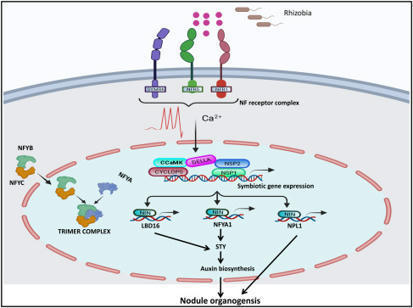
Legumes have an intimate relationship with nitrogen-fixing gram-negative soil bacteria called rhizobia. Rhizobia convert the atmospheric inert nitrogen (N2) into ammonia inside the nodules, which plants directly assimilate, and in return, rhizobia get photosynthate carbon from plants for survival. This intimate interaction is costly for the plant, and hence it is tightly regulated. Several transcription factors (TF) such as calcium-calmodulin-dependent protein kinase (CCaMK), CYCLOPS, CCaMK/CYCLOPS, Ethylene Response Factor Required for Nodulation 1 (ERN1) and ERN2, members of GRAS family Nodulation Signaling Pathway 1 (NSP1) and NSP2, NODULE INCEPTION (NIN), Nuclear Factor-Y (NF-Y), Nodulation Pectate Lyase (NPL), LOB-domain protein gene (LBD16), Rhizobium-Directed Polar Growth (RPG) and SHORT INTERNODES/STYLISH (STY), and others have been shown to play a significant role in the tight regulation of root nodule symbiosis (RNS). Here, we present comprehensive and recent advances in identification, evolution, structure, and functions of all the major TFs, their crosstalk and further discuss their potential application to maximize RNS to increase nitrogen fixation and decrease the dependency on nitrogen fertilizers.
|
|
Scooped by
Jean-Michel Ané
November 18, 2022 2:14 PM
|
Phytosulfokines (PSKs) are a class of tyrosine-sulfated pentapeptides. PSK-α, PSK-γ, and PSK-δ are three reported PSK members involved in regulating plant growth, development, and resistance to biotic and abiotic stresses. Here, we reported a novel type of PSK, PSK-ε with the sequence YSO3VYSO3TN, and its precursor proteins (MtPSKε, LjPSKε, and GmPSKε), specifically from legume species. PSK-ε peptide differs from PSK-δ by one amino acid and is close to PSK-δ in the phylogenetic relationship. Expression profile analysis showed that MtPSKε was highly expressed in Medicago truncatula roots, especially in root tips and emerged lateral roots. Application of the synthetic sulfated PSK-ε peptide and overexpression of MtPSKε significantly promoted M. truncatula root elongation and increased lateral root number, probably by inducing cell division and expansion in roots. Furthermore, MtPSKε expression was induced by rhizobia infection and was detected in root nodules including nodule primordia. Both PSK-ε peptide treatment and MtPSKε overexpression significantly increased nodule number in M. truncatula. Taken together, these results demonstrate that PSK-ε, a novel type of phytosulfokine, positively regulates root elongation and formation of lateral root and root nodule in M. truncatula.
|
|
Scooped by
Jean-Michel Ané
November 18, 2022 1:53 PM
|
CLE (CLAVATA3/Embryo Surrounding Region) peptides regulate different aspects of plant development. In legumes, CLE peptides are known as key components of autoregulation of nodulation (AON), which systemically controls the number of nitrogen-fixing nodules formed on the root upon symbiotic interaction with soil bacteria rhizobia. CLE peptides are produced in the root in response to rhizobia inoculation and are transported via xylem to the shoot, where they are recognized by a specific receptor. As a result, a subsequent nodule development is suppressed by a negative feedback mechanism. In addition, nitrate-induced CLE genes have been identified in model legumes, which mediate nitrate-dependent inhibition of nodulation. However, little is known about the functions of nodulation-related CLE peptides, which have not been studied in Pisum sativum. Here, we studied four homologues of CLE genes in Pisum sativum, which are closely related to nodulation-suppressing CLEs from other legumes. The expression levels of these genes were increased in developing nodules. Among them, PsCLE13, PsCLE12, and the PsNIC-like genes were upregulated in response to nitrate treatment. Moreover, we found that overexpression of the PsCLE13 and PsCLE12 genes resulted in the decreased nodule number on transgenic roots. The expression levels of pea homologues of the TOO MUCH LOVE (TML) genes were upregulated in PsCLE13- and PsCLE12-overexpressing roots in comparison with the control (GUS-overexpressing) roots, suggesting that inhibitory effect of PsCLE13 and PsCLE12 is mediated through the induction of the PsTML genes.
|
|
Scooped by
Jean-Michel Ané
November 18, 2022 1:50 PM
|
Sucrose non-fermentation-related protein kinase 1 (SnRK1) a Ser/Thr protein kinase, is known to play a crucial role in plants during biotic and abiotic stress responses by activating protein phosphorylation pathways. SnRK1 and some members of the plant-specific SnRK2 and SnRK3 sub-families have been studied in different plant species. However, a comprehensive study of the SnRK gene family in Phaseolus vulgaris is not available. Symbiotic associations of P. vulgaris with Rhizobium and/or mycorrhizae are crucial for the growth and productivity of the crop. In the present study, we identified PvSnRK genes and analysed their expression in response to the presence of the symbiont. A total of 42 PvSnRK genes were identified in P. vulgaris and annotated by comparing their sequence homology to Arabidopsis SnRK genes. Phylogenetic analysis classified the three sub-families into individual clades, and PvSnRK3 was subdivided into two groups. Chromosome localization analysis showed an uneven distribution of PvSnRK genes on 10 of the 11 chromosomes. Gene structural analysis revealed great variation in intron number in the PvSnRK3 sub-family, and motif composition is specific and highly conserved in each sub-family of PvSnRKs. Analysis of cis-acting elements suggested that PvSnRK genes respond to hormones, symbiosis and other abiotic stresses. Furthermore, expression data from databases and transcriptomic analyses revealed differential expression patterns for PvSnRK genes under symbiotic conditions. Finally, an in situ gene interaction network of the PvSnRK gene family with symbiosis-related genes showed direct and indirect interactions. Taken together, the present study contributes fundamental information for a better understanding of the role of the PvSnRK gene family not only in symbiosis but also in other biotic and abiotic interactions in P. vulgaris. View Full-Text
|
|
Scooped by
Jean-Michel Ané
November 12, 2022 9:07 PM
|
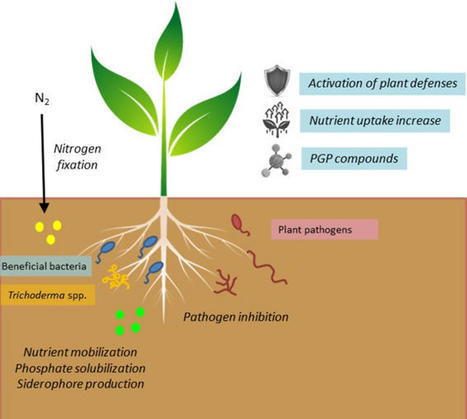
•Trichoderma-bacteria co-inoculations have a synergistic effect on plant benefits.
•Trichoderma-bacteria biocontrollers have similar results than chemical pesticides.
•Compatibility and formulation are key steps in Trichoderma-bacteria co-inoculants.
•More studies are needed in Trichoderma-bacteria effects on abiotic stress in plants.
|
|
Scooped by
Jean-Michel Ané
November 12, 2022 8:56 PM
|
Lysin motif receptor-like kinases (LysM-RLKs) are a plant-specific receptor protein family that sense components from soil microorganisms, regulating innate immunity and symbiosis. Every plant species possesses multiple LysM-RLKs in order to interact with a variety of soil microorganisms, however, most receptors have not been characterized yet. Therefore, we tried to identify LysM-RLKs from diverse plant species and proposed a new classification to indicate their evolution and characteristics, as well as to predict new functions. In this study, we have attempted to explore and update LysM-RLKs in Lotus japonicus using the latest genome sequencing and divided 20 LysM-RLKs into 11 clades based on homolog identity and phylogenetic analysis. We further identified 193 LysM-RLKs from 16 Spermatophyta species including L. japonicus and divided these receptors into 14 clades and one outgroup special receptor based on the classification of L. japonicus LysM-RLKs. All plant species not only have clade I receptors such as Nod factor or chitin receptors but also clade III receptors where most of the receptors are uncharacterized. We also identified dicotyledon- and monocotyledon-specific clades and predicted evolutionary trends in LysM-RLKs. In addition, we found a strong correlation between plant species that did not possess clade II receptors and those that lost symbiosis with arbuscular mycorrhizae fungi. A clade II receptor in Lotus japonicus Lys8 was predicted to express during arbuscular mycorrhizal symbiosis. Our proposed new inventory classification suggests the evolutionary pattern of LysM-RLKs and might help in elucidating novel receptor functions in various plant species.
|
|
Scooped by
Jean-Michel Ané
November 12, 2022 7:15 PM
|
Kill switches provide a biocontainment strategy in which unwanted growth of an engineered microorganism is prevented by expression of a toxin gene. A major challenge in kill switch engineering is balancing evolutionary stability with robust cell killing activity in application relevant host strains. Understanding host-specific containment dynamics and modes of failure helps to develop potent yet stable kill switches. To guide the design of robust kill switches in the agriculturally relevant strain Pseudomonas fluorescens SBW25, we present a comparison of lethality, stability, and genetic escape of eight different toxic effectors in the presence of their cognate inactivators (i.e., toxin–antitoxin modules, polymorphic exotoxin–immunity systems, restriction endonuclease–methyltransferase pair). We find that cell killing capacity and evolutionary stability are inversely correlated and dependent on the level of protection provided by the inactivator gene. Decreasing the proteolytic stability of the inactivator protein can increase cell killing capacity, but at the cost of long-term circuit stability. By comparing toxins within the same genetic context, we determine that modes of genetic escape increase with circuit complexity and are driven by toxin activity, the protective capacity of the inactivator, and the presence of mutation-prone sequences within the circuit. Collectively, the results of our study reveal that circuit complexity, toxin choice, inactivator stability, and DNA sequence design are powerful drivers of kill switch stability and valuable targets for optimization of biocontainment systems.
|
|
Scooped by
Jean-Michel Ané
November 12, 2022 7:08 PM
|
Truffle cultivation has quickly grown in European countries and elsewhere, so optimization of the nursery inoculation method to cover the high demand for mycorrhized seedlings is needed. The suitability of two compost-based potting mixes to produce Quercus pubescens Willd. mycorrhized with the black Périgord truffle T. melanosporum Vittad. was tested as an alternative to the employ of traditional potting mix used for mycorrhization and considered as the control treatment. The effects on the mycorrhizal development and the morphometric assessment of the root and shoot system of the downy oak seedlings were investigated 8 months after the spore slurry inoculation in a glasshouse experiment using the root analysis software WinRHIZO®. From the results obtained, the compost mix containing green organic residues from pruning and mowing (Mix 2) achieved better performance with a higher mycorrhization percentage than the control (59.7% and 46.7%, respectively) and significantly higher root growth with enhanced root length (531 cm), number of root tips (3.329), and root forks (3.941) both with respect to the control and the potting mix containing municipal and green organic residues (Mix 1). In conclusion, from this work is evident that potting mix containing recycled organic matter, which is readily available, cheap, and environmentally sustainable can offer excellent mycorrhization performances and may be included in the mycorrhization process of Q. pubescens seedlings with T. melanosporum under controlled conditions.
|
|
Scooped by
Jean-Michel Ané
November 12, 2022 6:29 PM
|
Purpose
Legumes form root nodules to gain fixed nitrogen from rhizobia and can also access nitrogen in soil. Data suggest that plants might discriminate among these sources to optimize growth, but recognition of symbiotically fixed nitrogen and its regulation remain poorly understood.
Methods
A greenhouse inoculation study manipulated the molecular form and concentration of nitrogen available using two Lotus japonicus genotypes and the nitrogen-fixing symbiont, Mesorhizobium loti. Plants were supplied with sole organic and inorganic nitrogen sources to simulate forms that plants might receive from symbiotic nitrogen fixation or from the soil. Host benefit from and regulation of symbiosis was investigated by quantifying symbiotic trait variation and isotopic analysis of nitrogen fixation.
Results
Host growth varied in response to fertilization with alanine, aspartic acid, ammonium, and nitrate, suggesting differences in catabolism efficiency. Net benefits of nodulation were reduced or eliminated under all forms of extrinsic fertilization. However, even when symbiosis imposed significant costs, hosts did not reduce investment into nodulation or nitrogen fixation when exposed to aspartic acid, unlike with other nitrogen sources.
Conclusions
L. japonicus can adaptively downregulate investment into symbiosis in the presence of some but not all nitrogen sources. Failure to downregulate any aspect of symbiosis in the presence of aspartic acid suggests that it might be jamming the main signal used by L. japonicus to detect nitrogen fixation.
|
|
Scooped by
Jean-Michel Ané
November 12, 2022 6:20 PM
|
Potassium (K+) plays crucial roles in many physiological, molecular and cellular processes in plants. Direct uptake of this nutrient by root cells has been extensively investigated, however, indirect uptake of K+ mediated by the interactions of the roots with fungi in the frame of a mutualistic symbiosis, also called mycorrhizal nutrient uptake pathway, is much less known. We identified an ion channel in the arbuscular mycorrhizal (AM) fungus Rhizophagus irregularis. This channel exhibits the canonical features of Shaker-like channel shared in other living kingdoms and is named RiSKC3. Transcriptionally expressed in hyphae and in arbuscules of colonized rice roots, RiSKC3 has been shown to be located in the plasma membrane. Voltage-clamp functional characterization in Xenopus oocytes revealed that RiSKC3 is endowed with outwardly-rectifying voltage-gated activity with a high selectivity for K+ over sodium ions. RiSKC3 may have a role in the AM K+ pathway for rice nutrition in normal and salt stress conditions. The current working model proposes that K+ ions taken up by peripheral hyphae of R. irregularis are secreted towards the host root into periarbuscular space by RiSKC3.
Significance Statement Mutualistic symbiosis with arbuscular mycorrhizal (AM) fungi are beneficial for about 80% of land plants thanks to an exchange of nutrients. The AM pathway responsible for potassium (K+) nutrition of the plant is not known. Here we uncovered a key step of this phenomenon, by functionally characterizing the first transport system in the AM fungus Rhizophagus irregularis, and we univocally demonstrated that RiSKC3 is an K+ outwardly-rectifying voltage-gated Shaker-like channel.
|


 Scoop.it!