Your new post is loading...

|
Scooped by
Jean-Michel Ané
April 12, 2023 9:03 PM
|
The glomalin-related soil proteins (GRSPs) are currently used to describe different fractions of the protein, which are linked to the arbuscular mycorrhizal fungal activity and include the easily or total GRSP (named EE or T, respectively) extracted. The GRSP would represent part of the carbon storage, but there are still disagreements whether the GRSP is a reliable indicator of changes in agricultural practices. We aimed (i) to determine the sensitivity of GRSP as an indicator of soil changes in different cropping systems, (ii) to evaluate the accuracy of relationships between GRSP and soil organic carbon (SOC) and (iii) to improve the T-GRSP standard procedure. Three long-term field trials were studied in the Argentine Pampas during winter and autumn over two growing seasons of soybean under three cropping regimes: soybean monoculture (Sb) and agricultural intensification that included cover crop (CC) before soybean (CC/Sb) or CC/soybean-corn-double cropping with wheat and soybean, called crop rotation (CR). Significant SOC increases were found only in the intensified plots with a low initial SOC. The optimization of T-GRSP procedure that included the sum of GRSP content across all generated extracts, and having stopped the extraction procedure when the value of absorbance reached 0.04–0.09, rather than processing samples based on their color, allowed us to achieved more accurate results; also, lower volume of the centrifuge tubes used reduced the processing time. The GRSP positively correlated to SOC and, in general, highest EE-GRSP and T-GRSP concentrations were recorded (mainly in winter-fallow) under agricultural intensification. This should be considered before planning agricultural production decisions in order to maintain soil sustainability.
|
|
Scooped by
Jean-Michel Ané
April 11, 2023 9:29 PM
|
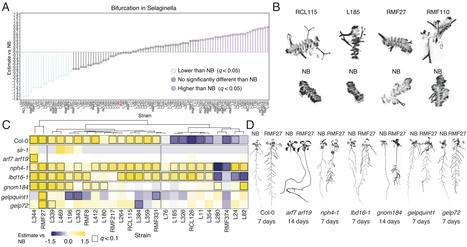
The establishment of beneficial interactions with microbes has helped plants to modulate root branching plasticity in response to environmental cues. However, how the plant microbiota harmonizes with plant roots to control their branching is unknown. Here, we show that the plant microbiota influences root branching in the model plant Arabidopsis thaliana. We define that the microbiota’s ability to control some stages in root branching can be independent of the phytohormone auxin that directs lateral root development under axenic conditions. In addition, we revealed a microbiota-driven mechanism controlling lateral root development that requires the induction of ethylene response pathways. We show that the microbial effects on root branching can be relevant for plant responses to environmental stresses. Thus, we discovered a microbiota-driven regulatory pathway controlling root branching plasticity that could contribute to plant adaptation to different ecosystems.
|
|
Scooped by
Jean-Michel Ané
April 11, 2023 12:36 PM
|
Plant root nodule symbiosis (RNS) with mutualistic nitrogen-fixing bacteria is restricted to a single clade of angiosperms, the Nitrogen-Fixing Nodulation Clade (NFNC), and is best understood in the legume family. It is widely accepted that nodulation originated through the assembly of modules recruited from existing functions, such as mycorrhizal symbiosis, polar growth, and lateral root development. Because nodulating species are scattered within the NFNC, the number of times nodulation has evolved or has been lost has been a matter of considerable speculation. This interesting evolutionary question has practical implications concerning the ease with which nodulation might be engineered in non-nodulating crop plants. Nodulating species share many commonalities, due either to divergence from a common ancestor over 100 million years ago or to convergence or deep homology following independent origins over that same time period. In either case, comparative analyses of diverse nodulation syndromes can provide insights into constraints on nodulation—what must be acquired or cannot be lost for a functional symbiosis—and what the latitude is for variation in the symbiosis. However, much remains to be learned about nodulation, especially outside of legumes. Here we present new information across the spectrum of nodulating groups. We find no evidence for convergence at the level of amino acid residues or gene family expansion across the NFNC. Our phylogenomic analyses further emphasize the uniqueness of the transcription factor, NIN, as a master regulator of nodulation, and identify key mutations affecting its function across the NFNC. We find that nodulation genes are over-represented among orthologous gene groups (OGs) present in the NFNC common ancestor, but that lineage-specific OGs play major roles in nodulation. We identified over 900,000 conserved noncoding elements (CNEs), of which over 300,000 were unique to NFNC species. A significant proportion of these are associated with nodulation-related genes and thus are candidates for transcriptional regulators.
|
|
Scooped by
Jean-Michel Ané
April 11, 2023 12:33 PM
|
Nodules are formed as a result of symbiosis with nitrogen-fixing bacteria on the roots of legume plants. Symbiotic nodule development shares common developmental processes with lateral roots, including cell proliferation of the pericycle and cortical cell layers leading to primordium formation, and both these organs are assumed to be evolutionarily related. The progression of their development is realized with the help of phytohormones, in particular auxin and cytokinin. Due to common evolutionary origin, the hormonal pathway and response may have similar functionality in cell fate specification during lateral root and nodule development. It is known that auxin and cytokinin both positively regulate nodule primordia development. However during lateral root development, auxin is a key positive regulator, while cytokinin suppresses lateral root development. Therefore, a comparative review of auxin and cytokinin action in the development of these two organs to elucidate how their identity is established should be of special interest. This review discusses the involvement of auxin and cytokinin in the development of symbiotic nodules and lateral roots, with a special focus on the similarity and differences of their action during lateral root and nodule developmental processes. The spatio-temporal peculiarities of auxin and cytokinin biosynthesis, transport and response during lateral root and symbiotic nodule formation are reviewed, which should help to clarify how the identity of these two root lateral organs depends on auxin-cytokinin interplay.
|
|
Scooped by
Jean-Michel Ané
April 6, 2023 10:47 AM
|
The establishment of the Legume-Rhizobia symbiosis is generally dependent on the production of rhizobial lipochitooligosaccharidic Nod factors (NFs) and their perception by plant Lysin Motif Receptor-Like Kinases (LysM-RLKs). In this study, we characterized a cluster of LysM-RLK genes implicated in strain-specific recognition in two highly divergent and widely-studied Medicago truncatula genotypes, A17 and R108. We then used reverse genetic approaches and biochemical analyses to study the function of selected genes in the clusters and the ability of their encoded proteins to bind NFs. Our study has revealed that the LYK cluster exhibits a high degree of variability among M. truncatula genotypes, which in A17 and R108 includes recent recombination events within the cluster and a transposon insertion in A17. The essential role of LYK3 in nodulation in A17 is not conserved in R108 despite similar sequences and good nodulation expression profiles. Although, LYK2, LYK5 and LYK5bis are not essential for nodulation of the two genotypes, some evidence points to accessory roles in nodulation, but not through high-affinity NF binding. This work shows that recent evolution in the LYK cluster provides a source of variation for nodulation, and potential robustness of signaling through genetic redundancy.
|
|
Scooped by
Jean-Michel Ané
April 4, 2023 9:35 PM
|
Medicago truncatula is the model plant species for studying symbioses with nitrogen-fixing rhizobia and arbuscular mycorrhizae, where edited mutants are invaluable for elucidating the contributions of known genes in these processes. Streptococcus pyogenes Cas9 (SpCas9)-based genome editing is a facile means of achieving loss of function, including where multiple gene knockouts are desired in a single generation. We describe how the user can customize our vector to target single or multiple genes, then how the vector is used to make M. truncatula transgenic plants containing target site mutations. Finally, obtaining transgene-free homozygous mutants is covered.
|
|
Scooped by
Jean-Michel Ané
April 2, 2023 10:33 PM
|
The genus Vachellia (Fabaceae) has a pan-tropical distribution and numerous Vachellia species are currently observed to be expanding their indigenous ranges and/or are invasive. Most Vachellia species have the capacity to enhance nitrogen uptake via an N2-fixing rhizobial mutualism that manifests in specialized root nodule structures enabling the catalysis of atmospheric N2 into a plant useable form. Improved understanding of nodulation may provide new insight to the changing patterns of ecological success of Vachellia species. Here, we investigated how the seedling growth, allometry and nodulation of two common Vachellia species, the arid Vachellia erioloba and the mesic Vachellia sieberiana, responded to varied levels of water availability. Seedlings were grown at 4%, 8% and 16% soil moisture content (SMC) for four months. The seedling growth and allometry of V. erioloba was unresponsive to changing water availability, and no nodulation was observed. The allometry of V. sieberiana was responsive to changing water availability and nodulation was observed; with the highest nodule biomass and growth rate recorded at 4% SMC. These patterns suggest that V. erioloba does not require the rhizobial mutualism, possibly due to lower competitive interactions between woody plants and grass in the arid savanna. Whereas, due to the competitive vegetation interactions typical in the mesic savanna, N2- fixation via nodule development could provide V. sieberiana a competitive advantage over grass not only in limited N conditions, but also during periods of lower water availability.
|
|
Scooped by
Jean-Michel Ané
April 1, 2023 7:23 PM
|
During root nodule symbiosis (RNS), cell-division activity is re-initiated and sustained in the root cortex to create a hospitable cellular niche. Such temporary and spatially confined site is required to render host cells compatible with the intracellular progression of rhizobia. Although it has been suggested that early infection events might involve a pre-mitotic cell-cycle arrest, this process has not been dissected with cellular resolution. Here, we show that a dual-colour Medicago histone reporter robustly identifies cells with different mitotic or endoreduplication activities in the root cortex. By imaging deep root tissues, we found that a confined trajectory of cortical cells that are transcellularly passed by infection threads are in a stage of the cell-cycle that is distinct from directly adjacent cells. Distinctive features of infected cells include nuclear widening and large-scale chromatin rearrangements consistent with a cell-cycle exit prior to differentiation. Using a combination of fluorescent reporters demarcating cell-cycle phase progression, we confirmed that a reduced proliferation potential and modulating the G2/M transition, a process possibly controlled by the NF-YA1 transcription factor, mark the success of rhizobial delivery to nodule cells.
|
|
Scooped by
Jean-Michel Ané
April 1, 2023 7:14 PM
|
Plant adaptation to drought facilitates major ecological transitions, and will likely play a vital role under looming climate change. Mycorrhizas, i.e. strategic associations between plant roots and soil-borne symbiotic fungi, can exert strong influence on the tolerance to drought of extant plants. Here, I show how mycorrhizal strategy and drought adaptation have been shaping one another throughout the course of plant evolution. To characterize the evolutions of both plant characters, I applied a phylogenetic comparative method using data of 1,638 extant species globally distributed. The detected correlated evolution unveiled gains and losses of drought tolerance occurring at faster rates in lineages with ecto- or ericoid mycorrhizas, which were on average about 15 and 300 times faster than in lineages with the arbuscular mycorrhizal and naked root (non-mycorrhizal alone or with facultatively arbuscular mycorrhizal) strategy, respectively. My study suggests that mycorrhizas can play a key facilitator role in the evolutionary processes of plant adaptation to critical changes in water availability across global climates.
|
|
Scooped by
Jean-Michel Ané
March 24, 2023 4:28 PM
|
Cu+-chaperones are a diverse group of proteins that allocate Cu+ ions to specific copper-proteins, creating different copper pools targeted to specific physiological processes. Symbiotic nitrogen fixation carried out in legume root nodules indirectly requires relatively large amounts of copper e.g. for energy delivery via respiration, for which targeted copper deliver systems would be required. MtNCC1 is a nodule-specific Cu+-chaperone encoded in the Medicago truncatula genome, with a N-terminus Atx1-like domain that can bind Cu+ with picomolar affinities. This gene is expressed primarily from the late infection zone to the early fixation zone, and is located in the cytosol, associated to plasma and symbiosome membranes, and within nuclei. Consistent with its key role in nitrogen fixation, ncc1 mutants have a severe reduction of nitrogenase activity, and a 50% reduction in copper-dependent cytochrome c oxidase activity. A subset of the copper-proteome is also affected in the mutant nodules. Many of these proteins can be pulled-down when using a Cu+-loaded N-terminal MtNCC1 moiety as a bait, indicating a role in nodule copper homeostasis and in copper-dependent physiological processes. Overall, these data suggest a pleiotropic role of MtNCC1 in copper delivery for symbiotic nitrogen fixation.
|
|
Scooped by
Jean-Michel Ané
March 24, 2023 4:24 PM
|
Bacterial surface motility is a complex microbial trait that contributes to host colonization. However, the knowledge about regulatory mechanisms that control surface translocation in rhizobia and their role in the establishment of symbiosis with legumes is still limited. Recently, 2-tridecanone (2-TDC) was identified as an infochemical in bacteria that hampers microbial colonization of plants. In the alfalfa symbiont Sinorhizobium meliloti, 2-TDC promotes a mode of surface motility that is mostly independent of flagella. To understand the mechanism of action of 2-TDC in S. meliloti and unveil genes putatively involved in plant colonization, Tn5 transposants derived from a flagellaless strain that were impaired in 2-TDC-induced surface spreading were isolated and genetically characterized. In one of the mutants, the gene coding for the chaperone DnaJ was inactivated. Characterization of this transposant and newly obtained flagella-minus and flagella-plus dnaJ deletion mutants revealed that DnaJ is essential for surface translocation, while it plays a minor role in swimming motility. DnaJ loss-of-function reduces salt and oxidative stress tolerance in S. meliloti and hinders the establishment of efficient symbiosis by affecting nodule formation efficiency, cellular infection, and nitrogen fixation. Intriguingly, the lack of DnaJ causes more severe defects in a flagellaless background. This work highlights the role of DnaJ in the free-living and symbiotic lifestyles of S. meliloti.
|
|
Scooped by
Jean-Michel Ané
March 6, 2023 11:46 AM
|
Fungal-bacterial symbioses range from antagonisms to mutualisms and remain one of the least understood interdomain interactions despite their ubiquity as well as ecological and medical importance. To build a predictive conceptual framework for understanding interactions between fungi and bacteria in different types of symbioses, we surveyed fungal and bacterial transcriptional responses in the mutualism between Rhizopus microsporus (Rm) (ATCC 52813, host) and its Mycetohabitans (formerly Burkholderia) endobacteria versus the antagonism between a nonhost Rm (ATCC 11559) and Mycetohabitans isolated from the host, at two time points, before and after partner physical contact. We found that bacteria and fungi sensed each other before contact and altered gene expression patterns accordingly. Mycetohabitans did not discriminate between the host and nonhost and engaged a common set of genes encoding known as well as novel symbiosis factors. In contrast, responses of the host versus nonhost to endobacteria were dramatically different, converging on the altered expression of genes involved in cell wall biosynthesis and reactive oxygen species (ROS) metabolism. On the basis of the observed patterns, we formulated a set of hypotheses describing fungal-bacterial interactions and tested some of them. By conducting ROS measurements, we confirmed that nonhost fungi increased production of ROS in response to endobacteria, whereas host fungi quenched their ROS output, suggesting that ROS metabolism contributes to the nonhost resistance to bacterial infection and the host ability to form a mutualism. Overall, our study offers a testable framework of predictions describing interactions of early divergent Mucoromycotina fungi with bacteria.
|
|
Scooped by
Jean-Michel Ané
March 6, 2023 10:52 AM
|
Symbiosis between leguminous plants and soil bacteria rhizobia is a refined type of plant–microbial interaction that has a great importance to the global balance of nitrogen. The reduction of atmospheric nitrogen takes place in infected cells of a root nodule that serves as a temporary shelter for thousands of living bacteria, which, per se, is an unusual state of a eukaryotic cell. One of the most striking features of an infected cell is the drastic changes in the endomembrane system that occur after the entrance of bacteria to the host cell symplast. Mechanisms for maintaining intracellular bacterial colony represent an important part of symbiosis that have still not been sufficiently clarified. This review focuses on the changes that occur in an endomembrane system of infected cells and on the putative mechanisms of infected cell adaptation to its unusual lifestyle.
|
|
|
Scooped by
Jean-Michel Ané
April 12, 2023 9:00 PM
|
This manuscript describes a unique protocol for the rapid transformation of Medicago truncatula A17 cell suspension cultures mediated by Agrobacterium tumefaciens. Medicago cells were collected on day 7 of the growth curve, which corresponded to the beginning of the exponential phase. They were then co-cultured with Agrobacterium for 3 days before being spread onto a petri dish with appropriate antibiotic selection. The Receptor Binding Domain of the Spike protein of SARS-CoV-2 was used as a model to develop this protocol. The presence of the transgene was assessed using PCR, and the integrity of the product was evaluated by SDS-PAGE and Western-blotting.
|
|
Scooped by
Jean-Michel Ané
April 11, 2023 12:38 PM
|
Mutualistic association can improve a plant’s health and productivity. G-type lectin receptor-like kinase (PtLecRLK1) is a susceptibility factor in Populus trichocarpa that permits root colonization by a beneficial fungus, Laccaria bicolor. Engineering PtLecRLK1 also permits L. bicolor root colonization in non-host plants similar to Populus trichocarpa. The intracellular signaling reprogramed by PtLecRLK1 upon recognition of L. bicolor to allow for the development and maintenance of symbiosis is yet to be determined. In this study, phosphoproteomics was utilized to identify phosphorylation-based relevant signaling pathways associated with PtLecRLK1 recognition of L. bicolor in transgenic switchgrass roots. Our finding shows that PtLecRLK1 in transgenic plants modifies the chitin-triggered plant defense and MAPK signaling along with a significant adjustment in phytohormone signaling, ROS balance, endocytosis, cytoskeleton movement, and proteasomal degradation in order to facilitate the establishment and maintenance of L. bicolor colonization. Moreover, protein–protein interaction data implicate a cGMP-dependent protein kinase as a potential substrate of PtLecRLK1.
|
|
Scooped by
Jean-Michel Ané
April 11, 2023 12:33 PM
|
Nitrogenases have catalyzed biological nitrogen fixation for billions of years and revolutionized planet Earth by supplying essential nitrogen to the biosphere.
|
|
Scooped by
Jean-Michel Ané
April 11, 2023 12:31 PM
|
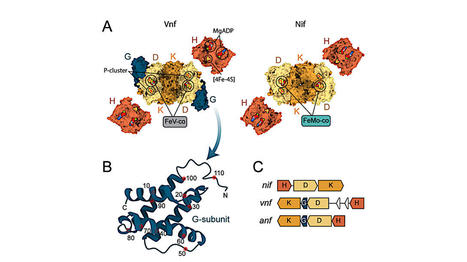
Nitrogenases have catalyzed biological nitrogen fixation for billions of years and revolutionized planet Earth by supplying essential nitrogen to the biosphere. How these molecular machines were built and distributed by microbial processes and a shifting geochemical landscape remains an open question. Here, we probe the birth and functional evolution of the G-subunit, an integral, Precambrian component of certain nitrogenases that makes its appearance midway through the history of nitrogen fixation. Our results establish the G-subunit as an unprecedented molecular novelty that was integrated into preexisting interaction pathways for nitrogenase metallocluster incorporation. In the wake of Earth oxygenation, the G-subunit primed nitrogenases and their microbial hosts to exploit newly diversified geochemical environments. The history of the nitrogenase G-subunit showcases the elaborate tango between contingent evolutionary events and environmental conditions that together open an adaptive frontier for molecular innovations with global consequences.
|
|
Scooped by
Jean-Michel Ané
April 4, 2023 9:40 PM
|
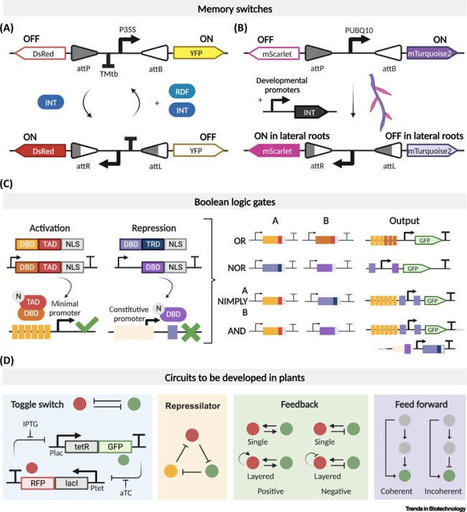
Plant synthetic biology has gained recognition both in academia and industry for driving significant advances in the fields of agriculture, medicine, and biotechnology.
Unprecedented genetically encoded resources have been developed in plants to control cellular activities as well as engineering novel functions.
Rational design approaches are being implemented to improve conventional plant genetic engineering.
Molecular farming of products with therapeutic and commercial values can be boosted by plant synthetic biology.
|
|
Scooped by
Jean-Michel Ané
April 2, 2023 10:34 PM
|
Ethylene (ET) controls many facets of plant growth and development under abiotic and biotic stresses. MtEIN2, as a critical element of the ET signalling pathway, is essential in biotic interactions. However, the role of MtEIN2 in responding to abiotic stress, such as combined nutrient deficiency, is less known. To assess the role of ethylene signalling in nutrient uptake, we manipulated nitrate (NO3-) and phosphate (Pi) availability for wild type (WT) and the ethylene-insensitive (MtEIN2-defective) mutant, sickle, in Medicago truncatula. We measured leaf biomass and photosynthetic pigments in WT and sickle to identify conditions leading to different responses in both genotypes. Under combined NO3- and Pi deficiency, sickle plants had higher chlorophyll and carotenoid contents than WT plants. Under these conditions, nitrate content and gene expression levels of nitrate transporters were higher in the sickle mutant than in the WT. This led to the conclusion that MtEIN2 is associated with nitrate uptake and the content of photosynthetic pigments under combined Pi and NO3-deficiency in M. truncatula. We conclude that ethylene perception plays a critical role in regulating the nutrient status of plants.
|
|
Scooped by
Jean-Michel Ané
April 2, 2023 10:31 PM
|
Gene co-expression network analysis is an efficient systems biology approach for the discovery of novel gene functions and trait-associated gene modules. To identify clusters of functionally related genes involved in soybean nodule formation and development, we performed a weighted gene co-expression network analysis. Two nodule-specific modules (NSM-1 and NSM-2, containing 304 and 203 genes, respectively) were identified. The NSM-1 gene promoters were significantly enriched in cis-binding elements for ERF, MYB, and C2H2-type zinc transcription factors, whereas NSM-2 gene promoters were enriched in cis-binding elements for TCP, bZIP, and bHLH transcription factors, suggesting a role of these regulatory factors in the transcriptional activation of nodule co-expressed genes. The co-expressed gene modules included genes with potential novel roles in nodulation, including those involved in xylem development, transmembrane transport, the ethylene signalling pathway, cytoskeleton organization, cytokinesis and regulation of the cell cycle, regulation of meristem initiation and growth, transcriptional regulation, DNA methylation, and histone modifications. Functional analysis of two co-expressed genes using TILLING mutants provided novel insight into the involvement of unsaturated fatty acid biosynthesis and folate metabolism in nodule formation and development. The identified gene co-expression modules provide valuable resources for further functional genomics studies to dissect the genetic basis of nodule formation and development in soybean.
|
|
Scooped by
Jean-Michel Ané
April 1, 2023 7:20 PM
|
Understanding the interactions between plants and microorganisms can inform microbiome management to enhance crop productivity and resilience to stress. Here, we apply a genome-centric approach to identify ecologically important leaf microbiome members on replicated plots of field-grown switchgrass and miscanthus, and to quantify their activities over two growing seasons for switchgrass. We use metagenome and metatranscriptome sequencing and curate 40 medium- and high-quality metagenome-assembled-genomes (MAGs). We find that classes represented by these MAGs (Actinomycetia, Alpha- and Gamma- Proteobacteria, and Bacteroidota) are active in the late season, and upregulate transcripts for short-chain dehydrogenase, molybdopterin oxidoreductase, and polyketide cyclase. Stress-associated pathways are expressed for most MAGs, suggesting engagement with the host environment. We also detect seasonally activated biosynthetic pathways for terpenes and various non-ribosomal peptide pathways that are poorly annotated. Our findings support that leaf-associated bacterial populations are seasonally dynamic and responsive to host cues.
|
|
Scooped by
Jean-Michel Ané
March 24, 2023 4:29 PM
|
Legume-rhizobia nodulation is a complex developmental process. It initiates when the rhizobia-produced Nod factors are perceived by specific LysM receptors present in the root hair apical membrane. Consequently, SYMRK (Symbiosis Receptor-like Kinase) becomes active in the root hair and triggers an extensive signaling network essential for the infection process and nodule organogenesis. Despite its relevant functions, the underlying cellular mechanisms involved in SYMRK signaling activity remain poorly characterized. In this study, we demonstrated that PvSYMRK-EGFP undergoes constitutive and rhizobia-induced endocytosis. We found that in uninoculated roots, PvSYMRK-EGFP is mainly associated with the plasma membrane, although intracellular puncta labelled with PvSymRK-EGFP were also observed in root hair and nonhair-epidermal cells. Inoculation with Rhizobium etli producing Nod factors induces in the root hair a redistribution of PvSYMRK-EGFP from the plasma membrane to intracellular puncta. In accordance, deletion of the endocytic motif YXXØ (YKTL) and treatment with the endocytosis inhibitors ikarugamycin (IKA) and tyrphostin A23 (TyrA23), as well as brefeldin A (BFA), drastically reduced the density of intracellular PvSYMRK-EGFP puncta. A similar effect was observed in the phosphorylation-deficient (T589A) and kinase-dead (K618E) mutants of PvSYMRK-EGFP, implying these structural features are positive regulators of PvSYMRK-EGFP endocytosis. Our findings lead us to postulate that rhizobia-induced endocytosis of SYMRK modulates the duration and amplitude of the SYMRK-dependent signaling pathway.
|
|
Scooped by
Jean-Michel Ané
March 24, 2023 4:27 PM
|
Legumes coordinate nodulation and plant development to maximize reproductive success, but the underlying molecular mechanisms are not well understood. A recent study by Yun et al. has revealed that nodulation drives root-to-shoot movement of microRNA172 (miR172) to accelerate flowering time, thus building a new bridge between nodulation and plant growth regulation.
|
|
Scooped by
Jean-Michel Ané
March 24, 2023 4:23 PM
|
Nitrogenase in some bacteria and archaea catalyzes conversion of N2 to ammonia. To reconstitute a nitrogenase biosynthetic pathway in a eukaryotic host is still a challenge, since synthesis of nitrogenase requires a large number of nif (nitrogen fixation) genes. Viral 2A peptide mediated “cleavage” of polyprotein is one of strategies for multigene co-expression. Here, we show that cleavage efficiency of NifB-2A-NifH polyprotein linked by four different 2A peptides (P2A, T2A, E2A, and F2A) in Saccharomyces cerevisiae ranges from ~50% to ~90%. The presence of a 2A tail in NifB, NifH, and NifD does not affect their activity. Western blotting shows that 9 Nif proteins (NifB, NifH, NifD, NifK, NifE, NifN, NifX, HesA, and NifV) from Paenibacillus polymyxa that are fused into two polyproteins via 2A peptides are co-expressed in S. cerevisiae. Expressed NifH from Klebsiella oxytoca NifU and NifS and P. polymyxa NifH fusion linked via 2A in S. cerevisiae exhibits Fe protein activity.
|
|
Scooped by
Jean-Michel Ané
March 6, 2023 10:54 AM
|
In plant–microbe interactions, symbionts and pathogens live within plants and attempt to avoid triggering plant defense responses. In order to do so, these microbes have evolved multiple mechanisms that target components of the plant cell nucleus. Rhizobia-induced symbiotic signaling requires the function of specific legume nucleoporins within the nuclear pore complex. Symbiont and pathogen effectors harbor nuclear localization sequences that facilitate movement across nuclear pores, allowing these proteins to target transcription factors that function in defense. Oomycete pathogens introduce proteins that interact with plant pre-mRNA splicing components in order to alter host splicing of defense-related transcripts. Together, these functions indicate that the nucleus is an active site of symbiotic and pathogenic functioning in plant–microbe interactions.
|


 Scoop.it!