Your new post is loading...

|
Scooped by
Jean-Michel Ané
August 24, 2023 3:03 PM
|
Background and aims
One of the most promising strategies for sustainable intensification of crop production involves the utilization of beneficial root-associated microorganisms, such as plant growth-promoting bacteria and arbuscular mycorrhizal fungi (AMF). The aim of this study was to investigate whether a seed-applied biostimulant, based on the bacterial strain Bacillus amyloliquefaciens IT-45 and a plant polysaccharide extract, and crop enhancement tools, such as hybrids with contrasting early vigor and nitrogen (N) plus phosphorus (P) starter fertilization, and their interactions, shape the communities of native root-colonizing AMF symbionts in maize.
Methods
A factorial growth chamber experiment was set up with two maize genotypes in natural soil. Mycorrhizal colonization was evaluated after root staining. The diversity and composition of AMF communities were assessed by PCR-DGGE of the 18S rRNA gene and amplicon sequencing.
Results
N and P fertilization determined a consistent reduction of AMF root colonization and, in combination of biostimulant, a reduction of AMF richness. The biostimulant alone generally did not affect AMF colonization or the community biodiversity. In addition the effect of the two factors were modulated by maize genotype. In all treatments, predominant AMF were represented by Glomus sp. and Funneliformis mosseae, while populations of the genus Rhizoglomus were rarely detected in biostimulant and NP fertilization treatments.
Conclusion
The results of this study increase our understanding of how the biostimulant seed treatment may affect native AMF communities, depending on NP fertilization and maize genotype and may improve the implementation of innovative tools in sustainable and resilient agroecosystems.
|
|
Scooped by
Jean-Michel Ané
August 23, 2023 5:21 PM
|
In rice, symbiotic N fixation via nodule bacteroids does not take place naturally. Although N fixation by endophytic and associative diazotrophs has been reported in rice, main organs and seasonal regulation for the N fixation have not been elucidated. In this study, therefore, seasonal changes of nitrogenase (acetylene reduction) activity and carbohydrate contents in culm internode (IN), basal nodes (BN), and crown root (CR) were investigated in manure compost (MC)- and chemical fertilizer-applied rice. Nitrogenase activity increased after rooting, and reached the highest activity in BN of MC-applied rice at panicle initiation. In BN of MC-applied rice, the sucrose content was low whereas the higher glucose content was detected at panicle initiation. Although bacterial and diazotrophic bacterial populations were most abundant in CR, the nitrogenase activity seemed to be restricted by its trace sucrose and glucose contents. In addition, alpha-Proteobacteria and Clostridia phyla were abundant in BN-specific bacterial microbiota at panicle initiation. These results suggest that the increased N fixation in BN at panicle initiation might be sustained both by the non-structural carbohydrate supply from photosynthetic apparatus and BN-specific bacterial microbiota including diazotrophs.
|
|
Scooped by
Jean-Michel Ané
August 23, 2023 5:14 PM
|
The family Rhizobiaceae contains 19 validly described genera including the rhizobia groups, many of which are important nitrogen-fixing bacteria. Early classification of Rhizobiaceae relied heavily on the poorly resolved 16S rRNA genes and resulted in several taxonomic conflicts. Although several recent studies illustrated the taxonomic status of many members in the family Rhizobiaceae, several para- and polyphyletic genera still needed to be elucidated. The rapidly increasing number of genomes in Rhizobiaceae has allowed for a revision of the taxonomic identities of members in Rhizobiaceae. In this study, we performed analyses of genome-based phylogeny and phylogenomic metrics to review the relationships of 155-type strains within the family Rhizobiaceae. The UBCG and concatenated protein phylogenetic trees, constructed based on 92 core genes and concatenated alignment of 170 single-copy orthologous proteins, demonstrated that the taxonomic inconsistencies should be assigned to eight novel genera, and 22 species should be recombined. All these reclassifications were also confirmed by pairwise cpAAI values, which separated genera within the family Rhizobiaceae with a demarcation threshold of ~86%. In addition, along with the phenotypic and chemotaxonomic analyses, a novel strain BDR2-2T belonging to a novel genus of the family Rhizobiaceae was also confirmed, for which the name Ectorhizobium quercum gen. nov., sp. nov. was proposed. The type strain is BDR2-2T (=CFCC 16492T = LMG 31717T).
|
|
Scooped by
Jean-Michel Ané
August 18, 2023 4:54 PM
|
Arbuscular mycorrhizal fungi (AMF) are obligate plant symbionts of most land plants. In these organisms, thousands of nuclei that are either genetically similar (homokaryotic) or derived from two distinct parents (dikaryotic) co-exist in a large syncytium. Here, we investigated the impact of these two nuclear organizations on the mycorrhizal response of potatoes (Solanum tuberosum) by inoculating four potato cultivars with eight Rhizophagus irregularis strains individually (four homokaryotic and four dikaryotic). By evaluating plant and fungal fitness-related traits four months post inoculation, we found that AMF genetic organization significantly affects the mycorrhizal response of host plants. Specifically, homokaryotic strains lead to higher total, shoot, and tuber biomass and a higher number of tubers, compared to dikaryotic strains. However, fungal fitness-related traits showed no clear differences between homokaryotic and dikaryotic strains. Nucleotype content analysis of single spores confirmed that the nucleotype ratio of AMF heterokaryon spores can shift depending on host identity. Together, these findings continue to highlight significant ecological differences derived from the two distinct genetic organizations in AMF.
|
|
Scooped by
Jean-Michel Ané
August 18, 2023 4:48 PM
|
In addition to rhizobia, many types of co-existent bacteria are found in leguminous root nodules, but their habitats are unclear. To investigate this phenomenon, we labeled Bradyrhizobium diazoefficiens USDA122 and Bradyrhizobium sp. SSBR45 with Discosoma sp. red fluorescent protein (DsRed) or enhanced green fluorescent protein (eGFP). USDA122 enhances soybean growth by forming effective root nodules, but SSBR45 does not form any nodules. Using low-magnification laser scanning confocal microscopy, we found that infected cells in the central zone of soybean nodules appeared to be occupied by USDA122. Notably, high-magnification microscopy after co-inoculation of non-fluorescent USDA122 and fluorescence-labeled SSBR45 also revealed that SSBR45 inhabits the intercellular spaces of healthy nodules. More unexpectedly, co-inoculation of eGFP-labeled USDA122 and DsRed-labeled SSBR45 (and vice versa) revealed the presence of USDA122 bacteria in both the symbiosomes of infected cells and in the apoplasts of healthy nodules. We then next inspected nodules formed after a mixed inoculation of differently-labeled USDA122, without SSBR45, and confirmed the inhabitation of the both populations of USDA122 in the intercellular spaces. In contrast, infected cells were occupied by single-labeled USDA122. We also observed Mesorhizobium loti in the intercellular spaces of active wild-type nodules of Lotus japonicus using transmission electron microscopy. Compatible intercellular rhizobia have been described during nodule formation of several legume species and in some mutants, but our evidence suggests that this type of colonization may occur much more commonly in leguminous root nodules.
|
|
Scooped by
Jean-Michel Ané
August 15, 2023 8:32 PM
|
Under agroforestry practices, inter-specific facilitation between tree rows and cultivated alleys occurs when plants increase the growth of their neighbors especially under nutrient limitation. Owing to a coarse root architecture limiting soil inorganic phosphate (Pi) uptake, walnut trees (Juglans spp.) exhibit dependency on soil-borne symbiotic arbuscular mycorrhizal fungi that extend extra-radical hyphae beyond the root Pi depletion zone. To investigate the benefits of mycorrhizal walnuts in alley cropping, we experimentally simulated an agroforestry system in which walnut rootstocks RX1 (J. regia x J. microcarpa) were connected or not by a common mycelial network (CMN) to maize plants grown under two contrasting Pi levels. Mycorrhizal colonization parameters showed that the inoculum reservoir formed by inoculated walnut donor saplings allowed the mycorrhization of maize recipient roots. Relative to non-mycorrhizal plants and whatever the Pi supply, CMN enabled walnut saplings to access maize Pi fertilization residues according to significant increases in biomass, stem diameter, and expression of JrPHT1;1 and JrPHT1;2, two mycorrhiza-inducible phosphate transporter candidates here identified by phylogenic inference of orthologs. In the lowest Pi supply, stem height, leaf Pi concentration, and biomass of RX1 were significantly higher than in non-mycorrhizal controls, showing that mycorrhizal connections between walnut and maize roots alleviated Pi deficiency in the mycorrhizal RX1 donor plant. Under Pi limitation, maize recipient plants also benefited from mycorrhization relative to controls, as inferred from larger stem diameter and height, biomass, leaf number, N content, and Pi concentration. Mycorrhization-induced Pi uptake generated a higher carbon cost for donor walnut plants than for maize plants by increasing walnut plant photosynthesis to provide the AM fungus with carbon assimilate. Here, we show that CMN alleviates Pi deficiency in co-cultivated walnut and maize plants, and may therefore contribute to limit the use of chemical P fertilizers in agroforestry systems.
|
|
Scooped by
Jean-Michel Ané
August 14, 2023 5:21 PM
|
The α/β hydrolase KARRIKIN INSENSITIVE 2 (KAI2) functions as a receptor for a yet undiscovered phytohormone, provisionally termed KAI2 ligand (KL). In addition, it perceives karrikin, a butenolide compound found in the smoke of burnt plant material. KAI2-mediated signaling is involved in regulating seed germination and in shaping seedling and adult plant morphology, both above and below ground. It also governs responses to various abiotic stimuli and stresses and shapes biotic interactions. KAI2-mediated signaling is being linked to an elaborate cross-talk with other phytohormone pathways such as auxin, gibberellin, abscisic acid, ethylene and salicylic acid signaling, in addition to light and nutrient starvation signaling. Further connections will likely be revealed in the future. This article summarizes recent advances in unraveling the function of KAI2-mediated signaling and its interaction with other signaling pathways.
|
|
Scooped by
Jean-Michel Ané
August 14, 2023 5:19 PM
|
Aims
Milpas are traditional agroecosystems found in rural areas of Mexico, where low input practices favor the presence of microbial associates with greater abundance and diversity than modern crops. Milpas can be found in a wide range of climates, but the beneficial functions of microbes are yet to be explored across biotic and abiotic conditions. In semi-arid regions of Hidalgo, Mexico, maize landraces have been selected to grow in milpas despite low rainfall and we hypothesized that associated bacteria contribute to the drought tolerance of these plants.
Methods
We collected maize seeds from arid and tropical milpas, as well as hybrid varieties from modern crops to test their responses to drought during germination and early vegetative growth; next, we studied the role of seed endophytic bacteria for this trait.
Results
Landraces from arid milpas displayed decreased phenotypic responses to drought (i.e. increased tolerance), and elimination of seed-endophytic bacteria from these landraces reduced germination in drought. Next, 16 S amplicon sequencing revealed that drought-tolerant landraces harbor Pseudomonas spp., Brachybacterium spp., and strains from the Bacilli class that were not found in drought-sensitive varieties; likewise, culturing methods allowed the isolation of these bacterial groups. Finally, inoculation of Pseudomonas spp. and Brachybacterium sp. strains improved the germination of a drought-sensitive variety.
Conclusions
Our results indicate that seed-endophytic bacteria associated to maize landraces from arid milpas contribute to drought tolerance in early developmental stages and support that ancestral practices manifest in the microbial ecology of milpas, selecting beneficial microbes to cope with local conditions.
|
|
Scooped by
Jean-Michel Ané
August 8, 2023 5:05 PM
|
Cell walls are important interfaces of plant-fungal interactions. Host cell walls act as robust physical and chemical barriers against fungal invaders, making them an essential line of defense. Upon fungal colonization, plants deposit phenolics and callose at the sites of fungal penetration to reinforce their walls and prevent further fungal progression. Alterations in the composition of plant cell walls significantly impact host susceptibility. Furthermore, plants and fungi secrete glycan hydrolases acting on each other’s cell walls. These enzymes release a wide range of sugar oligomers into the apoplast, some of which trigger the activation of host immunity via host surface receptors. Recent characterization of cell walls from plant-colonizing fungi have emphasized the abundance of β-glucans in different cell wall layers, which makes them suitable targets for recognition. To characterize host components involved in immunity against fungi, we performed a protein pull-down with the biotinylated β-glucan laminarin. Thereby, we identified a glycoside hydrolase family 81-type glucan-binding protein (GBP) as the major Exciting preprint from @Team_Zuccaro and coll. on plant β-glucan interacting proteins in both symbiosis and defenses. Mutation of GBP1 and its only paralogue GBP2 in barley led to decreased colonization by the beneficial root endophytes Serendipita indica and S. vermifera, as well as the arbuscular mycorrhizal fungus Rhizophagus irregularis. The reduction of symbiotic colonization was accompanied by enhanced responses at the host cell wall. Moreover, GBP mutation in barley also increased resistance to fungal infections in roots and leaves by the hemibiotrophic pathogen Bipolaris sorokiniana and the obligate biotrophic pathogen Blumeria graminis f. sp. hordei, respectively. These results indicate that GBP1 is involved in the establishment of symbiotic associations with beneficial fungi, a role that has potentially been appropriated by barley-adapted pathogens.
|
|
Scooped by
Jean-Michel Ané
August 8, 2023 4:55 PM
|
Plants interact with arbuscular mycorrhizal fungi (AMF) and in doing so, change transcript levels of many miRNAs and their targets. However, the identity of an Argonaute (AGO) that modulates this interaction remains unknown, including in Nicotiana attenuata.
We examined how the silencing of NaAGO1/2/4/7/and 10 by RNAi influenced plant-competitive ability under low-P conditions when they interact with AMF. Furthermore, the roles of seven miRNAs, predicted to regulate signaling and phosphate homeostasis, were evaluated by transient overexpression.
Only NaAGO7 silencing by RNAi (irAGO7) significantly reduced the competitive ability under P-limited conditions, without changes in leaf or root development, or juvenile-to-adult phase transitions. In plants growing competitively in the glasshouse, irAGO7 roots were over-colonized with AMF, but they accumulated significantly less phosphate and the expression of their AMF-specific transporters was deregulated. Furthermore, the AMF-induced miRNA levels were inversely regulated with the abundance of their target transcripts. miRNA overexpression consistently decreased plant fitness, with four of seven-tested miRNAs reducing mycorrhization rates, and two increasing mycorrhization rates. Overexpression of Na-miR473 and Na-miRNA-PN59 downregulated targets in GA, ethylene, and fatty acid metabolism pathways.
We infer that AGO7 optimizes competitive ability and colonization by regulating miRNA levels and signaling pathways during a plant's interaction with AMF.
|
|
Scooped by
Jean-Michel Ané
August 8, 2023 9:49 AM
|
Biological nitrogen fixation is a key process for nitrogen geochemical cycling and plant‒microbe interactions. At present, little is known about the possible effects of nonnodulating microbes on rhizobia nodulation in soils. Here, we show that Enterobacter sp. Z1 and Klebsiella sp. Z2 significantly improved soybean growth and nitrogen fixation in the presence of Bradyrhizobium diazoefficiens USDA110. Soil metabolomic analysis showed that the application of mixed strains Z1 and Z2 significantly increased the levels of flavonoids, indoleacetic acid (IAA), salicylic acid (SA), and taurine in rhizosphere soil. The addition of IAA, SA, or taurine increased nitrogenase activity, nodule production, and chlorophyll content in soybean. Flavonoids were the determinant of the interaction between soybeans and rhizobia. Moreover, strains Z1 and Z2 produced an abundance of IAA and SA, thus increasing the expression of flavonoid synthesis-related genes and eventually increasing the accumulation of flavonoids. Both strains Z1 and Z2 exhibited two metabolic pathways of taurine, and they catalyzed taurine to produce acetyl-CoA, a key flavonoid synthesis substrate in soybeans. This study revealed the mechanism by which rhizosphere microorganisms mediated soybean-rhizobium interactions, thus promoting soybean nitrogen fixation.
|
|
Scooped by
Jean-Michel Ané
August 7, 2023 4:06 PM
|
Bacteroid (name for rhizobia inside nodule cells) differentiation is a prerequisite for successful nitrogen-fixing symbiosis. In certain legumes, under the regulation of host proteins, for example, a large group of NCR (nodule cysteine rich) peptides, bacteroids undergo irreversible terminal differentiation. This process causes them to lose the ability to propagate inside nodule cells while boosting their competency for nitrogen fixation. How host cells maintain the viability of differentiated bacteroids while maximizing their nitrogen-reducing activities remains elusive.
Here, through mutant screen, map-based cloning, and genetic complementation, we find that NCR343 is required for the viability of differentiated bacteroids. In Medicago truncatula debino1 mutant, differentiated bacteroids decay prematurely, and NCR343 is proved to be the casual gene for debino1.
NCR343 is mainly expressed in the nodule fixation zone, where bacteroids are differentiated. In nodule cells, mature NCR343 peptide is secreted into the symbiosomes. RNA-Seq assay shows that many stress-responsive genes are significantly induced in debino1 bacteroids. Additionally, a group of stress response-related rhizobium proteins are identified as putative interacting partners of NCR343.
In summary, our findings demonstrate that beyond promoting bacteroid differentiation, NCR peptides are also required in maintaining the viability of differentiated bacteroids.
|
|
Scooped by
Jean-Michel Ané
August 5, 2023 4:28 PM
|
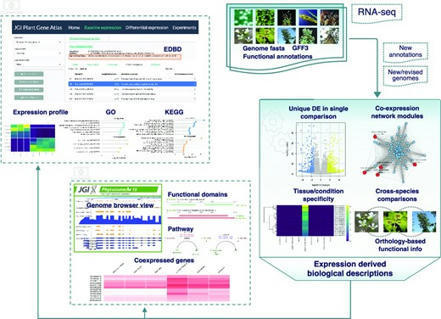
Gene functional descriptions offer a crucial line of evidence for candidate genes underlying trait variation. Conversely, plant responses to environmental cues represent important resources to decipher gene function and subsequently provide molecular targets for plant improvement through gene editing. However, biological roles of large proportions of genes across the plant phylogeny are poorly annotated. Here we describe the Joint Genome Institute (JGI) Plant Gene Atlas, an updateable data resource consisting of transcript abundance assays spanning 18 diverse species. To integrate across these diverse genotypes, we analyzed expression profiles, built gene clusters that exhibited tissue/condition specific expression, and tested for transcriptional response to environmental queues. We discovered extensive phylogenetically constrained and condition-specific expression profiles for genes without any previously documented functional annotation. Such conserved expression patterns and tightly co-expressed gene clusters let us assign expression derived additional biological information to 64 495 genes with otherwise unknown functions. The ever-expanding Gene Atlas resource is available at JGI Plant Gene Atlas (https://plantgeneatlas.jgi.doe.gov) and Phytozome (https://phytozome.jgi.doe.gov/), providing bulk access to data and user-specified queries of gene sets. Combined, these web interfaces let users access differentially expressed genes, track orthologs across the Gene Atlas plants, graphically represent co-expressed genes, and visualize gene ontology and pathway enrichments.
|
|
|
Scooped by
Jean-Michel Ané
August 24, 2023 2:59 PM
|
The mutualistic symbiosis between plants and arbuscular mycorrhizal (AM) fungi is based on a balanced nutrient exchange between both partners, with the plant achieving improved nutrition and stress tolerance. The symbiosis is finely-tuned according to plant’s needs and surrounding conditions, usually through phytohormonal signaling. Thus, environmental conditions or stress factors modulating phytohormone signaling may influence the symbiosis. This study compares the colonization abilities of two AM fungal species, Funneliformis mosseae and Rhizophagus irregularis, independently or in combination, in tomato plants subjected to different stress conditions. These included salt stress and systemic defense activation by aboveground application of the defense-related hormones methyl jasmonate, abscisic acid and salicylic acid. The results show that root colonization by the two fungal species differs depending on the stress treatment. Nutrient and transcriptional analyses revealed that changes in colonization correlated with differential regulation of nutrient exchange, plant defensive responses, and symbiosis regulatory genes. Specifically, under salt stress R. irregularis colonization decreased, while F. mosseae colonization was promoted. These differential regulation of colonization under stress positively correlated with changes in the functionality of the symbiosis. Overall, the results support that the benefits provided by each AM fungi influence carbon reward and determines the control of root colonization by the host plant.
|
|
Scooped by
Jean-Michel Ané
August 23, 2023 5:19 PM
|
Introducing nitrogen fixation (nif ) genes into eukaryotic genomes and targeting Nif components to mitochondria or chloroplasts is a promising strategy for engineering nitrogen-fixing plants. A prerequisite for achieving nitrogen fixation in crops is stable and stoichiometric expression of each component in organelles. Previously, we designed a polyprotein-based nitrogenase system depending on Tobacco Etch Virus protease (TEVp) to release functional Nif components from five polyproteins. Although this system satisfies the demand for specific expression ratios of Nif components in Escherichia coli, we encountered issues with TEVp cleavage of polyproteins targeted to yeast mitochondria. To overcome this obstacle, a version of the Nif polyprotein system was constructed by replacing TEVp cleavage sites with minimal peptide sequences, identified by knowledge-based engineering, that are susceptible to cleavage by the endogenous mitochondrial-processing peptidase. This replacement not only further reduces the number of genes required, but also prevents potential precleavage of polyproteins outside the target organelle. This version of the polyprotein-based nitrogenase system achieved levels of nitrogenase activity in E. coli, comparable to those observed with the TEVp-based polyprotein nitrogenase system. When applied to yeast mitochondria, stable and balanced expression of Nif components was realized. This strategy has potential advantages, not only for transferring nitrogen fixation to eukaryotic cells, but also for the engineering of other metabolic pathways that require mitochondrial compartmentalization.
|
|
Scooped by
Jean-Michel Ané
August 18, 2023 4:58 PM
|
Plant microbiomes are surprisingly complex due to competition as well as cooperative relationships, such as interdependence, but the relative contributions of competition vs. cooperation remain unclear. To learn more, researchers recently predicted the functions and metabolite networks of 193 types of bacteria from the roots of the model plant Arabidopsis. They found that different taxonomic groups of bacteria produced distinct sets of metabolites, and simulations with random synthetic combinations of bacteria suggested that increasingly diverse combinations produced more metabolites. However, most combinations had an optimal diversity level, beyond which the metabolic functions remained redundant. In fact, relatively small combinations reflected the metabolic capacity of the whole microbe community. Most strains could produce almost all of a set of 30 metabolites, including amino acids, vitamins, and plant hormones. The production of these metabolites depended on nutrient availability and was facilitated by root-like nutrient conditions. Furthermore, numerous sets of interdependent strains could produce the metabolites under severe nutrient limitations. Although experimental work is needed, the results suggest the existence of metabolic cooperation among root microbes that helps meet important functional needs in different nutrient conditions.
|
|
Scooped by
Jean-Michel Ané
August 18, 2023 4:49 PM
|
Rhizobia fix N2 within legume root nodules in microaerobic conditions, with low O2 a key signal for expression of the nitrogenase enzyme complex. In Mesorhizobium japonicum R7A, which forms a symbiosis with Lotus corniculatus, the novel LacI/GalR-type regulator FixV is essential to N2 fixation and controls symbiosis gene expression, even though FixV lacks an O2-binding heme group or obvious O2 sensing mechanism. However, in M. ciceri CC1192 which is a microsymbiont of Cicer arietinum, deletion of fixV reduced, but did not abolish nitrogenase activity, indicating some other regulator must controlN2 fixation in this strain. Recently, the O2-sensing regulator FnrN was found to control N2 fixation in Rhizobium spp., and this gene is present in CC1192. To investigate whether fnrN is involved in regulating N2 fixation in CC1192, a vector for site-directed marker-exchange mutagenesis was constructed and an ΔfnrN mutant isolated and confirmed by Illumina whole genome sequencing. CC1192 also harbours a second potential O2 sensor-regulator system (fixLJ-fixK) on its 648-kb repABC-type plasmid pMc1192, so a curing vector was constructed and pMc1192 cured separately from both ΔfnrN and ΔfixV mutant backgrounds. In glasshouse trials with C. arietinum, nitrogenase activity of ΔfixV and ΔfixV plasmid-cured strains was reduced to 25% of the wild-type rate irrespective of whether the plasmid was present, indicating that fixLJ-fixK or other pMc1192 encoded genes were not essential to N2 fixation. In contrast, nitrogenase activity was reduced to 11% for ΔfnrN mutant and less than 1% for the plasmid cured strain relative to the wild-type rate, suggesting a synergistic effect may exist between FnrN and the FixLJ-FixK system. These results demonstrate that FnrN plays a key role in the O2 regulation of N2 fixation in the Mesorhizobium ciceri CC1192-Cicer arietinum symbiosis.
Collapse
|
|
Scooped by
Jean-Michel Ané
August 17, 2023 11:08 PM
|
Ericaceae thrive in poor soil, which we postulate is facilitated by microbes living inside those plants. Here, we investigate the growth stimulation of the American cranberry (Vaccinium macrocarpon) by one of its fungal endosymbionts, EC4. We show that the symbiont resides inside the epidermal root cells of the host but extends into the rhizosphere via its hyphae. Morphological classification of this fungus is ambiguous, but phylogenetic inference based on 28S rRNA identifies EC4 as a Codinaeella species (Chaetosphaeriaceae, Sordariomycetes, Ascomycetes). We sequenced the genome and transcriptome of EC4, providing the first ‘Omics’ information of a Chaetosphaeriaceae fungus. The 55.3-Mbp nuclear genome contains 17,582 potential protein-coding genes, of which nearly 500 have the capacity to promote plant growth. For comparing gene sets involved in biofertilization, we annotated the published genome assembly of the plant-growth-promoting Trichoderma hamatum. The number of proteins involved in phosphate transport and solubilization is similar in the two fungi. In contrast, EC4 has ~50% more genes associated with ammonium, nitrate/nitrite transport, and phytohormone synthesis. The expression of 36 presumed plant-growth-promoting EC4 genes is stimulated when the fungus is in contact with the plant. Thus, Omics and in-plantae tests make EC4 a promising candidate for cranberry biofertilization on nutrient-poor soils.
|
|
Scooped by
Jean-Michel Ané
August 14, 2023 5:23 PM
|
Adequate distribution of mineral sulphur (S) nutrition to nodules mediated by sulphate transporters is crucial for nitrogen fixation in symbiosis establishment process. However, the molecular mechanisms underlying this process remain largely unknown. In this study, we characterized the function of Early Senescent Nodule 2 (MtESN2), a gene crucial to nitrogen fixation in Medicago truncatula. Mutations in MtESN2 resulted in severe developmental and functional defects including dwarf shoots, early senescent nodules, and lower nitrogenase activity under symbiotic conditions compared to wild-type plants. MtESN2 encodes an M. truncatula sulphate transporter that is expressed only in roots and nodules, with the highest expression levels in the transition zone and nitrogen-fixing zone of nodules. MtESN2 exhibited sulphate transport activity when expressed in yeast. Immunolocalization analysis showed that MtESN2-yellow fluorescent protein fusion protein was localized to the plasma membranes of both uninfected and infected cells of nodules, where it might transport sulphate into both rhizobia-infected and uninfected cells within the nodules. Our results reveal an unreported sulphate transporter that contributes to effective symbiosis and prevents nodule early senescence in M. truncatula.
|
|
Scooped by
Jean-Michel Ané
August 14, 2023 5:19 PM
|
Symbiotic interactions between legumes and rhizobia lead to development of root nodules and nitrogen fixation by differentiated bacteroids within nodules. Differentiation of the endosymbionts is reversible or terminal, determined by plant effectors. In IRLC legumes, Nodule-Specific Cysteine-Rich Peptides (NCRs) control the terminal differentiation of bacteroids. Medicago truncatula contains ∼700 NCR-coding genes. However, the role of few NCRs has been demonstrated. Here, we report characterization of FN2106 (Fast Neutron 2106), a symbiotic nitrogen fixation defective (fix-) mutant of M. truncatula. Using a transcript-based approach, together with linkage and complementation tests, we showed that loss-of-function of NCR343 results in impaired bacteroid differentiation and/or maintenance and premature nodule senescence of the FN2106 mutant. NCR343 was specifically expressed in nodules. Subcellular localization studies showed that the functional NCR343-YFP fusion protein colocalizes with bacteroids in symbiosomes in infected nodule cells. Transcriptomic analyses identified senescence-, but not defense-related genes, as being significantly upregulated in ncr343 (FN2106) nodules. Taken together, results from our phenotypic and transcriptomic analyses of a loss-of-function ncr343 mutant demonstrate an essential role of NCR343 in bacteroid differentiation and/or maintenance required for symbiotic nitrogen fixation.
|
|
Scooped by
Jean-Michel Ané
August 8, 2023 5:12 PM
|
Symbiotic nitrogen fixation (SNF) by rhizobium, a Gram-negative soil bacterium, is an essential component in the nitrogen cycle and is a sustainable green way to maintain soil fertility without chemical energy consumption. SNF, which results from the processes of nodulation, rhizobial infection, bacteroid differentiation and nitrogen-fixing reaction, requires the expression of various genes from both symbionts with adaptation to the changing environment. To achieve successful nitrogen fixation, rhizobia and their hosts cooperate closely for precise regulation of symbiotic genes, metabolic processes and internal environment homeostasis. Many researches have progressed to reveal the ample information about regulatory aspects of SNF during recent decades, but the major bottlenecks regarding improvement of nitrogen-fixing efficiency has proven to be complex. In this mini-review, we summarize recent advances that have contributed to understanding the rhizobial regulatory aspects that determine SNF efficiency, focusing on the coordinated regulatory mechanism of symbiotic genes, oxygen, carbon metabolism, amino acid metabolism, combined nitrogen, non-coding RNAs and internal environment homeostasis. Unraveling regulatory determinants of SNF in the nitrogen-fixing protagonist rhizobium is expected to promote an improvement of nitrogen-fixing efficiency in crop production.
|
|
Scooped by
Jean-Michel Ané
August 8, 2023 5:00 PM
|
Legumes can utilize atmospheric nitrogen via symbiotic nitrogen fixation, but this process is inhibited by high soil inorganic nitrogen. So far, how high nitrogen inhibits N2 fixation in mature nodules is still poorly understood. Here we construct a co-expression network in soybean nodule and find that a dynamic and reversible transcriptional network underlies the high N inhibition of N2 fixation. Intriguingly, several NAC transcription factors (TFs), designated as Soybean Nitrogen Associated NAPs (SNAPs), are amongst the most connected hub TFs. The nodules of snap1/2/3/4 quadruple mutants show less sensitivity to the high nitrogen inhibition of nitrogenase activity and acceleration of senescence. Integrative analysis shows that these SNAP TFs largely influence the high nitrogen transcriptional response through direct regulation of a subnetwork of senescence-associated genes and transcriptional regulators. We propose that the SNAP-mediated transcriptional network may trigger nodule senescence in response to high nitrogen.
|
|
Scooped by
Jean-Michel Ané
August 8, 2023 9:54 AM
|
The symbiotic interaction of plants with arbuscular mycorrhizal fungi (AM fungi) is ancient and widespread. Plants provide AM fungi with carbon in exchange for nutrients and water, making this interaction a prime target for crop improvement. However, plant-fungal interactions are restricted to a small subset of root cells, precluding the application of most conventional functional genomic techniques to study the molecular bases of these interactions. Here we used single-nucleus and spatial RNA sequencing to explore both M. truncatula and R. irregularis transcriptomes in AM symbiosis at cellular and spatial resolution. Integrated spatially-registered single-cell maps of interacting cells revealed major infected and uninfected plant root cell types. We observed that cortex cells exhibit distinct transcriptome profiles during different stages of colonization by AM fungi, indicating dynamic interplay between both organisms during establishment of the cellular interface enabling successful symbiosis. Our study provides insight into a symbiotic relationship of major agricultural and environmental importance and demonstrates a paradigm combining single-cell and spatial transcriptomics for the analysis of complex organismal interactions.
|
|
Scooped by
Jean-Michel Ané
August 7, 2023 4:11 PM
|
Sorghum (Sorghum bicolor) is gaining popularity as a sustainable energy crop due to its high biomass and potential for biofuel production. Some rare sorghum accessions develop many aerial roots that produce viscous carbohydrate-rich mucilage after rain. This aerial root mucilage is strikingly similar to that observed in specific landraces of maize (Zea mays) from southern Mexico, which have been previously shown to host nitrogen-fixing bacteria (diazotroph). The landraces displaying these traits can reduce nitrogen-based fertilizer input, mitigating their negative environmental impacts. In this study, we characterized the aerial root development of several sorghum accessions and successfully isolated more than 103 distinct diazotrophs from the sorghum mucilage. Using acetylene reduction and 15N gas enrichment assays, we confirmed that sorghum plants acquire nitrogen from the atmosphere through the diazotrophic associations in the mucilage. This sorghum symbiotic relationships with diazotrophs offer a promising avenue for nitrogen fixation, potentially diminishing reliance on synthetic fertilizers and promoting sustainable agricultural practices.
|
|
Scooped by
Jean-Michel Ané
August 5, 2023 4:40 PM
|
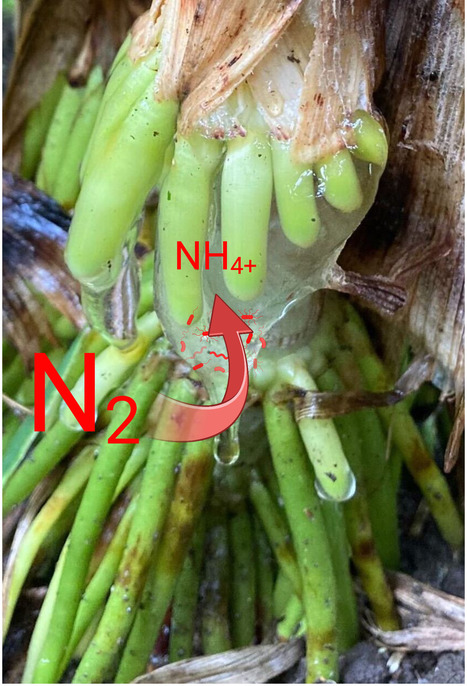
Synthetic biology and metabolic engineering promise to deliver sustainable solutions to global problems such as phasing out fossil fuels and replacing industrial nitrogen fixation. While this promise is real, scale matters, and so do knock-on effects of implementing solutions. Both scale and knock-on effects can be estimated by ‘Fermi calculations’ (aka ‘back-of-envelope calculations’) that use uncontroversial input data plus simple arithmetic to reach rough but reliable conclusions. Here, we illustrate how this is done and how informative it can be using two cases: oilcane (sugarcane engineered to accumulate triglycerides instead of sugar) as a source of bio-jet fuel, and nitrogen fixation by bacteria in mucilage secreted by maize aerial roots. We estimate that oilcane could meet no more than about 1% of today’s U.S. jet fuel demand if grown on all current U.S. sugarcane land and that, if cane land were expanded to meet two-thirds of this demand, the fertilizer and refinery requirements would create a large carbon footprint. Conversely, we estimate that nitrogen fixation in aerial-root mucilage could replace up to 10% of the fertilizer nitrogen applied to U.S. maize, that 2% of plant carbon income used for growth would suffice to fuel the fixation, and that this extra carbon consumption would likely reduce grain yield only slightly.
|