Microevolution and origins of Bradyrhizobium populations associated with soybeans at two field sites (A and B, 280 km apart in Canada) with contrasting histories of inoculation was investigated using probabilistic analyses of six core (housekeeping) gene sequences. These analyses supported division of 220 isolates in five lineages corresponding either to B. japonicum groups 1 and 1a or to one of three novel lineages within the genus Bradyrhizobium. None of the isolates from site A and about 20% from site B (the only site with a recent inoculation history) were attributed to inoculation sources. The data suggest that most isolates were of indigenous origin based on sequence analysis of 148 isolates of soybean-nodulating bacteria from native legumes (Amphicarpaea bracteata and Desmodium canadense). Isolates from D. canadense clustered with B. japonicum group 1, whereas those from A. bracteata were placed in two novel lineages encountered at soybean field sites. One of these novel lineages predominated at soybean sites and exhibited a significant clonal expansion likely reflecting selection by the plant host. Homologous recombination events detected in the 35 sequence types from soybean sites had an effect on genetic diversification that was approximately equal to mutation. Interlineage transfer of core genes was infrequent and mostly attributable to gyrB that had a history of frequent recombination. Symbiotic gene sequences (nodC and nifH) of isolates from soybean sites and native legumes clustered in two lineages corresponding to B. japonicum and B. elkani with the inheritance of these genes appearing predominantly by vertical transmission. The data suggest that soybean-nodulating bacteria associated with native legumes represent a novel source of ecologically adapted bacteria for soybean inoculation.
Tang J, Bromfield ES, Rodrigue N, Cloutier S, Tambong JT. (2012). Ecol Evol. Dec;2(12):2943-61. doi: 10.1002/ece3.404. Epub 2012 Oct 22.
The authors present data that suggests native Bradyrhizobia are selected by the planted soybean crop rather than having a horizontal gene transfer event from the inoculant stranins to the native strains. Regardless, there are implications for finding inoculant strains that may be better sutied to some areas.
SummaryMedicago truncatula and Sinorhizobium meliloti form a symbiotic association resulting in the formation of nitrogen-fixing nodules. Nodule cells contain large numbers of bacteroids which are differentiated, nitrogen-fixing forms of the symbiotic bacteria. In the nodules, symbiotic plant cells home and maintain hundreds of viable bacteria. In order to better understand the molecular mechanism sustaining the phenomenon, we searched for new plant genes required for effective symbiosis.We used a combination of forward and reverse genetics approaches to identify a gene required for nitrogen fixation, and we used cell and molecular biology to characterize the mutant phenotype and to gain an insight into gene function.The symbiotic gene DNF2 encodes a putative phosphatidylinositol phospholipase C-like protein. Nodules formed by the mutant contain a zone of infected cells reduced to a few cell layers. In this zone, bacteria do not differentiate properly into bacteroids. Furthermore, mutant nodules senesce rapidly and exhibit defense-like reactions.This atypical phenotype amongst Fix(-) mutants unravels dnf2 as a new actor of bacteroid persistence inside symbiotic plant cells.
Bourcy M, Brocard L, Pislariu CI, Cosson V, Mergaert P, Tadege M, Mysore KS, Udvardi MK, Gourion B, Ratet P. (2012). New Pytol. article first published online: 27 DEC DOI: 10.1111/nph.12091
Here is one more resolution for your list: “In 2013, I will communicate about plants to a non-specialist audience.” I think you know WHY (plant science is underfunded, plants are perceived as boring, or less important than animals, etc.), but here are some suggestions for HOW.
Give a public lecture at a botanic garden, library, senior center, community group or other venue. You can talk about your research or about the roles of plants in our lives. Some of the Teaching Tools materials are easily adapted to a non-specialist audience, including “Why Study Plants?”, “Genetic Improvements in Agriculture”, “Plants, Food and Human Health”, and “Medicinal Plants” (out in Jan 2013). (http://www.plantcell.org/site/teachingtools/teaching.xhtml).
Bring plants and a plant-based activity into a school classroom for an hour. Contact your local schools with a concrete proposal, and they’ll help to find a teacher who can work your idea into their curriculum. Many teachers have a very strict curriculum they have to follow, but if you can show them how your presentation fits into their needs they’re usually willing to bring you in as an invited guest. Here are some resources to guide and inspire you:
Share a popular science book about plants. You can donate a copy to your public library, school library, or to your favourite high school biology teacher. Here are a few I’ve read recently that I’d like to share:
“What a Plant Knows: A Field Guide to the Senses” by Daniel Chamovitz
“Seed to Seed: The Secret Life of Plants” by Nicholas Harberd
“Hybrid: The History and Science of Plant Breeding” by Noel Kingsbury
"The Emerald Planet: How Plants Changed Earth's History” by David Beerling
“Eating the Sun” by Oliver Morton
“The Secret Life of Trees” by Colin Tudge
“Reinventing Life: A Guide to our Evolutionary Future” by Jeffrey Coker
“Reaching for the Sun: How Plants Work” by John King
“Tomorrows Table” by Pamela Ronald and Raoul Adamchak
“The New Oxford Book of Food Plants” by J.G. Vaughan and C.A. Geissler
“The Natural History of Medicinal Plants” by Judith Sumner
"A Private Life of Plants" by David Attenborough (book and DVD!)
(if I missed any of your favorites let me know and I’ll add them!)
Plant scientists do have to shoulder a heavier burden of responsibility for communicating about our discipline than do animal biologists, but we also have a strong, supportive community and plenty of well-researched resources to make it easier. Have a very happy, fruitful year!
The interaction between legumes and arbuscular mycorrhizal (AM) fungi is vital to the development of sustainable plant production systems. Here, we focus on a putative MYB-like (LjMAMI) transcription factor (TF) previously reported to be highly upregulated in Lotus japonicus mycorrhizal roots. Phylogenetic analyses revealed that the protein is related to a group of TFs involved in phosphate (Pi) starvation responses, the expression of which is independent of the Pi level, such as PHR1. GUS transformed plants and quantitative reverse transcription PCR revealed strong gene induction in arbusculated cells, as well as the presence of LjMAMI transcripts in lateral root primordia and root meristems, even in the absence of the fungus, and independently of Pi concentration. In agreement with its putative identification as a TF, an eGFP-LjMAMI chimera was localized to the nuclei of plant protoplasts, whereas in transgenic Lotus roots expressing the eGFP-LjMAMI fusion protein under the control of the native promoter, the protein was located in the nuclei of the arbusculated cells. Further expression analyses revealed a correlation between LjMAMI and LjPT4, a marker gene for mycorrhizal function. To elucidate the role of the LjMAMI gene in the mycorrhizal process, RNAi and overexpressing root lines were generated. All the lines retained their symbiotic capacity; however, RNAi root lines and composite plants showed an important reduction in root elongation and branching in the absence of the symbiont. The results support the involvement of the AM-responsive LjMAMI in non-symbiotic functions: i.e. root growth.
Medicago truncatula and Sinorhizobium meliloti form a symbiotic association resulting in the formation of nitrogen-fixing nodules. Nodule cells contain large numbers of bacteroids which are differentiated, nitrogen-fixing forms of the symbiotic bacteria. In the nodules, symbiotic plant cells home and maintain hundreds of viable bacteria. In order to better understand the molecular mechanism sustaining the phenomenon, we searched for new plant genes required for effective symbiosis.We used a combination of forward and reverse genetics approaches to identify a gene required for nitrogen fixation, and we used cell and molecular biology to characterize the mutant phenotype and to gain an insight into gene function.The symbiotic gene DNF2 encodes a putative phosphatidylinositol phospholipase C-like protein. Nodules formed by the mutant contain a zone of infected cells reduced to a few cell layers. In this zone, bacteria do not differentiate properly into bacteroids. Furthermore, mutant nodules senesce rapidly and exhibit defense-like reactions.This atypical phenotype amongst Fix− mutants unravels dnf2 as a new actor of bacteroid persistence inside symbiotic plant cells.
Diversified grasslands that contain native plant species can produce biofuels, support sustainable grazing systems, and produce other ecosystem services. However, ecosystem service production can be disrupted by invasion of exotic perennial plants, and these plants can have soil-microbial “legacies” that may interfere with establishment and maintenance of diversified grasslands even after effective management of the invasive species. The nature of such legacies is not well understood, but may involve suppression of mutualisms between native species and soil microbes. In this study, we tested the hypotheses that legacy effects of invasive species change colonization rates, diversity, and composition of arbuscular-mycorrhizal fungi (AMF) associated with seedlings of co-occurring invasive and native grassland species. In a glasshouse, experimental soils were conditioned by cultivating three invasive grassland perennials, three native grassland perennials, and a native perennial mixture. Each was grown separately through three cycles of growth, after which we used T-RFLP analysis to characterize AMF associations of seedlings of six native perennial and six invasive perennial species grown in these soils. Legacy effects of soil conditioning by invasive species did not affect AMF richness in seedling roots, but did affect AMF colonization rates and the taxonomic composition of mycorrhizal associations in seedling roots. Moreover, native species were more heavily colonized by AMF and roots of native species had greater AMF richness (number of AMF operational taxonomic units per seedling) than did invasive species. The invasive species used to condition soil in this experiment have been shown to have legacy effects on biomass of native seedlings, reducing their growth in this and a previous similar experiment. Therefore, our results suggest that successful plant invaders can have legacies that affect soil-microbial associations of native plants and that these effects can inhibit growth of native plant species in invaded communities.
During the course of evolution, mainly leguminous plants have acquired the ability to formde novo structures called root nodules. Recent studies on the autoregulation and hormonal controls of nodulation have identified key mechanisms and also indicated a possible link to other developmental processes, such as the formation of the shoot apical meristem (SAM). However, our understanding of nodulation is still limited by the low number of nodulation-related genes that have been identified. Here, we show that the induced mutation tricot (tco) can suppress the activity of spontaneous nodule formation 2, a gain-of-function mutation of the cytokinin receptor in Lotus japonicus. Our analyses of tco mutant plants demonstrate that TCO positively regulates rhizobial infection and nodule organogenesis. Defects in auxin regulation are also observed during nodule development in tco mutants. In addition to its role in nodulation, TCO is involved in the maintenance of the SAM. The TCO gene was isolated by a map-based cloning approach and found to encode a putative glutamate carboxypeptidase with greatest similarity to Arabidopsis ALTERED MERISTEM PROGRAM 1, which is involved in cell proliferation in the SAM. Taken together, our analyses have not only identified a novel gene for regulation of nodule organogenesis but also provide significant additional evidence for a common genetic regulatory mechanism in nodulation and SAM formation. These new data will contribute further to our understanding of the evolution and genetic basis of nodulation.
Nitrogen fixing wheat 'possible in the next 20 years'FarmersWeeklyThe transfer of genes from legumes and oats into wheat will allow the production of cereal crops capable of fixing nitrogen and with resistance to take-all in the next 20 years,...
We show here that MtN5 is a NF-responsive gene expressed at a very early phase of symbiosis in epidermal cells and root hairs. MtN5 expression is induced in vitro by rhizobial effector molecules and by auxin and cytokinin, phytohormones involved in nodule organogenesis. Furthermore, lipid signaling is implicated in the response of MtN5 to rhizobia, since the activity of phospholipase D is required for MtN5 induction in S. meliloti-inoculated roots. MtN5-silenced roots inoculated with rhizobia display an increased root hair curling and a reduced number of invaded primordia compared to that in wild type roots, but with no impairment to nodule primordia formation. This phenotype is associated with the stimulation of ENOD11 expression, an early marker of infection, and with the down-regulation of Flotillin 4 (FLOT4), a protein involved in rhizobial entry.
Drought stress is a major factor limiting nitrogen fixation (NF) in crop production. However, the regulatory mechanism involved and the origin of the inhibition, whether local or systemic, is still controversial and so far scarcely studied in temperate forage legumes. Medicago truncatula plants were symbiotically grown with a split-root system and exposed to gradual water deprivation. Physiological parameters, NF activity, and amino acid content were measured. The partial drought treatment inhibited NF in the nodules directly exposed to drought stress. Concomitantly, in the droughted below-ground organs, amino acids accumulated prior to any drop in evapotranspiration (ET). It is concluded that drought exerts a local inhibition of NF and drives an overall accumulation of amino acids in diverse plant organs which is independent of the decrease in ET. The general increase in the majority of single amino acids in the whole plant questions the commonly accepted concept of a single amino acid acting as an N-feedback signal.
Understanding the interactions of plants with beneficial and pathogenic microbes is a promising avenue to improve crop productivity and agriculture sustainability. Proteomic techniques provide a unique angle to describe these intricate interactions and test hypotheses. The various approaches for proteomic analysis generally include protein/peptide separation and identification, but can also provide quantification and the characterization of post-translational modifications. In this review, we discuss how these techniques have been applied to the study of plant-microbe interactions. We also present some areas where this field of study would benefit from the utilization of newly developed methods that overcome previous limitations. Finally, we reinforce the need for expanding, integrating, and curating protein databases, as well as the benefits of combining protein-level datasets with those from genetic analyses and other high-throughput large-scale approaches for a systems-level view of plant-microbe interactions.
Dhileepkumar Jayaraman, Kari L. Forshey, Paul A. Grimsrud and Jean-Michel Ané
Calcium (Ca2+) is a key secondary messenger in many plant signaling pathways. One such pathway is the SYM pathway, required in the establishment of both arbuscular mycorrhizal and rhizobial root symbioses with legume host plants.1 When the host plant has perceived the diffusible signals from the microbial symbionts, one of the earliest physiological responses are Ca2+ oscillations in and around the nucleus.2 These oscillations are essential for activating downstream gene expression, but the precise mechanisms of encoding and decoding the Ca2+ signals are unclear and still under intense investigation. Here we put forward a hypothesis for the mechanism of the cation channel DMI1.
Myriam Charpentier, Teresa Vaz Martins, Emma Granqvist, Giles Oldroyd and Richard Morris (2013). Volume 8, Issue 2 February eLocation ID: e22894
Scientist Fighting Microbes with Microbes Scientist Researchers traced communication back to the fungus Glomus mosseae, which forms a symbiotic relationship with plant root hair known as a mycorrhizal network by inserting itself into the root...
In order to accommodate the physiologically incompatible processes of photosynthesis and nitrogen fixation within the same cell, unicellular nitrogen fixing cyanobacteria have to maintain a dynamic metabolic profile in the light as well as the dark phase of a diel cycle. The transition from the photosynthetic to the nitrogen-fixing phase is marked by the onset of various biochemical and regulatory responses, which prime the intracellular environment for nitrogenase activity. Cellular respiration plays an important role during this transition, quenching the oxygen generated by photosynthesis and by providing energy necessary for the process. Although the underlying principles of nitrogen fixation predict unicellular nitrogen fixing cyanobacteria to function in a certain way, significant variations are observed in the diazotrophic behavior of these microbes. In an effort to elucidate the underlying differences and similarities that govern the nitrogen fixing ability of unicellular diazotrophic cyanobacteria, we analyzed six members of the genus Cyanothece. Cyanothece 51142, a member of this genus, has been shown to perform efficient aerobic nitrogen fixation and hydrogen production. Our study revealed significant differences in the patterns of respiration and nitrogen fixation among the Cyanothece strains that were grown under identical culture conditions, suggesting that these processes are not solely controlled by cues from the diurnal cycle but that strain specific intracellular metabolic signals play a major role. Despite these inherent differences, the ability to perform high rates of aerobic nitrogen fixation and hydrogen production appears to be a characteristic of this genus.
Nodulation in legumes requires the recognition of rhizobially made Nod factors. Genetic studies have revealed that the perception of Nod factors involves LysM domain receptor-like kinases, while biochemical approaches have identified LECTIN NUCLEOTIDE PHOSPHOHYDROLASE (LNP) as a Nod factor-binding protein. Here, we show that antisense inhibition of LNP blocks nodulation in Lotus japonicus. This absence of nodulation was due to a defect in Nod factor signaling based on the observations that the early nodulation gene NODULE INCEPTION was not induced and that both Nod factor-induced perinuclear calcium spiking and calcium influx at the root hair tip were blocked. However, Nod factor did induce root hair deformation in the LNP antisense lines. LNP is also required for infection by the mycorrhizal fungus Glomus intraradices, suggesting that LNP plays a role in the common signaling pathway shared by the rhizobial and mycorrhizal symbioses. Taken together, these observations indicate that LNP acts at a novel position in the early stages of symbiosis signaling. We propose that LNP functions at the earliest stage of the common nodulation and mycorrhization symbiosis signaling pathway downstream of the Nod factor receptors; it may act either by influencing signaling via changes in external nucleotides or in conjunction with the LysM receptor-like kinases for recognition of Nod factor.
To date, little research has been published that quantifies the impact of soil desiccation (e.g. drought) on endemic B. japonicum populations. Pena-Cabriales and Alexander (1979) reported a biphasic decline inRhizobium japonicum numbers in soils undergoing drying. The initial rapid phase of R. japonicum loss coincided with major water loss (simulated drought) whereas the secondary and subsequently slower decline in numbers was governed by the soil water content of specific soils. Pena-Cabriales and Alexander (1979) also noted that organic matter content provided little protection againstR. japonicum desiccation and loss. In a parallel study Oso-Afiana and Alexander (1982) reported similar results when comparing strains of R. japonicum and cowpea rhizobia under desiccation. As one would expect, variation exists among Rhizobium spp. as well as individual isolates within species in their response to soil desiccation, though significant losses were evident regardless of species or isolate (Foulds, 1971; Trotman and Weaver, 1995).
As far as I know, Bradyrhizobium japonicum strains (soybean rhizobia) are overall more resistant to desiccation than Sinorhizobium meliloti (alfalfa rhizobia) but there is some variation between strains (see http://www.sciencedirect.com/science/article/pii/0038071794901341#). However, this can be pretty different from responses to drought in the soil so we are currently studying in our lab the effect of various drought treatments on the survival of Bradyrhizobium japonicum in the soil.
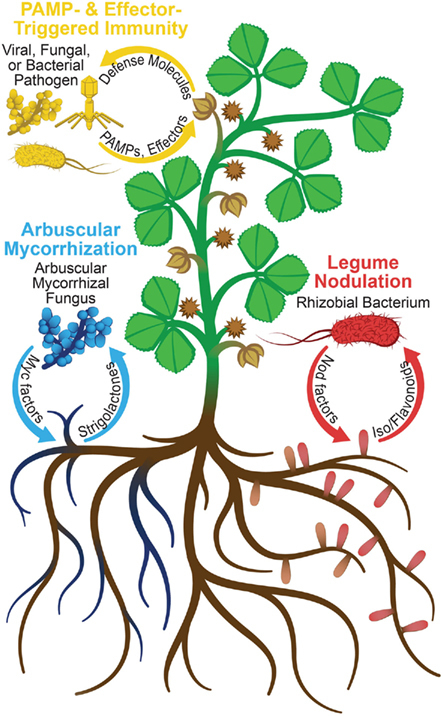
In the Internet era, communicating with friends and colleagues via social networks constitutes a significant proportion of our daily activities. Similarly animals and plants also interact with many organisms, some of which are pathogens and do no good for the plant, while others are beneficial symbionts. Almost all plants indulge in developing social networks with microbes, in particular with arbuscular mycorrhizal fungi, and emerging evidence indicates that most employ an ancient and widespread central ‘social media’ pathway made of signaling molecules within what is called the SYM pathway. Some plants, like legumes, are particularly active recruiters of friends, as they have established very sophisticated and beneficial interactions with nitrogen-fixing bacteria, also via the SYM pathway. Interestingly, many members of the Brassicaceae, including the model plant Arabidopsis thaliana, seem to have removed themselves from this ancestral social network and lost the ability to engage in mutually favorable interactions with arbuscular mycorrhizal fungi. Despite these generalizations, recent studies exploring the root microbiota of A. thaliana have found that in natural conditions, A. thaliana roots are colonized by many different bacterial species and therefore may be using different and probably more recent ‘social media’ for these interactions. In general, recent advances in the understanding of such molecular machinery required for plant–symbiont associations are being obtained using high throughput genomic profiling strategies including transcriptomics, proteomics and metabolomics. The crucial mechanistic understanding that such data reveal may provide the infrastructure for future efforts to genetically manipulate crop social networks for our own food and fiber needs.
Muthusubramanian Venkateshwaran, Jeremy D Volkening, Michael R Sussman, Jean-Michel Ané
Via Nicolas Denancé
Within the framework of the Mycorrhizal Genomics Initiative, the JGI is sequencing aphylogenetically and ecologically diverse suite of mycorrhizal fungi (Basidiomycota and Ascomycota), which include the major clades of symbiotic species associating with trees and woody shrubs. Analyses of these genomes will provide insight into the diversity of mechanisms for the mycorrhizal symbiosis, including endo- and ectomycorrhiza.
This scoop points to the official project page hosted on Mycorweb.
The nod(ulation) genes of Rhizobium tropici CIAT899 can be induced by very low concentrations (nM –microM range) of several flavonoid molecules secreted by the roots of leguminous plants under a number of different conditions. Some of these conditions have been investigated and appear to have a great influence on the concentration and the number of different Nod(ulation) factors, which can induce root nodule primordia and pseudo-nodules in several leguminous plant roots. In one such condition, we added up to 300 mM NaCl to the induction medium of R. tropici CIAT899 containing the nod gene inducer apigenin (Estévez et al., 2009). At the higher concentrations of NaCl, larger amounts and more different Nod factors were produced than in the absence of extra NaCl. To our surprise, under control conditions (300 mM NaCl without apigenin) some Nod factor-like spots were also observed on the thin layer plates used to detect incorporation of radiolabelled glucosamine into newly synthesised Nod factors. This phenomenon was further investigated with thin layer plates, fusions of nod genes to the lacZ gene, HPLC, mass spectrometry and the formation of pseudo-nodules on bean roots. Here we report that in the absence of flavonoid inducers, high concentrations of NaCl induced nod genes and the production of Nod factors.
Beatriz Guasch-Vidal, Jana Estévez,Marta Susana Dardanelli, Maria Eugenia Soria-Díaz, Francisco Fernández de Cordoba, Crina I.A. Balog, Hamid Manyani, Antonio Gil-Serrano, Jane Thomas-Oates, Paul J. Hensbergen, André M. Deelder, Manuel Megias, Antonius Albertus Nicolaas van Brussel (2012). MPMI first look, Accepted for publication
Until recently it had been well established that the initial step in legume-rhizobia symbioses was flavonoid and Nod factor (NF) signaling. However, NF-independent symbiosis is now known to occur between Bradyrhizobium and some species of Aeschynomene. Since its discovery, this unusual symbiotic system has attracted attention and efforts have been devoted to revealing the NF-independent symbiotic mechanism, though the molecular mechanisms of nodule initiation still remain to be elucidated. NF-independent symbiosis is also interesting from the perspective of the evolution of legume-rhizobia symbiosis. In this mini-review, we discuss the current literature on the NF-independent symbiotic system in terms of phylogeny of the partners, infection, bacteroid differentiation, nodule structure, photosynthesis, endophytic features, and model host plant. We also discuss NF-independent symbiosis, which is generally regarded to be more primitive than NF-dependent symbiosis, because the bacteria invade host plants via “crack entry”. We propose three possible scenarios concerning the evolution of NF-independent symbiosis, which do not exclude the possibility that the NF-independent system evolved from NF-dependent interactions. Finally, we examine an interesting question on Bradyrhizobium-Aeschynomene mutualism, which is how they do initiate symbiosis without NF? Phylogenetic and genomic analyses of symbiotic and non-symbiotic bradyrhizobia with A. indica may be crucial to address the question, because of the very narrow phylogeny of natural endosymbionts without nod genes compared to other legume-rhizobia symbioses.
Takashi Okubo, Shohei Fukushima and Kiwamu Minamisawa (2012). Plant Cell Physiol doi: 10.1093/pcp/pcs150 First published online: November 18, 2012
To get content containing either thought or leadership enter:
To get content containing both thought and leadership enter:
To get content containing the expression thought leadership enter:
You can enter several keywords and you can refine them whenever you want. Our suggestion engine uses more signals but entering a few keywords here will rapidly give you great content to curate.


 Your new post is loading...













The authors present data that suggests native Bradyrhizobia are selected by the planted soybean crop rather than having a horizontal gene transfer event from the inoculant stranins to the native strains. Regardless, there are implications for finding inoculant strains that may be better sutied to some areas.