Your new post is loading...

|
Scooped by
Jean-Michel Ané
December 19, 2013 10:29 PM
|
The endoplasmic reticulum (ER) of the model legume Lotus japonicus was visualized using green fluorescent protein (GFP) fused with the KDEL sequence to investigate the changes in the root hair cortical ER in the presence or absence of Mesorhizobium loti using live fluorescence imaging. Uninoculated root hairs displayed dynamic forms of ER, ranging from a highly condensed form to an open reticulum. In the presence of M. loti, a highly dynamic condensed form of the ER linked with the nucleus was found in deformed, curled, and infected root hairs, similar to that in uninoculated and inoculated growing zone I and II root hairs. An open reticulum was primarily found in mature inoculated zone III root hairs, similar to that found in inactive deformed/curled root hairs and infected root hairs with aborted infection threads. Co-imaging of GFP-labeled ER with light transmission demonstrated a correlation between the mobility of the ER and other organelles and the directionality of the cytoplasmic streaming in root hairs in the early stages of infection thread formation and growth. ER remodeling in root hair cells is discussed in terms of possible biological significance during root hair growth, deformation/curling, and infection in the Mesorhizobium–L. japonicussymbiosis.
|
|
Scooped by
Jean-Michel Ané
December 19, 2013 10:26 PM
|
Backgrounds and aims Mung bean (Vigna radiata (L.) R. Wilczek), a widely cultivated pulse crops in India, experiences severe drought stress during the cultivation period. Apart from the conventional plant breeding and transgenic approaches, the application of plant growth-promoting rhizobacteria (PGPR) has always been a promising approach to improve abiotic stress tolerance in crop plants. The aim of the present study was to investigate the role of mung bean rhizosphere-associated Pseudomonas aeruginosaGGRJ21 strain on drought stress alleviation in the host plant. Methods Fluorescent pseudomonads were isolated from mung bean rhizosphere by employing a culture-dependent approach. The role of osmotic stress tolerant P. aeruginosa GGRJ21 on drought stress alleviation in host plants was further examined in both the green house and field conditions. Results An elevated production of reactive oxygen species scavenging enzymes and cellular osmolytes; increased root length, shoot length, dry weight, relative water content; and a stronger upregulation of three drought stress-responsive genes, i.e., dehydration-responsive element binding protein (DREB2A), catalase (CAT1), and dehydrin (DHN) were observed in GGRJ21 inoculated plants in comparison with the uninoculated control plants tested under drought conditions. The field experimental data show an increase in biomass and better growth and development in inoculated and stressed plants when compared with untreated and stressed plants. Conclusion P. aeruginosa GGRJ21 strain was found to elicit water stress tolerance in mung bean plants by accelerating the accumulation of inherent levels of antioxidant enzymes, cell osmolytes, and consistently expediting the upregulation of stress responsive genes in PGPR-treated plants under water stress conditions.
|
|
Scooped by
Jean-Michel Ané
December 19, 2013 8:44 PM
|
Plants establish beneficial symbiotic associations with arbuscular mycorrhizal fungi, which colonize the root cortex, building specialized structures called arbuscules that facilitate nutrient exchange. The association occurs following plant recognition of lipochitooligosaccharides (LCOs) from mycorrhizal fungi, which activates the symbiosis signaling pathway prior to mycorrhizal colonization
|
|
Scooped by
Jean-Michel Ané
December 18, 2013 8:54 PM
|
Ectomycorrhizal (ECM) mycelium is a key component of the ectomycorrhizal symbiosis, yet we know little regarding the fine-scale diversity and distribution of mycelium in ECM fungal communities.We collected four 20 × 20 × 2-cm3 (800-cm3) slices of Scots pine (Pinus sylvestris) forest soil and divided each into 100 2 × 2 × 2-cm3 (8-cm3) cubes. The presence of mycelium of ECM fungi was determined using an internal transcribed spacer (ITS) database terminal restriction fragment length polymorphism (T-RFLP) approach.As expected, many more ECM fungi were detected as mycelium than as ectomycorrhizas in a cube or slice. More surprisingly, up to one-quarter of the 43 species previously detected as ectomycorrhizas over an area of 400 m2 could be detected in a single 8-cm3cube, and up to three-quarters in a single 800-cm3 slice. ECM mycelium frequency decreased markedly with depth and there were distinct ‘hotspots’ of mycelium in the moss/F1 layer.Our data demonstrate a high diversity of ECM mycelium in a small (8-cm3) volume of substrate, and indicate that the spatial scale at which ECM species are distributed as mycelium may be very different from the spatial scale at which they are distributed as tips.
|
|
Scooped by
Jean-Michel Ané
December 17, 2013 11:54 AM
|
The industry that manufactures cultures of rhizobia for seed and soil inoculation generates approximately $20 million of sales annually and is increasing with new and improved inoculants. The delivery of inoculants is explained based on University of Minnesota information. Inoculants range from simple tube cultures sufficient for small quantities of exotic seed, to large-scale, fermenter-grown cultures mixed with peat or other carrier material, and used in the commercial inoculation of the large areas planted to soybean, bean, peanut and clover. The large-scale production of inoculants per batch per vat will produce in excess of 1,000 million highly effective rhizobia per gram of product. Once the inoculant culture has been produced, a number of different materials can be used to keep these organisms viable until ready for use by the farmer. Most of these "carrier" materials allow rhizobial survival for periods of at least six months. Again, as research has progressed, some companies have made exceptional strides in carriers and rhizobial survival. Characteristics of a good inoculant carrier are High water-holding capacityNon-toxic to RhizobiumAvailable, inexpensive and easily processedSterilizable by autoclaving (pressurized steam) or radiationAdheres well to seedGood buffering capacity The most commonly used carrier is peat, but since peat is not universally available, compost, bagasse (derived from the milling of sugar cane), coal, polyacrylamide, vegetable oils, clays and clay granules, liquid preparations and soil have all been used successfully. No listing of physical or chemical properties can fully explain why some peats make suitable inoculant carriers and others do not. Peat sterilized by irradiation or electron acceleration is preferred to carriers that are not sterile, Roughley and Vincent (1967) noted that sterile carriers generally support a higher population of rhizobia, and have longer shelf lives. A problem being addressed recently is that while sterile preparations may enhance rhizobial survival in storage, such inoculants may still undergo deterioration in ability to nodulate and fix N2.
|
|
Scooped by
Jean-Michel Ané
December 17, 2013 11:35 AM
|
丛枝菌根(Arbuscular Mycorrhizae,AM)真菌是一类广泛分布于土壤生态系统中的有益微生物,能与大约80%的陆生高等植物形成共生体。由土传病原物侵染引起的土传病害被植物病理学界认定为最难防治的病害之一。研究表明,AM真菌能够拮抗由真菌、线虫、细菌等病原体引起的土传性植物病害,诱导宿主植物增强对病虫害的耐/抗病性。当前,利用AM真菌开展病虫害的生物防治已经引起生态学家和植物病理学家的广泛关注。基于此,围绕AM真菌在植物病虫害生物防治中的最新研究进展,从AM真菌改变植物根系形态结构、调节次生代谢产物的合成、改善植物根际微环境、与病原微生物直接竞争入侵位点和营养分配、诱导植株体内抗病防御体系的形成等角度,探究AM真菌在植物病虫害防治中的作用机理,以期为利用AM真菌开展植物病虫害的生物防治提供理论依据,并对本领域未来的发展方向和应用前景进行展望。
|
|
Scooped by
Jean-Michel Ané
December 17, 2013 11:30 AM
|
There is a need to conduct research on the selection of microbial isolates from rhizosphere of plants growing on heavy metal contaminated soils for specific restoration programs. This article suggest a consortium of bacteria combining Rhizobium sp. CCNWSX0481, Rhizobium leguminosarum bv. viciae, Enterobacter cloacae and Pseudomonas sp. 2(2010) that was examined for the ability to promote Vicia faba.L. growth when cultivated on the vineyard of soil moderately contaminated with copper. Data showed that inoculation was significant in nodulation; it increases the number and the weight of nodules of 50%. Co-inoculation was also found to positively influence growth and seed yield, through increasing fresh shoot and fresh root weights by 33 and 26%, respectively, and through rising numbers of seed per pod and pods per plant. In contrast, co-inoculation produced a significant reduction of accumulated copper in roots attending 35%, however, the treatment revealed no significant effects on the copper contents in pods and seeds. The tested inoculum could be an option to promote V. faba growth and to enhance soil fertilization in moderate copper contaminated soils. Further studies on the influence of co-inoculation practices on copper migration in soil-plant systems are recommended to acquire more information for evaluation of this legume safety.
|
|
Scooped by
Jean-Michel Ané
December 15, 2013 3:27 PM
|
The rhizosphere priming effect (RPE) is a mechanism by which plants interact with soil functions. The large impact of the RPE on soil organic matter decomposition rates (from 50% reduction to 380% increase) warrants similar attention to that being paid to climatic controls on ecosystem functions. Furthermore, global increases in atmospheric CO2 concentration and surface temperature can significantly alter the RPE. Our analysis using a game theoretic model suggests that the RPE may have resulted from an evolutionarily stable mutualistic association between plants and rhizosphere microbes. Through model simulations based on microbial physiology, we demonstrate that a shift in microbial metabolic response to different substrate inputs from plants is a plausible mechanism leading to positive or negative RPEs. In a case study of the Duke Free-Air CO2 Enrichment experiment, performance of the PhotoCent model was significantly improved by including an RPE-induced 40% increase in soil organic matter decomposition rate for the elevated CO2 treatment – demonstrating the value of incorporating the RPE into future ecosystem models. Overall, the RPE is emerging as a crucial mechanism in terrestrial ecosystems, which awaits substantial research and model development.
|
|
Scooped by
Jean-Michel Ané
December 14, 2013 2:35 PM
|
Here are some important practices to keep in mind as you conduct the review: 1. Expertise: Ask yourself honestly whether this paper falls within the scope of your expertise. If it falls too far outside of your discipline and knowledge, it’s better to leave the review to someone else. If you decline to review (for whatever reason), it’s courteous to recommend several alternate referees to the editor. 2. Timeliness: It’s important that you make an effort to return a review within the specified deadline. People’s research careers may be depending on how quickly their papers are published. Take into consideration your schedule when you’re deciding whether to review a paper. If you’re a relatively young researcher, you may need to put in additional time in order to familiarize yourself with any background literature and methods that might be new to you. This isn’t a small thing, especially when balanced with all your other duties (coursework, teaching, research, writing). And keep in mind that complicated papers take more time to evaluate. For example, it took me about 8 or 10 hours (spread out over several days) to do my most recent review of a particular manuscript, and another 4 hours to review the revised version. If you don’t think you can commit enough time to the review in order to make the deadline, you should decline. 3. Take it seriously:Peer review is at the heart of the scientific process, and in order for the process to work, the review must be rigorous. Don’t just sign off on a paper or do a slapdash job; read it critically (see my suggestions for how to do so below). Your review should ideally help the authors to improve the quality of their manuscript, and contribute to the overall quality of the journal. 4. Avoid bias: Absolutely do not review a manuscript if you have a strong feeling (positive or negative) about any of the authors. Absolutely do not review a manuscript with any intention of reaping personal or professional benefit from it. Be aware that several studies have revealed implicit biases (such as gender bias) in peer review. Abstracts with female senior authors are systematically more poorly reviewed than abstracts with male senior authors (Knobloch-Westerwick et al. 2013), and “all articles with women in dominant author positions receive fewer citations than those with men in the same positions.” (Larivière et al. 2013) To avoid biases of all kinds, make a concerted, deliberate effort to always review the manuscript in front of you, not the authors. 5. Don’t be intimidated: Remember that reviewing is a place where the implicit hierarchy of academia should not apply, ever. The authors of the manuscript might be the biggest names in the field, but that doesn’t automatically make them right. 6. Review anonymously? There have been some calls in discussions of peer review for doing away with anonymity of referees, as anonymity is seen by some as facilitating bullying. In fact, the British Medical Journal (BMJ) requires all reviewers to be identified. In a study of the effect of open peer review on the quality of reviews, it was suggested that “if reviewers have to sign their reviews they may put more effort into their reviews and so produce better ones “, and also that “ open peer review should increase both the credit and accountability for peer reviewing, both of which seem desirable.” (van Rooyen et al. 1999). In contrast, this discussion in Nature Neuroscience recommended the continuation of anonymous review. As an early career scientist, I feel more comfortable critiquing my colleagues’ work anonymously. But I know several peers who have reached the opposite conclusion. Ultimately, the decision as to whether or not to sign your review is a completely personal one. 7. Respect confidentiality: Don’t talk about the manuscript, its results, or its methods with outsiders. Don’t use information from the manuscript prior to its publication. Don’t communicate with the authors about their manuscript. All thoughts and comments on it should only go to the editor.
|
|
Scooped by
Jean-Michel Ané
December 14, 2013 12:13 AM
|
Although the use of plant growth-promoting bacteria in agriculture is a reality, the molecular basis of plant–bacterial interaction is still poorly understood. We used a proteomic approach to study the mechanisms of interaction of Herbaspirillum seropedicae SmR1 with rice. Root proteins of rice seedlings inoculated or noninoculated with H. seropedicae were separated by 2-D electrophoresis. Differentially expressed proteins were identified by MALDI-TOF/TOF and MASCOT program. Among the identified proteins of H. seropedicae, the dinitrogenase reductase NifH and glutamine synthetase GlnA, which participate in nitrogen fixation and ammonium assimilation, respectively, were the most abundant. The rice proteins up-regulated included the S-adenosylmethionine synthetase, methylthioribose kinase, and acireductone dioxygenase 1, all of which are involved in the methionine recycling. S-Adenosylmethionine synthetase catalyzes the synthesis of S-adenosylmethionine, an intermediate used in transmethylation reactions and in ethylene, polyamine, and phytosiderophore biosynthesis. RT-qPCR analysis also confirmed that the methionine recycling and phytosiderophore biosynthesis genes were up-regulated, while ACC oxidase mRNA level was down-regulated in rice roots colonized by bacteria. In agreement with these results, ethylene production was reduced approximately three-fold in rice roots colonized by H. seropedicae. The results suggest that H. seropedicae stimulates methionine recycling and phytosiderophore synthesis and diminishes ethylene synthesis in rice roots.
|
|
Rescooped by
Jean-Michel Ané
from Plants and Microbes
December 14, 2013 12:08 AM
|
Fungi occupy a plethora of niches and play essential roles in diverse environments through decomposition of organic material as saprophytes or through establishment of symbiotic relationships with plants and animals that range from mutually beneficial to pathogenic. During colonization of their niches, fungi secrete proteins that include carbohydrate-degrading enzymes to feed on complex molecules and effectors that mediate the establishment of interactions with host organisms. Although effectors are typically thought to be species- or even lineage-specific, some effectors are widespread among pathogens, such as the necrosis- and ethylene-inducing-like proteins (NLPs) that are widely spread in bacteria, fungi, and oomycetes. Several studies have shown that NLPs contribute to pathogen virulence through phytotoxic activity, but more recent work has revealed that some NLPs act in processes other than pathogenicity, such as fungal growth and sporulation]. A more recently identified class of conserved effectors are LysM effectors: fungal effectors that carry no recognizable protein domains other than lysin motifs (LysMs). Intriguingly, like NLPs, LysM effectors occur in both pathogenic and in nonpathogenic fungi.
Via Kamoun Lab @ TSL
|
|
Scooped by
Jean-Michel Ané
December 13, 2013 9:03 AM
|
Scientists have discovered a tiny new natural friend for farmers that could mean using fewer agricultural chemicals to grow our food.
|
|
Scooped by
Jean-Michel Ané
December 12, 2013 9:23 PM
|
Soil microorganisms are critical components of desert ecosystems. They improve soil conditions and plant growth and they block invasive plants.
|
|
|
Scooped by
Jean-Michel Ané
December 19, 2013 10:28 PM
|
This study revealed cultivable diazotrophs in arid and semi-arid regions of Haryana, India, harboring multiple plant growth promoting (PGP) traits, i.e. nitrogenase activity (18.84–337.26 nmol ethylene mg−1 protein h−1), indole-3-acetic acid production (42.4–1162.7 μg mL−1), ammonia excretion (0.013–2.561 μg mL−1), phosphate solubilization (55.8 %), and siderophore production (20.58 %). High diversity among diazotrophic bacterial isolates was deciphered by using amplified ribosomal DNA restriction analysis with MspI and HaeIII. All the isolates positively influenced the growth and yield ofBt-cotton and pearl millet plants under pot house conditions. On the basis of their plant growth promoting potential, 10 efficient bacterial strains were selected. Sequence analysis of these strains revealed two phyla of bacteria in the 16S rRNA library, which consisted of α and γ subclasses of the Proteobacteria and Firmicutes. The dominant group was Firmicutes (80 % of the total isolates), and the most dominant genus was Bacillus. Overall, our study reported bacterial strains with biofertilizer potential and could be considered as an excellent addition to existing beneficial microbes’ consortium for growth promotion of Bt-cotton and pearl millet plants in arid and semi-arid regions.
|
|
Scooped by
Jean-Michel Ané
December 19, 2013 8:47 PM
|
N2O is a potent greenhouse gas involved in the destruction of the protective ozone layer in the stratosphere and contributing to global warming. The ecological processes regulating its emissions from soil are still poorly understood. Here, we show that the presence of arbuscular mycorrhizal fungi (AMF), a dominant group of soil fungi, which form symbiotic associations with the majority of land plants and which influence a range of important ecosystem functions, can induce a reduction in N2O emissions from soil. To test for a functional relationship between AMF and N2O emissions, we manipulated the abundance of AMF in two independent greenhouse experiments using two different approaches (sterilized and re-inoculated soil and non-mycorrhizal tomato mutants) and two different soils. N2O emissions were increased by 42 and 33% in microcosms with reduced AMF abundance compared to microcosms with a well-established AMF community, suggesting that AMF regulate N2O emissions. This could partly be explained by increased N immobilization into microbial or plant biomass, reduced concentrations of mineral soil N as a substrate for N2O emission and altered water relations. Moreover, the abundance of key genes responsible for N2O production (nirK) was negatively and for N2O consumption (nosZ) positively correlated to AMF abundance, indicating that the regulation of N2O emissions is transmitted by AMF-induced changes in the soil microbial community. Our results suggest that the disruption of the AMF symbiosis through intensification of agricultural practices may further contribute to increased N2O emissions.
|
|
Scooped by
Jean-Michel Ané
December 18, 2013 10:53 PM
|
The microbial world could serve as key allies in everything from advanced medical treatments to farming and environmental remediation.
|
|
Scooped by
Jean-Michel Ané
December 17, 2013 11:58 AM
|
Greetings again, plant people. Dr. Bob Linderman here, a retired research plant pathologist with a 50-year career focused on ornamental and nursery crop diseases and emphasizing the epidemiology and control of soil-borne, root-infecting, fungal plant pathogens, and the biology and application of beneficial microorganisms, especially mycorrhizal fungi and antagonistic rhizobacteria. This is the second installment of a three-part series giving the straight story on mycorrhizae based on my knowledge and experience on the subject.
Several eukaryotic symbioses have shown to host a rich diversity of prokaryotes that interact with their hosts. Here, we study bacterial communities associated with ectomycorrhizal root systems of Bistorta vivipara compared to bacterial communities in bulk soil using pyrosequencing of 16S rRNA amplicons. A high richness of Operational Taxonomic Units (OTUs) was found in plant roots (3,571 OTUs) and surrounding soil (3,476 OTUs). The community composition differed markedly between these two environments. Actinobacteria, Armatimonadetes, Chloroflexi and OTUs unclassified at phylum level were significantly more abundant in plant roots than in soil. A large proportion of the OTUs, especially those in plant roots, presented low similarity to Sanger 16S rRNA reference sequences, suggesting novel bacterial diversity in ectomycorrhizae. Furthermore, the bacterial communities of the plant roots were spatially structured up to a distance of 60 cm, which may be explained by bacteria using fungal hyphae as a transport vector. The analyzed ectomycorrhizae presents a distinct microbiome, which likely influence the functioning of the plant-fungus symbiosis.
Via Francis Martin
|
|
Scooped by
Jean-Michel Ané
December 17, 2013 11:32 AM
|
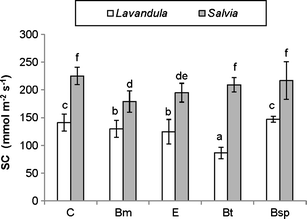
The effectiveness of autochthonous plant growth-promoting rhizobacteria was studied in Lavandula dentata and Salvia officinalis growing in a natural arid Mediterranean soil under drought conditions. These bacteria identified as Bacillus megaterium (Bm), Enterobacter sp. (E), Bacillus thuringiensis(Bt), and Bacillus sp. (Bsp). Each bacteria has different potential to meliorate water limitation and alleviating drought stress in these two plant species. B. thuringiensis promoted growth and drought avoidance in Lavandula by increasing K content, by depressing stomatal conductance, and it controlled shoot proline accumulation. This bacterial effect on increasing drought tolerance was related to the decrease of glutathione reductase (GR) and ascorbate peroxidase (APX) that resulted sensitive indexes of lower cellular oxidative damage involved in the adaptative drought response in B. thuringiensis-inoculated Lavandula plants. In contrast, in Salvia, having intrinsic lower shoot/root ratio, higher stomatal conductance and lower APX and GR activities than Lavandula, the bacterial effects on nutritional, physiological and antioxidant enzymatic systems were lower. The benefit of bacteria depended on intrinsic stress tolerance of plant involved. Lavadula demonstrated a greater benefit than Salvia to control drought stress when inoculated with B. thuringiensis. The bacterial drought tolerance assessed as survival, proline, and indolacetic acid production showed the potential of this bacteria to help plants to grow under drought conditions. B. thuringiensis may be used forLavandula plant establishment in arid environments. Particular characteristic of the plant species as low shoot/root ratio and high stomatal conductance are important factors controlling the bacterial effectiveness improving nutritional, physiological, and metabolic plant activities.
|
|
Scooped by
Jean-Michel Ané
December 15, 2013 3:36 PM
|
Background and aims Nitrogen (N2) fixation in feather moss-cyanobacteria associations is a major source of N for boreal ecosystems. However, mosses experience significant shifts in their moisture status due to daily and yearly fluctuations in sunlight, temperature and precipitation. While the effects of drying and rewetting on nutrient leaching and photosynthesis in mosses have been studied, no attempt has been made to assess the consequences for N2 fixation in feather mosses. Methods We conducted an experiment in which we dried (3 day at 28 °C; <9 % of field moisture) and rewetted samples of the feather moss Pleurozium schreberi (Brid.) Mitt. that is colonized by N2-fixing-cyanobacteria to assess the influence on N2 fixation. Further, we tested how long it takes for N2fixation to recover from a drying-rewetting cycle. In addition, we assessed how N2 fixation changes with incubation time with acetylene (2–65 h). Results A drying period of 3 days almost completely eliminated N2 fixation (<0.2 μmol m−2 h−1) in the moss. However, rates slowly recovered after rewetting, reaching N2 fixation levels of moist (non-water stressed) moss 5 days after rewetting. Nitrogen fixation increased significantly with incubation time with acetylene (0 μmol m−2 h−1 at 2 h vs. 26 μmol m−2 h−1 at 65 h incubation). Conclusions Although N2 fixation recommenced upon rewetting, the recovery was slow. Thus, recurrent drying and rewetting cycles could reduce total N2 fixation in moss-cyanobacteria associations over time, leading to reduced total N input to the system.
|
|
Scooped by
Jean-Michel Ané
December 15, 2013 2:47 PM
|
|
|
Scooped by
Jean-Michel Ané
December 14, 2013 2:26 PM
|
Alnus trees associate with ectomycorrhizal (ECM) fungi and nitrogen-fixing Frankia bacteria and, although their ECM fungal communities are uncommonly host specific and species poor, it is unclear whether the functioning of Alnus ECM fungal symbionts differs from that of other ECM hosts. We used exoenzyme root tip assays and molecular identification to test whether ECM fungi on Alnus rubra differed in their ability to access organic phosphorus (P) and nitrogen (N) when compared with ECM fungi on the non-Frankia host Pseudotsuga menziesii. At the community level, potential acid phosphatase (AP) activity of ECM fungal root tips from A. rubra was significantly higher than that from P. menziesii, whereas potential leucine aminopeptidase (LA) activity was significantly lower for A. rubra root tips at one of the two sites. At the individual species level, there was no clear relationship between ECM fungal relative root tip abundance and relative AP or LA enzyme activities on either host. Our results are consistent with the hypothesis that ECM fungal communities associated with Alnus trees have enhanced organic P acquisition abilities relative to non-Frankia ECM hosts. This shift, in combination with the chemical conditions present in Alnus forest soils, may drive the atypical structure of Alnus ECM fungal communities.
|
|
Scooped by
Jean-Michel Ané
December 14, 2013 12:13 AM
|
There is a lack in our current understanding on the putative interactions of species of the phyla of Acidobacteria and Verrucomicrobia with plants. Moreover, progress in this area is seriously hampered by the recalcitrance of members of these phyla to grow as pure cultures. The purpose of this study was to investigate whether particular members of Acidobacteria and Verrucomicrobia are avid colonizers of the rhizosphere. Based on previous work, rhizosphere competence was demonstrated for the Verrucomicrobia subdivision 1 groups of Luteolibacter and Candidatus genus Rhizospheria and it was hypothesized that the rhizosphere is a common habitat for Acidobacteria subdivision 8 (class Holophagae). We assessed the population densities of Bacteria, Verrucomicrobia subdivision 1 groups Luteolibacter and Candidatus genus Rhizospheria and Acidobacteria subdivisions 1, 3, 4, 6 and Holophagae in bulk soil and in the rhizospheres of grass, potato and leek in the same field at different points in time using real-time quantitative PCR. Primers of all seven verrucomicrobial, acidobacterial and holophagal PCR systems were based on 16S rRNA gene sequences of cultivable representatives of the different groups. Luteolibacter, Candidatus genus Rhizospheria, subdivision 6 acidobacteria and Holophaga showed preferences for one or more rhizospheres. In particular, the Holophaga 16S rRNA gene number were more abundant in the leek rhizosphere than in bulk soil and the rhizospheres of grass and potato. Attraction to, and colonization of, leek roots by Holophagae strain CHC25 was further shown in an experimental microcosm set-up. In the light of this remarkable capacity, we propose to coin strain CHC25 Candidatus Porrumbacterium oxyphilus (class Holophagae, Phylum Acidobacteria), the first cultured representative with rhizosphere competence.
|
|
Scooped by
Jean-Michel Ané
December 13, 2013 9:05 AM
|
The cold stress biology of psychrotrophic Pseudomonas strains isolated from the rhizosphere of Himalayan plants have been explored to evaluate their cryotolerance characteristcs. Pseudomonas strains were examined for stress metabolites, viz., exopolysaccharide (EPS) production, intracellular sugar, polyols and amino acid content, ice nucleation activity, and their freezing survival at -10 and -40[degree sign]C, respectively. High freezing survival was observed for the Pseudomonas strains that were grown at 4[degree sign]C prior to their freezing at -10 or -40[degree sign]C. Increased EPS production was noticed when Pseudomonas strains were grown at lower temperatures, i.e., 4 and 15[degree sign]C, in comparison with their optimal growth temperature of 28[degree sign]C. All Pseudomonas strains showed low level of type-III class ice nucleation activity at -10[degree sign]C after 96 h. Considerable differences were noticed in accumulated contents of various intracellular sugars, polyols, amino acids for all Pseudomonas strains when they grown at two different temperatures, i.e., 4 and 28[degree sign]C, respectively. The unusual complement of stress protectants especially, raffinose, cysteine and aspartic acid that accumulated in the bacterial cells at low temperature was novel and intriguing finding of this study. The finding that raffinose is a key metabolite accumulated at low temperature is an exciting discovery, and to the best of our information this is first report ever signifying its role in bacterial cold tolerance.
|
|
Scooped by
Jean-Michel Ané
December 12, 2013 9:26 PM
|
Modern agriculture is increasingly turning to the natural associations between plants and bacteria to improve cultivation and crop yield methods. Understanding the molecular events that trigger and maintain these symbiotic relationships could help farmers improve sustainable agricultural systems.
Bacteria that live in the roots of legumes are collectively referred to as rhizobia and are responsible for fixation of atmospheric nitrogen to ammonium that can be readily utilised by the plant. The plant in turn provides bacteria with the necessary nutrients and organic compounds required for growth.
Rhizobia produce nodulation (Nod) factors that trigger the formation of nodules in the roots and facilitate nitrogen up-take by plants. The EU-funded SYMBIOSIGNAL project is interested in understanding the early biochemical events that occur during nodule formation.
The main objective is to identify new proteins involved in the Nod-factor signalling cascade when rhizobium bacteria first colonise plants. To this end, scientists are using the legume Medicago truncatula as a plant model and are analysing the early transcriptional events occurring in the roots.
Changes in gene transcription are being monitored by RNA sequencing (RNA-seq) methods and have so far unveiled novel differentially expressed genes with a putative role in symbiosis. The generated transcript information offers the scientific community a unique tool for retrieving expression data relevant to a gene of interest.
Given the importance of the rhizobium-legume symbiosis in agriculture, SYMBIOSIGNAL results have the potential to lead to improvement of nitrogen use and soil quality. Manipulation of the biochemical events during the early phase of bacterial colonisation of plant roots could be exploited to avoid the excessive use of chemical nitrogen fertilizers in agricultural soils.
|