Common mycorrhizal networks (CMNs) link multiple plants together. We hypothesized that CMNs can serve as an underground conduit for transferring herbivore-induced defence signals. We established CMN between two tomato plants in pots with mycorrhizal fungus Funneliformis mosseae, challenged a /`donor/' plant with caterpillar Spodoptera litura, and investigated defence responses and insect resistance in neighbouring CMN-connected /`receiver/' plants. After CMN establishment caterpillar infestation on /`donor/' plant led to increased insect resistance and activities of putative defensive enzymes, induction of defence-related genes and activation of jasmonate (JA) pathway in the /`receiver/' plant. However, use of a JA biosynthesis defective mutant spr2 as /`donor/' plants resulted in no induction of defence responses and no change in insect resistance in /`receiver/' plants, suggesting that JA signalling is required for CMN-mediated interplant communication. These results indicate that plants are able to hijack CMNs for herbivore-induced defence signal transfer and interplant defence communication.
In past decades, environmental nitrogen fixation has been attributed almost exclusively to the action of enzymes in the well-studied molybdenum-dependent nitrogen fixation system. However, recent evidence has shown that nitrogen fixation by alternative pathways may be more frequent than previously suspected. In this study, the nitrogen fixation systems employed by lichen-symbiotic cyanobacteria were examined to determine whether their diazotrophy can be attributed, in part, to an alternative pathway. The mining of metagenomic data (generated through pyrosequencing) and PCR assays were used to determine which nitrogen-fixation systems are present in cyanobacteria from the genus Nostoc associated with four samples from different geographical regions, representing different lichen-forming fungal species in the genus Peltigera. A metatranscriptomic sequence library from an additional specimen was examined to determine which genes associated with N2 fixation are transcriptionally expressed. Results indicated that both the standard molybdenum-dependent system and an alternative vanadium-dependent system are present and actively transcribed in the lichen symbiosis. This study shows for the first time that an alternative system is utilized by cyanobacteria associated with fungi. The ability of lichen-associated cyanobacteria to switch between pathways could allow them to colonize a wider array of environments, including habitats characterized by low temperature and trace metal (e.g. molybdenum) availability. We discuss the implications of these findings for environmental studies that incorporate acetylene-reduction assay data.
Linear chromosomes are atypical in bacteria and likely a secondary trait derived from ancestral circular molecules. Within the Rhizobiaceae family, whose genome contains at least two chromosomes, a particularity of Agrobacterium fabrum (formerly A. tumefaciens) secondary chromosome (chromid) is to be linear and hairpin-ended thanks to the TelA protelomerase. Linear topology and telA distributions within this bacterial family was screened by pulse field gel electrophoresis and PCR. In A. rubi, A. larrymoorei, Rhizobium skierniewicense, A. viscosum, Agrobacterium sp. NCPPB 1650, and every genomospecies of the biovar 1/A. tumefaciens species complex (including R. pusense, A. radiobacter, A. fabrum, R. nepotum plus seven other unnamed genomospecies), linear chromid topologies were retrieved concomitantly with telA presence, whereas the remote species A. vitis, Allorhizobium undicola, Rhizobium rhizogenes and Ensifer meliloti harbored a circular chromid as well as no telA gene. Moreover, the telA phylogeny is congruent with that of recA used as a marker gene of the Agrobacterium phylogeny. Collectively, these findings strongly suggest that single acquisition of telA by an ancestor was the founding event of a large and diverse clade characterized by the presence of a linear chromid. This clade, characterized by unusual genome architecture, appears to be a relevant candidate to serve as a basis for a possible redefinition of the controversial Agrobacterium genus. In this respect, investigating telA in sequenced genomes allows to both ascertain the place of concerned strains into Agrobacterium spp. and their actual assignation to species/genomospecies in this genus.
Ramírez-Bahena MH, Vial L, Lassalle F, Diel B, Chapulliot D, Daubin V, Nesme X, Muller D. (2014). Mol Phylogenet Evol. Jan 17. [Epub ahead of print]
Via IvanOresnik
The advent of next-generation DNA sequencing platforms has revolutionized molecular microbial ecology by making the detailed analysis of complex communities over time and space a tractable research pursuit for small research groups. However, the ability to generate 105-108 reads with relative ease brings with it many downstream complications. Beyond the computational resources and skills needed to process and analyze data, it is difficult to compare datasets in an intuitive and interactive manner that leads to hypothesis generation and testing. We developed the free web service VAMPS (Visualization and Analysis of Microbial Population Structures, http://vamps.mbl.edu) to address these challenges and to facilitate research by individuals or collaborating groups working on projects with large-scale sequencing data. Users can upload marker gene sequences and associated metadata; reads are quality filtered and assigned to both taxonomic structures and to taxonomy-independent clusters. A simple point-and-click interface allows users to select for analysis any combination of their own or their collaborators' private data and data from public projects, filter these by their choice of taxonomic and/or abundance criteria, and then explore these data using a wide range of analytic methods and visualizations. Each result is extensively hyperlinked to other analysis and visualization options, promoting data exploration and leading to a greater understanding of data relationships. VAMPS allows researchers using marker gene sequence data to analyze the diversity of microbial communities and the relationships between communities, to explore these analyses in an intuitive visual context, and to download data, results, and images for publication. VAMPS obviates the need for individual research groups to make the considerable investment in computational infrastructure and bioinformatic support otherwise necessary to process, analyze, and interpret massive amounts of next-generation sequence data. Any web-capable device can be used to upload, process, explore, and extract data and results from VAMPS. VAMPS encourages researchers to share sequence and metadata, and fosters collaboration between researchers of disparate biomes who recognize common patterns in shared data.
The objective of this study was to elucidate the transfer of nutrient elements in orchid symbiotic protocorms at the cellular level by imaging of stable isotope tracers. We address the long-standing question of whether nutrients move by transport across the symbiotic interface or solely by lysis of fungal pelotons.[U-13C]glucose and 15NH415NO3 were added to Ceratobasidium sp. hyphae extending from symbiotic protocorms of Spiranthes sinensis. Isotope images were taken from resin-embedded sections of protocorms using ultra-high spatial resolution secondary ion mass spectrometry (SIMS). Analyses of regions of interest were conducted on isotope ratio images for fungal and host structures.Amyloplasts adjacent to young pelotons showed elevated 13C:12C, which indicated that fungal carbon (C) was transferred from live hyphae. Senescent pelotons and their surrounding host cytoplasm showed significantly higher isotope ratios than young pelotons and surrounding host cytoplasm. These results indicate an inflow of C to senescent hyphae, which was then transferred to the host.The findings of this study provide some support for each of the two contradictory hypotheses concerning nutrient exchange in the symbiotic protocorm: the interface between the symbionts is involved before fungal senescence, and peloton degradation also releases a significant amount of C and nitrogen to host cells.
In this introductory chapter, we briefly characterize major groups of plant-associated bacteria and discuss what is currently known about genome organization and plasticity in such versatile and resourceful microbes as plant pathogenic and plant-growth-promoting bacteria.
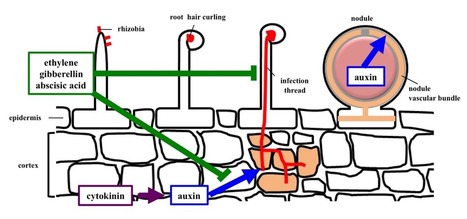
Leguminous plants form root nodules, in which symbiotic rhizobia fix atmospheric nitrogen. The nodulation process in the legume-rhizobium symbiosis consists of a series of events initiated by an exchange of specific signaling compounds between the two partners. The roots of leguminous plants secrete flavonoids, which trigger the synthesis of lipochitin-oligosaccharide signaling molecules, Nod factors (NFs), by rhizobia. NFs activate nodule organogenesis in the roots by stimulating the division of cortical cells. Many nodule development stages resemble other plant organ development such as cell divisions and differentiations. Because phytohormones are signal molecules involved in most plant physiological activities, they are likely to positively or negatively regulate nodulation and nitrogen fixation in the legume-rhizobium symbiosis.
In this chapter, we review the roles of several key phytohormones, namely auxins, cytokinins, gibberellins, ethylene, brassinosteroids, abscisic acid, salicylic acid, jasmonic acid and strigolactones in nodulation and nitrogen fixation in leguminous plants.
Most of legume plants produce de novo root lateral organs, root nodules, to accommodate their symbiotic bacteria, collectively called as rhizobia. Production of the de novo root organ is initiated by infection of rhizobia on surfaces of plant root tissues [1]. Rhizobia enter host tissues by two major strategies. One is the crack entry from the root epidermis where lateral roots emerge, and the other is the root hair-mediated invasion. Model legume plants, Lotus japonicus and Medicago truncatula, have adopted the latter mode of the infection pathway.
The nutrient status and physiological responses to drought were investigated in young poplar (Populus xcanescens) trees, which were either non-mycorrhizal (NM) or colonized with the ectomycorrhizal fungusPaxillus involutus (EM). Stomatal conductance declined rapidly with limited water availability indicating thatPopulus x canescens is a strongly water-saving tree species. EM trees showed higher stomatal conductance than NM trees but the magnitude of the effect was very small. Nitrogen uptake was traced by15N. 15N enrichment was higher in EM root tips than in NM root tips. The 15N enrichment in root tips and in roots was significantly linked with stomatal conductance, whereas the enrichment in leaves was correlated with the enrichment in roots, indicating that N uptake is influenced by photosynthetic processes and that the internal translocation to leaves depends on the concentration in the below-ground tissues. Phosphorus and cations, in particular the main osmolyte potassium K, were enriched leaves of EM plants, but not in roots. Under drought, K and Mg increased in roots regardless the EM status, whereas the foliar concentrations increased only in EM plants. A decline in the leaf water content was prevented by increases in both, cations and soluble sugars. EM also delayed root tip mortality compared with NM plants, thus, suggesting transiently positive effects of EM on poplar performance under drought. Under stronger stress at water potentials of about -1.1 MPa, the transcript levels of stress marker genes (aquaporin PIP2.5, ABA-responsive RD26, ammonium transporter AMT3.1) were increased regardless the mycorrhizal status of the trees.
n the United States, federal funds for symbiosis research have (however inadequately) grown in concert with increasing recognition of the field. In recent years, there have been special funding initiatives at the National Institutes of Health to support research on host-associated microbial communities and the human microbiome, support of microbial symbiosis research by the Dept. of Agriculture, and creation of a long-term funding program for basic research on pathogenic, parasitic and mutualistic symbiosis, “Symbiosis, Defense & Self-Recognition,” at the National Science Foundation.
As a particularly remarkable indicator of the growing influence of symbiosis research, progress in research on beneficial symbosis has begun to significantly influence everyday agricultural and medical practice. Once firmly committed to the principle that “the only good microbe is a dead microbe”, both enterprises have been enlivened by the belated understanding that beneficial (as well as parasitic/pathogenic) microbial colonists have profoundly affected the ecology and evolution of both animals and plants and by the recognition that many of those fungal, protistan and bacterial microbes are not only a normal presence in their hosts, but even essential to plant and animal health. The widely reported examples of beneficial symbiosis have also penetrated popular understanding. (Do others besides me find it easier these days to explain to non-biologist friends what they do, now that everyone seems suddenly to know about “good bacteria”, and to understand the devastating biological consequences of coral bleaching?)
There is a lot more than just plants that live and grow in soil. Soil inhabiting organisms include a diversity of types and sizes. There are small burrowing mammals, insects, amphibians, and worms that can be seen with our eyes, and also a large diversity of tiny and microscopic biota including nematodes, bacteria, fungi and actinomycetes. All of these organisms work to breakup, disperse, incorporate into the ground and decompose plant residues.
They also, in many instances, help to weather soil mineral components and less soluble precipitated compounds. All this activity results in the release of plant nutrients in mineral forms that plants can use to grow. The whole process of nutrients being used by plants, and then plant residues being decomposed in soil is a vital part of nutrient cycling in the environment.
The majority of the nutrients in soil, at any one time, are stored in forms that are unavailable to plants. At first this sounds less effective, but is in fact a necessary feature of soils so that nutrients are stored and released in a timely and adequate manner, but not so soluble that they would be easily leached out of soils. Plant roots exude chemicals that help to dissolve some of these more complex and less soluble compounds that contain plant nutrients.
However, plants are not able to do this all on their own, and this is where other soil-inhabiting organisms, noted above, help out. One especially effective and beneficial group of microbes is a genus of fungi called Mycorrhizae (M). These fungi have the ability to grow into the roots of many plant species, while their fungal hyphae or branches grow into the soil matrix.
M fungi are beneficial to many important agronomic crop species in a couple of ways. They live symbiotically with the crops by accessing and supplying needed plant nutrients from the soil to their plant partner. The plant in turn shares photosynthetically produced sugars to the fungi as an energy source. The M fungi make nutrients accessible to crop plants by first effectively increasing the extent of the plant root system in soil by exploring portions of the soil that the roots would not grow into and touch.
Secondly, they have the ability to dissolve low solubility compounds containing plant nutrients, that crop roots are less effective at doing. Because many plant nutrients have low mobility in soil, they diffuse slowly and for only a short distance, for example a few millimeters in a growing season, from an area of higher concentration to an area of lower concentration. It is very helpful to have the M hyphae assist in finding and acquiring needed nutrients. In these two ways they help supply nutrients to crops, especially less mobile phosphorus, potassium, and most micronutrients.
Management of cropping systems by choosing certain crop rotations and reduced tillage systems can help M fungi to be more effective. Even though in the original natural state many of the grassland soils of the Northern Great Plains contained a diverse group of M fungi species the use of intense tillage, summer fallowing, and predominately growing wheat, has drastically reduced the number of M fungi species surviving. The remaining species cannot supply needed plant nutrients as well compared to if more species would be present.
However, by using conservation or no-till cropping, and a more diverse crop rotation including pulse crops such as lentils and field pea in rotation along with small grain cereal crops, it is possible to create soil conditions suitable to re-establish many beneficial M fungi species.
There is on-going research in the Northern Great Plains on how to bring back the beneficial influence of missing M fungi for growing crops. Research is being led by Dr. Chantal Hamel, Director of the Soil Microbiology Laboratory, Semiarid-Prairie Agricultural Research Centre, of Agriculture and Agri-Food Canada, Swift Current, SK. Dr. Hamel’s research team is selecting beneficial missing species of the fungi, still present in natural grasslands, and reintroducing them into cropped soils.
Part of the technique to achieve this is to successfully grow the needed species in sufficient quantity under controlled laboratory conditions, inoculate the seed of a compatible crop species, e.g. a pulse crop, and grow this crop in rotation with wheat. The use of no-till planting and cropping helps the reintroduced fungi to survive, as tillage itself is disruptive to established fungal hyphae in soils. Many of the so called “lost” species of M fungi will increase nutrient availability to crops, after reintroduction using less tillage, cessation of summer fallowing, and growing diverse crops in rotation.
STANDISH, Maine — Beer and oysters, pilsners and cheese, beef sliders with a frosty pint. In the culinary world, such pairings are the norm. But craft chocolate infused with craft beer? In a short period of time, chocolatier Laura Rudy has become the truffle stout queen. Toiling in her country [...]
The α-proteobacterium Sinorhizobium meliloti establishes a chronic intracellular infection during the symbiosis with its legume hosts. Within specialized host cells, S. meliloti differentiates into highly polyploid, enlarged nitrogen-fixing bacteroids. This differentiation is driven by host cells through the production of defensin-like peptides called “nodule-specific cysteine-rich” (NCR) peptides. Recent research has shown that synthesized NCR peptides exhibit antimicrobial activity at high concentrations but cause bacterial endoreduplication at sublethal concentrations. We leveraged synchronized S. meliloti populations to determine how treatment with a sublethal NCR peptide affects the cell cycle and physiology of bacteria at the molecular level. We found that at sublethal levels a representative NCR peptide specifically blocks cell division and antagonizes Z-ring function. Gene-expression profiling revealed that the cell division block was produced, in part, through the substantial transcriptional response elicited by sublethal NCR treatment that affected ∼15% of the genome. Expression of critical cell-cycle regulators, including ctrA, and cell division genes, including genes required for Z-ring function, were greatly attenuated in NCR-treated cells. In addition, our experiments identified important symbiosis functions and stress responses that are induced by sublethal levels of NCR peptides and other antimicrobial peptides. Several of these stress-response pathways also are found in related α-proteobacterial pathogens and might be used by S. meliloti to sense host cues during infection. Our data suggest a model in which, in addition to provoking stress responses, NCR peptides target intracellular regulatory pathways to drive S. meliloti endoreduplication and differentiation during symbiosis.
Several symbiotic mutants of legume plants defective in nodulation have also been shown to be mutants related to arbuscular mycorrhizal (AM) symbiosis. The origin of the AM symbiosis can be traced back to the early land plants. It has therefore been postulated that the older system of AM symbiosis was partially incorporated into the newer system of legume-rhizobium symbiosis. To unravel the genetic basis of the establishment of AM symbiosis, we screened about 34,000 plants derived from ethyl methanesulfonate (EMS)-mutagenized Lotus japonicus seeds by microscopic observation. As a result, three lines (ME778, ME966 and ME2329) were isolated as AM-specific mutants that exhibit clear AM-defective phenotypes but form normal effective root nodules with rhizobial infection. In the ME2329 mutant, AM fungi spread their hyphae into the intercellular space of the cortex and formed trunk hyphae in the cortical cells, but the development of fine branches in the arbuscules was arrested. The ME2329 mutant carried a nonsense mutation in the STR-homologue gene, implying that the line may be a str mutant in L. japonicus. On the ME778 and ME966 mutant roots, the entry of AM fungal hyphae was blocked between two adjacent epidermal cells. Occasionally, hyphal colonization accompanied with arbuscules was observed in the two mutants. The responsible genes for the ME778 and ME966 mutants were independently located on chromosome 2. These results suggest that the ME778 and ME966 lines are symbiotic mutants involved in the early stage of AM formation in L. japonicus.
Due to its phenomenal growth requiring neither nitrogen fertilizer nor arable land and its biomass composition, the mosquito fernAzolla is a candidate crop to yield food, fuels and chemicals sustainably. To advance Azolla domestication, we research its dissemination, storage and transcriptome.Methods for dissemination, cross-fertilization and cryopreservation of the symbiosis Azolla filiculoides–Nostoc azollae are tested based on the fern spores. To study molecular processes in Azolla including spore induction, a database of 37 649 unigenes from RNAseq of microsporocarps, megasporocarps and sporophytes was assembled, then validated.Spores obtained year-round germinated in vitro within 26 d. In vitro fertilization rates reached 25%. Cryopreservation permitted storage for at least 7 months. The unigene database entirely covered central metabolism and to a large degree covered cellular processes and regulatory networks. Analysis of genes engaged in transition to sexual reproduction revealed a FLOWERING LOCUS T-like protein in ferns with special features induced in sporulating Azolla fronds.Although domestication of a fern–cyanobacteria symbiosis may seem a daunting task, we conclude that the time is ripe and that results generated will serve to more widely access biochemicals in fern biomass for a biobased economy.
Agricultural land use compromises the viability of Atlantic forest remnants and may permanently alter the structure of the biological soil community. Soil micro-organisms such as arbuscular mycorrhizal fungi (AMF) which participate in symbiotic associations with plant roots are of particular importance. In order to assess the impact of cultivation we measured the diversity of AMF in six areas in Goiana, PE, Brazil: a sapodilla plantation, a rubber tree plantation, a mahogany plantation, a eucalyptus plantation, a crop rotation area currently being used to cultivate cassava, and an area of Atlantic forest. A total of 96 samples of rhizospheric soil were collected in the wet (June 2011) and dry (March 2012) seasons. Glomerospores were extracted from the soil, counted and used for AMF species identification. A total of 50 species belonging to 15 genera were recorded. Acaulospora spp. and Glomus spp. predominated, accounting for 52% of total species. The low value found in non-metric multidimensional scaling (NMS) multivariate analyses (33.2%) indicated that AMF community composition was more affected by different land uses than by physical and chemical characteristics of the soil. Diversity, evenness and richness indices were higher for the environment under greater stress (crop rotation), indicating that mycorrhizal symbiosis could be a strategy by which fungi and plants overcome biotic and abiotic stresses that occur in the soil. Diversity, evenness and richness indices tended to be lower in communities established in climax environments, such as in the Atlantic forest, rather than in the ones established in cultivation areas.
Soybean (Glycine max [L.] Merr.) establishes a symbiotic relationship by infection with soybean-nodulating bacteria and subsequent root nodule formation. Soybean acquires atmospheric nitrogen as ammonia through the symbiotic nitrogen fixation by soybean-nodulating rhizobia in the root nodules. The inoculation of soybean with bradyrhizobia that has high ability of nitrogen fixation is considered to be effective in increasing soybean production. However, the efficiency of the inoculum may be poor if the inoculum can not compete with indigenous soybean-nodulating rhizobia in the soil or can not establish an efficient symbiosis with the host plants because of the increased densities of indigenous rhizobia. To solve this problem, it is very important to understand the ecology of indigenous soybean-nodulating rhizobia in terms of their genetic diversity, community structure, geographical distribution, compatibility with the host soybean, and the ecosystems including environmental factors associated with the localization and dominance of the rhizobial strains in the soil. Therefore, analysis of the genetic diversity and field distribution of indigenous soybean-nodulating rhizobia is important to improve our understanding of rhizobial ecology as well as inoculation methodology under various environmental conditions.
Ectomycorrhizal symbiosis plays a major role in biodiversity and stability of ecosystems in tropical forests. It is a research imperative in tropical and neotropical forest ecosystems because they contain ecologically and economically important tree species. This book provides an overview of the knowledge of ECM symbioses in tropical and neotropical ecosystem forests. The contents address diversity and function of ectomycorrhiza associated with forest plants, impacts of ectomycorrhiza on plant diversity and composition, regeneration and dynamics of ecosystems, biomass production in forestry, and adaptation of ectomycorrhiza.
Nitrogen is one of the most important elements in biological systems, comprising the main building blocks of nucleic acids, enzymes and proteins among its multiple functions. In nature, it exists primarily in the gaseous form and constitutes approximately 78% of the atmosphere. Despite its abundance, nitrogen (N) is one of the most growth-limiting nutrients in terrestrial and aquatic ecosystems (Dalton & Krammer, 2006) because its gaseous form is inert and unusable by most living organisms except for nitrogen fixing microorgansisms.
A plant–microbe dual biological system was set up involving the model legume Medicago truncatula and two bacteria, the soil-borne root pathogen Ralstonia solanacearum and the beneficial symbiont Sinorhizobium meliloti.Comparison of transcriptomes under symbiotic and pathogenic conditions highlighted the transcription factor MtEFD (Ethylene response Factor required for nodule Differentiation) as being upregulated in both interactions, together with a set of cytokinin-related transcripts involved in metabolism, signaling and response. MtRR4 (Response Regulator), a cytokinin primary response gene negatively regulating cytokinin signaling and known as a target of MtEFD in nodulation processes, was retrieved in this set of transcripts.Refined studies of MtEFD and MtRR4 expression during M. truncatula and R. solanacearum interaction indicated differential kinetics of induction and requirement of central regulators of bacterial pathogenicity, HrpG and HrpB. Similar to MtRR4, MtEFD upregulation during the pathogenic interaction was dependent on cytokinin perception mediated by the MtCRE1 (Cytokinin REsponse 1) receptor.The use of M. truncatula efd-1 and cre1-1 mutants evidenced MtEFD and cytokinin perception as positive factors for bacterial wilt development. These factors therefore play an important role in both root nodulation and root disease development.
Rhizobium-induced root nodules are organs specialized for symbiotic nitrogen fixation. Indeterminate-type nodules are formed from an apical meristem and exhibit a spatial zonation which corresponds to successive developmental stages. To get a dynamic and integrated view of plant and bacterial gene expression associated with nodule development, we set up a sensitive and comprehensive approach based upon oriented high depth RNA-seq coupled to laser micro-dissection of nodule regions.
This study, focused on the association between the model legume Medicago truncatula and its symbiont Sinorhizobium meliloti, led to the production of 942 million sequencing read pairs that were unambiguously mapped on plant and bacterial genomes. Bioinformatic and statistical analyses enabled in-depth comparison, at a whole genome level, of gene expression in specific nodule zones. Previously characterized symbiotic genes displayed the expected spatial pattern of expression, thus validating the robustness of the approach. We illustrate the interest of this resource by examining gene expression associated with three essential elements of nodule development, namely meristem activity, cell differentiation and selected signaling processes related to bacterial Nod factors and to the redox status. We found that transcription factor genes essential for the control of the root apical meristem were also expressed in the nodule meristem, while plant mRNAs most enriched in nodules compared to roots were mostly associated with zones comprising both plant and bacterial partners. The data, accessible on a dedicated web site, represent a rich resource for microbiologists and plant biologists to address a variety of questions of both fundamental and applied interest.
P-solubilizing bacterial isolate CB7 isolated from apple rhizosphere soil of Himachal Pradesh, India was identified as Bacillus circulanson the basis of phenotypic characteristics, biochemical tests, fatty acid methyl esters analysis, and 16S rRNA gene sequence. The isolate exhibited plant growth-promoting traits of P-solubilization, auxin, 1-aminocyclopropane-1-carboxylate deaminase activity, siderophore, nitrogenase activity, and antagonistic activity against Dematophora necatrix. In vitro studies revealed that P-solubilization and other plant growth-promoting traits were dependent on the presence of glucose in PVK medium and removal of yeast extract had no significant effect on plant growth-promoting traits. Plant growth-promoting traits of isolate CB7 were repressed in the presence of KH2PO4. P-solubilization activity was associated with the release of organic acids and a drop in the pH of the Pikovskaya's medium. HPLC analysis detected gluconic and citric acid as major organic acids in the course of P-solubilization. Remarkable increase was observed in seed germination (22.32%), shoot length (15.91%), root length (25.10%), shoot dry weight (52.92%) and root dry weight (31.4%), nitrogen (18.75%), potassium (57.69%), and phosphorus (22.22%) content of shoot biomass over control. These results demonstrate that isolate CB7 has the promising PGPR attributes to be developed as a biofertilizer to enhance soil fertility and promote plant growth.
To get content containing either thought or leadership enter:
To get content containing both thought and leadership enter:
To get content containing the expression thought leadership enter:
You can enter several keywords and you can refine them whenever you want. Our suggestion engine uses more signals but entering a few keywords here will rapidly give you great content to curate.


 Your new post is loading...