Rhizobia are soil bacteria that are able to form symbiosis with plant hosts of the legume family. These associations result in the formation of organs, called nodules in which bacteria fix atmospheric nitrogen to the benefit of the plant. Most of our knowledge on the metabolism and the physiology of the bacteria during symbiosis derives from studying roots nodules of terrestrial plants. Here we used a proteomics approach to investigate the bacterial physiology of photosynthetic Bradyrhizobium sp. ORS278 during the symbiotic process with the semi aquatical plant Aeschynomene indica that forms root and stem nodules. We analyzed the proteomes of bacteria extracted from each type of nodule. First, we analyzed the bacteroid proteome at two different time points and found only minor variation between the bacterial proteomes of 2-week- and 3-week-old nodules. High conservation of the bacteroid proteome was also found when comparing stem nodules and root nodules. Among the stem nodule specific proteins were those related to the phototrophic ability of Bradyrhizobium sp. ORS278. Furthermore, we compared our data with those obtained during an extensive genetic screen previously published. The symbiotic role of four candidate genes which corresponding proteins were found massively produced in the nodules but not identified during this screening was examined. Mutant analysis suggested that in addition to the EtfAB system, the fixA locus is required for symbiotic efficiency.
Our first look at inoculation of peas left us asking more questions. We got a high level of inoculation on one paddock but very little in another.
Everything pretty much the same: Both were the same pea variety planted at the same rate on the same day with the same equipment using the same inoculator.
Why did we get different effects?What encourages or discourages inoculation?How many nodules is enough?
Haber Bosch fixes nitrogen. The process is considered by many to be one of the most important technological advances of the 20th century. Indeed, it is estimated that about a third of the people born since 1909 have been sustained by fertilizer produced by the Haber Bosch process (Erisman et al., Nature, 2008). It must also be said that the process has been responsible for the death of millions as well, because it also fixes nitrogen for use in explosives, but it is its use in agriculture that we are focusing on today. Nitrogen is an essential component of all living cells. It is crucial to metabolic processes, to growth and development, and in plants it is a component of chlorophyll, so it's essential for photosynthesis as well as seed and fruit production. But nitrogen can be hard to come by if you're a plant. It's a major constituent of our atmosphere – 78% -- but plants can't use it in its atmospheric form because as such it is chemically inert, an unreactive molecule that must be primed for further chemical reactions. The bonds between the two nitrogen atoms (N2) in atmospheric nitrogen are the strongest bonds known, in fact, so it must be 'fixed' by some natural or man-made process, the bonds broken, and the nitrogen otherwise made ‘reactive, or available to plants.*
The Eighth International Conference on Mycorrhiza (ICOM8) seeks to stimulate a productive exchange of information and ideas among mycorrhizal researchers from around the world, including physiologists, geneticists, taxonomists, ecologists, inoculum producers, and land managers. Conference sessions will be designed to find common interests and cut across traditional hierarchical divisions of science.
The International Mycorrhiza Society selected Northern Arizona University to host ICOM8, which will take place at the university’s High Country Conference Center, Flagstaff, Arizona, USA. The International Mycorrhiza Society is a scientific organization that advances education, research, and development in the area of mycorrhizal symbiosis between plants and soil fungi. In addition to an engaging scientific program, attendees will enjoy Flagstaff and the region’s many attractions.
It is known that the presence of arbuscular mycorrhizal within the plant roots enhances the tolerance of the host plant to different environmental stresses, although the positive effect of the fungi over plants under waterlogged conditions has been little studied. Plants tolerance to flooding can be achieved through different molecular, physiological and anatomical adaptations, which will affect their water uptake capacity and therefore their root hydraulic properties. Here, we investigated the root hydraulic properties under non-flooded and flooded conditions in non-mycorrhizal tomato plants and plants inoculated with the arbuscular mycorrhizal fungus Rhizophagus irregularis. Only flooded-mycorrhizal plants increased their root hydraulic conductivity and this effect was correlated with a higher expression of the plant aquaporin SlPIP1;7 and the fungal aquaporin GintAQP1. There was also a higher abundance of the phoshorylated PIP2 protein at Ser-280 in mycorrhizal flooded plants. The role of plant hormones (ethylene, abscisic acid and indolacetic acid) in root hydraulic properties was also taken into consideration and concluded that, in mycorrhizal flooded plants, ethylene has a secondary role regulating root hydraulic conductivity whereas indolacetic acid (IAA) may be the key hormone that allows the enhancement of root hydraulic conductivity in mycorrhizal plants under low oxygen conditions.
Arbuscular mycorrhizal fungi (AMF) are ubiquitous soil fungi, forming mutualistic symbiosis with a majority of terrestrial plant species. They are abundant in nearly all soils, less diverse than soil prokaryotes and other intensively studied soil organisms, and thus are promising candidates for universal indicators of land management legacies and soil quality degradation. However, insufficient data on how the composition of indigenous AMF varies along soil and landscape gradients has hampered the definition of baselines and effect thresholds to date. Here, indigenous AMF communities in 154 agricultural soils collected across Switzerland were profiled by quantitative real-time PCR with taxon-specific markers for six widespread AMF species. To identify the key determinants of AMF community composition, the profiles were related to soil properties, land management, and site geography. Our results indicate a number of well-supported dependencies between abundances of certain AMF taxa and soil properties such as pH, soil fertility and texture, and a surprising lack of effect of available soil phosphorus on the AMF community profiles. Site geography, especially the altitude and large geographic distance, strongly affected AMF communities. Unexpected was the apparent lack of a strong land management effect on the AMF communities as compared to the other predictors, which could be due to the rarity of highly intensive and unsustainable land management in Swiss agriculture. In spite of the extensive coverage of large geographic and soil gradients, we did not identify any taxon suitable as an indicator of land use among the six taxa we studied.
Premise of the study: Microsatellite loci were developed for the ectomycorrhizal fungusLaccaria sp. A to investigate the population genetic structure of this fungal symbiont across its fragmented distribution in southeastern Australia.
Methods and Results: A partial genome sequence from an individual collection of Laccariasp. A was obtained by 454 genome sequencing. Eight microsatellite markers were selected from 66 loci identified in the genome. The selected markers were highly polymorphic (4–19 alleles per locus, average 13 alleles) and amplified reproducibly from collections made across the distribution of this species. Five of these markers also amplified reproducibly in the sister species Laccaria sp. E (1). All eight of the selected microsatellite loci were from the mitochondrial genome.
Conclusions: The highly polymorphic markers described here will enable population structure of Laccaria sp. A to be determined, contributing to research on mycorrhizal fungi from a novel distribution.
Several symbiotic mutants of legume plants defective in nodulation have also been shown to be mutants related to arbuscular mycorrhizal (AM) symbiosis. The origin of the AM symbiosis can be traced back to the early land plants. It has therefore been postulated that the older system of AM symbiosis was partially incorporated into the newer system of legume–rhizobium symbiosis. To unravel the genetic basis of the establishment of AM symbiosis, we screened about 34,000 plants derived from ethyl methanesulfonate (EMS)-mutagenized Lotus japonicus seeds by microscopic observation. As a result, three lines (ME778, ME966 and ME2329) were isolated as AM-specific mutants that exhibit clear AM-defective phenotypes but form normal effective root nodules with rhizobial infection. In the ME2329 mutant, AM fungi spread their hyphae into the intercellular space of the cortex and formed trunk hyphae in the cortical cells, but the development of fine branches in the arbuscules was arrested. The ME2329 mutant carried a nonsense mutation in the STR-homolog gene, implying that the line may be an str mutant in L. japonicus. On the ME778 and ME966 mutant roots, the entry of AM fungal hyphae was blocked between two adjacent epidermal cells. Occasionally, hyphal colonization accompanied by arbuscules was observed in the two mutants. The genes responsible for the ME778 and ME966 mutants were independently located on chromosome 2. These results suggest that the ME778 and ME966 lines are symbiotic mutants involved in the early stage of AM formation in L. japonicus.
Arbuscular Mycorrhizal Fungi (AMF) are well known for their ecological importance and their positive influence on plants. The genetics and phylogeny of this group of fungi have long been debated. Nuclear markers are the main tools used for phylogenetic analyses, but they have sometimes proved difficult to use because of their extreme variability. Therefore, the attention of researchers has been moving towards other genomic markers, in particular those from the mitochondrial DNA. In this study, 46 sequences of different AMF isolates belonging to two main clades Gigasporaceae and Glomeraceae have been obtained from the mitochondrial gene coding for the Cytochrome c Oxidase I (COI), representing the largest dataset to date of AMF COI sequences. A very low level of divergence was recorded in the COI sequences from the Gigasporaceae, which could reflect either a slow rate of evolution or a more recent evolutionary divergence of this group. On the other hand, the COI sequence divergence between Gigasporaceae and Glomeraceae was high, with synonymous divergence reaching saturated levels. This work also showed the difficulty in developing valuable mitochondrial markers able to effectively distinguish all Glomeromycota species, especially those belonging to Gigasporaceae, yet it represents a first step towards the development of a full mtDNA-based dataset which can be used for further phylogenetic investigations of this fungal phylum.
As a result of natural or artificial disturbances, elevated nitrate concentrations are found in forest soils and could thus be important for tree nutrition. In an EST project of Populus tremula x tremuloides/Amanita muscaria ectomycorrhizas three putative high-affinity nitrate transporters of the NRT2 gene family were discovered of which PttNRT2.4A and PttNRT2.5B were expressed highest in fine roots at comparable levels.
Ectomycorrhiza formation resulted in a nitrate independent enhanced PttNRT2.5B gene expression. However, as characterization of transport properties by heterologous expression failed, PttNRT2.5B function still remains unclear.
With a KM value of about 26 μM, as determined by heterologous expression in Xenopus laevis oocytes, PttNRT2.4A is a high affinity nitrate importer. In fine roots of nitrate depleted poplar plants PttNRT2.4Aexpression was very low. Transcript levels increased 75-fold when plants were exposed to low nitrate concentrations (10-100 μM). This increase was lower at elevated nitrate concentrations or in the presence of ammonium. By generating P. tremula x tremuloides plants transformed with a PttNRT2.4A promoter GFP fusion construct, nitrate induced PttNRT2.4A expression was localized in root hairs but not in underlying cortex cells.
In ectomycorrhizas of ammonium grown plants PttNRT2.4A expression decreased compared to non-mycorrhizal fine roots. However, nitrate induced PttNRT2.4A expression in ectomycorrhizas indicate nitrate permeability of the fungal mantle under certain conditions.
In our germophobic society today, the role of soil microorganisms is often grossly misunderstood -- to many of us, the only good bug is a dead bug. We join Dr. Kris Nichols in Mandan, North Dakota to talk about why we need change our thinking.
Dr. Kristine Nichols is a soil microbiologist with the USDA Agricultural Research Service. Dr. Nichols has long been dedicated to studying arbuscular mycorrhizal fungi and its intricate relationship with plants and soil ecology, receiving a Master's in Environmental Microbiology at West Virginia University in 1999, and a Ph.D. in Soil Science from the University of Maryland in 2003. Growing up on a corn-soybean farm in Minnesota, she has long been at home in the agricultural world and continues to be closely involved in research and outreach to study impacts of soil management and conservation.
Variations of the amount of N2 fixation of soybean with different soil inorganic N concentration in black soil (Haplocryoll) in Northeast China were evaluated in this study. A pot experiment was conducted to quantify and investigate the amount of N2 fixation of soybean with soil inorganic N concentration ranging from 19.5 to 90.6 mg kg-1, which derived from split application of fertilizer N (urea). The amount of N2 fixation of Hefeng 35 was calculated by N difference method with little modification. The nodule number, dry weight and size at R2 stage were also determined. N fertilizer had effect on the soil inorganic N availability, which was the direct factor to soybean nodulation, N2 fixation and yield. The maximum amount of N2 fixation of Hefeng 35 (3.15 g pot-1) was produced with soil inorganic N concentration 32.1 mg kg-1 in the N2 treatment. The maximum yield was produced of Hefeng 35 (51.8 g pot-1) with soil inorganic N concentration 57.7 mg kg-1 in the N4 treatment. The amount of N2 fixation and yield decreased 53.3% and 5.2%, respectively, in the N6 treatment with soil inorganic N concentration 90.6 mg kg-1 than that of in the N1 treatment. Reduction in N2 fixation with soil inorganic N concentration has been ascribed to inhibition of nodule number, dry weight and size. Both the amount of N2 fixation and yield had second order polynomial response curve to soil inorganic N concentration. Otherwise, the required soil inorganic N concentration for the highest soybean yield and N2 fixation were different. The soil inorganic N concentration should be maintained 32.1-45.8 mg kg-1 for biological requirement; maintained 45.8-71.3 mg kg-1 for production requirement; maintained 45.8 mg kg-1 for ecological requirement in Black soil in Northeast China. The soil inorganic N concentration should be regulated with N application in terms of requirement in practice in black soil in Northeast China.
Progress in microbial community ecology is challenged by the fact that individuals often cannot be morphologically identified and counted, and the great majority of taxa are not phenotypically characterized because they lack recognizable traits and are not in culture. As a result, microbes are often distinguished from one another using molecular sequence data. For example, ≥ 97% sequence similarity in the 16S rRNA gene is commonly used to separate species in bacteria (Stackebrandt & Goebel, 1994; Schloss & Handelsman, 2006) although some argue that 99% is more appropriate (Acinas et al., 2004). Such differences in universal thresholds may influence our ability to understand the ecology of sequence clusters, or operational taxonomic units (OTUs). If sequence similarities are too narrow (e.g. 99%), comparisons among communities are difficult, and if they are too broad (e.g. 90%), OTUs with different ecological roles and distribution patterns may be erroneously lumped together (discussed in Knights et al., 2011a). Universal thresholds also do not consider differences in speciation and substitution rates among lineages and may therefore not capture equivalent units of diversity. Indeed, Koeppel & Wu (2013) showed that many bacterial OTUs are paraphyletic and span multiple ecological habitats, and Youngblut et al. (2013) demonstrated that ecological patterns may be optimally detected by using different OTU delineations among lineages.
Arbuscular mycorrhizal fungi (AMF) present similar challenges. AMF are asexual, obligate symbionts that exchange nutrients and other services for plant carbon (Smith & Read, 2008). Long-term asexual evolution has led to high genetic and ecological diversity within known AMF species (Munkvold et al., 2004; Koch et al., 2006; Rosendahl, 2008; Stockinger et al., 2009) that traditionally have been identified based on spore features. Molecular techniques show that, like bacteria, many environmental sequences do not cluster with cultured species (Rosendahl, 2008), but there is currently no consensus on how to best organize sequences into biologically and ecologically meaningful taxonomic units (Öpik et al., 2010). While some researchers use universal – albeit varying – OTU thresholds (Dumbrell et al.,2011) or BLAST matches against published sequences (Lekberg et al., 2007), others attempt to control for evolutionary differences by identifying OTUs as groups forming monophyletic clades (Rosendahl & Stukenbrock, 2004; Sykorova et al., 2007). How these methods affect our understanding of AMF community patterns along environmental and spatial gradients is more or less unknown (but see Powellet al., 2011). This is a pressing question given that high-throughput pipelines for post-sequencing analyses of next generation sequencing (NGS) data often utilize universal thresholds for OTU delineations (Caporaso et al., 2010), as groupings based on evolutionary relationships are computationally expensive for large data sets.
Genomic characteristics discriminating parasitic and mutualistic relationship of bacterial symbionts with plants are poorly understood. This study comparatively analysed the genomes of 54 mutualists and pathogens to discover genomic markers associated with the different phenotypes. Using metabolic network models we predict external environments associated with free living and symbiotic lifestyles and quantify dependences of symbionts on the host in terms of the consumed metabolites. We show that specific differences between the phenotypes are pronounced at the levels of metabolic enzymes, especially carbohydrate active, and protein functions. Overall, biosynthetic functions are enriched and more diverse in plant mutualists while processes and functions involved in degradation and host invasion are enriched and more diverse in pathogens. A distinctive characteristic of plant pathogens is a putative novel secretion system with a circadian rhythm regulator. A specific marker of plant mutualists is the co-residence of genes encoding nitrogenase and Ribulose Bisphosphate Carboxylase/Oxygenase (RuBisCO). We predict that RuBisCO is likely used in a putative metabolic pathway to supplement carbon obtained heterotrophically with low-cost assimilation of carbon from CO2. We validate results of the comparative analysis by predicting correct phenotype, pathogenic or mutualistic, for 20 symbionts in an independent set of 30 pathogens, mutualists, and commensals.
Volatiles are ubiquitously present on earth due to their physical and chemical properties (high vapour pressure, low boiling point, low molecular mass). It is obvious that volatiles are constituents of the atmosphere, but they also appear in porous material, for example, plants, rocks and soil pores, and are dissolved in aqueous media. Volatiles originate from both anthropogenic and biogenic sources. Whereas animal and plant volatile emissions have been comprehensively studied in the past, volatiles of microorganisms (i.e. bacteria and fungi) have been mostly neglected (Fig. 1). Only recently has the wealth of microbial volatile organic compounds (mVOCs) been discovered. Approximately 1000 mVOCs released by about 400 bacteria and fungi are described in the literature to date. These volatiles are summarized in the database ‘mVOC’, which is publicly accessible (http://bioinformatics.charite.de/mvoc/, Lemfack et al. 2013). Considering that only about 10 000 microbial species are currently described, although at least a million species are expected to exist on earth, the VOC profiles of a surprisingly small number of microorganisms have been investigated so far. The more microorganisms we investigate in the future, the more volatiles with novel structures are likely to be discovered as this new research field expands.
The arbuscular mycorrhizal (AM) symbiosis is a widespread mutualistic association between soil fungi (Glomeromycota) and the roots of most plant species. AM fungi are obligate biotrophs whose development is partially under the control of their plant host. We explored the possibility to combine metabolomic and transcriptomic approaches to find putative mycorrhiza-associated metabolites regulating AM fungal development. Methanol extracts of Medicago truncatula roots colonized or not with the AM fungus Rhizophagus irregularis were analyzed and compared by ultra-high-performance liquid chromatography (UHPLC), high-resolution mass spectrometry (Q-TOF), and multivariate statistical discrimination. We detected 71 mycorrhiza-associated analytes exclusively present or at least 10-fold more abundant in mycorrhizal roots. To identify among these analytes those that could regulate AM fungal development, we fractionated by preparative and semi-preparative HPLC the mycorrhizal and non-mycorrhizal root extracts and established how the 71 analytes were distributed among the fractions. Then we tested the activity of the fractions on germinating spores of R. irregularis by quantifying the expression of 96 genes known for their diverse in planta expression patterns. These investigations reveal that propionyl- and butyryl-carnitines accumulated in mycorrhizal roots. The results suggest that these two molecules regulate fungal gene expression in planta and represent interesting candidates for further biological characterization.
Prokaryote-eukaryote interactions are primordial, but host selection of its bacterial community remains poorly understood. Since eukaryote evolution affects numerous traits shaping the ecology of their microbiome, we can expect that many evolutionary changes in the former will have the potential to impact on the composition of the latter. Consequently, the more phylogenetically distant the eukaryotic hosts, the more distinct their associated bacterial communities should be. We tested this with plants, by comparing the bacterial communities associated to maize genotypes or other Poaceae. 16S rRNA taxonomic microarray analysis showed that the genetic distance between rhizobacterial communities correlated significantly with the phylogenetic distance (derived from chloroplastic sequences) between Poaceae genotypes. This correlation was also significant when considering specific bacterial populations from all main bacterial divisions, instead of the whole rhizobacterial community. These results indicate that eukaryotic host's evolutionary history can be a significant factor shaping directly the assembly and composition of its associated bacterial compartment.
Black truffle (Tuber melanosporum) cultivation is a promising agro-forestry alternative for Mediterranean rural areas, but adequate weed control at seedling establishment still remains a challenge in black truffle plantations.
Aims
The aim of this study is to evaluate the effects of several weed control strategies on early development of Quercus ilex seedlings and the symbiotic T. melanosporum.
Materials and methods
In a young black truffle-inoculated holm oak plantation, we assessed for 3 years the effects of two types of mechanical weed control and five mulches in a young Q. ilex plantation inoculated with T. melanosporum. Herbaceous cover, seedling growth and abundance of T. melanosporum mycelium, based on PCR analysis of soil DNA extracts using T. melanosporum-specific primers, were estimated to determine the effectiveness of these treatments in controlling weeds and supporting the growth of both the host tree and the target fungus.
Results
The amount of T. melanosporum mycelium in the soil 30 cm around the seedlings was larger under double-layer white mulch than in the rest of treatments tested. Under the white colour mulches, which had the largest light reflection, we registered the cooler soil temperature, and the best weed control was observed on the single- and double-layer black truffles and double-layer white mulch.
Conclusion
The effects of double-layer white mulch on herbaceous cover, soil temperature, reflected light, and the expansion of T. melanosporum bring us closer to being able to substitute traditional tilling of truffle orchards for the less expensive mulching treatments.
Epichloë festucae is a filamentous fungus that forms a mutually beneficial symbiotic association with Lolium perenne. This endophyte synthesizes bioprotective lolitrems (ltm) and ergot alkaloids (eas) in planta but the mechanisms regulating expression of the corresponding sub-telomeric gene clusters are not known. We show here that the status of histone H3 lysine 9 and lysine 27 trimethylation (H3K9me3/H3K27me3) at these alkaloid gene loci are critical determinants of transcriptional activity. Using ChIP-qPCR we found that levels of H3K9me3 and H3K27me3 were reduced at these loci in plant infected tissue compared to axenic culture. Deletion ofE. festucae genes encoding the H3K9- (ClrD) or H3K27- (EzhB) methyltransferases led to derepression of ltm and eas gene expression under non-symbiotic culture conditions and a further enhancement of expression in the double deletion mutant. These changes in gene expression were matched by corresponding reductions in H3K9me3 and H3K27me3 marks. Both methyltransferases are also important for the symbiotic interaction between E. festucae and L. perenne. Our results show that the state of H3K9 and H3K27 trimethylation of E. festucae chromatin is an important regulatory layer controlling symbiosis-specific expression of alkaloid bioprotective metabolites and the ability of this symbiont to form a mutualistic interaction with its host.
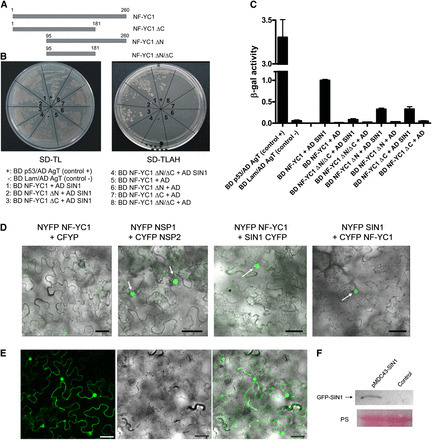
A C subunit of the heterotrimeric nuclear factor Y (NF-YC1) was shown to play a key role in nodule organogenesis and bacterial infection during the nitrogen fixing symbiosis established between common bean (Phaseolus vulgaris) andRhizobium etli. To identify other proteins involved in this process, we used the yeast (Saccharomyces cerevisiae) two-hybrid system to screen for NF-YC1-interacting proteins. One of the positive clones encodes a member of the Phytochrome A Signal Transduction1 subfamily of GRAS (for Gibberellic Acid-Insensitive (GAI), Repressor of GAI, and Scarecrow) transcription factors. The protein, named Scarecrow-like13 Involved in Nodulation (SIN1), localizes both to the nucleus and the cytoplasm, but in transgenic Nicotiana benthamiana cells, bimolecular fluorescence complementation suggested that the interaction with NF-YC1 takes place predominantly in the nucleus. SIN1 is expressed in aerial and root tissues, with higher levels in roots and nodules. Posttranscriptional gene silencing of SIN1 using RNA interference (RNAi) showed that the product of this gene is involved in lateral root elongation. However, root cell organization, density of lateral roots, and the length of root hairs were not affected by SIN1RNAi. In addition, the expression of the RNAi of SIN1 led to a marked reduction in the number and size of nodules formed upon inoculation with R. etli and affected the progression of infection threads toward the nodule primordia. Expression ofNF-YA1 and the G2/M transition cell cycle genes CYCLIN B and Cell Division Cycle2 was reduced in SIN1 RNAi roots. These data suggest that SIN1 plays a role in lateral root elongation and the establishment of root symbiosis in common bean.
Legumes are classified as salt-sensitive crops with their productivity particularly affected by salinity. Abcisic acid (ABA) plays an important role in the response to environmental stresses as signal molecule which led us to study its role in the response of nitrogen fixation and antioxidant metabolism in root nodules ofMedicago sativa under salt stress conditions. Adult plants inoculated with Sinorhizobium meliloti were treated with 1 μM and 10 μM ABA two days before 200 mM salt addition. Exogenous ABA together with the salt treatment provoked a strong induction of the ABA content in the nodular tissue which alleviated the inhibition induced by salinity in the plant growth and nitrogen fixation. Antioxidant enzymes superoxide dismutase (SOD), catalase (CAT) and glutathione reductase (GR) were induced by ABA pre-treatments under salt stress conditions which together with the reduction of the lipid peroxidation, suggest a role for ABA as signal molecule in the activation of the nodular antioxidant metabolism. Interaction between ABA and polyamines (PAs), described as anti-stress molecules, was studied being detected an induction of the common polyamines spermidine (Spd) and spermine (Spm) levels by ABA under salt stress conditions. In conclusion, ABA pre-treatment improved the nitrogen fixation capacity under salt stress conditions by the induction of the nodular antioxidant defenses which may be mediated by the common PAs Spd and Spm that seems to be involved in the anti-stress response induced by ABA.
Although the predicted enhanced photosynthetic rates of plants exposed to elevated [CO2] are expected to increase carbohydrate and plant growth, recent findings have shown a complex regulation of these processes. The aim of this study was to determine the effect of elevated [CO2] on pathways leading to the main forms of leaf C storage (starch) and export (sucrose) and the implications of this increased [CO2] on photosynthetic performance of exclusively N2 fixing plants. For this purpose, exclusively N2-fixing pea plants were exposed to elevated [CO2] (1000 μmol mol−1versus 360 μmol mol−1 CO2). The data obtained highlighted that plants exposed to elevated [CO2] were capable of maintaining hexose levels (involved in Rubisco down regulation) at control levels with the consequent avoidance of photosynthetic acclimation. More specifically, in plants exposed to elevated [CO2] there was an increase in the activity of pathways involved in the main forms of leaf C storage (starch) and export (sucrose). Furthermore, the study highlighted that although starch content increased by up to 40% under elevated [CO2], there was also an increase in the proteins and compounds involved in starch degradation. Such a finding, together with an increase in the activity of proteins involved in sucrose synthesis revealed that these plants up-regulated the sucrose synthesis pathway in order to meet the large nodule photoassimilate requirements. As a consequence, the study highlighted the relevance of controlling the activity of pathways that determine leaf cellular carbohydrate availability and how this is linked with C-demanding organs such as nodules.
We are excited that we have been able to secure a spectacular venue for our meeting in the sunny South area of the wonderful and picturesque Tenerife island and, together with the European and International Advisory Boards, we are assembling the best possible scientific programme, one that brings together the wide range of interests for which these Conferences are well known, with a judicious mixture of well-established and more junior scientists with top science to present.
Agroinfiltration and PVX agroinfection are two efficient transient expression assays for functional analysis of candidate genes in plants. The most commonly used agent for agroinfiltration is Agrobacterium tumefaciens, a pathogen of many dicot plant species. This implies that agroinfiltration can be applied to many plant species. Here, we present our protocols and expected results when applying these methods to the potato (Solanum tuberosum), its related wild tuber-bearing Solanum species (Solanum section Petota) and the model plantNicotiana benthamiana. In addition to functional analysis of single genes, such as resistance (R) or avirulence (Avr) genes, the agroinfiltration assay is very suitable for recapitulating the R-AVR interactions associated with specific host pathogen interactions by simply delivering R and Avr transgenes into the same cell. However, some plant genotypes can raise nonspecific defense responses to Agrobacterium, as we observed for example for several potato genotypes. Compared to agroinfiltration, detection of AVR activity with PVX agroinfection is more sensitive, more high-throughput in functional screens and less sensitive to nonspecific defense responses to Agrobacterium. However, nonspecific defense to PVX can occur and there is a risk to miss responses due to virus-induced extreme resistance. Despite such limitations, in our experience, agroinfiltration and PVX agroinfection are both suitable and complementary assays that can be used simultaneously to confirm each other's results.
To get content containing either thought or leadership enter:
To get content containing both thought and leadership enter:
To get content containing the expression thought leadership enter:
You can enter several keywords and you can refine them whenever you want. Our suggestion engine uses more signals but entering a few keywords here will rapidly give you great content to curate.


 Your new post is loading...


 Scoop.it!