


Membrane trafficking functions in the delivery of proteins that are newly synthesized in the endoplasmic reticulum (ER) to their final destinations, such as the plasma membrane (PM) and the vacuole, and in the internalization of extracellular components or PM-associated proteins for recycling or degradative regulation. These trafficking pathways play pivotal roles in the rapid responses to environmental stimuli such as challenges by microorganisms. In this review, we provide an overview of the current knowledge of plant membrane trafficking and its roles in plant-microbe interactions. Although there is little information regarding the mechanism of pathogenic modulation of plant membrane trafficking thus far, recent research has identified many membrane trafficking factors as possible targets of microbial modulation.

Plant-Microbe Symbiosis
524.3K views |
+59 today
Beneficial associations between plants and microbes
Curated by
Jean-Michel Ané
 Your new post is loading...
 Scoop.it! Mychorriza is a beneficial fungus that has a symbiotic relationship with the roots of plants. Studies have shown that mycorrhizal inoculation helps plants in soils with heavy metals and that are low in nutrients. It also helps plants take up nutrients and moisture by increasing the surface area of the root systems up to 700 to 1,000 percent. Cathy Hanus wanted to see if the use of products that encourage mycorrhizae growth would help small berry growers establish productive plantings more quickly. She planted aronia and elderberry root cuttings in four groups: control, commercially available compost added, commercially available mycorrhizae added, and both commercially available compost and mycorrhizae added. 
Scoop.it!
Type IVb pili in enteropathogenic bacteria function as a host-colonization factor by mediating tight adherence to host cells, but their role in bacteria-plant symbiosis is currently unknown. The genome of the symbiotic soil bacteriumSinorhizobium meliloti contains two clusters encoding proteins for Type IVb pili of the Flp (fimbrial low-molecular-weight protein) subfamily. To establish the role of Flp pili in the symbiotic interaction of S. meliloti and its host Medicago sativa, we deleted pilA1 that encodes the putative pilin subunit in the chromosomal flp1 cluster and conducted competitive nodulation assays. ThepilA1 deletion strain formed 27% fewer nodules than wild type. Transmission electron microscopy revealed the presence of bundle-forming pili protruding from the polar and lateral region of S. meliloti wild-type cells. The putative pilus assembly ATPase, CpaE1, fused to mCherry showed a predominantly unilateral localization. Transcriptional reporter gene assays demonstrated that expression of pilA1 peaks in early stationary phase and is repressed by the quorum sensing regulator ExpR, which also controls production of exopolysaccharides and motility. Binding of acyl homoserine lactone-activated ExpR to the pilA1 promoter was confirmed with electrophoretic mobility shift assays. A 17-bp consensus sequence for ExpR binding was identified within the 28-bp protected region by DNase I detected by footprinting analyses. Our results show that Flp pili are important for efficient symbiosis of S. meliloti with its plant host. The temporal inverse regulation of exopolysaccharides and pili by ExpR enables S. meliloti to achieve a coordinated expression of cellular processes during early stages of host interaction. Zatakia HM, Nelson CE, Syed UJ, Scharf BE. (2014). Appl Environ Microbiol. Feb 7. [Epub ahead of print] Via IvanOresnik, Sebastian López
Scoop.it!

he word Mycorrhizae literally means 'Fungus Root’ coming from the Greek words 'mycos' meaning fungus, and 'rhiza' meaning root . Mycorrhizae are special soil fungi that form a symbiotic relationship with plant roots. In this association both organisms benefit. The fungi attach themselves to the roots and feed on the sugars (carbon) produced by the plant during photosynthesis. In exchange the fungi branch out and act as an extension of the plants root system. It is estimated that mycorrhizae can extend the surface area of the roots by as much as 400 times (Canadian Organic Growers Inc., 1992). This assists the plant with the absorption of water and nutrients (especially immobile nutrients like phosphorus), and also plays a role in disease protection, and overall soil quality. It is estimated that between 80% and 90% of all known species of plants form mycorrhizal relationships (Australian National Botanic Gardens, 2012).
Scoop.it!

What do chanterelles, truffles, porcini, and matsutaki mushrooms have in common? Since they are not photosynthetic, mushrooms must obtain their nutrients from some other source than the sun. Some fungi are decomposers; they utilize dead plant (and animal) sources to grow. Others, the ones just mentioned included, are symbionts that form associations with living plants, which serve as hosts providing them with nutrients. Many of this type of organism don’t just take, they also give—by forming bonds with trees and shrubs and helping them absorb hundreds of times more water than they would normally be able to do, they live in mutualistic associations that benefit both species.
Scoop.it!
Mid-domain effect (MDE) models predict that the random placement of species’ ranges within a bounded geographical area leads to increased range overlap and species richness in the center of the bounded area. These models are frequently applied to study species-richness patterns of macroorganisms, but the MDE in relation to microorganisms is poorly understood. In this study, we examined the characteristics of the MDE in richness patterns of ectomycorrhizal (EM) fungi, an ecologically important group of soil symbionts. We conducted intensive soil sampling to investigate overlap among species ranges and the applicability of the MDE to EM fungi in four temperate forest stands along an elevation gradient on Mount Fuji, Japan. Molecular analyses using direct sequencing revealed 302 EM fungal species. Of 73 EM fungal species found in multiple stands, 72 inhabited a continuous range along the elevation gradient. The maximum overlap in species range and the highest species richness occurred at elevations in the middle of the gradient. The observed richness pattern also fit within the 95% confidence interval of the mid-domain null model, supporting the role of the MDE in EM fungal richness. Deviation in observed richness from the mean of the mid-domain null estimation was negatively correlated with some environmental factors, including precipitation and soil C/N, indicating that unexplained richness patterns could be driven by these environmental factors. Our results clearly support the existence of microbial species’ ranges along environmental gradients and the potential applicability of the MDE to better understand microbial diversity patterns.
Scoop.it!
Un grupo de investigadores de la Estación Experimental del Zaidín (EEZ), centro perteneciente a la Agencia Estatal Consejo Superior de Investigaciones Cientí...
Scoop.it!
Bacterial infection has been fought against successfully since the discovery of penicillin, and since then other antibiotics. Despite this, bacterial strains continue to mutate and find resistance to commonly used antibiotics. Gaining an understanding the genetic process of infection within bacteria will aid in the fight of harmful bacteria and the use of symbiotic bacteria. The bacteria used in the this study was Sinorhizobium meliloti. In order for bacteria to go into the infection mode it must first receive a stimulus from the outside environment. This stimulus then causes a chain of events to happen within the cell on a molecular level.
Scoop.it!
Genus Bradyrhizobium includes slow growing bacteria able to nodulate different legumes as well as species isolated from plant tumours. The slow growth presented by the members of this genus and the phylogenetic closeness of most of its species difficults their identification. In the present work we applied for the first time Matrix-Assisted Laser Desorption Ionization-Time-of-Flight Mass Spectrometry (MALDI-TOF MS) to the analysis ofBradyrhizobium species after the extension of MALDI Biotyper 2.0 database with the currently valid species of this genus. With this methodology it was possible to identify strains belonging to phylogenetically closely related species of genus Bradyrhizobium allowing the discrimination among species with rrs gene identities higher than 99%. The application of MALDI-TOF MS to strains isolated from nodules of different Lupinus species in diverse geographical locations allowed their correct identification when comparing with the results of rrs gene and ITS analyses. The nodulation of Lupinus gredensis, an endemic species of the west of Spain, by B. canariense supports the European origin of this species.
Sánchez-Juanes F, Ferreira L, Alonso de la Vega P, Valverde A, Barrios ML, Rivas R, Mateos PF, Martínez-Molina E, González-Buitrago JM, Trujillo ME,Velázquez E. (2013). Syst Appl Microbiol. Oct 26.[Epub ahead of print] Via IvanOresnik
Scoop.it!
Our goal was to study the symbiotic performance of two Mesorhizobium ciceri strains, transformed with an exogenous 1-aminocyclopropane-1-carboxylate deaminase gene (acdS), in chickpea plants under salinity stress. The EE-7 (salt-sensitive) and G-55 (salt-tolerant) M. ciceri strains were transformed with an acdS gene present on plasmid pRKACC. Salinity significantly reduced the overall growth of plants inoculated with either wild-type strains. Although the growth of plants inoculated with either salt-sensitive or salt-tolerant strain was reduced under salinity, the salt-tolerant strain showed a higher ability to nodulate chickpea under salt stress compared with the salt-sensitive strain. The shoot dry weight was significantly higher in plants inoculated with the acdS-transformed salt-sensitive strain compared with the plants inoculated with the native strain in the presence of salt. The negative effects of salt stress were also reduced in nodulation when using acdS-transformed strains in comparison with the wild-type strains. Interestingly, by expressing the exogenous acdS gene, the salt-sensitive strain was able to induce nodules in the same extent as the salt-tolerant strain. Although preliminary, these results suggest that genetic modification of a Mesorhizobium strain can improve its symbiotic performance under salt stress and indicate that ACC deaminase can play an important role in facilitating plant-rhizobium interaction under salinity conditions.
Brígido C, Nascimento FX, Duan J, Glick BR, Oliveira S. (2013). FEMS Microbiol Lett. Oct 8. [Epub ahead of print] Via IvanOresnik
Scoop.it!

The α-proteobacterium Sinorhizobium meliloti establishes a chronic intracellular infection during the symbiosis with its legume hosts. Within specialized host cells, S. meliloti differentiates into highly polyploid, enlarged nitrogen-fixing bacteroids. This differentiation is driven by host cells through the production of defensin-like peptides called "nodule-specific cysteine-rich" (NCR) peptides. Recent research has shown that synthesized NCR peptides exhibit antimicrobial activity at high concentrations but cause bacterial endoreduplication at sublethal concentrations. We leveraged synchronized S. meliloti populations to determine how treatment with a sublethal NCR peptide affects the cell cycle and physiology of bacteria at the molecular level. We found that at sublethal levels a representative NCR peptide specifically blocks cell division and antagonizes Z-ring function. Gene-expression profiling revealed that the cell division block was produced, in part, through the substantial transcriptional response elicited by sublethal NCR treatment that affected ∼15% of the genome. Expression of critical cell-cycle regulators, including ctrA, and cell division genes, including genes required for Z-ring function, were greatly attenuated in NCR-treated cells. In addition, our experiments identified important symbiosis functions and stress responses that are induced by sublethal levels of NCR peptides and other antimicrobial peptides. Several of these stress-response pathways also are found in related α-proteobacterial pathogens and might be used by S. meliloti to sense host cues during infection. Our data suggest a model in which, in addition to provoking stress responses, NCR peptides target intracellular regulatory pathways to drive S. meliloti endoreduplication and differentiation during symbiosis.
Penterman J1, Abo RP, De Nisco NJ, Arnold MF, Longhi R, Zanda M, Walker GC. (2014). Proc Natl Acad Sci U S A. Mar 4;111(9):3561-6.
Via IvanOresnik
Scoop.it!
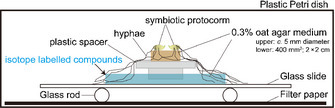
The objective of this study was to elucidate the transfer of nutrient elements in orchid symbiotic protocorms at the cellular level by imaging of stable isotope tracers. We address the long-standing question of whether nutrients move by transport across the symbiotic interface or solely by lysis of fungal pelotons.[U-13C]glucose and 15NH415NO3 were added to Ceratobasidium sp. hyphae extending from symbiotic protocorms of Spiranthes sinensis. Isotope images were taken from resin-embedded sections of protocorms using ultra-high spatial resolution secondary ion mass spectrometry (SIMS). Analyses of regions of interest were conducted on isotope ratio images for fungal and host structures.Amyloplasts adjacent to young pelotons showed elevated 13C/12C, which indicated that fungal carbon (C) was transferred from live hyphae. Senescent pelotons and their surrounding host cytoplasm showed significantly higher isotope ratios than young pelotons and surrounding host cytoplasm. These results indicate an inflow of C to senescent hyphae, which was then transferred to the host.The findings of this study provide some support for each of the two contradictory hypotheses concerning nutrient exchange in the symbiotic protocorm: the interface between the symbionts is involved before fungal senescence, and peloton degradation also releases a significant amount of C and nitrogen to host cells.
Scoop.it!
Direct Regulation of the NADPH Oxidase RBOHD by the PRR-Associated Kinase BIK1 during Plant Immunity
The rapid production of reactive oxygen species (ROS) burst is a conserved signaling output in immunity across kingdoms. In plants, perception of pathogen-associated molecular patterns (PAMPs) by surface-localized pattern recognition receptors (PRRs) activates the NADPH oxidase RBOHD by hitherto unknown mechanisms. Here, we show that RBOHD exists in complex with the receptor kinases EFR and FLS2, which are the PRRs for bacterial EF-Tu and flagellin, respectively. The plasma-membrane-associated kinase BIK1, which is a direct substrate of the PRR complex, directly interacts with and phosphorylates RBOHD upon PAMP perception. BIK1 phosphorylates different residues than calcium-dependent protein kinases, and both PAMP-induced BIK1 activation and BIK1-mediated phosphorylation of RBOHD are calcium independent. Importantly, phosphorylation of these residues is critical for the PAMP-induced ROS burst and antibacterial immunity. Our study reveals a rapid regulatory mechanism of a plant RBOH, which occurs in parallel with and is essential for its paradigmatic calcium-based regulation. Via Kamoun Lab @ TSL

Steve Marek's curator insight,
March 13, 2014 9:54 AM
Elegantly simple and effective. What about other PRRs? |
Scoop.it!
Cathy Hanus and her family have a vegetable and berry farm in Fremont, Nebraska. This video is their presentation, "The Effect of Commercially-Added Mycorrhizae and/or Compost on Early Growth of Berry Bushes," at the 2012 Farmers Forum. Learn about this SARE project here: http://mysare.sare.org/mySARE/Project...
Scoop.it!
Scoop.it!
Legumes such as alfalfa (Medicago sativa L.) are vital N2-fixing crops accounting for a global N2 fixation of ~35 MtNyear<br>1. Although enzymatic and molecular mechanisms of nodule N2 fixation are now well documented, some uncertainty remains as to whether N2 fixation is strictly coupled with photosynthetic carbon fixation. That is, the metabolic origin and redistribution of carbon skeletons used to incorporate nitrogen are still relatively undefined. Here, we conducted isotopic labelling with both 15N2 and 13C-depleted CO2 on alfalfa plants grown under controlled conditions and took advantage of isotope ratio mass spectrometry to investigate the relationship between carbon and nitrogen turn-over in respired CO2, total organic matter and amino acids. Our results indicate that CO2 evolved by respiration had an isotopic composition similar to that in organic matter regardless of the organ considered, suggesting that the turn-over of respiratory pools strictly followed photosynthetic input. However, carbon turn-over was nearly three times greater than N turn-over in total organic matter, suggesting that new organic material synthesised was less N-rich than pre-existing organic material (due to progressive nitrogen elemental dilution) or that N remobilisation occurred to sustain growth. This pattern was not consistent with the total commitment into free amino acids where the input of new C and N appeared to be stoichiometric. The labelling pattern in Asn was complex, with contrasted C and N commitments in different organs, suggesting that neosynthesis and redistribution of new Asn molecules required metabolic remobilisation. We conclude that the production of new organic material during alfalfa growth depends on both C and N remobilisation in different organs. At the plant level, this remobilisation is complicated by allocation and metabolism in the different organs. Additional keywords: carbon exchange, carbon isotopes, nitrogen fixation, nitrogen 15 isotope
Scoop.it!

Orchids are well-known for their beautiful flowers, but for me, the most fascinating feature of orchids is that they need to form interactions with fungi to be able to grow. Orchid seeds are tiny (less than 1mm long) and contain little or no endosperm (seed energy store) (2). Therefore, to germinate and grow into a mature plant, the seeds need be colonized by friendly fungi, known as mycorrhizal fungi. The fungi provide the main source of carbohydrates (e.g. sugars) for the seedling until it is able to produce its own through photosynthesis. As the chances of an individual orchid seed meeting a suitable mycorrhizal fungus are small, individual orchids can produce millions of seeds (2).
Scoop.it!
The gap between current average global wheat yields and that achievable through agronomic management and crop genetics is large. This is notable in intensive wheat rotations which are widely used. Expectations are that this gap can be reduced through soil processes, especially those that involve microbial ecology. Cross-year analysis of the soil microbiome in an intensive wheat cropping system revealed that rhizosphere bacteriachanged much more than the bulk soil community. Dominant factors influencing populations included, binding to roots,plant age , soil and planting sequence rotation. We demonstrated evolution of bacterial communities within the field rhizosphere. early in the season, communities tightly bound to the root were simplest. These increased with plant age and senescence. Loosely bound communities also increased in diversity from vegetative to reproductive plant stages but were s more stable than those tightly bound to roots. Planting sequence and, to a lesser extent, wheat genotype also significantly affected rhizosphere bacteria. Plasticity in the rhizosphere generated from crop root system management and genetics offers promise for manipulating the soil ecology of intense cereal systems. . Analyses of soil microbiomes for the purpose of generating change should include roots as well as soil loosely adhered to the roots, and the bulk soil.
Scoop.it!
o identify the molecular networks in Pseudomonas fluorescens that convey resistance to toxic concentrations of Zn, a common pollutant and hazard to biological systems. Methods and ResultsPseudomonas fluorescens strain ATCC 13525 was cultured in growth medium with millimolar concentrations of Zn. Enzymatic activities and metabolite levels were monitored with the aid of in-gel activity assays and high performance liquid chromatography, respectively. As oxidative phosphorylation was rendered ineffective, the assimilation of citric acid mediated sequentially by citrate lyase (CL), phosphoenolpyruvate carboxylase (PEPC) and pyruvate phosphate dikinase (PPDK) appeared to play a key role in ATP synthesis via substrate level phosphorylation (SLP). Enzymes generating the anti-oxidant, reduced nicotinamide adenine dinucleotide phosphate (NADPH) were enhanced while metabolic modules mediating the formation of the pro-oxidant, reduced nicotinamide adenine dinucleotide (NADH), were downregulated. ConclusionsPseudomonas fluorescens reengineers its metabolic networks to generate ATP via SLP, a stratagem that allows the microbe to compensate for an ineffective electron transport chain provoked by excess Zn. Significance and Impact of the StudyThe molecular insights described here are critical in devising strategies to bioremediate Zn-polluted environments.
Scoop.it!
PGPR,PLANT GROWTH PROMOTING RHIZOBACTERIA
Scoop.it!
Learn how to say Bradyrhizobium correctly with EmmaSaying's "how do you pronounce" free tutorials. http://www.emmasaying.com/ Take a look at my comparison tu...
Scoop.it!

To shed light on the breadth of the host range of Mesorhizobium loti strain NZP2037, we determined the sequence of the NZP2037 symbiosis island and compared it with those of strain MAFF303099 and R7A islands. The determined 533 kb sequence of NZP2037 symbiosis island, on which 504 genes were predicted, implied its integration into a phenylalanine-tRNA gene and subsequent genome rearrangement. Comparative analysis revealed that the core regions of the three symbiosis islands consisted of 165 genes. We also identified several NZP2037-specific genes with putative functions in nodulation-related events, suggesting that these genes contribute to broaden the host range of NZP2037.
Kasai-Maita H, Hirakawa H, Nakamura Y, Kaneko T, Miki K, Maruya J, Okazaki S, Tabata S, Saeki K, Sato S. (2013). Microbes Environ May 11. [Epub ahead of print]. Via IvanOresnik
Scoop.it!

The endoplasmic reticulum (ER) of the model legume Lotus japonicus was visualized using green fluorescent protein (GFP) fused with the KDEL sequence to investigate the changes in the root hair cortical ER in the presence or absence of Mesorhizobium loti using live fluorescence imaging. Uninoculated root hairs displayed dynamic forms of ER, ranging from a highly condensed form to an open reticulum. In the presence of M. loti, a highly dynamic condensed form of the ER linked with the nucleus was found in deformed, curled, and infected root hairs, similar to that in uninoculated and inoculated growing zone I and II root hairs. An open reticulum was primarily found in mature inoculated zone III root hairs, similar to that found in inactive deformed/curled root hairs and infected root hairs with aborted infection threads. Co-imaging of GFP-labeled ER with light transmission demonstrated a correlation between the mobility of the ER and other organelles and the directionality of the cytoplasmic streaming in root hairs in the early stages of infection thread formation and growth. ER remodeling in root hair cells is discussed in terms of possible biological significance during root hair growth, deformation/curling, and infection in the Mesorhizobium-L. japonicus symbiosis. Via Ryohei Thomas Nakano
Scoop.it!

In α-proteobacteria, strict regulation of cell cycle progression is necessary for the specific cellular differentiation required for adaptation to diverse environmental niches. The symbiotic lifestyle of Sinorhizobium meliloti requires a drastic cellular differentiation that includes genome amplification. To achieve polyploidy, the S. meliloti cell cycle program must be altered to uncouple DNA replication from cell division. In the α-proteobacterium Caulobacter crescentus, cell cycle-regulated transcription plays an important role in the control of cell cycle progression but this has not been demonstrated in other α-proteobacteria. Here we describe a robust method for synchronizing cell growth that enabled global analysis of S. meliloti cell cycle-regulated gene expression. This analysis identified 462 genes with cell cycle-regulated transcripts, including several key cell cycle regulators, and genes involved in motility, attachment, and cell division. Only 28% of the 462 S. meliloti cell cycle-regulated genes were also transcriptionally cell cycle-regulated in C. crescentus. Furthermore, CtrA- and DnaA-binding motif analysis revealed little overlap between the cell cycle-dependent regulons of CtrA and DnaA in S. meliloti and C. crescentus. The predicted S. meliloti cell cycle regulon of CtrA, but not that of DnaA, was strongly conserved in more closely related α-proteobacteria with similar ecological niches as S. meliloti, suggesting that the CtrA cell cycle regulatory network may control functions of central importance to the specific lifestyles of α-proteobacteria.
De Nisco NJ1, Abo RP, Wu CM, Penterman J, Walker GC. (2014). Proc Natl Acad Sci U S A. Mar 4;111(9):3217-
Via IvanOresnik
Scoop.it!

In order to address the hypothesis that seeds from ecologically and geographically diverse plants harbor characteristic epiphytic microbiota, we characterized the bacterial and fungal microbiota associated with Triticum and Brassica seed surfaces.The total microbial complement was determined by amplification and sequencing of a fragment of chaperonin 60 (cpn60). Specific microorganisms were quantified by qPCR. Bacteria and fungi corresponding to operational taxonomic units (OTU) that were identified in the sequencing study were isolated and their interactions examined.A total of 5477 OTU were observed from seed washes. Neither total epiphytic bacterial load nor community richness/evenness was significantly different between the seed types; 578 OTU were shared among all samples at a variety of abundances. Hierarchical clustering revealed that 203 were significantly different in abundance on Triticum seeds compared with Brassica. Microorganisms isolated from seeds showed 99–100% identity between the cpn60 sequences of the isolates and the OTU sequences from this shared microbiome. Bacterial strains identified as Pantoea agglomerans had antagonistic properties toward one of the fungal isolates (Alternaria sp.), providing a possible explanation for their reciprocal abundances on bothTriticum and Brassica seeds.cpn60 enabled the simultaneous profiling of bacterial and fungal microbiota and revealed a core seed-associated microbiota shared between diverse plant genera.
Jean-Michel Ané's insight:
Very interesting for both the technical approach and the results
|




