Your new post is loading...

|
Scooped by
Jean-Michel Ané
June 15, 2024 9:39 PM
|
Nitrate reductase (NR) is a key enzyme in higher land plants, catalyzing the rate-limiting reduction of nitrate to nitrite in the nitrate assimilation pathway. Phylogenetic analysis of NR protein sequences indicates that duplication events responsible for the existence of two NR branches, corresponding to NR1 and NR2 genes, occurred after the divergence of the different orders within the Rosids clade. A third NR sequence branch, named NR3-type, emerged in the inverted repeat-lacking clade of the Fabales order. An intriguing feature of the NR3-type sequences is the absence of conserved phosphorylation sites in the two hinge regions, in contrast to all other NRs. To investigate the respective roles of MtNR1, MtNR2 and MtNR3 in M. truncatula, three single Tnt1 retrotransposon-tagged nr mutants and one nr1/nr2 double mutant were analyzed on plants growing either on nitrate, or during the nodulation process. Overall, the absence of phenotypes observed in M. truncatula single mutants suggests a significant functional redundancy between the different NRs in M. truncatula. The most striking outcome of this work is the almost complete impairment of nodulation capacity observed in the nr1/nr2 double mutant, demonstrating that NR activity is required for the functioning of the N2-fixing symbiosis.
|
|
Scooped by
Jean-Michel Ané
June 15, 2024 9:36 PM
|
Tree species diversity and mycorrhizal associations play a central role for forest productivity, but factors driving positive biodiversity-productivity relationships remain poorly understood. In a biodiversity experiment manipulating tree diversity and mycorrhizal associations, we examined the roles of above- and belowground processes in modulating wood productivity in young temperate tree communities and potential underlying mechanisms. We found that tree species richness, but not mycorrhizal associations, increased forest productivity by enhancing aboveground structural complexity within communities. Structurally complex communities were almost twice as productive as structurally simple stands, particularly when light interception was high. We further demonstrate that overyielding was largely explained by positive net biodiversity effects on structural complexity with functional variation in shade tolerance and taxonomic diversity being key drivers of structural complexity in mixtures. Consideration of stand structural complexity appears to be a crucial element in predicting carbon sequestration in the early successional stages of mixed-species forests.
|
|
Scooped by
Jean-Michel Ané
June 15, 2024 9:32 PM
|
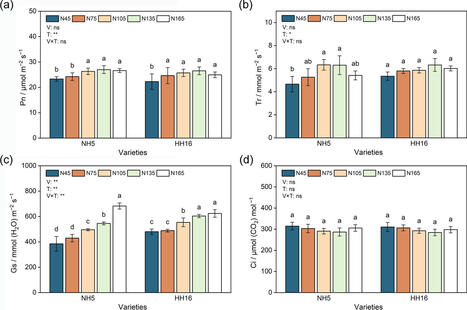
The study aims to evaluate the difference of nitrogen (N) utilization in peanut varieties with different nodulation efficiency and the contribution of different N sources to yield formation. Based on an outdoor pot experiment, 15N isotope-labeled urea was used as a N source to investigate the effects of different N fertilization levels (N rates with 45, 75, 105, 135, 165 kg N ha–1, defined as N45, N75, N105, N135 and N165 in the study, respectively) on peanut photosynthesis, photosynthate accumulation, yield, and N distribution and transport. The results showed that N application can improve peanut yield by creating photosynthesis, dry matter weight, and N accumulation, and the N105 treatment had the most significant effect. However, higher N applications inhibited the number of peanut root nodules. The ratio of N supply for peanuts from nodules, soil, and fertilizer at the pod setting stage was about 5:3:2, and the ratio of fertilizer distribution for low nodulation peanut variety of reproductive organ (pod) to nutrient organs (root, stem, leaf) was about 3:2, while the high nodulation variety was about 1:1. Biological N fixation is an important N source during peanut growth and development. Appropriate N fertilizer can further promote peanut growth and yield formation without inhibiting nodulation and N fixation. In agricultural production, optimizing N fertilizer management (105 ~ 135 kg N ha–1) in combination with using nodulation efficient peanut varieties not only promotes the N-cycling in agriculture, but also effectively reduce the waste of N fertilizer as well as environmental damage.
|
|
Scooped by
Jean-Michel Ané
June 15, 2024 5:59 PM
|
Azolla is a floating fern that has closely evolved with a vertically transmitted obligate cyanobacterium endosymbiont—Anabaena azollae—that performs nitrogen fixation in specialized Azolla leaf pockets. This cyanobac-terium has a greatly reduced genome and appears to be in the “advanced” stages of symbiosis, potentially evolving into a nitrogen-fixing organelle. However, there are also other lesser-known inhabitants of the leaf pocket whose role and mode of transmission are unknown. We sequenced 112 Azolla specimens collected across the state of California and characterized their metagenomes in order to identify the common bacterial endosymbionts of the leaf pocket and assess their patterns of co-diversification. Four taxa were found across all samples, establishing that there are multiple endosymbionts that consistently inhabit the Azolla leaf pocket. We found varying degrees of co-diversification across these taxa as well as varying degrees of isolation by distance and of pseudogenation, which implies that the endosymbiotic community is transmitted by a mix of horizontal and vertical mechanisms, and that some members of the microbiome are more facultative symbionts than others. These results show that the Azolla symbiotic community is complex, featuring members at potentially different stages of symbiosis evolution, further supporting the utility of the Azolla microcosm as a system for studying the evolution of symbioses.
|
|
Scooped by
Jean-Michel Ané
June 13, 2024 4:21 PM
|
The type III secretion system (T3SS) of Rhizobium plays a crucial role during the establishment of the soybean (Glycine max (L.) Merr.)-Rhizobium symbiosis system. Additionally, host-specific nodulation may also depend on the Nops (nodulation outer proteins) secreted by the T3SS of Rhizobium. However, there is limited understanding of the response of soybean genes to Nops. In this study, a NopC mutant, HH103ΩNopC, was constructed from Sinorhizobium fredii HH103 and then utilized to assess the impact of the NopC on nodulation. An RNA-seq analysis revealed that the GmERF5 (Glycine max Ethylene Responsive Factor 5) gene was induced by NopC, which was confirmed by qRT-PCR. Furthermore, an overexpression of the GmERF5 hair-root system was constructed to investigate the effect of GmERF5 on nodulation and its interaction with NopC. Differences in nodule number and nodule dry weight in the overexpression of the GmERF5 hair-root system supported the conclusion that GmERF5 can regulate soybean nodule phenotype via NopC. These results elucidate the genetic mechanisms that regulate nodule phenotype in soybean.
|
|
Scooped by
Jean-Michel Ané
June 13, 2024 4:09 PM
|
The root nodules of actinorhizal plants are home to nitrogen‐fixing bacterial symbionts, known as Frankia, along with a small percentage of other microorganisms. These include fungal endophytes and non‐Frankia bacteria. The taxonomic and functional diversity of the microbial consortia within these root nodules is not well understood. In this study, we surveyed and analyzed the cultivable, non‐Frankia fungal and bacterial endophytes of root nodules from red and Sitka alder trees that grow together. We examined their taxonomic diversity, co‐occurrence, differences between hosts, and potential functional roles. For the first time, we are reporting numerous fungal endophytes of alder root nodules. These include Sporothrix guttuliformis, Fontanospora sp., Cadophora melinii, an unclassified Cadophora, Ilyonectria destructans, an unclassified Gibberella, Nectria ramulariae, an unclassified Trichoderma, Mycosphaerella tassiana, an unclassified Talaromyces, Coniochaeta sp., and Sistotrema brinkmanii. We are also reporting several bacterial genera for the first time: Collimonas, Psychrobacillus, and Phyllobacterium. Additionally, we are reporting the genus Serratia for the second time, with the first report having been recently published in 2023. Pseudomonas was the most frequently isolated bacterial genus and was found to co‐inhabit individual nodules with both fungi and bacteria. We found that the communities of fungal endophytes differed by host species, while the communities of bacterial endophytes did not.
|
|
Scooped by
Jean-Michel Ané
June 13, 2024 4:05 PM
|
It is well-studied that type-III effectors are essential required by gram-negative bacteria to directly target different cellular pathways from hosts, thus enhancing their infection. However, in the unique context of legume-rhizobium symbiosis, the role of rhizobial effectors in regulating plant symbiotic pathways remains a subject of hypothesized understanding. Here, we show that NopT, a YopT-type cysteine protease from Sinorhizobium fredii NGR234 that could directly target symbiotic signaling pathway by associating with two Nod Factor Receptors (NFR1 and NFR5) from Lotus japonicus. NopT is the only effector out of 15 effectors from S. fredii NGR234 that inhibits cell death triggered by co-overexpression of NFR1 and NFR5 in Nicotiana benthamiana. NopT interacts with both NFR1 and NFR5. NopT proteolytically cleaves NFR5 in both in vitro and in vivo assays, but is later inactivated via phosphorylation by NFR1. NopT plays an essential role in mediating rhizobial infection in L. japonicus. The truncated NopT, lacking 50 N–terminal amino acids post-autocleavage, retains the ability to cleave NFR5 but no longer interacts with NFR1. Intriguingly, certain Sinorhizobium species exclusivley harbor this truncated NopT in their genomes. These findings unveil an intricate regulatory interplay between rhizobia and legumes, wherein rhizobial NopT actively cleaves NFR5, and this cleavage process is subsequently suppressed following NopT phosphorylation by NFR1. This discovery presents a compelling narrative of a nuanced regulatory interplay between rhizobia and legumes, highlighting rhizobial effector as a direct mediator targeting symbiotic pathway from plants.
|
|
Scooped by
Jean-Michel Ané
June 4, 2024 7:49 AM
|
The symbioses between leguminous plants and nitrogen-fixing bacteria known as rhizobia are well known for promoting plant growth and sustainably increasing soil nitrogen. Recent evidence indicates that hopanoids, a family of steroid-like lipids, promote Bradyrhizobium symbioses with tropical legumes. To characterize hopanoids in Bradyrhizobium symbiosis with soybean, we validated a recently published cumate-inducible hopanoid mutant of Bradyrhizobium diazoefficiens USDA110, Pcu-shc::∆shc. GC-MS analysis showed that this strain does not produce hopanoids without cumate induction, and under this condition, is impaired in growth in rich medium and under osmotic, temperature, and pH stress. In planta, Pcu-shc::∆shc is an inefficient soybean symbiont with significantly lower rates of nitrogen fixation and low survival within the host tissue. RNA-seq revealed that hopanoid loss reduces the expression of flagellar motility and chemotaxis-related genes, further confirmed by swim plate assays, and enhances the expression of genes related to nitrogen metabolism and protein secretion. These results suggest that hopanoids provide a significant fitness advantage to B. diazoefficiens in legume hosts and provide a foundation for future mechanistic studies of hopanoid function in protein secretion and motility.
|
|
Scooped by
Jean-Michel Ané
May 31, 2024 4:23 PM
|
Bacterial-fungal interactions influence microbial community performance of most ecosystems and elicit specific microbial behaviours, including stimulating specialised metabolite production. Here, we use a co-culture experimental evolution approach to investigate bacterial adaptation to the presence of a fungus, using a simple model of bacterial-fungal interactions encompassing the bacterium Bacillus subtilis and the fungus Aspergillus niger. We find in one evolving population that B. subtilis was selected for enhanced production of the lipopeptide surfactin and accelerated surface spreading ability, leading to inhibition of fungal expansion and acidification of the environment. These phenotypes were explained by specific mutations in the DegS-DegU two-component system. In the presence of surfactin, fungal hyphae exhibited bulging cells with delocalised secretory vesicles possibly provoking an RlmA-dependent cell wall stress. Thus, our results indicate that the presence of the fungus selects for increased surfactin production, which inhibits fungal growth and facilitates the competitive success of the bacterium.
|
|
Scooped by
Jean-Michel Ané
May 31, 2024 4:15 PM
|
Phosphate starvation response (PHR) transcription factors play essential roles in regulating phosphate uptake in plants through binding to the P1BS cis-element in the promoter of phosphate starvation response genes. Recently, PHRs were also shown to positively regulate arbuscular mycorrhizal colonization in rice and lotus by controlling the expression of many symbiotic genes. However, their role in arbuscule development has remained unclear.
In Medicago, we previously showed that arbuscule degradation is controlled by two SPX proteins that are highly expressed in arbuscule-containing cells. Since SPX proteins bind to PHRs and repress their activity in a phosphate-dependent manner, we investigated whether arbuscule maintenance is also regulated by PHR.
Here, we show that PHR2 is a major regulator of the phosphate starvation response in Medicago. Knockout of phr2 showed reduced phosphate starvation response, symbiotic gene expression, and fungal colonization levels. However, the arbuscules that formed showed less degradation, suggesting a negative role for PHR2 in arbuscule maintenance. This was supported by the observation that overexpression of PHR2 led to enhanced degradation of arbuscules. Although many arbuscule-induced genes contain P1BS elements in their promoters, we found that the P1BS cis-elements in the promoter of the symbiotic phosphate transporter PT4 are not required for arbuscule-containing cell expression.
Since both PHR2 and SPX1/3 negatively affect arbuscule maintenance, our results indicate that they control arbuscule maintenance partly via different mechanisms. While PHR2 potentiates symbiotic gene expression and colonization, its activity in arbuscule-containing cells needs to be tightly controlled to maintain a successful symbiosis in Medicago.
|
|
Scooped by
Jean-Michel Ané
May 31, 2024 12:52 PM
|
Root nodule symbiosis (RNS) is a complex trait that enables plants to access atmospheric nitrogen converted into usable forms through a mutualistic relationship with soil bacteria. Pinpointing the evolutionary origins of RNS is critical for understanding its genetic basis, but building this evolutionary context is complicated by data limitations and the intermittent presence of RNS in a single clade of ca. 30,000 species of flowering plants, i.e., the nitrogen-fixing clade (NFC). We developed the most extensive de novo phylogeny for the NFC and an RNS trait database to reconstruct the evolution of RNS. Our analysis identifies evolutionary rate heterogeneity associated with a two-step process: An ancestral precursor state transitioned to a more labile state from which RNS was rapidly gained at multiple points in the NFC. We illustrate how a two-step process could explain multiple independent gains and losses of RNS, contrary to recent hypotheses suggesting one gain and numerous losses, and suggest a broader phylogenetic and genetic scope may be required for genome-phenome mapping.
|
|
Scooped by
Jean-Michel Ané
May 24, 2024 8:09 PM
|
• The soil microbiome hinders Striga parasitism of sorghum roots
• A Striga-suppressive microbiome tweaks root exudate, aerenchyma, and suberin content
• Pseudomonas strain VK46 reduces haustorium formation by degrading syringic acid
• Arthrobacter strain VK49 increases sorghum endodermal suberization
|
|
Scooped by
Jean-Michel Ané
May 24, 2024 3:31 PM
|
Beneficial interactions with microorganisms are pivotal for crop performance and resilience. However, it remains unclear how heritable the microbiome is with respect to the host plant genotype and to what extent host genetic mechanisms can modulate plant–microbiota interactions in the face of environmental stresses. Here we surveyed 3,168 root and rhizosphere microbiome samples from 129 accessions of locally adapted Zea, sourced from diverse habitats and grown under control and different stress conditions. We quantified stress treatment and host genotype effects on the microbiome. Plant genotype and source environment were predictive of microbiome abundance. Genome-wide association analysis identified host genetic variants linked to both rhizosphere microbiome abundance and source environment. We identified transposon insertions in a candidate gene linked to both the abundance of a keystone bacterium Massilia in our controlled experiments and total soil nitrogen in the source environment. Isolation and controlled inoculation of Massilia alone can contribute to root development, whole-plant biomass production and adaptation to low nitrogen availability. We conclude that locally adapted maize varieties exert patterns of genetic control on their root and rhizosphere microbiomes that follow variation in their home environments, consistent with a role in tolerance to prevailing stress.
|
|
|
Scooped by
Jean-Michel Ané
June 15, 2024 9:37 PM
|
The health of soil is paramount for sustaining life, as it hosts diverse communities of microorganisms that interact with plants, influencing their growth, health, and resilience. Beneficial microorganisms, including fungi and bacteria, form symbiotic relationships with plants, providing essential nutrients, promoting growth, and enhancing stress tolerance. These microorganisms, such as mycorrhizal fungi and plant growth-promoting bacteria, play crucial roles in nutrient cycling, soil health, and plant productivity. Additionally, they help lessen reliance on chemical fertilizers, thereby mitigating the environmental risks associated with their use. Advances in agricultural practices harness the potential of these beneficial microorganisms to improve crop yields while minimizing the environmental impact. However, challenges such as competition with indigenous microbial strains and environmental factors limit the universal utilization of microbial inoculants. Despite these challenges, understanding and leveraging the interactions between plants and beneficial microorganisms hold promise for sustainable agriculture and enhanced food security.
|
|
Scooped by
Jean-Michel Ané
June 15, 2024 9:34 PM
|
Modern cultivated rice (Oryza sativa) typically experiences limited growth benefits from arbuscular mycorrhizal (AM) symbiosis. This could be due to the long-term domestication of rice under favorable phosphorus conditions. However, there is limited understanding of whether and how the rice domestication has modified AM properties.
This study compared AM properties between a collection of wild (Oryza rufipogon) and domesticated rice genotypes and investigated the mechanisms underlying their differences by analyzing physiological, genomic, transcriptomic, and metabolomic traits critical for AM symbiosis.
The results revealed significantly lower mycorrhizal growth responses and colonization intensity in domesticated rice compared to wild rice, and this change of AM properties may be associated with the domestication modifications of plant phosphorus utilization efficiency at physiological and genomic levels. Domestication also resulted in a decrease in the activity of the mycorrhizal phosphorus acquisition pathway, which may be attributed to reduced mycorrhizal compatibility of rice roots by enhancing defense responses like root lignification and reducing carbon supply to AM fungi.
In conclusion, rice domestication may have changed its AM properties by modifying P nutrition-related traits and reducing symbiotic compatibility. This study offers new insights for improving AM properties in future rice breeding programs to enhance sustainable agricultural production.
|
|
Scooped by
Jean-Michel Ané
June 15, 2024 6:02 PM
|
Biological nitrogen fixation (BNF) by symbiotic bacteria plays a vital role in sustainable agriculture. However, current quantification methods are often expensive and impractical. This study explores the potential of Raman spectroscopy, a non-invasive technique, for rapid assessment of BNF activity in soybeans. Raman spectra were obtained from soybean plants grown with and without rhizobia bacteria to identify spectral signatures associated with BNF. δN15 isotope ratio mass spectrometry (IRMS) was used to determine actual BNF percentages. Partial least squares regression (PLSR) was employed to develop a model for BNF quantification based on Raman spectra. The model explained 80% of the variation in BNF activity. To enhance the model's specificity for BNF detection regardless of nitrogen availability, a subsequent elastic net (Enet) regularization strategy was implemented. This approach provided insights into key wavenumbers and biochemicals associated with BNF in soybeans.
|
|
Scooped by
Jean-Michel Ané
June 13, 2024 4:29 PM
|
The roots of plants play multiples functions that are essential for growth and development, including anchoring to the soil and water and nutrient acquisition. These underground organs exhibit the plasticity to modify their root system architecture in response to environmental cues allowing adaptation to change in water and nutrient availability. In addition, roots enter in mutualistic interactions with soil microorganisms, e.g. the root nodule symbiosis established between a limited group of plants and nitrogen fixing soil bacteria and the arbuscular mycorrhiza symbiosis involving most land plants and fungi of the Glomeromycetes phylum. In the past 20 years, genetic approaches allowed the identification and functional characterization of genes required for the specific programs of root development, root nodule and arbuscular mycorrhiza symbioses. These genetic studies provided evidence that the program of root nodule symbiosis recruited components of the arbuscular mycorrhiza symbiosis and the root developmental programs. The execution of these programs is strongly influenced by epigenetic changes -DNA methylation and histone post-translational modifications- that alter chromatin conformation modifying the expression of key genes. In this review, we summarize recent advances that highlighted how DNA methylation and histone post-translational modifications, as well as chromatin remodeling factors and long non-coding RNAs, shape the root system architecture and allow the successful establishment of both root nodule and arbuscular mycorrhiza symbioses. We anticipate that the analysis of dynamic epigenetic changes and chromatin 3D structure in specific single-cells or tissue types of root organs will illuminate our understanding of how root developmental and symbiotic programs are orchestrated, opening exciting questions and new perspectives to modulate agronomical and ecological traits linked to nutrient acquisition.
|
|
Scooped by
Jean-Michel Ané
June 13, 2024 4:18 PM
|
Life on Earth comprises prokaryotes and a broad assemblage of endosymbioses. The pages of Molecular Biology and Evolution and Genome Biology and Evolution have provided an essential window into how these endosymbiotic interactions have evolved and shaped biological diversity. Here, we provide a current perspective on this knowledge by drawing on decades of revelatory research published in Molecular Biology and Evolution and Genome Biology and Evolution, and insights from the field at large. The accumulated work illustrates how endosymbioses provide hosts with novel phenotypes that allow them to transition between adaptive landscapes to access environmental resources. Such endosymbiotic relationships have shaped and reshaped life on Earth. The early serial establishment of mitochondria and chloroplasts through endosymbioses permitted massive upscaling of cellular energetics, multicellularity, and terrestrial planetary greening. These endosymbioses are also the foundation upon which all later ones are built, including everything from land–plant endosymbioses with fungi and bacteria to nutritional endosymbioses found in invertebrate animals. Common evolutionary mechanisms have shaped this broad range of interactions. Endosymbionts generally experience adaptive and stochastic genome streamlining, the extent of which depends on several key factors (e.g. mode of transmission). Hosts, in contrast, adapt complex mechanisms of resource exchange, cellular integration and regulation, and genetic support mechanisms to prop up degraded symbionts. However, there are significant differences between endosymbiotic interactions not only in how partners have evolved with each other but also in the scope of their influence on biological diversity. These differences are important considerations for predicting how endosymbioses will persist and adapt to a changing planet.
|
|
Scooped by
Jean-Michel Ané
June 13, 2024 4:09 PM
|
Root nodule symbiosis (RNS) between legume and rhizobia is a major source of nitrogen in agricultural systems. Effective symbiosis requires precise regulation of plant defense responses. The role of the defense hormone jasmonic acid in the immune response has been extensively studied. The current research shows that JA can play either a positive or negative regulatory role in RNS depending on its concentration, while the molecular mechanisms remain to be elucidated. Here, we found that inoculation with rhizobia Sm1021 induced the JA pathway response in Medicago truncatula, and blocking JA pathway significantly reduced the number of infection threads. Mutations in the MtMYC2 gene, a JA signaling master transcription factor, significantly inhibited rhizobia infection, terminal differentiation, and symbiotic cell formation. Combining RNA-seq and ChIP-seq, we discovered that MtMYC2 regulates the expression of nodule-specific MtDNF2, MtNAD1, and MtSymCRK to suppress host defense. MtMYC2 activates MtDNF1 expression to regulate the maturation of MtNCRs, which in turn promotes bacteroid formation. More importantly, MtMYC2 promotes the expression of MtIPD3 to participate in symbiotic signaling transduction. Notably, the MtMYC2-MtIPD3 transcriptional regulation module is specifically present in legumes. Additionally, The Mtmyc2 mutants exhibits a susceptible phenotype to Rhizoctonia solani. Collectively, our findings reveal the molecular mechanisms of the JA pathway in RNS and further broaden the understanding of JA in the plant-microbe interaction network.
|
|
Scooped by
Jean-Michel Ané
June 7, 2024 4:28 AM
|
Mucoromycotina fine root endophytes have similar ecological functions as arbuscular mycorrhizal fungi in assisting plant nutrient uptake. The mechanisms enabling their symbiosis with plants remain largely unexplored.
The mechanisms of Mucoromycotina fine root endophyte symbioses may overlap with those regulating arbuscular mycorrhizal fungal symbioses or the plant endophytes Colletotrichum tofieldiae and Serendipita indica.
Contrasting colonisation mechanisms between Mucoromycotina fine root endophytes and arbuscular mycorrhiza fungi could provide insights into how ancient fungi facilitated the terrestrialisation of land plants.
Investigations into mechanisms of symbiosis will benefit from inclusion of Mucoromycotina fine root endophytes as these fungi are more culturable than arbuscular mycorrhizal fungi under laboratory conditions and can be grown in the absence of a plant host.
|
|
Scooped by
Jean-Michel Ané
May 31, 2024 5:36 PM
|
During arbuscular mycorrhizal (AM) symbiosis, plant innate immunity is modulated to a prime state to allow for fungal colonization. The underlying mechanisms remain to be further explored. In this study, two rice genes encoding LysM extracellular (LysMe) proteins were investigated.
By obtaining OsLysMepro:GUS transgenic plants and generating oslysme1, oslysme2 and oslysme1oslysme2 mutants via CRISPR/Cas9 technique, OsLysMe genes were revealed to be specifically induced in the arbusculated cells and mutations in either gene caused significantly reduced root colonization rate by AM fungus Rhizophagus irregularis. Overexpression of OsLysMe1 or OsLysMe2 dramatically increased the colonization rates in rice and Medicago truncatula.
The electrophoretic mobility shift assay and dual-luciferase reporter assay supported that OsLysMe genes are regulated by OsWRI5a. Either OsLysMe1 or OsLysMe2 can efficiently rescue the impaired AM phenotype of the mtlysme2 mutant, supporting a conserved function of LysMe across monocotyledonous and dicotyledonous plants.
The co-localization of OsLysMe proteins with the apoplast marker SP-OsRAmy3A implies their probable localization to the periarbuscular space (PAS) during symbiosis. Relative to the fungal biomass marker RiTEF, some defense-related genes showed disproportionately high expression levels in the oslysme mutants. These data support that rice plants deploy two OsLysMe proteins to facilitate AM symbiosis, likely by diminishing plant defense responses.
|
|
Scooped by
Jean-Michel Ané
May 31, 2024 4:18 PM
|
• Microbes facilitate plant nutrient acquisition and improve nutrient use efficiency.
• Plants control rhizosphere microbiome assembly and behavior through root exudates.
• Exudate engineering may enhance nutrient use efficiency by altering the rhizosphere.
• Soil microbe engineering is an important approach in sustainable agriculture.
|
|
Scooped by
Jean-Michel Ané
May 31, 2024 4:11 PM
|
Bean production in Tanzania barely meets half of the domestic demand because of low yield attributed to low fertility, nitrogen being the most common deficient. The use of rhizobia inoculants can substantially increase bean yields. However, less than 1% of the farming population is aware of inoculants. The aim of the study was to evaluate the efficacy of different rhizobia strains with specific common beans landraces in biological nitrogen fixation and yields. Four experiments were conducted during in a screen house at Sokoine University of Agriculture (SUA). Two experiment consisted Leonard jar and the other two were pot experiments in which the soil used were either sterilized or unsterilized. The landraces collected were Kasuka Nywele, Msafiri and Manjano from Mbeya; Nyayo, Soya and Kachumbaa from Arusha; and Kabungu, Nyamungu and Karanga from Morogoro. Two sets of Leonard jars were arranged in completely randomized block design in triplicate and the other two pot experiments were arranged in split split plot design. Inoculants in pot experiments used were Nitro-SUA, Underwood Biostacked as commercial and native. Landrace were the main plot, soil sterilization as a sub plot and inoculants as sub sub plot replicated three times. Data were subjected to analysis of variance using GENSTAT software. Significance differences in N2 fixation were observed among all landraces in all experiments, promising results were observed from Nyayo, Nyamungu, Msafiri and Kabungu. Native rhizobia had comparable symbiotic effectiveness to commercial inoculants in unsterilized soils and vice versa in sterilized soils conditions though soil sterilization was not significant. The findings on this study provide rooms for further research especially on the promising landraces to nodulation and explore their effectiveness.
|
|
Scooped by
Jean-Michel Ané
May 24, 2024 8:15 PM
|
The rhizosphere microbiome plays critical roles in plant growth and provides promising solutions for sustainable agriculture. While the rhizosphere microbiome frequently fluctuates with the soil environment, recent studies have demonstrated that a small proportion of the microbiome is consistently assembled in the rhizosphere of a specific plant genotype regardless of the soil condition, which is determined by host genetics. Based on these breakthroughs, which involved exploiting the plant-beneficial function of the rhizosphere microbiome, we propose to divide the rhizosphere microbiome into environment-dominated and plant genetic-dominated components based on their different assembly mechanisms. Subsequently, two strategies to explore the different rhizosphere microbiome components for agricultural production are suggested, that is, the precise management of the environment-dominated rhizosphere microbiome by agronomic practices, and the elucidation of the plant genetic basis of the plant genetic-dominated rhizosphere microbiome for breeding microbiome-assisted crop varieties. We finally present the major challenges that need to be overcome to implement strategies for modulating these two components of the rhizosphere microbiome.
|
|
Scooped by
Jean-Michel Ané
May 24, 2024 3:39 PM
|
Legumes are renowned for their distinctive biological characteristic of forming symbiotic associations with soil bacteria, mostly belonging to the Rhizobiaceae familiy, leading to the establishment of symbiotic root nodules. Within these nodules, rhizobia play a pivotal role in converting atmospheric nitrogen into a plant-assimilable form. However, it has been discerned that root nodules of legumes are not exclusively inhabited by rhizobia; non-rhizobial endophytic bacteria also reside within them, yet their functions remain incompletely elucidated. This comprehensive review synthesizes available data, revealing that Bacillus and Pseudomonas are the most prevalent genera of nodule endophytic bacteria, succeeded by Paenibacillus, Enterobacter, Pantoea, Agrobacterium, and Microbacterium. To date, the bibliographic data available show that Glycine max followed by Vigna radiata, Phaseolus vulgaris and Lens culinaris are the main hosts for nodule endophytic bacteria. Clustering analysis consistently supports the prevalence of Bacillus and Pseudomonas as the most abundant nodule endophytic bacteria, alongside Paenibacillus, Agrobacterium, and Enterobacter. Although non-rhizobial populations within nodules do not induce nodule formation, their presence is associated with various plant growth-promoting properties (PGPs). These properties are known to mediate important mechanisms such as phytostimulation, biofertilization, biocontrol, and stress tolerance, emphasizing the multifaceted roles of nodule endophytes. Importantly, interactions between non-rhizobia and rhizobia within nodules may exert influence on their leguminous host plants. This is particularly shown by co-inoculation of legumes with both types of bacteria, in which synergistic effects on plant growth, yield, and nodulation are often measured. Moreover these effects are pronounced under both stress and non-stress conditions, surpassing the impact of single inoculations with rhizobia alone.
|


 Scoop.it!