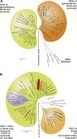
The role of plant growth-promoting rhizobacteria (PGPR) in adaptation of plants in extreme environments is not yet completely understood. For this study native bacteria were isolated from rhizospeheric arid soils and evaluated for both growth-promoting abilities and antagonistic potential against phytopathogenic fungi and nematodes. The phylogentic affiliation of these representative isolates was also characterized. Rhizobacteria associated with 11 wild plant species from the arid soil of Almadinah Almunawarah, Kingdom of Saudi Arabia (KSA) were investigated. From a total of 531 isolates, only 66 bacterial isolates were selected based on their ability to inhibit Fusarium oxysporum, and Sclerotinia sclerotiorum. The selected isolates were screened in vitro for activities related to plant nutrition and plant growth regulation as well as for antifungal and nematicidal traits. Isolated bacteria were found to exhibit capabilities in fix atmospheric nitrogen, produce ammonia, indoleacetic acid (IAA), siderophores, solubilize phosphate and zinc, and showed an antagonistic potential against some phytopathogenic fungi and one nematode species (Meloidogyne incognita) to various extent. Isolates were ranked by their potential ability to function as PGPR. The 66 isolates were genotyped using amplified rDNA restriction analysis (ARDRA) and 16S rRNA gene sequence analysis. The taxonomic composition of the representative genotypes from both rhizosphere and rhizoplane comprised Bacillus, Enterobacter and Pseudomonas. Out of the 10 genotypes, three strains designated as PHP03, CCP05, and TAP02 might be regarded as novel strains based on their low similarity percentages and high bootstrap values. The present study clearly identified specific traits in the isolated rhizobacteria, which make them good candidates as PGPR and might contribute to plant adaption to arid environments. Application of such results in agricultural fields may improve and enhance plant growth in arid soils.
The first commercialization of seedlings inoculated with truffle fungi occurred in 1973. Over the last 40 years, considerable progress has been made relative to quality control for inoculated seedlings. A recently published paper by Andrés-Alpuente and colleagues (Mycorrhiza 24:29–37, 2014) reviewed and tested the different methods of mycorrhization assessment currently used in Europe. The aim of this paper is to augment their findings by adding information to the discussion about the most important steps in seedling quality control. Additionally, the history of seedlings inoculated with truffles, procedures currently used in France for seedling control quality, and a reflection on future research aimed at increasing truffle production will be presented.
Ericaceae diversity hotspots are in the mountains of the Neotropics and Papua New Guinea, South Africa’s fynbos and Southeast Asia but majority of references to their root mycobionts come from the Northern Hemisphere. Here, typical cultivable ericoid mycorrhizal (ErM) fungi comprise Rhizoscyphus ericae, Meliniomyces variabilis, and Oidiodendron maius. It is however unclear whether this is true also for the Southern Hemisphere. Our study focused on cultivable mycobionts from hair roots of Gaultheria mucronata and Gaultheria poeppigii (Ericaceae) from two natural forests in NW Patagonia, Argentina, differing in mycorrhizal preferences of their tree dominants. We detected 62 well-defined OTUs mostly belonging to Helotiales and Hypocreales; the most frequent were Phialocephala fortinii s. l., Pochonia suchlasporia, and Ilyonectria radicicola. Only one out of 257 isolates showed ITS nrDNA similarity to members of the R. ericae aggregate (REA) but was not conspecific with R. ericae, and only five isolates were conspecific with O. maius. Microscopic observations showed that the screened roots were frequently colonized in a manner differing from the pattern typically produced by R. ericae and O. maius. A re-synthesis experiment with selected isolates showed that only O. maius formed colonization resembling ericoid mycorrhiza. Amplification of root fungal DNA with REA-specific and Sebacinaceae-specific primers showed that REA mycobionts were present in some of the screened samples while Sebacinaceae were present in all samples. These results suggest that Gaultheria spp. from NW Patagonia form ericoid mycorrhizae predominantly with the difficult-to-cultivate Sebacinaceae while the incidence of REA is relatively low and may be masked by other most likely non-mycorrhizal cultivable mycobionts.
Soil bacteria called rhizobia are gram-negative capable to colonize the soil immediately surrounding roots under the influence of the plant “rhizosphere” and reduce atmospheric nitrogen into the form available to plants through nitrogen fixation process. Nitrogen is the most limiting and supplied nutrient to most plants, and the determinant of plant growth. Legumes differ with most plants because they have access to nitrogen from both mineral and symbiotic sources. Small-scale farmers who are the major legume producers in Africa rarely apply fertilizers during legume production. Hence, the crop is largely dependent on fixed nitrogen from native nitrogen fixers. Isolation of rhizobia for legume production has been given a little attention in Africa due to inadequate research or negligence of researchers and unawareness of its potential in legume production as well as lack of an intention from skilled personnel to popularize the technology. Evaluation of effectiveness of isolated rhizobia is essential for inoculants preparation, host specificity recommendation and symbiotic effectiveness. The isolation, determination of their population in the soil and assessing factors affecting their population and testing the effectiveness of native nitrogen fixers with respect to right trap host crop are given a special attention in this review.
Various cleavage products of C40 carotenoid substrates are formed preferentially or exclusively in roots. Such apocarotenoid signaling or regulatory compounds differentially induced in roots during environmental stress responses including root colonization by arbuscular mycorrhizal fungi include ABA, strigolactones and C13 α-ionol/C14 mycorradicin derivatives. The low carotenoid levels in roots raise the question of whether there is a regulated precursor supply channeled into apocarotenoid formation distinct from default carotenoid pathways. This review describes root-specific isogene components of carotenoid pathways toward apocarotenoid formation, highlighting a new PSY3 class of phytoene synthase genes in dicots. It is clearly distinct from the monocot PSY3 class co-regulated with ABA formation. At least two members of the exclusive dicot PSY3s are regulated by nutrient stress and mycorrhization. This newly recognized dicot PSY3 (dPSY3 vs. mPSY3 from monocots) class probably represents an ancestral branch in the evolution of the plant phytoene synthase family. The evolutionary history of PSY genes is compared with the evolution of MEP pathway isogenes encoding 1-deoxy-d-xylulose 5-phosphate synthases (DXS), particularly DXS2, which is co-regulated with dPSY3s in mycorrhizal roots. Such stress-inducible isoforms for rate-limiting steps in root carotenogenesis might be components of multi-enzyme complexes committed to apocarotenoid rather than to carotenoid formation.
The signaling of the plant hormone ethylene has been studied genetically, resulting in the identification of signaling components from membrane receptors to nuclear effectors. Among constituents of the hormone signaling pathway, functional links involving a putative mitogen-activated protein kinase kinase CONSTITUTIVE TRIPLE RESPONSE1 (CTR1) and a membrane transporter-like protein ETHYLENE INSENSITIVE2 (EIN2) have been missing for a long time. We now learn that EIN2 is cleaved and its C-terminal end moves to the nucleus upon ethylene perception at the membrane receptors, and then the C-terminal end of EIN2 in the nucleus supports EIN3-dependent ethylene-response gene expression. CTR1 kinase activity negatively controls the EIN2 cleavage process through direct phosphorylation. Despite the novel connection of CTR1 with EIN2 that explains a large portion of the missing links in ethylene signaling, our understanding still remains far from its completion. This focused review will summarize recent advances in the EIN3-dependent ethylene signaling mechanisms including CTR1–EIN2 functions with respect to EIN3 regulation and ethylene responses. This will also present several emerging issues that need to be addressed for the comprehensive understanding of signaling pathways of the invaluable plant hormone ethylene.
Ca2+ signatures are central to developmental processes and adaptive responses in plants. However, high-resolution studies of Ca2+ dynamics using genetically encoded Ca2+ indicators (GECIs) such as Yellow Cameleon (YC) proteins have so far not been conducted in important model crops such as rice (Oryza sativa). We conducted a comparative study of 35S and ubiquitin-10 (UBQ10) promoter functionality in Arabidopsis thaliana and O. sativa plants expressing the Ca2+ indicator Yellow Cameleon 3.6 (YC3.6) under control of the UBQ10 or 35S promoter. Ca2+ signatures in roots of both species were analyzed during exposure to hyperpolarization/depolarization cycles or in response to application of the amino acid glutamate. We found a superior performance of the UBQ10 promoter with regard to expression pattern, levels and expression stabilities in both species. We observed remarkable differences between the two species in the spatiotemporal parameters of the observed Ca2+ signatures. Rice appeared in general to respond with a lower maximal signal amplitude but greatly increased signal duration when compared with Arabidopsis. Our results identify important advantages to using the UBQ10 promoter in Arabidopsis and rice and in T-DNA mutant backgrounds. Moreover, the observed differences in Ca2+ signaling in the two species underscore the need for comparative studies to achieve a comprehensive understanding of Ca2+ signaling in plants.
Bacteria were isolated from surface disinfected seeds of eight modern corn types and an ancestor of corn, ‘teosinte’, and identified using 16S rDNA sequences. From each of the modern corn types we obtained Bacillus spp. (including, B. amyloliquefaciens and B. subtilis); while from teosinte we obtained only Pantoea agglomerans and Agrobacterium species. Of these bacteria, only P. agglomerans could actively grow under hypersaline conditions and increase salt tolerance of tropical corn seedlings. In laboratory and greenhouse experiments where plants were watered with a 0.2 mol l−1 NaCl solution, P. agglomerans was found to enhance the capacity of tropical corn to grow compared to uninoculated controls. The total dry biomass was significantly higher in P. agglomerans treated plants compared to controls under saline water. Gene expression analysis showed the up-regulation of the aquaporin gene family especially plasma membrane integral protein (ZmPIP) genes in P. agglomerans-treated plants. The plasma membrane integral protein type 2 (PIP2-1) gene in tropical corn seedlings was highly up-regulated by P. agglomerans treatment under salt stress conditions. Microscopic examination of P. agglomerans inoculated seedlings revealed that the bacterium colonized root meristems densely, and as roots developed, the bacterium became sparsely located in cell junctions.
Mycorrhiza Proves Valuable in Qatar's Saline Soils Big Picture Agriculture If you are a gardener and want to promote the growth of your own garden soil network of Mycorrhiza, add compost, don't use synthetic chemicals, do minimum tillage, rotate...
TED Talk: Phosphorus Fertilizer Should Be Replaced with Mycorrhizal Fungi Big Picture Agriculture Hijri's mycorrhizal fungi solution, while it is not the only farming practice method to enhance the availability of phosphorus for growing crops, is...
Join Kim Eierman, Founder of EcoBeneficial, for an interview with Dr. Roger Koide, professor at Brigham Young University for a discussion about mycorrhizal f...
For survival, plants have to efficiently adjust their phenotype to environmental challenges, finely coordinating their responses to balance growth and defence. Such phenotypic plasticity can be modulated by their associated microbiota. The widespread mycorrhizal symbioses modify plant responses to external stimuli, generally improving the resilience of the symbiotic system to environmental stresses. Phytohormones, central regulators of plant development and immunity, are instrumental in orchestrating plant responses to the fluctuating environment, but also in the regulation of mycorrhizal symbioses. Exciting advances in the molecular regulation of phytohormone signalling are providing mechanistic insights into how plants coordinate their responses to environmental cues and mycorrhizal functioning. Here, we summarize how these mechanisms permit the fine-tuning of the symbiosis according to the ever-changing environment.
The common occurrence of mutualistic interactions between plants and root symbionts is problematic. As the delivery of benefit to hosts involves costs to symbionts, symbionts that provide reduced benefit to their host are expected to increase in frequency. Plants have been shown to allocate preferentially to the most efficient symbiont and this preferential allocation may stabilize the mutualism. I construct a general model of the interactive feedbacks of host preferential allocation and the dynamics of root symbiont populations to evaluate the stability of nutritional mutualisms. Preferential allocation can promote the evolution of mutualism even when the cost to the symbiont is very large. Moreover, the physiological plasticity of preferential allocation likely leads to coexistence of beneficial and nonbeneficial symbionts. For arbuscular mycorrhizal fungi, which facilitate plant uptake of phosphorus (P), the model predicts greater P transfer from these fungi per unit carbon invested with decreasing concentrations of soil P and with increasing concentrations of atmospheric CO2, patterns that have been observed in laboratory and field studies. This framework connects physiological plasticity in plant allocation to population processes that determine mutualism stability and, as such, represents a significant step in understanding the stability and environmental patterns in mutualism.
The synergistic and antagonistic interactions among biotic components in the rhizosphere play a crucial role in plant defence against soil-borne pathogens. We investigated if the rhizosphere helper bacterium Streptomyces sp. AcH 505 (HB) indirectly protects the plant from the parasitic nematode Pratylenchus penetrans by modifying the rhizosphere microbial community structure and whether these interactions are dependent on the growth stage of oaks. Changes in the abundance of Streptomyces sp. AcH 505 and the phospholipid fatty acid (PLFA) composition of the rhizosphere soil as well as oak shoot and root biomass were assessed. Investigated were the bud resting stage A and in bud swelling stage B with maximal root elongation of oak microcuttings at two successive harvest times. The deleterious effect of P. penetrans on oak biomass was dependent on plant development, being limited to the second harvest and oak microcuttings growing at the stage B. In comparison to control and HB inoculated soils, shoot biomass decreased by about 20% and 55%, and root biomass by about 33 and 48%, respectively. The antagonistic effect of Streptomyces against the nematode was linked to shifts in the rhizosphere microbial community. The Streptomyces AcH505 strain promoted growth of oak microcuttings at bud swelling stage B during maximal root elongation and enhanced the abundance of saprophytic and ectomycorrhizal fungus in the rhizosphere by 158% with respect to controls. Our results highlight the importance of Streptomyces for counteracting the damage of nematodes and promoting plant growth in natural ecosystems such as forests.
Arbuscular mycorrhizal fungi play an important role in phosphate supply to the host plants. The fungal hyphae contain tubular vacuoles where phosphate compounds such as polyphosphate are accumulated. Despite their importance for the phosphate storage, little is known about the physiological properties of the tubular vacuoles in arbuscular mycorrhizal fungi. As an indicator of the physiological state in vacuoles, we measured pH of tubular vacuoles in living hyphae of arbuscular mycorrhizal fungus Gigaspora margarita using ratio image analysis with pH-dependent fluorescent probe, 6-carboxyfluorescein. Fluorescent images of the fine tubular vacuoles were obtained using a laser scanning confocal microscope, which enabled calculation of vacuolar pH with high spatial resolution. The tubular vacuoles showed mean pH of 5.6 and a pH range of 5.1–6.3. These results suggest that the tubular vacuoles of arbuscular mycorrhizal fungi have a mildly acidic pH just like vacuoles of other fungal species including yeast and ectomycorrhizal fungi.
Background and aims In spite of the importance of Retama species for dune stabilization and re-vegetation and the contribution to the bio-fertilization of semi-arid and arid ecosystems, the...
Salicylic acid is an important signalling molecule in plant-microbe defence and symbiosis. We analysed the transcriptional responses of the nitrogen fixing plant symbiont, Rhizobium leguminosarum bv viciae 3841 to salicylic acid. Two MFS-type multicomponent efflux systems were induced in response to salicylic acid, rmrAB and the hitherto undescribed system salRAB. Based on sequence similarity salA and salB encode a membrane fusion and inner membrane protein respectively. salAB are positively regulated by the LysR regulator SalR. Disruption of salA significantly increased the sensitivity of the mutant to salicylic acid, while disruption of rmrA did not. A salA/rmrA double mutation did not have increased sensitivity relative to the salA mutant. Pea plants nodulated by salA or rmrA strains did not have altered nodule number or nitrogen fixation rates, consistent with weak expression of salA in the rhizosphere and in nodule bacteria. However, BLAST analysis revealed seventeen putative efflux systems in Rlv3841 and several of these were highly differentially expressed during rhizosphere colonisation, host infection and bacteroid differentiation. This suggests they have an integral role in symbiosis with host plants.
Corn (Zea mays L.)–soybean [Glycine max (L.) Merr.] cropping systems of the Midwest have led to increased selection pressure on diseases caused by Fusarium pathogens. A field experiment was conducted from 2010 to 2012 near Arlington, WI, to identify interactions among disease management practices (crop rotation, host resistance, and fungicide use) that increase corn, soybean, and wheat (Triticum aestivum L.) yields. For corn grain, significant interactions were primarily driven by crop rotation. Highest corn yields across all 3 yr were observed in the corn–soybean–wheat (CSW) rotation (13.55 Mg ha−1). Corn silage yield was influenced by cultivar rotation, with highest yields displayed by the Fusarium-susceptible rotations (susceptible followed by susceptible followed by susceptible [SSS] and susceptible followed by susceptible followed by resistant [SSR]). Soybean yields were influenced by interactions involving crop rotation and cultivar rotation. Highest soybean yields were found for crop rotations containing wheat and ranged from 5.1 to 8.4% higher than the corn alternated annually with soybean (CS) rotation. The Fusarium-resistant (resistant followed by resistant followed by resistant [RRR]) cultivar rotation (4.14 Mg ha−1) yielded 3.0% better than the next highest rotation (SSR). Crop rotation, cultivar selection, and fungicide use were all key drivers for wheat yield. Highest yields on average were observed in the CSW rotation (5.62 Mg ha−1). The Fusarium head blight (FHB)–susceptible cultivar (5.50 Mg ha−1) yielded significantly higher compared to the resistant cultivar (4.89 Mg ha−1), and fungicide use increased yield in the susceptible cultivar 7.2% (5.31 to 5.69 Mg ha−1) but not for the resistant cultivar. Although interactions were not consistent for all three crops, our results suggest growers should begin with combining a high-yield-potential cultivar, regardless of its susceptibility or resistance to Fusarium pathogens, in a CSW crop rotation to maximize yield potential when managing Fusarium-related diseases.
Understanding the natural dynamics of arbuscular mycorrhizal (AM) fungi and their response to global environmental change is essential for the prediction of future plant growth and ecosystem functions. We investigated the long-term temporal dynamics and effect of elevated atmospheric carbon dioxide (CO2) and ozone (O3) concentrations on AM fungal communities. Molecular methods were used to characterize the AM fungal communities of soybean (Glycine max) grown under elevated and ambient atmospheric concentrations of both CO2 and O3 within a free air concentration enrichment experiment in three growing seasons over 5 yr. Elevated CO2 altered the community composition of AM fungi, increasing the ratio of Glomeraceae to Gigasporaceae. By contrast, no effect of elevated O3 on AM fungal communities was detected. However, the greatest compositional differences detected were between years, suggesting that, at least in the short term, large-scale interannual temporal dynamics are stronger mediators than atmospheric CO2 concentrations of AM fungal communities. We conclude that, although atmospheric change may significantly alter AM fungal communities, this effect may be masked by the influences of natural changes and successional patterns through time. We suggest that changes in carbon availability are important determinants of the community dynamics of AM fungi.
Ecologists have long acknowledged the importance of seed banks; yet, despite the fact that many plants rely on mycorrhizal fungi for survival and growth, the structure of ectomycorrhizal (ECM) fungal spore banks remains poorly understood. The primary goal of this study was to assess the geographic structure in pine-associated ECM fungal spore banks across the North American continent. Soils were collected from 19 plots in forests across North America. Fresh soils were pyrosequenced for fungal internal transcribed spacer (ITS) amplicons. Adjacent soil cores were dried and bioassayed with pine seedlings, and colonized roots were pyrosequenced to detect resistant propagules of ECM fungi. The results showed that ECM spore banks correlated strongly with biogeographic location, but not with the identity of congeneric plant hosts. Minimal community overlap was found between resident ECM fungi vs those in spore banks, and spore bank assemblages were relatively simple and dominated by Rhizopogon, Wilcoxina, Cenococcum, Thelephora, Tuber, Laccaria and Suillus. Similar to plant seed banks, ECM fungal spore banks are, in general, depauperate, and represent a small and rare subset of the mature forest soil fungal community. Yet, they may be extremely important in fungal colonization after large-scale disturbances such as clear cuts and forest fires.
Science and Technology Minister Jaipal Reddy said a new technology developed by research body TERI for mass production of biofertiliser 'Mycorrhiza' can reduce the country's dependence on chemical soil nutrients and help increase crop productivity...
The deadline for application to the first Jacques Monod Conference on Bacterial-Fungal Interactions entitled : “Bacterial-fungal interactions: a federative field for fundamental and applied microbiology“, is September 15, 2013.
Study describes Arbuscular Mycorrhiza (AM) fungi colonization within the roots of cultivated tea plants (Camellia sinensis) at four sites, that is, Goodrich, Archadia, IIP, and Vasant Vihar of Doon Valley, Dehradun, India, from ...
To get content containing either thought or leadership enter:
To get content containing both thought and leadership enter:
To get content containing the expression thought leadership enter:
You can enter several keywords and you can refine them whenever you want. Our suggestion engine uses more signals but entering a few keywords here will rapidly give you great content to curate.


 Your new post is loading...


 Scoop.it!