


Next week we'll be talking about "enthusiasm" and how important it is when teaching and communicating science. Here are some quotations about enthusiasm - do you have any favorites?
Via Mary Williams

 Your new post is loading...
 Scoop.it!
|

|
Scooped by
Jean-Michel Ané
February 28, 2015 10:43 PM
|
Scoop.it!
Seventy bacterial strains were isolated from root nodules of the legume Hedysarum flexuosum grown wild in soils from Northwest Morocco. Repetitive extragenic palindromic (REP)-polymerase chain reaction (PCR) clustered the strains into 30 REP-PCR groups. The nearly complete sequence of the 16S rRNA gene from a representative strain of each REP-PCR pattern showed that 17 strains were closely related to members of the genus Rhizobium of the family Rhizobiaceae of the Alphaproteobacteria. Pairwise alignments between globally aligned sequences of the 16S rRNA gene indicated that the strains from H. flexuosum had 99.75-100% identity with Rhizobium sullae type strain IS123T . The phenotypic characteristics analyzed allowed description of a wide physiological diversity among the isolates, where the carbohydrate assimilation test was the most discriminating. Analysis of the 16S rRNA gene of a representative strains from the remaining 13 REP-PCR groups showed they belong to a wide variety of phylogenetic groups being closely related to species of genera Stenotrophomonas, Serratia, Massilia, Acinetobacter, Achromobacter, and Pseudomonas from the Beta- and Gammaproteobacteria. The R. sullae strains identified in this study produced effective symbiosis with their original host plant. None of the other bacterial strains could form nodules on H. flexuosum.

|
|
Scooped by
Jean-Michel Ané
February 28, 2015 1:12 PM
|
Scoop.it!
A video that touches on the basics of planting a Cover Crop. Please comment if you have a question or comment on cover crops. Especially if you have somethin...
|
|
Scooped by
Jean-Michel Ané
February 28, 2015 12:41 AM
|
Scoop.it!

The soil around roots of plants such as barley – one of our most important crops - is a battleground where only certain bacteria can survive, suggests evidence gathered by a Scottish and German research team.
Researchers from the University of Dundee, the Helmholtz Centre for Infection Research and the Max Planck Institute for Plant Breeding Research used a massive sequencing approach called metagenomics to identify the major groups of bacteria that flourish in and around the roots of barley plants.
|
|
Scooped by
Jean-Michel Ané
February 28, 2015 12:15 AM
|
Scoop.it!
Microorganisms associated with the roots of plants have an important function in plant growth and in soil carbon sequestration. Rice cultivation is the second largest anthropogenic source of atmospheric CH4, which is a significant greenhouse gas. Up to 60% of fixed carbon formed by photosynthesis in plants is transported below ground, much of it as root exudates that are consumed by microorganisms. A stable isotope probing (SIP) approach was used to identify microorganisms using plant carbon in association with the roots and rhizosphere of rice plants. Rice plants grown in Italian paddy soil were labeled with 13CO2 for 10 days. RNA was extracted from root material and rhizosphere soil and subjected to cesium gradient centrifugation followed by 16S rRNA amplicon pyrosequencing to identify microorganisms enriched with 13C. Thirty operational taxonomic units (OTUs) were labeled and mostly corresponded to Proteobacteria (13 OTUs) and Verrucomicrobia (8 OTUs). These OTUs were affiliated with the Alphaproteobacteria, Betaproteobacteria, and Deltaproteobacteria classes of Proteobacteria and the “Spartobacteria” and Opitutae classes of Verrucomicrobia. In general, different bacterial groups were labeled in the root and rhizosphere, reflecting different physicochemical characteristics of these locations. The labeled OTUs in the root compartment corresponded to a greater proportion of the 16S rRNA sequences (∼20%) than did those in the rhizosphere (∼4%), indicating that a proportion of the active microbial community on the roots greater than that in the rhizosphere incorporated plant-derived carbon within the time frame of the experiment.
|
|
Rescooped by
Jean-Michel Ané
from Popular Science
February 27, 2015 11:56 PM
|
Scoop.it!
Mycorrhiza, the symbiosis between fungi and plants, has been central in the development of life on Earth.

|
|
Scooped by
Jean-Michel Ané
February 27, 2015 9:52 PM
|
Scoop.it!
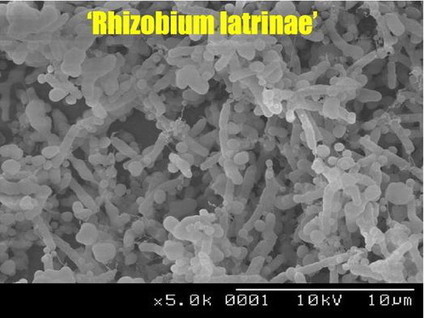
The bacterial community structure was compared between the third days’, one week’, and three weeks’ biofilm samples from the surface of a household toilet bowl. It was found that the PCR-DGGE band pattern of 16S rRNA gene was dramatically changed after the third day and was not further changed until three weeks. This result suggests that there are early and late colonizing bacterial groups. One of the early colonizers isolated from the third days’ sample was Rhizobium sp. R8, a closest relative to Rhizobium giardinii, which exhibited the highest biofilm formation activity in an artificial urine condition. R8 produced extracellular polysaccharides containing galactose, glucose, and mannose at the molar ratio of 8:1:1, which were probably responsible for the biofilm formation. Its excelled biofilm formation and urease activities together with the lack of nodulation and nitrogen fixing genes in R8 suggest that this strain has been specifically adapted to urine condition in a toilet bowl.
“Rhizobium latrinae” neither forms root nodules nor fixes atmospheric nitrogen, but instead exhibits high urease activity. This finding adds our knowledge about the ecological diversity of Rhizobia.
Rhizobium latrinae... That's awesome :-)
|
|
Rescooped by
Jean-Michel Ané
from MycorWeb Plant-Microbe Interactions
February 27, 2015 9:42 PM
|
Scoop.it!

The mutualistic association of roots with ectomycorrhizal fungi promotes plant health and is a hallmark of boreal and temperate forests worldwide. In the pre-colonization phase, before direct contact, lateral root (LR) production is massively stimulated, yet little is known about the signals exchanged during this step. Here, we identify sesquiterpenes (SQTs) as biologically active agents emitted by Laccaria bicolor while interacting with Populus or Arabidopsis. We show that inhibition of fungal SQT production by lovastatin strongly reduces LR proliferation and that (–)-thujopsene, a low-abundance SQT, is sufficient to stimulate LR formation in the absence of the fungus. Further, we show that the ectomycorrhizal ascomycote, Cenococcum geophilum, which cannot synthesize SQTs, does not promote LRs. We propose that the LR-promoting SQT signal creates a win-win situation by enhancing the root surface area for plant nutrient uptake and by improving fungal access to plant-derived carbon via root exudates.
|
|
Scooped by
Jean-Michel Ané
February 27, 2015 9:39 PM
|
Scoop.it!
Establishment of arbuscular mycorrhizal interactions involves plant recognition of diffusible signals from the fungus, including lipochitooligosaccharides (LCOs) and chitooligosaccharides (COs). Nitrogen-fixing rhizobial bacteria that associate with leguminous plants also signal to their hosts via LCOs, the so-called Nod factors. Here, we have assessed the induction of symbiotic signaling by the arbuscular mycorrhizal (Myc) fungal-produced LCOs and COs in legumes and rice (Oryza sativa). We show that Myc-LCOs and tetra-acetyl chitotetraose (CO4) activate the common symbiosis signaling pathway, with resultant calcium oscillations in root epidermal cells of Medicago truncatula and Lotus japonicus. The nature of the calcium oscillations is similar for LCOs produced by rhizobial bacteria and by mycorrhizal fungi; however, Myc-LCOs activate distinct gene expression. Calcium oscillations were activated in rice atrichoblasts by CO4, but not the Myc-LCOs, whereas a mix of CO4 and Myc-LCOs activated calcium oscillations in rice trichoblasts. In contrast, stimulation of lateral root emergence occurred following treatment with Myc-LCOs, but not CO4, in M. truncatula, whereas both Myc-LCOs and CO4 were active in rice. Our work indicates that legumes and non-legumes differ in their perception of Myc-LCO and CO signals, suggesting that different plant species respond to different components in the mix of signals produced by arbuscular mycorrhizal fungi.
It's finally published... I may not be totally objective but I think that this is a great paper.
|
|
Scooped by
Jean-Michel Ané
February 27, 2015 10:59 AM
|
Scoop.it!
Plant colonization by bradyrhizobia is found not only in leguminous plants but also in non-leguminous species such as rice. To understand the evolution of endophytic symbiosis of bradyrhizobia, the effect of ecosystems of rice plantations on their associations was investigated. Samples were collected from various rice (Oryza sativa) tissues and crop rotational systems. The rice endophytic bradyrhizobia were isolated on the basis of oligotrophic property, selective medium and nodulation on siratro (Macroptilium atropurpureum). Six bradyrhizobial strains were obtained exclusively from rice with crop rotational system. The isolates were separated into photosynthetic bradyrhizobia (PB) and non-photosynthetic bradyrhizobia (Non-PB). Thai bradyrhizobial strains promoted rice growth of Thai rice cultivars better than the Japanese strains. This implies that the rice cultivars have the factors governing rice-bacteria associations. To examine whether leguminous plants in rice plantation system maintain the persistence of rice endophytic bradyrhizobia, the isolates were tested for legume nodulation. All PB strains performed the symbiosis with Aeschynomene indica and A. evenia. On the other hand, Non-PB strains were able to nodulate A. americana, Vigna radiata and M. atropurpureum, but unable to nodulate either A. indica or A. evenia. Interestingly, all of these bradyrhizobial strains seem to exhibit low similarity of nodABC genes to those of B. diazoefficiens USDA110 and Bradyrhizobium sp. ORS285. From these results, we discussed the evolution of plant-bradyrhizobia association including non-legume in terms of photosynthetic lifestyle and nod-independent interactions.
|
|
Rescooped by
Jean-Michel Ané
from Microbes, plant immunity, and crop science
February 27, 2015 9:53 AM
|
Scoop.it!

Fungal cell walls play dynamic functions in interaction of fungi with their surroundings. In pathogenic fungi, the cell wall is the first structure to make physical contact with host cells. An important structural component of fungal cell walls is chitin, a well-known elicitor of immune responses in plants. Research into chitin perception has sparked since the chitin receptor from rice was cloned nearly a decade ago. Considering the widespread nature of chitin perception in plants, pathogens evidently evolved strategies to overcome detection, including alterations in the composition of cell walls, modification of their carbohydrate chains and secretion of effectors to provide cell wall protection or target host immune responses. Also non-pathogenic fungi contain chitin in their cell walls and are recipients of immune responses. Intriguingly, various mutualists employ chitin-derived signaling molecules to prepare their hosts for the mutualistic relationship. Research on the various types of interactions has revealed different molecular components that play crucial roles and, moreover, that various chitin-binding proteins contain dissimilar chitin-binding domains across species that differ in affinity and specificity. Considering the various strategies from microbes and hosts focused on chitin recognition, it is evident that this carbohydrate plays a central role in plant–fungus interactions.
Andrea Sánchez-Vallet , Jeroen R. Mesters , Bart P.H.J. Thomma
|
|
Scooped by
Jean-Michel Ané
February 25, 2015 10:03 PM
|
Scoop.it!
New evidence points to the evolution of the ability for bacteria to grab nitrogen from the atmosphere some 3.2 billion years ago, about 1.2 billion years earlier than thought—with implications for finding extraterrestrial life. Lee Billings reports
|
|
Scooped by
Jean-Michel Ané
February 25, 2015 9:57 PM
|
Scoop.it!
Plant dependence on fungal carbon (mycoheterotrophy) evolved repeatedly. In orchids, it is connected with a mycorrhizal shift from rhizoctonia to ectomycorrhizal fungi and a high natural 13C and 15N abundance. Some green relatives of mycoheterotrophic species show identical trends, but most of these remain unstudied, blurring our understanding of evolution to mycoheterotrophy. We analysed mycorrhizal associations and 13C and 15N biomass content in two green species, Neottia ovata and N. cordata (tribe Neottieae), from a genus comprising green and nongreen (mycoheterotrophic) species. Our study covered 41 European sites, including different meadow and forest habitats and orchid developmental stages. Fungal ITS barcoding and electron microscopy showed that both Neottia species associated mainly with nonectomycorrhizal Sebacinales Clade B, a group of rhizoctonia symbionts of green orchids, regardless of the habitat or growth stage. Few additional rhizoctonias from Ceratobasidiaceae and Tulasnellaceae, and ectomycorrhizal fungi were detected. Isotope abundances did not detect carbon gain from the ectomycorrhizal fungi, suggesting a usual nutrition of rhizoctonia-associated green orchids. Considering associations of related partially or fully mycoheterotrophic species such as Neottia camtschatea or N. nidus-avis with ectomycorrhizal Sebacinales Clade A, we propose that the genus Neottia displays a mycorrhizal preference for Sebacinales and that the association with nonectomycorrhizal Sebacinales Clade B is likely ancestral. Such a change in preference for mycorrhizal associates differing in ecology within the same fungal taxon is rare among orchids. Moreover, the existence of rhizoctonia-associated Neottia spp. challenges the shift to ectomycorrhizal fungi as an ancestral pre-adaptation to mycoheterotrophy in the whole Neottieae.
|
|
Rescooped by
Jean-Michel Ané
from MycorWeb Plant-Microbe Interactions
March 1, 2015 2:43 PM
|
Scoop.it!

• Forest trees affect community composition of bacteria and fungi in soil and litter.
• More fungi than bacteria are tree-specific, especially in the litter.
• Effects of trees on bacteria are likely mediated by litter or soil pH.
• Both root-symbiotic and saprotrophic fungi are tree-specific.
• Litter and soils under different trees are dominated by different fungi.
|
|
Scooped by
Jean-Michel Ané
February 28, 2015 10:41 PM
|
Scoop.it!
At present, there is no relevant information on arbuscular mycorrhiza and the effect of the symbiosis on the growth of wild populations of cyclamens. To fill this gap, two populations of Cyclamen purpurascens subsp. immaculatum, endemic in Nízke Tatry (NT) mountains and Veľká Fatra (VF) mountains, Slovakia, were studied in situ as well as in a greenhouse pot experiment. For both populations, mycorrhizal root colonization of native plants was assessed, and mycorrhizal inoculation potential (MIP) of the soils at the two sites was determined in 3 consecutive years. In the greenhouse experiment, the growth response of cyclamens to cross-inoculation with arbuscular mycorrhizal fungi (AMF) was tested: plants from both sites were grown in their native soils and inoculated with a Septoglomus constrictum isolate originating either from the same or from the other plant locality. Although the MIP of soil at the NT site was significantly higher than at the VF site, the level of AMF root colonization of C. purpurascens subsp. immaculatum plants in the field did not significantly differ between the two localities. In the greenhouse experiment, inoculation with AMF generally accelerated cyclamen growth and significantly increased all growth parameters (shoot dry weight, leaf number and area, number of flowers, tuber, and root dry weight) and P uptake. The two populations of C. purpurascens subsp. immaculatum grown in their native soils, however, differed in their response to inoculation. The mycorrhizal growth response of NT plants was one-order higher compared to VF plants, and all their measured growth parameters were stimulated regardless of the fungal isolates' origin. In the VF plants, only the non-native (NT originating) isolate showed a significant positive effect on several growth traits. It can be concluded that mycorrhiza significantly increased fitness of C. purpurascens subsp. immaculatum, despite the differences between plant populations, implying that AMF symbionts should be taken into account in conservation programs of this endemic plant.
|
|
Scooped by
Jean-Michel Ané
February 28, 2015 12:46 AM
|
Scoop.it!

Drawing from ancient knowledge and cutting edge science, Symphony of the Soil is an artistic exploration of the miraculous substance soil. By understanding the elaborate relationships and mutuality between soil, water, the atmosphere, plants and animals, we come to appreciate the complex and dynamic nature of this precious resource. The film also examines our human relationship with soil, the use and misuse of soil in agriculture, deforestation and development, and the latest scientific research on soil’s key role in ameliorating the most challenging environmental issues of our time. Filmed on four continents, featuring esteemed scientists and working farmers and ranchers, Symphony of the Soil is an intriguing presentation that highlights possibilities of healthy soil creating healthy plants creating healthy humans living on a healthy planet.
Great movie. I highly recommend it.
|
|
Scooped by
Jean-Michel Ané
February 28, 2015 12:14 AM
|
Scoop.it!
The remediation of metal-contaminated soils by phytoextraction depends on plant growth and plant metal accessibility. Soil microorganisms can affect the accumulation of metals by plants either by directly or indirectly stimulating plant growth and activity or by (im)mobilizing and/or complexing metals. Understanding the intricate interplay of metal-accumulating plants with their rhizosphere microbiome is an important step toward the application and optimization of phytoremediation. We compared the effects of a “native” and a strongly disturbed (gamma-irradiated) soil microbial communities on cadmium and zinc accumulation by the plant Arabidopsis halleri in soil microcosm experiments. A. halleri accumulated 100% more cadmium and 15% more zinc when grown on the untreated than on the gamma-irradiated soil. Gamma irradiation affected neither plant growth nor the 1 M HCl-extractable metal content of the soil. However, it strongly altered the soil microbial community composition and overall cell numbers. Pyrosequencing of 16S rRNA gene amplicons of DNA extracted from rhizosphere samples of A. halleri identified microbial taxa (Lysobacter, Streptomyces, Agromyces, Nitrospira, “Candidatus Chloracidobacterium”) of higher relative sequence abundance in the rhizospheres of A. halleri plants grown on untreated than on gamma-irradiated soil, leading to hypotheses on their potential effect on plant metal uptake. However, further experimental evidence is required, and wherefore we discuss different mechanisms of interaction of A. halleri with its rhizosphere microbiome that might have directly or indirectly affected plant metal accumulation. Deciphering the complex interactions between A. halleri and individual microbial taxa will help to further develop soil metal phytoextraction as an efficient and sustainable remediation strategy.
|
|
Scooped by
Jean-Michel Ané
February 27, 2015 9:54 PM
|
Scoop.it!

Plants require nitrogen (N) to make proteins, nucleic acids and other biological molecules. It is widely accepted that plants absorb inorganic forms of N to fill their needs. However, recently it has become clear that plants also have the capacity to absorb organic N from soils. In this paper we describe a new kind of symbiosis involving seed-vectored rhizobacteria and grasses that is targeted at enhancing acquisition of organic N from soils. Our proposal is based on results of experiments on seedlings of grass species Festuca arundinacea Schreb., Lolium perenne L. and Poa annua L. that suggest: (i) seed-vectored rhizobacteria colonize seedling roots and influence their development; (ii) reactive oxygen secretion by seedling roots plays a role in organic N procurement by denaturing microbial proteins in the vicinity of roots (daytime activity); and (iii) plant root and microbial proteases degrade denatured proteins prior to absorption by roots (night-time activity). This research involved the following types of studies: (i) seedling root development experiments with and without rhizobacteria on a variety of substrates in agarose media and (ii) isotopic N-tracking experiments to evaluate the absorption into seedlings of N obtained from degradation of proteins. We hypothesize that grasses, in particular, are adapted to scavenge organic N from soils through application of this ‘oxidative nitrogen scavenging’ symbiosis with rhizobacteria, and their soil-permeating root systems. This newly discovered symbiosis in grass species could lead to new ways to cultivate and manage grasses to enhance efficiency of N utilization and reduce applications of inorganic fertilizers.
|
|
Scooped by
Jean-Michel Ané
February 27, 2015 9:47 PM
|
Scoop.it!

Plants require nitrogen to make proteins, nucleic acids and other biological molecules. It is widely accepted that plants absorb inorganic forms of nitrogen to fill their needs. However, recently it has become clear that plants also have the capacity to absorb organic nitrogen from soils. In a new study published in AoB PLANTS, White et al. describe a new kind of symbiosis involving seed-vectored rhizobacteria and grasses that is targeted at enhancing acquisition of organic nitrogen from soils. The authors propose a diurnal process where during the day roots produce and release hydrogen peroxide that oxidizes microbial exoenzymes around roots; at night hydrogen peroxide production ceases, then roots and symbiotic rhizobacteria secrete proteases that degrade the oxidized proteins to form peptides that are absorbed by roots. The existence of a mechanism for organic nitrogen scavenging in grasses emphasizes the nutritional importance of non-pathogenic microbes that associate with roots. Future applications of this process could result in new methods for the cultivation of crop plants.
|
|
Scooped by
Jean-Michel Ané
February 27, 2015 9:40 PM
|
Scoop.it!

The microbial communities inhabiting the root interior of healthy plants, as well as the rhizosphere, which consists of soil particles firmly attached to roots, engage in symbiotic associations with their host. To investigate the structural and functional diversification among these communities, we employed a combination of 16S rRNA gene profiling and shotgun metagenome analysis of the microbiota associated with wild and domesticated accessions of barley (Hordeum vulgare). Bacterial families Comamonadaceae, Flavobacteriaceae, and Rhizobiaceae dominate the barley root-enriched microbiota. Host genotype has a small, but significant, effect on the diversity of root-associated bacterial communities, possibly representing a footprint of barley domestication. Traits related to pathogenesis, secretion, phage interactions, and nutrient mobilization are enriched in the barley root-associated microbiota. Strikingly, protein families assigned to these same traits showed evidence of positive selection. Our results indicate that the combined action of microbe-microbe and host-microbe interactions drives microbiota differentiation at the root-soil interface.
|
|
Scooped by
Jean-Michel Ané
February 27, 2015 1:50 PM
|
Scoop.it!
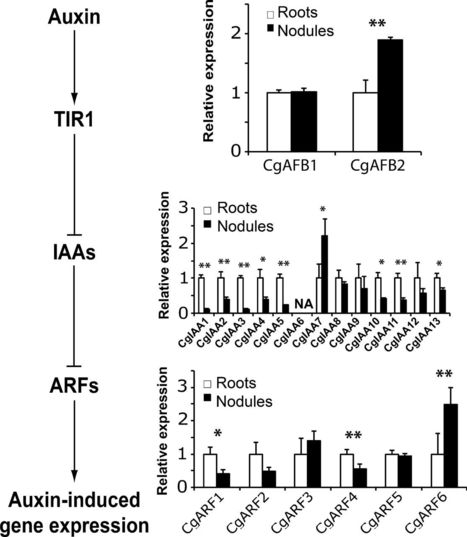
Actinorhizal symbioses are mutualistic interactions between plants and the soil bacteria Frankia spp. that lead to the formation of nitrogen-fixing root nodules. The plant hormone auxin has been suggested to play a role in the mechanisms that control the establishment of this symbiosis in the actinorhizal tree Casuarina glauca. Here, we analyzed the role of auxin signaling in Frankia spp.-infected cells. Using a dominant-negative version of an endogenous auxin-signaling regulator, INDOLE-3-ACETIC ACID7, we established that inhibition of auxin signaling in these cells led to increased nodulation and, as a consequence, to higher nitrogen fixation per plant even if nitrogen fixation per nodule mass was similar to that in the wild type. Our results suggest that auxin signaling in Frankia spp.-infected cells is involved in the long-distance regulation of nodulation in actinorhizal symbioses.
|
|
Scooped by
Jean-Michel Ané
February 26, 2015 9:23 PM
|
Scoop.it!

A new study shows that legume plants regulate their symbiotic relationship with soil bacteria by using cytokinins—signaling molecules— that are transmitted through the plant structure from leaves into the roots to control the number of bacteria-holding nodules in the roots. This collaborative study was conducted by researchers from the National Institute for Basic Biology, the Graduate University for Advanced Studies (SOKENDAI), and the RIKEN Center for Sustainable Resource Science in Japan.
|
|
Scooped by
Jean-Michel Ané
February 25, 2015 10:02 PM
|
Scoop.it!
•Consider soil inoculants. Years of corn-after-corn production can reduce populations of Bradyrhizobium japonicum, the soil bacteria that fix nitrogen (N) for soybeans. Fields that have been out of soybean rotation four or more years could benefit from an inoculant to ensure proper nodulation and prevent the need for supplemental N applications.






So true... passionate and enthusiastic teachers or mentors can change students' lives. It all starts from the heart.