 Your new post is loading...

|
Scooped by
Jean-Michel Ané
February 23, 2025 4:57 PM
|
Biofertilizers are critical for sustainable agriculture since they can replace ecologically disruptive chemical fertilizers while improving the trajectory of soil and plant health. Yet, to continue improving deployment, the persistence of designer biofertilizers within native soil consortia must be elucidated and enhanced. Here, we describe a high-throughput, modular, and automation-friendly in vitro approach to screen for biofertilizer organism persistence within soil-derived consortia after co-cultivation with stable synthetic soil microbial communities (SynComs) obtained through a top-down cultivation process. We profiled ∼1200 SynComs isolated from various soil sources and cultivated in divergent media types, and detected significant phylogenetic diversity (e.g., Shannon index > 4) and richness (Observed richness > 400) across these communities. We observed high reproducibility in SynCom community structure from common soil and media types, which provided a testbed for assessing biofertilizer persistence within representative native consortia. Furthermore, we demonstrate the screening method described herein can be coupled with microbial engineering to efficiently identify soil-derived SynComs where an engineered biofertilizer organism (i.e. Bacillus subtilis) persists. Additionally, our approach enables an analysis of the ecological impact of B. subtilis inoculation on SynCom structure and profile alterations in community diversity and richness (or lack thereof) associated with the presence of a genetically modified model bacterium. Ultimately, this work establishes a modular pipeline that could be integrated into a variety of microbiology/microbiome-relevant workflows or related applications that would benefit from assessing persistence and interaction of a specific organism of interest with native consortia.
|
|
Scooped by
Jean-Michel Ané
February 23, 2025 4:47 PM
|
Tobacco is a significant economic crop cultivated in various regions of China. Arbuscular mycorrhizal fungi (AMF) can establish a symbiotic relationship with tobacco and regulate its growth. However, the influences of indigenous AMF on the growth and development of tobacco and their symbiotic mechanisms remain unclear. In this study, a pot inoculation experiment was conducted, revealing that six inoculants - Acaulospora bireticulata(Ab), Septoglomus viscosum(Sv), Funneliformis mosseae(Fm), Claroideoglomus etunicatum(Ce), Rhizophagus intraradices(Ri), and the mixed inoculant (H) – all formed stable symbiotic relationships with tobacco. These inoculants were found to enhance the activities of SOD, POD, PPO, and PAL in tobacco leaves, increase chlorophyll content, IAA content, CTK content, soluble sugars, and proline levels while reducing malondialdehyde content. Notably, among these inoculants, Fm exhibited significantly higher mycorrhizal infection density, arbuscular abundance, and soil spore density in the root systems of tobacco plants compared to other treatments. Membership function analysis confirmed that Fm had the most pronounced growth-promoting effect on tobacco. The transcriptome analysis results of different treatments of CK and inoculation with Fm revealed that 3,903 genes were upregulated and 4,196 genes were downregulated in the roots and stems of tobacco. Enrichment analysis indicated that the majority of these genes were annotated in related pathways such as biological processes, molecular functions, and metabolism. Furthermore, differentially expressed genes associated with auxin, cytokinin, antioxidant enzymes, and carotenoids were significantly enriched in their respective pathways, potentially indirectly influencing the regulation of tobacco plant growth. This study provides a theoretical foundation for the development and application of AMF inoculants to enhance tobacco growth.
|
|
Scooped by
Jean-Michel Ané
February 23, 2025 4:37 PM
|
Plant–fungal symbiotic associations benefit initial plant adaptation to droughty terrestrial ecosystems. Although information on mycorrhizal and endophytic fungi in drought-resistant mechanisms in crops and conifer species is increasing, additional information is needed on novel ectomycorrhizal fungi that promote adaptation in broad-leaf species. In this study, the effect of the ectomycorrhizal association formed by Lycoperdon perlatum isolated from coniferous forest soil and Populus × canadensis ‘Zhongliao 1’ on drought resistance was investigated. After colonization, ectomycorrhizal symbiosis was detected in poplar roots, and simultaneously typical characteristic fungal mantle and Hartig net structures were observed in the cross-section of ectomycorrhiza under laser scanning confocal microscopy. Fungal colonization led to increases in plant growth and regulation of root system architecture. Under drought stress, accumulations of soluble sugar and proline increased in colonized plants. Furthermore, the plant–fungal association increased antioxidant enzyme activity, which inhibited the production of reactive oxygen species (ROS) and decreased malondialdehyde content. The results of the study indicated that the ectomycorrhizal symbiosis facilitated drought resistance by both substantially increasing the content of osmoregulatory substances and diminishing excess ROS. Thus, ectomycorrhizal fungi from coniferous forests can establish associations that increase the adaptation of broad-leaf species to the environment.
|
|
Scooped by
Jean-Michel Ané
February 23, 2025 4:34 PM
|
The final steps of ethylene biosynthesis involve the consecutive activity of two enzymes, 1-aminocyclopropane-1-carboxylate synthase (ACS) and 1-aminocyclopropane-1-carboxylate oxidase (ACO). These enzymes are encoded by small gene families, which, in the case of legumes, have not been systematically characterized at the level of gene family membership or phylogenetic relationships. Moreover, the absence of consensus nomenclature complicates comparisons within the scientific literature, where authors are addressing the roles of these genes in planta. In this study, we provide a framework in which the ACS and ACO family members of several legume species, including the two model legumes Medicago truncatula and Lotus japonicus, were systematically annotated, named, and analyzed relative to genes from other dicot and monocot model species. A combination of phylogenetic and reciprocal BLAST analyses was used to identify evolutionary relationships among genes, including the identification of orthologous relationships that can inform hypotheses about function. Given the role of ethylene as a negative regulator of the legume-rhizobium symbiosis, we queried publicly available RNA-seq expression datasets to obtain an overview of the expression profiles of these genes in the interaction between M. truncatula and its nitrogen-fixing microsymbiont. The resulting evolutionary framework, as well as structural and expression analyses, are intended to facilitate ongoing functional studies in legumes.
|
|
Scooped by
Jean-Michel Ané
February 23, 2025 4:31 PM
|
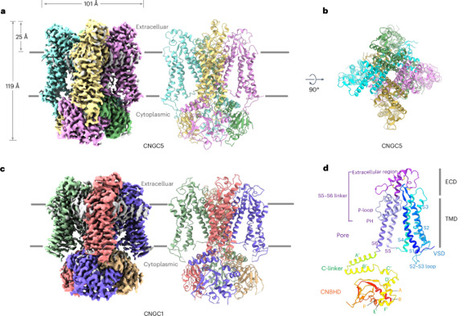
Plant cyclic nucleotide-gated channels (CNGCs) belong to the cyclic nucleotide-binding domain (CNBD) channel family, but are phylogenetically classified in a distinct branch. In contrast to their animal counterparts of K+-selective or non-selective cation channels, plant CNGCs mainly mediate Ca2+ influx and are involved in various physiological processes, such as stomatal movements, pollen-tube growth and immune responses. Here, we present the cryo-EM structure and electrophysiological analysis of plant CNGC representatives, Arabidopsis CNGC1 and CNGC5. We found that CNGC1 and CNGC5 contain a unique extracellular domain featuring disulfide bonds that is essential for channel gating via coupling of the voltage-sensing domain with the pore domain. The pore domain selectivity filter possesses a Gln residue at the constriction site that determines the Ca2+ selectivity. Replacement of this Gln with Glu, typically observed in CNBD-type non-selective cation channels, could convert CNGC1 and CNGC5 from Ca2+-selective channels to non-selective cation channels permeable to Ca2+, Na+ or K+. In addition, we found that the CNGC1 and CNGC5 CNBD homology domain contains intrinsic-ligand-like interactions, which may devoid the binding of cyclic nucleotides and lead to gating independent of cAMP or cGMP. This research not only provides a mechanistic understanding of plant CNGCs’ function, but also adds to the comprehensive knowledge of the CNBD channels.
|
|
Scooped by
Jean-Michel Ané
February 19, 2025 12:40 PM
|
SynComs, artificially assembled microbial communities, represent simplified, modular tools to investigate microbiome assembly and dynamics, as well as microbiome–host interactions, for promoting plant growth.
Current SynCom studies showcase adaptations of bottom-up and top-down approaches, including functional screening of strains and host selection to produce SynComs with a specific focus, such as phylogenetic member distribution or plant-related functionality.
Quantitatively synthesizing current research on SynComs for plant growth-promotion highlights common trends and challenges, as well as widespread discrepancies in the methodologies and principles applied to SynCom construction and evaluation.
Optimized SynCom construction should consider the concepts of stability, resilience, and reproducibility, and would benefit from the sharing of common building protocols.
|
|
Scooped by
Jean-Michel Ané
February 18, 2025 5:34 PM
|
Arbuscular mycorrhizal (AM) fungi are crucial components of the plant microbiota and can form symbioses with 72% of land plants. Researchers have long known that AM symbioses have dramatic effects on plant performance and also provide multiple ecological services in terrestrial environments. The successful establishment of AM symbioses relies on the host plant recognition of the diffusible mycorrhizal (Myc) factors, lipo-chitooligosaccharides (LCOs) and chitooligosaccharides (COs). Among them, the short-chain COs such as CO4/5 secreted by AM fungi are the major Myc factors in COs. In this review, we summarize current advances, develop the concept of mycorrhizal biceptor complex (double receptor complexes for Myc-LCOs and CO4/5 in the same plant), and provide a perspective on the future development of mycorrhizal receptors. First, we focus on the distinct perception of two Myc factors by different host plant species, highlighting the essential role of Lysin-Motif (LysM)-type mycorrhizal receptors in perceiving them. Second, we propose the underlying molecular mechanisms by which LysM-type mycorrhizal receptors in various plants recognize both the Myc-LCOs and -COs. Finally, we explore future prospects for studies on the biceptor complex (Myc-LCO and -CO receptors) in dicots to facilitate the utilization of them in cereal crops (particularly in modern cultivated rice). In conclusion, our understanding of the precise perception processes during host plant interacting with AM fungi, where LysM-type mycorrhizal receptors act as recruiters, provides the tools to design biotechnological applications addressing agricultural challenges.
|
|
Scooped by
Jean-Michel Ané
February 17, 2025 9:42 PM
|
Using preparations of vesicles of symbiosome membrane (SM) obtained from nitrogen-fixing nodules of broad beans (Vicia faba L.) as a model system, the ability of malate, when transported through it, to cause coupled with proton translocation with the formation of ∆рН was studied. It was shown that in the presence of malate, the mechanism of H+ transfer through the SM occurs against the concentration gradient and does not depend on the alternative mechanism of ∆pH generation as a result of the functioning of H+-ATPase. Based on the kinetic curves of ∆pH generation using the acridine orange indicator, a constant was calculated that characterizes the malate concentration at which half the ∆pH generation rate is reached: Km = 1.3 ± 0.7 mM. Such values indicate the presence of stoichiometry, i.e. conjugation of malate and H+ transport. Other singly charged cations (K+, Na+,
NH4+) cannot replace the role of the proton and their participation is reduced to the dissipation of ∆pH due to the exchange with the proton electrically neutral. The need for optimal maintenance of the ∆pH value in situ for malate translocation through the SM is considered as a possible mechanism that ensures the coordination of the relationships between the partners of nitrogen-fixing symbiosis not only at the level of metabolites, but also through the circulation of H+.
|
|
Scooped by
Jean-Michel Ané
February 17, 2025 9:09 PM
|
A rhizosphere (a narrow area of soil around plant roots) is an ecological niche, within which beneficial microorganisms and pathogens compete with each other for organic carbon compounds and for the opportunity to colonize roots. The roots secrete rhizodeposits into the rhizosphere, which include border cells, products of root cell death and liquids secreted by living cells (root exudates). Border cells, which have their name due to their location in the soil next to the root (at the border of the root and soil), represent terminal differentiation of columella and adjacent lateral root cap cells. Border cells can detach from the root cap surface both as single cells and as cell layers. Border cells are constantly supplied to the soil throughout plant life, and the type and intensity of border cells’ sloughing depend on both plant species and soil conditions. Currently, data on the factors that control the type of border cells’ release and its regulation have been described in different plant species. Border cells are specialized for interaction with the environment, in particular, they are a living barrier between soil microbiota and roots. After separation of border cells from the root tip, transcription of primary metabolism genes decreases, whereas transcription of secondary metabolism genes as well as the synthesis and secretion of mucilage containing these metabolites along with extracellular DNA, proteoglycans and other substances increase. The mucilage that the border cells are embedded in serves both to attract microorganisms promoting plant growth and to protect plants from pathogens. In this review, we describe interactions of border cells with various types of microorganisms and demonstrate their importance for plant growth and disease resistance.
|
|
Scooped by
Jean-Michel Ané
February 17, 2025 8:55 PM
|
The emergence of multicellularity and division of labor in cyanobacteria is a major evolutionary transition and remains elusive due to scarcity of fossil records. We investigate specialized cells used for nitrogen fixation by reconstructing the origin and evolution of molecules unique to their membranes, heterocyte glycolipids (HGs), by combining genomic analysis of ~3,600 cyanobacteria with high-resolution detection of HGs in key cultures. Our results dispute the common use of HGs as taxonomic biomarkers. We reveal the presence of rudimentary HG biosynthetic machinery in cyanobacteria before the emergence of the heterocyte and show that specific nonheterocytous cyanobacteria still produce structurally similar molecules today. Our study helps elucidate how cell specialization evolved in cyanobacteria via neofunctionalization of existing genomic machinery.
|
|
Scooped by
Jean-Michel Ané
February 17, 2025 4:48 PM
|
•ZmSYMRK is a symbiotic receptor kinase in maize, localized to the cell membrane.
•The expression of the ZmSYMRK gene is induced by AMF.
•The absence of ZmSYMRK significantly affects the symbiosis between maize and AMF.
•ZmSYMRK regulates the expression of symbiosis-related genes in maize.
•The zmsymrk mutant exhibits significant growth defects under low phosphorus conditions.
|
|
Scooped by
Jean-Michel Ané
February 13, 2025 1:34 PM
|
Plant growth-promoting rhizobacteria (PGPR) can improve crop yields, nutrient use efficiency, plant tolerance to stressors, and confer benefits to future generations of crops grown in the same soil. Unlocking the potential of microbial communities in the rhizosphere and endosphere is therefore of great interest for sustainable agriculture advancements. Before plant microbiomes can be engineered to confer desirable phenotypic effects on their plant hosts, a deeper understanding of the interacting factors influencing rhizosphere community structure and function is needed. Dealing with this complexity is becoming more feasible using computational approaches. In this review, we discuss recent advances at the intersection of experimental and computational strategies for the investigation of plant–microbiome interactions and the engineering of desirable soil microbiomes.
|
|
Scooped by
Jean-Michel Ané
February 13, 2025 11:32 AM
|
In pea (Pisum sativum L.), alleles of the Sym2 gene determine the specificity of the interaction with nodule bacteria (rhizobia). The Sym2A allele present in landraces from Afghanistan provides higher selectiveness toward rhizobia than the Sym2E allele present in European cultivars. Rhizobial strains possessing the nodX gene can interact with both Sym2A and Sym2E peas, while strains lacking nodX can interact only with Sym2E peas. Here, we studied the previously obtained introgression line A33.18 bearing Sym2A in a homozygous state in the genome of the European pea cultivar ‘Rondo’. A33.18 has proved its high selectiveness in pot experiments. Genome sequencing has shown that A33.18 possesses an 18.2 Mb region inherited from Afghanistan pea with 63 genes, including 5 receptor kinase genes, among which was the Sym2 candidate gene LykX. In a field experiment, under inoculation with the nodX+ strain TOM, over 95% of nodules of A33.18 contained TOM, as opposed to less than 8% of nodules containing TOM in the parental European cultivar ‘Rondo’. Thus, introgression of Sym2A enabled peas to interact specifically with the nodX+ strain, favoring the formation of nodules by the strain from the inoculum and protecting peas from the indigenous soil microbiota.
|
|
|
Scooped by
Jean-Michel Ané
February 23, 2025 4:53 PM
|
Little is known about the path of root-derived carbon (C) into soil microbial communities in response to arbuscular mycorrhizal fungi (AMF) and nitrogen (N) fertilization. A mycorrhiza defective mutant of tomato (reduced mycorrhizal colonization: rmc) and its mycorrhizal wild type progenitor (MYC) were used to control for the formation of AMF. 16-week continuous 13CO2 labeling was performed to quantify the photosynthetic C allocation in active microorganisms via 13C profiles of neutral (NLFAs) and phospholipid fatty acids (PLFAs). The 13C incorporation into fungal biomarker (the sum of PLFA 16:1ω5c, NLFA 16:1ω5c, PLFA 18:2ω6,9) increased with time over 16 weeks, and 4.62% of totally assimilated C was incorporated into AMF. More 13C was allocated into AMF storage compounds (NLFA 16:1ω5c, 3.1–4.1%) than hyphal biomass (PLFA 16:1ω5c, 0.12–0.25%). Furthermore, AMF symbiosis shifted microbial community composition, resulting in a lower 13C incorporation into bacteria and saprotrophic fungi compared to rmc plants. This suggests a lower use of root-derived C by bacteria and saprotrophic fungi but preference to older C compounds as energy sources. However, N fertilization decreased AMF abundance and subsequently less root-derived C was incorporated into PLFA and NLFA 16:1ω5c in relative to unfertilized soils, due to less C allocation caused by an increased C immobilization in the aboveground biomass. Our findings suggested that root-derived C can be sequestered by AMF through storage in their reproductive organs, but the preferential C allocation to AMF might be at the expense of C flow to other microbial groups. Overall, our results confirmed that mycorrhizal plants exert a greater influence on C incorporation into bacteria and saprotrophic fungi, which, however, is highly dependent on N fertilization.
|
|
Scooped by
Jean-Michel Ané
February 23, 2025 4:43 PM
|
Potassium (K) in plants participates in a variety of physiological processes and is kept at a higher concentration than its soluble form in soil. Potassium solubilizing bacteria (KSB) release K from minerals. Arbuscular mycorrhizal (AM) fungi facilitate bacterial movement along their extraradical hyphae and improve plant K status. However, the interaction of KSB and AM fungi is rarely reported. This study aimed to isolate KSB and evaluate their interaction with AM fungi in promoting plant K uptake and growth. Soil was sampled from the rhizosphere of Robinia pseudoacacia in the southern area of the Loess Plateau, where soil available K is lower than plant demand. KSB from soil was isolated using a select medium in which K-feldspar is the only K source. KSB that showed an obvious dissolving circle and relatively high K solubilizing efficiency (over 20%) were isolated and identified. A pot experiment was conducted in a randomized design to evaluate the effect of KSB and AM fungi and their interaction. Four out of 12 isolated strains that showed high potassium solubilizing efficiency were from the genus Pseudomonas. Inoculation of KSB promoted the growth and K content of R. pseudoacacia. KSB showed a variety of (increase, decrease, and not-obvious) influences on the colonization status of R. irregularis. Co-inoculation of R. irregularis and KSB promoted plant growth, K content of the plant, and the available K in the growth substrate. This study provided a basis for the utilization of KSB and AM fungi as biofertilizers in the Loess Plateau.
|
|
Scooped by
Jean-Michel Ané
February 23, 2025 4:35 PM
|
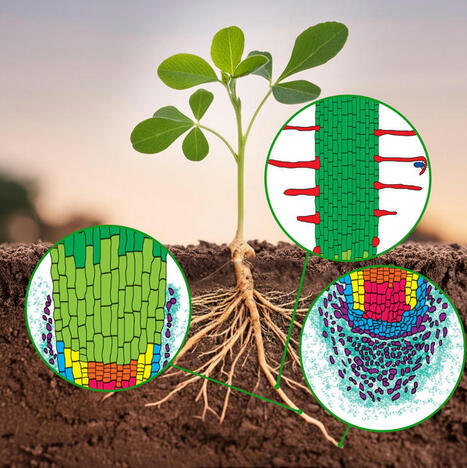
Root tissues are broadly divided into mature tissue, elongation zone (developing tissue), root tip, and border cells. While each zone contributes individually to the overall root secretion profile, border cells are emphasized in this review due to their specialized secretory functions. Border cells are often overlooked in plant root focused studies, thus excluding an important component of root functionality. Border cells are a specialized cell type surrounding the root apical meristematic region of most plant species, with the exception of the Brassicaceae family that possess border-like cells. Both cell types share the commonality of complete detachment from the root tip and reliance on internal starch reserves to perform metabolic processes. However, border cells release from the root tip as single/individual cells whereas border-like cells separate as cohesive sheets. Furthermore, border cells, but not border-like cells, secrete a complex matrix consisting of mucilage, proteins, DNA, and metabolites. Many of these secreted compounds are bioactive (e.g. secreted mucilage supports microbial growth and DNA physically entangles pathogens) thus mediating symbiosis and pathogen defense. We are interested in metabolites secreted from individual root regions, with a heavy emphasis on those specifically arising from border cells. Border cell metabolite secretion is in need of further investigation, as current research indicates they secrete symbiosis-inducing, allelopathic, and defense oriented metabolites. This review will summarize current literature regarding metabolite secretions by specific root cell types and regions. In particular, it will focus on border cell contributions to the rhizosphere chemistry relative to other root tissue types.
|
|
Scooped by
Jean-Michel Ané
February 23, 2025 4:31 PM
|
Most land plants have evolved direct and indirect (via mycorrhizal symbiosis) uptake pathways to secure nitrogen (N) and phosphorous (P) from soil. However, the interaction between the two N uptake pathways remains unclear. Here, we reveal that rice recruits a shared regulatory network to orchestrate the two pathways for acquiring nitrate, the dominant inorganic N in aerobic soils, by shifting expression localization of key components involved in nitrate and phosphate acquisitions, including OsNAR2.1–NRT2s, the nitrate transporter (NRT) complexes, Nodule Inception (NIN)-like protein 3 (OsNLP3), a key regulator in nitrate signaling, and OsPHR2, a major regulator of phosphate starvation responses (PHR). Our work also provides essential insights into the coordinated activation of symbiotic nitrate–phosphate signaling in mycorrhizal plants.
|
|
Scooped by
Jean-Michel Ané
February 21, 2025 8:46 AM
|
The oxygen-sensitive molybdenum-dependent nitrogenase of Azotobacter vinelandii is protected from oxidative damage by a reversible ‘switch-off’ mechanism1. It forms a complex with a small ferredoxin, FeSII (ref. 2) or the ‘Shethna protein II’3, which acts as an O2 sensor and associates with the two component proteins of nitrogenase when its [2Fe:2S] cluster becomes oxidized4,5. Here we report the three-dimensional structure of the protective ternary complex of the catalytic subunit of Mo-nitrogenase, its cognate reductase and the FeSII protein, determined by single-particle cryo-electron microscopy. The dimeric FeSII protein associates with two copies of each component to assemble a 620 kDa core complex that then polymerizes into large, filamentous structures. This complex is catalytically inactive, but the enzyme components are quickly released and reactivated upon oxygen depletion. The first step in complex formation is the association of FeSII with the more O2-sensitive Fe protein component of nitrogenase during sudden oxidative stress. The action of this small ferredoxin represents a straightforward means of protection from O2 that may be crucial for the maintenance of recombinant nitrogenase in food crops.
|
|
Scooped by
Jean-Michel Ané
February 19, 2025 12:35 PM
|
Suppression of chronic Arabidopsis immune responses is a widespread but typically strain-specific trait across the major bacterial lineages of the plant microbiota. We show by phylogenetic analysis and in planta associations with representative strains that immunomodulation is a highly conserved, ancestral trait across Xanthomonadales, and preceded specialization of some of these bacteria as host-adapted pathogens. Rhodanobacter R179 activates immune responses, yet root transcriptomics suggest this commensal evades host immune perception upon prolonged association. R179 camouflage likely results from combined activities of two transporter complexes (dssAB) and the selective elimination of immunogenic peptides derived from all partners. The ability of R179 to mask itself and other commensals from the plant immune system is consistent with a convergence of distinct root transcriptomes triggered by immunosuppressive or non-suppressive synthetic microbiota upon R179 co-inoculation. Immunomodulation through dssAB provided R179 with a competitive advantage in synthetic communities in the root compartment. We propose that extensive immunomodulation by Xanthomonadales is related to their adaptation to terrestrial habitats and might have contributed to variation in strain-specific root association, which together accounts for their prominent role in plant microbiota establishment.
|
|
Scooped by
Jean-Michel Ané
February 18, 2025 5:27 PM
|
Mycorrhizas are common mutualistic symbioses formed between soil fungi and plant roots. The symbiotic status improves plant mineral nutrition at the cost of a fraction of the photosynthetically fixed carbon. As a result, plant growth is positively impacted as well as host resistance to biotic and abiotic stresses. Furthermore, mycorrhizas provide a number of ecosystem services in both agricultural and natural settings. Indeed, mycorrhizal fungi shape microbial and plant communities, enhance carbon storage, and alter soil particle aggregation (Chen et al., 2018; Tedersoo et al., 2020).
|
|
Scooped by
Jean-Michel Ané
February 17, 2025 9:36 PM
|
The global dependency on synthetic fertilizers has significantly revolutionized the agroecosystem. Excessive use of synthetic N fertilizers (SNF) for rapid agricultural expansion has become the next global threat to the natural ecosystem. A few of the prominent impacts of SNF on climate change is due to its emission of powerful greenhouse gases (GHG), ammonium volatilization, soil acidification, and coastal eutrophication. The release of these GHG gases and agricultural ammonia volatilization has been reported to be the crucial driver in the alteration of carbon sequestration and fine particulate matter pollution. Globally, the production of nitrogen contributed to approximately 0.41 GtCO2e, which is equivalent to 0.7% of total global GHG emissions. Additionally, the redeposition of nitrous oxides (NO2) by ammonia volatilization has largely disrupted the soil equilibrium causing an enormous rise in the problem of soil acidification. The devastating environmental changes have immensely reformed the soil microbial diversity and natural biochemical processes. Likewise, the release of SNF into water bodies and groundwater reservoirs has significantly impacted aquatic lives by reducing the abundance and biodiversity of bottom fauna leading to coastal eutrophication. The current chapter discusses the pressing issue of SNF pollution highlighting the following key objectives: (i) to provide an insight into the GHG emissions and ammonia volatilization, (ii) to illustrate the concerns of soil acidification and coastal eutrophication, (iii) to address the strategies to mitigate the environmental damage and uplift the sustainable nutrient management practices. Overall, this chapter provides an analysis of the prevailing scenario on the agro-environmental consequences of SNF pollution, strategies, and sustainable approaches for effective abatement of agrochemical pollution.
|
|
Scooped by
Jean-Michel Ané
February 17, 2025 9:02 PM
|
This study investigated the environmental impact and discussed the economic aspects of substituting synthetic urea (S1) with nitrogen-fixing Nostoc sp. in two agricultural systems: slow-release fertilization (S2) and external nutrient extraction in the form of biogas digestate (S3), which allows for more efficient use of nutrients by plants. The carbon dioxide (CO2) sequestration rate was determined experimentally, while actual outdoor productivity data were obtained from the literature and analyzed for uncertainty. The results showed that replacing one ton of traditional synthetic urea with microalgae-based alternatives (S2 and S3) significantly mitigated global warming potential from 5.4 to 2.3 tons CO2-eq in S2 and achieved net carbon sequestration of -1.1 tons CO2-eq in S3 when using biogas in anthropogenic activities. Furthermore, S2 and S3 mitigated the impact of human non-carcinogenic toxicity by 51.0% and 48.1%, respectively. However, these alternatives consumed higher water amounts and increased land use significantly. The current cost of equivalent microalgal biomass production is approximately five times higher than the price of urea. Therefore, substituting chemical fertilizer of urea with a natural alternative based on N-fixing Nostoc sp. is not economically feasible at present, despite its positive environmental benefits.
|
|
Scooped by
Jean-Michel Ané
February 17, 2025 5:00 PM
|
Harnessing beneficial microorganisms is seen as a promising approach to enhance sustainable agriculture production. Synthetic communities (SynComs) are increasingly being used to study relevant microbial activities and interactions with the plant host. Yet, the lack of community standards limits the efficiency and progress in this important area of research. To address this gap, we recommend three actions: (1) defining reference SynComs; (2) establishing community standards, protocols and benchmark data for constructing and using SynComs; and (3) creating an infrastructure for sharing strains and data. We also outline opportunities to develop SynCom research through technical advances, linking to field studies, and filling taxonomic blind spots to move towards fully representative SynComs.
|
|
Scooped by
Jean-Michel Ané
February 17, 2025 4:28 PM
|
• Previous studies may have overestimated AMF responses to atmospheric N deposition
• We used field surveys and global meta-analysis to validate this perspective
• N addition based on realistic N deposition caused minimal AMF changes
• Excessive N addition reduced AMF Shannon diversity, biomass, and hyphal density
• Current atmospheric N deposition is unlikely to increase soil C storage through AMF
|
|
Scooped by
Jean-Michel Ané
February 13, 2025 11:38 AM
|
Small pots limit root and shoot growth in several plant species. In this work, we investigated the effect of pot size (1.7 L and 7 L) on nodulation with Bradyrhizobium japonicum and soybean growth. Small pots restricted the growth of shoots and roots of inoculated and non-inoculated plants and reduced the number of nodules, confirming that pot size interfered with nodule establishment. Plants in small pots had a significant accumulation of calcium (Ca) and boron (B) in the leaves but showed minimal changes in photosynthesis-related parameters. In large pots, inoculated plants showed higher leaf nitrate concentrations and total protein contents, with lower ureide concentrations than plants in small pots. Increased nitrogen use efficiency in plants grown in large pots probably contributed to the higher chlorophyll concentration, leaf area, and pod production when compared to ones in small pots. These findings show that restricting root zone in small pots affects growth and plant nodulation, altering nitrogen metabolism in soybeans. Our results highlight the importance of using large pots in research experiments to mitigate the underestimation of various biochemical responses and better understand the physiological reaction of soybean plants to nodulation. In conclusion, the optimization of pot size in experimental setups is essential for accurately assessing the effects of rhizobial inoculation on soybean performance.
|


 Scoop.it!











Interesting preprint