Your new post is loading...

|
Scooped by
Jean-Michel Ané
March 8, 2025 9:49 PM
|
Azospirillum brasilense is a plant growth beneficial rhizobacterium (PGBR) that is used as an inoculant to enhance root architecture in grassland and crop plants. The intent of our study was to develop A. brasilense into a probiotic inoculant for peas and supplement with a seedling exudate compound, to be used together or separately. As an initial characterization of the association of A. brasilense with pea roots, we performed several pea growth experiments. Azospirillum brasilense Sp7T increased the lengths of the five longest lateral roots from each plant by 63.6% and the top 10 lateral roots across 14 plants by 30%, an effect that was abolished in an rpoN mutant and a ΔcheA1/cheA4 mutant. Azospirillum brasilense Cd increased the number of lateral roots by 76%. We detected colonization by this PGBR within the epiphytic root microbiome. To identify a pea seedling exudate compound capable of enhancing lateral pea roots, we tested 15 such compounds. Cytidine was the only one that increased the number of lateral roots, by approximately two-fold, an effect that did not require A. brasilense. We conclude that both A. brasilense and cytidine might be suitable as supplements to enhance lateral roots of pea plants.
|
|
Scooped by
Jean-Michel Ané
March 7, 2025 10:37 PM
|
Cold stress is a limiting factor for rice yield. Empirical evidence has demonstrated that arbuscular mycorrhizal fungi (AMF) can bolster the cold resilience of plants. In barren environments, AMF can promote host plant growth and resistance. However, whether the addition of mycorrhizal helper bacteria (MHB) can further enhance AMF's ability to improve cold tolerance in plants remains unclear. In this study, we set up an uninoculated group, a separately inoculated group, and a compound inoculated group and incubated rice at 25°C until the three-leaf stage, and then each group was equally divided into four portions for treatment at 25°C, 12°C, 8°C, and 4°C, respectively. The results showed that: (1) Under cold stress conditions, the biomass of rice plants inoculated with AMF was significantly higher than that of the non-inoculated group; (2) AMF and MHB effectively activated the antioxidant enzyme system in rice plants and improved their osmoregulatory capacity under cold stress; (3) The presence of AMF and MHB stimulated and modulated the upregulation of genes related to photosynthesis and cold tolerance in rice plants, thereby enhancing their resilience against cold stress. Our findings corroborate that MHB can further enhance the cold tolerance of rice by promoting the functions of AMF. This study lays the foundation for expanding rice cultivation areas, and ensuring food production security.
|
|
Scooped by
Jean-Michel Ané
March 4, 2025 8:42 AM
|
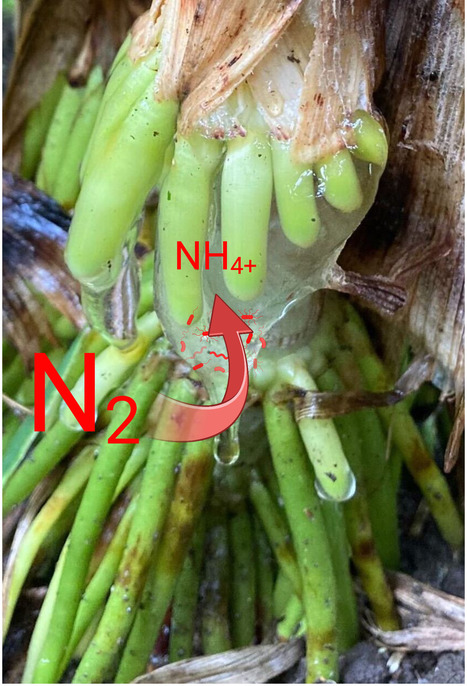
Sorghum (Sorghum bicolor) is an important food, feed, and fodder crop worldwide and is gaining popularity as an energy crop due to its high potential for biomass production. Some sorghum accessions develop many aerial roots and produce an abundant carbohydrate-rich mucilage after rain. This aerial root mucilage is similar to that observed in landraces of maize (Zea mays) from southern Mexico, which have been previously shown to host diazotrophs. In this study, we characterized the aerial root development of several sorghum accessions and the impact of humidity on this trait. We conducted a microbiome study of the aerial root mucilage of maize and sorghum and isolated numerous diazotrophs from field sorghum mucilage. We observed that the prevailing phyla in the mucilage were Pseudomonadota, Bacteroidota, and Bacillota. However, bacterial abundances varied based on the genotype and the location. Using acetylene reduction, 15N2 gas feeding, and 15N isotope dilution assays, we confirmed that these sorghum accessions can acquire about 40% of their nitrogen from the atmosphere through these associations on aerial roots. Nitrogen fixation in sorghum aerial root mucilage offers a promising avenue to reduce reliance on synthetic fertilizers and promote sustainable agricultural practices for food, feed, fodder, and bioenergy production.
|
|
Scooped by
Jean-Michel Ané
March 3, 2025 10:10 PM
|
In agricultural production, periods in which there is a lack of water can affect the productivity of soybean crops. One alternative is the use of arbuscular mycorrhizal fungi (AMF), which maximize water absorption, biochemical regulation, leaf elasticity and transpiration, and water use regulation. The present study aimed to analyze the morphological and physiological traits of soybean plants associated with Gigaspora margarita and Gigaspora gigantea submitted to water restriction in nonsterilized soil. The soybean plants received 31 g of the AMF Gigaspora margarita or 46 g of Gigaspora gigantea separately at sowing and were cultivated in a greenhouse under natural light conditions with controlled relative humidity and temperature. Water restriction was imposed when the plants reached the V3 stage and were divided into three levels: irrigated (80%), moderate (60%), and severe (40%) field capacity (FC). The experimental design was completely randomized in a 3 × 3 factorial design (three inoculation treatments × three water restriction levels). Physiological and morphological parameters, photosynthetic pigments, electrolyte leakage, root colonization of soybean plants, and percentage of fungal spores were evaluated. The inoculation of Gigaspora gigantea promoted the adaptation of physiological (photosynthesis rate, transpiration, stomatal conductance, Ci/Ca ratio, and carboxylation) and morphological traits (plant height and stem diameter), with greater colonization of soybean roots under conditions of water restriction, and maximized the tolerance of plants to drought, mitigating the negative effects of these conditions regardless of the level of water restriction. Mycorrhizal inoculation promoted better functioning of the photosynthetic apparatus and growth of soybean plants.
|
|
Scooped by
Jean-Michel Ané
March 2, 2025 11:26 AM
|
Aims
Symbiotic nitrogen fixation (SNF) has the potential to enhance the yield of legume crops, particularly under low nitrogen conditions. Selenium (Se) has been demonstrated to enhance plant adaptability to the environment. In this study, the effects of selenite on the growth of soybean and SNF were investigated.
Methods
A hydroponics experiment with four selenite concentrations (0, 0.5, 2, and 10 μM) and a soil experiment with three selenite application rates (0, 2, 5 mg kg−1) were carried out. The soybean variety Zhonghuang 13 and Bradyrhizobium diazoefficiens USDA110 were utilized as experimental materials, Na2SeO3 used as the Se source.
Results
The application of Se significantly promoted soybean growth and improved physiological performance. Nodule biomass increased by 36.79% and 32.65% under 10 μM and 5 mg kg⁻1 Se treatments, respectively, compared to the CK. Nitrogenase activity was markedly improved by 313% under 10 μM Se in hydroponic conditions. Se also elevated nitrogen content in soybean plants, promoting carbohydrate accumulation and transport. The activities of superoxide dismutase (SOD), peroxidase (POD), and catalase (CAT) in leaves increased, whereas the malondialdehyde (MDA) content decreased in both roots and leaves following Se application. Metabolomics analysis revealed that Se treatment upregulated amino acid metabolism and the citrate cycle pathways in soybean roots, while downregulating the biosynthesis pathways of flavones, isoflavonoids, and flavonoids.
Conclusions
Selenite promotes soybean and nodule growth while enhancing SNF efficiency. Our results provide a theoretical basis for improving legume production by using Se fertilizer in the context of low nitrogen inputs.
|
|
Scooped by
Jean-Michel Ané
March 2, 2025 11:13 AM
|
Most land plants engage in arbuscular mycorrhiza (AM) symbiosis with Glomeromycotina fungi for better access to mineral nutrients. The plant hormone ethylene suppresses AM development, but a molecular explanation for this phenomenon is lacking. Here we show that ethylene inhibits the expression of many genes required for AM formation in Lotus japonicus. These genes include strigolactone biosynthesis genes, which are needed for fungal activation, and Common Symbiosis genes, which are required for fungal entry into the root. Application of strigolactone analogs and ectopic expression of the Common Symbiosis gene Calcium Calmodulin-dependent Kinase (CCaMK) counteracts the effect of ethylene. Therefore, ethylene likely inhibits AM development by suppressing expression of these genes rather than by inducing defense responses. These same genes are regulated by SUPPRESSOR OF MAX2 1 (SMAX1), a transcriptional repressor that is proteolyzed during karrikin signaling. SMAX1 is required for suppression of AM by ethylene, and SMAX1 abundance in nuclei increases after ethylene application. We conclude that ethylene suppresses AM by promoting accumulation of SMAX1. SMAX1 emerges as a signaling hub that integrates karrikin and ethylene signaling, thereby orchestrating development of a major plant symbiosis with a plant’s physiological state.
|
|
Scooped by
Jean-Michel Ané
March 1, 2025 10:14 AM
|
Root rot and mosaic are two important diseases that pose a serious threat to cassava production. Piriformospora indica and Arbuscular Mycorrhizal Fungi (AMF) are root colonizing endophytic fungi with exceptional abilities for promoting growth and suppressing diseases in many crops. This study explores the potential of P. indica and AM fungus colonization in cassava to promote growth and suppress diseases. Cassava stem and root rot pathogens were isolated, characterized and subjected to pathogenicity tests. Two fungal isolates Lasiodiplodia theobromae and Fusarium sp. were identified as the major pathogens, with Cunninghamella elegans being a minor pathogen causing the disease. The percentage of weight loss during pathogenicity test ranged from 0.36% in the uninoculated control to 25% on inoculation with a combination of Lasiodiplodia theobromae and Fusarium sp. Both P. indica and AM fungus were able to colonize cassava roots, marking the first successful report of P. indica colonization in cassava. An increase in growth and yield along with a decrease in disease incidence was observed in P. indica and AM fungus inoculated plants, even when challenged with root rot pathogens. Plants treated with P. indica also showed a significant reduction in cassava mosaic disease severity and viral load compared to control plants marking the first report of cassava root rot disease management using beneficial fungal endophytes. The study suggests that P. indica can effectively be utilized as a plant growth promoter and a biocontrol agent to combat cassava mosaic disease.
|
|
Scooped by
Jean-Michel Ané
March 1, 2025 9:58 AM
|
Fungi made Earth’s land liveable by building networks that released nutrients locked in primordial rock and supplied those nutrients to plant roots. An imaging study now sheds light on how these fungal networks are constructed.
|
|
Scooped by
Jean-Michel Ané
March 1, 2025 9:54 AM
|
In natural ecosystems, microbes have the ability to stably colonize plant leaves, overcoming the fluctuating environmental conditions that the leaves represent. How the phyllosphere microbiota influences the growth of individual leaves remains poorly understood. Here, we investigate the growth of Zea mays (maize/corn) leaves in plants grown in three soils with differing amounts of nutrients and water and identify a leaf-growth-promoting effect driven by the leaf microbiota, which we also validate in field studies. We built and used a bacterial strain collection for recolonization experiments to study the microbiota-mediated mechanisms involved in leaf growth promotion. We demonstrate that prevalent bacteria inhabiting young leaves promote individual leaf growth. Using transcriptomic analyses, we reveal a defense-related genetic network that integrates the beneficial effect of the phyllosphere microbiota into the leaf development program. We demonstrate that the individual leaf microbiota differentially represses this genetic network to modulate the growth-defense trade-off at single-leaf resolution.
|
|
Scooped by
Jean-Michel Ané
February 28, 2025 8:53 PM
|
Legumes establish symbiotic relationships with nitrogen-fixing bacteria to convert atmospheric nitrogen into usable forms within root nodules, a process regulated by complex signalling, gene expression, and energy balance. In this Virtual Issue, research articles and reviews that discuss the latest plant-oriented advances in biological nitrogen fixation were collected to provide an updated view of the biochemical and molecular aspects of different steps of the nodulation process.
|
|
Scooped by
Jean-Michel Ané
February 28, 2025 2:36 PM
|
BRUTUS is an iron sensor that negatively regulates iron uptake when iron is sufficient. New work shows that BRUTUS orthologues in legumes positively regulate the establishment of symbiosis with rhizobia on the basis of iron availability through mono-ubiquitination of their transcription factor target.
|
|
Scooped by
Jean-Michel Ané
February 28, 2025 2:28 PM
|
Plant biofertilization involves introducing compounds containing living mi-croorganisms into the coating medium to sustainably enhance plant production and soil health. This is a complex process that undergoes multiple stages of development before yielding a final product. The final biofertilizer is used by legumes-protein-rich crops in symbiosis with rhizobia to enable biological nitrogen fixation increasing natural soil fertility. This study aims to determine the optimal formulation of a rhizobial biofertilizer to improve the performance of soybean (Glycine max L. cv. Docko). To this end, soybean seeds obtained from IRAD were coated with different formulations derived from locally sourced materials. Palm kernel oil was used as an adhesive in one group, while corn powder served as an adhesive in another. The coated seeds were then sown in the field. The results indicate that the combination of pigeon pea powder + sugarcane molasses, with palm kernel oil as an adhesive, produced the best nodulation (nitrogen fixation). This formulation also led to significant improvements in growth (+350%) and total nitrogen content (+1100%) compared to the bacterial broth inoculum control (B0) (P ≤ 0.01). These findings represent a significant advancement in improving nitrogen-fixing bacterial inoculants and enhancing soil fertility for the sustainable cultivation of soybeans in this tropical soil.
|
|
Scooped by
Jean-Michel Ané
February 25, 2025 6:57 PM
|
The symbiotic relationship between legumes and rhizobium has important potential for sustainable agricultural development, increasing crop yields and reducing nitrogen fertilizer dependence. Recent advancements in molecular biology have unraveled key signaling pathways and genetic elements that govern this symbiosis. Legume roots secrete flavonoids that trigger rhizobia to produce nodulation factors (NFs), initiating a complex signaling cascade leading to nodule formation. These nodules house bacteria that convert atmospheric nitrogen into ammonia, crucial for plant growth. Understanding and engineering these signaling pathways could enhance nitrogen fixation efficiency, reduce fertilizer dependence, and promote eco-friendly farming. This review synthesizes the past 25 years of research, highlighting breakthroughs in symbiotic signaling, transcriptional regulation, and plant immunity modulation during legume-rhizobium symbiosis. It also explores the potential for engineering nitrogen-fixing capabilities in both legume and non-legume plants, offering insights into future agricultural strategies that harness this symbiosis for enhanced sustainability and productivity.
|
|
|
Scooped by
Jean-Michel Ané
March 7, 2025 10:42 PM
|
Drought stress significantly impairs crop growth and productivity, threatening global food security. Plant growth-promoting rhizobacteria (PGPR) enhance crop stress tolerance through various physiological and molecular mechanisms, including regulation of nitrogen fixation, phosphate solubilization, plant hormone production, antioxidant system, nutrient uptake, and transcript abundance. This study explored the physiological and molecular mechanisms of rhizosphere microorganisms promoting drought resistance in various crops. The dynamic composition of the crop rhizosphere community structure was summarized and revealed the primary mechanisms of PGPR-mediated enhancement in host crop stress resistance. Furthermore, a comparison of PGPR-mediated drought resistance mechanisms in various crops was performed to identify the commonalities and differences. Finally, the potential applications of rhizosphere microorganisms are discussed, which provides insights and theoretical support for future research on the plant growth-promoting mechanisms and practical application of PGPRs for the breeding of drought-tolerant crops towards our sustainable food future.
|
|
Scooped by
Jean-Michel Ané
March 6, 2025 9:04 PM
|
For agriculture, the symbiosis between rhizobia and legumes is one of the most important relationships economically and environmentally. In this process, the bacteria colonize the roots of the plants, inducing the formation of an organ called a nodule. Within these structures, rhizobia perform biological nitrogen fixation, thereby reducing the demand for this element critical to plant growth. Different bacterial secretion systems (such as the Type X Secretion System, TXSS) have been implicated in establishing this symbiosis, with the T3SS being the most studied. Interestingly, although the T6SS is widely distributed among rhizobia, its role in symbiosis with legumes remains unknown. This system is commonly used as an antimicrobial weapon, although some bacteria utilize it to manipulate eukaryotic cells. In this work, we characterized the T6SS of Sinorhizobium fredii USDA257, a fast-growing bacterium with a broad host range. S. fredii USDA257 possesses a unique cluster of T6SS that not only contains genes encoding all the structural components of the system but also includes two genes encoding potential effectors that could target the cell wall of plant cells. Through regulation and secretion assays, we have demonstrated that the system is active and can be induced in nutrient-poor culture media. Additionally, nodulation assays between S. fredii USDA257 and its natural host, Glycine max var Pekin, seem to indicate that the T6SS plays a positive role in symbiosis.
|
|
Scooped by
Jean-Michel Ané
March 3, 2025 10:13 PM
|
The field studies of rhizobial inoculants require using simple and reliable methods for identification of the strains used to find out exactly which strain has formed a nitrogen-fixing nodule. This problem appears when testing the competitive ability of inoculant strains with respect to the local rhizobial strains, in order to follow the fate of inoculant strains in the long-term periods after introduction of the strains; finally, such methods may be in demand for protecting the rights of the owners and developers of the strains. The essence of the proposed identification method consists in the search of strain-specific DNA regions, which are absent in other genomes of the same species, and construction of a primer system for multiplex PCR, which allows simple, reliable, and rapid strain identification. The advantages of this approach relative to other identification techniques are, firstly, high reproducibility and, secondly, the fact that the method is based on detection of the structural variants, the contributions of which to the evolution of rhizobial genomes is rather high, whereas most of the genome fingerprinting techniques (AFLP, RAPD, REP, ERIC, etc.) are based on the detection of nucleotide polymorphisms in short genome fragments but miss a lot of events related to genome rearrangements and horizontal gene transfer. The method proposed can also be used for monitoring the evolutionary dynamics of rhizobial inoculant strains, particularly in unique fragments of the genome, which is very important for R. leguminosarum, where the proportion of unique sequences is much higher compared to other rhizobia.
|
|
Scooped by
Jean-Michel Ané
March 2, 2025 11:35 AM
|
Mycorrhiza is a symbiotic association between plant root and fungus, contributing to plant mineral nutrition and defence against antagonists. The mycorrhizal collaboration niche characterizes the position of plant species along a gradient of reliance on mycorrhiza. In this Perspective, we introduce the plant mycorrhizal traits that describe these niches and explore upscaling them to describe community-scale and macroecological-scale structure, including relationships with ecosystem function. Plant mycorrhizal type, status, dependency and root colonization rate characterize mycorrhizal niche optima, whereas flexibility and variation of root colonization rate, indicating the plasticity of plants in their reliance on mycorrhiza, describe mycorrhizal niche width. Abundance-weighted community means of plant mycorrhizal traits offer a way of upscaling trait information and examining mycorrhizal niche structure across communities and biomes. An illustrative analysis indicated that the share of highly mycorrhiza-reliant plant species decreases in biomes of more recent biogeographic origin at high latitudes. Arbuscular mycorrhizal plants become less prevalent, and those remaining tend to be flexible. The highest overall flexibility is observed in anthropogenic semi-natural grasslands, whereas, contrastingly, natural grasslands exhibit low overall mycorrhizal flexibility. Further advances in the field will be underpinned by the development of standardized approaches for measuring mycorrhizal traits.
|
|
Scooped by
Jean-Michel Ané
March 2, 2025 11:15 AM
|
Recent studies have shown that mucilage secretion from aerial roots is an essential feature of modern maize inbred lines, with some retaining the nitrogen-fixing capabilities of ancient landraces. To explore the genetic basis of nitrogen fixation in mucilage and its evolution from teosinte (Zea mays ssp. mexicana) to modern maize, we developed a recombinant inbred line (RIL) population from teosinte and cultivated it under low-nitrogen conditions. Large-scale, multi-year, and multi-environment analyses of RIL-Teo, Doubled Haploid-A (DH-A), Doubled Haploid-B (DH-B), and association populations led to the identification of 15 quantitative trait loci (QTL), 68 quantitative trait nucleotides (QTN), and 59 candidate genes linked to mucilage secretion from aerial roots. Functional verification of the candidate gene ZmAco3, which is associated with mucilage secretion in aerial roots, demonstrated that deletion of this gene resulted in a reduction in mucilage secretion in aerial roots. In addition, most maize inbred lines exhibited stronger mucilage secretion from aerial roots under low-nitrogen conditions than under normal-nitrogen conditions. We categorized mucilage secretion into constitutive and low-nitrogen-inducible types. Through genotype-by-environment interaction studies, 8 QTL 16 QTN and 19 candidate genes were identified, revealing the genetic mechanisms underlying mucilage secretion under low-nitrogen conditions. These findings provide a comprehensive genetic analysis of the mucilage-secreting ability of maize aerial roots, contributing to our understanding of nitrogen fixation and offering potential avenues for enhancing nitrogen fixation in modern maize lines. This research advances knowledge of plant nutrient acquisition strategies and has implications for sustainable agricultural practices.
|
|
Scooped by
Jean-Michel Ané
March 2, 2025 11:06 AM
|
Most plants form mutualistic symbioses with soil fungi, including arbuscular mycorrhizal (AM) fungi. These fungi usually transfer soil nutrients to plants and assimilate carbon from host plant photosynthesis. Recently, Mucoromycotina ‘fine root endophytes’ (MFRE) were identified as nutritionally mutualistic and widespread fungal symbionts of plants, establishing MFRE as a new class of mycorrhizal fungi. However, the regulatory mechanisms for MFRE symbioses are completely unknown. Other symbionts, like AM fungi, use the ‘Common Symbiotic Signalling Pathway’ (CSSP) to establish symbiosis. To explore whether MFRE interactions also involve this pathway, we cultured MFRE with CSSP mutants of Medicago truncatula which show impaired AM symbioses and tracked carbon and nutrient transfers using isotope tracers. Results show no differences in root colonization or nutrient exchange, suggesting MFRE symbioses are regulated by different molecular mechanisms. This finding highlights the unique nature of MFRE symbiosis, broadening our understanding of diverse fungal symbioses and their evolutionary significance.
|
|
Scooped by
Jean-Michel Ané
March 1, 2025 10:04 AM
|
The Asilomar Conference on Recombinant DNA, held in 1975, established guidelines for recombinant DNA (rDNA) research and laid the foundation for biotechnology regulations. While rDNA has driven significant advancements in pharmaceutical and crop biotechnology, the commercialization of plant-beneficial microbials developed using rDNA has lagged behind. This disparity may be attributed to a cumbersome regulatory framework shaped by the perception that rDNA products pose biosafety risks. To unlock the full potential of rDNA technology in addressing global challenges, regulatory reform for rDNA-derived microbial products for crop plants that reduce reliance on chemical fertilizers and pesticides is essential. Streamlining these barriers will enable greater societal benefits from microbial solutions in agriculture and beyond.
|
|
Scooped by
Jean-Michel Ané
March 1, 2025 9:55 AM
|
Underground fungal networks are “living algorithms” that quietly help regulate Earth’s climate. Now scientists know what makes them so efficient.
|
|
Scooped by
Jean-Michel Ané
March 1, 2025 9:51 AM
|
Arbuscular mycorrhizal (AM) fungi (phylum Glomeromycota) are obligate symbionts with plants influencing plant health, soil a(biotic) processes, and ecosystem functioning. Despite advancements in molecular techniques, understanding the role of AM fungal communities on a(biotic) processes based on AM fungal taxonomy remains challenging. This review advocates for a standardized trait-based framework to elucidate the life-history traits of AM fungi, focusing on their roles in three dimensions: host plants, soil, and AM fungal ecology. We define morphological, physiological, and genetic key traits, explore their functional roles and propose methodologies for their consistent measurement, enabling cross-study comparisons towards improved predictability of ecological function. We aim for this review to lay the groundwork for establishing a baseline of AM fungal trait responses under varying environmental conditions. Furthermore, we emphasize the need to include underrepresented taxa in research and utilize advances in machine learning and microphotography for data standardization.
|
|
Scooped by
Jean-Michel Ané
February 28, 2025 8:47 PM
|
Chitooligosaccharides (COS) are versatile biomolecules with applications across food, pharmaceutical, and cosmetic industries. Expanding the COS portfolio, particularly with partially acetylated COS (paCOS) of defined degree and pattern of acetylation, is essential to unlocking their full potential. This study investigates the co-expression of chitin deacetylases (CDAs) with a chitooligosaccharide synthase (CHS) RhNodC in E. coli for in vivo paCOS production. While this approach shows promise, it is hampered by reduced overall (pa)COS yields and incomplete conversion of fully acetylated COS to paCOS. Our findings reveal that RhNodC and CDAs co-localize, suggesting potential interactions that influence production efficiency. Additionally, CDA expression induces significant stress responses, including upregulation of ibpA and cpxP promoters linked to inclusion body formation and membrane stress, respectively. This is accompanied by pronounced cellular elongation, further indicating cellular distress. These bottlenecks highlight the need for deeper exploration of RhNodC-CDA interactions and stress mitigation strategies to optimize scalable in vivo paCOS production.
|
|
Scooped by
Jean-Michel Ané
February 28, 2025 2:31 PM
|
Arbuscular mycorrhizal fungi (AMF) are an essential symbiotic partner colonizing more than 70% of land plants. In exchange for carbon sources, mycorrhizal association ameliorates plants’ growth and yield and enhances stress tolerance and/or resistance. To achieve this symbiosis, plants mediate a series of biomolecular changes, including the regulation of phytohormones. This review focuses on the role of each phytohormone in establishing symbiosis. It encases phytohormone modulation, exogenous application of the hormones, and mutant studies. The review also comments on the plausible phytohormone cross-talk essential for maintaining balanced mycorrhization and preventing fungal parasitism. Finally, we briefly discuss AMF-mediated stress regulation and contribution of phytohormone modulation in plants. We must examine their interplay to understand how phytohormones act species-specific or concentration-dependent manner. The review summarizes the gaps in these studies to improve our understanding of processes underlying plant-AMF symbiosis.
|
|
Scooped by
Jean-Michel Ané
February 28, 2025 2:17 PM
|
Biological fixation of dinitrogen (N2), the primary natural source of new bioavailable nitrogen (N) on Earth, is catalyzed by the enzyme nitrogenase through a complex mechanism at its active site metal cofactor. How this reaction functions in cellular environments, including its rate-limiting step, and how enzyme structure affects functioning remain unclear. Here we investigated cellular N2 fixation through its N isotope effect (15εfix), measured as the difference between the 15N/14N ratios of diazotroph net new fixed N and N2 substrate. The value of 15εfix underpins N cycle reconstructions and differs between diazotrophs using molybdenum-containing and molybdenum-free nitrogenases. By examining 15εfix for Azotobacter vinelandii strains with natural and mutated nitrogenases, we determined if 15εfix reflects enzyme-scale isotope effects and, thus, N2 use efficiency. Distinct and relatively stable 15εfix values for wild-type molybdenum- and vanadium-nitrogenase isoforms (2.5‰ and 5.8–6.6‰, respectively), despite changing cellular growth rate and electron availability, support 15εfix as a proxy for isoform type among extant nitrogenases. Structural mutation of active site N2 access altered molybdenum-nitrogenase 15εfix (3.0–6.8‰ for α-70VI mutant). Structure-function and isotopic modeling results indicated cellular N2 reduction is rate-limited by N2 diffusion inside nitrogenase due to highly efficient catalysis by the active site cofactor, exemplifying 15εfix as a tool to probe N2 fixation mechanisms. Diffusion-constrained reactions could reflect structural tradeoffs that protect the oxygen-sensitive cofactor from oxygen inactivation. This suggests that nitrogenase function is optimized for modern oxygenated environments and that pre-Great Oxidative Event nitrogenases were less diffusion limited and potentially exhibited larger 15εfix values.
|